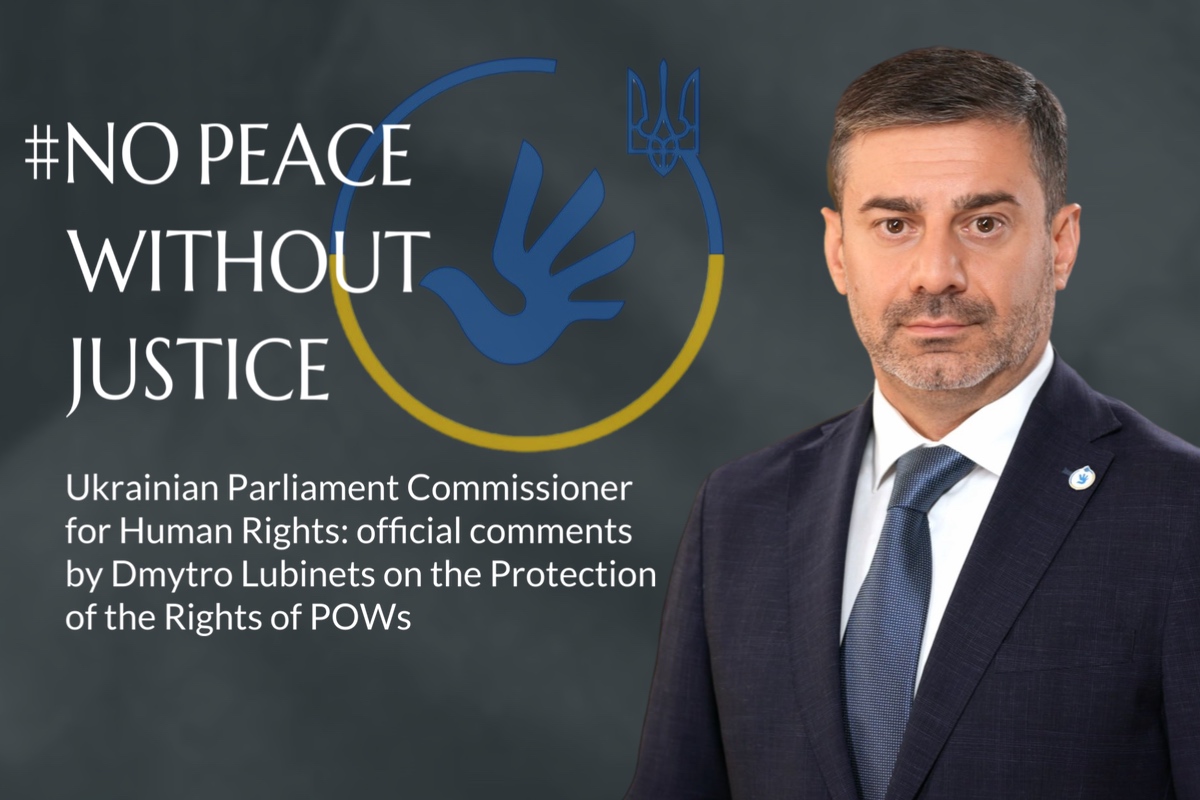


In accordance with Articles 55 and 101 of the Constitution of Ukraine, everyone has the right to the protection of their rights, and the observance of these rights is subject to parliamentary oversight by the Ukrainian Parliament Commissioner for Human Rights. He is also known as the Ombudsman of Ukraine. Since July 2022, this position has been held by Dmytro Lubinets.
During the full-scale war, the role of the Ukrainian Parliament Commissioner for Human Rights has expanded significantly. The institution has been successfully reformed, and nine key areas of work have been identified. Among them is a separate focus on protecting the rights of citizens affected by the armed aggression against Ukraine, which is of particular importance in wartime.
The Ombudsman’s Office is working on the return of illegally detained civilians and prisoners of war. To this end, in particular, the Ukrainian Parliament Commissioner for Human Rights maintains humanitarian working-level communication with the Russian Commissioner for Human Rights. There is an exchange of parcels, letters, and mutual visits to prisoners of war.
The Ukrainian Parliament Commissioner for Human Rights raises the issue of war crimes committed by the Russian Federation at all meetings. He also systematically sends letters to international organisations, such as the United Nations and the International Committee of the Red Cross, regarding the extrajudicial executions of Ukrainian prisoners of war on the battlefield committed by the occupiers.
In the context of the No Peace Without Justice initiative and similar projects implemented in different formats, what key tools and forms of support do you consider necessary to strengthen the effectiveness of the public documentation process and continuous awareness-raising around war crimes?
Any sustained reminders of war crimes at all levels are important: at the media level, including both Ukrainian and international media; at the level of organising public events to inform foreign audiences; and at the level of recognition by foreign parliaments of Russia’s war crimes as genocide against the Ukrainian people.
Overall, all initiatives and projects are essential tools for shaping a sustained international memory, as mechanisms of pressure on the aggressor state, and as safeguards against the recidivism of crimes in the future. This prevents war crimes from being reduced to abstract statistics or a temporary information agenda, instead transforming them into documented facts that require legal assessment and fair punishment.
At the same time, to enhance the effectiveness of the process of public documentation and sustained reminders of war crimes, systematic work must be organised in accordance with principles and standards that will ensure the possibility of the effective use of evidence in national and international courts.
Such work is carried out by the law enforcement authorities of Ukraine, in particular within the principal criminal proceedings on genocide, conducted by the Office of the Prosecutor General in cooperation with the Security Service of Ukraine, in which the entire body of war crimes committed by the aggressor is analysed.
A significant number of war crimes committed by representatives of the Russian Federation are covered by investigations conducted by international mechanisms operating in Ukraine, primarily by the Independent International Commission of Inquiry on Ukraine, established by the UN Human Rights Council in March 2022, and by the UN Human Rights Monitoring Mission in Ukraine, which began its work in March 2014.
Periodic reports and briefings by the aforementioned mechanisms on the results of their work in documenting war crimes each time draw the attention of the international community to war crimes committed by the Russian Federation in Ukraine and contribute to the consolidation of efforts for diplomatic and economic pressure on the aggressor.
Based on your observations and the collected evidence, are war crimes against Ukrainian prisoners of war the result of a centralised policy of the Russian state, or rather the result of decisions taken at the level of individual units and commanders on the ground?
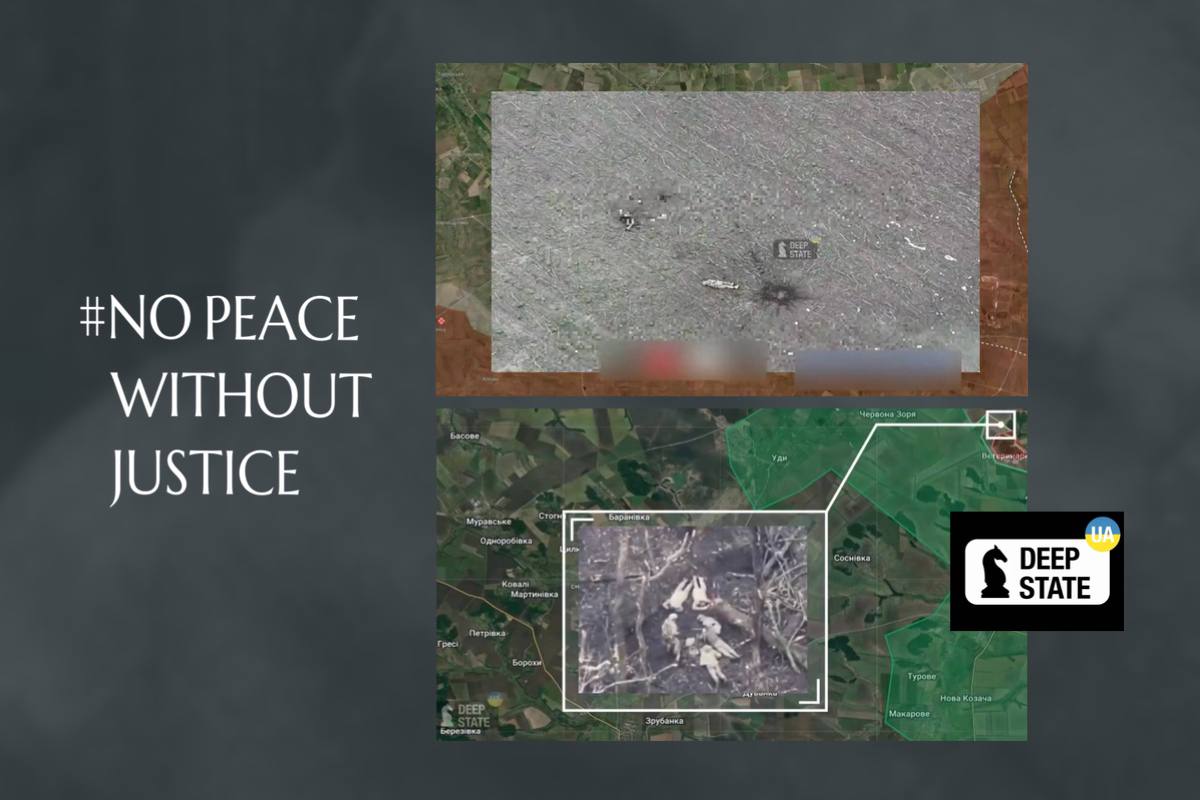
War crimes against Ukrainian prisoners of war cannot be viewed solely as isolated incidents or as the result of decisions taken by individual commanders on the ground. The collected evidence, numerous documented facts, and the repetition of the same practices across different regions and units indicate the systemic nature of such crimes, thereby demonstrating the presence of a centralized policy and conscious tolerance on the part of the top military-political leadership of the Russian Federation.
Firstly, the scale and regularity of torture, inhuman treatment, denial of medical care, and extrajudicial executions of prisoners of war indicate that these actions are not an exception. They are repeated according to similar patterns, which is characteristic of systemic practices.
Secondly, the absence of effective investigations and punishments in Russia, and in some cases the public endorsement of violence by officials and propaganda media, creates an atmosphere of complete impunity. In such conditions, crimes are not only allowed, but effectively encouraged as a tool of intimidation and demoralisation.
Also, as an example, statements by the top military-political leadership of the Russian Federation reflect the tolerance and encouragement of such crimes. In these statements, the use of violence against Ukrainian prisoners of war is incited and justified.
In particular, during a meeting at one of the command posts of the Kursk grouping of the Armed Forces of the Russian Federation in March 2025, the President of the Russian Federation stated that “representatives of Ukrainian formations opposing the Russian authorities in the Kursk region are, under the law, considered terrorists and should be treated accordingly”.
After returning from captivity, a significant number of Ukrainian servicemen show signs of prolonged exhaustion, in particular, critical weight loss and a substantial deterioration in their physical condition. Is the issue of improper conditions of detention of prisoners of war constantly in focus in the negotiation process, and what position does the Russian side express on this matter?
The issue of the conditions of detention of Ukrainian prisoners of war and civilians unlawfully held in Russian captivity is being raised within the framework of the communication with the Russian Commissioner for Human Rights. The need to grant the ICRC access to the detention facilities where Ukrainians are being held in the Russian Federation and in the temporarily occupied territories is also emphasized.
At the same time, it is important to emphasize that Russia is violating virtually every article of the Geneva Convention relative to the Treatment of Prisoners of War. For example, unlike Ukraine, Russia has not established special camps for prisoners of war, and captured combatants are “scattered” across facilities within the Russian Federation’s penitentiary system as ordinary prisoners. Horrible conditions of detention and inhumane treatment lead to the emergence or exacerbation of chronic illnesses and mental disorders.
Torture, including that which leads to death, is often used to force prisoners of war to confess to crimes committed against civilians. Released Ukrainian prisoners of war report the systematic round-the-clock use of physical violence and psychological abuse.
Accordingly, 95% of Ukrainian prisoners of war are subjected to torture in Russian captivity. These data are confirmed, in particular, by the UN Human Rights Monitoring Mission in Ukraine. Prisoners are starved, held in cold or overcrowded cells, and denied medication (the largest recorded weight loss is 77 kg over 5 months). People are left without contact with their families for years. They are forced to sign false confessions, subjected to constant psychological pressure, humiliated, and broken. This is a well-established system.
There are numerous cases in which servicemen die after returning from captivity due to exhaustion and illnesses contracted while in captivity
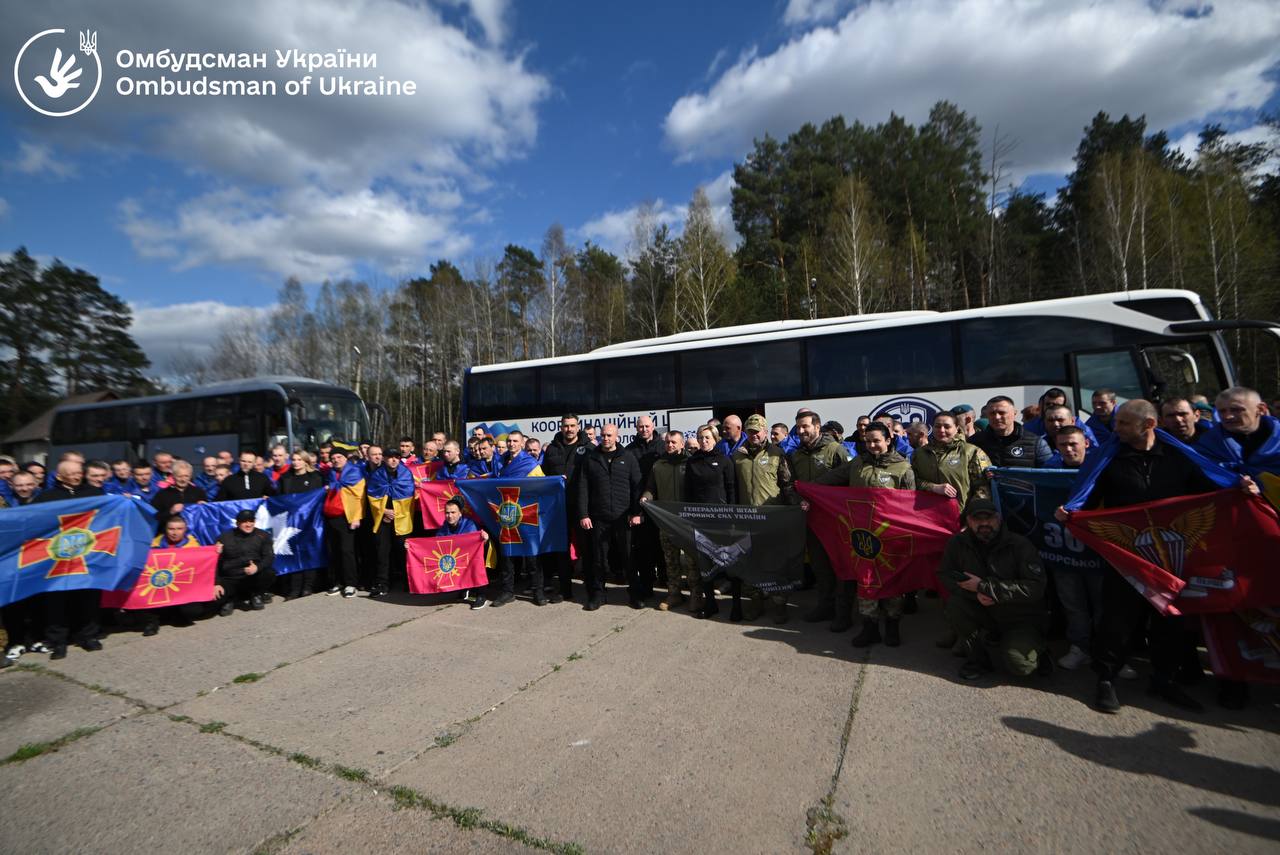
The Ukrainian side seeks the release and return to Ukraine of all prisoners of war and civilians deprived of their liberty as a result of armed aggression, being held in the Russian Federation and in the occupied territory of Ukraine.
Transparent principles for conducting prisoner exchanges have been proposed to the Russian side: first of all, the return of seriously ill and severely wounded prisoners of war, servicemen who are held in captivity the longest, and women.
Instead, the Russian side manipulates the issue of the return of prisoners of war, in particular when it is advantageous in the context of peace negotiations, and does not adhere to agreements.
In August 2025, among the bodies repatriated to Ukraine were the remains of five Ukrainian servicemen who died in captivity. They were on the lists of “seriously wounded and seriously ill” prisoners for exchange in accordance with the agreements in Istanbul during the second round of negotiations. But due to delays by the Russian side, they did not live to see their release.
In your opinion, what real mechanisms of international pressure can prompt the aggressor state to at least partially comply with the provisions of the Geneva Conventions?
Forcing the aggressor state to at least partially comply with the provisions of the Geneva Conventions is possible only through a combination of strong international pressure, the inevitability of accountability, and constant public attention. Among the most realistic and effective mechanisms, the following should be highlighted:
- The inevitability of legal accountability. The intensification of war crimes investigations at the level of the International Criminal Court, national courts of other states (the principle of universal jurisdiction), and the establishment of special tribunals. The understanding that crimes will be investigated regardless of time is one of the strongest deterrent factors.
- Individual sanctions. The introduction and expansion of personal sanctions against the military-political leadership and those individuals who commit crimes. The sanctions mustn’t be symbolic, but ones that are actually effective.
- International isolation. Restrictions on the aggressor state’s participation in international organizations, forums, sporting, and cultural events. Isolation increases the political cost of violating international humanitarian law and demonstrates that ignoring the rules leads to systemic losses of reputation and influence.
- Continuous international monitoring. Pressure to ensure access for international organisations (the ICRC, UN special missions) to places of detention of prisoners of war, as well as regular public reports on violations. Even partial access and publicity can reduce the scope for violations.
- Publicity and reputational pressure. The systematic disclosure of evidence of violations and conditions of detention of prisoners in international media and on diplomatic platforms.
Overall, the effort to put pressure on the enemy and compel it to comply with international humanitarian law is of the utmost importance. And the implementation of mechanisms to punish violations of humanitarian law will help prevent further crimes and partially compensate for the damage inflicted on our country.
In an interview with Deutsche Welle, you emphasized that the Russian side is consciously delaying the exchange processes. In your opinion, what instruments could the international community use to influence this situation?
The primary means of influencing Russia’s position in this situation could be for representatives of the most influential states and international organizations, above all the United Nations, to exert political and economic pressure on the Russian leadership, insisting that it comply with the norms of international humanitarian law and cease its practice of disregarding its provisions.
In addition, all the above-mentioned steps in the previous question may also compel Russia to return Ukrainian citizens. It is also worth noting that international pressure is a very effective tool. One example is the implementation of the Istanbul Agreements in mid-2025:
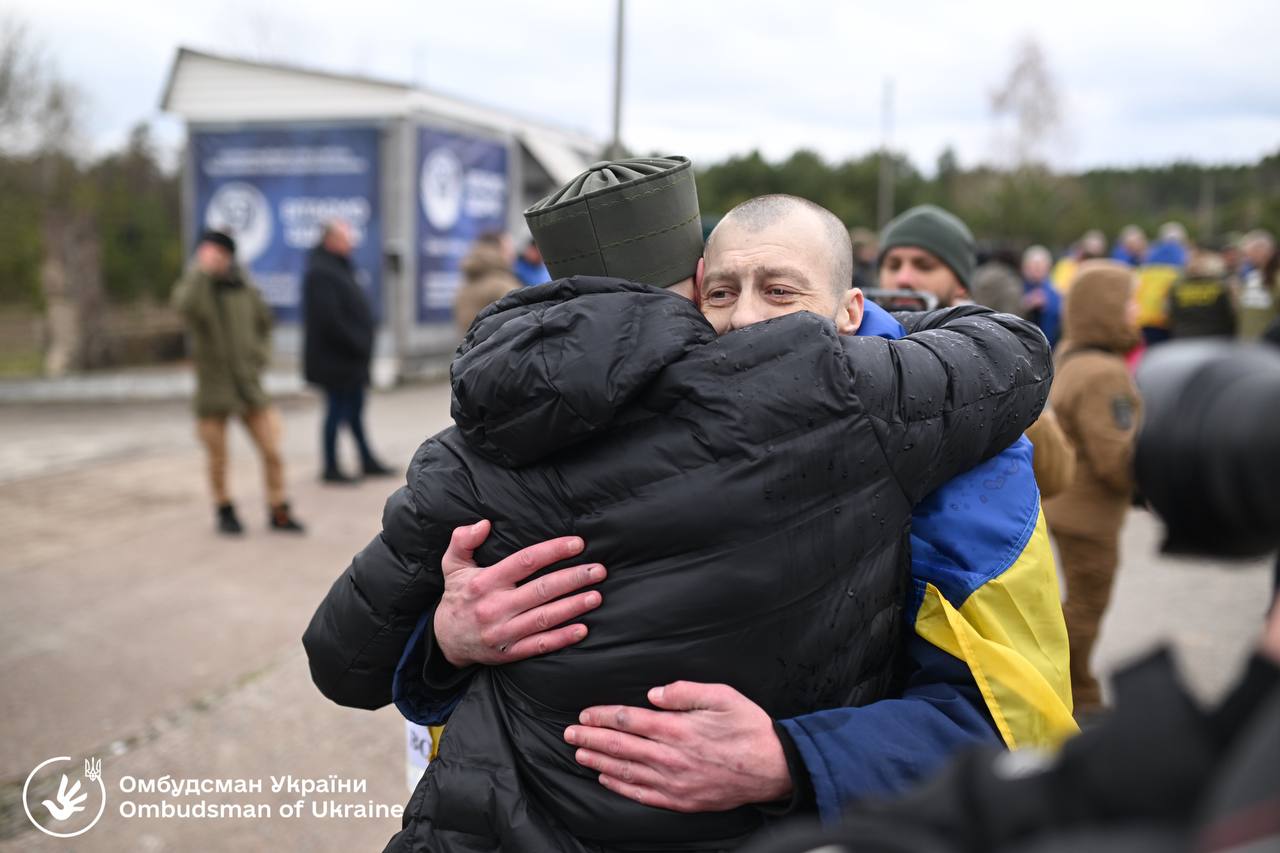
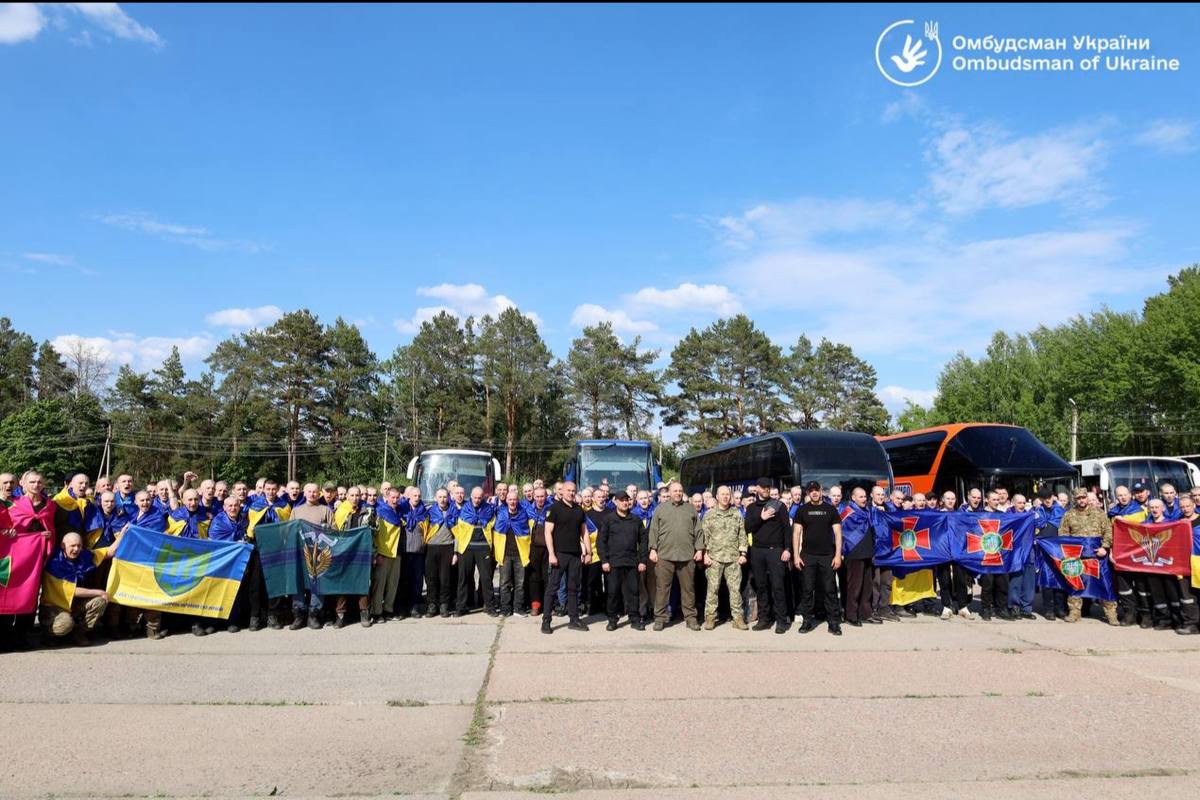
- The first round took place on May 16, 2025. It was then that it was possible to agree on an exchange in the “1000 for 1000” format. This was a truly historic development: for the first time since the beginning of the full-scale invasion, it was possible to return such a large number of people home – not only military personnel, but also civilians.
- During the second round of negotiations in Istanbul, Ukraine again raised the issue of returning our people. The priority categories were the severely wounded, the sick, and persons under 25 years. However, the third stage of negotiations did not bring any tangible results, even though Russia agreed to priority exchanges of prisoners of war with the longest period of detention.
In fact, the Russian side fulfilled only the agreements of the first round. Only a part of the young military personnel aged 18–25 were returned. The Russian side also returned only a part of the severely wounded and sick prisoners of war. As for the military personnel held in captivity the longest, they were practically not returned at all.
Do you share the view that lasting and just peace agreements require a proper legal assessment of crimes against prisoners of war and civilians, and how, in your opinion, could the international community even today strengthen its efforts so that the principle No Peace Without Justice gradually acquires practical meaning in international politics?
Lasting and just peace agreements are impossible without a proper legal assessment of crimes against prisoners of war and civilians. Historical experience shows that peace built on the silencing of crimes or on compromises with impunity is only a temporary pause before new violence.
Furthermore, achieving a just peace is impossible without a proper legal assessment of the aggressor state’s compliance with international humanitarian law, as it deliberately disregards the provisions of the Geneva Conventions and the Rome Statute of the International Criminal Court.
In general, the guarantee of lasting and just peace should be agreements built on the principles of the rule of law. The restoration of the rights of victims of war (reparations, the right to truth, etc.) should be a condition of a peace agreement.
At the same time, impunity for committed crimes devalues any guarantees of peace. If war crimes remain unpunished, this will stimulate the repetition of acts of aggression in the future.
Dmytro Lubinets, Ukrainian Parliament Commissioner for Human Rights