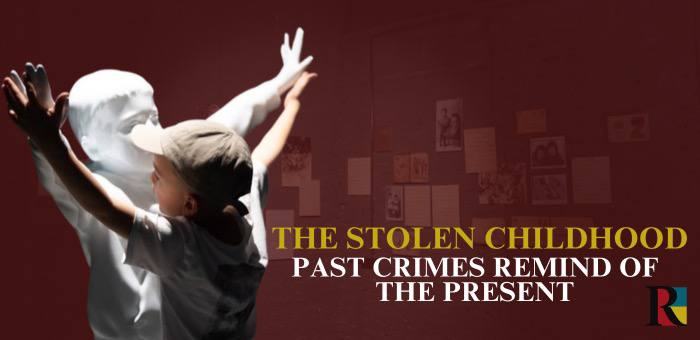


During the World War II, Nazis killed tens of thousands of people in Babyn Yar. On International Children’s Day, the National Historical and Memorial Reserve “Babyn Yar”, with the support of the Embassy of the Federal Republic of Germany in Ukraine and with the assistance of the Ministry of Culture and Information Policy of Ukraine, opened an exhibition that told the stories of Jewish children, murdered 82 years ago, and reminded about the current genocide of Ukrainians. “Babyn Yar” is a tract in the northwest of Kyiv, where during the German occupation, mass murderings based on ethnicity, ideology, and the violation of the laws were committed. The exhibition was planned to run only in June, but because of the number of visitors, it continued for July.
The focus of “The Stolen Childhood” is documents, photos, and exhibits from the Levitas archive that show the memories of two little Jewish girls, Polina and Malvina Babat, who were killed in a that tract in 1941 at the age of 5 and 6, with their family. Their mother was on the frontline, so she read the letters of her children after WW2. Girls were shot along with their grandparents. Their clothes, toys, and letters were presented in the first space, dedicated to the past. The story of the sisters became known due to a girl, Larisa Sudovska, who survived that day, and the facts of her life were also displayed.
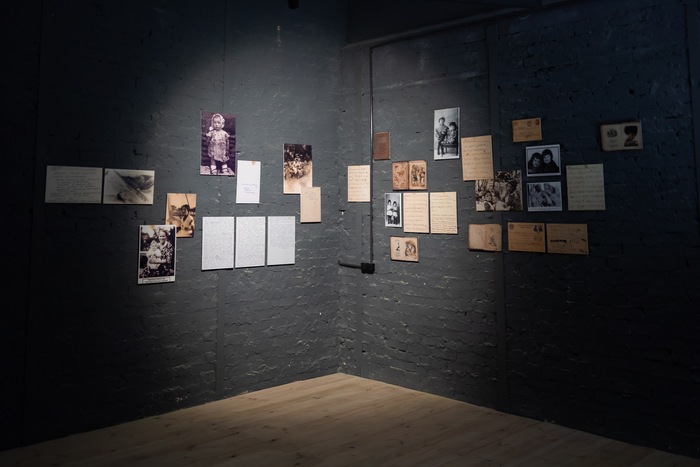
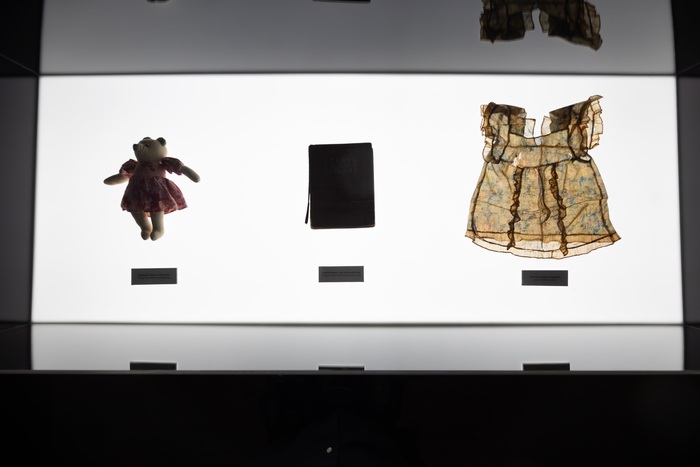
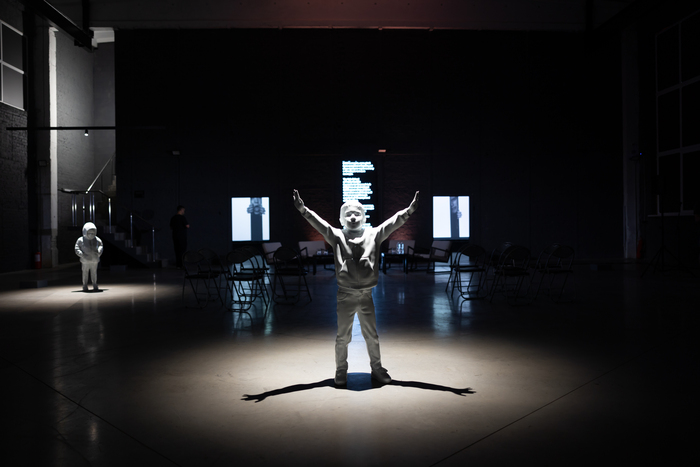
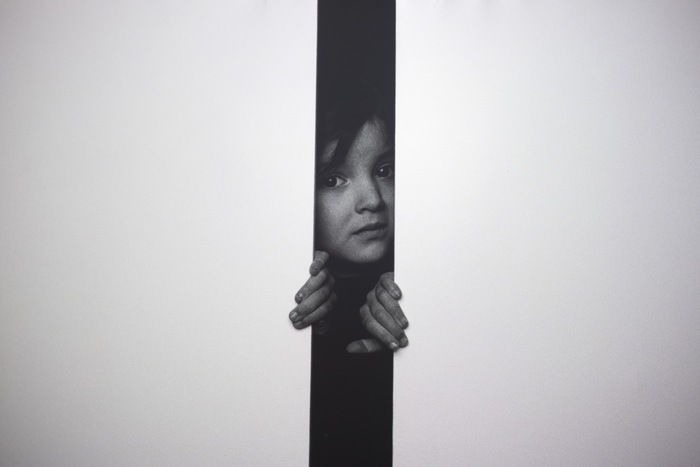
The project’s main purpose is to draw the attention of the world community to Russian war crimes. According to the platform “Children of War”, it is officially proven Ukraine irreversibly damaged 563 children. At least more than nineteen thousand are kidnapped, so the main message of the creators is to encourage authorities to work on minor citizens’ return. That is why stories from WW2 are complemented by reflections of modern Ukrainian artists on the forced deportation of Ukrainian children over the past two years: a three-channel video of Mykhailo Alekseenko, which shows through metaphor that the more we postpone justice, the fewer children are able to come back, and white sculptures by Julia Beliaeva. It is important to emphasise that in their public communication, organisers reminded that 2014 was the starting point of the abductions.
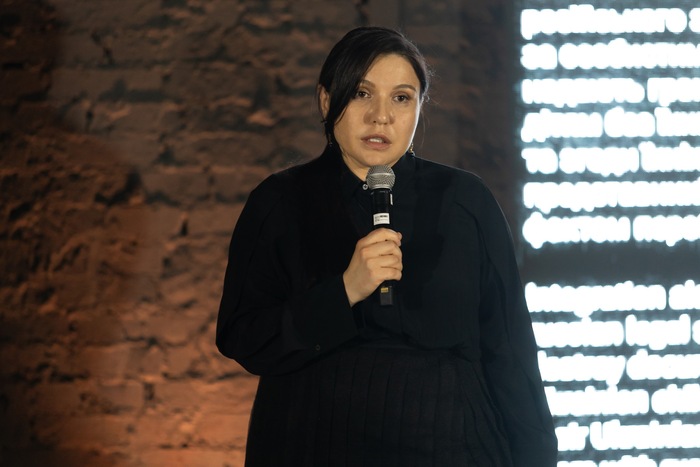
Roza Tapanova, the head of the National Historical and Memorial Reserve “Babyn Yar”, shared her vision about the concept of the project:
“Babyn Yar” NHMR works with the concept of “living memory”, it is important for us to counteract the reincarnation of evil, because an incomplete understanding of genocide leads to its repetition. Today’s killers in the uniform of the Russian army grew up from children for whom the Holocaust was not a crime against humanity — “only” a crime against the Jews.
“Revival of memory” is about expanding the audience of those who come to Babyn Yar and changing the motivation for such a visit. It is not for the sake of a memorable date but for the understanding of what it means to be human and what it means not to be. And this is achieved through educational and cultural programs, events, and art projects.
She also talked about the way the idea appeared:
The idea arose during communication with representatives of Ukraine in international institutions, who are making great efforts to reveal to the world the true face of the Russians in their aggression against Ukraine. The deportation of Ukrainian children and the forced erasure of their national identity is a crime against humanity that is happening now.
Events within the exhibition
During the discussion “Stolen Children. How to bring them back?” Anton Korynevych, Ambassador-at-Large, Ministry of Foreign Affairs of Ukraine, Yanina Tertychna, Head of the Department for Child Protection and Counteraction to Violence, Office of the Prosecutor General, Oleksandra Dvoretska, Advisor to the Ukrainian Parliament Commissioner for Human Rights, Office of the Ombudsman of Ukraine, Anastasia Stepula, Advocacy Advisor, Ukrainian Child Rights Network, Yaroslava Volvach, Head of Investigations, hromadske.ua also shared their thought on the fact that Russia creates so-called “Recovery camps” to assimilate childrenand impose propaganda.
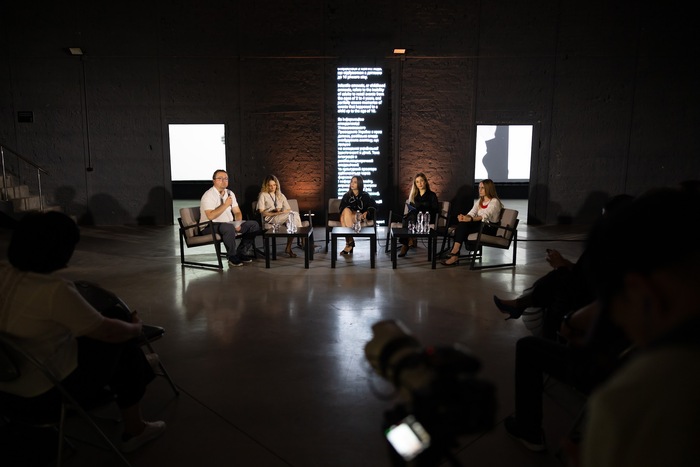
The Ukrainian Review has an interview with Anton Korynevych regarding the judicial process of Russian crimes in the Hague.
For the cultural part, Ukrainian musician Yevgeny Gromov performed a piano concert with the music of world-famous European composers.
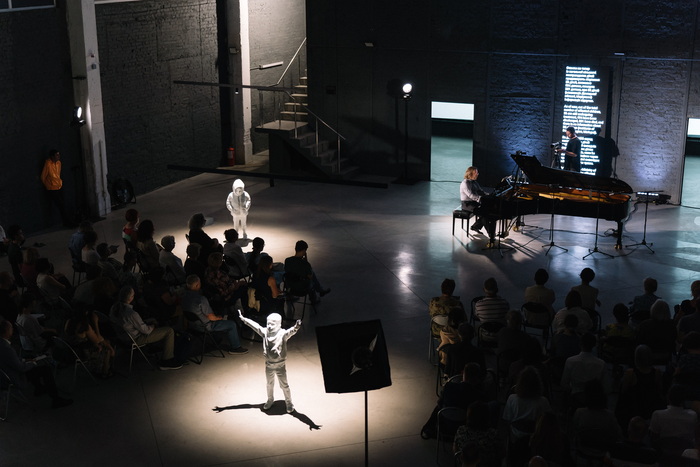
The state, public organisations, and our international partners are working on the return of Ukrainian children. It is important to keep this topic in the information space at all times, especially for a global audience. And the more initiatives, the better. We saw our task as drawing attention not only to the problem of abduction of children, but also to the upbringing of Ukrainian children who were taken to Russia or are in the temporarily occupied territories, in the spirit of hatred for Ukraine, and militarisation. Our exhibition was visited by numerous diplomats, representatives of international organisations, and guests of Kyiv from foreign countries. No one remained indifferent to what they saw, they felt the parallels that the exposition emphasised.
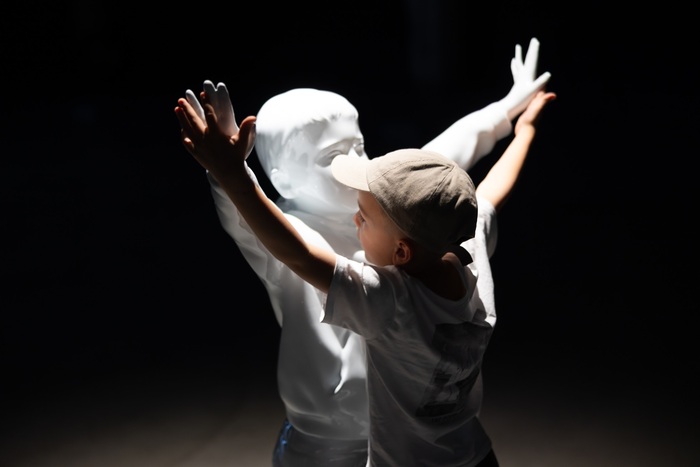
Through examples from history, the exhibition drew attention to war crimes happening in Ukraine today. Because of the military actions, it is impossible to evaluate the number of victims, harmed by Russia, so this project is another reminder, of how important it is to prevent the violation.