

What a kind and peaceful face! This is the best depiction of Jesus I have ever seen. He embodies confidence in the triumph of good over evil, and his image radiates joy and happiness. I admire this face. It combines kindness, serenity, wisdom, and bliss. Its message is to do good without looking back. Truly brilliant! Usually, the face of Jesus reflects suffering, merely conveying pain. But here, there is grandeur, calmness, spiritual strength, and the infinity of life. I am in awe, — Lyudmila Leukhina Art Beauty Industry BIOTECH, Kharkiv.
Ukraine is expecting the imminent arrival of a unique artwork — the “Cross of Peace” installation, created by the American artist of Cossack heritage, Sergey Melnikoff, who uses the minimalist artistic pseudonym “MFF.”
The “Cross of Peace” installation with its Golden Crucifix stands as one of the most symbolic contemporary art pieces. Every element of this multifaceted artwork tells the story of the tragedy that befell the Ukrainian people in the 21st century.
A three-meter cross bearing the sculpture of the crucified Christ unites the symbolism of Orthodoxy, Catholicism, and Protestantism, giving the work special spiritual significance in the context of religious disputes dating back to the Great Schism of 1054.
The cross is made from pipes dismantled by emergency services in Kharkiv and Odesa from residential high-rise buildings destroyed by Russian ballistic missile strikes. Its base is a stylized anti-tank obstacle, crafted from railway tracks produced after World War II at the Azovstal plant, whose defenders have recently joined the pantheon of Ukraine’s heroes.
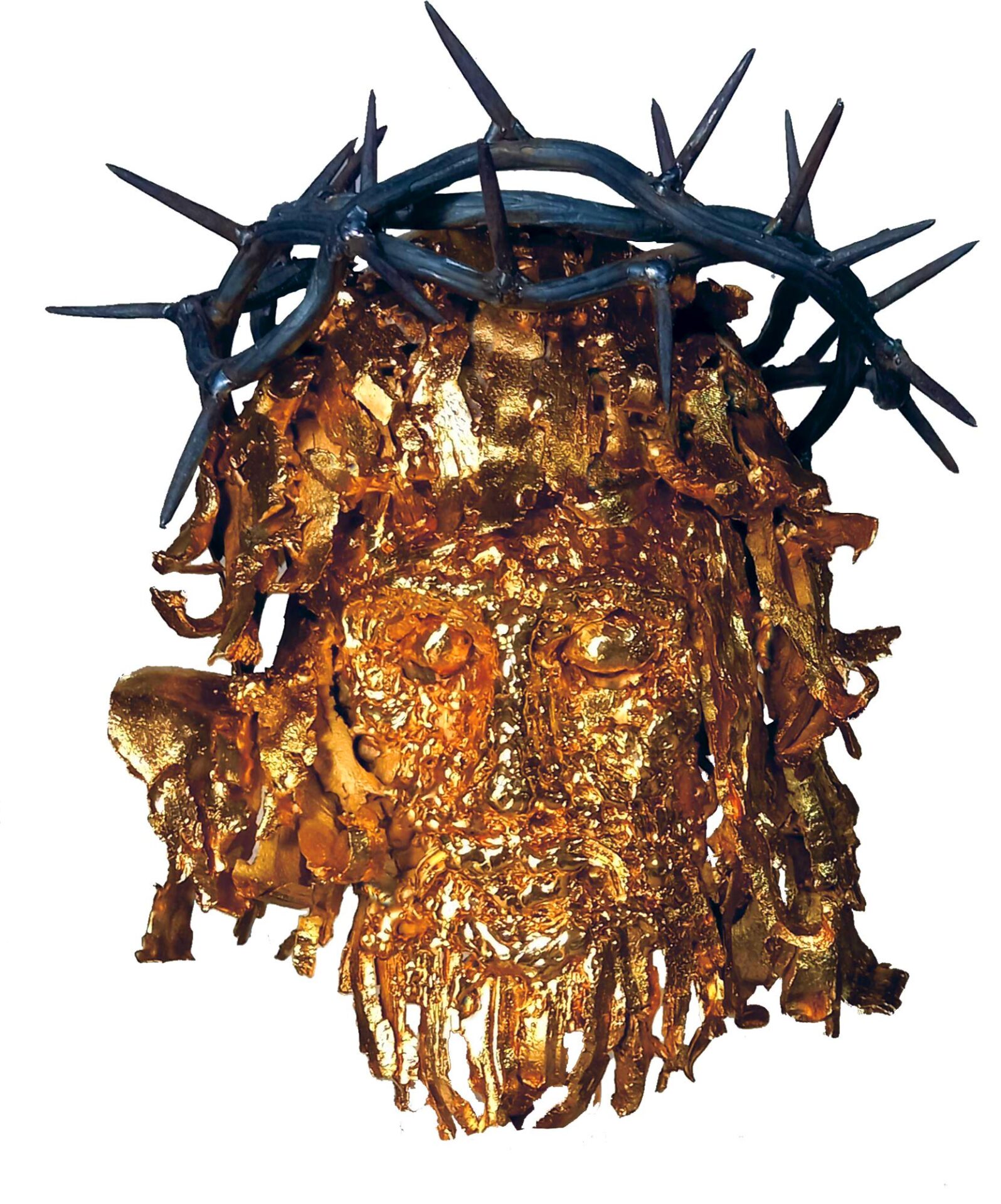
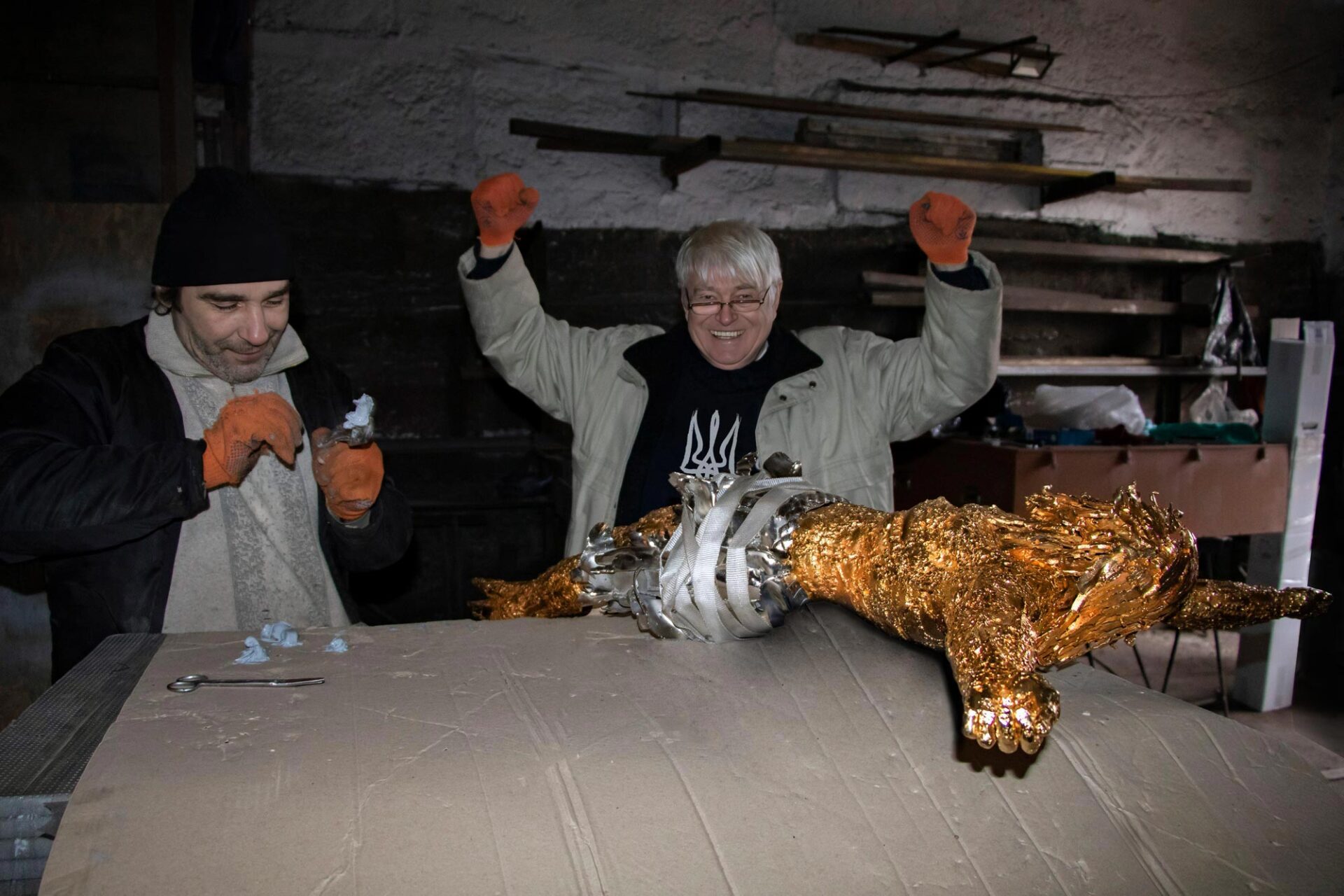
The central element of the work is the Golden Crucifix, a life-sized sculpture of the crucified Jesus Christ, composed of 20,000 fragments of artillery shells and mines, all coated in pure gold.
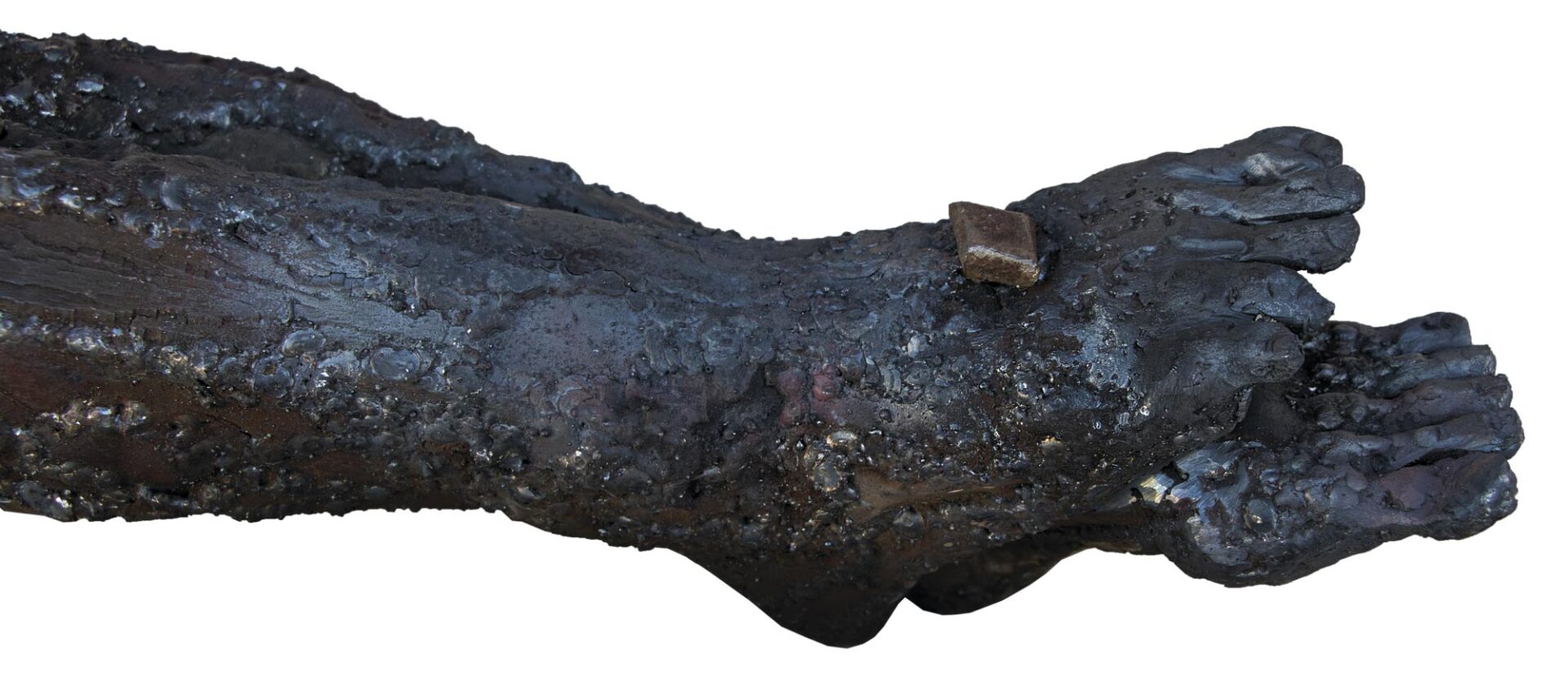
However, the value of the sculpture lies not in the gold coating but in the uniqueness of its details. Not a single fragment used in the nearly life-sized figure was mechanically altered or reshaped. Each component — muscles, ribs, joints, the face with sunken eyes and drooping mustache — has retained its authentic form, assembled into a massive puzzle of thousands of shards.
To create this extraordinary piece, the artist gathered a vast quantity of military debris from former combat zones in Mykolaiv, Kherson, and Kharkiv regions. Tons of fragments were meticulously sorted. Carefully sifting through heaps of cast iron debris, Sergey Melnikoff set aside those pieces that resembled parts of the human body.
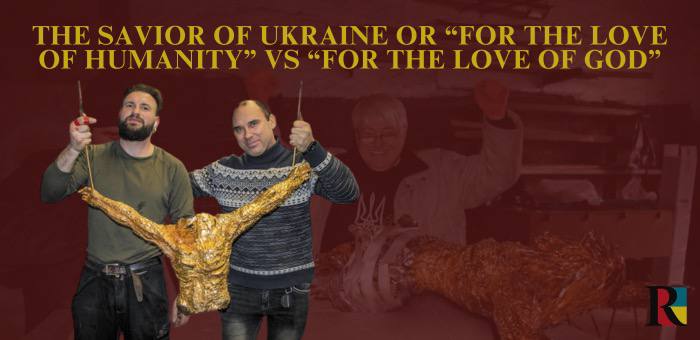
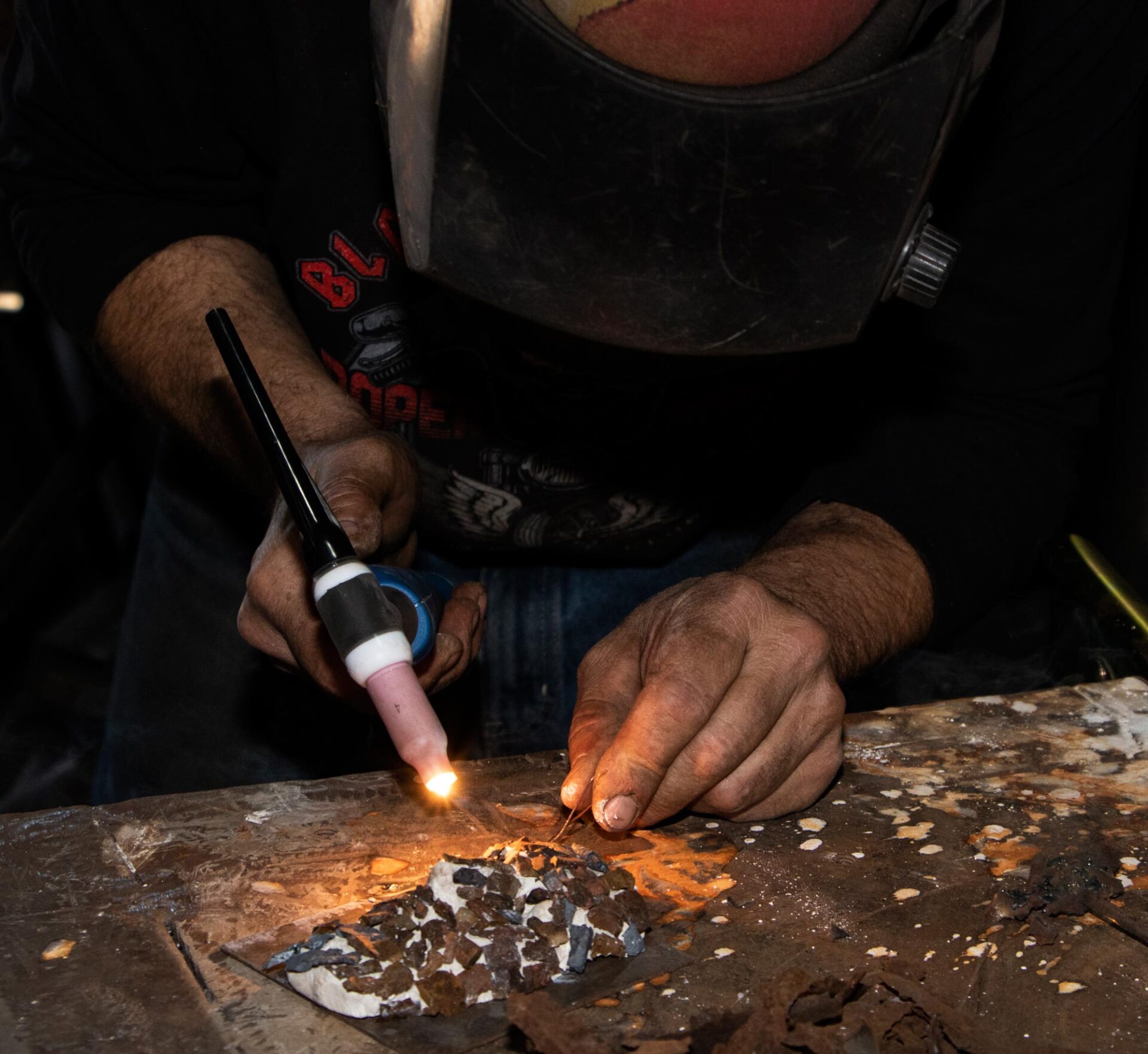
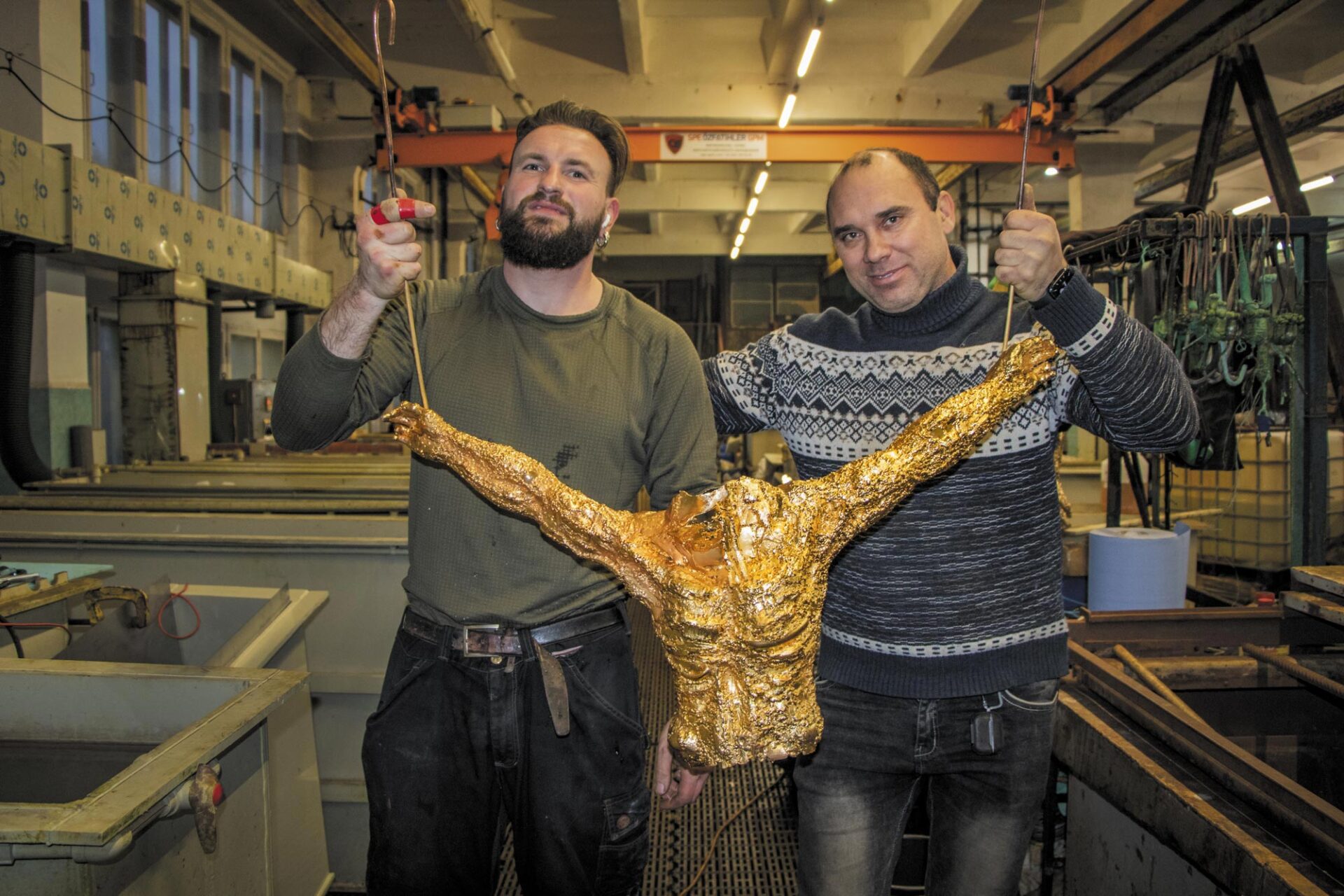
The project involved highly skilled Ukrainian craftsmen. Thousands of fragments were welded into the monumental sculpture by Victor Bielchyk, an Odesa-based welding virtuoso who developed a unique method of welding cast iron fragments, many of which Melnikoff held in place with tweezers. The gilding was performed by Sergey Naumenko and Vitaliy Zhuk at the Kyiv enterprise “Metal Chemistry.” To coat the 1.5-meter figure with gold, Naumenko even created a custom electrolysis bath for the task.
The most remarkable feature of the golden figure is the bloody wound beneath the rib, filled with blood-red enamel commonly used by jewelers. However, on this sculpture of Christ, where the enamel is applied, a drop of “blood” occasionally forms and falls. Only theologians can explain this phenomenon.
The Golden Crucifix is often compared to the renowned artwork “For the Love of God” by British artist Damien Hirst — a platinum skull encrusted with 8,601 diamonds, sold for $100 million. However, there is a fundamental difference between these two works.
While Hirst’s “Diamond Skull” symbolizes luxury and the fetishization of material wealth, Melnikoff’s Golden Crucifix speaks of sacrifice, suffering, and hope. Created from the “ashes of war,” its symbolism is profound, serving as a reminder of conflict’s consequences and the need for peace. Here, gold is not a symbol of wealth but a reflection of faith and hope.
The title of Hirst’s work, “For the Love of God,” is contrasted by Melnikoff’s “For the Love of Humanity,” offering a deeper meaning: art created in service of people as opposed to art aimed at human vanity.
Hirst used the skull to symbolize life’s vanity and transience, while Melnikoff, in crafting his Christ the Savior from the fragments of war munitions, emphasizes the value of every human life, represented by the multitude of shards assembled together.
The crucifix, as a philosophical object, embodies Christ’s sacrifice and suffering for the salvation of humanity, becoming a symbol of hope and faith, in contrast to Hirst’s glamorous materialism focused solely on monetary value.
The gold coating of the figure ennobles it, infusing it with the eternal light of life. It serves as the artist’s act of consecration, elevating the sculpture of Christ to a level comparable to, or even surpassing, a church ritual. The figure of Jesus Christ, “woven” through electric welding from 20,000 fragments of mines and shells, embodies both the fragility and the resilience of life. This unique artistic approach emphasizes the significance of each fragment, serving as a poignant reminder of the immense sacrifices demanded by the horrors of war.
The use of gold in the figure of Christ not only enhances its aesthetic appeal but also symbolizes the purity of faith. In Mariia Universaliuk’s remarkable portrait, the artist appears nude, gazing intently into the face of Christ, newly created him from the “ashes of war.” In this powerful moment, the artist engages in a silent, deeply personal dialogue with God, wordlessly seeking answers to the causes of the bloody tragedy.
A special symbolism is added by the traditional Ukrainian embroidered towel (rushnyk) wrapped around Christ’s waist, emphasizing the artwork’s Ukrainian roots and presenting the sculpture as the Savior of Ukraine. The rushnyk is a symbol of national identity and spiritual connection between the living and the dead in Ukrainian culture.
Given its historical significance for the Christian world, art historians compare the Golden Crucifix to masterpieces of the Renaissance. In recent centuries, no religion has produced such a significant spiritual relic. In this sense, the Golden Crucifix can be equated with the works of Raphael and Michelangelo.
The “Cross of Peace” with the Golden Crucifix, already recognized by art experts as one of the most significant contemporary works, has all the makings of becoming a new wonder of the world.
Learn more about this masterpiece from the brochure available here.
Photographs were taken by Mariia Universaliuk