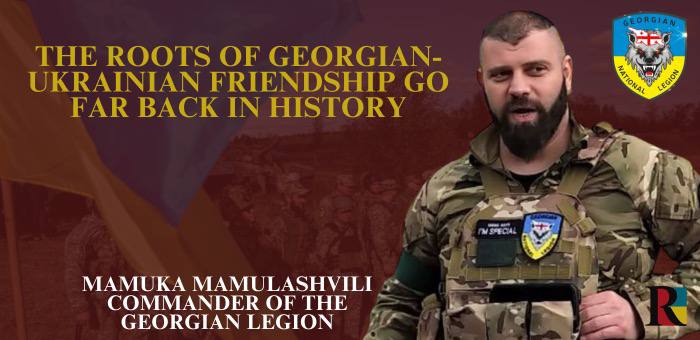


Representatives of different countries and nationalities are helping Ukraine in the Russian-Ukrainian war. Georgians have been among the first foreigners to defend Ukraine’s independence with arms since 2014. In 2014, the Georgian National Legion was created, and in 2016, it became part of the Armed Forces of Ukraine. In 2022, the Georgian National Legion became a special strategic unit of the Defence Intelligence of Ukraine. The founder and commander of the Georgian Legion, Mamuka Mamulashvili, at the age of fourteen, participated in the 1992-1993 war in Abkhazia, and,from 2009 to 2012, was an advisor to the Minister of Defense of Georgia. He actively supported the events on the Maidan (2013-2014) and arrived in Ukraine in 2014, where he founded the Georgian National Legion. Mamuka Mamulashvili was awarded the Order of the People’s Hero of Ukraine, the Order of Courage, the Ivan Mazepa Cross, the Patriarchal Medal “For Sacrifice and Love for Ukraine”, and the Order of Vakhtang Gorgasali, III degree (Mamuka was the only one to be awarded in his teens).
Yevhen Dzhumyga, a journalist at The Ukrainian Review:
Good morning. Thank you for agreeing to this conversation. And I am grateful for your defence of Ukraine. First, I would like to ask you about your health, given that a month ago there was information on the Internet about poisoning.
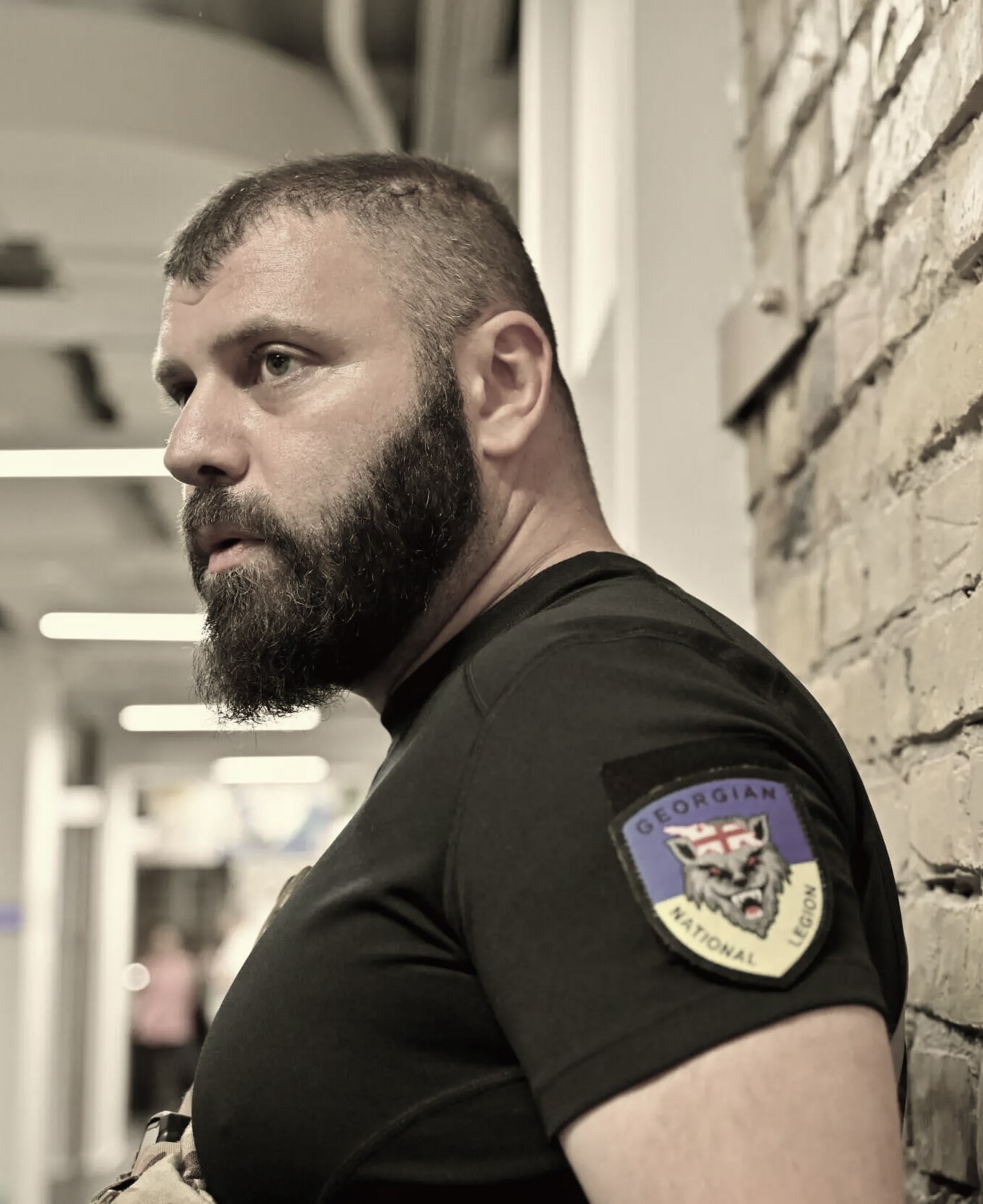
Mamuka Mamulashvili, founder and commander of the Georgian Legion:
Good morning. My health is still the same. I was not able to start active treatment, given that a forensic medical examination was to take place. Blood tests must be taken, but the police are in no hurry to do it. And I can’t start full treatment without it. So I’m waiting for the police to react and start doing their job properly.
The roots of Ukrainian-Georgian friendship
D.Y.: My first question is from my personal experience. A long time ago, in 2012, I was in Georgia, and I was very impressed by the attitude of Georgians towards Ukrainians, especially when the locals found out that we were from Odesa. It was no longer just hospitality, but a feeling that Georgians and Ukrainians are related peoples. We were repeatedly helped, treated, given rides, etc. After that, when I travelled, I never saw anything like that. How can you explain this attitude towards Ukrainians in Georgia?
M.M.: You know, I think the roots of the Georgian-Ukrainian friendship go very far back in history. And as for Odesa, I can explain to you why this is happening. The Ukrainian military evacuated Georgian refugees from Abkhazia and evacuated them to Odesa, among other places. A lot of Georgian refugees were sheltered in Odesa in the 1990s. Georgians remember this, they know that Ukrainians were the only ones who helped Georgia, who helped to practically evacuate more than 50,000 refugees. I would call it just friendship.
D.Y.: Thank you. As for the 1992-1993 war, it is known that there was not only a mission to help refugees, but there were also Ukrainian volunteers who fought on the side of Georgia. It was the UNA-UNSO [Ukrainian National Assembly – Ukrainian People’s Self-Defense, a Ukrainian right-wing radical political party and public organisation]. Approximately 30 volunteers were awarded the highest honour in Georgia – the Order of Vakhtang Gorgasali [Vakhtang Gorgasali – Georgian king, founder of Georgian statehood-ed.] Perhaps you are familiar with the people who participated in this struggle and can tell us more about it.
M.M.: I know these people. One of them, one of the last, who lost his leg, he came to Ukraine recently, a year ago, and died in Ukraine. He was a volunteer from the UNA-UNSO, who practically stayed behind after the fighting in Georgia. There were about a company of Ukrainians. They were the only foreigners who helped Georgia at that time. I think many Georgians who know history remember this very well. Indeed, there was such a unit, and the Ukrainian leadership provided the main assistance, headed by Leonid Kravchuk [the first president of independent Ukraine (1991-1994)-ed.]
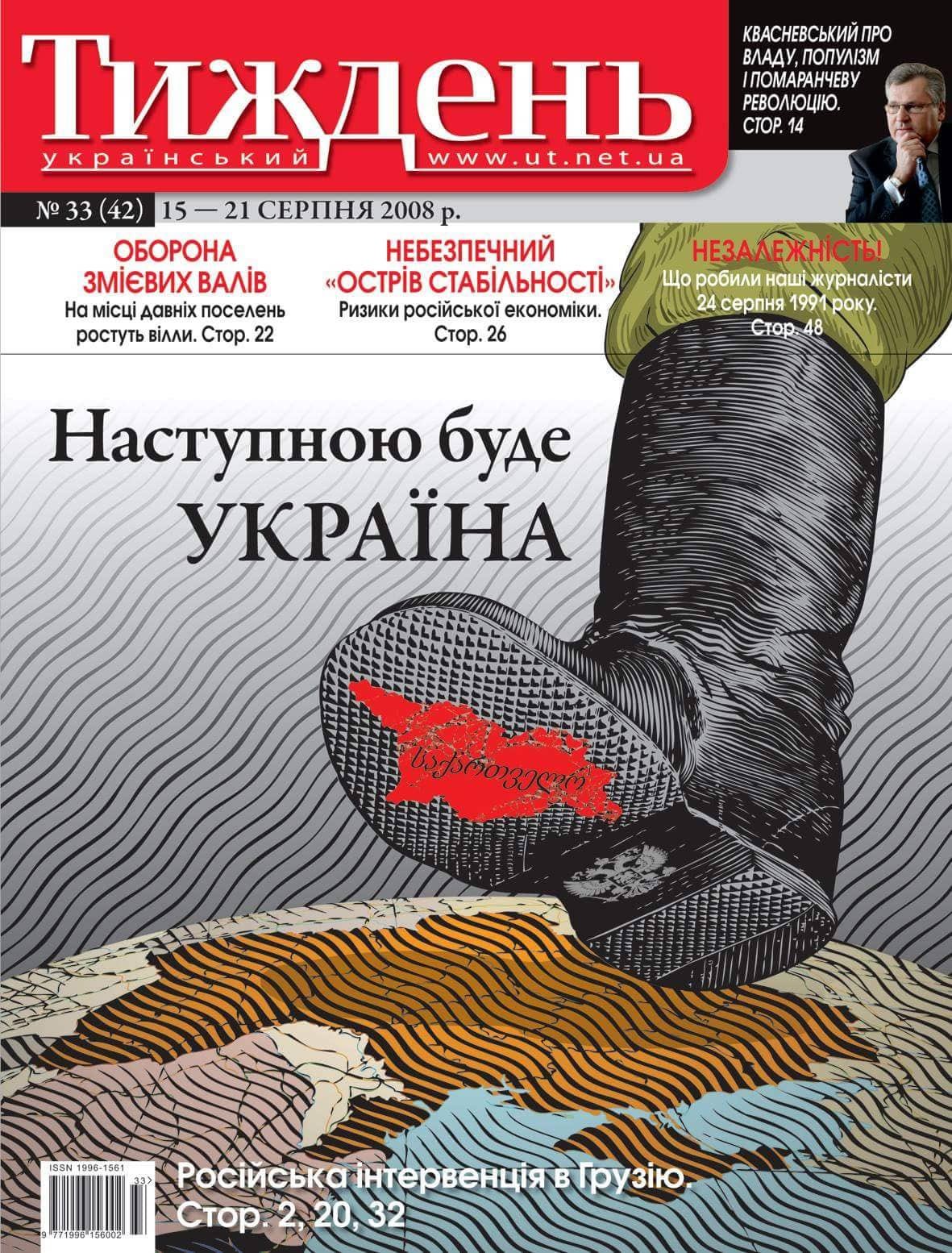
D.Y.: What about the Russian-Georgian war of 2008, was there any assistance from Ukraine? I remember manifestations of solidarity with Georgia, in particular, rallies in Odesa, when local residents gathered on Soborna Square with Georgian flags.
М.М.: I know that Ukraine has transferred several Buk air defence systems and other weapons.
“The Georgian Legion, as it has been since the beginning of the war in 2014, is the largest foreign formation”
D.Y.: As far as I understand, there are not only Georgians in your unit. What other nationalities are represented, and what is their motivation?
M.M.: You know, at this moment, the Georgian Legion, as it has been since the beginning of the war in 2014, is the largest foreign formation. Now, we have just expanded and started accepting foreigners. It includes guys from more than 30 countries. Foreigners, and I don’t call Georgians foreigners anymore, from Western countries stay no more than 3-6 months at most, after which they have to be replaced by recruits who come from Georgia. Previously, the ratio of Georgians and representatives of other nationalities was 70% and 30%, but today it is 85% and 15%. These are mainly England, the United States and others. We have, for example, a Japanese division.
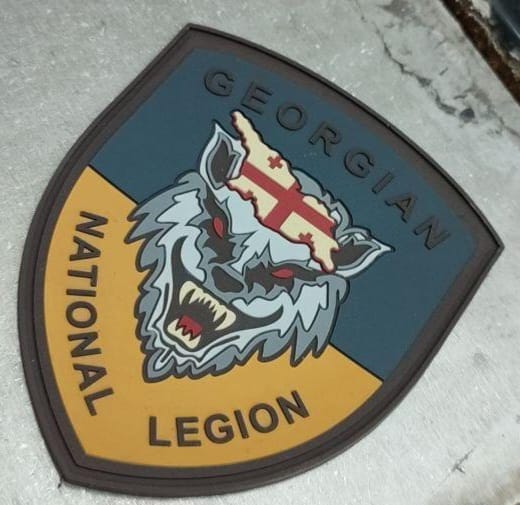
D.Y.: Regarding the chevron of your legion: I understand that you designed it. Could you explain why it depicts a wolf?
M.M.: The wolf has always been a symbol of Georgia, it was used in pre-Christian times and for the national flag of Georgia. The wolf is a symbol of Georgia’s unity and indestructibility.
D.Y.: Since 2022, the Georgian Legion has been a part of the Defence Intelligence of Ukraine. Could you tell us a few words about the operations you have participated in?
M.M.: Yes, we were the first to meet the enemy in Gostomel, even before we were part of the Defence Intelligence of Ukraine. Unfortunately, the supply of weapons in Gostomel was late, and we faced quite a few difficulties because the curators could not help us in time. They sent us to Gostomel, and we had to manage on our own. Everything was quite difficult because we did not expect to see the enemy so close, even for us, it was a non-standard phenomenon.
Later on, we took part in combat operations in the ranks of military intelligence and other units of the Armed Forces of Ukraine, and I would say quite successfully. Russia has opened criminal cases against 300 fighters of the Georgian Legion, which shows the effectiveness of our work.
D.Y.: During the years of the Russian-Ukrainian war, have you met the units that took part in the military aggression against Georgia in 1992-1993 and in 2008?
М.М.: Yes. We have met units that participated in the war against Georgia in 2008 and 1992-1993 as well, because, as you know, the so-called Abkhazian unit was formed in the Russian army. I would say that these are the same people, the same history and very clear parallels between these wars.
“This is not the Georgian government, but the Russian government in Georgia”
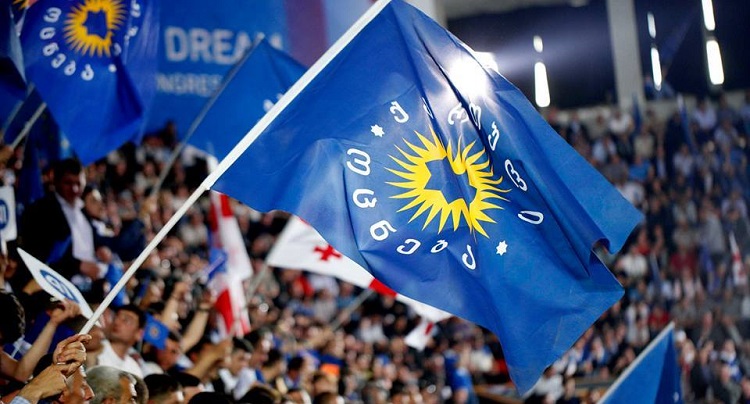
D.Y.: In recent years, our society has paid a lot of attention to what is happening inside Georgia itself. Last year’s protests in Georgia were in our public space. What is your attitude to the Georgian authorities today? And do you think that the Georgian Dream [a pro-Russian political party in Georgia founded by Russian oligarch Bidzina Ivanishvili, which has a majority of seats in the Georgian parliament – ed].
M.M.: You know, Ukraine has a negative attitude towards the Georgian government, just like we do [referring to the Georgian National Legion], and the Georgian government has a negative attitude towards us. I would say that it is not the Georgian government, but the Russian government in Georgia. These are people who are almost one hundred percent dependent on Russian finances, dependent on the Kremlin’s directives. And for the Georgian government, as well as for us, they are unacceptable. We have always had problems with the Georgian government since 2014. They tried to prevent us, they passed information about our fighters to the Russian special services, they sent and are sending ethnic Georgians to the Georgian Legion, who work for the special services and pass on information. Information about 300 fighters was passed on with the help of the Georgian government and the people it sends to the legion.
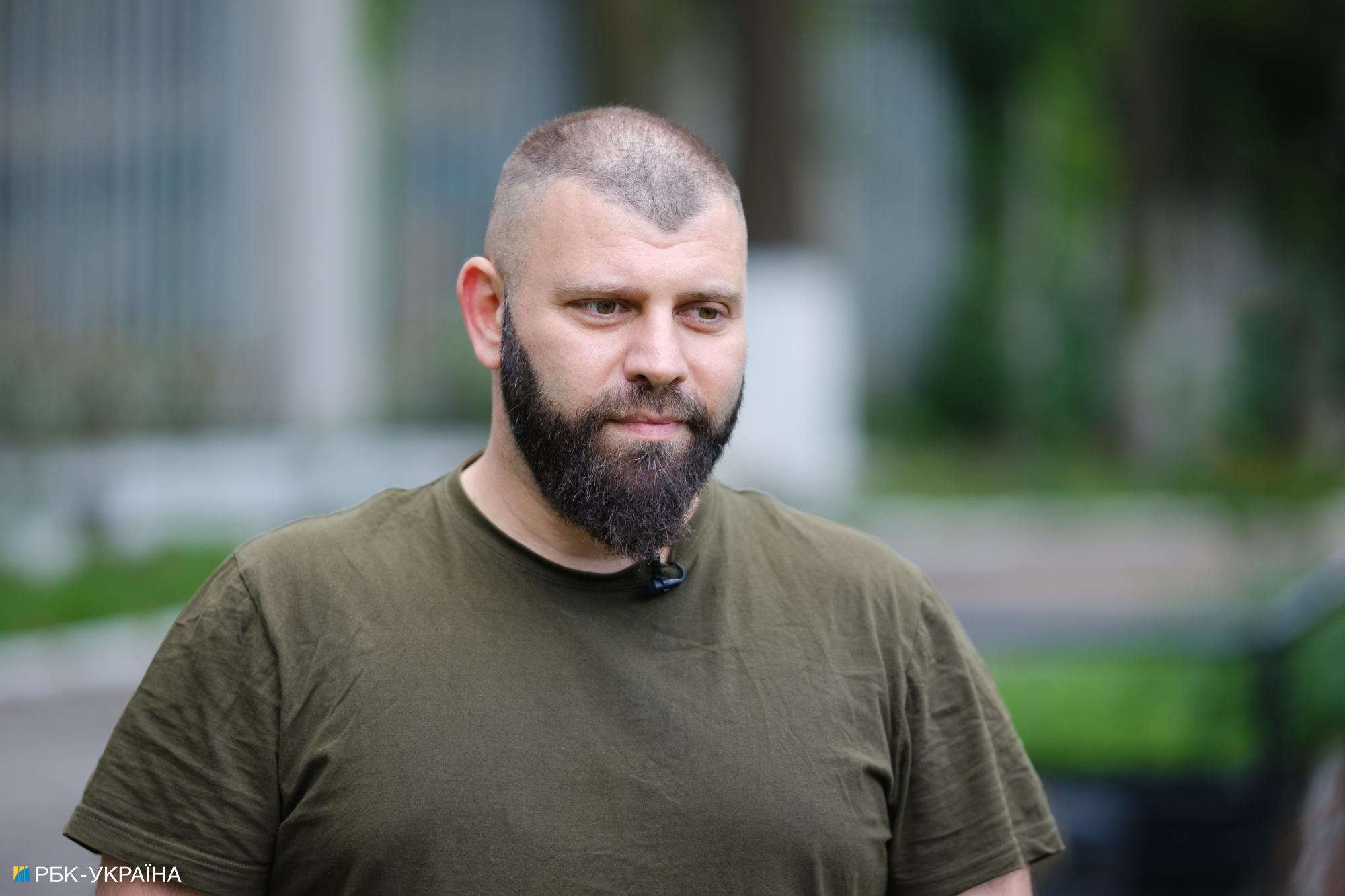
\ RBC-Ukraine
D.Y.: Do you think that these protests, in which Georgian youth took an active part, could be repeated in October this year?
M.M.: It will definitely happen again, because, in principle, Georgian society has said “no” to Russia and everything Russian. I am sure that the Georgian government will also falsify these elections as it falsified the previous ones. This will cause quite serious unrest in Georgian society. I hope that this will all end without bloodshed, but as we know, Russia does not end such activity of the people without blood.
D.Y.: One last question. It is quite obvious that Russia is an empire, and any empire sooner or later falls apart and ends. I’m not going to ask when it will happen, but what factors can contribute to it? What is needed for Russia to collapse and cease to exist in the format of an empire in which it exists?
М.М.: This requires convincing those nations occupied by Russia that it is no longer a threat. Step by step, Ukraine is doing this by destroying those war lovers, who come to Ukraine. Unfortunately, this most difficult fate has just fallen to Ukraine – to show all the occupied peoples that it is possible to live without Russia. Basically, as soon as the Caucasian peoples, and all the other peoples who currently have nothing to do with the Russian Federation, start some kind of activity, I think that these will be the first steps of disintegration. The prerequisites for this are already there, because we see the activity of various kinds of militants on the territory of Russia, who demand independence. I cannot say whether they will have the strength and morale to complete this, but the processes have already begun.
D.Y.: Thank you for this conversation.