The involvement of Biden in the “state coup” in Ukraine: a video review from “The Glenn Show”
19.01.2024
Share:
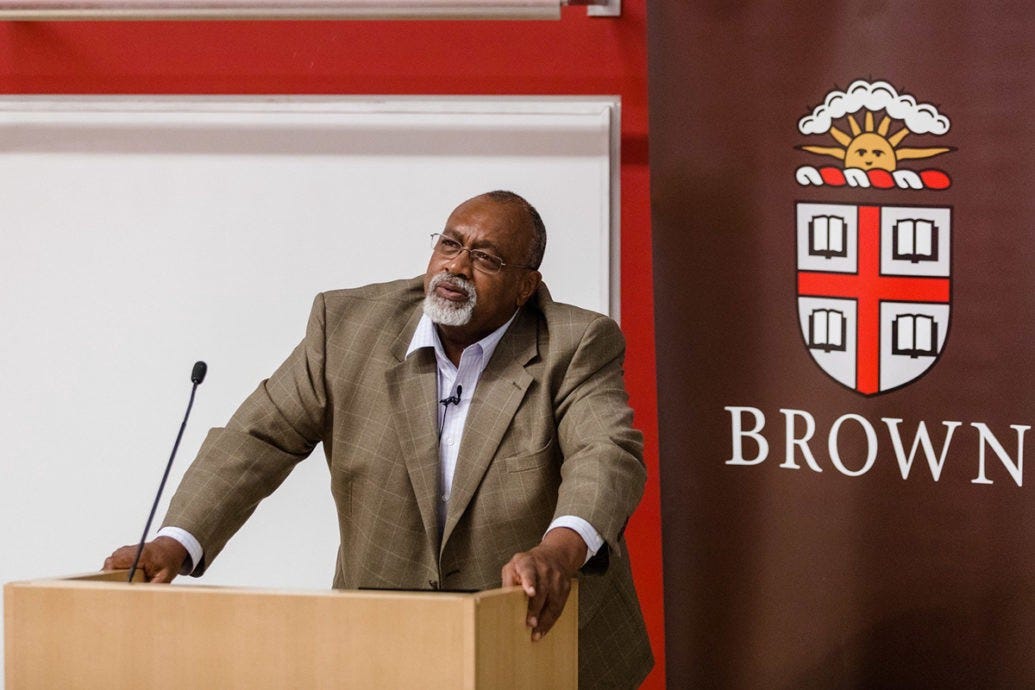
Glenn Loury is a senior fellow at the Manhattan Institute for Policy Research, he runs a YouTube channel called “The Glenn Show.” Each week he releases conversations on various political and social topics.
Glenn Loury, The Free Press
In one of his videos, he, along with John Mearsheimer, a political scientist and professor at the University of Chicago, discussed the Russian-Ukrainian war. Here are some quotes from their conversation:
“There is no evidence that he [Putin] intended to conquer Ukraine and incorporate it into Greater Russia. There is no evidence that he had imperialistic tendencies. In fact, the cause of this war was NATO expansion. Uncle Sam [the United States] was interested in creating a Western war on Russia’s border, bringing Ukraine into NATO and the EU, and then supporting the color revolution in Ukraine, which would turn it into a pro-Western liberal democracy.”
“The United States ignored Russia’s concerns and continued to insist on NATO expansion and EU enlargement. If we had not expanded NATO or attempted to expand NATO, Ukraine would most likely be intact today, Russians would not have annexed Crimea in 2014, and they would not be destabilizing Ukraine, annexing territory, and incorporating it into Russia.”
“He [Putin] is not a bad guy; he is not the reincarnation of someone terrible. There is no clear black-and-white line where Ukrainian sovereignty is in a good place. Putin did everything possible to avoid this war; he was deeply interested in finding a settlement through negotiations. He did not want to conquer Ukraine, but he felt that we were in the process of turning Ukraine into a de facto NATO member.”
“The fact that Russians are performing much better on the battlefield today ironically minimizes the prospects of escalation.”
“It is important to understand that when he (Biden) was vice president, President Obama appointed him to handle the Ukraine portfolio. Biden effectively collaborated with Victoria Nuland and others to help orchestrate the state coup in 2014 (in Ukraine). This shifted the crisis, which has now escalated into a war. Joe Biden has been deeply involved in Ukrainian affairs for a long time.”
Glenn Loury and John Mearsheimer often use the phrase “conflict in Ukraine,” and they refer to the war in Donbas as a “civil war.”
The Ukrainian Review analyzes their statements.
“Putin didn’t plan to seize Ukraine and was open to diplomacy”
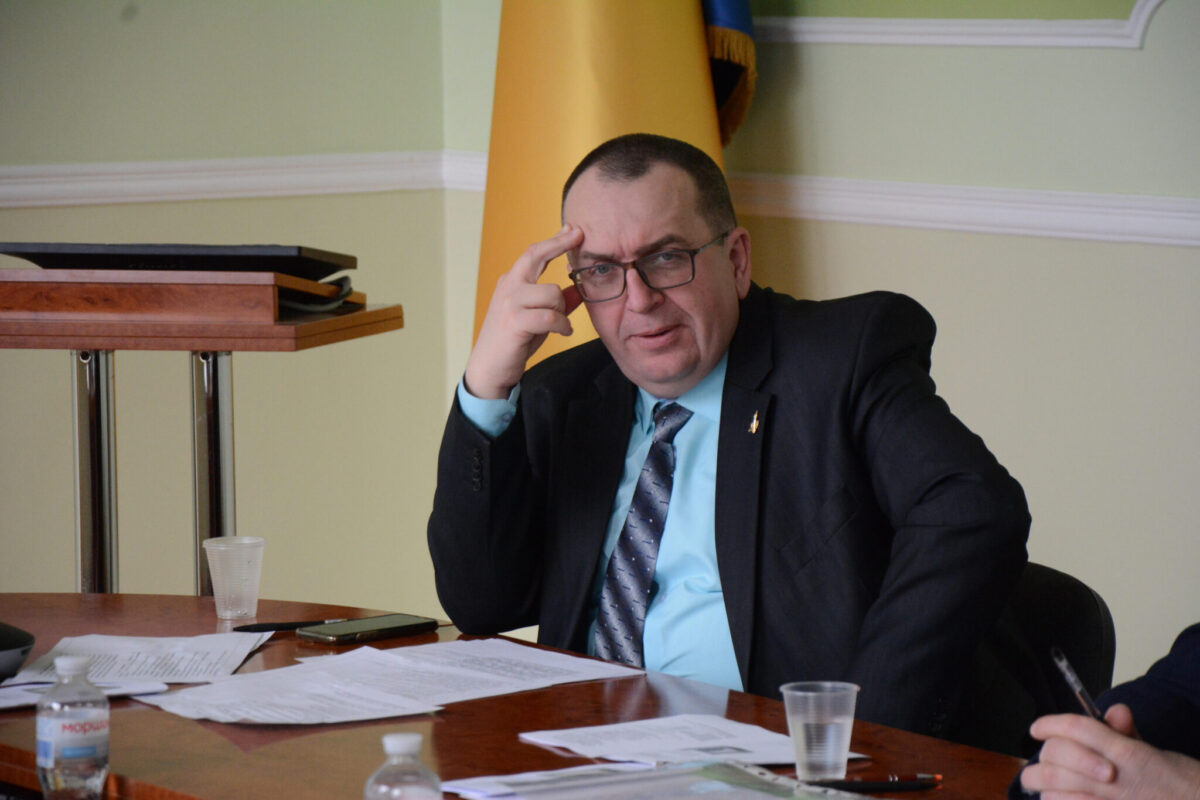
Andrii Kharuk, Doctor of Historical Sciences and professor at the National Academy of Ground Forces named after Petro Sahaidachnyi, commented on this thesis:
Andrii Kharuk, Doctor of Historical Sciences and professor at the National Academy of Ground Forces named after Petro Sahaidachnyi
“It should be noted that the war against Ukraine by Russia didn`t begin in 2022 but much earlier, starting with the denial by then-press secretary of the president Boris Yeltsin, regarding the integrity and inviolability of the borders of the former USSR countries. In other words, even Russia’s military actions in 2014 were just a continuation of the escalation of the policy it had been pursuing since the 1990s. It simply did not have the material and physical capabilities to implement it back then. As soon as the opportunities arose, thanks to gas and oil dollars, in the 2000s, Russia began to restore the combat readiness of its army and accordingly prepare its armed forces for aggression.
The initial attempts involved the conflict around Tuzla Island [2003 – ed.]. It was Russia’s attempt to encroach upon internationally recognized Ukrainian territory. At that moment, it was decided that perhaps it was too early to resort to decisive actions.
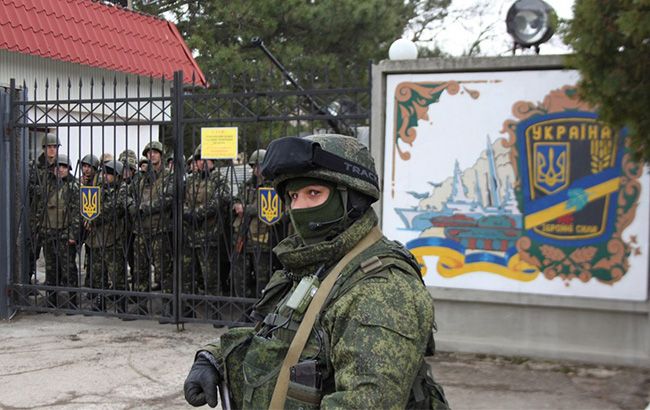
In 2014, this was actually realized. The occupation with the subsequent annexation of Crimea took place, which became an act of direct armed aggression, not to mention the subsequent support for collaborationist forces in Donbas and other regions. The resistance of Ukrainian civil society quickly suppressed these uprisings in most regions, except for parts of Donetsk and Luhansk regions where Russians found it easiest to assist. As for negotiations, the question arises: what should have been the subject of these negotiations? What to talk about? Should Ukraine recognize that Russia annexed part of its territory? The content of the negotiations is unclear from the perspective of international law and common sense.”
Annexation of Crimea by Russia in 2014
The theses that Putin did not plan to seize Ukraine and was open to diplomacy are erroneous. There are several arguments against this.
Firstly, Putin had been threatening Ukraine with military aggression for many years. He repeatedly stated that Ukraine is an integral part of Russia and that its entry into NATO is a ‘red line’ for Russia. These statements indicate that Putin was prepared to use military force to achieve his goals.
Secondly, Putin amassed troops on the border with Ukraine for many months. This indicates that he was preparing for an invasion, not negotiations.
Thirdly, Putin did not agree to any of Ukraine’s proposals for resolving the situation. On the contrary, he presented an ultimatum to Ukraine, which essentially meant its capitulation. This indicates that Putin was not interested in negotiations but only in achieving his goals through military aggression.
Here are specific examples that support these arguments:
In 2008, Putin stated that Ukraine is an ‘artificial state’ and that its borders are ‘doubtful.’
In 2014, russia annexed Crimea and started an armed conflict in Donbas.
In 2021, Putin initiated massive military exercises on the border with Ukraine.
In February 2022, Putin presented an ultimatum to Ukraine, demanding that it abandon the aspiration to join NATO, recognize Crimea, and acknowledge the Donetsk and Luhansk People’s Republics.
The Russian armed forces committed aggression against Ukraine
“In response to these demands, Ukraine offered Putin a series of compromises, including postponing NATO membership for 15 years, security guarantees from the U.S., UK, and other countries, and holding referendums in the Donetsk and Luhansk regions. However, Putin rejected these proposals.
Dmytro Franchuk, political analyst.
“Therefore, there are enough grounds to assert that Putin indeed planned military aggression against Ukraine and was not open to diplomacy. His actions indicate that he was ready to use force to achieve his goals,” – added Dmytro Franchuk, political analyst”.
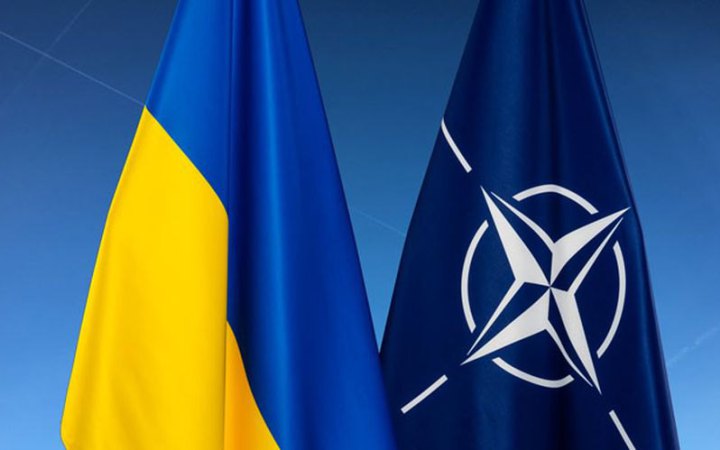
“The reason for the war is NATO expansion”
This thesis has been repeatedly challenged by journalists from The Ukrainian Review. In particular, we reported on how russia threatened the world regarding Ukraine and Georgia’s entry into the Alliance during the NATO summit in 2008.
Joining NATO is a strategic goal of Ukraine, but until 2022 Ukraine was far from achieving this goal, so NATO expansion as a reason for Russia’s attack is a false argument
On February 21, 2022, three days before the full-scale invasion of Ukraine by the russian federation, DW journalists wrote: “all of Ukraine’s attempts to approach NATO membership have so far been unsuccessful.”
In other words, it is at least incorrect to speak of the start of the war due to NATO expansion at the expense of Ukraine. For Russia, the absence of Ukraine and Georgia provided permission for military aggression [against Georgia in 2008, against Ukraine in 2014].
“Biden organized a ‘state coup’ in Ukraine in 2014”
About the events of 2014 in Ukraine and the possible “involvement of Biden,” journalist Yevhen Lisichkin from the fact-checking project “Behind the news” explains:
“The events of 2013-2014 on Maidan were a popular protest, and there were plenty of moments and opportunities for the then government not to escalate the confrontation. No evidence of Maidan being financed by the US State Department has been provided. All of this remained at the level of conspiracy theories and unhealthy fantasies of Russian propagandists”.
Yevhen Lisichkin, fact-checking project “Behind the news”
“In general, the ‘state coup in Ukraine in 2014,’ ‘unconstitutional coup,’ ‘violent removal of legitimate power,’ ‘civil war’ are messages that have been one of the most widespread narratives of russian propaganda for almost the past 10 years. The russian government refers to the 2014 Revolution of Dignity and the events on Maidan as a ‘state coup,’ as repeatedly emphasized by the russian dictator Vladimir Putin. At the same time, he did not forget to add that ‘Maidan was organized by the US with funds from the State Department”.
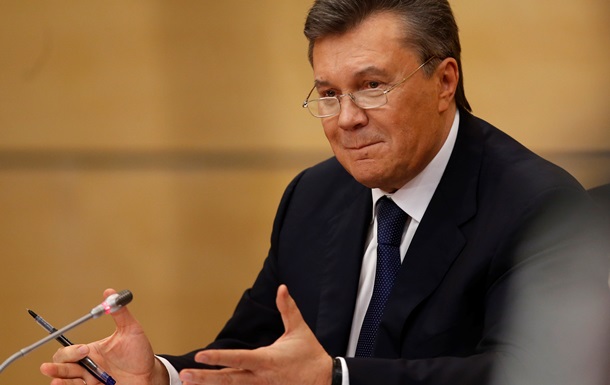
Former President of Ukraine Viktor Yanukovych, who fled Ukraine in February 2014
“At the end of November 2013, the political situation in Ukraine began to deteriorate. Tensions reached a peak when the then-president Viktor Yanukovych refused to sign the Association Agreement and the Free Trade Area with the EU. This happened despite the fact that, according to polls, the majority of the country’s population supported European integration. Later, Yanukovych admitted that he had no intention of signing this Agreement.
On November 21, 2013, discontented Ukrainians began to gather on Maidan in protest against the government’s actions. The protest started as resistance to the abandonment of the legislatively established European course. On November 30, “Berkut” brutally dispersed the protesters of Euromaidan, the majority of whom were students. At least 79 people were injured, and three went missing”.
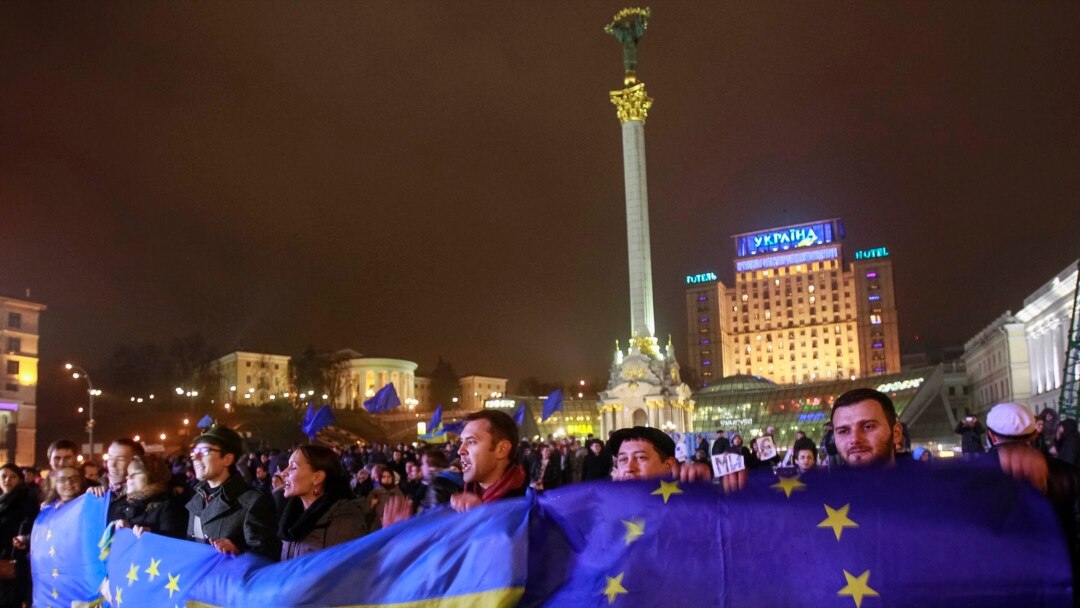
November 21, 2013. Protesters on the square express dissatisfaction with Yanukovych’s decision to refuse to sign the Association Agreement with the EU. Source: Reuters
“The next day, hundreds of thousands of people came out to support the protesters. Among their demands was the punishment of those responsible for the bloody dispersal of Maidan. The action was named the “March of Millions.” An estimated 500,000 to one million people gathered for the rally on Independence Square. On the same day, the first clashes between the police and protesters took place in Kyiv. Protests were supported in various cities across the country, and Maidan turned into an indefinite action in the center of Kyiv, with “People’s Veche” taking place every Sunday.
One of the main reasons for the protests was the excessive concentration of power in the hands of Viktor Yanukovych and his “family,” as well as Ukrainians’ unwillingness to accept the transformation of the country into not only de facto but also de jure one of russia’s colonies.
On the night of December 11, 2013 despite Yanukovych’s assurances made to the EU’s special representative Catherine Ashton, special forces and internal troops launched a mass operation to displace the protesters from their positions. However, they were unsuccessful.
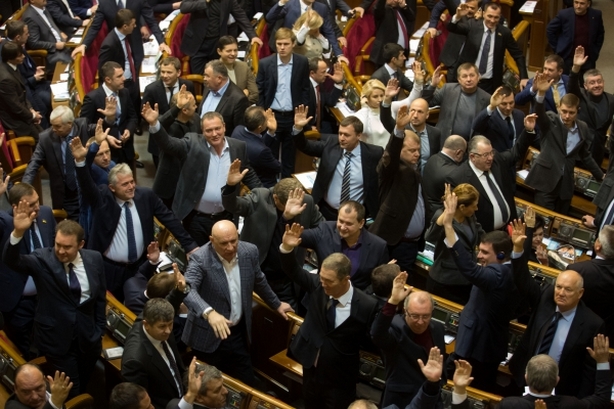
On January 16, 2014, the pro-government majority in the Verkhovna Rada adopted a package of “Laws of Dictatorship,” which, according to most experts, restricted citizens’ rights, gave the government more opportunities to punish protest participants, and aimed to criminalize the opposition and civil society. The laws were passed outside the “Council” system and without discussion. This significantly exacerbated the already tense situation in the country”.
The Ukrainian parliament adopted dictatorial laws in January 2014
“Violent clashes between protesters and the police, internal troops began. At the same time, supporters of the authorities, “unidentified individuals,” special forces, and “titushky” committed crimes: they kidnapped people, tortured Igor Lutsenko, Dmitry Bulatov, killed activist Yuri Verbitsky, publicly stripped and humiliated Mikhail Gavrylyuk with “photo sessions” in the freezing cold. On January 22, the first reports of deaths of protesters [Sergei Nigoyan, Mikhail Zhiznevsky] from sniper bullets appeared.
On February 18, the “Peaceful March” of protesters to the Verkhovna Rada began, and the power confrontation resumed, resulting in several casualties. On the night of February 19, storming of regional administrations, law enforcement departments, and SBU offices took place in Lviv, Ivano-Frankivsk, and Ternopil.
On February 20, 2014 the main events took place on Maidan, where many protesters were killed, later called the “Heavenly Hundred.”
On this day, in the morning, law enforcement officers began an unauthorized withdrawal from Maidan. Around 9 a.m., the protesters went on the offensive and, despite the intense sniper fire, quickly regained all lost positions from the 18th and expanded the controlled area. The most brutal and bloody confrontation took place on Institutska Street, where more than fifty Maidan activists were killed, mainly by sniper bullets.
On the same day, around 5:00 p.m., 239 mainly opposition MPs gathered, who, after lengthy discussions, around 10:00 p.m., adopted a resolution declaring the “anti-terrorist operation” illegal and calling for the withdrawal of all units of law enforcement agencies to permanent deployment locations.
On the same evening, negotiations between European ministers and the opposition with Yanukovych began, as a result of which Yanukovych agreed to early presidential elections no later than December 2014.
It was on February 20, 2014, that Russia began its military operation to annex the Autonomous Republic of Crimea”.
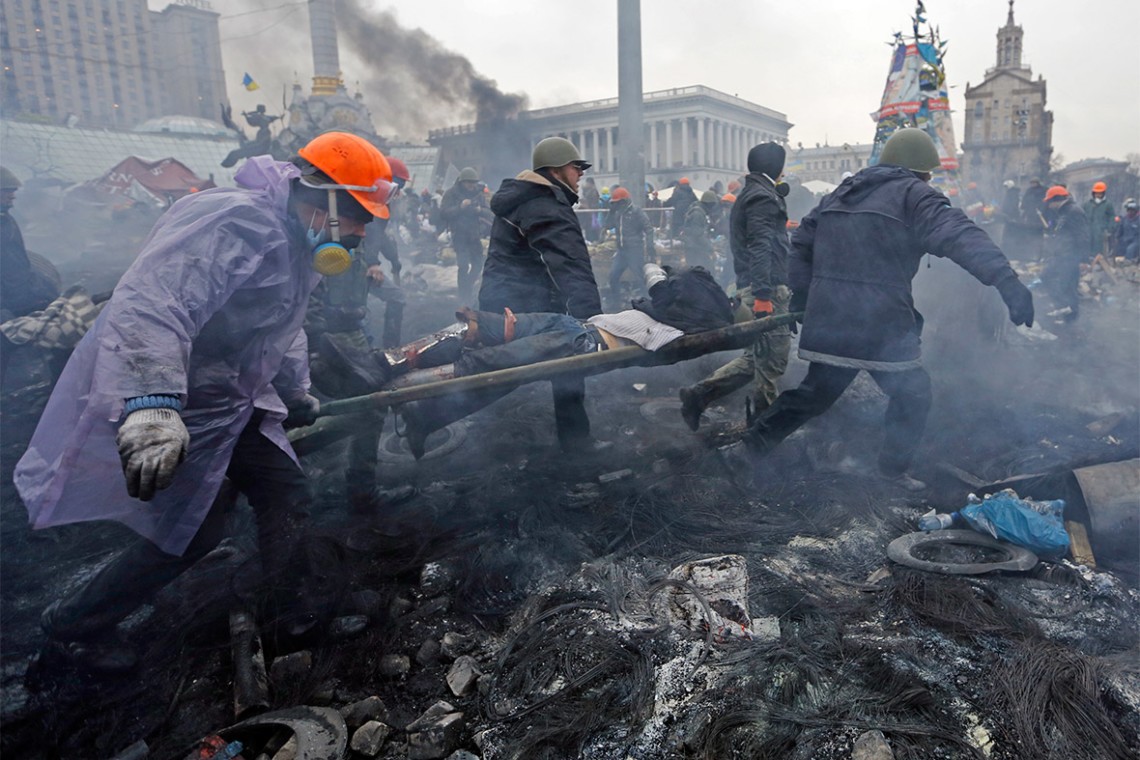
Bloody events on the Maidan in February 2014. Source: Reuters
“On February 22, 2014 the Verkhovna Rada of Ukraine, with 328 votes of people’s deputies [a constitutional majority], removed Viktor Yanukovych from the position of President of Ukraine. They also dismissed several top officials. This means that some deputies from the ruling party also voted to remove Yanukovych from the presidency.
Yanukovych fled from his residence to russia.
The then government also tried to gather its supporters, but most of them were government employees, dependent on the leadership, as well as paid “activists.”
The majority of Ukrainians supported Maidan, so it cannot be called a coup. Protesters never escalated the situation first, always emphasizing that it was a peaceful demonstration.
The change in power in the country occurred through a vote in the highest legislative body, the Verkhovna Rada.
The U.S. government at that time advocated for a peaceful resolution to the political situation in the country. However, Yanukovych’s government constantly escalated the situation, passing “dictatorial laws” and attempting to disperse Maidan, using firearms against protesters. Representatives of the U.S. government visited Maidan, met with activists, opposition leaders, and supported the European integration course.
In May 2014, early presidential elections were held in Ukraine, and Petro Poroshenko emerged victorious. Later that year, early parliamentary elections took place. In other words, no one seized power in the country on Maidan”.
“Successes of the russians on the battlefield reduce escalation”
Mykola Bielieskov, a Ukrainian military and political expert, and senior analyst at the “Come Back Alive” Foundation, disputes Russia’s successes on the battlefield: “Russia has not made much progress in a year, despite the losses. Avdiivka is an illustrative example.”
Mykola Bielieskov, Ukrainian military and political expert, senior analyst at the “Come Back Alive” Foundation,
“Any new captures of Ukrainian territories by the Russian aggressor only delay the time when Ukraine’s sovereignty and territorial integrity will be restored. Ukrainian President Volodymyr Zelensky has repeatedly emphasized that peace and an end to the war in Ukraine are possible only when the country regains full control over the territories within the borders of 1991. Russia’s new territorial captures are the annexation of new territories, and even more unrecognized entities by the world community. The capture of Ukrainian cities, such as Mariupol, Bakhmut, Mariinka, turns these cities into ruins. Therefore, Laurie’s statements look openly pro-russian. The person rejoices in the aggressor’s success, believing that the more he captures, the less motivation Ukrainians will have to resist. This is full tolerance for Russia’s actions and justification of its armed aggression in Ukraine,” adds Yevhen Lisichkin, a journalist of the fact-checking project “Behind the news.”
***
Supporters and spreaders of Russian propaganda, with their statements about the cessation of escalation due to its success, deny international law and give permission for the armed aggression of the Russian Federation. Their theses about Biden’s involvement in the “state coup” and war due to NATO expansion also justify Russia’s already unleashed war.