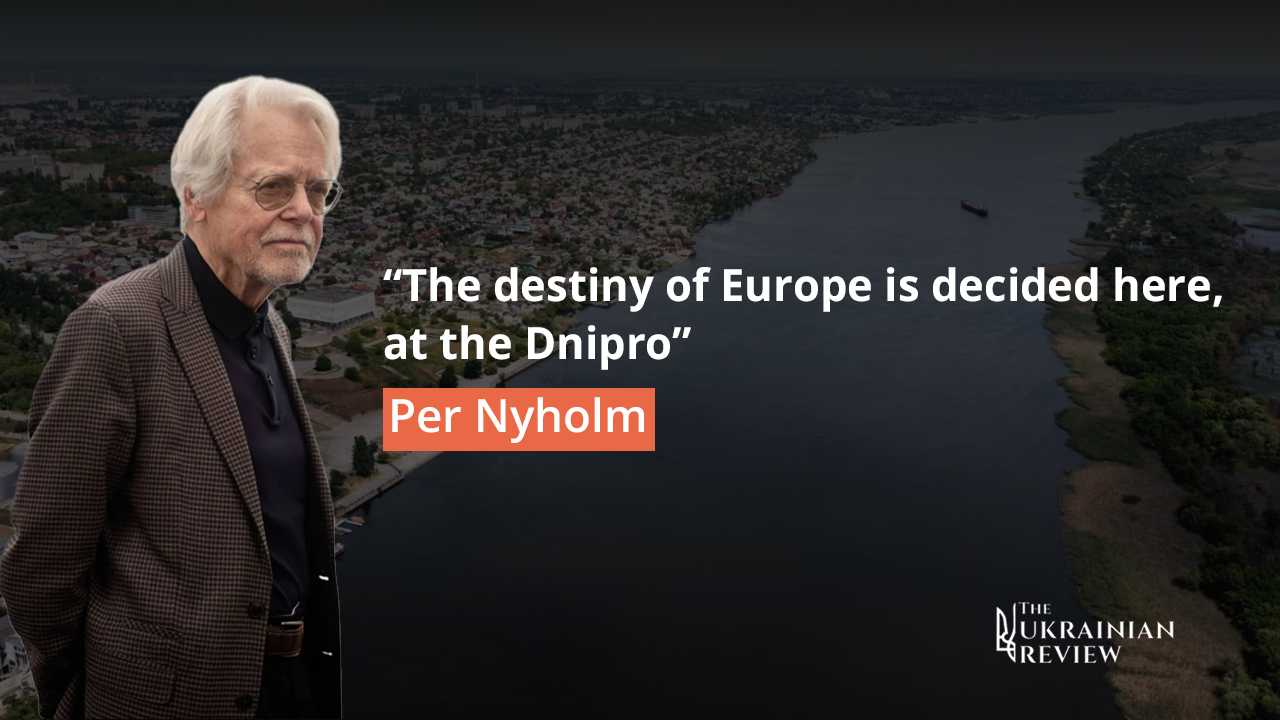


“Kherson is like a burial chamber. No civilians, no traffic. The Russians’ heavy artillery breaks the silence time and time again”.
Kherson
The flat plain stretches as far as the eye can see – and further, much further, from the Baltic Sea in the west to the Pacific Ocean in the east, infinity, no natural boundaries. Germany, Poland, and Ukraine are large European countries, living and breathing inside their political bodies. After Ukraine follows the empire, which does not know where to begin and where to end. What is Russia? European, Asian, Eurasian, hundreds of peoples, a partially failed state.
The night train from Kyiv to Odesa rattles slowly down through the war-torn country, about 500 km in nine hours, time to think, time to read and take a nap. I remember a story told about Anastas Mikoyan, one of the biggies of the now-defunct Soviet Union. This outspoken Armenian is said to have asked scornfully at a meeting of the ruling Communist Party’s Politburo: “What is this country? Two cities and a gypsy camp.”
Arrival at dawn. In front of the station building – Stalinist neoclassicism – Natalia and Glib, my Ukrainian fixers, are waiting with hot coffee and a bag of apples. And the good news that we are expected in Mykolaiv and Kherson. Well done, Natalia! Thanks, my dear. Three hours along the Black Sea coast follow fields and rivers, villages and small towns. Mykolaiv appears, seriously wounded in the almost two-year-old war with Russia, but on its feet, a front city until late 2022, an honor that now belongs to Kherson an hour further on.
The much admired Dmytro Marchenko receives us, well hidden in his lair, deep inside a civilian housing complex. The general, who in the first month of the war stopped the Russians just outside Mykolaiv and in November of last year threw them back over the Dnipro, is quiet and determined, in the best of spirits. A strategic shift has occurred. The Russians defend their gains. They can no longer advance. On the Black Sea, the initiative lies increasingly with the Ukrainians, who are building their bridgeheads on the left bank of the Dnipro, pushing – slowly, slowly – towards the Sea of Azov. If they succeed next year in breaking the Russian supply line from Krasnodar to Crimea and then in sabotaging the vulnerable bridge over the Kerch Strait, the death knell in the Kremlin will begin to ring out. The prospects are not poor. In a few months, the Danish, Norwegian, and Dutch F-16 fighters can begin the job of softening of the Russian hinterland. “See you in Crimea next year,” I say to the general, as we part. “Yes,” he replies. “We will meet for a cup of coffee in Yalta.”
Kherson is like a burial chamber, very few civilians, almost no cars except for the occasional military vehicle. The Russians’ heavy artillery, less than five kilometers out to the east, breaks the silence time and time again. We drive down towards the Dnipro, which glistens silvery in front of us in the bright light of the late morning. Covered by a small forest, we try to reach the river, but suddenly hear a drone buzzing above us. Natalia suggests a retreat. A few minutes later, we drive through a bombed-out suburban housing estate, neat wooden houses turned into firewood. An elderly man hobbles by with his dog and a wheelbarrow. Another violent explosion tells me that at Dnipro the fate of Europe will be decided.
Ukraine defends itself; Ukraine defends Europe, Ukraine is Europe. Ukraine must one way or another, in whole or in part, enter the EU and NATO, and it cannot happen fast enough. We need, here and now, the great historic gesture. If we lose ourselves in bureaucracy and empty promises or in the Middle East War, which is of no vital importance to Europe, less important for Europe, we risk that Russian barbarism will spread beyond all borders, towards Poland, towards Hamburg, to the Atlantic.
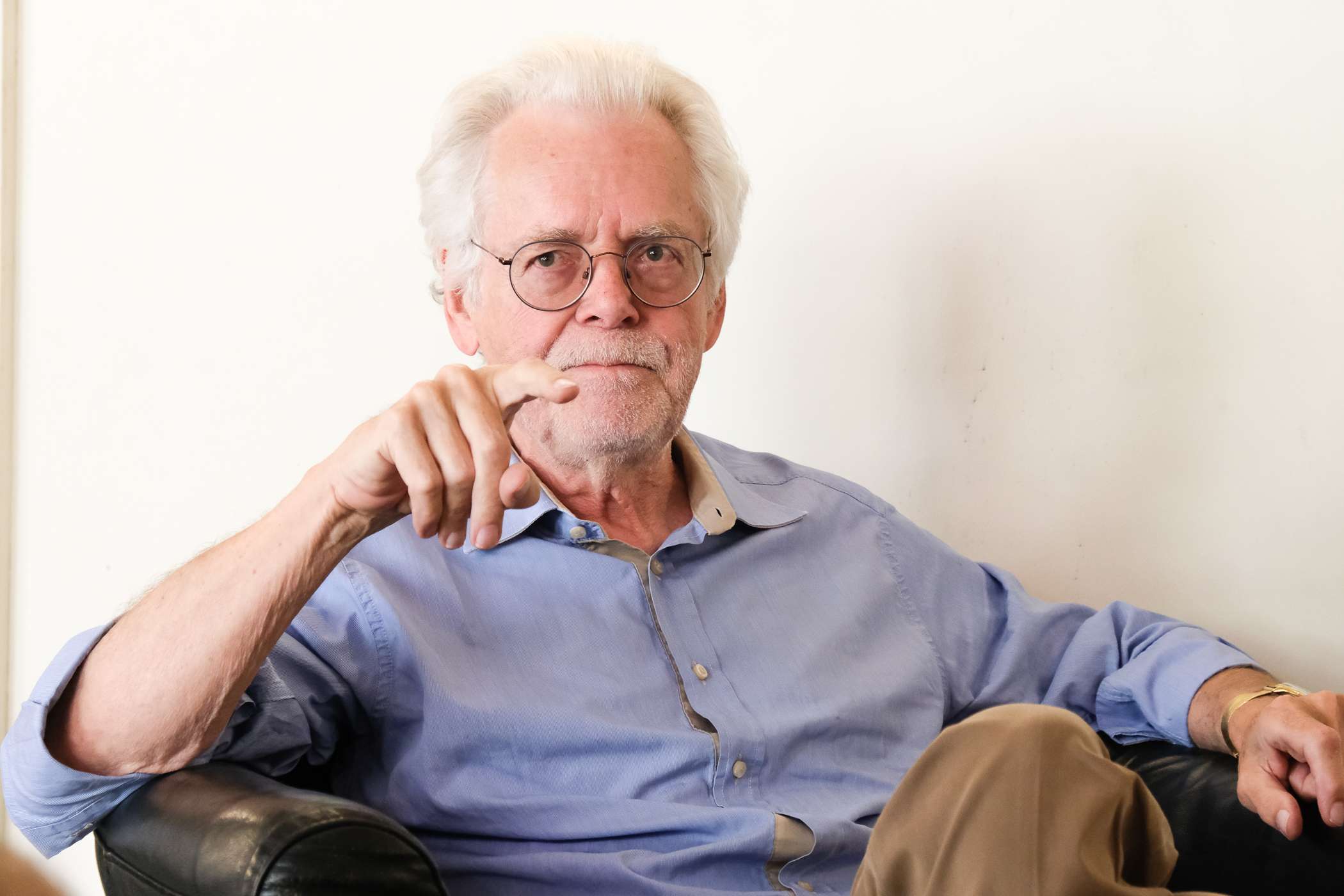
Author: Per Nyholm
Danish journalist since 1960, based in Austria, columnist and foreign correspondent at the liberal Danish daily newspaper Jyllands-Posten. This text was translated and adapted for The Ukrainian Review by Stanislav Kinka.
Per Nyholm´s latest book, “Journeys in the Land of Blood” (Barcelona and Copenhagen, 2023), is freely available to any serious Ukrainian publisher, who might want to publish it.