

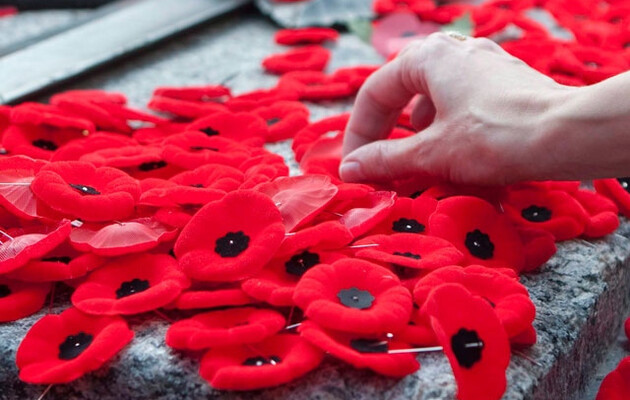
On May 8, Ukraine honors those who died in World War II by celebrating the Day of Remembrance and Victory. This day was officially established in 2023, but Ukraine joined the European memorial tradition more than a decade ago. And it’s not just about the date, but about the essence. The Day of Remembrance and Victory focuses on the human dimension of World War II: the fate of the fighters against Nazism, the memory of fallen soldiers and unarmed victims of the most brutal war in human history. By joining the European tradition of remembrance, Ukraine broke another thread that tied us to the “Russian world,” in which the sporting memory of World War II was transformed into a bizarre, aggressive “cult of victory.” For many years, this cult has been a weapon in Moscow’s hands, directed against both Ukraine and the whole of Europe.
Toxic inheritance
The roots of the modern Russian “Victory Cult” go back to the Soviet Union, namely the period of so-called “stagnation.” The party felt that the expectation of communism no longer worked, and a new ideologue was needed to keep the population of the USSR together. After a short search, they decided to make the memory of the Great Patriotic War the basis of the identity of the “Soviet people.” If earlier the Soviets had been assured that they were the vanguard of humanity, about to break through to communism, now they were offered to unite around pride in the “Great Victory” over Nazism. In other words, the party was trying to divert the attention of the subject population from the “bright future” that was still not coming to the “glorious past.”
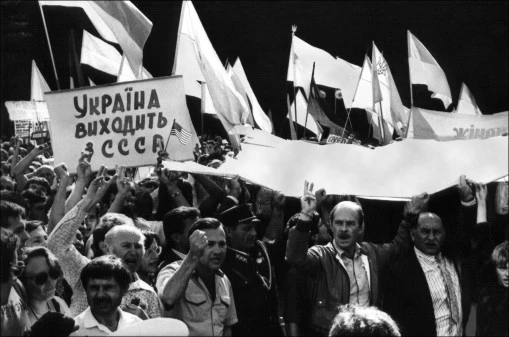
Of course, no one was going to tell people the truth about World War II. Pompous monuments, thousands of copies of books, dozens of films, and crowded celebrations on May 9 were not meant to revive the memory, but rather to bury all the facts and even personal memories that were inconvenient for the Soviet government. For example, the fact that World War II began with a conspiracy between two totalitarian regimes-the Third Reich and the USSR. Or that both Stalin and Hitler viewed Ukrainian lands in the same way-as a resource for their own imperial projects. Or that both totalitarian regimes committed numerous crimes against humanity on the territory of Ukraine. It was only after gaining independence that Ukraine finally had the opportunity to begin to restore its true memory and to comprehend its place in history, particularly in the events of 1939-1945.
The rationale for dictatorship
Meanwhile, in Russia, the process of deeply rethinking its past has not been launched. The chaotic attempts of the 1990s were interrupted by Putin’s coming to power, around whom certain circles of Russian elites began to quickly build a dictatorial regime. Already during Putin’s second presidential term, the Kremlin realized that the continuity of power had to be justified somehow. This could not be done in a democratic way: election fraud, the use of administrative resources, and eventually violations of the constitution were too obvious. Therefore, they decided to use purely ideological rhetoric to justify the dictatorship. This is where the Kremlin’s political strategists recalled the Brezhnev cult of the “Great Victory.”
From every iron, Russians began to be assured that there were enemies around who allegedly wanted to “rewrite history” and “blacken the memory of their grandfathers.” And the only force capable of stopping this blasphemy was first implicitly and then openly declared to be the Russian government, headed by Putin. Already in 2009, the Russian president set up a special “commission to counter attempts to falsify history to the detriment of Russia’s interests,” and then the number of prohibitive measures only increased. The reanimated Soviet cult of the “Great Victory” gained in scope and absurdity, and was ironically called “victory”.
The most eloquent symbol of contemporary Russian “victory” is probably the Main Church of the Russian Armed Forces in Moscow Oblast, dedicated not to any Orthodox saint but to the “75th anniversary of the victory in the German-Soviet war.” Even the proportions of this khaki building are maintained with numerological precision: the height of the bell tower is 75 meters (a reference to the 75th anniversary of the “Great Victory”), the diameter of the main dome is 19.45 meters (1945), and the iconostasis consists of 48 icons – according to the number of months of the war. In fact, the cult of the “Great Victory” has become a kind of civil religion in modern Russia, and thus the Putin regime has received a “sacred” justification. And with it, the war against Ukraine.
“Holy war” against Ukraine
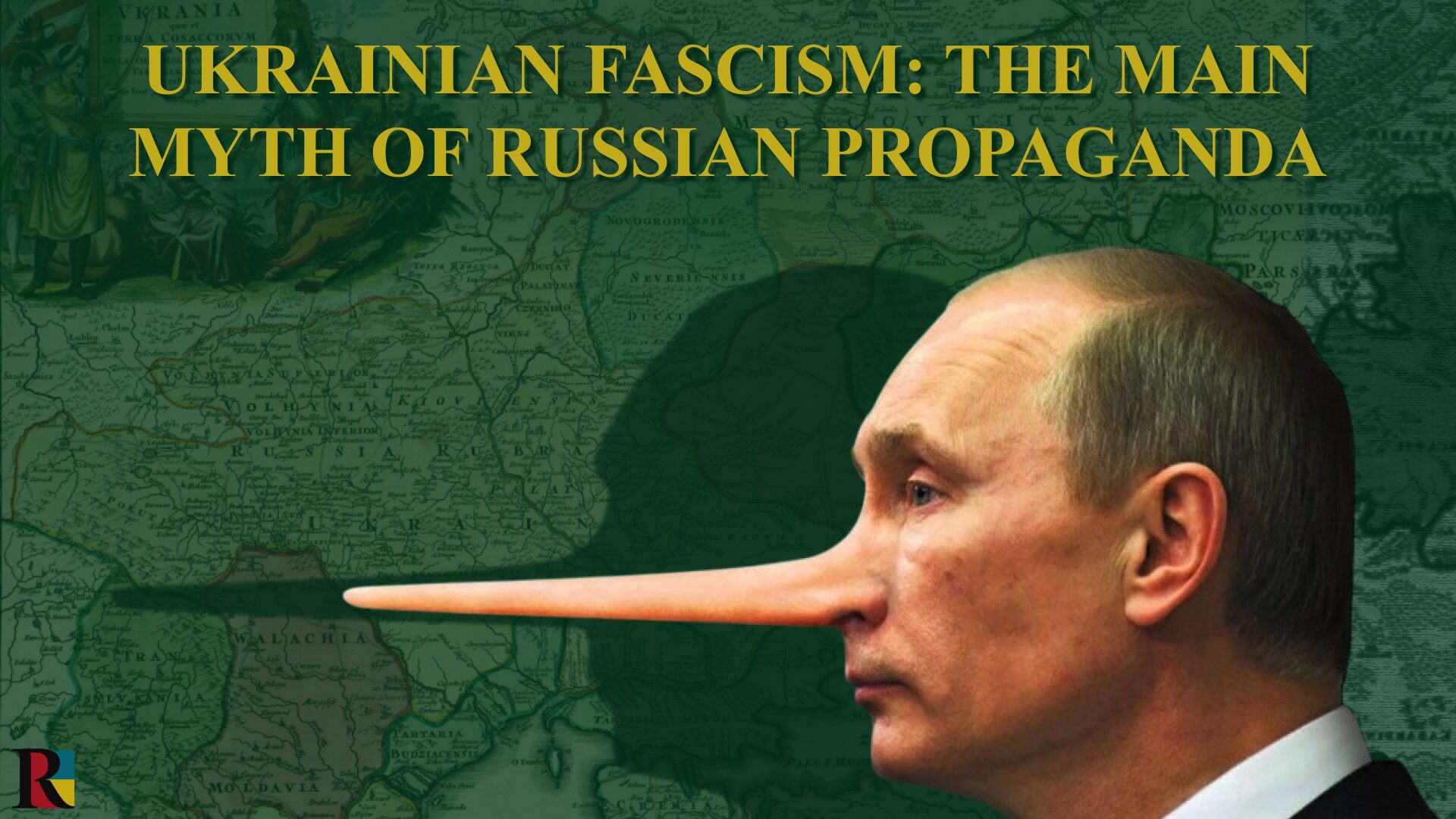
When announcing the outbreak of war, Putin did not say in vain that one of the goals of the so-called “special military operation” was to “denazify” Ukraine. In the ideological vocabulary of racism, the terms “Nazi,” “fascist,” and even “nationalist” are synonymous with the enemy. At the same time, it is an instrument of absolute dehumanization of the latter: those who are labeled “Nazis” are automatically deprived of their right to exist. If an entire nation, such as the Ukrainians, is declared a “Nazi,” the most serious crimes can (and should) be committed against it, up to and including genocide. The Kremlin ideologues did not invent anything new: the word “untermensch” performed a similar function in the ideological arsenal of the Third Reich.
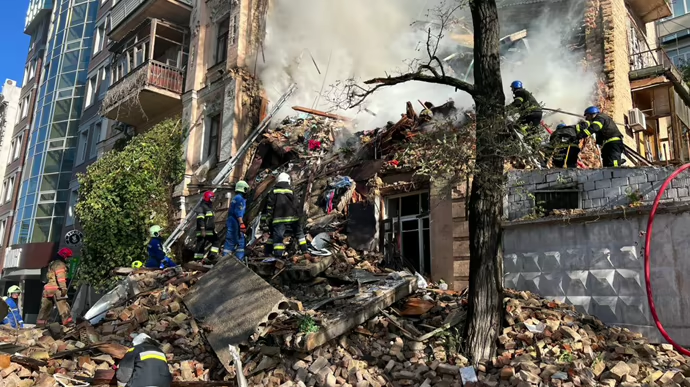
However, the quite obvious parallels with real Nazi practices do not bother either Moscow or the silent Russian majority. And these are also the consequences of the “victory” narrative. Kremlin political strategists have gone much further than their Soviet predecessors of the 1960s and 1970s. Russia’s modern “cult of the Great Victory” has taken their work to the point of absurdity. Russia has been declared the sole bearer of the sacred succession from the generation of “grandfathers” who allegedly single-handedly liberated the world from Nazism. Thus, the distorted memory of World War II became the basis not even for great-power chauvinism, but for messianism. If Russia “saved humanity,” then it has the exclusive “historical right” to decide the fate of other nations at its own discretion, without regard to international law, UN conventions, etc.
That is why the cult of the “Great Victory” should be considered nothing less than a cornerstone of the ideology of racism. And it is precisely the rootedness of this cult in the minds of Russians that allowed the Kremlin to unleash a genocidal war against Ukraine. From the point of view of international law, this is an act of criminal and unprovoked aggression against a sovereign state, but according to racist dogma, it is a “holy war” against “fascist Ukraine,” which can be easily scaled up against “fascist” Lithuania, Poland, and any other country in the world if necessary. Because racism, appealing to memory, has long since replaced it with ideological simulacra that can easily be adapted to any directive from the Kremlin.
The threat of frivolity
When in 2023 the Verkhovna Rada of Ukraine adopted a resolution condemning racism as a totalitarian and hateful ideology, it was not just a necessary step, but an absolutely necessary one. Some in the world might have perceived this as a “domestic matter” of a country that has been brutally attacked. However, the worst thing the international community can do in this context is to disregard the phenomenon that Ukrainian lawmakers have pointed out. Ukraine entered into combat with racism back in 2014. The “Izolyatsia” concentration camp in occupied Donetsk was a prologue to Bucha and Mariupol, just as the supposedly ridiculous Russian “victory” of the late 2000s was in fact the basis for the racist megalomania of the early 2020s.
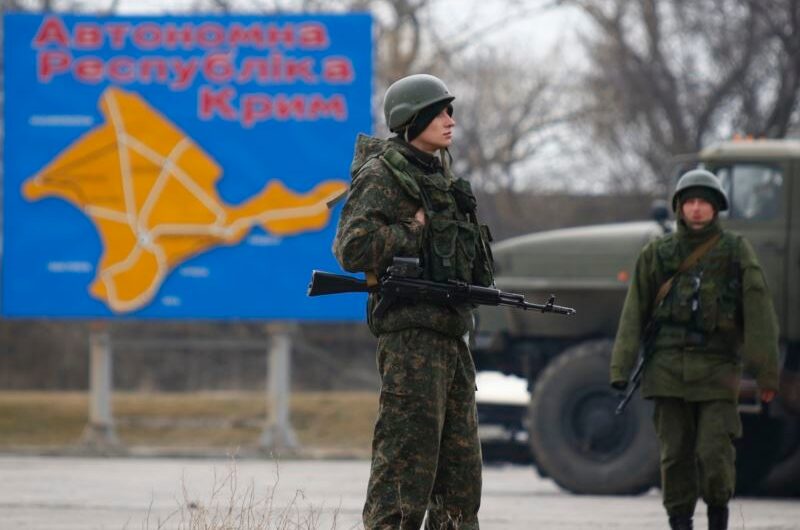
The world’s insufficiently strong reaction to the annexation of Crimea in 2014 was one of the reasons why NATO member states are now developing contingency plans in case of war. Similarly, it is dangerous to think of racism as something less than it really is. “Rashism” is not a Ukrainian-invented narrative, but a term that denotes a very specific ideology that is no less threatening than Nazism. And this ideology is no longer the prerogative of the marginalized – it is guided by a regime that unleashed the largest armed conflict in Europe since 1945.
On May 8, European countries will remember the slogan “Never Again”. And on this day, it is worth remembering that only effective and timely measures can protect us from the recurrence of disasters. And now Ukraine is winning time for Europe.
Ihor Solovey, head of the Centre for Strategic Communication and Information Security.