

The photojournalist Till Mayer has been documenting the war in eastern Ukraine since 2017. Since the start of the full-scale invasion in February 2022, he has been reporting regularly on the consequences of the Russian war on Ukraine. He has received several awards for his photos and reports. His volume of reports, “Europe’s Front – War in Ukraine”, was recently published by ibidem publishing house.
The war in Ukraine through the lens of a camera: capturing the reality of conflict and its emotional impact
I.K.: Please share a specific moment where a photograph you took during the war in Ukraine deeply moved you or changed the way you view the situation. Which particular photo are you referring to, and where can people see it?
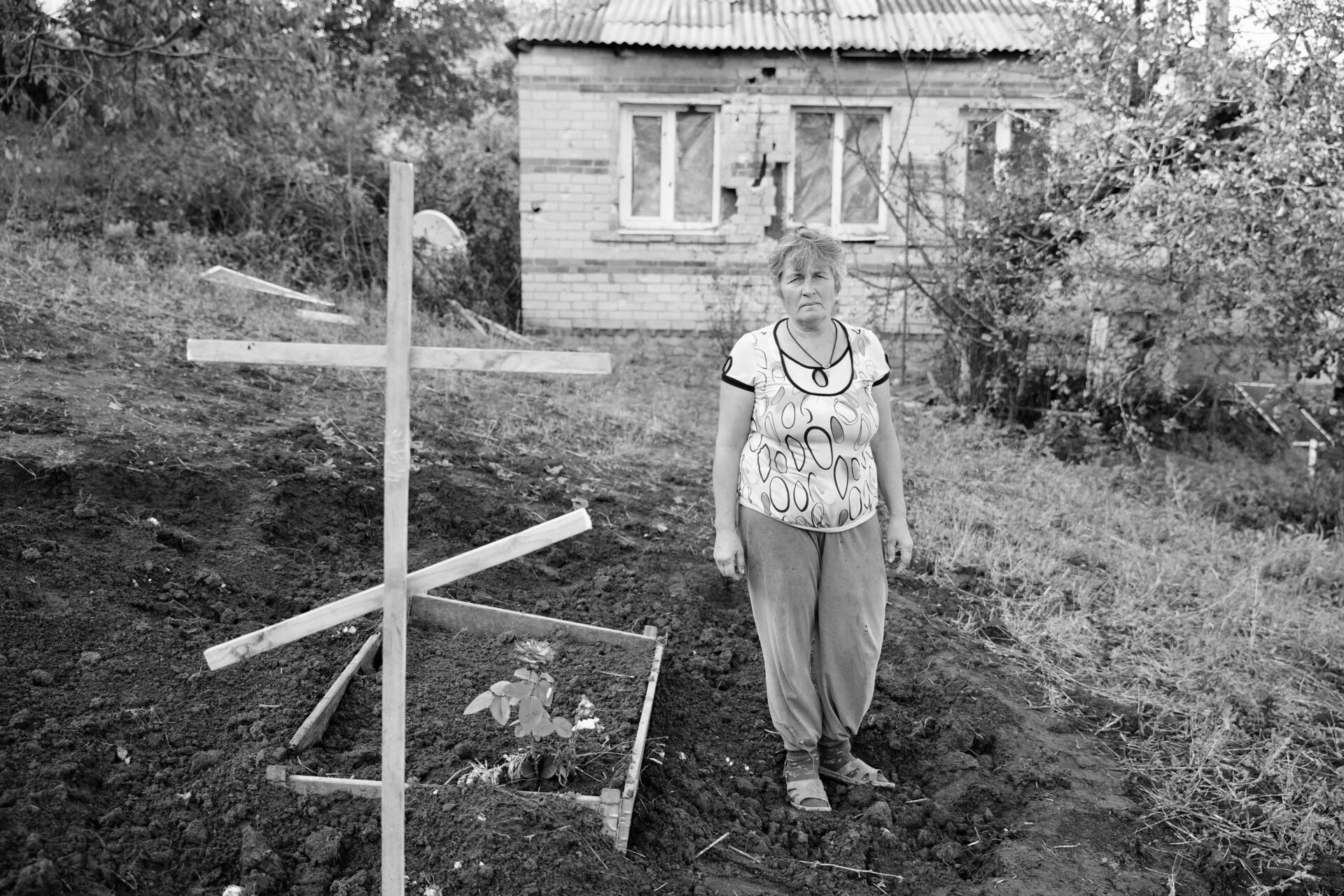
T.M.: I met Jelena in a village close to Kupiansk in autumn 2022. The settlement had just been liberated in the ongoing Kharkiv offensive. Smoke still rose up from the destroyed buildings. Dead Russian soldiers were lying on the road, packed in black body bags.
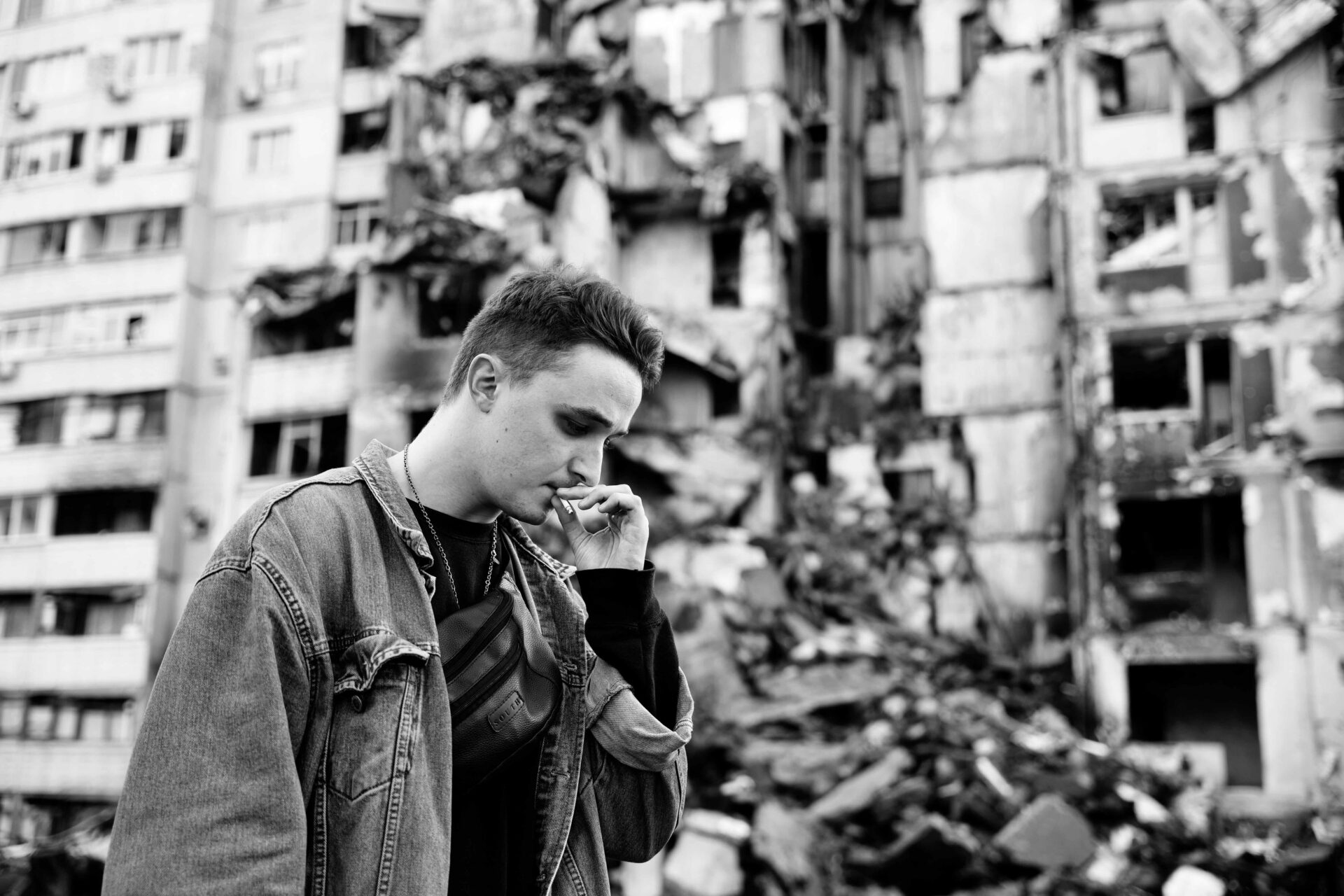
Jelena buried her son in a shell crater right in front of her house. Her son was killed by Russian forces firing at his white transporter. Jelena had tried to evacuate the dead body of her son. But Russian snipers were targeting her. She fled to Kupiansk and returned when her village was under Ukrainian control. It was less than a day ago that she had buried her son when I interviewed her. Jelena told me her story so I could tell it to my readers in Germany, showing the injustice that happened to her and her son. My article, which included a photo of Jelena in front of the grave, was published in many newspapers and in my book. Her photo is also displayed in my travelling exhibition.
I.K.: When photographing such intense situations, how do you balance documenting the reality of the war with respecting the people involved and their emotional state?
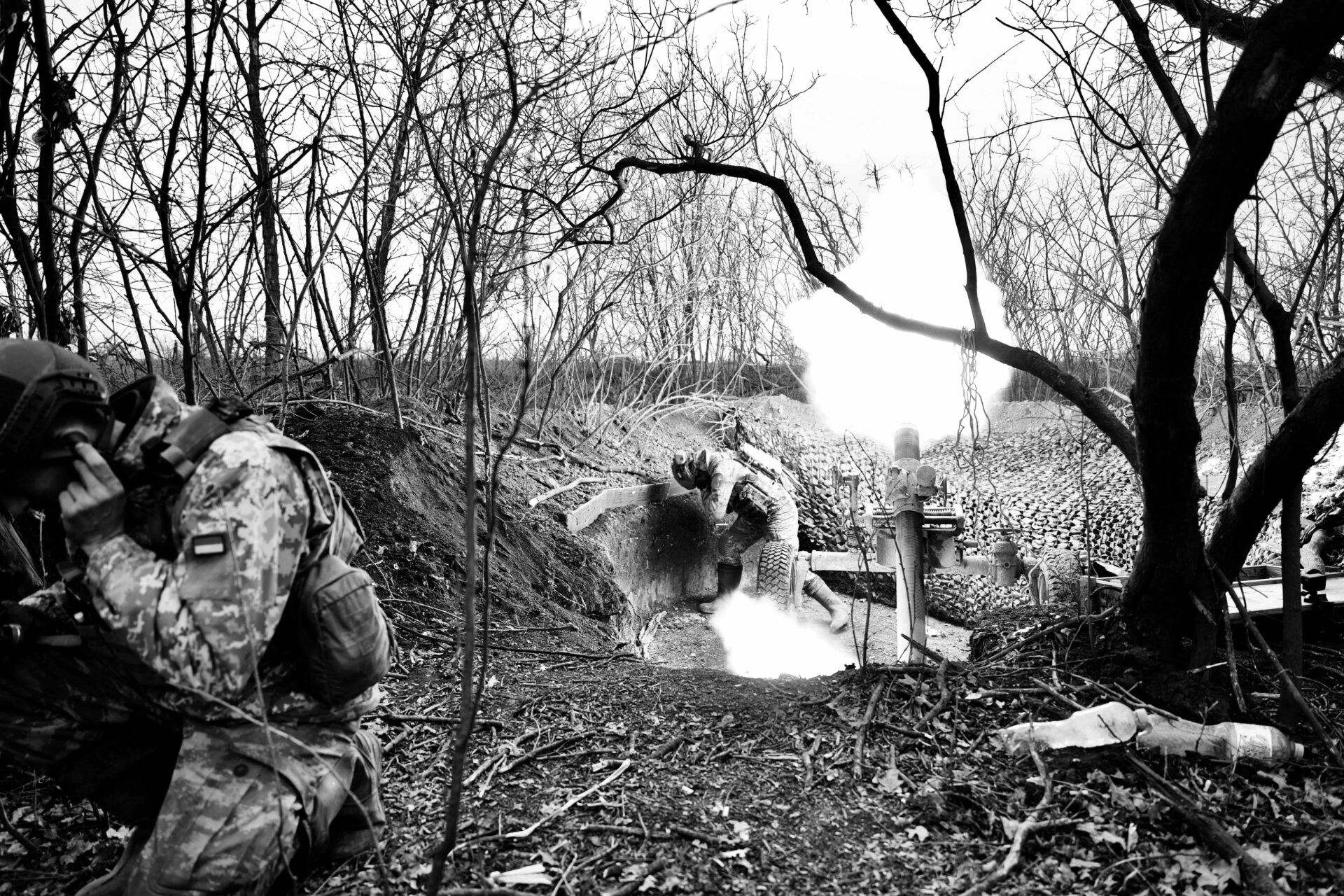
T.M.: Thankfully, many people in Ukraine are very welcoming of me. That is one of the reasons why I have been reporting from Ukraine since 2017. I always have someone supporting me. Sometimes, there is no chance of getting closer contact with those I photograph. For example, when I followed up on the evacuation close to Vovchansk, police officers and volunteers risked their lives to rescue the last remaining people of the villages. The frontline was very dynamic. Some police officers even got into shootings with the invaders. Everything happened fast, clouds from incoming Grad rockets and grenades rose straight up in the sky. I will never forget the faces of those who fled. In shock, some were crying – no one knew if they would ever see their home again. There were grenade hits, houses were burning. It was painful. But even though the men and women were under stress, they let me do my work. They allowed me to be with them.
If the situation is different and calmer, people let me follow up their lives. They open their doors for me: the widow who lost her husband on the battlefield, the torture survivor in Kherson, and the soldiers in their positions. They all trust me. That is an incredible honour for me.
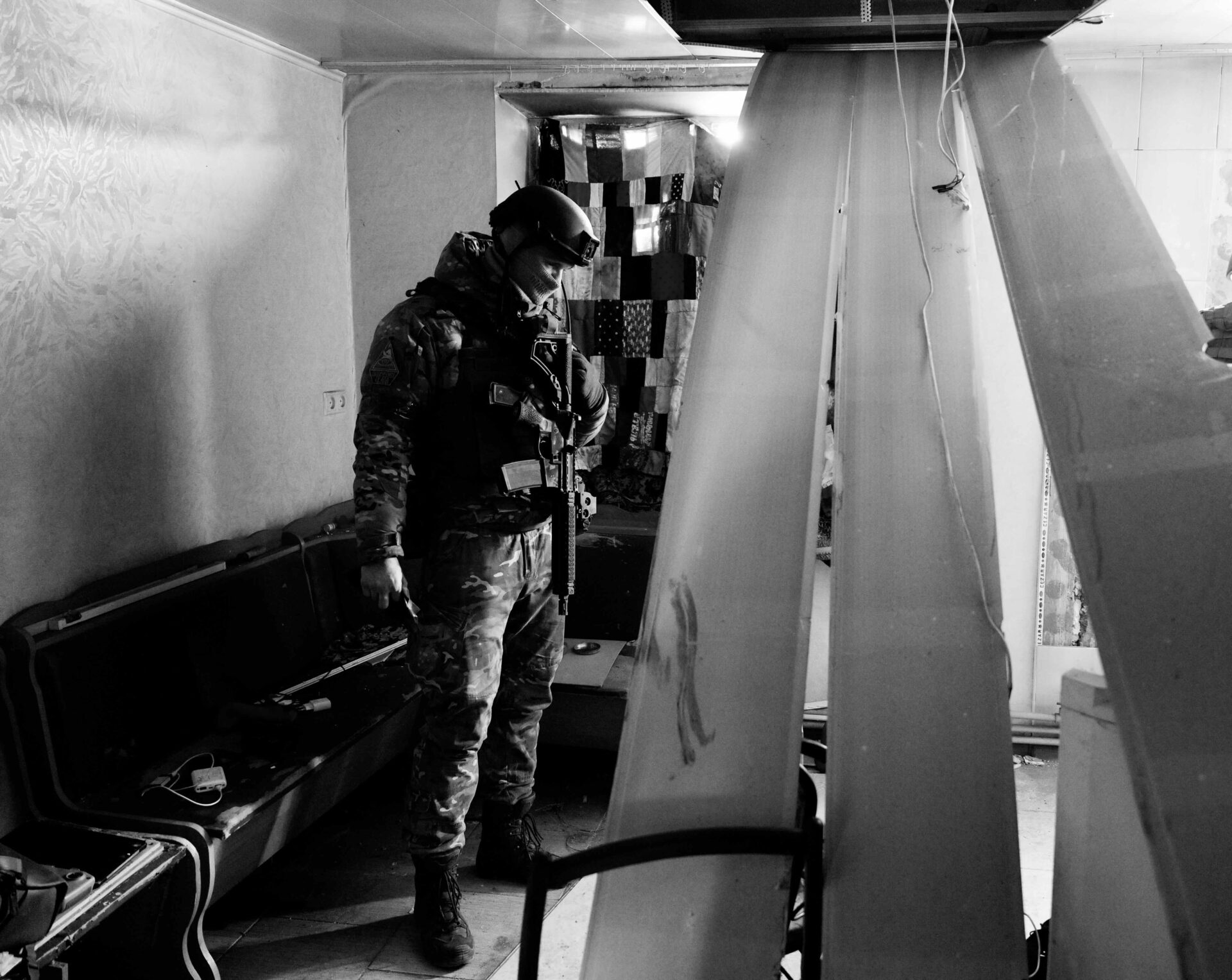
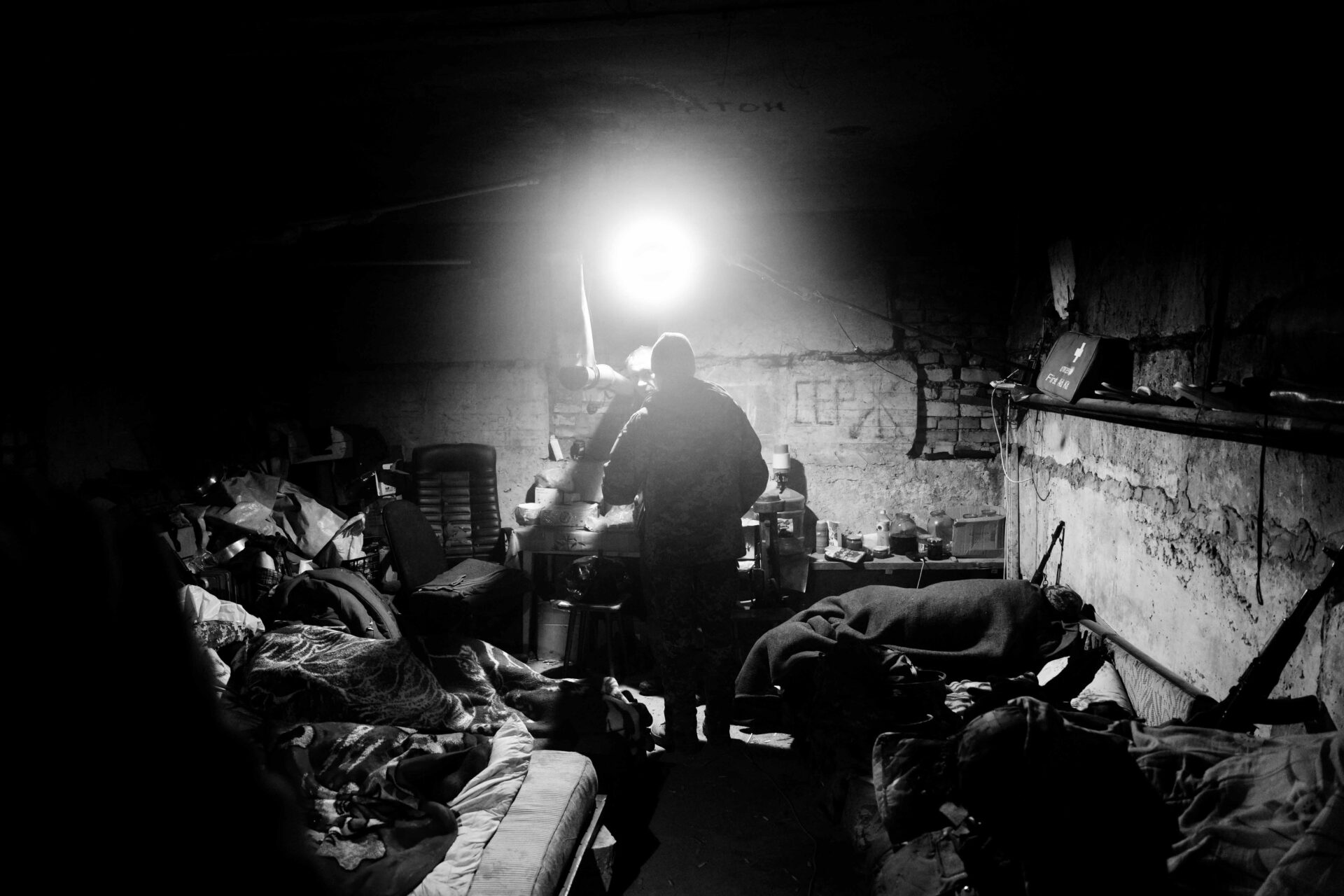
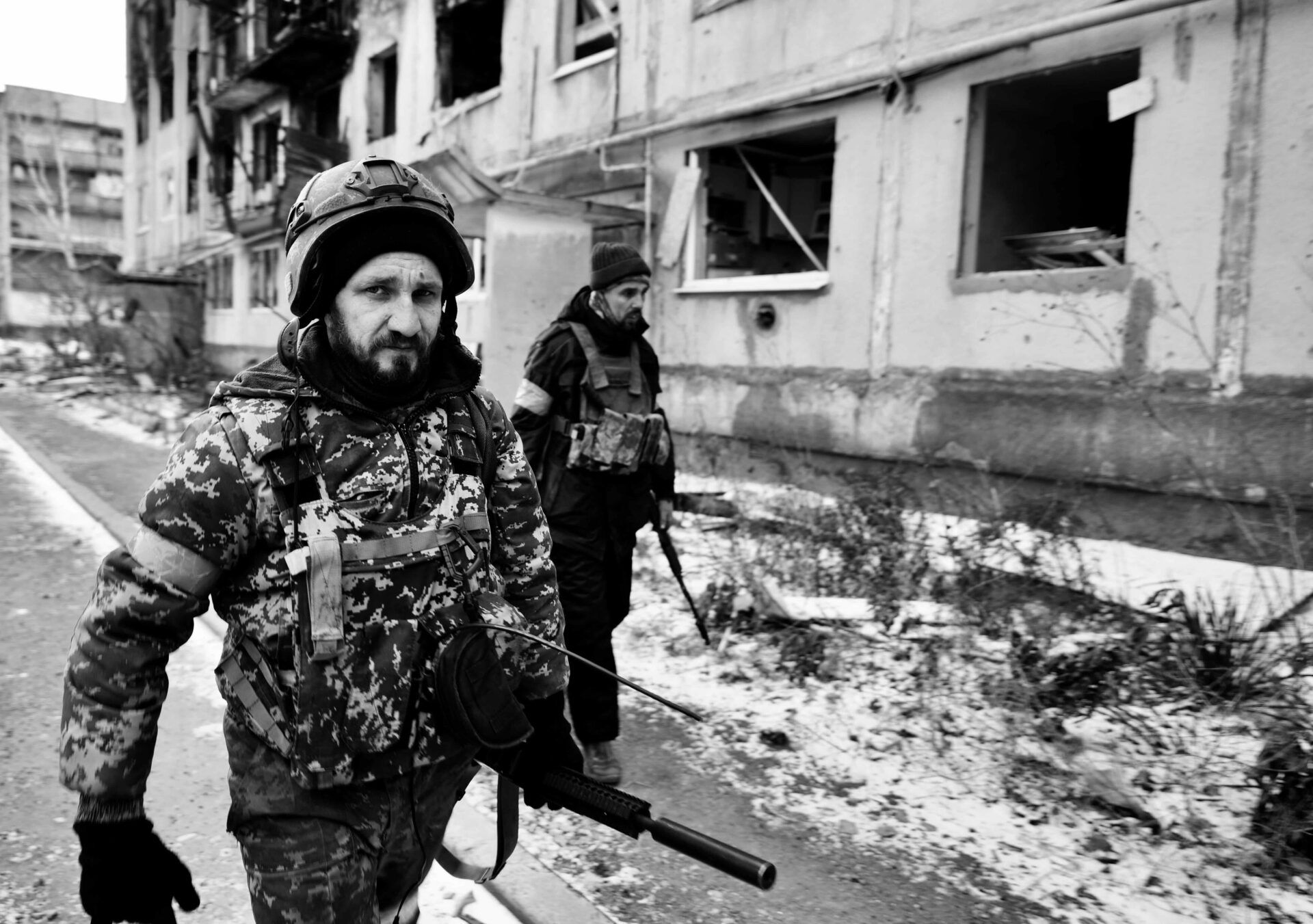
Photography as direct evidence of Russia’s war crimes against Ukraine: the role of visual documentation in conveying the truth.
I.K.: In your experience, how powerful is photography as a tool for documenting war crimes, and how can it serve as undeniable evidence in bringing justice to the aggressor?
T.M.: Pictures can be a weapon. They can be abused. They can be used out of context. They can be faked. Longtime documentation of a war is the opposite. It is a search for truth. Honest photos are a voice for the people who have to endure pain, destruction and death. I show the war in text and photos with portrays of the people who are in this unbearable situation. People like you and me. You cannot imagine how many heroes I met in my line of work in Ukraine.
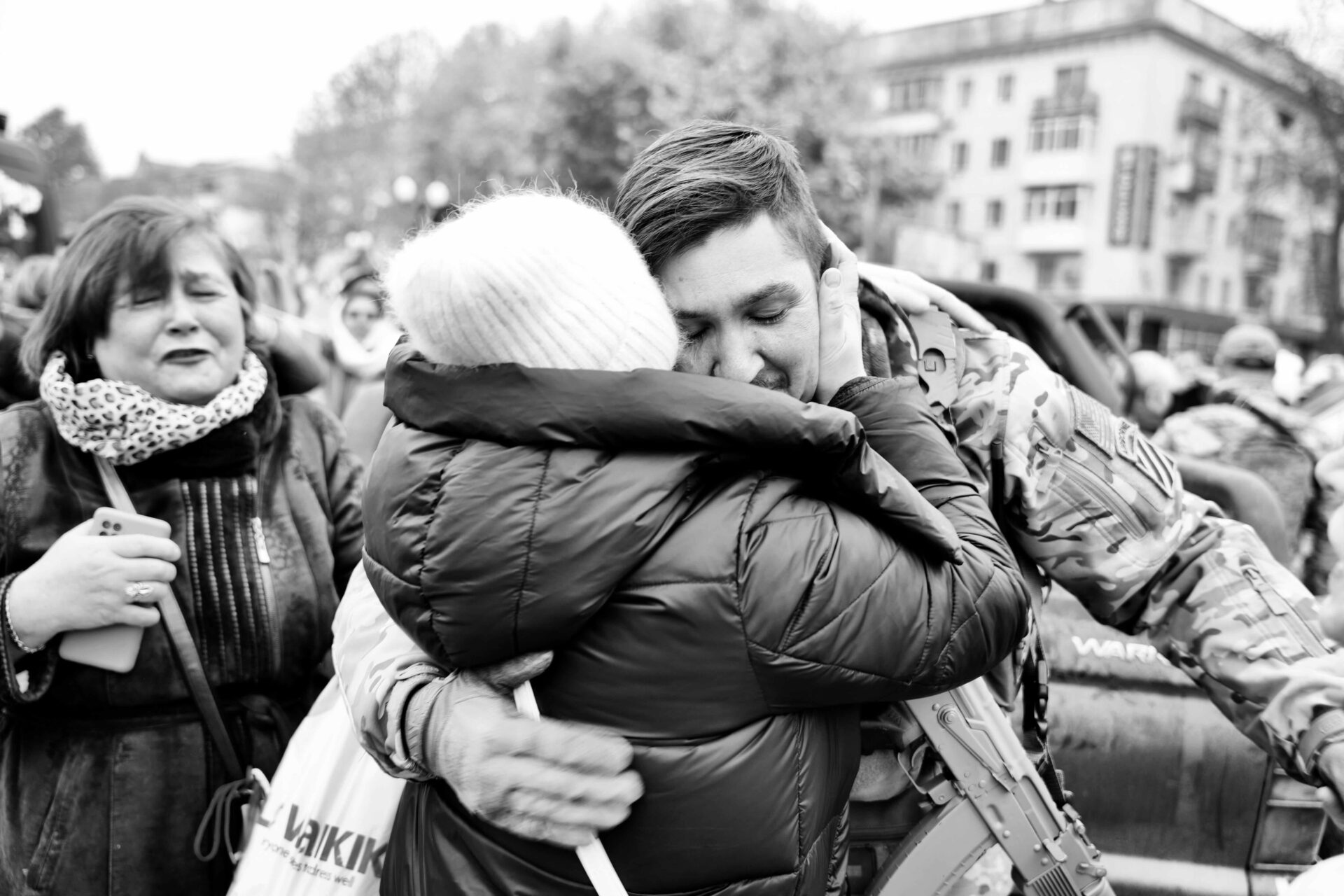
My photos give evidence to the readers and viewers. They trust me because they know I travel to Ukraine monthly. I have engaged myself for many years and will continue. I would be proud if photos of mine would be shown one day in “The Hague” to prove war crimes. But above all, I photograph to document for the media and to inform the public. To remind people in Germany that there is a war in the middle of Europe, a threat to their own freedom.
I.K.: What challenges do you face when documenting war crimes? Are there any problems in ensuring that the global community sees and trusts these photos?
T.M.: What worries me is the growing influence of photos composed by artificial intelligence. It is more complex and harder to differentiate them from the originals. It could lead to the end of truth as we know it.
Working on special, emotionally charged photographs: how you approach and capture these moments
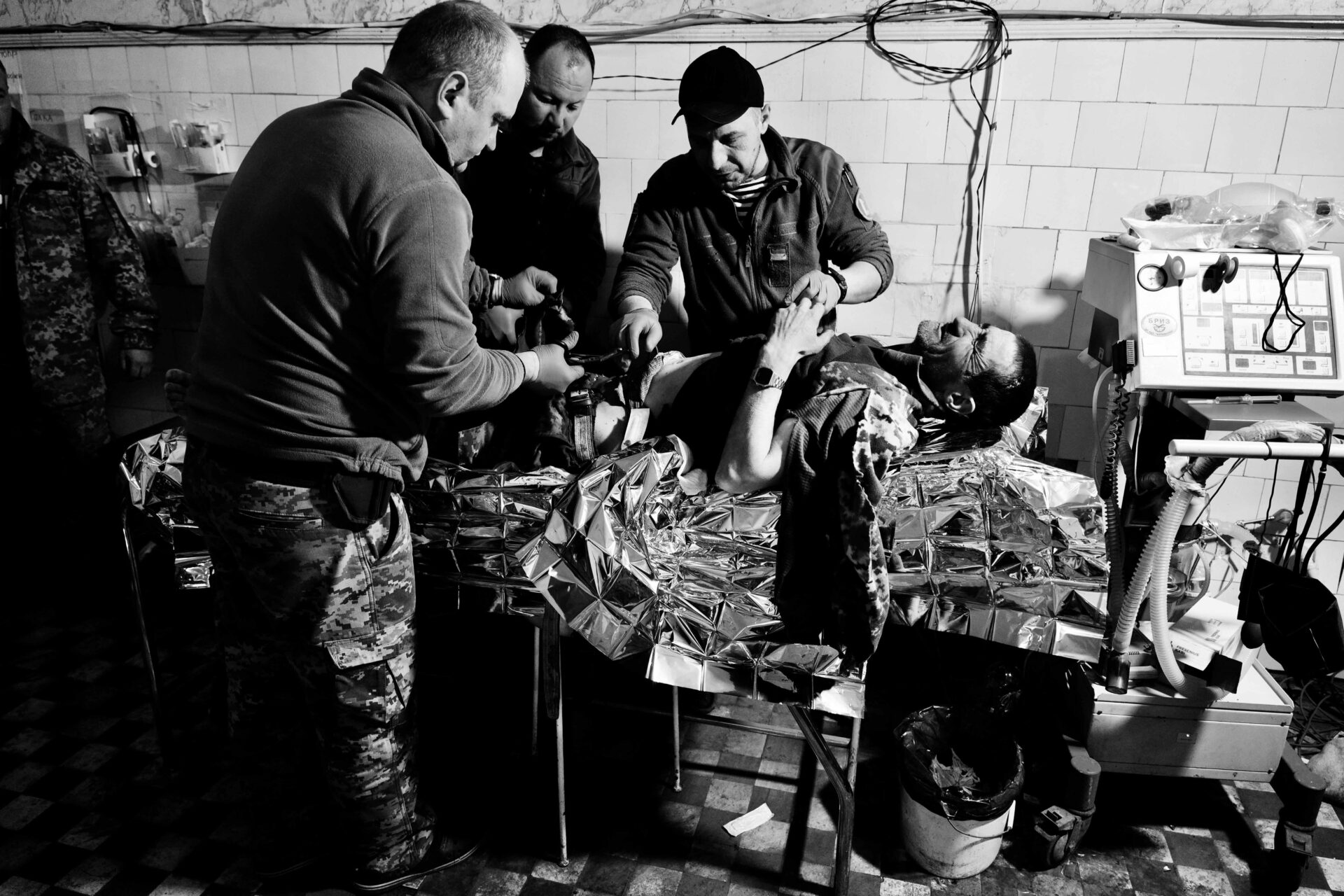
I.K.: How do you connect with the people in your photographs to ensure that you authentically capture their emotions and the truth of their experience?
T.M.: Photographing people at war often means showing strong emotions. The protagonists of my photos and features undergo pain and danger. The key to gaining access to them is showing respect. They can feel if you are really interested in them as people. Or if they are just seen as a story. Just another one to be photographed.
I have the chance to come close, especially when I portray a person with my camera and a written text. Thanks to social media, I often keep in contact.
There is Vasyl, for example, a very good man living in a destroyed village close to Izjum. When I travel with my colleague Oles Kromplias, we always try to make a stop at his place for tea or coffee on our way to Donbas. His honey is amazing and tasty. There is Dmytro, a doctor serving in a stabilisation point close to the front line. I am proud to have him like a photo on my Instagram account. He sacrifices so much more than I do. Like all these people I meet.
As I have been reporting for a long time from Ukraine, I also have a network of friends giving me good hints for features. On Facebook, 34.000 people follow me. Many of them are Ukrainians. They also gave me ideas and connected me with people worthy of being portrayed.
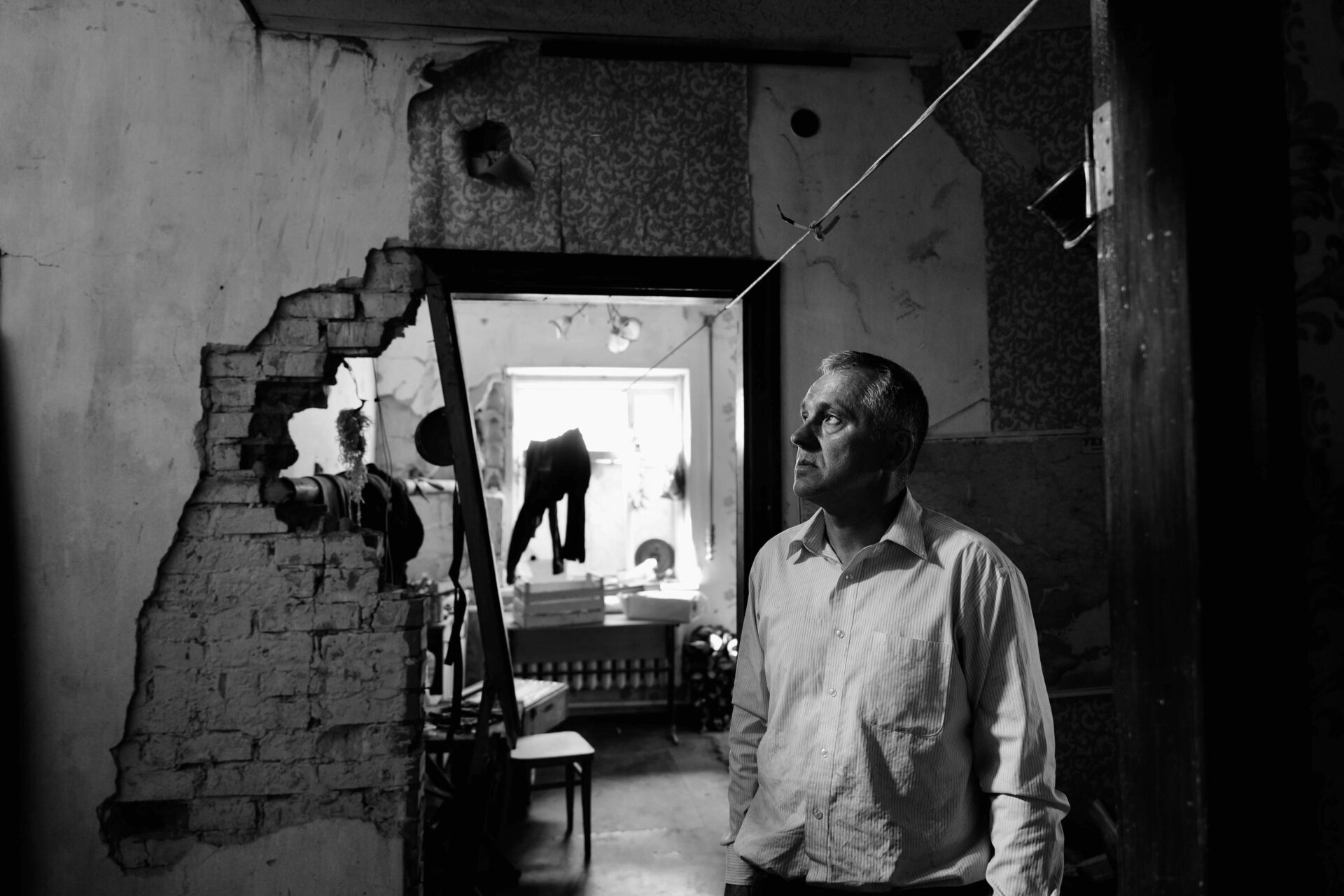
I.K.: What have you learned from the war, and will you continue to come to Ukraine?
T.M.: War and love stand for the most evil and the most beautiful things people can do to each other. Both ask you to give all you have to offer. It is bitter and hard for Ukrainians to defend their freedom. They are fighting for my freedom as well. I can not express enough my gratitude. Unfortunately, I am afraid this is the beginning of a troublesome time for all of us in Europe. We can overcome this when we Europeans stand together as a family. Freedom, as well as love, are worth sacrificing. There is nothing more precious. I will continue to report from Ukraine until there is peace and justice. And then? Sometimes, I dare to dream about the beautiful stories waiting for me to be covered.
Interviewed by Iryna Kovalenko