Shelling of Ukrainian Bessarabia: Russia prolongs the terror
13.11.2023
Share:
If in the winter Russia fought with the Ukrainian energy industry, then in the summer, confirming the status of a terrorist country, it declared war on Ukrainian grain. This was a consequence of thewithdrawal of the Russian Federation from the grain agreement. Odesa and the southern part of the Odesa region, where the extensive port infrastructure is located, have been suffering from regular shelling for almost five months. Moreover, Russian missile attacks have endangered the security of the regions of Romania, a NATO country, bordering Ukraine. How to protect Odesa and whether the support in this matter from our southwestern neighbours is sufficient – we will understand further in the article.
The withdrawal of the Russian Federation from the grain agreement
Russia’s full-scale invasion of Ukraine led to a complete stoppage of grain supplies from our country, which used to be a major exporter. This has created a major food crisis in some regions of the world. It resulted in negotiations under the name “Black Sea Grain Initiative”. As a result of negotiations on July 22, 2022, in Istanbul,two agreements were concluded at once: between Russia and the United Nations with the participation of Turkey and between Ukraine and the UN also with the participation of Turkey. Their main content is a safe procedure for the export of grain from Ukrainian ports. The twice-fixed arrangements continued, although both Russia and Ukraine expressed dissatisfaction with some of the terms.
The grain corridor is still operating, but without Russia guarantees. Moreover, Russia has intensified shelling of Ukrainian port infrastructure
Theend of the grain agreement came on July 17, 2023. After the detonation of the Crimean Bridge, the aggressor country accused Ukraine of a terrorist attack and withdrew from the grain initiative. Russia has also threatened that from that time on it will consider all vessels bound for Ukrainian ports as potential weapons carriers and, accordingly, military targets.
Missile attacks on the port infrastructure of Ukraine
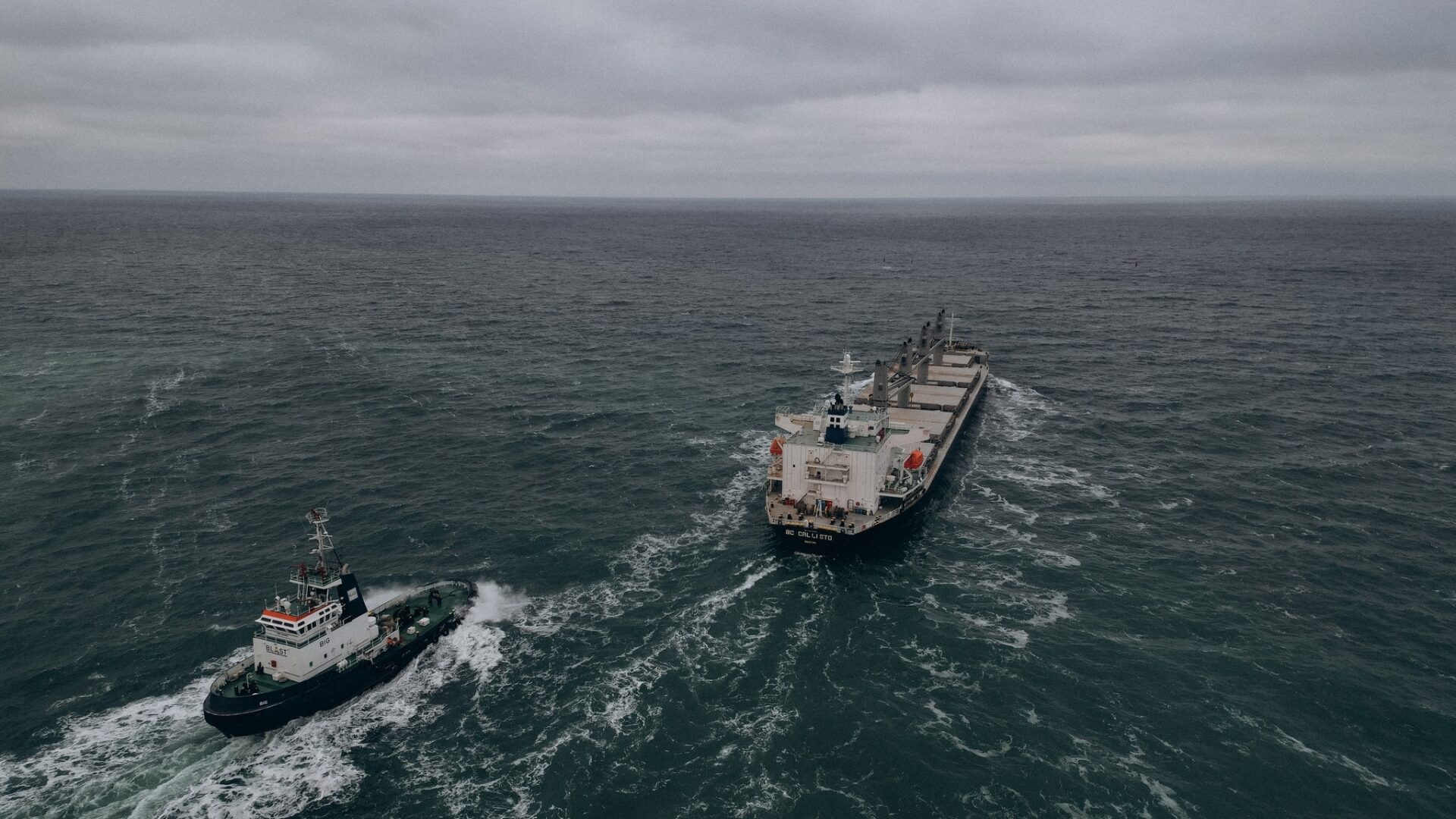
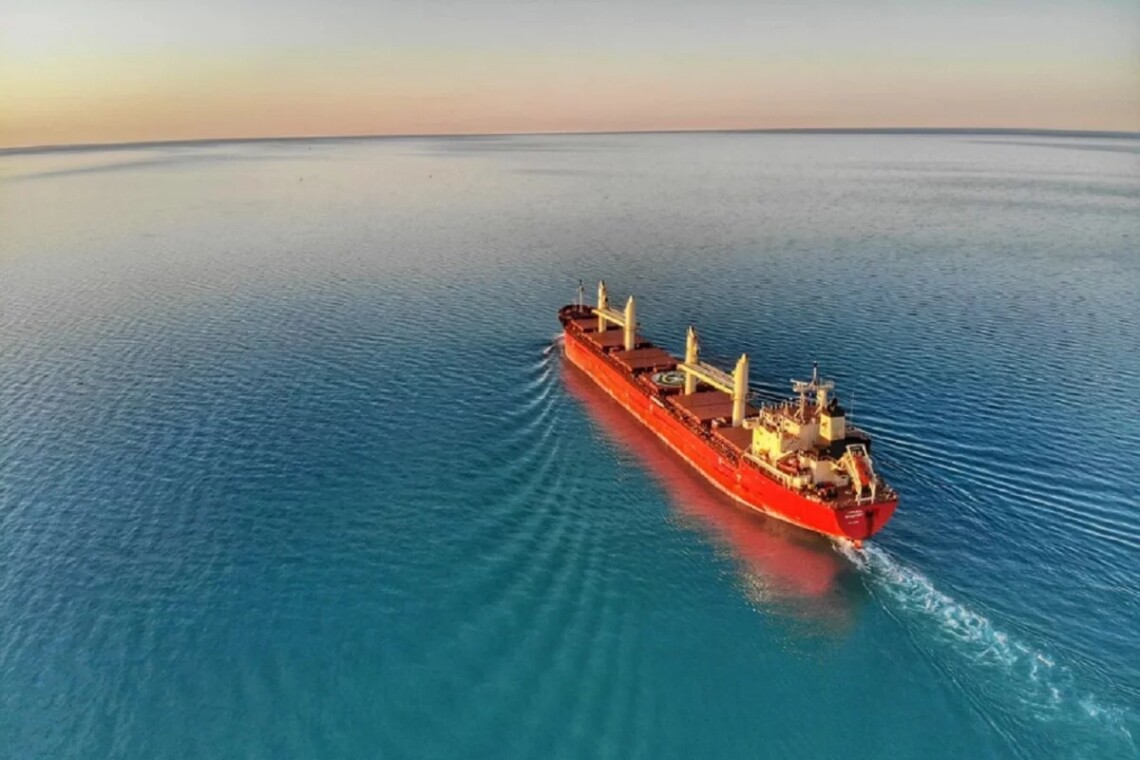
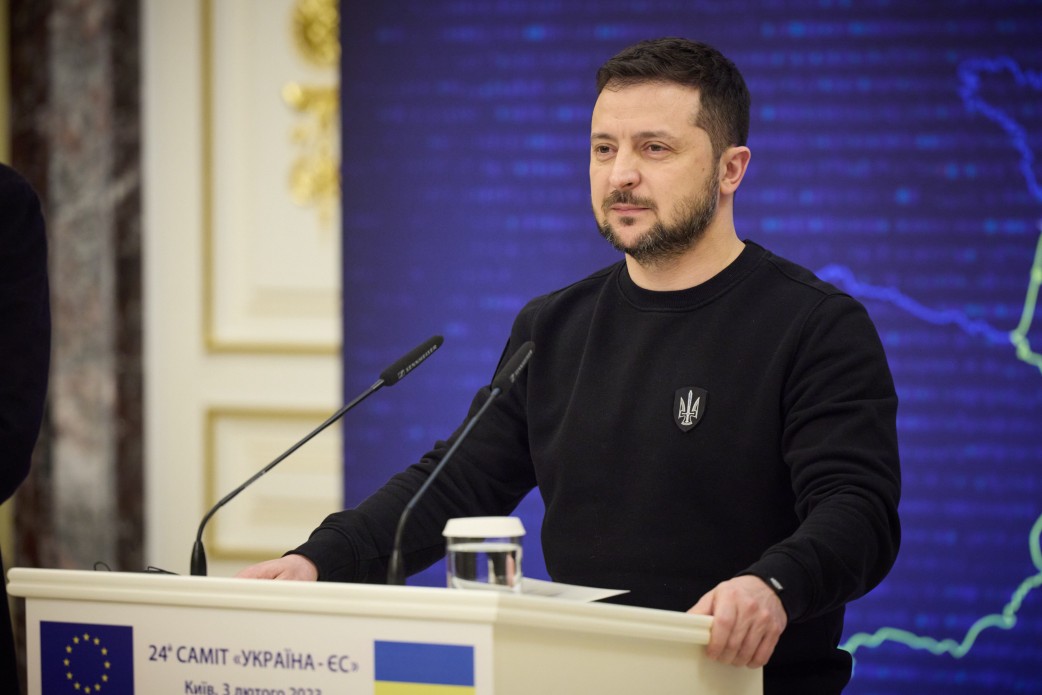
However, since October 2023 the main Ukrainian ports havecontinued to receive foreign ships, despite the threats from Russia. According to theinformation of the President of Ukraine, Volodymyr Zelenskyy, 50 ships used the new transport corridor in less than a month.
Volodymyr Zelenskyy, President of Ukraine
Feeling powerless in the face of a potential direct conflict with NATO countries, Russia, having withdrawn from the agreement, immediately decided not to fire at ships, but at Ukraine’s port infrastructure and grain warehouses.
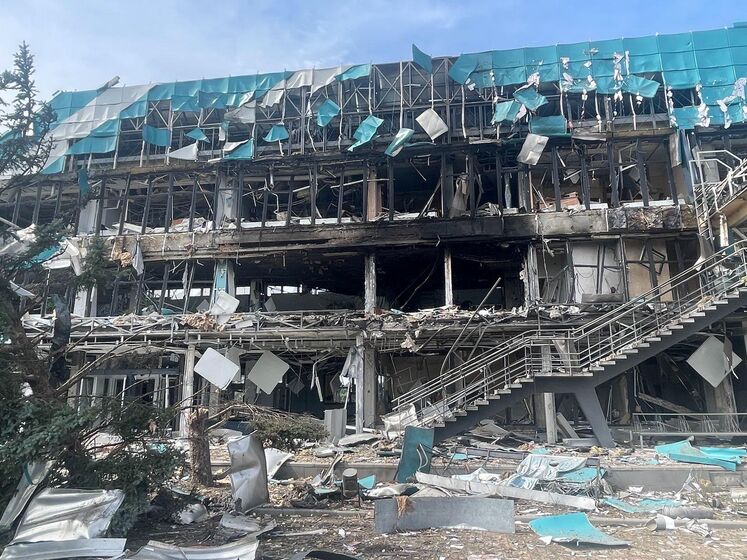
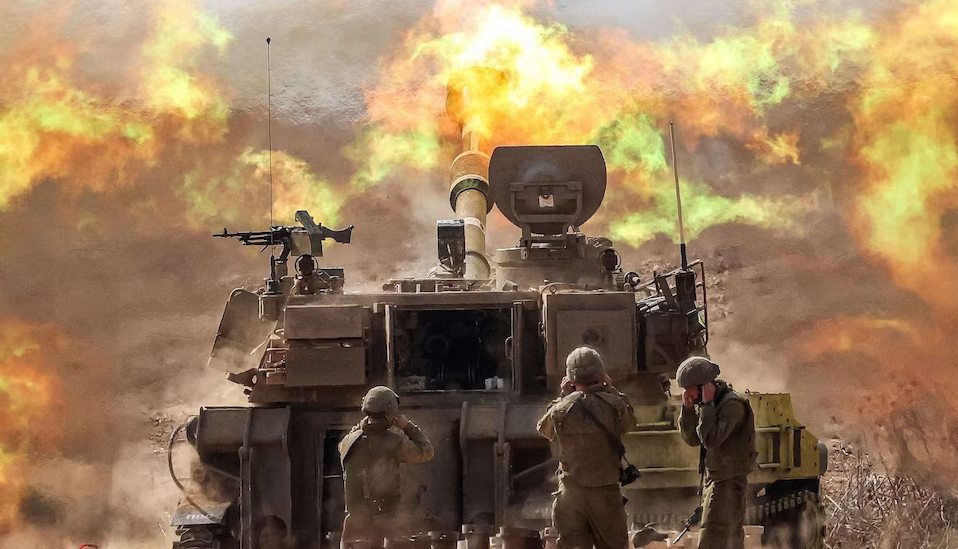
Here are the statistics for shelling for the summer only: July 18-19 — Odesa and Chornomorsk, July 24 — Reni Sea Port, August 1 and 2 — Odesa and Izmail, August 16 — Reni Port again, August 23 — another Russian attack on Odesa’s port infrastructure.
Damaged seaport facilities in Izmail, Odesa region
Intotal, more than 270,000 tons of grain were destroyed in a month.
Shelling continued in the fall, in particular, on the night of September 25, 2023, the Passenger terminal and Hotel Odesa wereshelled. So, will the enemy continue to attack Odesa’s port infrastructure? Will he focus on energy again in winter, trying to plunge the inhabitants of the region into darkness and cold? We asked military expert Dmytro Snegiriev about this.
“The military doctrine of the Russian Federation provides for launching missile strikes on critical energy infrastructure facilities — with the aim of forcing peace negotiations, and in fact — surrender. Regarding the attacks on the port infrastructure, I would not separate the port and energy infrastructure in this context, because it is a total damage to the vital activity of Ukraine in all directions. A wide range of weapons will be used.
The statistics, in particular, the launch of UAVs in September of this year [2023], testify to the capabilities of the Russian Federation. You should not listen to the false thesis that Russia is saving missiles. Here the issue is purely economic: the cost of the drone is $30 000-40 000, and the cruise missile — is $7-8 million, depending on the modification. That is, the most massive strike on the territory of Ukraine cost the occupying country approximately $15 million — the cost of two cruise missiles. But the devastating effects of launching 500 UAVs (provided we shot down 80%) compared to two cruise missiles are incomparable”.
Ukrainian military expert Dmytro Snegiriev
“As for missiles. Russia was able to increase the production of cruise missiles to bypass sanctions. They found ways to purchase microchips and microelements through the so-called “grey transit” (issued in the transit country to another company using other documents). This, in particular, is said by representatives of Western intelligence. Unfortunately, they have a stock of missiles.
I also want to note the change in the launch strategy, I mean combined launches — both drones and cruise missiles. Moreover, drones do not necessarily exhaust the air defence system. They themselves work both on air defence systems and on objects, and cruise missiles are already on their way. In addition, the aggressor began to use the star-like nature of the launch — from different points along different trajectories, which greatly reduced the effectiveness of air defence”.
Shelling of Odesa as a potential factor in further international escalation
During one of the shelling of Ukrainian Bessarabia, fragments of a Russian drone landed on the territory of Romania. It became known on September 4, 2023. This episode deserves special attention due to the fact that our southwestern neighbours are a NATO country.
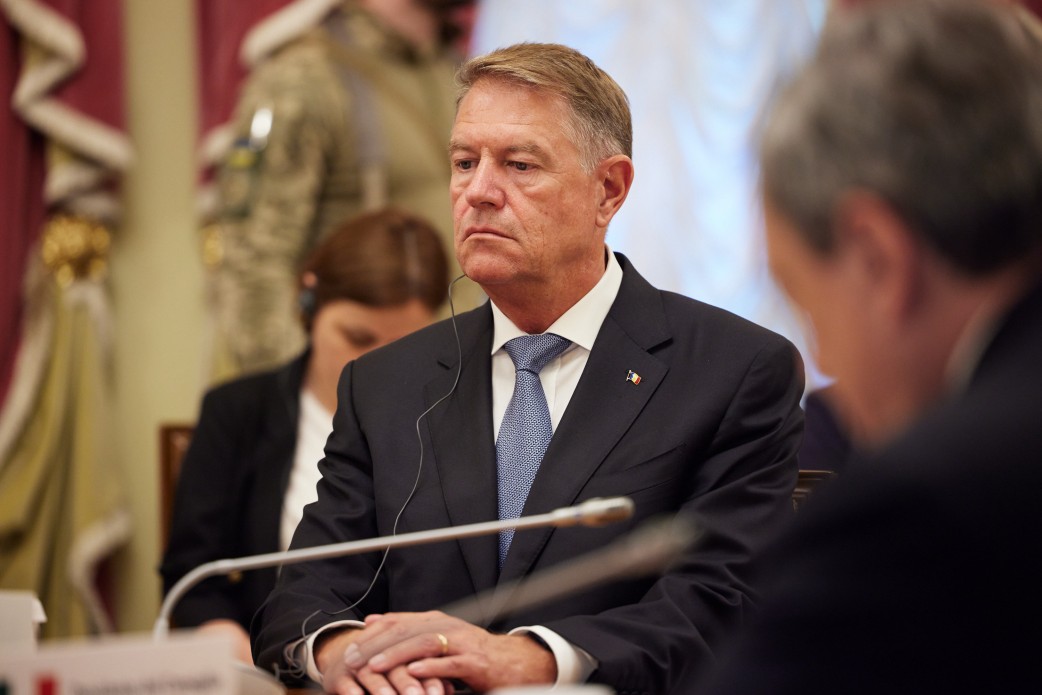
Klaus Iohannis, President of Romania. Source: https://www.president.gov.ua/en/news/volodimir-zelenskij-u-kiyevi-proviv-zustrich-z-liderami-nime-75845
Bucharest initially reacted rather reservedly, questioning the origin of the UAV, but then PresidentKlaus Iohannisconfirmed the Russian footprint in this attack and admitted that “it is a problem”.
Romanian Army GeneralGheorghiță Vlad was more decisive anddeclared that Romania was ready to use all its military power to deter the aggressor. Moreover, he noted that a decision was made to redeploy 600 soldiers and radars to the Danube Delta area.
Claudiu Degeratu, independent expert and associate professor of the History Faculty of Bucharest University
Was Romania’s reaction sufficient and how will the situation unfold in the near future? The Ukrainian Review spoke with Claudiu Degeratu, independent expert and associate professor of the History Faculty of Bucharest University.
Is Romania doing enough for its own safety in connection with the shelling of Ukrainian Bessarabia? (And we know, that parts of the drones appeared on the territory of Romania)
C.D.: After drone debris fell in Romania in the summer, the government decided to apply military and civilian measures to increase the capacity to handle these situations. Additional military forces and more surveillance systems were deployed at the border. The government has established a plan for cooperation with local authorities. Shelters for locals were installed, and an alert system for mobile phones was introduced. It must be said that Romania does not have enough specialised surveillance and monitoring systems for drones, and that is why NATO is preparing to send modern drone surveillance and combat systems. The government plans to buy more anti-drone systems in the future, but for now, NATO capabilities will be used when they arrive in the country. At the bilateral level, Romania and Ukraine recently agreed on a new military cooperation plan, and I assume that it also refers to problems related to managing the situation at the border. I appreciate that Romania has started to apply several necessary measures, but increasing the capacity to combat drones depends on buying high-performance systems. This acquisition takes time, and until completion, we will probably face the risk of not identifying drones at the border in time.
In your personal opinion, will attacks on the grain infrastructure of the South of Ukraine continue in the winter, or will Russia again concentrate on shelling the Ukrainian energy sector?
C.D.: Russia will alternate attacks according to political interests and military objectives. First, Moscow would like to block the corridors organised by Ukraine, Romania, and Moldova, but the attacks have limited effectiveness. Moscow also needs drones and missiles for other energy, military, and civilian infrastructure targets. That is why the Russian army will alternate bombing by rotation and will continue to hit the Danube infrastructure, as well as the energy and civilian infrastructure.
Conclusions
The Russian Federation has sufficient military potential to attack critical infrastructure facilities of Ukraine in winter. To protect against the aggressor, additional modern air defence systems are needed, which was repeatedly mentioned in the conversations at the highest level with the representatives of the partner countries. It is also worth studying in more detail the Russian sanctions circumvention scheme. Only complex measures will help to weaken the aggressor, who is again trying to force Ukrainians into a cold and dark winter, as well as create a new food crisis in the world.