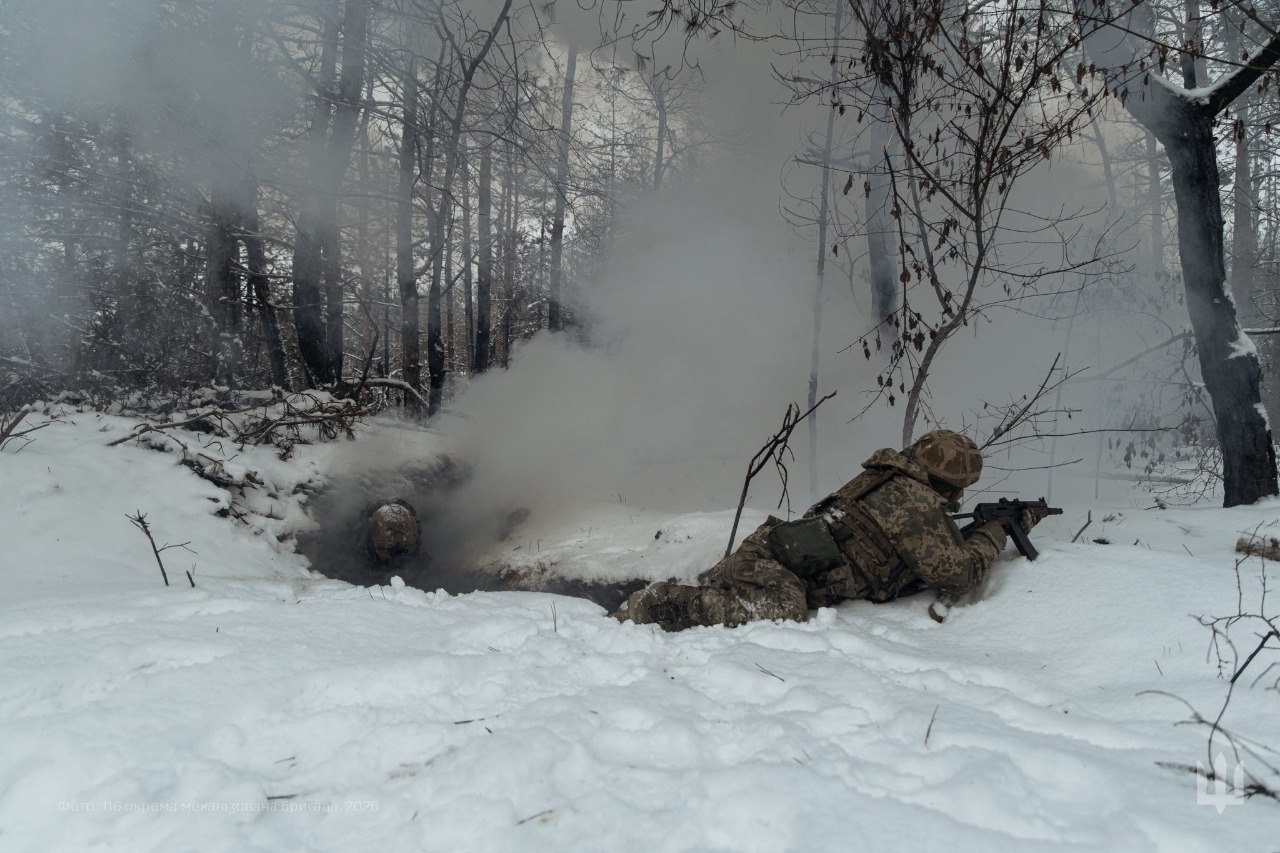


Russian missile and drone attacks on Ukraine have become one of the ways to terrorize Ukrainian society during Russia’s full-scale invasion.
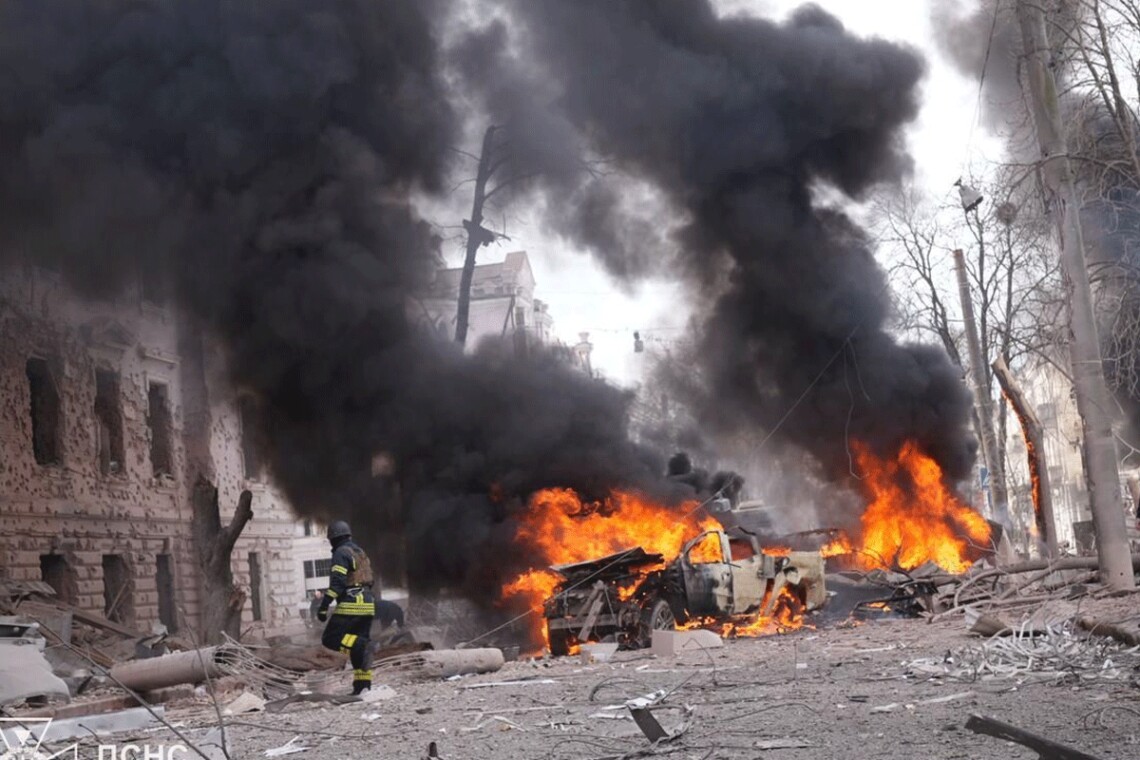
In 2025 alone, 2,514 civilians were killed and 12,142 were injured as a result of Russian attacks. This represents a 31% increase compared to 2024 and a 70% increase compared to 2023. The figures were reported by the UN Human Rights Monitoring Mission in Ukraine. The rise in civilian casualties comes against the backdrop of the launch of the so-called “negotiation process,” which, despite diplomatic rhetoric, has not led to a reduction in violence against the civilian population.
In 2026, during an abnormally cold winter, Russia continued to destroy Ukraine’s energy infrastructure. As a result, millions of people were left without electricity and heating in temperatures below -20°C.
In this article, The Ukrainian Review analyzes how global media covered Russian missile and drone attacks in 2022 and how they report them now.
American Media: How Russia Turned Missiles into a Tool of Humanitarian Blackmail
In 2022, The New York Times covered Russian attacks on Ukraine with a clear focus on humanitarian consequences and Russia’s responsibility for the strikes.
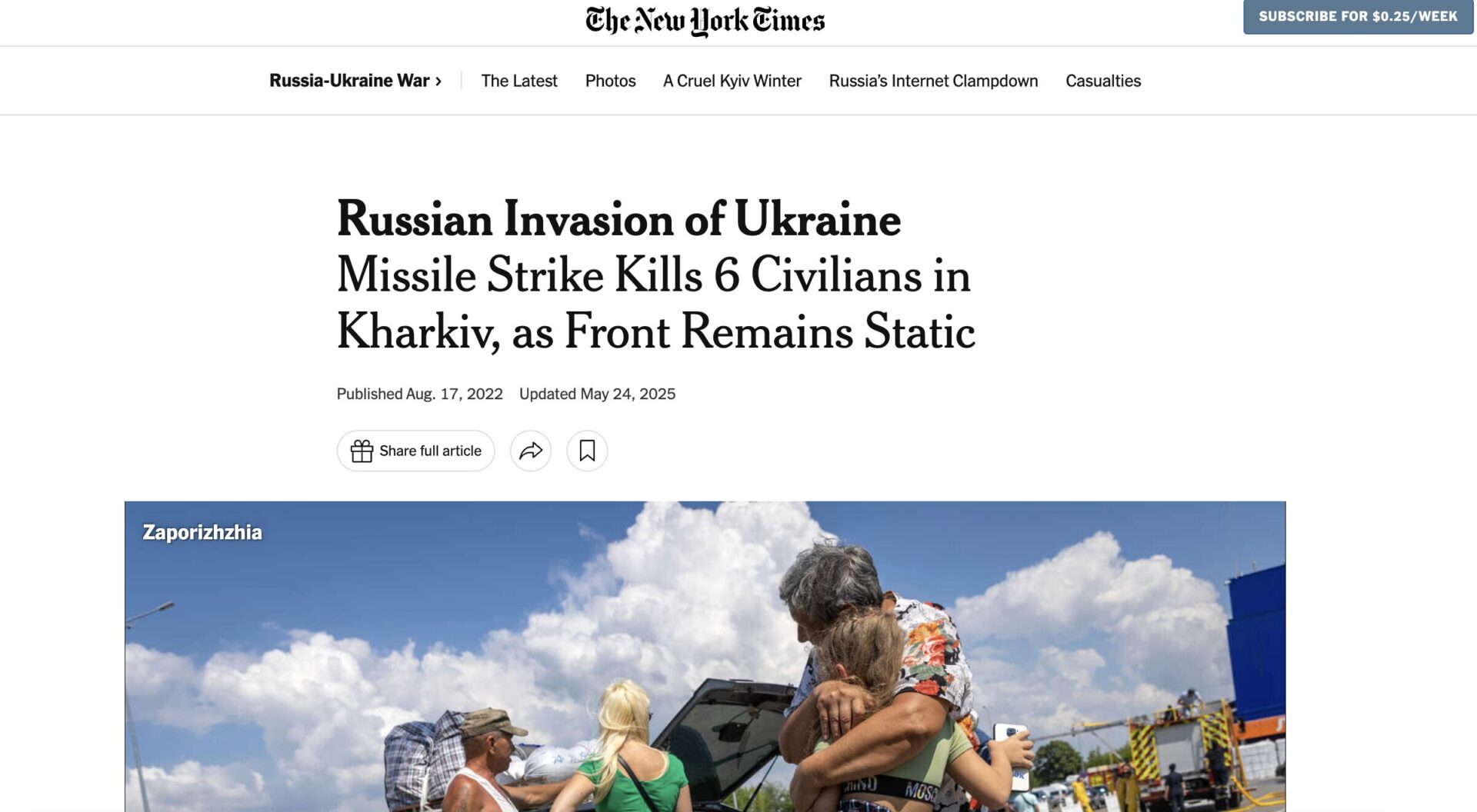
News reports regularly emphasized that Ukrainian cities were under nearly continuous artillery and missile fire, with attention focused on civilian casualties and the destruction of residential infrastructure.
The outlet actively used Ukrainian official sources, local authorities’ comments, rescuers, and eyewitnesses, as well as foreign officials and military experts.
A characteristic feature was analytical reporting: The New York Times journalists dissected major Russian missile attacks, assessed Russia’s weapon stockpiles, the effectiveness of Ukraine’s air defense, and the impact of strikes on energy infrastructure on civilian life.
For example, in one article, The New York Times reported on one of the largest Russian missile attacks on Ukraine and analyzed how many missiles Russia still had in stock. Journalists noted that “the arsenal of advanced weapons sent by Kyiv’s allies could not stop Moscow’s exhausting attacks on the energy infrastructure.”
The publication explicitly named Russia as the aggressor and framed the attacks as part of a strategy to pressure Ukraine and its population.
In 2026, The New York Times continues to report on Russian attacks in the context of the humanitarian crisis, but increasingly links the strikes to political pressure and the Kremlin’s attempts to impose its conditions. Articles highlight deliberate strikes on the energy sector, especially during winter, when consequences for civilians became critical.
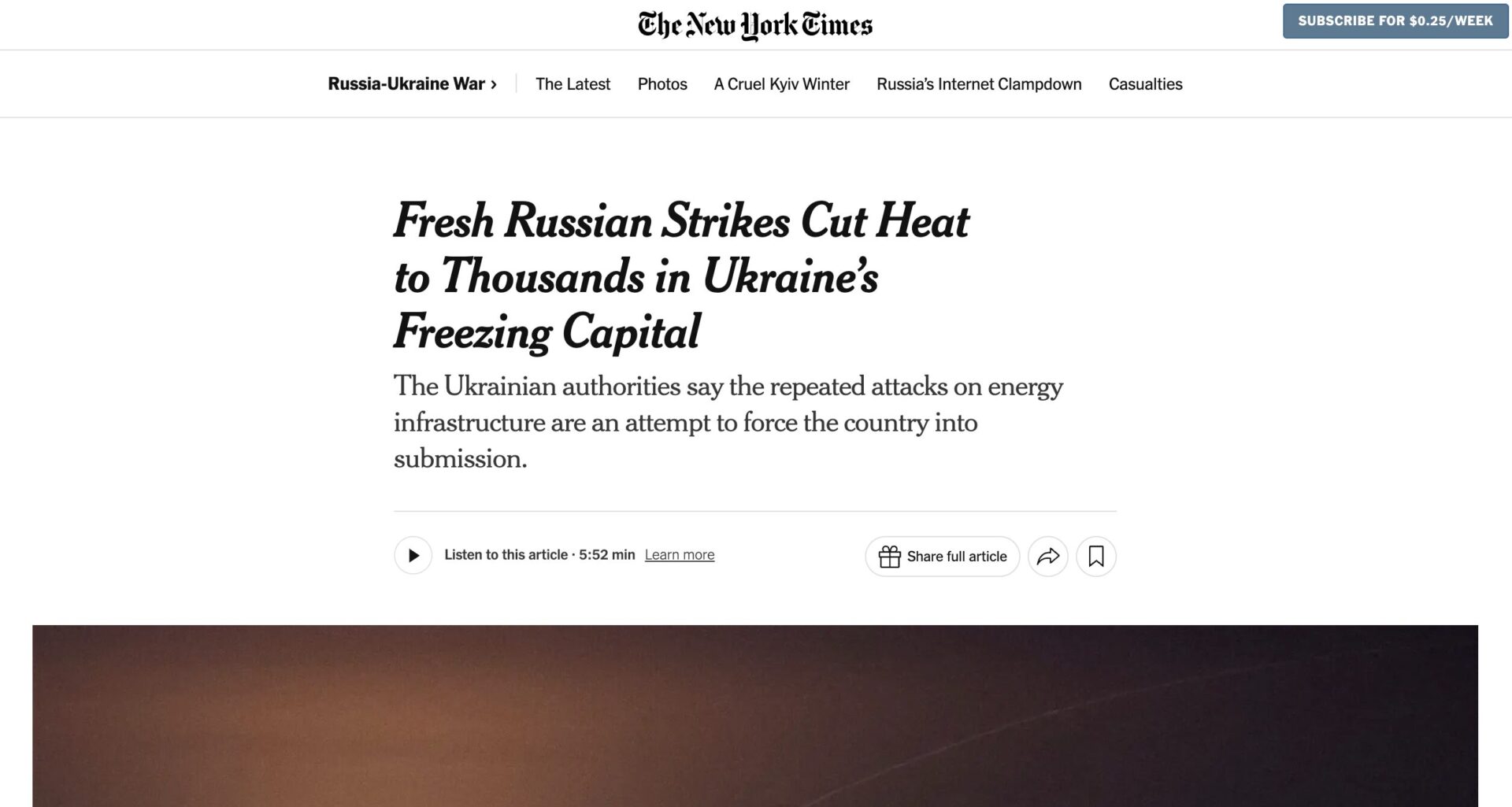
For instance, one article reported that Russian strikes left Kyiv without power and heating during subzero temperatures, attempts intended to force Ukraine into submission and undermine the morale of Ukrainians.
News reports regularly emphasize human losses. For example, The New York Times highlighted that 16 miners died after a Russian strike.
The New York Times also increasingly places attacks in a broader political context. In the same article, journalists mentioned international mediators’ attempts to reach a ceasefire and emphasized its fragility, showing that Russian strikes effectively undermine any agreements.
While in 2022 the focus was on the scale of destruction and military dynamics, in 2026 The New York Times emphasizes long-term humanitarian consequences and the use of winter as a weapon against Ukraine’s civilian population.
British Media: From Fact-Checking to Human Tragedies
In 2022, BBC covered Russian attacks on Ukraine with an emphasis on consequences for civilians and critical infrastructure. Articles on massive missile attacks detailed the humanitarian situation, showing the scale of the strikes and their direct impact on everyday life in Ukraine.
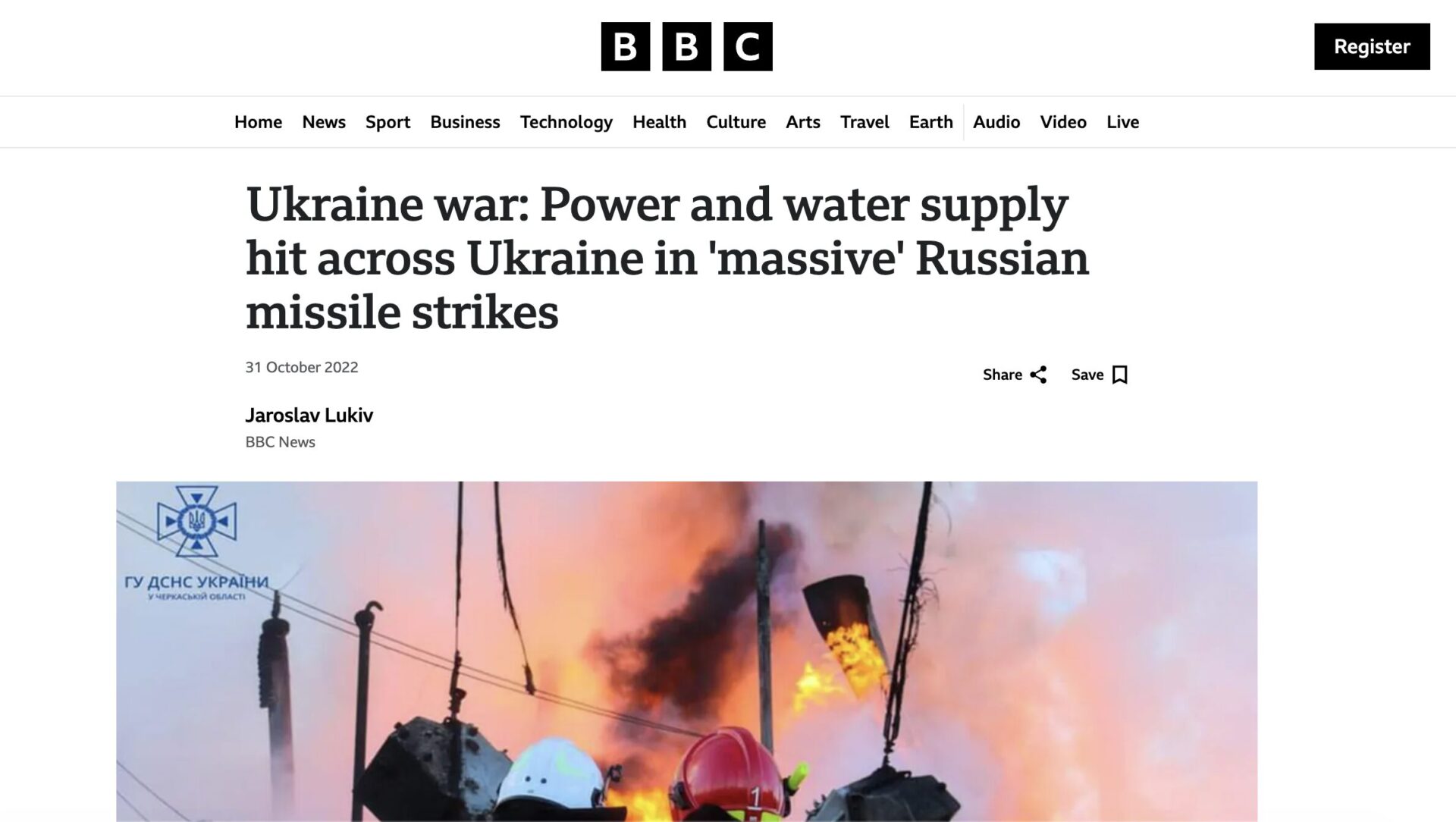
For example, in one article, BBC analyzed the consequences of a massive missile strike in October 2022, noting that “40% of Kyiv residents had no water and 270,000 apartments had no electricity,” and “energy facilities in northeastern Kharkiv were affected.”
A key feature of BBC reporting was its own journalistic verification. The outlet did not rely solely on official statements but independently analyzed videos, satellite images, and eyewitness accounts.
For instance, in one report, journalists analyzed surveillance footage of the Russian strike on a shopping center in Kremenchuk. This approach allowed for accurate determination of the circumstances of attacks and refuted Russian disinformation narratives.
BBC also focused on exposing Moscow’s fakes, particularly claims of “staged” attacks or supposedly non-operational civilian facilities. In one article, journalists analyzed and debunked Russian fake claims that the attack was “accidental” or “staged” and that the shopping center was closed during the strike.
Thus, the broadcaster shaped audience understanding of the attacks as part of Russia’s deliberate campaign against Ukraine’s civilian infrastructure, not as accidental or “false” strikes, as Russian propaganda tried to portray.
In 2026, BBC maintains its humanitarian focus when reporting Russian attacks but emphasizes human stories and civilians’ direct experiences of war even more.
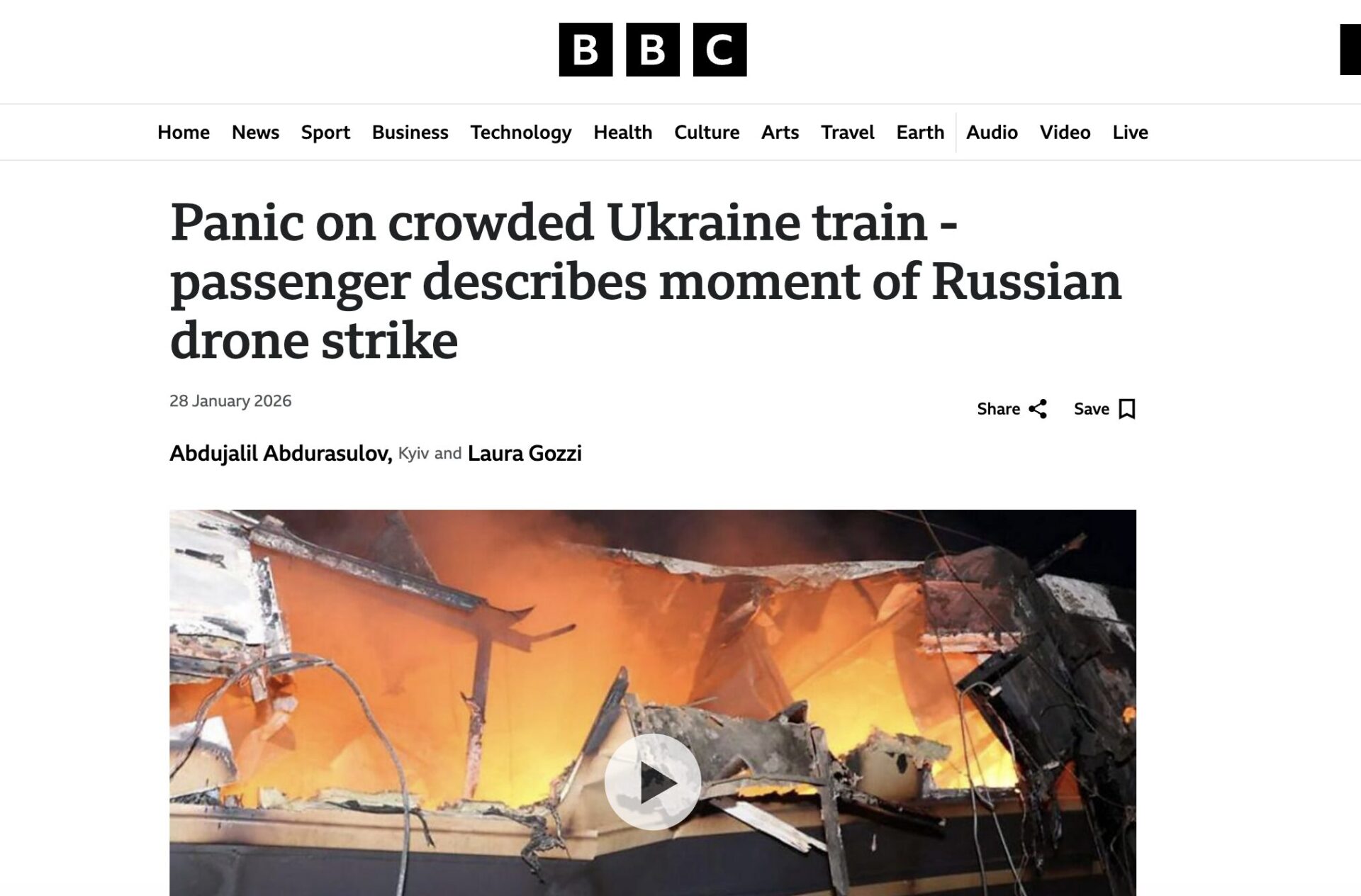
For example, one news piece reported on a strike on a Ukrainian train through the story of a Ukrainian soldier who witnessed the tragedy firsthand.
Reporters also covered a Kyiv apartment with a temperature of 2°C due to Russian attacks on electricity and heating. They noted that “Russia is using the harshest winter recently in Ukraine to damage the country’s energy infrastructure nationwide.”
News reports regularly cover civilian deaths, emphasizing that Russian strikes continue to affect everyday life rather than military targets.
While fact verification and debunking fakes were key in 2022, in 2026 BBC increasingly focuses on firsthand accounts and the long-term effects of the war on Ukrainian society.
German Media: Life Under Fire as Ukraine’s New Reality
In 2022, the German outlet Der Spiegel consistently covered Russian missile strikes in Ukraine, emphasizing the scale of destruction and civilian casualties.
Articles detailed the consequences of attacks across various regions, including strikes on Kyiv and eastern oblasts, regularly citing Ukrainian officials and emergency services as main sources.

Beyond reporting events, Der Spiegel often provided analytical explanations of the logic behind Russian strikes. The outlet described attacks on critical infrastructure as part of a deliberate strategy to pressure Ukrainian society and leadership, also using Western intelligence and military expert data on missile types and Russia’s military capabilities.
Thus, in 2022, Der Spiegel presented missile attacks not just as war episodes but as part of a systematic Russian campaign against civilian objects and residential areas in Ukraine, focusing on Moscow’s responsibility, real human losses, and strategic objectives of the attacks.
In 2026, Der Spiegel continues covering Russian attacks with a clear emphasis on civilian victims and deliberate strikes on critical infrastructure.

For example, one news report covered a Russian strike on a maternity hospital in Zaporizhzhia. Journalists included eyewitness testimonies, creating an emotionally charged narrative highlighting the humanitarian dimension of the war.
The outlet gives significant attention to the consequences of attacks on the energy system, presenting cold as a tool of war. Der Spiegel reports on deliberate strikes on power plants, frozen pipe failures, 24/7 repair work in extreme conditions, and shows life in Kyiv apartments without electricity and heating. Through personal stories, journalists demonstrate how Russian strategy directly disrupts civilians’ everyday lives.
While in 2022 the focus was on documenting destruction and military logic, now the outlet increasingly personalizes the war through individual stories and daily survival under attacks.
Chinese Media: Broadcasting the Kremlin’s Logic
In 2022, the Chinese state agency Xinhua reported Russian missile strikes in Ukraine mostly as brief news summaries with figures and official comments. Reports often noted the number of missiles launched or intercepted, damages, and casualties, citing Ukrainian officials and emergency services.
At the same time, Xinhua regularly gave voice to the Russian side, publishing statements by Volodymyr Putin and the Russian Ministry of Defense about “corresponding strikes” or “large-scale attacks” in response to certain events.
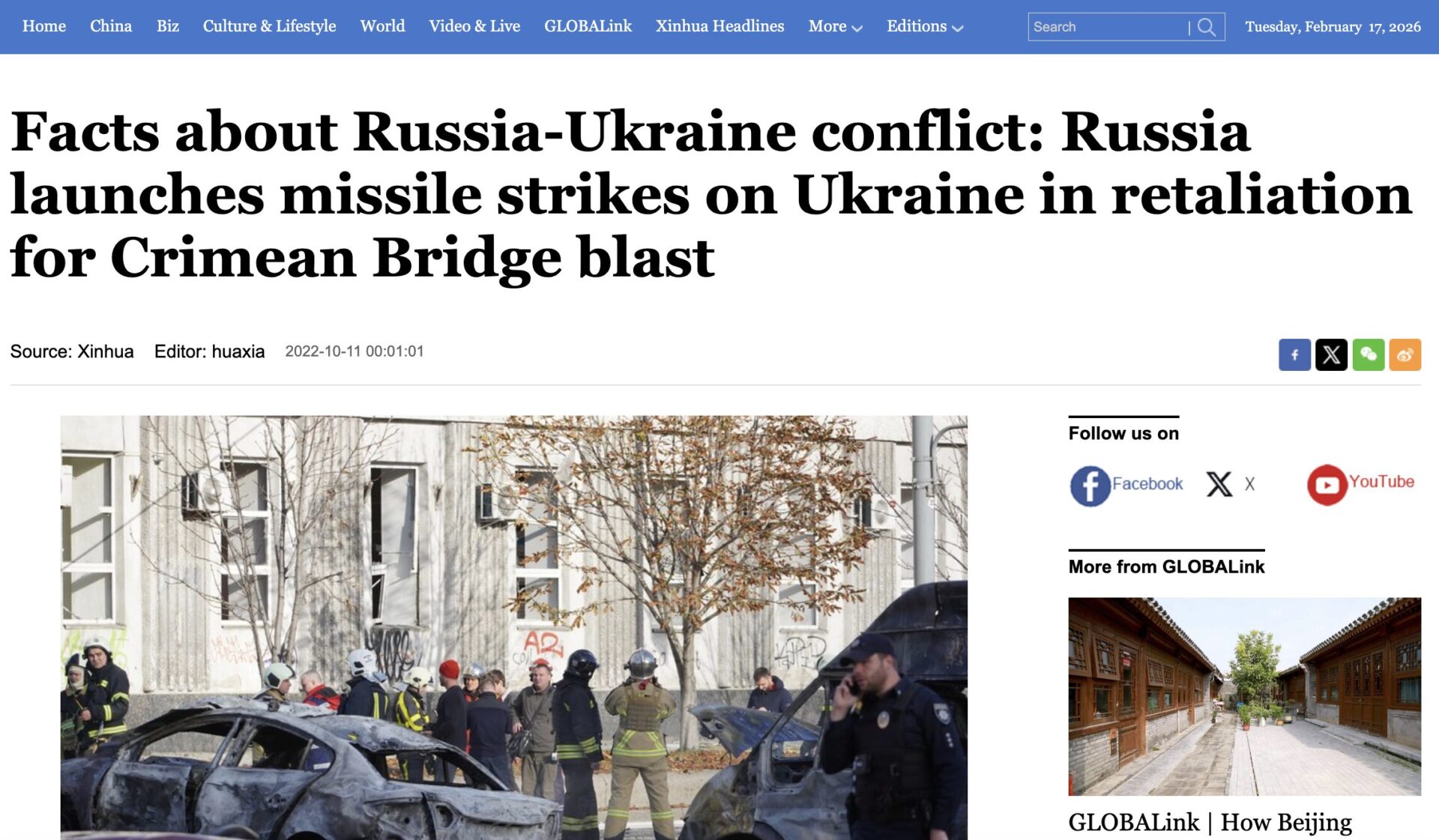
For example, one article quoted Putin saying, “Russia carried out a large-scale attack on Ukrainian targets on Monday in response to the deadly explosion on the Crimean Bridge.”
Such wording framed the attacks as Russia’s reaction rather than unilateral aggression, partially softening Moscow’s responsibility in readers’ eyes.
In 2022, Xinhua combined Ukrainian and Russian sources, maintaining a formally neutral tone but often reproducing Russian explanations for the attacks. Unlike Western media with in-depth analysis and humanitarian focus, Xinhua limited itself to facts, figures, and official statements without critically analyzing propaganda narratives.
In 2026, Xinhua continues covering Russian strikes as brief news summaries, but shifts even more toward the Russian official position. While some articles report civilian casualties, e.g., after an attack on a bus with miners or a drone strike on Odesa, these facts are presented without broader humanitarian or political context.
A large portion of Xinhua’s 2026 coverage consists of Russian Ministry of Defense statements describing strikes as attacks on “military targets,” “transport infrastructure of the Armed Forces of Ukraine,” or facilities related to Ukraine’s defense-industrial complex.
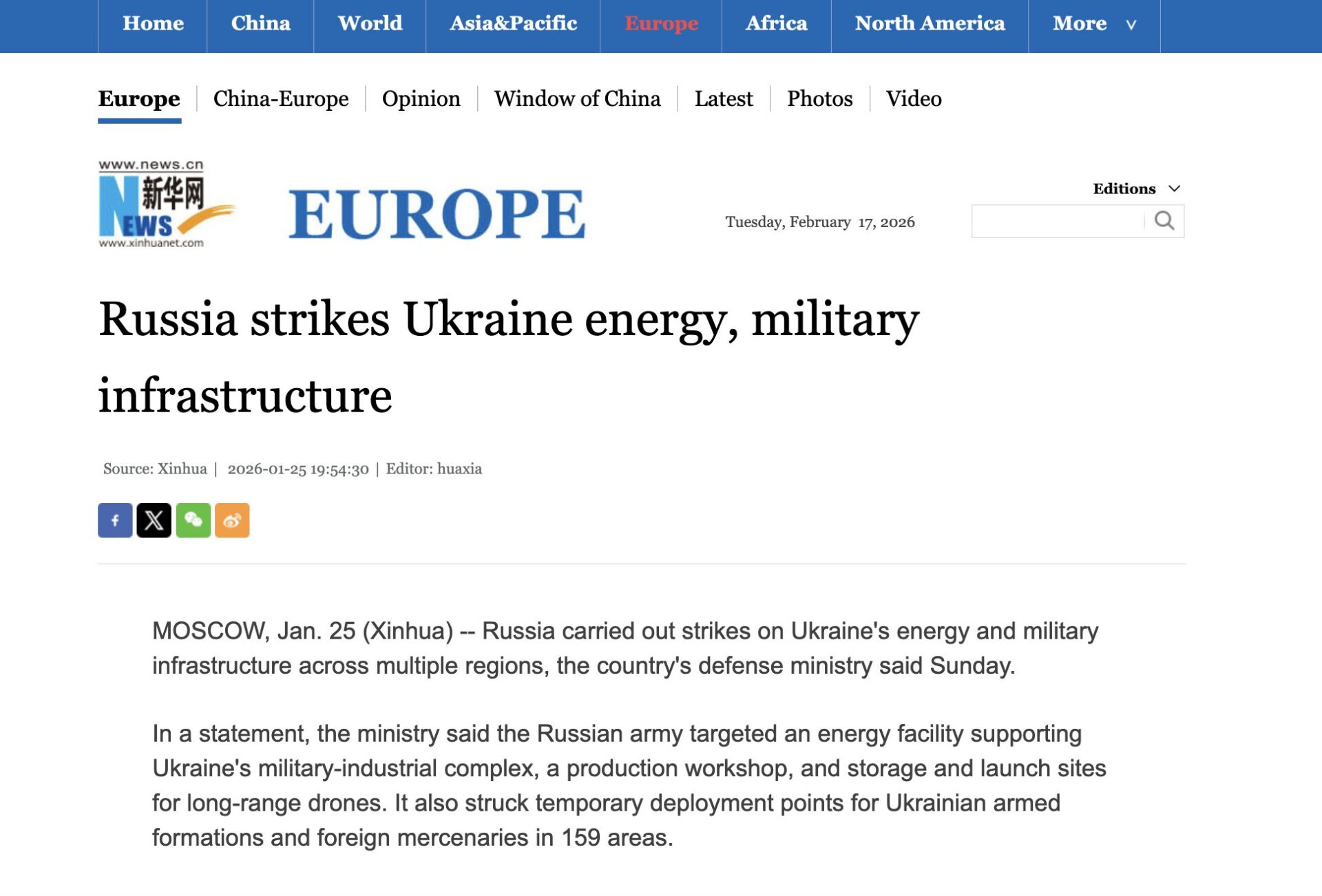
For example, one article notes that the Russian army struck an “energy facility supporting Ukraine’s defense-industrial complex.”
However, the media does not mention the humanitarian catastrophe caused by Russian missile and drone attacks on energy infrastructure, nor that millions of Ukrainians remain without electricity or heating.
Unlike Western media, which focus on civilian casualties and humanitarian consequences, Xinhua systematically reproduces Moscow’s logic, presenting attacks as part of the military rhetoric of “strikes on enemy targets.”
Thus, in 2026, Xinhua, as a Chinese state media outlet, increasingly leans toward the Russian interpretation of the war. Formally maintaining an informational style, the agency effectively broadcasts the Kremlin’s position, minimizing Russia’s responsibility for civilian harm.
Serbian Media: Shelling Through Moscow’s Eyes
In 2022, the Serbian media outlet Politika mostly covered Russian attacks through the lens of Moscow’s official position. Primary sources included statements from the Russian Ministry of Defense, Russian occupation administrations, and the agency Tanjug, which often republished Russian reports. The Ukrainian side was either absent or appeared sporadically without equivalent representation.
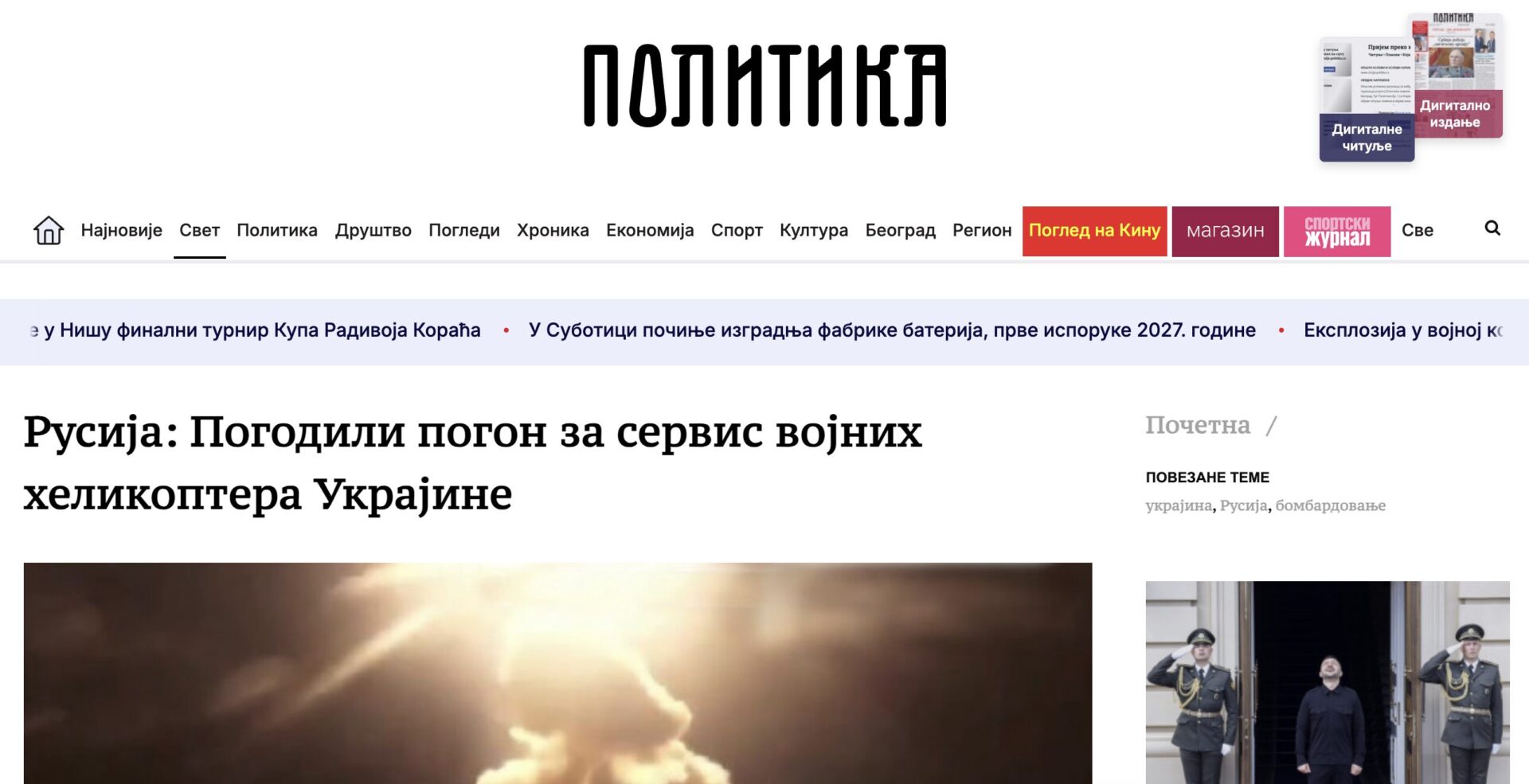
Reports regularly shifted responsibility for the strikes onto Ukraine. Politika wrote about alleged Ukrainian Armed Forces shelling of Zaporizhzhia NPP, Donbas bridges, or Russian border regions, presenting this as the main reason for escalation. Even when civilian objects were hit, the focus was on Russian “precision strikes” or “responses to Ukrainian provocations.”
For example, one article described Russia’s call for international organizations to condemn the “criminal actions” of Kyiv authorities involved in acts of nuclear terrorism. Another reported the largest shelling of Donetsk city center by the Ukrainian army since 2014.
Thus, in 2022, Politika did not just report events but effectively transmitted the Russian war narrative, portraying Ukraine as provoking shelling and threatening civilians.
In 2026, Politika continues to present the war exclusively from the Russian perspective. Most news is based on statements from the Russian Ministry of Defense, security services, military bloggers, and agencies like TASS, while the Ukrainian position is either absent or appears sporadically without real impact on the overall narrative.
Most reports emphasize Russia’s “air defense successes,” allegedly thwarted Ukrainian attacks, and “precision strikes” on targets in Ukraine. Even strikes in Ukrainian regions, such as Sumy oblast, are presented solely through Russian sources, e.g., as destruction of “UAF military trains” or “drone control points,” without mentioning civilian casualties or alternative assessments.
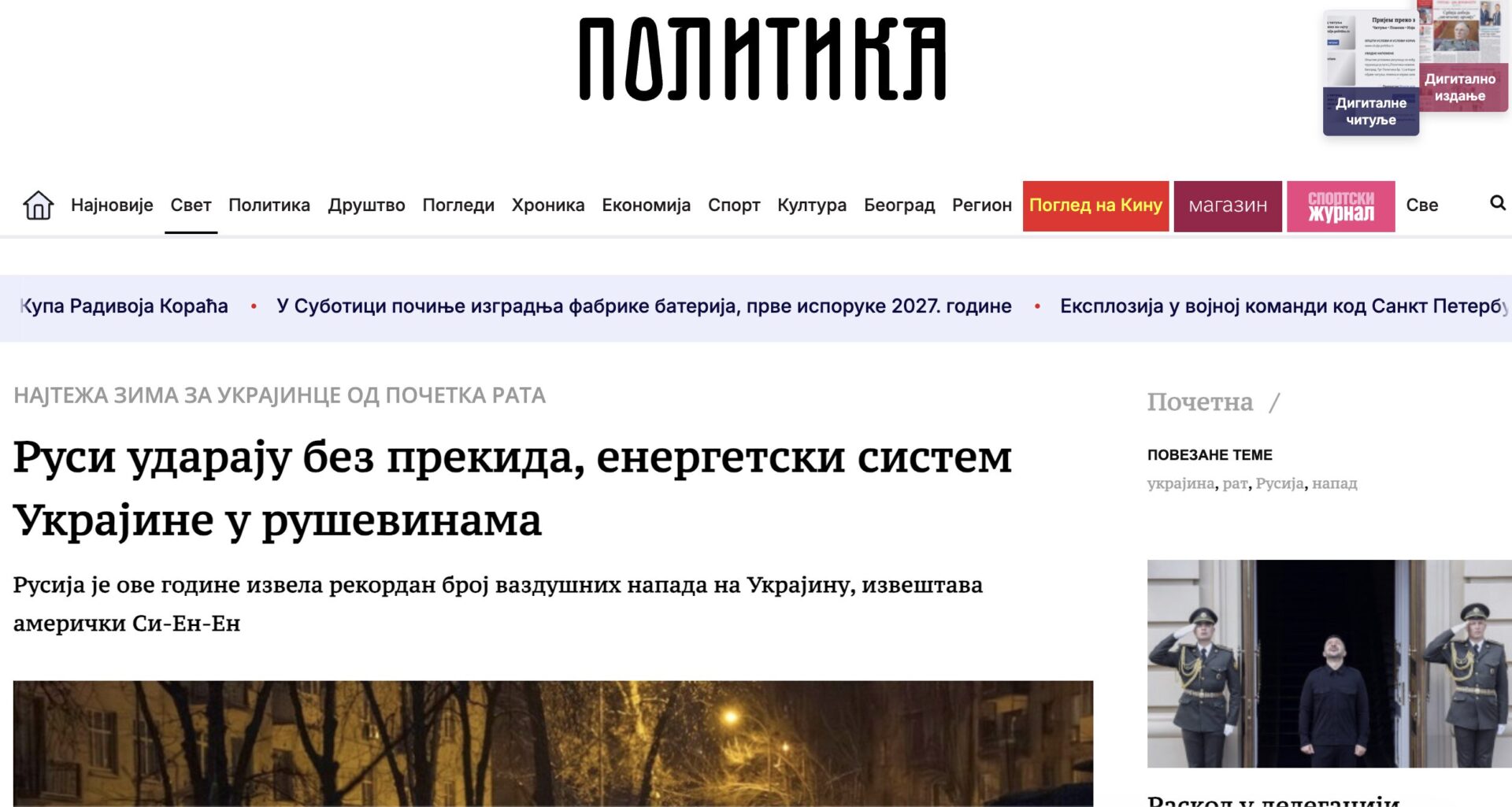
Notably, the humanitarian dimension of the war almost disappears from Politika’s agenda. Over a week, the outlet mentions only one report on strikes against Ukraine’s energy sector and power outages in Kyiv and other cities—without a detailed description of consequences for civilians. Meanwhile, much attention is given to the shelling of Russian territory, e.g., Belgorod, presented as key daily events.
Thus, in 2026, Politika not only reproduces Russian statements but almost entirely constructs the war narrative through the Kremlin’s eyes. Even strikes on Ukrainian civilian objects are presented through Russian military rhetoric or ignored, portraying Russia as “defending itself” rather than conducting systematic attacks on civilians.
Conclusion
In summary, analysis shows fundamentally different journalistic approaches to interpreting the war. Western outlets – The New York Times, BBC, and Der Spiegel – consistently present Russian strikes as deliberate aggression against civilians and critical infrastructure, combining factual reporting with analysis, verification, and a humanitarian dimension.
Over almost four years of full-scale war, their focus has increasingly shifted toward personalized stories, long-term consequences of destruction, and the use of the energy crisis as a tool of war.
Meanwhile, Chinese agency Xinhua formally maintains a neutral style but systematically reproduces Russian official rhetoric, presenting attacks as “strikes on military targets” and minimizing humanitarian consequences. This approach shifts responsibility from the aggressor to an abstract “military logic of conflict,” depriving the audience of a full understanding of civilian suffering.
An even more pro-Russian stance is seen in Serbian media outlet Politika, which almost entirely relies on Kremlin sources, transmitting narratives about “corresponding strikes” and “Ukrainian provocations,” largely ignoring civilian losses in Ukraine. In this narrative, Russia appears not as the aggressor but as a party “defending itself.”
Thus, media not only inform about shelling but actively shape perceptions of the war through source selection, emphasis, and context. Western journalism aims to explain events, show humanitarian consequences, and hold Russia accountable, whereas Chinese and Serbian state or pro-government media reproduce or soften Russian narratives.
This confirms that the information space remains an important battleground, where the war is interpreted differently depending on countries’ political and media priorities.
Anna Romaniv