

The world press has written a lot about how Russia is circumventing the sanctions of the civilized world, including the elemental base for the creation of the latest weapons. But for some reason, leading publications have paid little attention to another pariah state, Belarus. Although the authoritarian regime of dictator Alexander Lukashenko receives significant support from the countries of the civilized world. Of course, this is done through shady schemes, which we will discuss in this article.
Exports to the EU countries
Poland paid $55 million to Belarus in 2023. The main import items are grains, oil seeds, and meals (for example, Poland banned the import of rapeseed meal from Ukraine last year under pressure from local protesters). It’s also worth noting that in the first two years of the war, agricultural exports from Belarus to Poland were on the rise. There are reasonable suspicions that this trend will continue.
Smuggled Belarusian timber is also being actively imported into Poland. This is stated in a joint article by investigative journalists from Ukraine, Belarus, and Poland. The illegal scheme works through fake documents as if the products come from Kazakhstan. The Polish Ministry of Foreign Affairs and the customs authorities have not commented on the situation, which is not surprising.
Another fact. Exports from Belarus to Hungary in 2023 are estimated at more than $114 million, one of the highest figures in the last decade. In fact, Hungary, which currently holds the EU presidency, has never hidden its loyalty to the dictatorial regimes of Putin and Lukashenko. Thus, after the falsification of the presidential election results, political repression of the opposition, and the crackdown on peaceful protesters, Belarus found itself in international isolation. The only EU member to send an ambassador to the country was Hungary.
Since then, Hungary and Belarus have developed quite friendly relations. At the end of May, during Foreign Minister Péter Szijjártó’s visit to Minsk, the two sides signed a memorandum on deepening economic cooperation in the fields of energy, agriculture, industry, healthcare, and more. In particular, there were already significant Hungarian exports in agriculture and the food industry, which were not affected by the sanctions, and after the war, trade only gained momentum amid the isolation of the Lukashenko regime. The two sides also exchanged transportation permits to simplify supply logistics.
It is worth reminding that Poland and Hungary, as well as Bulgaria, Slovakia, and Romania, were at the forefront of the grain protests against Ukraine.
The British vector
The UK has been one of Ukraine’s key allies since the beginning of the full-scale war. Like EU countries, it has not been immune to shadowy schemes. Belarus is the main supplier of tobacco to the UK. The UK government reported that from July 2022 to June 2023, more than $202 million worth of tobacco and beverages were imported from Belarus alone. This is 96% of all supplies from the totalitarian country to the UK.
It is worth noting that the owners of Tabak-Invest, Pavel Topuzidis and Viktor Petrovich, one of the richest people in Belarus and supporters of Lukashenko’s regime, are behind these illegal supplies. They have been under US sanctions since December 5, 2023.
These are just a few cases from open sources or information from investigative journalists. In reality, the problem is much more complex and systemic. And European leaders should think about whether gray trade schemes bypassing sanctions bring victory over global evil closer. Let me just remind you that today’s Belarus is part of a union state with the Russian Federation, and is a kind of multifunctional tool in the war against Ukraine.
Expert opinion
Franak Viacorka, Chief Advisor to the duly elected President of Belarus, Sviatlana Tsikhanouskaya
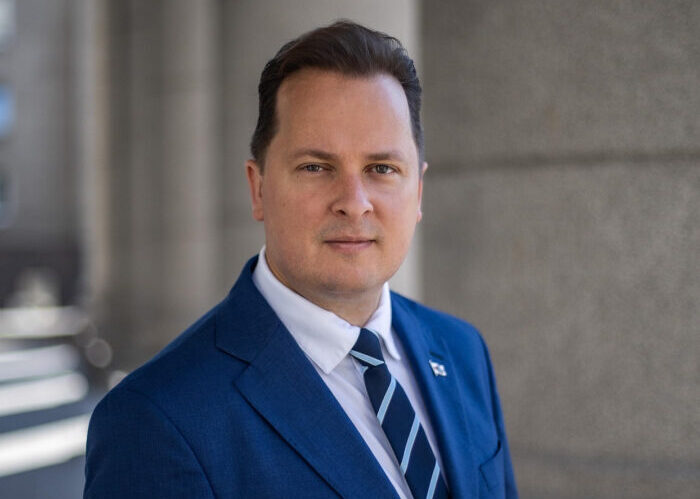
Lukashenko’s regime is an organized criminal group, a mafia. For decades, they have been building various smuggling schemes. This is how the regime made money by trading with both Russia and the West. Now that sanctions have been imposed, they have begun to earn even more by helping Russia circumvent these sanctions. Belarus is sanctioned on imports, while Russia is sanctioned on exports. So Russia buys products through Belarus, and Belarus sells products through Russia.
There are a lot of schemes. Lukashenko’s mafia is very flexible: when one loophole is closed, they immediately come up with new ones: they create shell companies, register them with foreigners, and so on. All of this is controlled by Lukashenko personally and those close to him. The EU and other countries are not able to react so quickly, to close these loopholes. They spent six months preparing a package, imposing sanctions, and during this time Lukashenko’s regime has developed new schemes. There is a constant catch-up.
What needs to be done? First, the EU needs to introduce effective mechanisms for monitoring the implementation of sanctions; second, the states that border Belarus need resources to control the flows at customs; third, we need fast sanctions tools that would allow us to quickly close loopholes. Unless this happens, there will be no result. Because not only the Putin and Lukashenko regimes cooperate, there are loyal businesses in fully democratic countries that make money on this.
Denys Kuzmin, an expert at the Center for International Studies at I.I. Mechnikov Odesa National University
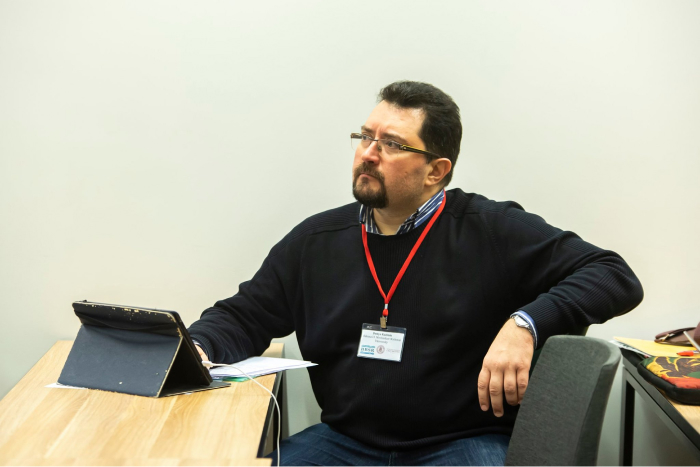
Ukraine has to get used to the fact that things are not so simple in modern international relations, which combine idealistic views (i.e., countries rely on certain values) and a pragmatic approach. There are interests not only of states but also of businesses. For us, it is the aggressor country and their henchmen, and in the West, no one is going to destroy their economic potential for our sake. They have already lost too much when most European businesses left Russia and Belarus.
Secondly, Belarus has its own game. No matter who Lukashenko is, the current situation for Europe is still much better than if Belarus were to fully integrate with the Russian Federation. Yes, they have a common state, but imagine if Belarus became a province within the Russian Federation. It would mean opening a new front, it would mean additional borders with Russia. The regime that exists, though pro-Russian, still serves as a buffer zone between Europe and Russia. That’s why Lukashenko is quite successful in manipulating this. That’s where the trade comes from.
Third, we live in an open world. Intermediaries, various offshore companies – business leaks out. Sometimes the sanctions are quite severe, but then the goods end up in Belarus or Russia through third or fourth hands. This is the modern world.
Sergey Yakubovskiy, Doctor of Economics, Professor at the I. Mechnikov National University of Kyiv.
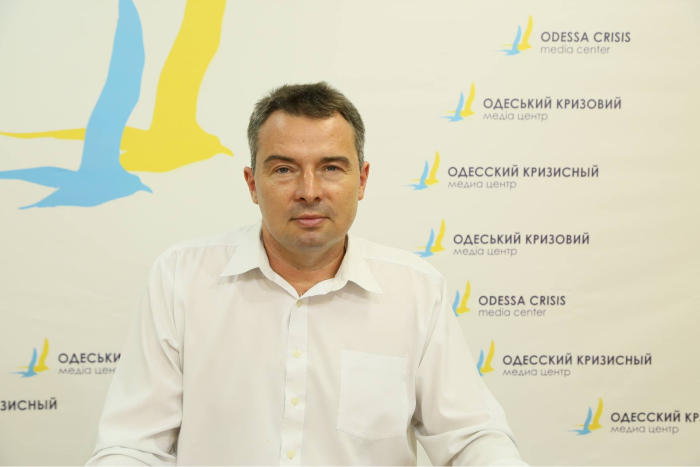
The situation with Russia is similar. Some states support the sanctions policy, and there is business, which is very difficult to control in developed countries. Not only in Ukraine but also in Europe, there is a shadow sector. Of course, it is much smaller, but on average, about 10% of the economy there is in the shadows. Thanks to this, both Belarus and Russia sell their products. Russia buys what they need for the military industry. This is a problem of the global economy. In addition, governments usually have no desire to quarrel with business, because in democratic countries, business has a significant impact on election results. There is the official position of countries, and there are realities.
Gennadiy Radchenko, Advisor to the Head of the Polish-Ukrainian Chamber of Commerce
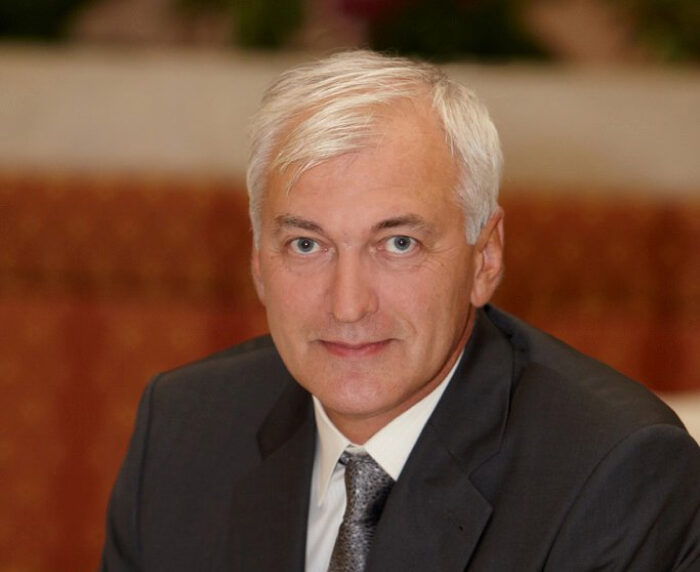
The Polish media often report on smuggling on the Polish-Russian and Polish-Belarusian border. These reports concern primarily cigarettes and drugs, which are transported using both traditional methods – in caches in trucks and buses – and quite modern means: balloons and drones. It can be said that Polish border guards and customs officers are quite successful in the fight against “ordinary smugglers”.
But on the other hand, there is a fairly lively legal trade between Poland, the EU, on the one hand, and Russia and Belarus, on the other. Until recently, it was agricultural products. Including those stolen in the occupied part of Ukraine. It’s no secret that Russian gas prevails at European gas stations, and fertilizers legally imported from Russia and Belarus occupy a significant segment of the European market.
The sanctions lists are still far from complete economic isolation of the aggressor and its supporters, which allows them to replenish the military budget.
Conclusions
Due to its incomplete involvement in the war with Ukraine, Belarus successfully uses its secondary role within the framework of a joint aggressor state with Russia. Accordingly, Europe turns a blind eye to some of the Lukashenko regime’s international trade deals. There is also an interest of certain business circles in Europe itself in smuggling from Belarus. In addition, within the global economy, current sanctions mechanisms are not always effective. An efficient sanctions policy that can quickly respond to current challenges, as well as strict control over the implementation of sanctions, is the only right way to fight smuggling.
Kostyantyn Grechany