

Our speaker, Dovydas Vitkauskas, has 25 years of practical experience in setting and promoting standards of good governance across the European continent. He believes the West should weigh carefully the interest of preserving its supremacy in the World’s financial system against the need to help rebuild Ukraine.
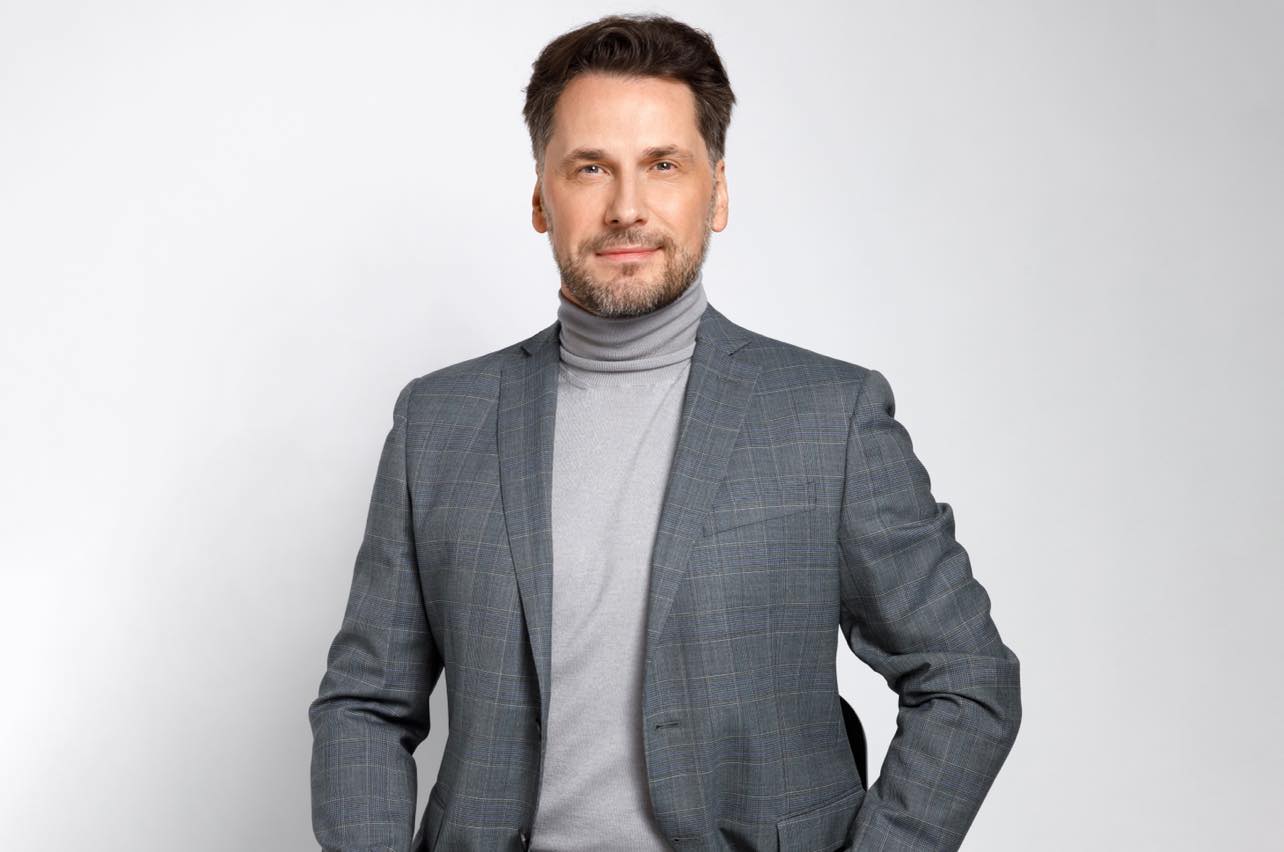
Dovydas Vitkauskas (DV): formerly a senior lawyer at the European Court of Human Rights, Team Leader of various EU-funded rule of law projects, including in Ukraine. Currently also a Member of the Council for Better Regulation, providing advice to the Lithuanian government institutions. Dovydas is also involved in various charitable causes to help Ukraine
Question: Why has the West been slow in taking Russian assets and giving them to Ukraine?
DV replies: The US, EU and other Western countries have been rather quick in adopting sanctions against the Russian sovereign and private assets before and following the 2022 military intervention. However, the purpose of sanctions is not to punish the rogue actor, but to exert pressure to change political course. Sanctions are ultimately a preventive, and not a reactive, tool. Some populist politicians are confusing the picture even more by wrapping together two separate issues with distinct political, legal and economic implications – that is, dealing with Russia on the one hand, and helping Ukraine on the other. As a result, promises and expectations do not always match reality.
Q: Why should these issues be separate?
DV: The West, and especially the US, have a distinct national interest – namely, to preserve the supremacy of the US Dollar (USD) as a dominant reserve and transaction currency. Currently about 60% of global financial reserves are kept in dollar assets, and up to 60% of global business settlements are USD-denominated. The US wants to avoid a message that it is no longer a safe place to invest. What would be the use of any sanctions in a future conflict, if the West no longer controlled the global financial system? Secondly, in case of confiscation, the West, especially EU countries, are afraid of tit-for-tat retaliation by Russia against Western assets there. It is enough to note that Austrian and Italian banks currently hold tens of billions of euros worth of credit and collateral in Russia. Thirdly, our politicians may want one thing, but our lawyers and judges might disagree – that’s what we call “the rule of law” in the West, which has worked so far, to a certain extent.
Q: Which Western country holds the key to finally addressing the issue of sanctioned Russian assets?
DV: Without a doubt, the United States. The US is the only country which has a profound political experience in imposing sanctions on various rogue players, especially since the Cuba sanctions in the 1960s. Secondly, the US have a readily-made legal framework, including by way of executive (President’s) authority, to vest the title of a sanctioned asset – that is, to confiscate – on the basis of so-called IEEPA, TWEA, RICO, CAATSA, DETER, DASKAA and other legislative instruments. The US also has administrative, civil and criminal forfeiture to deal with assets of illicit origin. The US confiscated about USD 1.7 billion belonging to Iraq commercial banks following the military intervention in 2003. Only two years ago the US took away some Afghan Central Bank dollar assets to compensate 9/11 victims. Previously the Trump administration had even used frozen US-based shares of Venezuelan state-owned oil company CITGO to fund the political activities of the then acting President of Venezuela Juan Guaido. So the US has the know-how of action on different types of foreign sanctioned assets, unlike the EU.
Q: So why not act against sanctioned Russian assets now?
DV: It’s the problem of caliber of sanctioned Russian assets, not legal nature of that action.
Q: How much sanctioned Russian property is there in the West?
DV: We actually don’t know the precise number. Firstly, a distinction should be made between sanctioned Russian sovereign and private assets. Sovereign assets are much easier to account for and find legal basis to deal with. But the only source with specific total numbers of sanctioned Russian sovereign assets is the Russian Central Bank (RCB) itself – not exactly an impartial source in terms of either factual accuracy or intentions. RCB claims that some “USD 300 billion” of its financial holdings are now frozen in the West in the shape of currency, government bonds and other securities. At the same time, RCB mentions that the total of its reserves as of December 2023 is a significantly larger amount of USD 612 billion, which raises a logical question: where does Russia hold its remaining “free” or “unfrozen” 312 billion of international reserves, if not in the West – China, gold? The only number – and the biggest chunk of Russian property in one place – that we can trust is EUR 191 billion of sanctioned Russian sovereign assets held by a Belgian clearing house Euroclear.
Q: So the Russian Central Bank continues to earn money in the West?
DV: Yes. The Euroclear holdings earned RCB about EUR 821 million profit in 2022, and EUR 4.4 billion profit in 2023, due to rising interest rates. These profits have been immobilised by sanctions together with the EUR 191 billion principal held at Euroclear. Belgium also received somewhat more than EUR 1 billion in taxes from these profits. G7 are currently discussing how to use the Euroclear and other similar smaller RCB holdings elsewhere to help Ukraine. An option to confiscate outright the whole principal is unrealistic, as Germany and some other EU countries would articulate the risks to the status of the Euro as a second preferred global reserve and transaction currency, for the same reasons as those indicated above with regard to Dollar global supremacy. An idea to use the Euroclear principal of EUR 191 billion as a collateral for new debt to be issued by European countries is also unrealistic, in my opinion, because putting a collateral for a third person’s debt is not unlike vesting that guarantee to someone else – or, in other words, not dissimilar from confiscation. The only option that realistically remains is to tax the profits of Russian sovereign holdings. But this will generate at best one or two billion USD per year, not the hundreds of billions that Ukraine needs.
Q: What about sanctioned Russian private assets?
DV: Western countries, where most of those properties of sanctioned Russian individuals are located, have rather underdeveloped eGovernment, as a result of which it is hard to know or access any quality electronic data on who owns what, or aggregate that data for statistical purposes. Putting restrictions on property – or visualising those restrictions – is frequently not automated either. In order to know exact numbers of various types of sanctioned Russian private assets, one needs to browse through various paper registers, or rely on data collected by governments themselves. Earlier last year the European Commission asked EU member states to respond on how much sanctioned private Russian assets were frozen in each country. Belgium, Germany and Italy reported more than EUR 3 billion worth of such assets each. Malta and Cyprus reported EUR 200 thousand. It’s not a joke, unfortunately. Switzerland appears to hold some EUR 8 billion, and the UK almost EUR 20 billion, of sanctioned Russian private assets. Taking them outright will be impossible due to the established legal limitations, however.
Q: Why not take it and give it to Ukraine?
DV: Sanctioned private assets are not criminal, by default. Moreover, the EU as a whole, or most EU countries separately, do not even have a legal basis similar to “forfeiture” in the US where one’s property can be taken without a criminal conviction. Even a few European countries (UK, Ireland, Italy etc.) that have a legal basis for non-conviction-based confiscation, will face hundreds of thousands in legal fees and years of bulky judicial processes to prove a “criminal” origin of sanctioned assets in each and every case. Maybe they will succeed in 1 or 2 percent of cases – for instance, where a sanctioned person willingly tries to circumvent sanctions. While being sanctioned is not a crime, evading sanctions is. A sanctioned oligarch Konstantin Malofeyev lost USD 5 million in the US last year for this reason. While the Malofeyev proceeds were transferred by the US government to Ukraine as compensation for Russia’s war, such cases will be a teardrop in the ocean. Canada has the most assertive and dedicated legal framework to take away sanctioned private Russian assets by way of “repurposing” for Ukraine, but it does not have much Russian property to back it up. There is no doubt that some sanctioned Russian assets, such as EU-based companies with dependence on sanctioned supply chains, will go bankrupt. One way or the other, it is not much for Ukraine to expect.
Q: So what advice would you give the West regarding sanctioned Russian assets?
DV: It took hundreds of years for the West to create its global financial supremacy as a “safe heaven”, and building the international system of rules of investor and trade protection. The Western countries can still borrow relatively cheaply, or print money without significant consequences, as a result of that supremacy. Dismantling this system of respect for property rights would come at a great cost firstly for the West itself, and can be used as an advantage by new rogue players or their enablers looking for alternative financial heavens. By way of a simple cost-benefit analysis, continuing to put pressure by way of sanctions on the Russian government is a better strategy than confiscation of sanctioned Russian assets. As mentioned above, the ultimate purpose of sanctions is not to punish but to change the rogue regime which threatens World security.
Q: Has this strategy worked in the past?
DV: No (laughing). Western sanctions are still in place with regard to Cuba, Iran, North Korea after decades. But we have no other option, especially in a World with diminishing economic power of the West.