


At the end of March 2024, Europe was hit by a dust storm from the Sahara Desert in northern Africa. It was accompanied by haze and reduced visibility.
This phenomenon is not unheard of, but it raises many questions, especially among the public. Ukraine was also affected by the storm. On April 1st, dust covered several regions: first the south, then the centre, and eventually reached the west.
One of the main concerns for Ukrainians was the storm’s impact on air pollution.
We spoke with an ecology expert and sent an inquiry to the Ministry of Environmental Protection and Natural Resources of Ukraine regarding the storm’s consequences. So, what is this phenomenon? Can it be considered an anomaly, and does it significantly affect the environment?

Is it a storm?
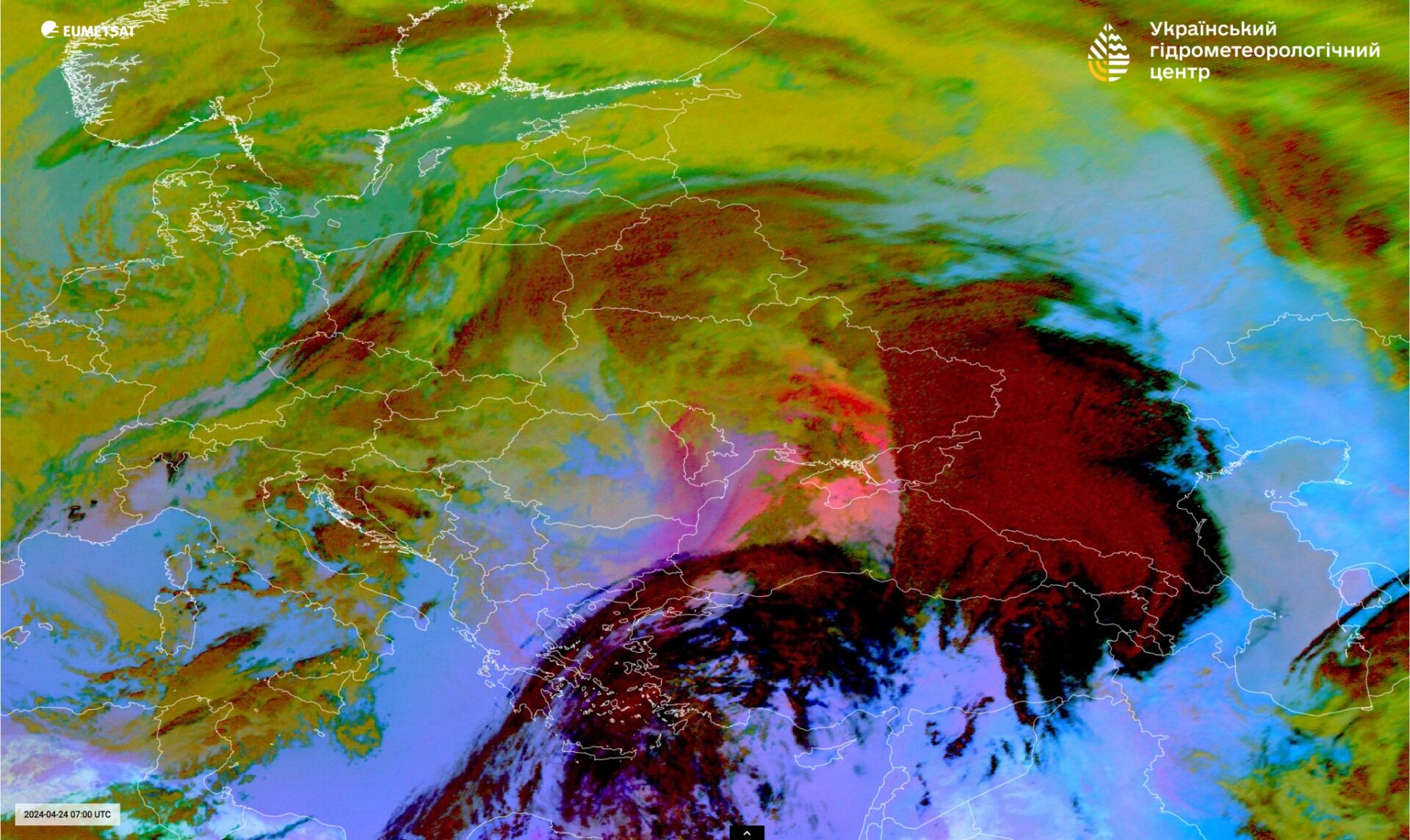
According to information from the State Emergency Service of Ukraine, from March 31st to April 1st, 2024, at an altitude of 1-2 km above Ukraine, southwestern streams were observed carrying hot and dusty air from the northern regions of Africa.
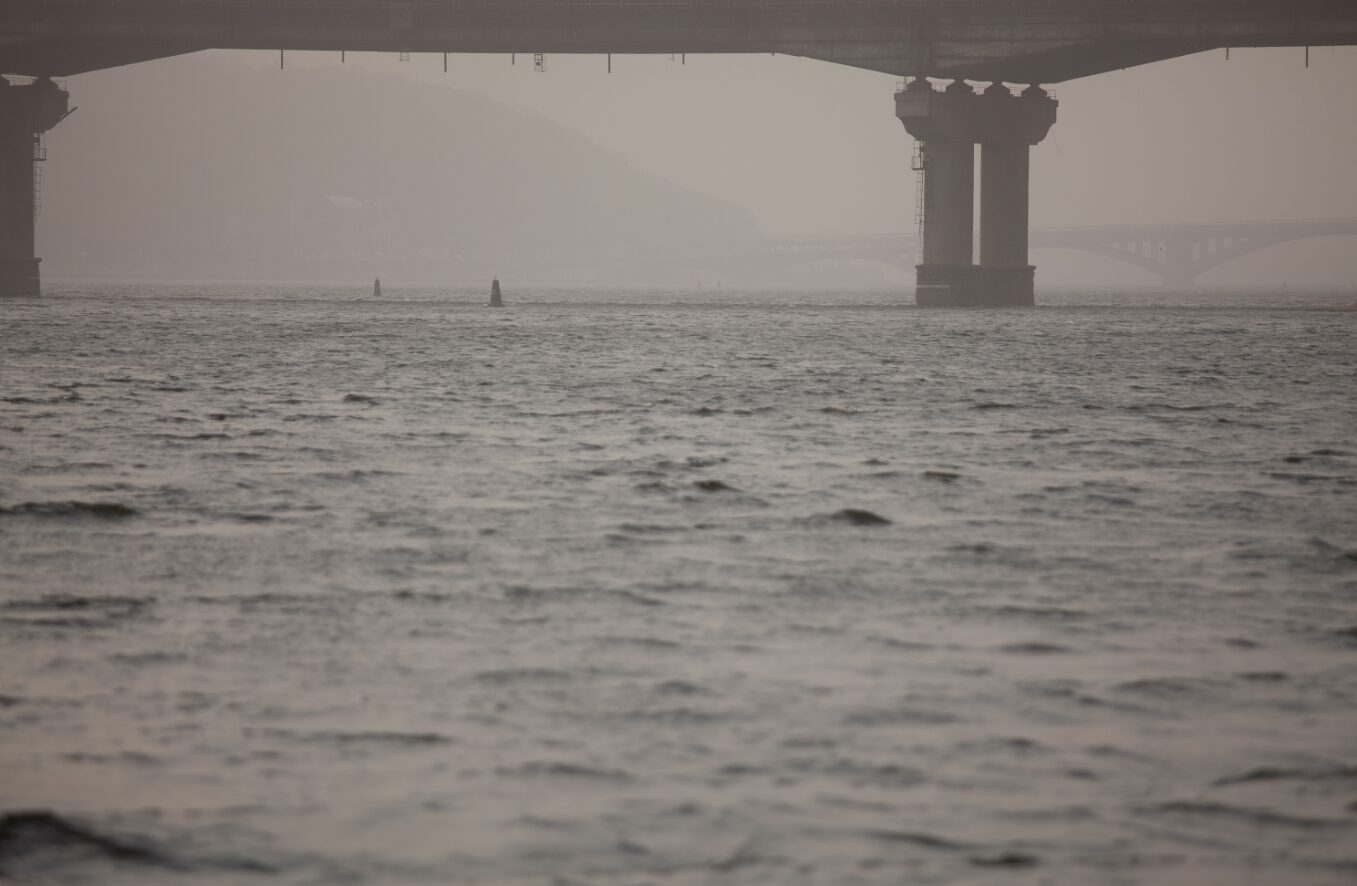
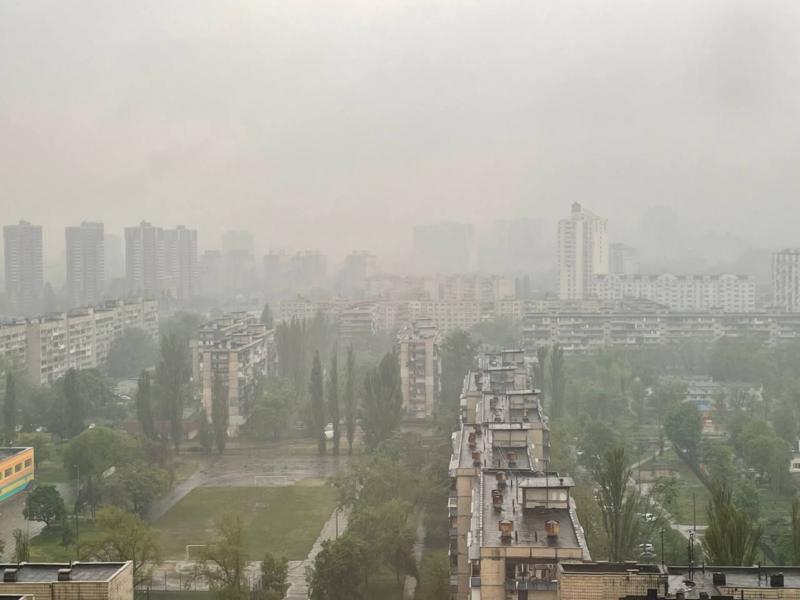
During this period, meteorological stations in Ukraine recorded haze (accumulation of suspended solid particles such as dust, smoke, and ash in the lower atmospheric layer, leading to reduced visibility), with a meteorological visibility range of 10 kilometres.
Vladyslav Mykhailenko, PhD in Ecology, Researcher at the State Organization “Institute Of Market And Economic&Ecological Researches of the National Academy of Sciences of Ukraine”, co-founder of the NGO “City of the Future” explains that there are different approaches to defining the concept of a storm.

For instance, the definition provided by the World Meteorological Organization is as follows: “A dust storm is an ensemble of particles of dust or sand energetically lifted to great heights by a strong and turbulent wind (WMO, 2017).”
“I agree; this is quite a vague definition. At the same time, meteorologists from the Ukrainian Hydrometeorological Center note that for a dust storm, wind speeds should exceed 12 meters per second and last for 3 hours or more”, — explains the ecologist.
On the other hand, the United Nations Office for Disaster Risk Reduction (UNDRR) provides a classification of dust storms based on two main criteria: visibility and knots (kt).
If we convert knots to meters per second (a more understandable metric), we get the following classification:
- “light” sand or dust storm: visibility <3000 m and wind gusts >=10.28 meters per second;
- “moderate” sand or dust storm: visibility <1500 m and wind gusts >=15.42 meters per second;
- “heavy” sand or dust storm: visibility <500 m and wind gusts >=20.56 meters per second.
According to this definition, it cannot be stated that a storm occurred in Ukraine.
“For example, in Kyiv on April 2nd, wind speeds were 15-20 meters per second, which, in my opinion, can be correctly called a dust storm. However, the wind was calm in Odesa, and dust lingered in the air and settled on the ground, cars, etc. Here, “dust cloud” or “dust pollution” is more appropriate”, — adds Vladyslav Mykhailenko.
The Ministry of Environmental Protection also shares this view. On April 2-3, 2024, a cold atmospheric front moving from west to east across the country caused dangerous wind gusts of 15-22 meters per second.
Ahead of the front, at a height of 10-20 meters above the ground, wind gusts temporarily lifted dust and sand onto Ukraine’s territory, worsening visibility.
“A natural phenomenon — a severe dust storm — was not recorded by meteorological stations”, — explain the Ministry representatives.
Anzhelika Hanchuk, a meteorologist at the Ukrainian Hydrometeorological Center, explained on “Radio Culture” that the phenomenon observed in Ukraine is more correctly termed haze rather than a dust or sand storm. This is mainly because most of the dust in Ukraine’s air was of local origin.
The sandstorm was explicitly observed in the Sahara from April 21st to 25th. It was characterised by lifting a significant amount of sand into the atmosphere. The wind gusts moved from those latitudes through the Mediterranean Sea to Central Europe and then to Ukraine. A dust storm had already covered Europe — meaning only the finest sand particles remained in the atmosphere.
“When we observed a sandstorm over the Sahara, a large amount of sand gradually rose into the atmosphere over five days. And even when the wind passed over the Mediterranean Sea, some sand settled. But dust still made its way to Europe, and so intensely that it reached latitudes where Scandinavia is located”, — explained the meteorologist.
It is worth noting that Sahara dust spread across Europe almost until the end of the month. For example, on April 24th, it reached Greece, where a characteristic orange-coloured haze was observed.

Sand from the Sahara desert — an anomalous phenomenon, but not a unique one
Every year, 60 to 200 million tons of mineral dust are carried from the Sahara. While larger particles (sand) quickly return to Earth, the smallest particles (dust) can sometimes travel thousands of kilometres.
For instance, in 2020, the United States experienced the most extensive Sahara dust storm in history, dubbed “Godzilla” by experts.
This natural phenomenon counterbalances the warming caused by greenhouse gases, demonstrating how desert dust can influence global temperature.
Saharan dust storms extend far beyond the desert itself and Africa’s borders. This year, they reached Europe and North America, profoundly impacting global ecological systems, as the Ministry of Environment of Ukraine explained.
“This dust, originating from the vast Sahara desert, embarks on transcontinental journeys that affect climate, ocean biology, and ecosystems far from its source”, — said Ministry of Environmental Protection officials.
For Saharan dust (sand) to reach Ukraine, two conditions must coincide. Firstly, local conditions, including high wind intensity, lift dust clouds significantly. Secondly, synoptic conditions allow for the “capture” and transport of this dust over considerable distances.
Meteorologist Angelika Hanchuk notes that the spring period is most characteristic for such phenomena, as it is the driest and windiest.
“It’s the most conducive time for such events to occur. And it did have an impact on our territory. We observed the movement of this dust on satellite images of our country,” — says the expert.
Dryness is the most favourable condition for dust and sand storms. Even without Sahara dust, Ukraine periodically experiences dust storms in arid regions, namely in the East and South. Strong wind gusts in dry climates lift dust particles into the atmosphere.
What are the consequences of a dust storm for climate and population?
For a storm to threaten the population, it must last more than three hours.
The most dangerous places are those where dust or sand storms originate. These are often deserts. In such areas, sand movement can reach wind speeds. And wind gusts can reach speeds of up to 30 meters per second. Such gusts can uproot trees.
Since the storm reached Ukraine much later and there were fewer particulates in the air, it did not pose a significant threat.
Ecologist Vladislav Mykhailenko notes that while there is a danger from the storm, it shouldn’t be overstated. In other words, the Sahara wind itself isn’t a global threat. The real danger lies in the dust, which is hazardous to people with respiratory diseases.
It’s important that during a dust storm, the air quality is restored relatively quickly under favourable conditions. It’s also crucial to note that reduced visibility during a dust storm can disrupt transportation and aviation systems.
“Take, for example, the super-dust storm 2021 in East Asia: in Mongolia, there were ten deaths, 12 provinces in northern China were affected, thousands of flights were cancelled, and public transport systems were shut down. Additionally, dust storms can destroy the topsoil, damage crops, disrupt transportation and trade, and diminish the recreational value of landscapes. But these require specific dust storm conditions”, — explains the expert.
Air pollution monitoring is carried out according to methodological guidelines in 35 cities in Ukraine.
According to observations from April 1-3, the highest average daily concentrations of suspended particles (dust) at levels of 2.8-6.4 times the average daily permissible concentration (ADPC) were recorded in the air of the cities of Kryvyi Rih, Dnipro, and Kamyanske.
Such levels of suspended particles are characteristic of these cities, corresponding to annual average concentrations, explain officials at the Ministry of Environmental Protection.
“Average daily concentrations of suspended particles (dust) at levels of 1.4-3.9 times the ADPC were recorded in the air of the cities of Kremenchuk, Poltava, Sumy, Ternopil, Uzhgorod, Khmelnytsky, and Cherkasy. In other cities of the country, the content of suspended particles was within normal limits: 1.0-0.8 ADPC. Soil samples in settlements for the quantitative and qualitative content of pollutants by hydrometeorological organisations were not taken”, — the Ministry notes.
The radiation situation from April 1-3 was also within normal limits. According to radiation background monitoring data carried out by stationary observation posts four times daily, no deviations from regulatory values were recorded throughout Ukraine after the meteorological phenomenon.
The State Institution “Public Health Center of the Ministry of Health of Ukraine” provided recommendations to territorial healthcare institutions regarding atmospheric air monitoring throughout Ukraine.
According to the monitoring of atmospheric dust pollution, indicators at the peak of the situation exceeded the norm by 2-3 times at individual points.
“At the same time, it should be noted that the situation was short-term, and no significant impact on public health has been established, except for possible exacerbations of chronic lung diseases in certain individuals”, — explain Ministry of Environmental Protection officials.
Overall, wind gusts accompanying sand lifting into the atmosphere are characteristic of desert regions. What is anomalous in this context is the distance the dust travels.
While such phenomena may occur frequently in African territories, they spread to Europe or the American continent once every few years.
Therefore, it cannot be said that such storms cause significant harm. Experts assure that significant damage from dust storms can occur if they last for several hours. And since the European climate is more humid and moderate, the consequences won’t be noticeable.
The presence of dust does not mean that the threshold of air pollution will be exceeded. In Ukraine, this can be monitored on official resources such as Ecozagroza, as well as on the official resources of the Ukrainian Hydrometeorological Center and the State Emergency Service of Ukraine.
By Dariia Podvyshenna