


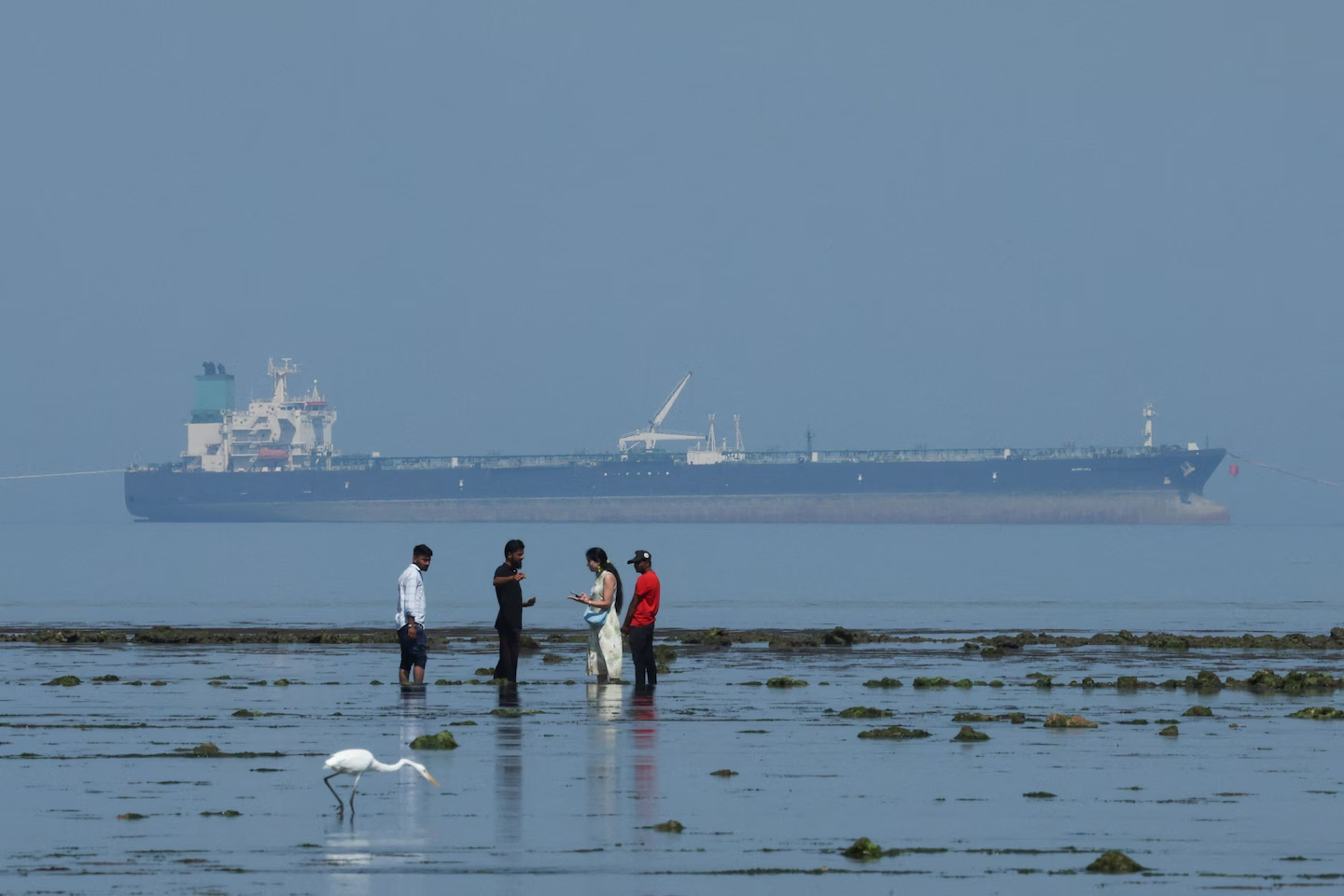
Russia sharply increased oil shipments to export tankers after Iran effectively closed the Strait of Hormuz and the United States partially eased sanctions. The decision allowed buyers to temporarily purchase Russian oil without the risk of secondary sanctions.
Bloomberg reported this.
Details
According to the outlet, Moscow is trying to sell as much oil as possible amid a sharp rise in global prices. Two factors created this opportunity. First, benchmark crude prices increased on global markets. Second, the temporary easing of US restrictions allows buyers to purchase Russian oil loaded before March 12.
Stronger demand pushed up the price of Russia’s main export grade, Urals crude oil, which Russia supplies to India. Higher prices generated unexpected additional revenue for the Russian budget that finances the war against Ukraine.
The combination of rising prices and higher export volumes produced the largest weekly jump in Russia’s oil revenue since the start of the full-scale invasion.
Export volumes also increased after shipments resumed from the Sheskharis oil terminal in Novorossiysk on the Black Sea. Operators restarted the terminal after Ukrainian drone strikes damaged facilities during the night of March 1–2.
Ship-tracking data collected by Bloomberg shows that Russia’s average seaborne oil exports reached about 3.44 million barrels per day in the four weeks leading up to March 15. That figure is roughly 90,000 barrels per day higher than the previous week, although it remains about 400,000 barrels below the peak levels recorded in late 2025.
Context
Global oil prices surpassed $100 per barrel for the first time since 2022 amid escalating tensions between the United States, Israel, and Iran. Energy markets fear prolonged supply disruptions due to a potential blockade of the Strait of Hormuz.
Before the escalation in the Middle East, Russian oil sold at a significant discount to the global benchmark Brent crude – about $30 cheaper, or roughly $40–42 per barrel.
However, supply disruptions from the Middle East pushed prices sharply higher. On the Indian market, the price of Urals crude oil rose to $98.93 per barrel, while the discount to Brent narrowed to about $4.8. This marks the smallest price gap in the past four months.
Earlier, The Ukrainian Review reported that Russia benefits the most from the oil crisis and earns up to $150 million in additional daily revenue from oil sales.