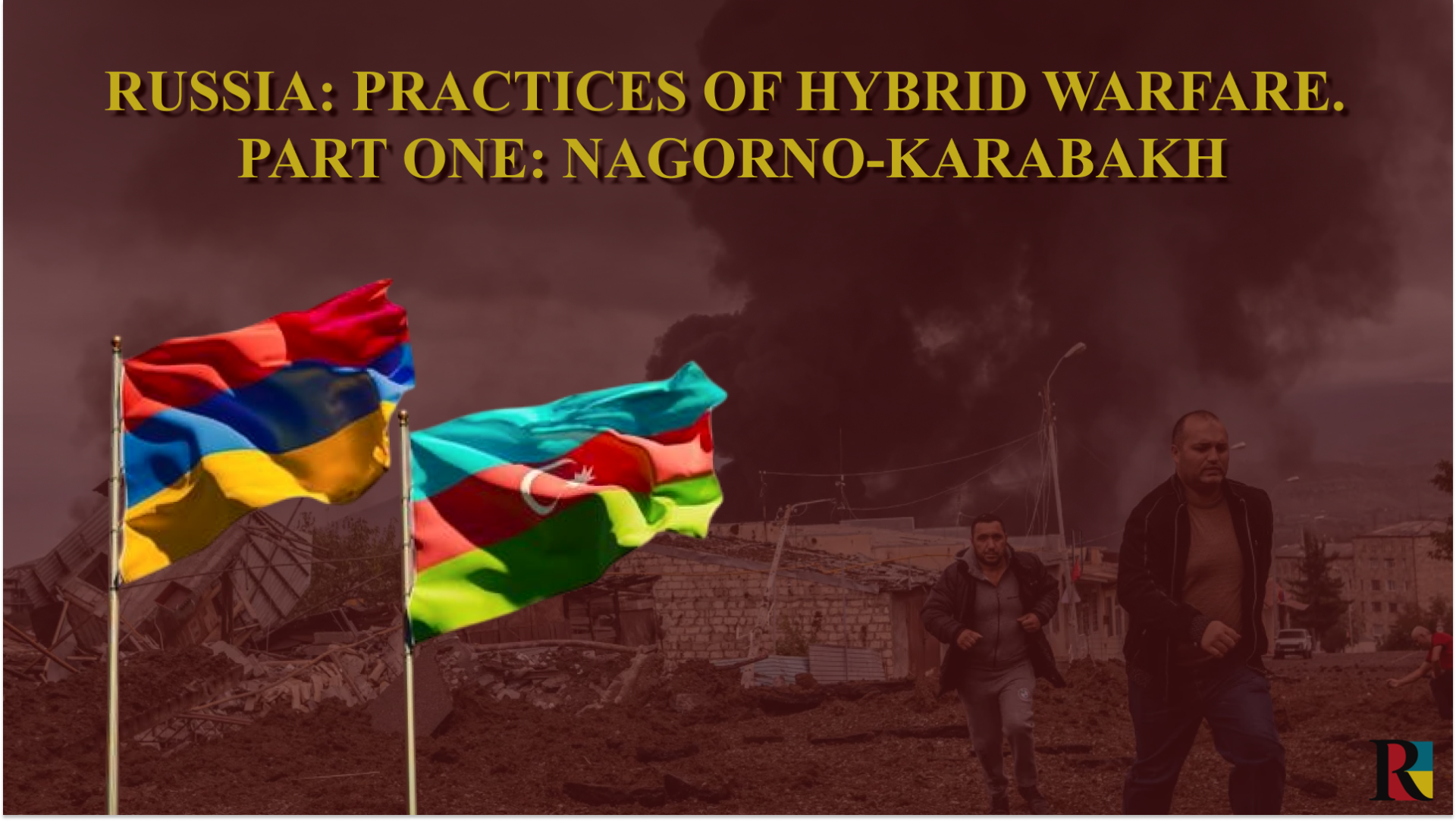


It’s no secret that Russia had been preparing the information and ideological groundwork for the invasion of Ukraine in 2014, and then for a full-scale war in 2022, in advance. It has been preparing for years and decades. Narratives about fraternal peoples, common history, a great victory over Nazism, and the absence of the Ukrainian language as an independent unit have been poured into Ukrainians’ ears almost from the very beginning of independence. In other words, some of these propaganda postulates existed in the USSR, but now they have acquired new meanings and adapted to the new reality. Their main goal was to prevent Ukrainians from gaining subjectivity, from getting out from under Russia’s influence. But of course, Ukrainians are not the only ones who have faced Moscow’s hybrid pressure. We will take a closer look at Russia’s involvement in other armed conflicts in the former Soviet Union, starting with Nagorno-Karabakh.
Prehistory of the conflict and the first war
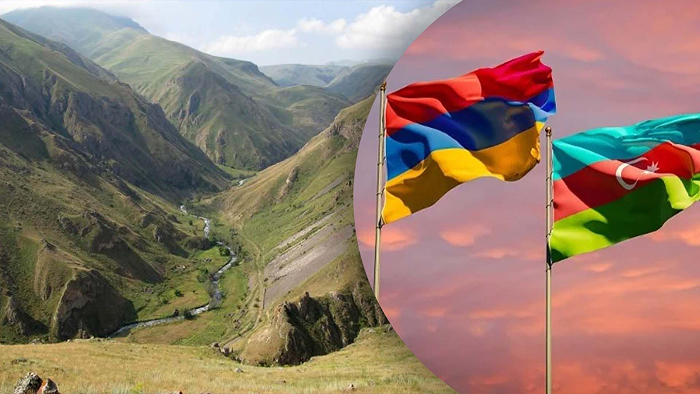
The Armenian-Azerbaijani conflict over Nagorno-Karabakh has its roots in the collapse of the Russian Empire. The region with a predominantly Armenian population first became a bloody arena in the early twentieth century, when the Republic of Armenia and the Democratic Republic of Azerbaijan claimed the territory.
The new Russian Empire, in a communist wrapper and under the name of the USSR, granted Nagorno-Karabakh the status of autonomy, but with subordination to the Azerbaijan SSR. This caused dissatisfaction even among the communist leadership of Armenia several times during the twentieth century (it even led to protests by the local population in the 1960s), but, of course, any republican initiatives were cut down at the initial stage by the center.
A new bloody conflict between Armenians and Azerbaijanis broke out on the ruins of the USSR. The policy of a certain democratization of the totalitarian Soviet regime allowed the leadership of the USSR to voice its demands more loudly. A series of interethnic clashes in Nagorno-Karabakh and rallies in Yerevan for the autonomy’s accession to Armenia resulted in a legislative initiative. On February 22, 1988, an extraordinary session of the NKAO deputies appealed to the leaderships of Armenia, Azerbaijan, and the central leadership of the USSR to transfer the region to the Armenian SSR.
A number of researchers of the Nagorno-Karabakh conflict, including British journalist Tom de Waal in his book Black Garden, note that a bloody scenario was virtually inevitable after that. Within two days, the first dead appeared, and then the situation snowballed. Over the next few years, a massive exodus of Armenians from Azerbaijan and Azerbaijanis from Armenia began. At the same time, the governing bodies of the USSR took an observant stance, only adopting a few obscure resolutions. The top of the Soviet empire, like its predecessor, the Russian Empire, has always been much more interested in global perestroika and external expansion than in the fate of the so-called “small peoples”. The “challenge for Gorbachev”, which The New York Times wrote about in the 1990, was simply ignored by the Secretary General.
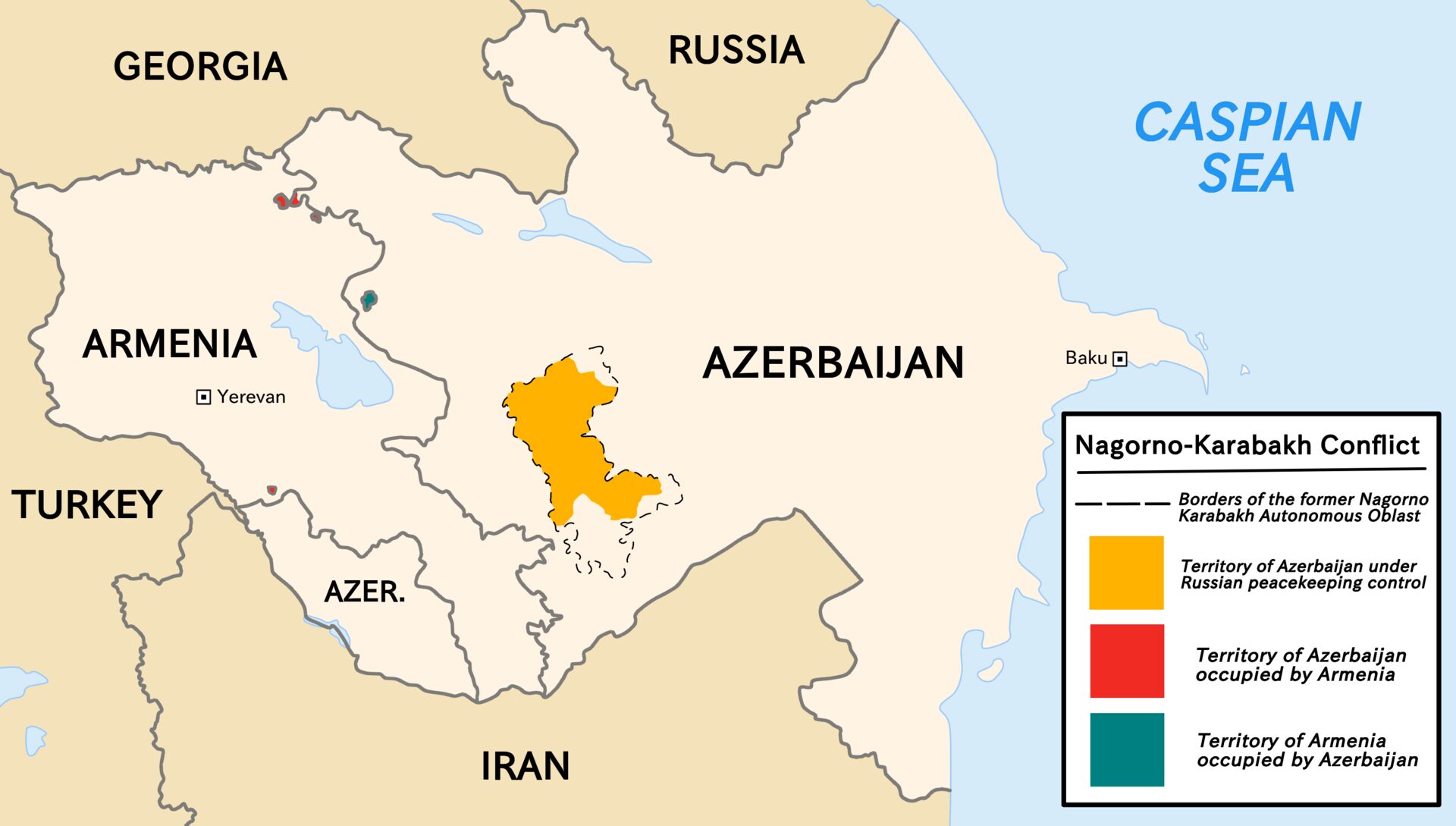
Against this background, a real war with ethnic cleansing broke out in the region. Armenians created their own illegal armed groups, and Azerbaijan was supported by local security forces, which, however, had little coordination with the central government and acted mainly as national punitive units. The collapse of the USSR further deepened the conflict. The two independent states received full-fledged armies at their disposal, which they turned on each other.
It is worth noting that Russia formally remained neutral in this conflict, but de facto sided with Armenia, providing it with weapons and equipment, including aircraft (four SU-25s as part of CIS cooperation). In this situation, in May 1994, Azerbaijan was forced to sign a peace agreement that was unfavorable for it, and which was also approved by the world. According to the agreement, Azerbaijan gained control over only 15% of the territory of the former Nagorno-Karabakh Autonomy. The rest went to the self-proclaimed republic of the same name in 1991 (of course, not recognized in the world), which was completely loyal to Armenia. The conflict was de jure frozen. That was the end of the first Nagorno-Karabakh war. However, Armenians will find out what Russian support is really worth in 30 years.
The Second World War and the loss of Armenia’s positions. Russian treachery
The situation in the region was relatively calm until September 2020, but the parties sometimes violated the ceasefire. On September 27, during another complication of the situation, the Azerbaijani army launched an offensive (President Ilham Aliyev announced that Armenians had shelled several border settlements), Operation Iron Fist. Azerbaijan was supported by Turkey, both politically and militarily (in particular, with strike UAVs, which would soon prove effective during the Russian-Ukrainian war). Russia, on the other hand, and the CSTO, which has included Armenia since 1991, were in no hurry to quarrel with Turkey and support their allies. This provoked massive rallies in Yerevan demanding to leave the organization, but Prime Minister Nikol Pashinyan did not listen to the people, which he would later regret.
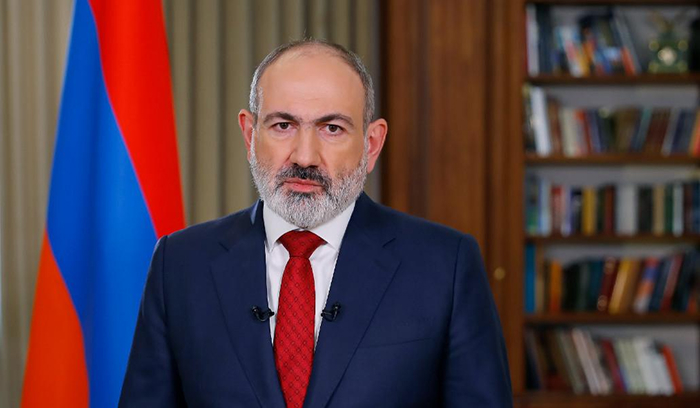
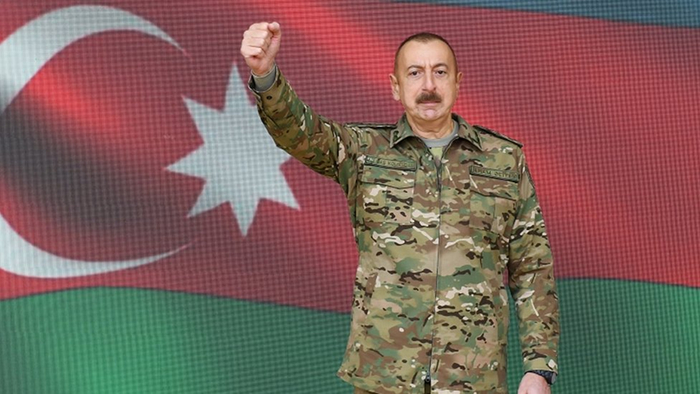
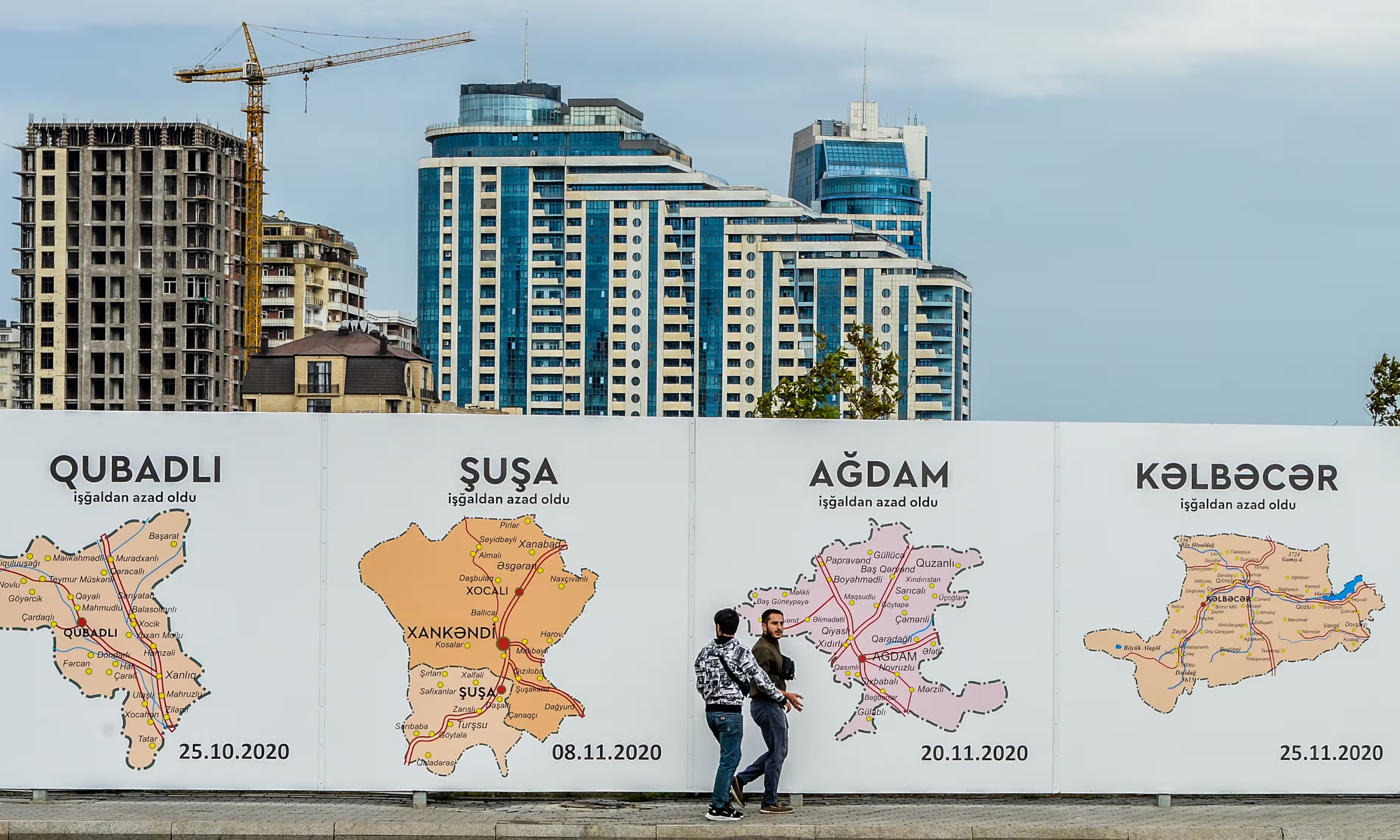
This time the war lasted 44 days. Azerbaijan was much more prepared for escalation. Their armed forces took control of significant territories – the cities of Jabrail, Fizuli, Zangelan, Gubadli, and the strategically important town of Shusha. On November 10, Armenia was forced to accept the loss of control over significant territories and sign an extremely unfavorable peace agreement, which was also signed by the Azerbaijani and Russian leaders. Moreover, the following year, Russia and Azerbaijan’s ally Turkey agreed to establish a joint center to monitor the implementation of the peace. The only thing that Armenia achieved was the deployment of Russian peacekeepers along the line of contact in Nagorno-Karabakh and along the Lachin corridor. However, the peacekeepers were deployed under the condition of the complete withdrawal of the Armenian army from the territories designated by the agreement. Azerbaijan celebrated the victory in the war, which President Ilham Aliyev called “domestic”.
But this was not the end of all troubles for Armenians. In 2022, Nikol Pashinyan first tried to enlist the military support of the CSTO countries, but Russia’s desire to launch a full-scale war against Ukraine largely sealed the fate of Nagorno-Karabakh. Russia was not going to waste resources on a war it did not need. Among other things, Azerbaijan was becoming a bridge for the sanctioned and isolated empire to cooperate with Turkey and Iran, as well as a gas window to Europe.
Andriy Haruk, military historian, PhD, professor:
I see two main reasons. The first is obvious: lack of resources due to the aggression against Ukraine. I am talking not only about resources in their material dimension (for example, armed forces), but also in the intangible dimension (diplomacy). The second is not so obvious, but I think it is no less important, and it is also related to the aggression against Ukraine: the unwillingness of the Russian leadership to aggravate relations with Turkey.

Shant Khatcherian is a Canadian-Armenian journalist based in Yerevan, Armenia:
The short answer for all of them is Azerbaijani gas. After 2022 invasion of Ukraine, Russia needed a proxy to sell its own gas to Europe and circumvent sanctions. Putin chose to side with Aliyev to accomplish this. Aliyev wanted Putin to simply do nothing while it took over Nagorno-Karabagh.
Europe, especially Germany, has increased their gas imports from AZ exponentially since they imposed their sanctions on Russia. The EU are hypocrites as usual but at least they can lie in the media and say they’re not buying Russian gas as much as before, they’re buying Azeri
SOCAR, the state oil company of Azerbaijan is the main beneficiary of this deal. Its gas stations are located wherever Azerbaijan has vested interests.
Mokhammad Faradzhallakh, expert on Ukrainian-Arab relations and editor-in-chief of the publication “Ukraine in Arabic” commented:
Russia decided to make a deal with Turkey, given its inability to defend its ally Armenia. There are several reasons for this:
First, Russia helped Armenia to hold these territories for more than 30 years and spent a lot of effort. In return, Russia wanted Armenia’s unquestioning support and full integration under Russian influence. However, Armenians resisted, they did not want to be a second Belarus. Therefore, it was more important for Russia to seize new regions of Ukraine than to help its ally hold their territory.
Second, Russia was already stuck in Ukraine at that time. The war, which Moscow announced would be over in a few weeks, was obviously dragging on. The Russians objectively had limited resources to participate in another war.
Third, the enemy. It was not just Azerbaijan. It was both Azerbaijan and Turkey. Azerbaijani troops are not an independent unit, they are closely linked to the Turkish army. In such a situation, the prospects of victory for Russia were rather vague. Therefore, the Kremlin did not want to get involved in a most likely losing conflict for the sake of an ally that did not demonstrate full loyalty.
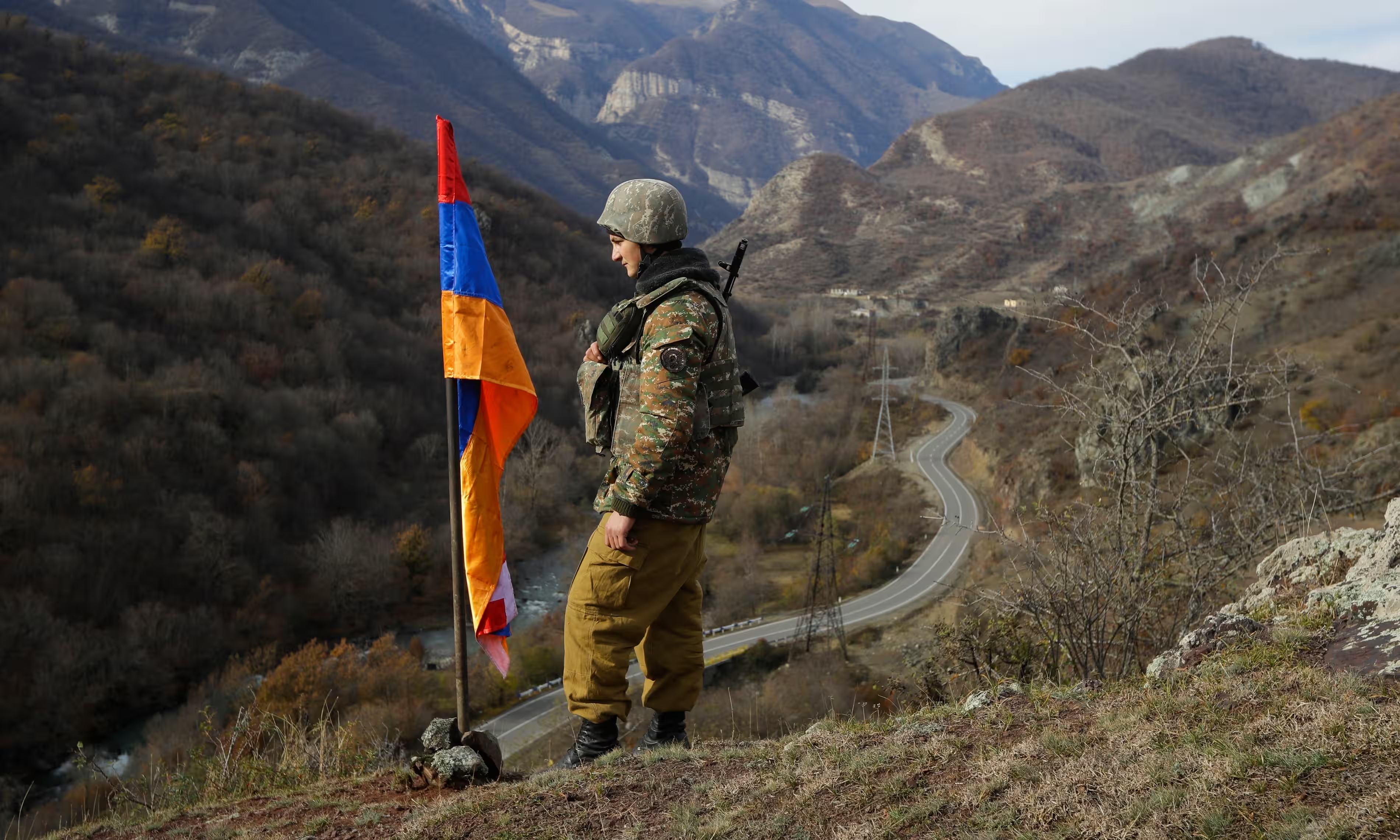
Having received a rejection from the CSTO, Pashinyan tried to enlist the political support of the European Union to preserve the existing territories. However, all agreements remained on paper. On September 19-20, Azerbaijan conducted a military operation against the Nagorno-Karabakh Republic. Russian peacekeepers did not prevent the offensive in any way. On September 20, the NKR agreed to withdraw the remnants of Armenian troops from Nagorno-Karabakh. In fact, it was an act of surrender. The situation was further proof of the value of Russia’s guarantees. After the end of hostilities, almost the entire Armenian population left the territory of Nagorno-Karabakh.
Armenia’s reaction
Nikol Pashinyan openly declared Russia’s betrayal of Armenia and the freezing of its membership in the CSTO. The tragicomic nature of the situation is that Moscow, even after all the above-mentioned events, wants to force Yerevan to pay membership fees.
In the last year, the Armenian government has tried to turn its policy toward the West. Europe has adopted a plan to financially support Armenia’s economy for 270 million euros. Pashinyan said that Armenia wants to become a member of the EU.
Mokhammad Faradzhallakh, expert on Ukrainian-Arab relations and editor-in-chief of the publication “Ukraine in Arabic” commented:
Armenia has indeed reoriented itself to the West, but it is very far from becoming a member of the EU or NATO. This is largely due to Turkey’s dominance in the region. Unfortunately, the EU has lost a lot of time to accept Turkey into the EU and become a global super player. A pivot to the West could be effective if Turkey, Azerbaijan, and Armenia agreed on a sustainable peace, but this is not the case now.
The West will probably help Armenia recover from the war and partially restore its economy. But the problem with the Armenians is that they are fluctuating. The desire of Armenia itself is the first condition for a complete exit from the orbit of Russia’s influence.
However, Pashinyan’s most resonant attack on Moscow was probably his statement about the need to withdraw Russian troops (about 10,000) from Armenia. Against this backdrop, Russian propagandists began to attack Armenia and its government even more with information. And in the country itself, there are more and more calls to turn off Russian TV channels.
Analyzing the situation, on September 21, 2023, Ruben Mehrabyan, an expert at the Armenian Institute of International Relations and Security, said the following in an interview with currenttime.tv:
We see that in its policy, Russia has used almost all of its tools of influence. The first tool is the Aliyev regime, which is a Wagnerian sledgehammer. The second tool is the new government that Russia brought to power in Nagorno-Karabakh just two weeks ago. They are completely Russian puppets. And the third is the fifth column and the sixth chamber in Yerevan. All of this was involved simultaneously. But their calculations did not work out.
In the security sector, Armenia has conducted joint exercises with the US military. The country has also begun purchasing defensive weapons, including air defense systems, from France and ammunition from India. However, has Armenia realized the need to distance itself from Moscow too late?
Photograph: Tofik Babayev/AFP/Getty Images
Conclusions
The modern history of Nagorno-Karabakh is a good example of “friendship” with Russia. Russia has no allies. Russia has either situational partners or countries in its sphere of influence. With the latter, Russia builds relations on the principle of classical medieval vassalage. But the modern Russian Federation has repeatedly demonstrated that it cannot protect its conventional “own”. Against the backdrop of Russia’s weakening, Turkey is significantly strengthening its positions, both political and economic.
Two main conclusions are worth noting here. The first is that Armenia’s betrayal is one link in a long chain of foreign policy defeats of the modern Russian neo-empire, or, more precisely, under-empire, which demonstrates that Russia is a colossus on clay feet. Second, what are the results of Russia’s hybrid practices of influence? Thus, unlike Ukraine, Georgia, or Moldova, Russia has not yet directly attacked Armenia, limiting its influence to humanitarian and informational activities. However, the involvement of a small Caucasian country in a defense alliance has resulted in it becoming a bargaining chip in a geopolitical game.
Kostyantyn Grechany