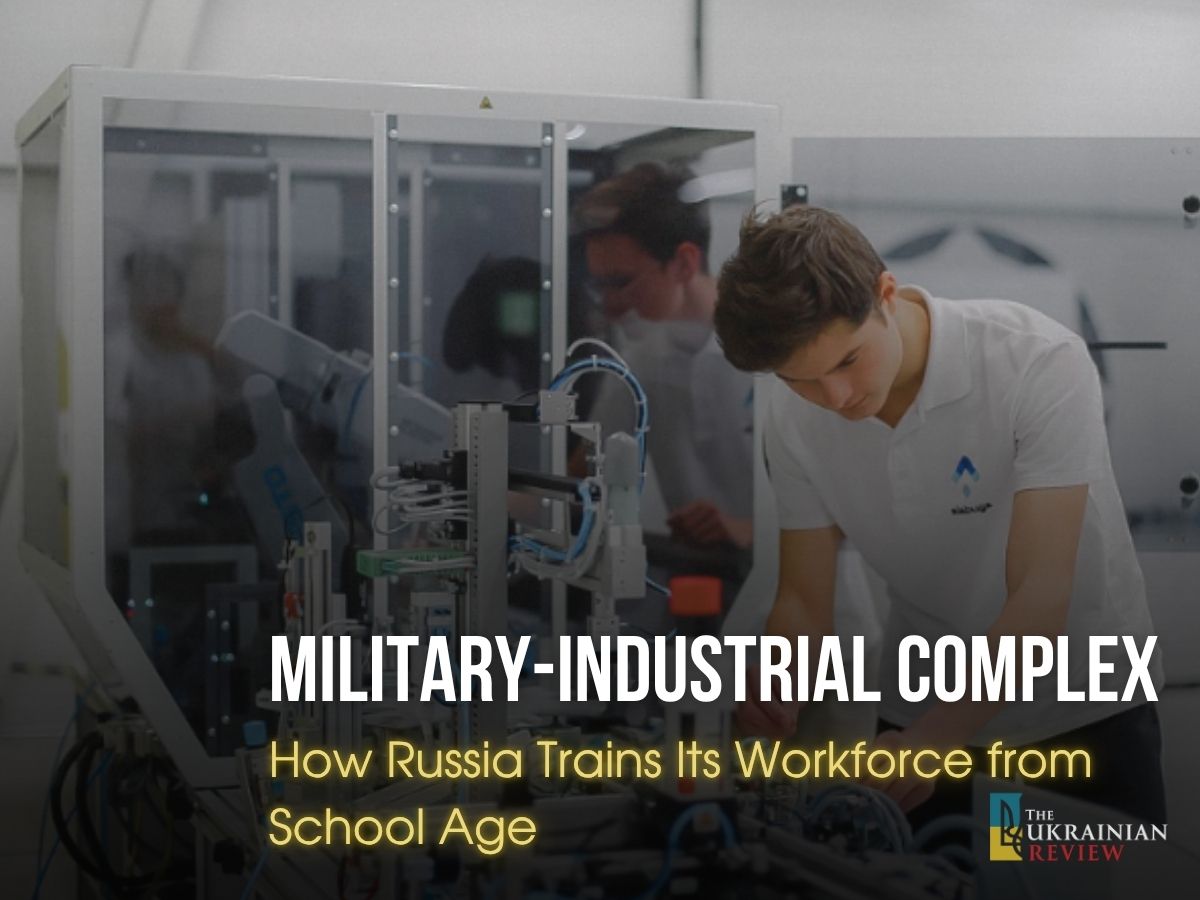


The systematic economic mobilization of Russian teenagers to production zones is becoming an institutional component of state policy. Russia has managed to repackage the Soviet experience of vocational education into a new format of an innovative education model. But it shows signs of child labor exploitation.
Special Economic Zone “Alabuga”
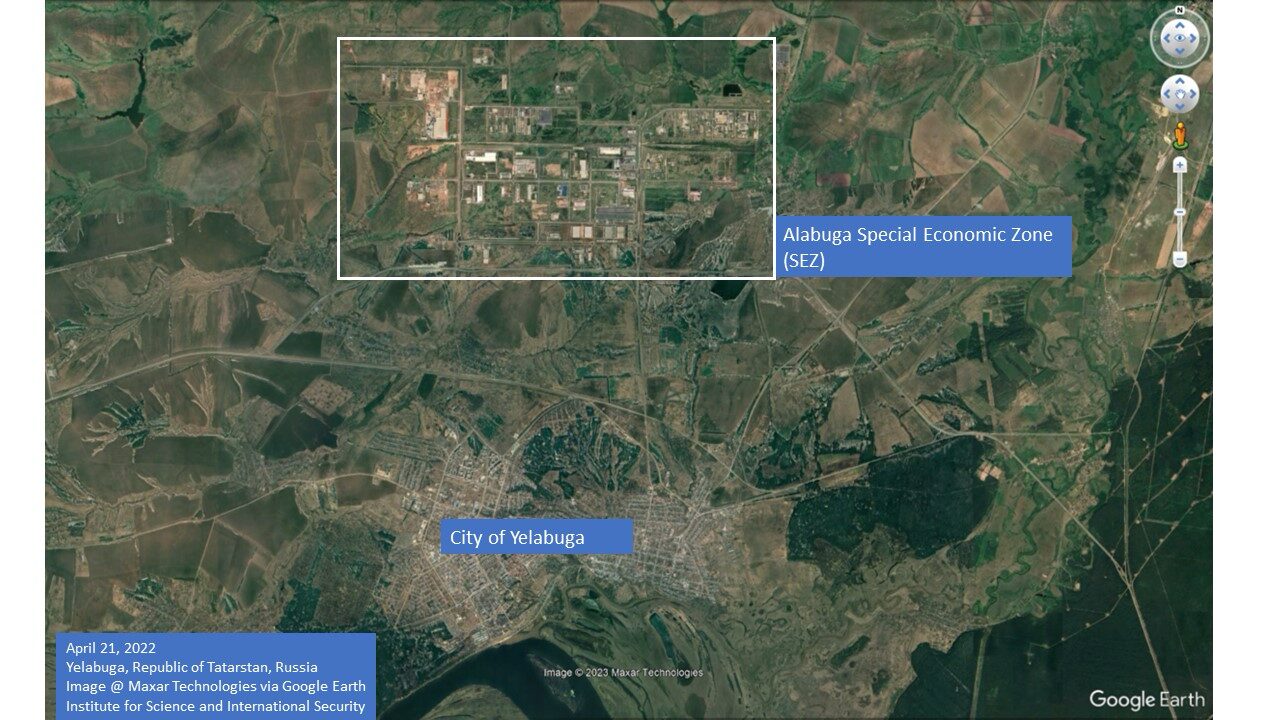
One of the most illustrative examples of this model is the Alabuga Special Economic Zone. The Alabuga Special Economic Zone was founded in 2006 in the city of Yelabuga (Tatarstan). Today, it has more than 35 resident enterprises. Among them are two Umatex plants (Rosatom). The first produces carbon fiber products. The second produces raw materials for it — PAN fiber (polyacrylonitrile fiber). This creates a full composite cluster that ensures military-industrial autonomy. These materials are used in the MS-21 aircraft program. They may also be applied in the production of unmanned and military systems.
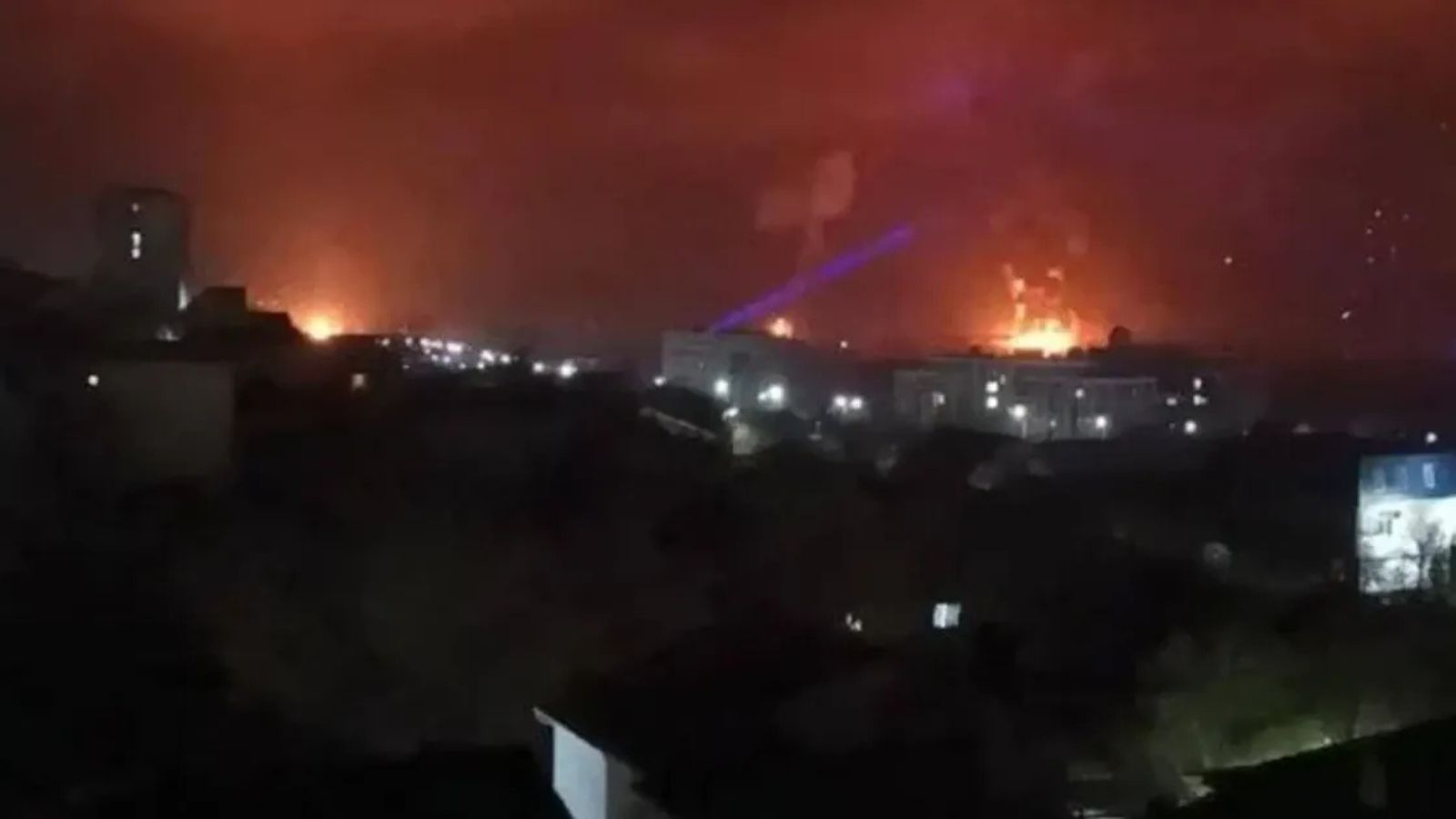
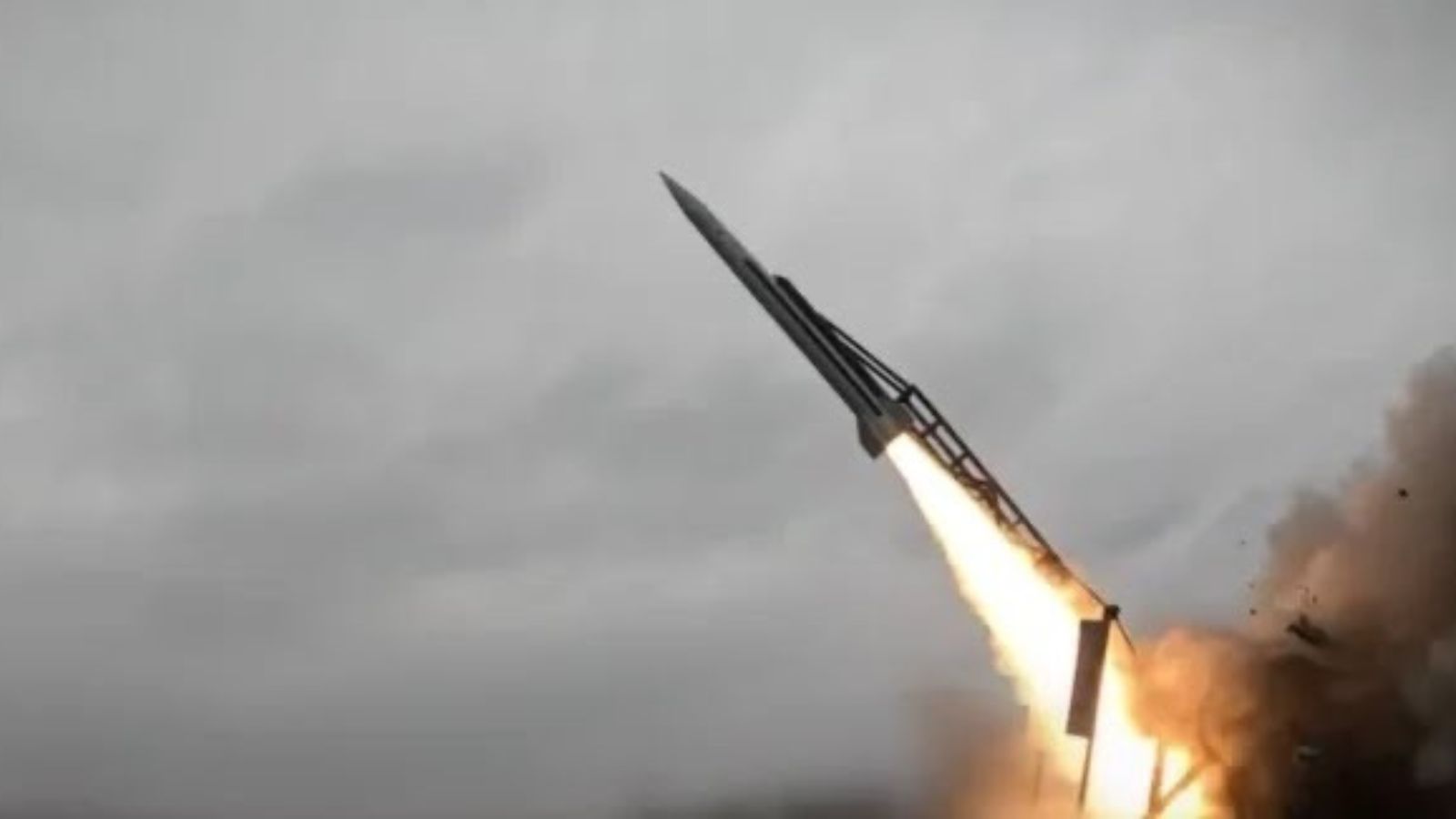
Russia is actively using Iranian Shahed-136 drones and their localized version Geran-2, as previously reported by The Ukrainian Review. According to a 2023 investigation by The Wall Street Journal, Moscow and Tehran planned to produce Iranian-designed drones in the city of Elabuga. According to the Institute for Science and International Security, in the same year, Albatros LLC and the Alabuga SEZ signed an agreement to build a plant under which the company must supply 25% of its products to the military. The Albatros LLC website states that in 2025, 5,000 drones were delivered for Russia’s war against Ukraine. This amounted to about 1 billion rubles. It is based on this infrastructure that a workforce reserve for production is being formed.
Alabuga Polytechnic University
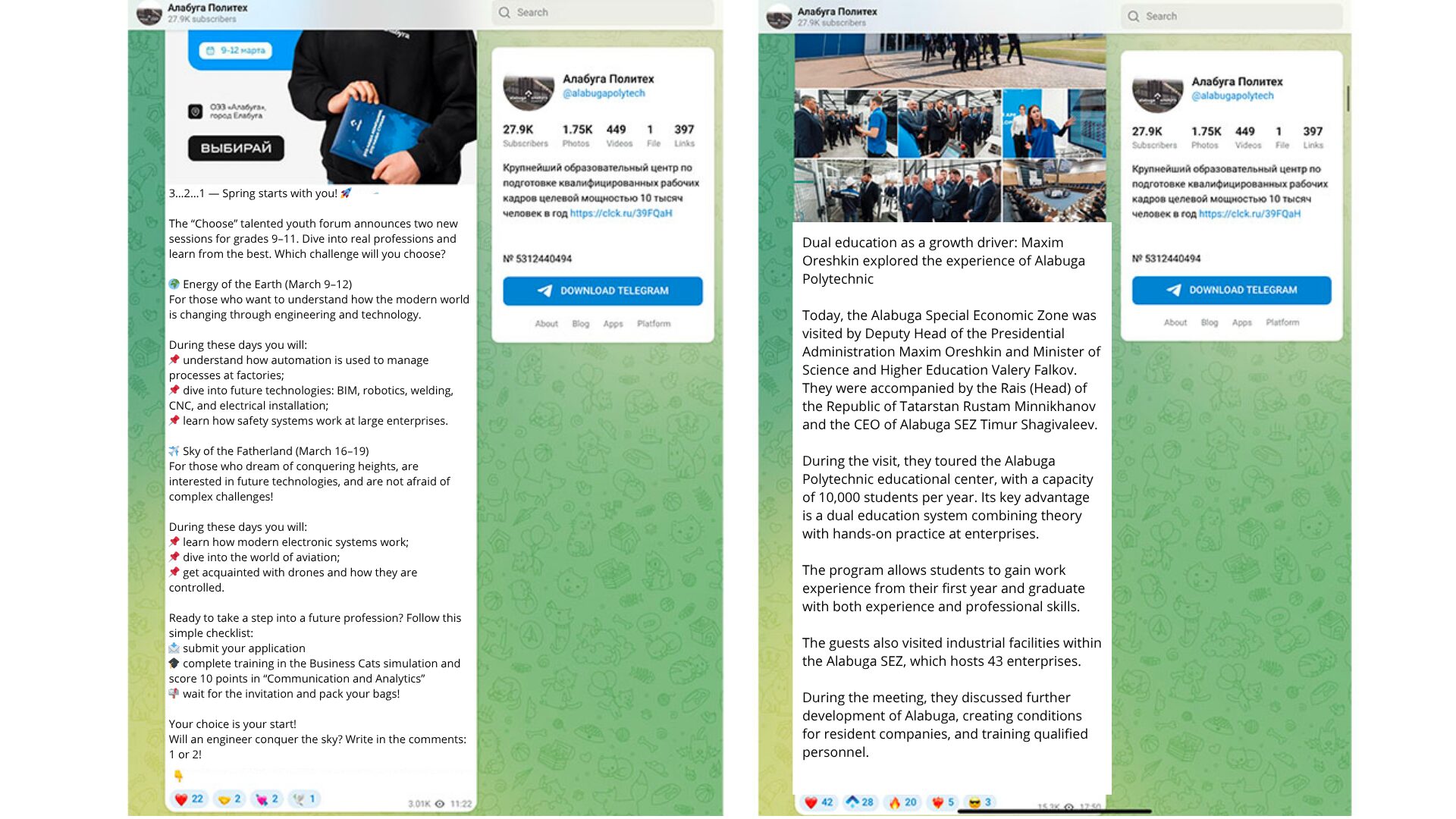
One of the key instruments of this policy is the Alabuga Polytech educational project. Russia is returning to the practice of the Soviet system of creating labor reserves. “Alabuga Polytechnic” is an example of this. According to a report from the National Academies of Sciences, Engineering, and Medicine (NAS), children who did not cope with the academic program were sent to factory schools, craft and vocational schools, or technical schools at industrial enterprises. The creation of labor reserves during the period of industrialization was a vivid example of centralized personnel management by the state apparatus and a planned economy. The school program was not adapted to the needs of individual students and their integration into the general educational process. It was not intended to cultivate talents. Responsibility for the development of skills was transferred directly to the student.
Against this backdrop, Russia’s labor shortage as of 2025 remains close to peak levels. Gazprombank estimates that the economy needs about 1.8 million workers, while the total number of unemployed is only 1.7 million. The war and the outflow of specialists abroad have affected the shortage of qualified workers. But the Alabuga Special Economic Zone has proposed a model in the form of Alabuga Polytechnic, which covers these deficits in specific industries.
In response to these challenges, this institution was established in 2021 and draws directly from the Soviet system. To lower the entry threshold, entrance exams were removed. The selection of potential students is based on the results of performance in specific video game-based tests. They select applicants according to a certain psychological portrait: the ability to work in a team, stress resistance, and the ability to follow instructions and complete assigned tasks.
The company’s website states that the institution can accept up to 10,000 students per year. Daniya Utaliyeva, head of marketing and PR, said in an interview that in the first two years, 100 students from all over Russia aged 14 and over were recruited. The next recruitment was 300 and 1,000 students, and a recruitment of 1,200 children was planned for 2023. The campaign to attract new applicants is being conducted on Instagram and TikTok.
The curriculum is structured so that students spend the first half of the day at the factory, and then go to study. However, more and more videos are appearing on TikTok, where former students report that they were forced to work all day. And if someone decides to leave their studies early, the contract provides for monetary compensation from the student. The student is required to work for three years at the enterprise since he received the training for free.
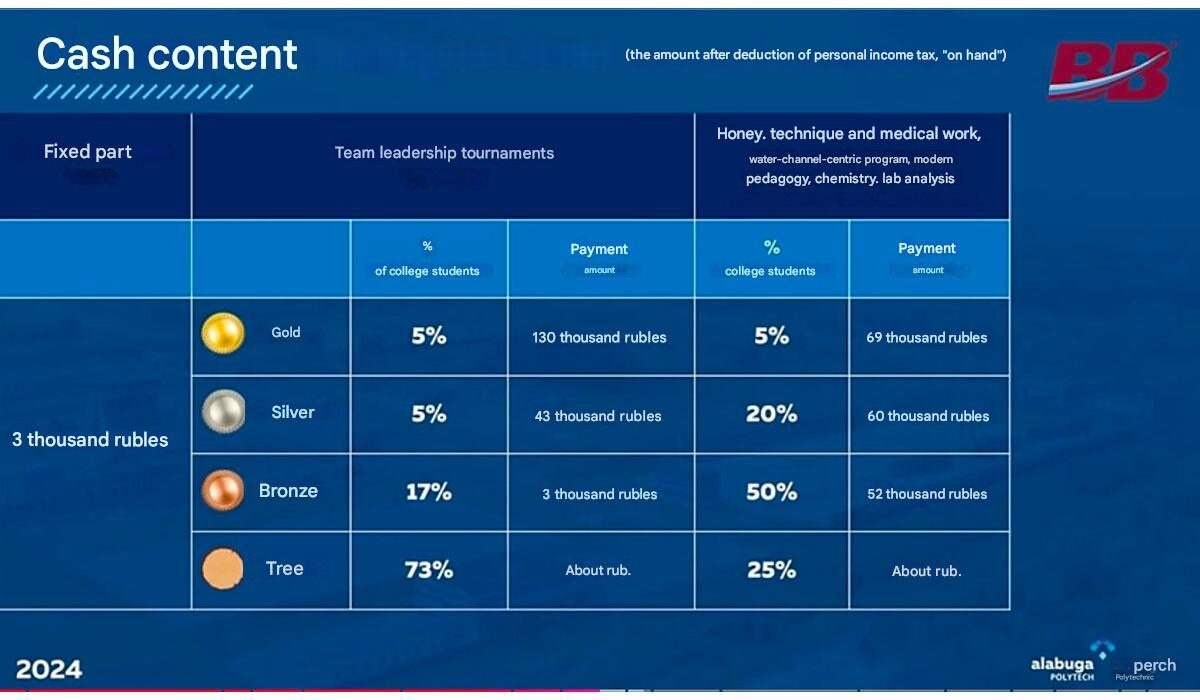
At the same time, payments are provided for students, but if you check the accrual system itself, only 5% of the total can receive 130 thousand rubles ($1,670) if they win the team-leadership tournament, and 73% only 3,000 rubles ($38.6).
Students from local colleges are also involved in working at the production facilities under an agreement concluded with Alabuga Polytechnic.
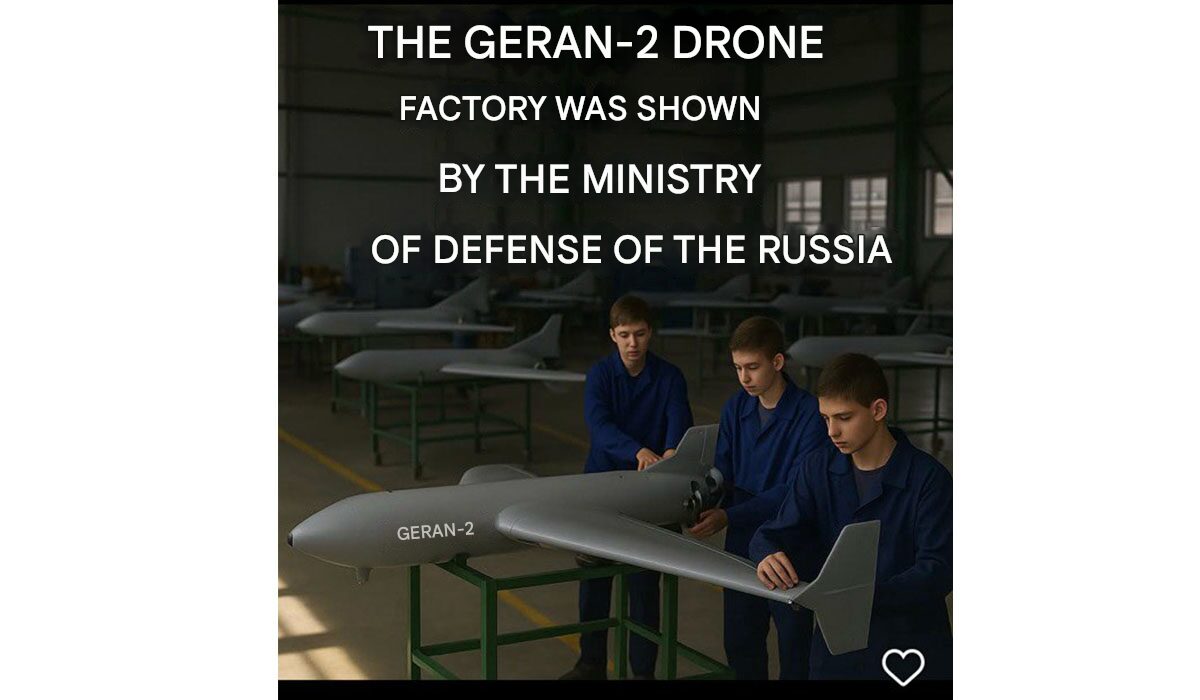
Particular attention should be paid to the involvement of students in the production of drones for military use. In 2025, the Russian Ministry of Defense TV channel Zvezda aired a report about students from Alabuga Polytech working at the Albatros drone manufacturing plant. Some students work in production at the Albatros (Rosatom) plant, according to Dania Ustimova.
According to representatives of Alabuga Polytech, the existence of contracts with military units should ensure that graduates are sent to serve in accordance with their specialization. This indicates the functional orientation of the educational program to the needs of specific units of the Russian armed forces.
Given the participation of minors in production processes related to military infrastructure, the activities of Alabuga Polytech raise serious questions from the perspective of international standards for the protection of children’s rights and humanitarian law. Russia not only receives low-paid labor but also young minds shaped by state-driven ideology in accordance with the country’s development strategy.
Alabuga Start
At the same time, students are not the only source of labor for these production facilities. Russia is also actively involving migrant workers in these operations. This policy is implemented, in particular, through the Alabuga Start program. Attracting migrant workers to strengthen the economy is a common practice in modern countries. However, the Alabuga Start program does not fall into this category. Due to the shortage of labor, Russia is recruiting migrants under the guise of training. The program is aimed at young people, namely women aged 18-22.
According to a report by the Global Initiative against Transnational Organized Crime (GI-TOC), the applicants were not warned that they would be working in Russia’s military-industrial complex. When they arrived at the site, it became clear that they would be involved in weapons production. They were offered a salary of 30,000-40,000 rubles ($300-400). The harsh working conditions had a negative impact on their health.
As noted on its website, the Alabuga Start program operates in more than 60 countries: Africa, South America, and Asia.

Recruitment takes place through several channels: directly through the official pages of “Alabuga Start” on Facebook, Telegram and the website; recruiting agencies in the countries where recruitment is taking place, and through influencers.
It is worth noting that not all participants refused the program after finding out what exactly they were supposed to do.

Taken together, these elements reveal a systemic model of workforce mobilization. The Alabuga Special Economic Zone (SEZ) is one of the key centers of Russia’s defense-industrial complex. Gustav Gressel, a military and political analyst and former senior fellow at the European Council on Foreign Relations, who currently works at the Austrian Ministry of Defence, told The Ukrainian Review that Russia has produced around 30,000 Shahed-type drones and approximately 25,000 similar models (for example, “Geran”).
According to him, Alabuga is the central hub for the production of long-range attack drones. Russia plans to expand production. In addition to opening new facilities and production lines, he notes that they are also becoming more efficient in organizing production. For long-range strike missions, such drones are unique in the Russian arsenal.
He also emphasized that this type of drone production is neither highly complex nor particularly secretive, which allows Russia to involve both migrant workers and students in the process:
“Yes, Russia faces labour shortages, and the defence industry has to compete with raising bonuses for the military service. For that reason, Russia also tries to lure foreign workers and female students to work in the defence industry. The production of attack drones is not as demanding and secretive as producing conventional long-range attack ammunition — Iskander missiles, for example — so often foreign nationals or inexperienced labour are used in that field. Even if some details of drone production get compromised, it’s an Iranian design after all. And it is faster to train new and inexperienced workers to learn their job in drone production compared to traditional aircraft engineering.“
Conclusion
The labor shortage caused by military expansion and emigration led to the creation of educational programs designed with a hidden goal of recruiting low-wage workers.
This led to the creation of programs such as Alabuga Polytech and Alabuga Start. The first involves the exploitation of minors and the mobilization of teenage labor. The second is the fraudulent recruitment of migrants to work in the Russian military-industrial complex without prior consent. Such practices contradict international standards for the recruitment of minors to work in armed conflict.
This model was launched within the framework of the Alabuga SEZ and has already shown its effectiveness. Despite the emergence of negative reviews on social networks Instagram and TikTok, the Alabuga Polytech program is increasing the number of applicants due to the low threshold for passing and the promise of real work experience and earnings from the first year. Therefore, scaling this model is only a matter of time.