

Long before its war started in Ukraine, Russia began a campaign to “evacuate” Ukrainian children to its own or occupied territory. For example, in October 2014, the “Train of Hope. Crimea” program was organised, bringing 7 children to Russia.
Currently, according to the “Children of War” platform, the situation is as follows:
- Deported or forcibly displaced – 19,546;
- Missing – 2,067;
- Returned – 24,808;
- Killed during the war – 537.
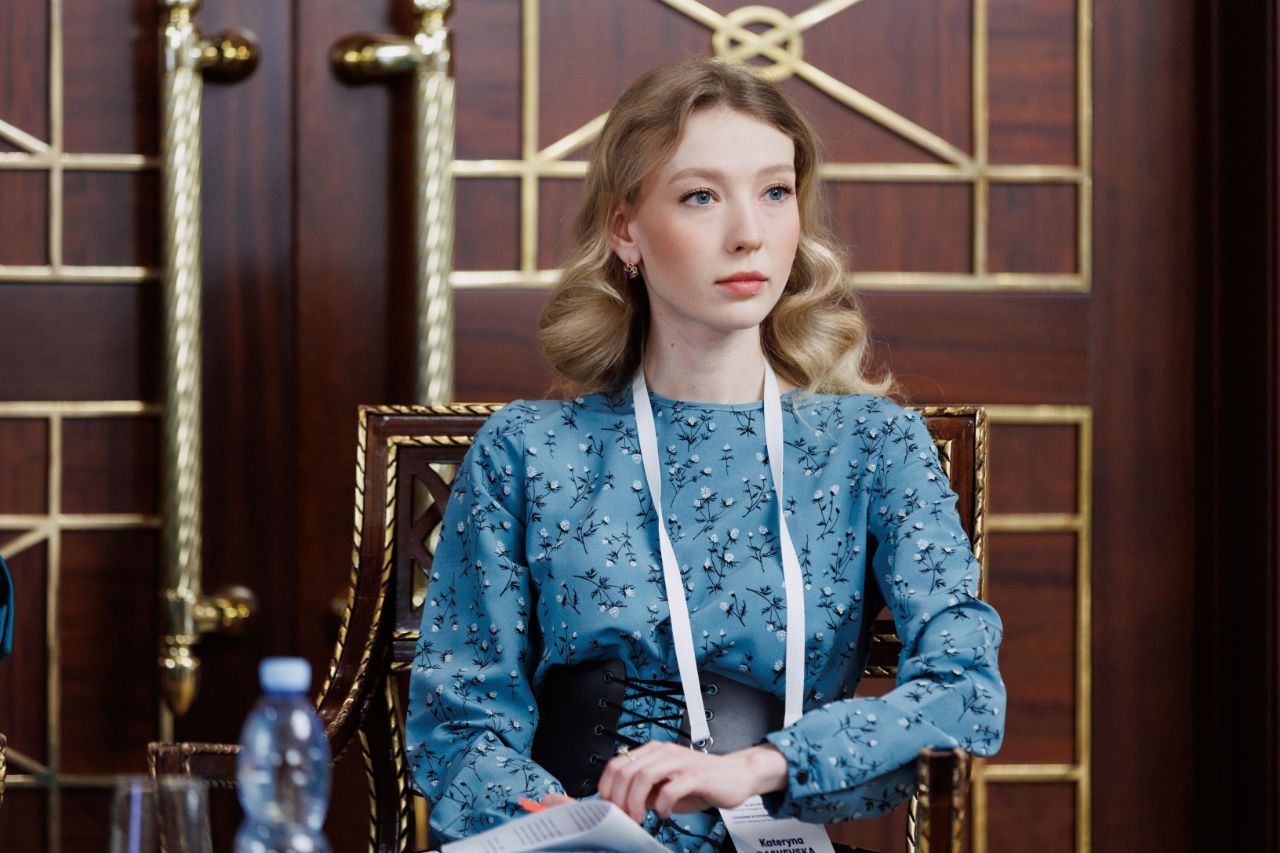
We spoke with Kateryna Rashevska, a legal expert at the Regional Center for Human Rights, about the children illegally deported to Russia. She talked about the ridiculous conditions imposed by the aggressor on the Ukrainian government, accidents during the return of children home, and the activities of the international community helping Ukraine in the process.
Children have been transported so often that they have stopped unpacking
Does Ukraine have the ability to track where abducted children end up and in what condition they are in?
This is a difficult question because it depends on the category of children and the removal method. When children are taken to the so-called re-education camps, we understand how many children were taken from which region and to which camp. However, we still do not know whether all children are returned from such camps. That is, in 2022, there was an extensive campaign when children were not returned. Now, due to the fact that children are mostly taken from the territory that is still under occupation, we cannot confirm the total return of each child. However, we know where they are.
At the same time, for those children who were “evacuated” starting from the full-scale invasion and even earlier (on February 18 from Donetsk and Luhansk regions – ed.), Russia either transfers them to families and then we have an idea of where at least a few hundred of them are, in which families and in which regions. But there are some children whom Russia took to orphanages. Evidence shows that children have been transported so often that they have stopped unpacking their belongings. That’s why it’s more difficult here. Children don’t stay long because the Russian Federation is looking for somewhere to put them, a family. And this family may be in a completely different region. And the process is quite dynamic, so it is more difficult here.
On the other way, there are children who, unfortunately, have become orphans due to the actions of the Russian Federation, and, for example, we only have information that their relatives are lost, so we also do not fully understand where they are. That is why Ukraine is now trying, including through this International Coalition of Partner States, to try to identify the personal data and the whereabouts of children.
So you said that there are three categories of children globally. The first are those who were allegedly evacuated, the second are those who were taken to the so-called camps, and the third are those who became orphans, right?
Yes, but there is also a category of children, such as children of our Ukrainian service members or children of civilians who were detained and separated from their children during the filtering process. This is another subcategory. They take some children for medical treatment based on the medical examination results. This is a separate category of children, as with the re-education camps, and we cannot confirm whether those children will return or not. Some of those children are also status children, children from orphanages. For them, it may be an element of just temporary transfer, first to such a hospital, then to a Russian family or a Russian orphanage.
Russians are frightened of a rebellion by Ukrainian children
You said that we know where they take them. Then the next question is, where do the children end up most often? I read that they are usually in the Donetsk region or remote regions of Russia. Is this true?
Information from the Russian side states that since the beginning of the Great War, they have so-called evacuated children to 56 regions of the Russian Federation. These are remote regions, the Arctic region or Siberia, and the Republic of Tatarstan and Adygeria, which are culturally quite different from Ukraine. There is evidence that Ukrainian children were also taken to Tskhinvali, that is, to occupied South Ossetia.
The number of such entities is even higher when discussing re-education camps. We recorded Ukrainian children in the “Okean” camp in Vladivostok and in the Republic of Belarus, where 14-15 institutions received Ukrainian children. And there are a lot of children who were evacuated or sent for so-called re-education in Crimea. Because if children from the territories of Donetsk and Luhansk, which were not occupied at the time of the full-scale invasion, were taken much closer, the so-called DPR and LPR, and then hospitals were mostly temporary detention centers for children before they were sent to Russia. So, for children from the Zaporizhzhia and Kherson regions, the only way to get there was to go to Crimea. And now, too, I have recently seen a video of Dzhankoy. In Dzhankoy, there was a large temporary accommodation center. And in this temporary accommodation center, there were also orphans, children deprived of bank care, in particular from Berdiansk.
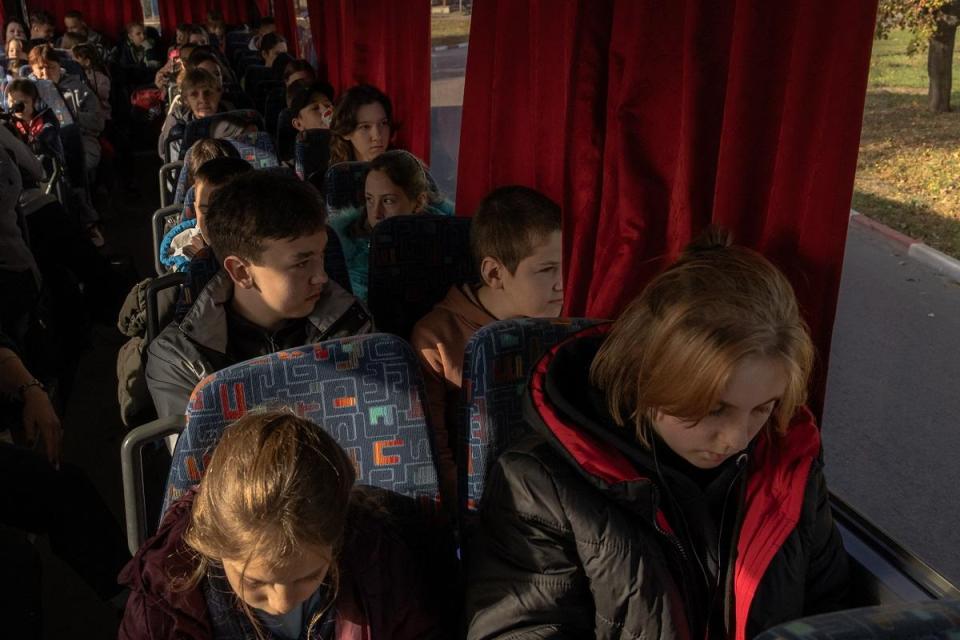
That is, the goal is to avoid the concentration of Ukrainian children and adults in one region of the Russian Federation or in one part of the occupied territory. They are afraid of Ukrainian teenage children, fearful of rebellions of so-called extremism. They are also scared that Ukrainian adults with children in the same city will unite and cause them some additional problems. So they scatter Ukrainians. Children have tiny choices. If we are talking about status children, orphans deprived of parental care, they are simply sent to the orphanage that has places.
That means: they are sent to such institutions only orphans, right?
There are also round orphans, but in Ukraine, we do not have such a phenomenon as biological orphanhood. We have social orphanhood, which means that children who were in orphanages at the time of the full-scale invasion – 90% of them have relatives, and some of them have parents. It’s just that these parents are either deprived of parental rights, or they are in prison, and so on. So, certain circumstances led to children being in boarding schools.
There was also a category of children with disabilities, for example, in the Oleshky orphanage. These children generally have parents and good ones, but they were in an orphanage because they needed special medical care.
How does the adoption process work in Russia? In the civilised world, this requires certain documents. You need to know for sure that the parents cannot raise this child, for example. What happens with our children, whom Russia has actually stolen?
In 2013, the first stage of Russia’s policy of adopting Ukrainian children began. We are now talking about adoption in legal terms. At that time, as part of the “Train of Hope – Crimea” media project, children were taken from the Crimean Peninsula. We recorded a case of removal in 2014; there were 12 children, most of whom were very young. Now, these children are 10-12 years old. There were cases in 2015. In total, according to the Moscow mechanism, there were up to a thousand Ukrainian children whom Russian citizens adopted before the full-scale invasion. The situation in Donbas was a little better because those children were not recognised as citizens of the Russian Federation, but there was still evidence of Russians trying to take children out of Donbas. Sometimes, Ukraine stopped such transfers and sent notes to the Russian Foreign Ministry, and the children were returned.
But we also have a particular proceeding in the European Court of Human Rights, which concerns attempts by Russians or Russian agents to take Ukrainian orphans and children deprived of parental care to Russia, apparently to transfer them to Russian families. That is, this is what happened before 2022. They already had an understanding, firstly, that Russians were ready to take such children, and secondly, that the world was not in revolt. That is, it is entirely unpunished. Until 2022, no one reacted to this adequately.
In 2022, large-scale cases of children being transferred to Russian families began. The first one was in 2022, before Easter, when 27 Ukrainian children were transferred to families. These families were from the Moscow region. In general, the Moscow region is the leading region of the Russian Federation that has adopted Ukrainian children. This is all because their governor, Vorobyov, organised the strongest possible incentive system, which includes not only this heroisation of these parents but also various additional funds for the maintenance of these children. Because, in reality, the funds provided by the Russian Federation, as a state with a federal budget, are not so significant that Russians would rush to do this en masse. So, all hope is on their local budgets, and they are doing a pretty good job with this task.
The main difference was that at the beginning of the full-scale invasion, they did not have adoption but rather a form of temporary guardianship. According to the legislation of the Russian Federation, temporary guardianship lasts for 6 months and, in exclusive cases, for 8 months. This form of guardianship is different in that it is faster. That is, only a local authority’s decision is required; there is no need to wait for a court decision. Although, as the example of Margarita Prokopenko, a girl whom Russians indeed adopted, showed, there were severe procedural violations of Russian law because the court considered the case for less than 10 days, which violates Russian law. Now, there is no such guardianship, and it has turned into either permanent guardianship or adoption.
But initially, I think the idea of this temporary guardianship was not to provide children with great guarantees of reunification with their relatives. The Russian Federation has never been concerned about that. I think it was to avoid overloading the local courts with so many cases and shorten the family reunification timeframe as quickly as possible.
There are testimonies, for example, from the Yamalo-Nenets Autonomous District from their governor, Artyukhov, where he says that Russian families with such big hearts took in Ukrainian children even without documents. Some of these families say that they do not know what happened to the parents of these children, and they do not care much. Likewise, some parents are fully aware of the criminal nature of their actions, and in interviews with Russian journalists, they say that they do not care. Therefore, from a legal point of view, the situation here is absolutely illegal, regardless of the form, i.e. adoption or guardianship, because the Russian Federation, claiming that it evacuated the children, had to do so with the intention of returning them as soon as possible.
I’m not even talking about the fact that it could only evacuate in cooperation with Ukraine and only to the territory of Ukraine or another occupied territory, but temporarily with a return. She was supposed to hand over the complete list of the so-called evacuated children to the Central Information Bureau of the International Committee of the Red Cross. This was not done, so such actions are not an evacuation. But this is the cherry on top of the cake, the transfer to Russian families is only additional evidence of a deportation crime in the opinion of the International Criminal Court. In my opinion, as a lawyer, this is evidence of nothing less than a crime of genocide. Because of the forced transfer of children from one group to another, it is hard to imagine what other form it can take. That is, it is either a transfer for adoption or it is disrespect for the Convention.
By the way, I’ve also heard that adoptees change the names of their children.
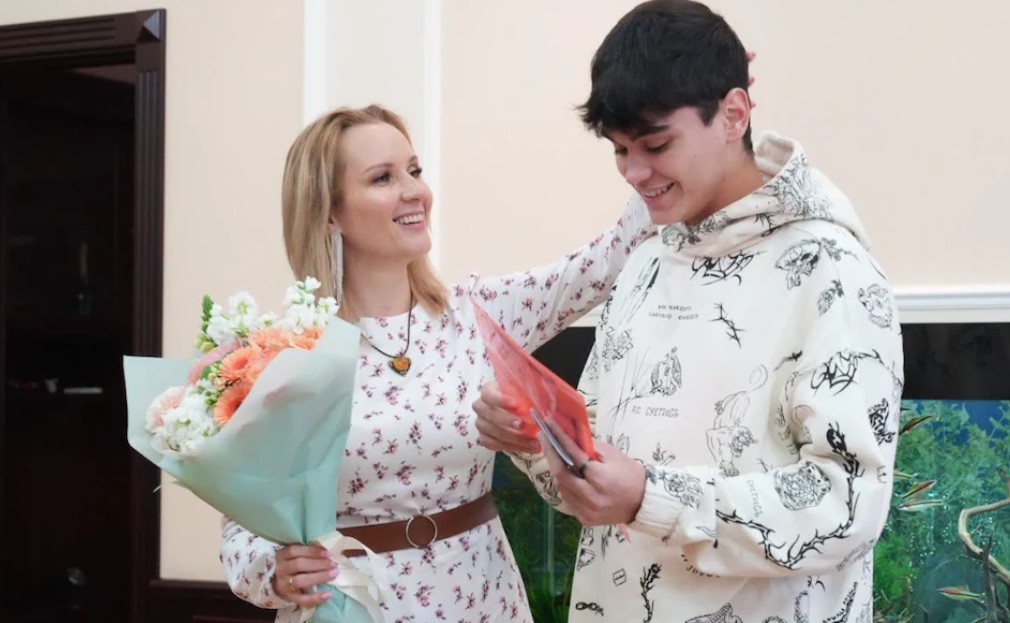
We recorded, for example, the change of Margarita Prokopenko’s name. She was named Marina in honour of Mironov’s sister, and she obviously became Marina Mironova. However, there were cases in which these changes were related to transliteration. That is, when Pylyp became Philip there, we saw documents for Philip Holovnya, the so-called son of the new Maria Lvova-Belova, who, by the way, will become an adult on April 4, and it will be very interesting to follow his fate. The same is true for Sergiy – Sergei, Oleksiy – Alexei. I can’t say that these changes were widespread. We are monitoring the fate of these children. And even those children who have been placed in foster care since 2014 even keep their surname. I would avoid manipulations; there are certain changes, modifications, and isolated cases of changing personal data.
What do they change? They change, for example, the place of birth or place of origin. And I’m explaining that this is a technical detail. That is, when the children were taken away, they were taken to Rostov-on-Don, Krasnodar and Kursk – there were large TACs where they were placed in camps and simply entered into a single federal database of children offered for adoption or guardianship as children from Kursk, as children from Rostov-on-Don and children from the Krasnodar Territory. And so, here is the problem: because no one wrote Mariupol or any other Ukrainian city. Obviously, this makes it very difficult to find such children based on their identities.
Grandmother died on the way to Russia when she tried to bring her granddaughter back home: what is the situation with adoptions
Mr. Lubinets announced for Ukraine news that we have managed to bring nine children home again. This is undoubtedly excellent news. In honour of this, I’d like to ask how the procedure for returning the children generally works. Do they somehow get in touch with Ukraine, or do we submit lists, and then is it somehow coordinated?
We have to be realistic that only teenagers can get in touch. And they are fearless, not afraid to call their families – very often, they called from hospitals in Donetsk, for example, from the toilet or elsewhere. Just two seconds to ask to be taken away. Or when they were already in Russia, they wrote and begged for their return, and not all children were immediately believed. Children under the age of 10 are very quickly re-educated, as evidenced by other children who have returned. It’s easy to impose a Russian identity on them, to tell them all sorts of lies about what’s happening in Ukraine war situation. These children do not get in touch, and sometimes, they are even afraid to get in touch.
How are they returned? I would like to tell you about one single procedure, but it does not exist today. We see certain conditional things that look like a system. This is now cooperation between Ukraine, Qatar and the Russian Federation, where Qatar acts as a so-called mediator. This is a political situational arrangement. We received information from the Russian Federation that Qatar pays for the accommodation of children’s relatives in the Russian Federation, pays for their transfer, and transfers the lists. However, can we return all the children in this way? In my opinion, no. We need something else from Russia. We need to understand precisely where the children are and have access to them. We need Qatar to pressure the Russian Federation to reduce its many conditions, requirements for legal representatives, proof of their authority, and the required documents.
One of the documents used to be that the school had to confirm that it would teach the child in Russian. In our country, schools cannot teach in Russian. So, some of the documents are simply unrealistic to obtain in Ukraine. Our authorities cooperate only to take the child away. Therefore, some extremely stupid requirements should be eliminated. The Russian Federation is abusing its dominant position by having these children under its control. The problem is that these parents or legal representatives have to go to the territory of Russia.
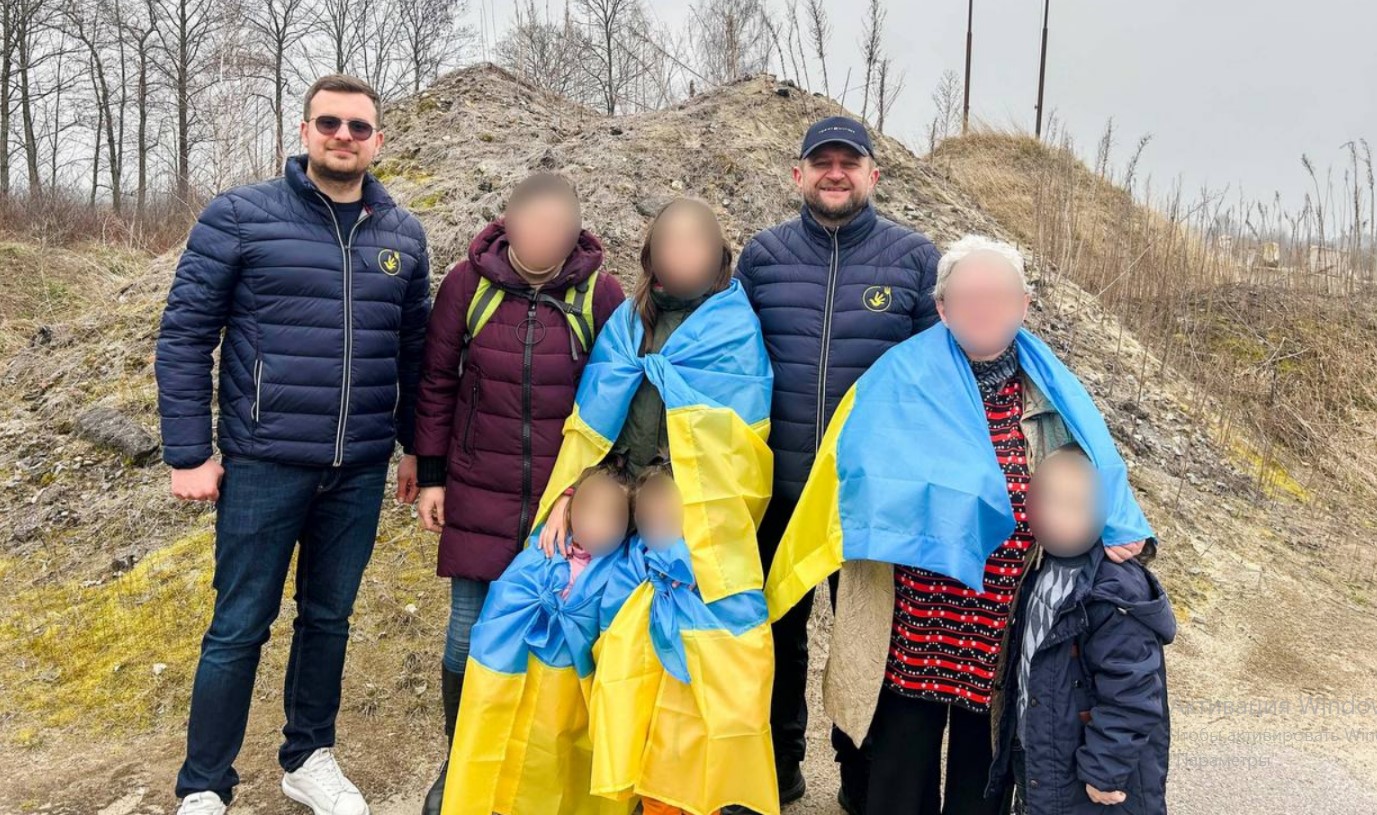
Now imagine that the child has only a father or grandfather. He cannot go because we have travel restrictions there and because it is dangerous for him. We also have cases where the mother has other very young children and would like to go, but it is tough to organise. We also have grandmothers who are sick, and there was a case when one grandmother died on the way to Russia when she tried to bring her granddaughter back home. Therefore, we need a mechanism where the presence of a physical, legal representative would not be mandatory.
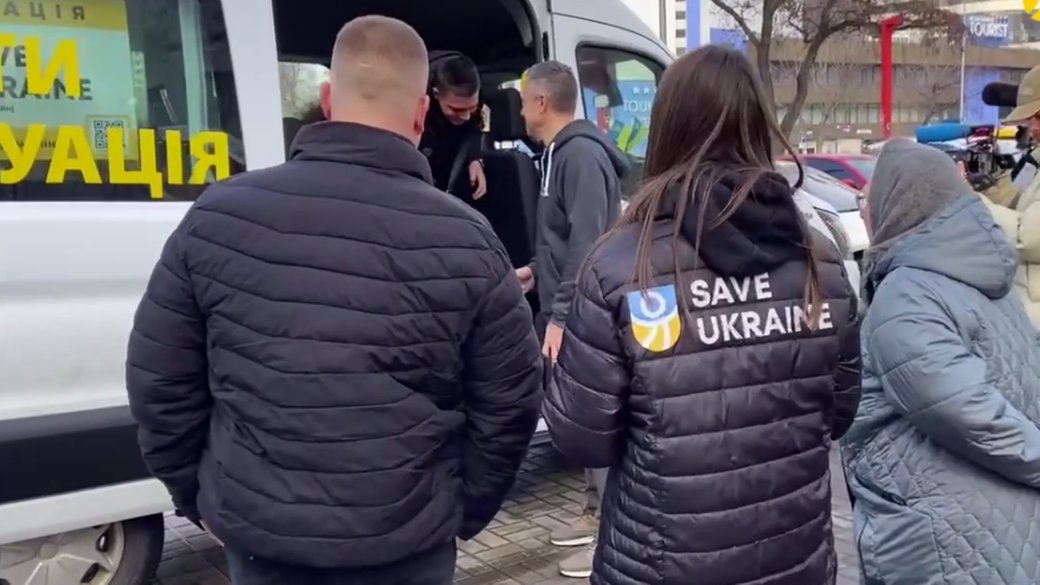
These children can be accompanied by the International Committee of the Red Cross, whose cooperation Russia is so proud of, substituting its own Red Cross. UNICEF or anyone else can be there, but so far, we have yet to see any steps towards creating a single legal mechanism for return. So it’s all sporadic. Parents or other legal representatives apply to non-governmental organisations or to the Ukrainian authorities. They organise a group trip to the Russian Federation or the occupied territories. That is, a particular group of people still needs to be assembled. Before this group goes, Qatar sends the list to Russia, and Russia says yes or no. If the answer is yes, people come and take the children. There, Lvova-Belova takes pictures with them and gives them expensive gifts, so they come to Ukraine and have less opportunity to criticise the Russian Federation.
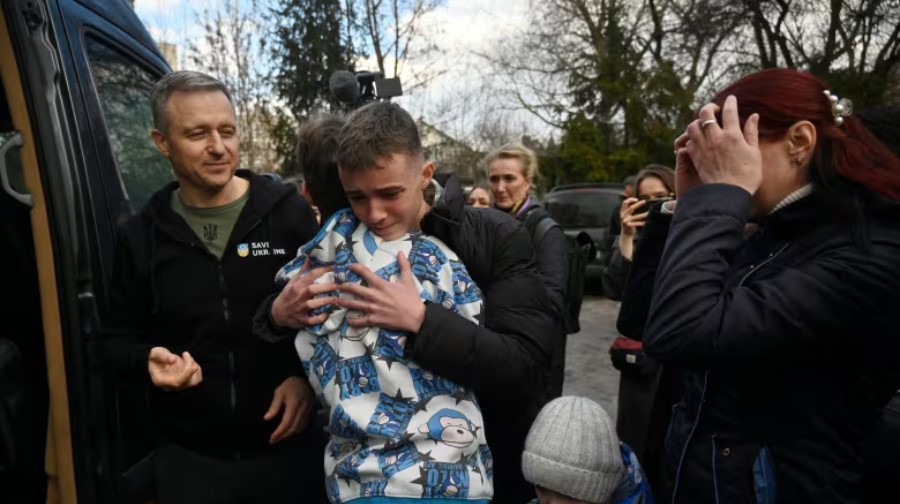
Then they return to the territory of Ukraine or go further to evacuate because these are, for example, families from the de-occupied territories in 2022, and there are very poor conditions or completely destroyed housing. They go to other countries or the west of Ukraine. My organisation, in cooperation with Save Ukraine, an organisation that returns children, and also in cooperation with the Lemkin Institute, an American non-governmental organisation, a think tank, filed a report with the International Criminal Court regarding these abuses during the return. Because we believe that this is a separate war crime, which should be a prerequisite for expanding the arrest warrants for Putin and Lvova-Belova for issuing new arrest warrants for those who are preventing the reunification of children with their families.
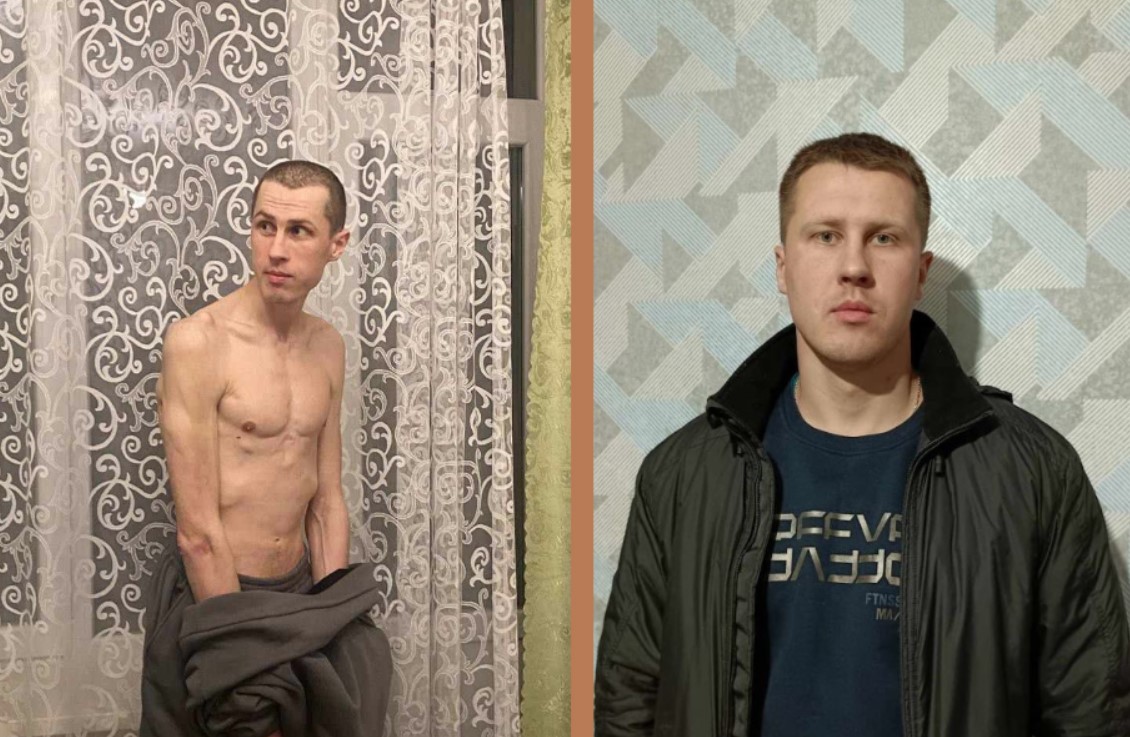
When we look at the condition of our military returning from Russian captivity, anyone can see that they were in very poor conditions. The question arises: is the situation better with the children that Russia stole from us?
This is an interesting question because everything varies. There are children who were in “re-education” camps – some say the conditions were good, while others say they were terrible. That is, some stinking sheets, dripping everywhere, little food, and this is not to mention the re-education program itself. That is various indoctrination, militarisation, Russification of these children, a ban on manifestations of their identity, threats, etc. As for the children taken to a Russian orphanage, you can imagine what those orphanages are like. It’s a prison for children, so we can’t talk about any conditions there. For me, this situation simply causes maximum fear for Ukrainian children who could potentially be there for two years.
As for Russian families, everything varies. There were those children who had not even been bought seasonal clothes for the winter, and they came back in summer sneakers in the middle of December. And there were those children who were treated normally. It’s not that there were no conversations about Ukrainian Nazis, and they were told that “Ukraine is a good country, forgive us for Putin.” This was not the case in any family. But there are resource families that are well-prepared, have normal living conditions, and have well taken care of Ukrainian children. This does not minimise the unlawfulness of the actions of these parents or Russia.
However, the idea is not to create concentration camp conditions for Ukrainian children. The idea is to create such conditions for Ukrainian children that, on the contrary, will stimulate them to love Russia, to stay in Russia, to go to serve for Russia, to go to kill for Russia, and so on. This is very similar to the practices of Nazi Germany, where these foster parents, who were given children abducted in other countries, were also trained and selected. These parents were never told that these children were kidnapped. They were told that they were German children and given them with German birth certificates. The idea was that the parents would love these children as their own. And, unfortunately, we have a very classy story like this. It has been going on since 2014. There is a Russian family in which one child died, and the other was born with a complicated disease, and they took two girls under their care. And from what we can see, these girls are doing well there. That is, they love them because it is connected with their own family tragedy. But these girls also love the Russian Federation, and they tell Russian poems about Putin and Russian land.
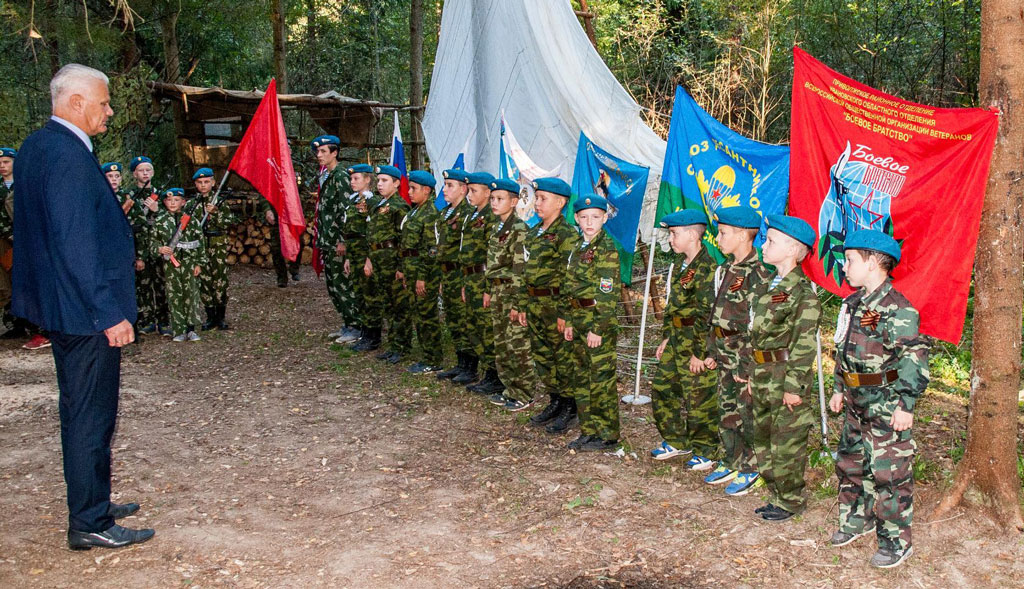
It’s no secret that Ukrainian children in Russia are subjected to so-called “re-education.” In particular, some teenagers are sent to cadet corps. What are the most popular narratives that are dictated to them? In the case of cadet corps, why is this done?
In cadet corps, there are mostly boys, but, for example, we have documented cases when the Russian Investigative Committee took girls to their educational institutions as well. So, there is no gender discrimination there. Similarly, girls run around in the “Unarmy” and other paramilitary associations of children. So, I wouldn’t go into the gender aspect here.
They are trying to do two things with these classes. The first is actually to deprive Ukraine of its demographic potential. That is, when they deported these children, took them away, and then put them in such classes, the idea was to strengthen their own resources and weaken Ukrainian ones. We recorded that mostly boys aged 14-17 were given to Russian families. That is the most unattractive portrait of an orphan. Then, we recorded that they either went to military schools or joined some kind of police academy, and their academies are similar to those of the Ministry of Internal Affairs. That is, they are all somehow connected to the security forces.
As for this militarisation, Putin, in a dialogue with Kravtsov, their minister of education, said the phrase, “If you are born, you will be an Eagle Scout.” They even have a program for younger children. First, the Eaglets, then the First Movement, and simultaneously, you can join the Junior Army. The Youth Army is very unpopular in the newly occupied territories, and people are simply forced into these cadet classes. Their parents are threatened with deprivation of parental rights, but this is happening and continues to happen. So the primary goal of such training, where children run around with natural weapons or various workshops in the Kherson region where they show how to fold and unfold various AKs, is to prepare children for military service.
They plan to replenish their reserves in the future, right?
Yes. I was laughing the other day when they released a news item as part of their fake news debunking campaign, where they said that news from the Ukraine was manipulating, that they were drafting children, and that it was all a lie. They explained that from the age of 17, everyone must report to the military enlistment office and give all their information. From the age of 18, compulsory military service is available. We have not really recorded cases of children standing on the front line with guns. But we have documented cases when Russia recruited children to gather intelligence or to surrender Ukrainian positions. We have documented cases where Ukrainian children received summonses to report to Russian military commissariats and provide information about themselves at the age of 17. This meant that at the age of 18, they would receive a real call to serve. So, yes, Russia needs an army, Russia needs people, there are significant demographic problems there, and they talk about it openly.
Political injustice: why people who should be helping look the other way
According to your column, Virginia Gamba has removed herself from the situation with our children, saying that deported or forcibly displaced children are outside her mandate. Given that she is the Special Representative of the UN Secretary-General for Children and Armed Conflict, is this really not her business? Why did she withdraw herself?
No, it is absolutely her business, and following their norms, we can clearly prove that Ukrainian children are abducted in the sense of the resolution, which provides for a serious violation of children’s rights in the current armed conflict. Because Ukrainian children are subjected to political indoctrination, no one knows their whereabouts, and Ukraine has to record and extract this data in various ways. That is, we see several markers at once that indicate that children have indeed been abducted. And sometimes it is really abduction, as we imagine in the literal sense of the word, when ambulances arrived at the Kherson orphanage, and in a few hours, the children were no longer there. So, this really falls under its mandate.
Virginia Gamba does not want to do this for several reasons. First, because then we would have to add the Russian Federation to another list, a special list called Annex B, you know, with the hope that in 2024, it could be removed from the list altogether. But we will make every effort to not just remove the Russian Federation from there but to move it to that list somewhere alongside Hamas. Another problem is that the Russian Federation is treated in an absolutely exclusive manner. It has not signed an “action plan” with Virginia Gamba. This is a mechanism that allows us to prevent violations of children’s rights and eliminate those violations that have already been recorded. The Russian Federation has not done this, and a year has passed. Why hasn’t it done so? Well, that’s a better question to ask Virginia.
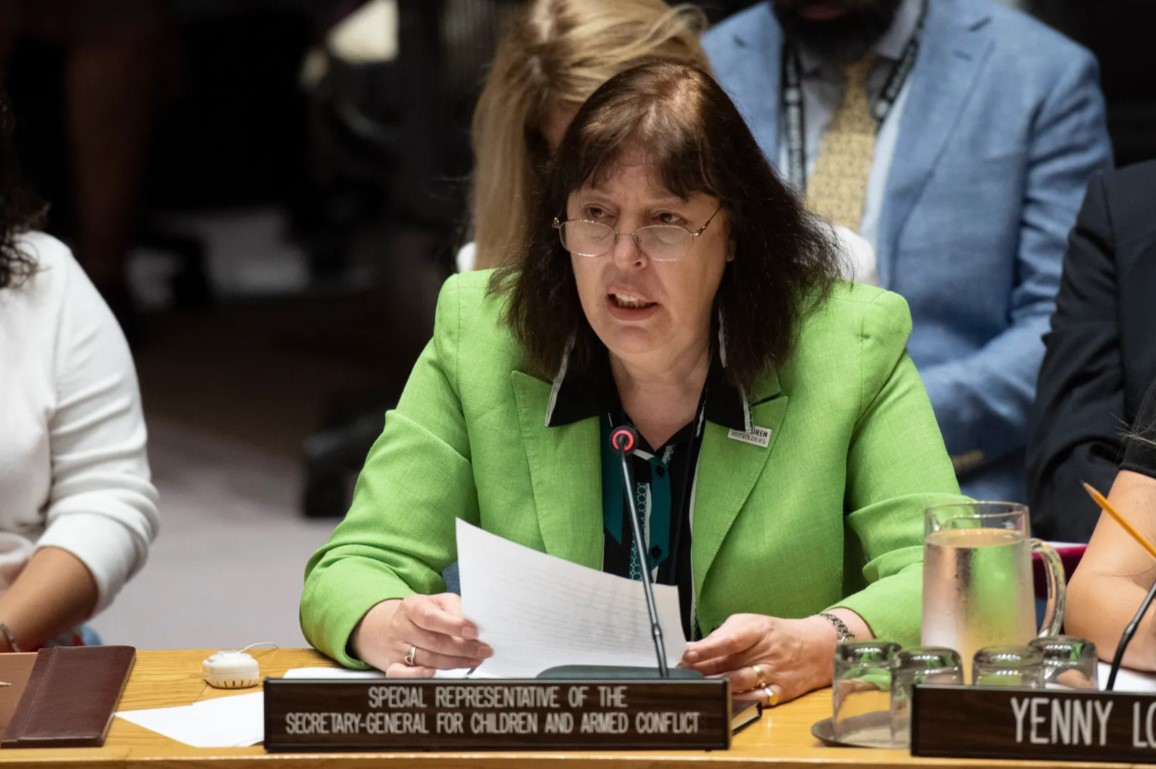
I think there is a particularly political aspect here. They believe the mere proclamation that the Russian armed forces have been included somewhere should be enough. But this is absolutely not enough. Attacks on schools continue. Attacks on medical facilities continue. The Russian Federation has not stopped killing Ukrainian children. We see this happening as a result of shelling. I am absolutely outraged by Virginia Gamba, who checked the cases of sexual violence, why it was not enough for her to put the Russian Federation on the relevant list for this violation. That is, there are many questions for this woman, and unfortunately, she refuses to communicate with Ukrainian non-governmental organisations, and I cannot ask her this question personally.
Can the removal of Ukrainian children and their forced adoption be considered genocide and a violation of the 1948 Genocide Convention?
I believe that at least when Ukrainian children were taken and transferred to a Russian family, regardless of the method of such transfer, it should be qualified as a crime of genocide. Here, we have several aspects at once. In both the Rome Statute and the Convention, the fifth element of the crime of genocide is material, and we also see intent. The intent is to make these children Russian patriots, to make them love the Russian Federation, and to integrate them as much as possible into the Russian cultural and social space. And so this leads to what? This leads to the destruction of the Ukrainian nation because these children will not give birth to Ukrainian children; these children themselves are actually taken away from the Ukrainian nation irrevocably.
As a lawyer in the field of child protection, I cannot imagine how we will separate children who have been raised for 10 years by the mother they love and return them to Ukraine. And will this physical return be enough to bring them back mentally? Because in some places, this eradication and abuse of a child’s identity is already becoming so severe that it has inevitable difficult consequences, and it will be very, very difficult to reintegrate such children. Therefore, yes, such acts should be qualified as a crime of genocide, including to prevent such practices from being committed in other regions of the world.
By the way, you also mentioned Belarus. It’s no secret that it participates in so-called recreational camps, i.e. it takes Ukrainian children to its territory. The head of the Red Cross of Belarus, Dmitriy Shevtsov, said they would return these children to Ukraine afterwards. However, I wanted to ask whether this is true and whether it can also be qualified as a crime.
Belarusians have been doing this for a very long time, and no one has been monitoring it. When we receive a specific list of children who have been to Belarus and find them later on the occupied territory, for the most part, these children did return. But the question is what kind of people they came back as, i.e. again, this is a crippled identity, this is Russification, this is militarisation. There were also cases when a child first went to this camp in Belarus, then stayed in Rostov, and then, from Rostov, was transferred to a Russian family.
As for how to qualify it, yes, it is a crime. It is a crime against humanity. That is, Russification, re-education, and attempts to eradicate Ukrainian and impose a Russian identity, including on the territory of Belarus, all fall under a discriminatory investigation. If we are talking about deportation as a war crime, then we must understand the role of Belarus in this process. Unfortunately, Lukashenko is not an independent author here, he is only a person who helps to implement Putin’s criminal policy. Then, he should be qualified as complicity in the commission of a war crime.
Unfortunately, we don’t have enough evidence to bring Lukashenko to the International Criminal Court tomorrow. And what’s worse, we are in a challenging situation when this issue is more politicised than the issue with the Russian president. Because some Belarusian circles are trying to use this to their advantage to remove Lukashenko. So, I would start with Alexei Talai. Because he is absolutely openly organising this export through his foundation, and he has no privileges or immunities. However, several states do not recognise Lukashenko’s privileges and immunities and do not recognise him as a legitimate president. But this person, Aleksei Talay, deserves to be the first to receive his arrest warrant.
There is another issue that concerns the prosecution of Belarus in the ICC. For some reason, whether the ICC has jurisdiction over Belarus appears in “closed conversations”. That’s why the track in Belarus will be moving for a long time. This is due to many circumstances. I have already mentioned politicisation in the context of the internal political struggle. However, the issue is also that Ukraine is behaving somewhat cautiously. And here I am not criticising our state because if troops move into Ukraine from the territory of Belarus again, the situation will be as difficult as possible and even more children will be deported. That’s why Ukraine has to manoeuvre. And Ukraine’s statements regarding Belarus are more loyal than those regarding the Russian Federation.
Reference: According to Rashevska, approximately 2,200-3,500 children have been taken to the territory of Belarus since 2016, according to various sources.
The last question is: what actions should international partners take to help Ukraine bring the children home? Is it possible to have some resolutions or, as you said, more active participation of international organisations like UNICEF or the Red Cross?
I will be as straightforward as possible, you know. Step number one is that we have to separate the issue of returning Ukrainian children, the humanitarian issue and bringing the perpetrators to justice. This is not to forget about accountability; both tracks are important, but the children are under the control of the Russian Federation, and we will never get them back if we say that we will punish you all, and now return the children to us. That is the most ineffective way to build rhetoric.
The second step is that we need to enlist the support of as many states as possible. 33 states in the Coalition for the Return of Children are not enough. There should be more of them. This coalition should include states from the global south. The states of the global south will be there only when this issue is separated from the issue of responsibility. It will be positioned exclusively as family reunification, children’s return, and rehabilitation and reintegration.
Then, we need to continue efforts to identify children, but this should be done on a parallel track to their return. At the international level, to fill the gaps that currently exist in international law, in particular regarding the return of orphans and children deprived of parental care, we need to adopt a resolution in the UN General Assembly that could eliminate the relevant gaps. It could include the main dimensions of the future return mechanism. The mechanism should be based on legally binding agreements between Ukraine and a third party and between the third party and the Russian Federation. Such a party can be a state, a group of states, an international organisation, or even a separate UN body, the Secretary-General, or any other combination, as was the case in the grain deal, where Turkey and the UN Secretary-General acted as mediators and guarantors. These agreements are concluded and clearly stipulate which categories of children are returned, in what order, what documents need to be provided, and how long this process should take.
Then, the children return. We have to develop an individual trajectory of return for each of them. We must clearly understand that Vanya is going to Kyiv, and Svitlana is going to Ivano-Frankivsk. And not to return children, just to return them anywhere. Further, there should be a national rehabilitation and social support program for these children, i.e., case management should be developed. There must be reintegration into society; for this, we need to work not only with the returned children, but also with the communities to which they return. For example, appropriate preventive conversations should be held with the class, explaining that this child is not a fascist or a terrorist, that speaking Russian is not a crime and that there is no need to harass them for it.
Ukraine can do a lot of work only in cooperation with its partners, but there is also work that Ukraine must do on its own. For example, reform and deinstitutionalisation. Because children from institutions cannot be returned to institutions, they can only be returned to their families. Obviously, there are areas, and this is a physical return, where we have to cooperate with Russia because the children are there now, and only Russia can return them to us.
Tetiana Stelmakh