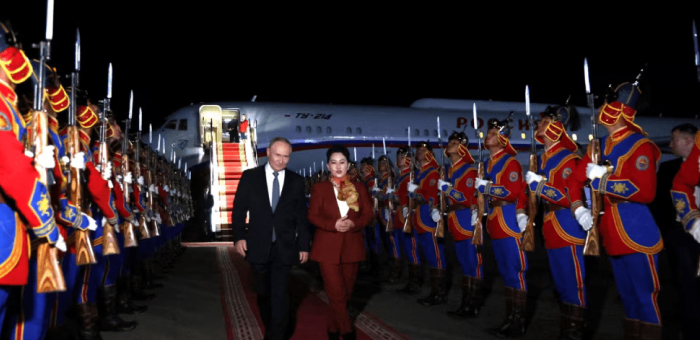


On September 2, Kremlin leader Vladimir Putin arrived at an official visit to Mongolia. Mongolia recognizes the jurisdiction of the International Criminal Court (ICC), which issued an arrest warrant for Putin, but Moscow was not concerned about the danger of arrest, Suspilne reports.
The Mongolian presidential administration announced the arrival.
At the same time, the international human rights organization Human Rights Watch calls on Mongolia to ban Putin from entering or arrest him.
Mongolia will violate its international obligations as a member of the ICC if it allows Russian President Vladimir Putin to visit the country without arresting him. Hosting Putin, who is a fugitive from the ICC, would not only be an insult to the many victims of Russian military crimes, but would also undermine the important principle that no one, no matter how powerful, is above the law, – wrote Maria Elena Vignoli, senior international justice adviser at Human Rights Watch.
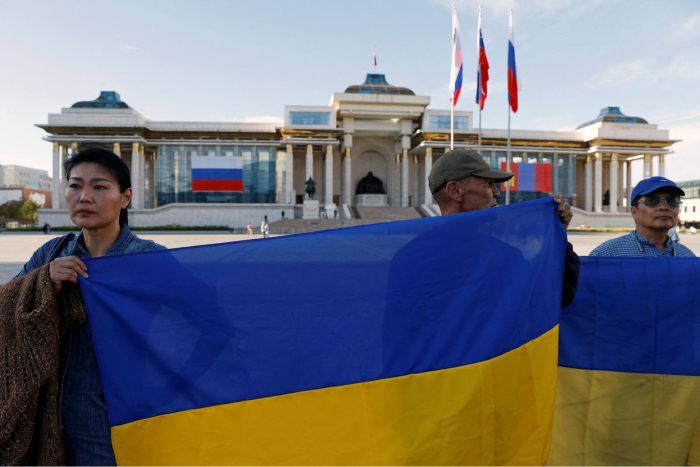
A protest took place outside the government building, which had Russian symbols affixed to its building for Putin’s arrival, the day before. People came out with Ukrainian flags and posters calling on their government to arrest the Russian leader for war crimes.
What is known about Putin’s visit to Mongolia
Putin planned this visit at the invitation of Mongolian President Ukhnaagiin Khürelsükh. The country recognizes the jurisdiction of the ICC, which issued an arrest warrant for Putin in March 2023.
The Ministry of Foreign Affairs of Ukraine called on the Mongolian authorities to execute the binding international arrest warrant and transfer Putin to the International Criminal Court in The Hague.
The Kremlin was not worried about Putin’s possible visit to Mongolia, Russia’s Interfax news agency reported, citing a comment by Vladimir Putin’s spokesman Dmitry Peskov.
And ICC spokesman Fadi El Abdallah said that Mongolia may not arrest the Russian leader if countries are forced to “violate treaty obligations” with another state or if it violates “the diplomatic immunity of a person or property of a third state”. The exception is spelled out in Chapter IX of the Rome Statute, the court representative said.