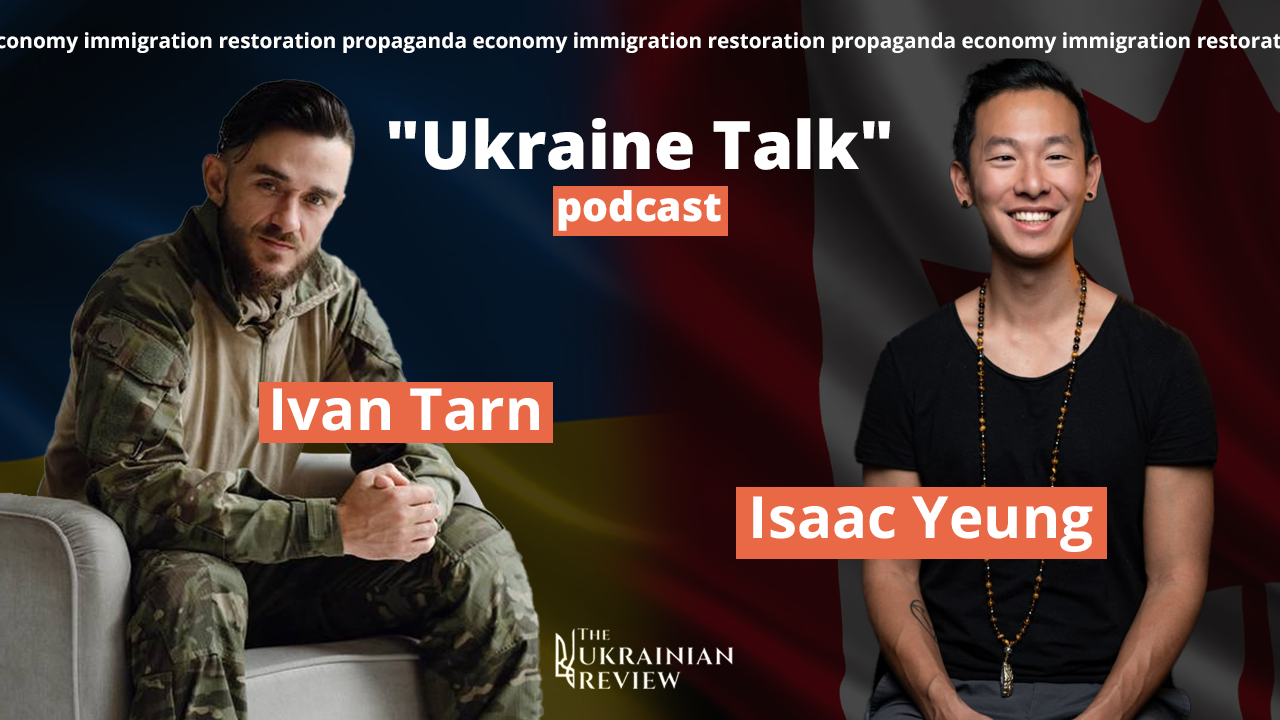


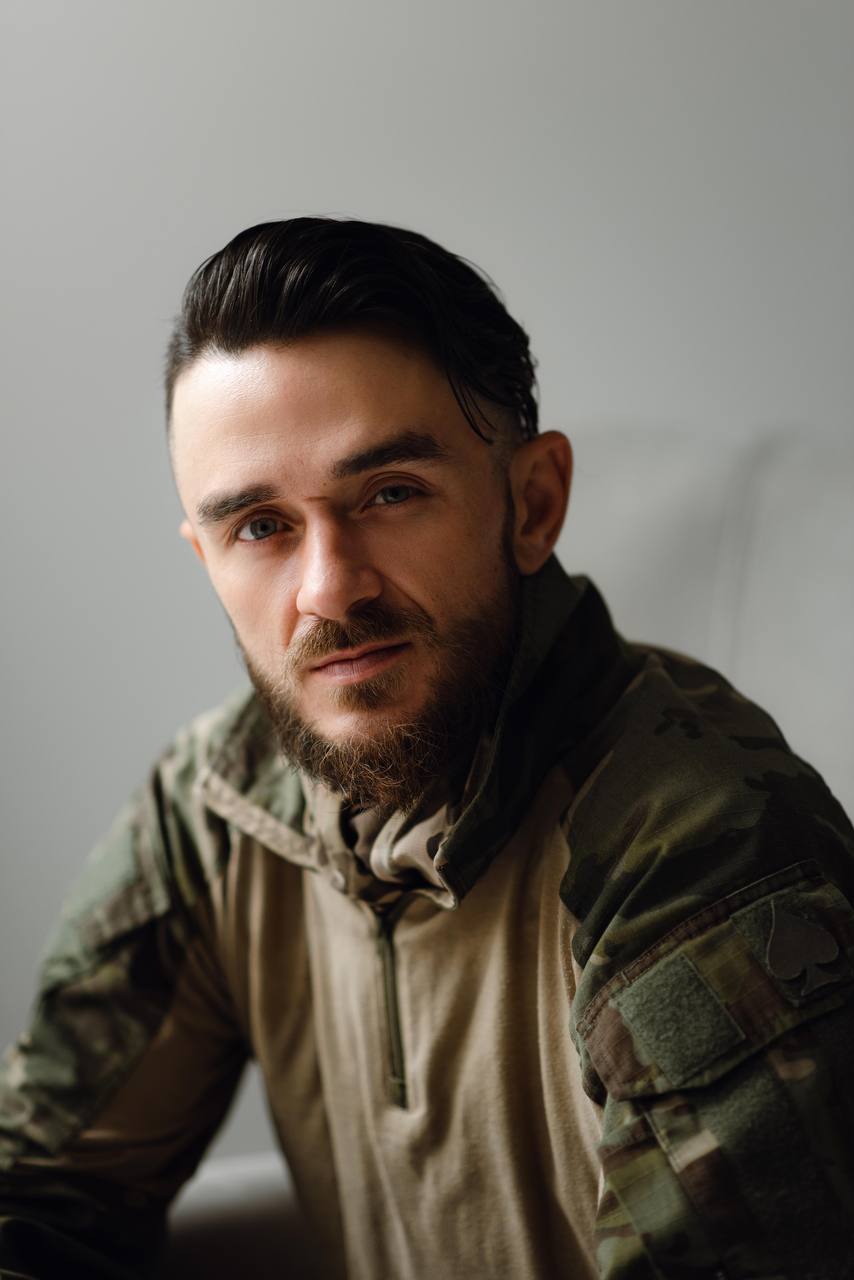
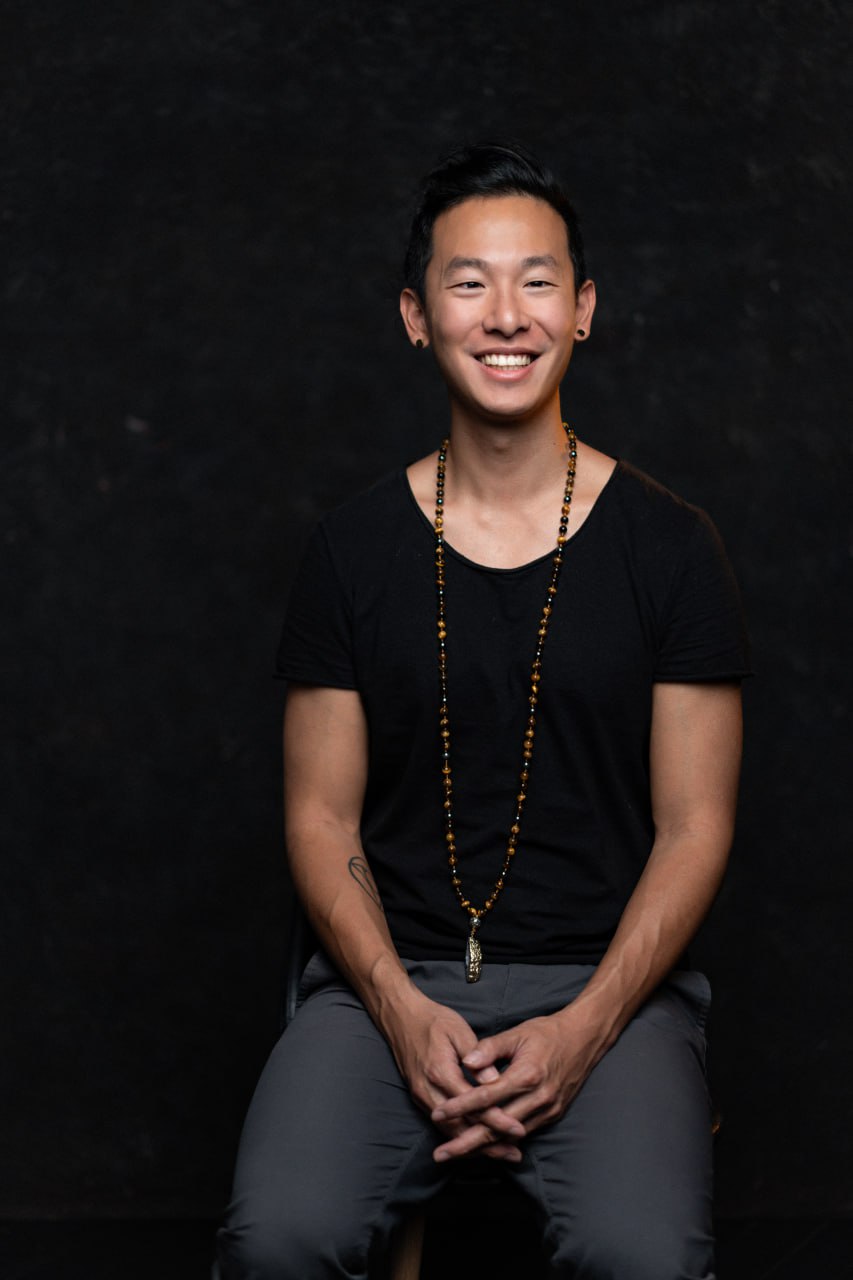
In the first episode of the podcast “Ukraine Talk”, Ivan Tarn, a veteran of the Russo-Ukrainian War together with Isaac Young, Chief Operating Officer of the Inertia Network, an unconventional travel agency and co-founder of the “Bird of Light Ukraine” discussed a lot of questions.
“For me, this podcast is a mission to challenge the distorted narratives and amplify Ukrainian voices in the world. Together, we’ll explore historical context, dissect public views, and share personal experiences”, – Ivan Tarn.
Here you can read about what realism is, learn the stories of Ukrainian heroes, and investigate the issues of immigration, propaganda, and reconstruction of Ukraine after the russian bloody invasion of Ukraine. In particular, speakers explained why foreign businesses do not want to invest in Ukraine yet.
What speakers did February 24, 2022?
Ivan: Isaac, I know you were in Ukraine when the full-scale invasion erupted. Can you share some of your experiences? How were those first days?
Isaac: Why don’t I first tell a story about how I got there, because it gives some context for this? I started this charity together with my partner, Zhanna. I’m not Ukrainian, but she is. She came to Ukraine in December 2021, just before the invasion, to meet her biological father for the very first time. I came shortly after. She hasn’t seen her biological father for 32 years. Almost her entire life. It’s a funny story, because I run this travel company, Inertia Network, and we did a trip to Egypt. She was meditating inside the King’s Chamber of the Great Pyramid of Giza, and she got a sign from God or whatever to go see her father because she knew her father didn’t have much time to live. So, she goes there and meets her father for the first time in 32 years, and that’s a beautiful experience.
Meanwhile, this is happening. I know war is coming. It’s on the news, and it has been hanging in the air for a very long time. It’s becoming very apparent. And I run a travel company to very weird places. We do Afghanistan, Syria, Iraq, and Yemen. I’m very comfortable in stressful environments. I figured I was not going to tell her to leave, because when you see your father for the first time, you can’t tell him you have to leave. I’m going to go there instead and help if something happens.
I go to Ukraine, and I’m expecting war is going to break out. Something’s going to happen. I need to do something. And it does. And everyone remembers perfectly what they were doing that morning. It was like 5 a.m., sirens going off, and we look at each other like, “Fuck, it’s actually happened. Today is the day”.
Ivan: You’re in Kyiv, right?
Isaac: I was in Kyiv at this moment. I look on the phone, it’s like, okay, the helicopters, the Ka-52s took off. I saw a picture of these helicopters on the highway in Belarus the day before. And it’s like, there’s no way you put helicopters on a highway unless you’re invading the next day. This starts happening. They start flying over the reservoir in Kyiv. And it’s like, okay, I got to get a train ticket. I have to figure out how to get a car. And I don’t know what’s going to happen. I have to go get all the cash I can get. I got to go to the supermarket and buy all the food that doesn’t go bad. So, like oatmeal and water and other stuff. Eventually, we managed to find a car, and we started driving west in the evening of the 24th at nighttime at like 10 p.m. We decided to leave. Everyone’s leaving Kyiv. We spent two days driving to the border of Moldova.
Ivan: It’s a drive of about six, seven, maybe eight hours, If you do it on a normal day. And it took you two days.
Isaac: But the whole country was moving at that time. And meanwhile, we’re driving, there are so many trucks and soldiers at that moment. Because everyone thought Ukraine would fall in two days. No one thought Ukraine would have so much bravery and courage to fight against the second most powerful country. And all these soldiers were driving back towards Kyiv. But eventually, we made it to the border of Moldova. We look at each other, and say, “You know, we don’t have to go because if we leave as foreigners, we’re done. You know, you never come back to Ukraine. But if we stay, we can do something”. So we decided to stay.
And then we turn around, and drive to Chernivtsi. Because one of her friends has a place, we could stay there. We live inside a rehabilitation center for children, “Osоbliva Dytyna”. And then we start figuring out what to do because all these mothers and fathers are coming. They have nothing, they’re wearing flip-flops, slippers – whatever clothes they had two nights ago.
Ivan: You mean other displaced persons were coming to this shelter?
Isaac: People from Kharkiv, Dnipro, Kyiv, like everyone, start driving there. Now all of a sudden the population at Chernivtsi is massive. And they said: ”We have no baby food”. Then we decided to raise money and buy baby food. That’s how we started.
Ivan: That’s how you founded the Birth of Light Ukraine [foundation]?
Isaac: Yeah. I can tell you more, we’ve done everything now. We’ve brought things like drones, night vision, ambulances, food and hygiene. A month of food and hygiene for over 90,000 people. We’re digging like 10 more wells for the Kakhovka, where they don’t have water. We do everything now. It’s crazy.
Ivan: Could you share a bit more about what you have been able to achieve so far? I’ve been looking through your website and I must say it’s quite, quite inspiring to see the results you have been able to, to realize with such a small team.
Isaac: I think what makes us special is just the way that we operate. Cause, there are so many Western charities like UNICEF and all these guys who come in, and they have a team from America, Germany, whatever. And how do you do things in Ukraine? They don’t speak the language, don’t know the culture, or how the country operates. This is when we were doing our food program, these are food bags, we were packing all day long. It’s a lot of food. I mean, it’s hard to operate, but what do we do – we just asked the Ukrainian people, what do they need? How can we do it?
We always partner with a ton of different groups. We worked with “Spilna Meta”. We worked with all sorts of different Ukrainian charities because everyone will do a piece. They might handle distribution, help us with transport, and with figuring out where to buy things. We come together as a small team, but we work with a large network of Ukrainian charities. So we’ve done $5.5 million in aid, and only 3% of that is going to expenses. We’re very efficient and, helped about 250,000 people so far, if my math is correct.
Ivan: Well, that’s so inspiring, and thank you for everything you have done and everything you have achieved. It’s an amazing story for me! Could you tell us a bit about your future plans or what you are working on now?
Isaac: When we were doing our food program, we were doing it until UNICEF could come in to fix it or the UN could come in. Because they take a very long time, but when they’re going to have millions and millions of US dollars. We’re always looking for what is the next problem and right now, we’re focusing on building foster homes for children. These kids have lost two years to COVID, two years to war. They need all the help they need – educators, social workers. A lot of kids need foster parents to take care of them. We’re working right now with The Coordination Center for Family Upbringing and Child Care Development under Zelenskyy’s office to reform childcare from institutional orphanages to foster homes. We’re trying to fundraise for that effort right now, and we’re doing a gala in New York for that soon February 7th. [2024].
Isaac: But that’s enough of me. I want to ask you the same question. Where were you, when that started?
Ivan: The night of the 24th [February, 2022], I was in Lviv. Let’s give a bit of background story. I’m Ukrainian from Ukraine. My birth town is Ternopil, Western Ukraine, but most of my life I have lived in Europe, in Belgium. It has been two years since I returned to Ukraine. A bit before this, the talk of invasion was going around, so I decided to return to Ukraine and to spend more time here. I had my work all set up to be able to work from Ukraine, and that’s what brought me here on February 24th. [2022].
A friend of mine has his birthday and we together with a group of friends organized a surprise for him at 12 o’clock midnight in Lviv, [at] the central square. We congratulated him on his birthday and the thing I will never forget was when we were congratulating him, and we were offering our best wishes, we asked: “What would you wish for yourself?” And he said: “The most important thing is peace”. And on that note, we actually left, I returned to the Ternopil, and I was back home around four in the morning.
And I heard a military plane flying over the city, that never happens. Actually, I never experienced that. There were no commercial flights over Ukraine. Only one lone US Reaper, like returning from Eastern Ukraine, was somewhere towards Bulgaria as it seemed. I realized something has begun. I did some internet research, but couldn’t find what was going on. I got a call from a family member of mine who lives near Kyiv. She was panicking and saying: “We are being bombarded, and we are leaving towards the west. Can we come to your place?”. I said: “Of course”.
The first few days for me were like organizing the evacuation of friends and family, women and children, mostly. Then, when we organized this evacuation path, we had a transfer from Ternopil to the border of Romania. There we had contacts with Romanian volunteers who provided shelter for people who arrived and helped them on the other side of the border. Once that all was taken care of, and I assembled some of the gear necessary for myself, I went to the East. First Kyiv, then Kharkiv, then when Kharkiv got a bit quieter back to Kyiv. There I met guys with whom we eventually started my unit where I was served, and I’m still serving. It has been a very interesting journey. I never in my wildest imagination could imagine something like that.
Isaac: You served in the French Foreign Legion, right?
Ivan: Yes. When I was 19, I joined the French Foreign Legion. So it gave me a good base for what awaited me here after the full-scale invasion. But nothing can prepare you for a full-scale war. It’s something on a completely different level.
Isaac: I mean, NATO doesn’t fight any equal wars. It’s always some poor country and [outstanding] 200 years of technology. Ukraine is brutal, it’s nothing like anything.
Ivan: No, a conflict like this hasn’t been seen since the Second World War, where you have almost peer adversaries. When all systems available are used for war and on such a ferocious scale.
Isaac: I want to also point out to the listeners that Ivan was recently wounded and he just finished rehabilitation.
Ivan: I finished my rehabilitation, and now I have a one-month leave for additional rehabilitation. After New Year’s, I’m hoping to rejoin my unit. I was injured in Bakhmut at the beginning of the year [2023], stepping on a landmine. As a result, I lost my foot, so I’m wearing a prosthetic now. That has been a very interesting experience, but the rehabilitation went quite well. I would say 80-90% of the abilities I had, I managed to retain. Thank God I was quite athletic before I got injured, so it helps me a lot with my rehabilitation now.
Isaac: Yeah, that takes some serious balls to get injured, and you want to go back to the front line. I mean, a lot of people will not have the guts for that after they get injured.
Ivan: You know, I thought about it because many people ask me: “What are you planning to do?” On the 24th of February 2022, I made a decision for myself that I’m all in. And that might probably mean that I won’t survive it, because that’s just how it goes in war. I had my motivation for that, it was patriotic. It was about fighting evil in this world. But when you are in battle, when you feel the artillery coming down at you, when it’s like all hell breaks loose, those higher motivations tend to vanish. The only thing that remains is your camarade on your right and your camarade on your left. And it’s for them, you’re fighting. That’s the only thing that keeps you in the fight, because, if you give up, they’ll be counting on you. And if you give up, it might bring your comrades and colleagues into a very hard situation and even lead to their demise. That’s the most important motivation.
Isaac: I think a lot of US veterans really relate to that because they say they don’t know why they’re in Iraq, in Africa, in Afghanistan. But they’re doing it for their brothers. I guess that’s what kind of messes them up when they come back, it’s like, why did I go to that war? In the moment, you did it for your brothers, but why after? I guess that’s why so many Americans and so many foreigners want to go to Ukraine to help. Because it truly is fighting against evil, a greater cause, and there hasn’t been a war that’s so cleanly good versus evil in so long. It’s hard to say what is good today. That’s why I’m not in the front line, but I feel that way. This is important. We have to continue with it.
Ivan: I could agree with you more, and it is a very simple story. A peace-loving country has been invaded by its bigger and stronger neighbor just to subjugate. And still, we can see that the Russian propaganda machine tries to turn it into something completely different. At least they try to bring doubt to this simple narrative, and it’s amazing to me that so many Western intellectuals actually buy into this narrative, into this premise that it’s not as simple. “We provoked Russia to this aggression” – it’s something I can’t grasp my mind throughout well. My intention or inspiration for this podcast is to combat these narratives that try to mess with people’s perception.
About realism
Isaac: I think if we don’t talk about it like easy to accept it, because if who you’re surrounded by is someone who just accepts it you just think: “Okay, this is normal, we are the Ukrainian voice. Other voices out there have to be also being spread”.
Ivan: It’s very serious, and we can clearly see that Russia is pouring a lot of resources and energy into pushing their narratives, and they have been doing this for years and years. They are very good at it, because they have the resources and they have the experience. They have been doing this for ages, basically since the Soviet Union and I’m trying to combat that.
Isaac: Let’s talk about this a little bit more, because I want to reply to you about these western intellectuals who have bought into Russian propaganda. I guess a lot of people are not aware (a few categories) but I want to talk about the one category that is interesting to me. That people aren’t aware of are what I would call “the political realists”. For the viewers who don’t know – realism is a political theory that basically really emerged under the Kissinger era. And it was in the Nixonian area. That was when realism was really a thing.
I guess to explain a little bit, realism basically believes that the world is kind of anarchistic. There’s no set rules. Countries have rules, but that really doesn’t matter, it comes down to the benefits and the costs. Everyone is acting in their own interest. Also, the realist view separates the world into spheres of influence. And actually, this is where the term first world, second world, third world comes from. Because the first sphere of influence is the American sphere of influence, right? Now you have America, you have the countries under it. You have parts of Europe, you have Canada, you have Mexico – these are the American sphere of influence. Then they had the idea of the Russian sphere of influence – this was Poland, Belarus, Ukraine, Kazakhstan. I mean, now you can see there’s also a Chinese sphere of influence. When you look at the world in this way, you forget that it doesn’t have to be under spheres of influence. So for example, even like Noam Chomsky, he is a very liberal kind of guy, but he is not exactly completely for Ukrainian independence. Because from the realist point of view, Ukraine is a country under the former Soviet sphere of influence. It is Russia’s problem and it’s not ours to touch.
Ivan: And I just want to interrupt you briefly and add that Noam Chomsky doesn’t even seem to realize his bias to realism. It’s just the way that he looks at the world, through this perspective of realism, policies.
Isaac: I think that’s a huge issue because there’s so many people who were born, basically from 1940 until now, who have lived knowing nothing about realism in international relations. There’s just an assumption that Kazakhstan will always be part of, under Russia’s thumb, Ukraine will always be under, and they can’t comprehend what that looks like. They also look at the world in terms of cost benefits. You lose something in that, because not everything is just about cost and benefit. The example I give, is what is the benefit of America going to World War II? It’s not so obvious before you go in there. You might fight the war yourself. You might lose a lot of men. What’s the economic benefit? So still trade of Nazi Germany. They’re kind of capitalist, just like China. But Russia is your real economic enemy, there’s no benefit because they are communists. You don’t conduct business, but there were massive benefits at the end of it.
Ivan: Yeah, it’s a great point. There were no arguments for the United States to join the Second World War, if you would view it through realpolitik narrative. But the US still joined on idealistic views, and enough time has passed for us to be able to see the real politics of the United States. The US military is really great, and it’s a good point, because there is not always a will to analyze that historical situation and to conclude that they ripped enormous benefits, massive benefits.
Isaac: I guess, Pearl Harbor kind of pushed them. It’s a shame, because people like Elon Musk, they look at it from that realistic view, and so do many US politicians, because they think of the cost of the war. There could be a new era of nuclear strike, but what is really the cost is that really going to happen and what is the benefit that they’re ignoring, and I actually think this is a very important topic discussed. Because this is actually what holds back more aid to Ukraine because America has been very slow to give aid. Ukraine is just providing to hold on not enough to win because they’re afraid of what if Ukraine strikes Moscow and takes the Crimea. They’re afraid of it, and they will give, but I think this realism argument is what we need to tackle in order to get the aid to win this war truly.
Ivan: No, Isaac, in my opinion the implementation of realpolitik by countries like the United States is more morally untenable. The United States is an ideological state, it stands for freedom, liberty, human rights, democracy and rule of war. Real politics on the other hand is based on considerations of mercantile circumstances and factors rather than following the ideological moral or ethical principles, so in my view, when the United States engages in real politics it betrays its core values. I want to be very careful stating this as an outsider to American society, but that’s still how it is.
Isaac: I absolutely agree. You know, I think there is a place for realism because just like if anything, you have to calculate your costs and benefits. But I agree with you. If America really believes, they are the land of democracy, what comes first? Is it the cost benefit, or is it the idealism? And I think the ideology must come before any of this.
Ivan: Yeah, and the Second World War is a great historical example of when ideological decisions are made, they reap enormous economic gains. They bring a lot of economic benefits.
Isaac: I would even like to give another example. What great business is only about money, right? For example, if you see the story of Apple, Steve Jobs wasn’t trying to get the most money. He was just trying to make the product that he loved, right? But as a result of his ideology, it got there.
Ivan: I have an economic education myself. So for me, it’s a very clear story how America benefited and is still benefiting from the decisions that were made in the 1940s with the Marshall Plan after the victory. That is what made America the biggest player, and gave it so many advantages on the world stage. Now if we examine the past few decades of realpolitik, it hasn’t brought us anything positive. America’s lost, its position, maybe not definitely, but it has, it’s been challenged, and we have the biggest war on our hands since the Second World War. So for me, it’s clear what policies work and what policies don’t work. Some politicians are willing to use this narrative and this real political story for their own political goals. That’s really disappointing because that has the price of human lives of human suffering.
Isaac: I would even say that Crimea was almost like a consequence of realpolitik. They saw how weak they are in their belief, and they took advantage of it. The funny thing is actually Russia and China are both authoritarian, but they’re actually ideologically driven countries. China wants power first, they will sacrifice the economy to retain power. Same with Russia. This is why they will do what it takes to make something happen in their direction.
Ivan: Yeah. They don’t engage in real politic. They’re very ferociously pursuing their own ideological interests. Absolutely. First and foremost.
Isaac: And I think this is part of the reason why it’s been easy to play Western countries these last few years, because we have forgotten about the ideologies that brought us here.
Ivan: The other thing is that authoritarian regimes like China, Russia, Iran, tend to corrupt our international institutions, of which they take part of. And this continuation of real politics only gives them more abilities to do so. If we take Russia as the prime example of this, they’ve managed to abuse and corrupt almost all the international institutions they are taking part of. Beginning from the UN, where they use their veto.
Isaac: It’s like doing business with someone who is stealing from you, but you still do business with them because you’re still making a net profit, but you’re allowing them to steal from you. We’ve seen this like Germany with Russia. They now admit it was a bad idea, but they were conducting business with Russia, assuming that by doing business, Russia will become democratic. It didn’t happen.
Ivan: I can somewhat understand the German love of realpolitik, and they invented the thing, and real politic has been credited to the reunification of the German states. But I don’t think you can implement the same principles on a global scale. The unification of German states could have been facilitated by real politic because they were basically on the same page. They had only these mercantile issues that they had to solve amongst themselves. But culturally and in their societal development, they were pretty much the same already. In that case, real politic can work, but when you are ideologically opposed you’re just making your ideological enemy stronger by trading with them.
Isaac: You can’t negotiate with someone dishonest, and that’s really what we’re into right now.
Ivan: I wouldn’t advocate for stopping all the trade. It has to be conducted fair and with our values and principles in the background of the mind. I hope more people can see this point because it’s so simple and so obvious to me.
Isaac: It’s actually so simple. I guess we just kept on going on in examples and the moment you understand about realism. I guess, make the example into something that people can digest. You can’t trust a neighbor that steals from you, you can’t do that. If you look at Germany and Russia, you look at China and America, you can’t look at a world cost benefit, and it’s just about people understanding this and this simple concept, being aware of it. Cause a lot of people just aren’t aware and the moment you are it just makes sense.
Ivan: It’s hard to bring this simple truth to people because there are so many narratives that you have to combat to get through that. It’s amazing. But on the other hand, it’s very understandable, seeing what resources are pumped into media outlets to spread these false narratives and to basically conduct information warfare.
Information warfare
Isaac: Is that the next topic we’re going to: information warfare?
Ivan: I think so. I experienced this propaganda myself when I was younger and in the French foreign Legion. I used to tune into “Russia Today” and “Russia One” channels just because the TV opportunities were very scarce, and these channels were always part of the channel packages in European cable networks. I could tune into them from basically any TV. And there is, needless to say, there were no Ukrainian or independent trust file channels available. Only these two state propaganda channels, as I now realize.
Tuning into those channels, for me, provided a sense of nostalgia, like watching news, how I used to watch them when I was a kid. Unwillingly, I absorbed all the screwed perspectives that were about broader. The turning point was during the events of 2014. At the beginning of the year, I was still in France, and I’ve seen reports from my hometown Ternopil and the Russian state media reporting neo-Nazi marches and almost public executions of Russian speaking people and horrific scenes.
That led me to do reality checks with my friends and family in town, and they showed me that nothing of sorts was going on. And this experience led me to question new sources to like, and realize the extent of propaganda. I had to really critically rethink my worldview at that point. Now upon reflection in retrospect I recognize that the content was deliberately sowing doubts, pushing conspiracy theories and presenting alternative facts. I didn’t buy into the conspiracy theories, it still introduced and ambiguity to my thinking.
Isaac: That’s all it takes. It happens everywhere. In the west, they’ve done it so well at the right wing. In Canada, for example, when [Volodymyr] Zelenskyy came to Toronto, they were Canadians protesting. Canadians right now are quite upset with our prime minister, they were calling him like a thief. They think that the money just goes to buying yachts or something stupid, but in reality, most of this money stays inside in Canada. If we give a tank, that’s a hundred million dollar item, but we’re not giving cash. We’re given an item when America buys artillery rounds, they spend the money in America to make the rounds to send to Ukraine. But all it takes is like you throw in the word corruption and people don’t think critically about it, and they start getting this idea. That seed of doubt is all it takes to shift the whole narrative.
Ivan: The president Zelenskyy once said that we have corruption in Ukraine, but it doesn’t concern Western money. He has been misunderstood, or this statement has been misunderstood, saying like, it doesn’t matter what money gets stolen. If it gets stolen, it gets stolen. There is a huge problem of corruption in Ukraine and we are seriously combating it, but as our president said, it has nothing to do with the aid we receive from the West. Because that is, any monetary aid that comes directly to the budget is strictly accounted for as any budgeted funds. Most of the aid comes in the form of military aids. Those are just items that would have been disposed of soon. It’s actually making more economic sense to send them to Ukraine and rearm your own armed forces with production of your own industry, than to just destroy them.
Isaac: There are definitely a few points I want to touch on for our listeners who might not be aware. Every single explosive device has an expiry date, even if it’s still good, you got to get rid of it at some point. It’s getting old. It costs a lot of money to blow up like a missile, and then you have to make a new missile. In this case, you give it to Ukraine. They use it to lower the need for defense because Russia is one of the main assets in Ukraine. And then you spend the money in America, you build another missile that’s brand new, and you keep it for America. It’s the best deal. I’ve never seen such an amazing deal given to America in the last like 50 years.
Ivan: But the American public still has a bitter pill to swallow from Afghanistan. That’s why I think they are very hesitant to help Ukraine.
Isaac: Because there’s also a massive cultural gap, how do we help Americans or Westerners understand how Ukraine works? How does corruption work? How is it kept honest?
There’s so much difficulty in communication in general. For example, does the Ukrainian government understand all the conflicts or all the things that the Republican congressmen are going through? They don’t know. Maybe, I’m not sure. And does the Republican congressman understand the nature of Ukraine? They don’t.
Even for me, when I came to Ukraine, I didn’t know what corruption was. I don’t know what it looks like because it’s a corruption in Eastern Europe. There are different systems, different accounting, different bureaucracy and different legal systems. So these kinds of things, it makes it easy to see that doubt because, for example, John Smith [figure of speech, fictitious name of the average person – ed.] doesn’t understand what corruption looks like in Ukraine. He just thinks there’s buying yachts and stealing money. It’s a little bit more complicated description, but also there’s a lot of honesty too.
About corruption
Ivan: There is so much sacrifice on a human level, like the donations for drones to the armed forces. Everybody is working towards the next wave of the world war effort. They are used to dealing with, but in general, there is a lot of integrity, that’s for sure. And there have been decisions made and laws passed to combat the corruption, and Ukrainian society in general is very thankful for our Western partners to bring this up. That corruption in this country is first and foremost our problem is we feel it on our skin daily, and we are working very hard to combat this problem.
Isaac: When I’m in Ukraine, I feel so hopeful for the country because of the younger generation. Like in your 30s but also the people that are 20s and younger with every generation. I guess people remember that the Soviet Union collapsed in 1991 – laws don’t really work, institutions don’t work. So corruption comes from this. Each generation became less and less corrupt.
Ivan: I would correct you here, corruption did not rise from the chaos of the early 1990s, it was created in Soviet time and even before that. There was this running joke from Soviet times that we pretend to work, and the government pretends to pay us. That was really the realistic situation on the ground. The Russian expression “going to work” means like working, but it’s literally going to work. It’s not like doing work, it’s just being present there. The second part of the expression “they pretended to pay us”, there were rubles paid, if you convert them to dollars, but you couldn’t buy anything for them. The population pretended to work, and the government pretended to pay them. That’s where all the corruption came from, because whenever you wanted to get something for yourself, you had to find your way. There was this whole barter system set up whenever you visited a doctor, you had to bring him a chocolate or something else that was difficult to find. That was the only way to get things done. Imagine 70 years of this system that has rooted itself into all layers of the society. Then the chaos of the 1990s, which was extreme, people didn’t realize how big it was. There was nobody in the country that understood how a capitalist system is supposed to work. Only low-level traders that have existed could have some grasp of how the system works in general. But when Ukraine became independent, we had difficulties finding somebody to head the national bank because there was no one with enough economic understanding. It was a huge problem. There was no real economic education in the Soviet Union. They didn’t participate in the capitalist economy, so they didn’t study it, there was all Marxist-Leninist economy.
Isaac: My partner’s dad, he sold jeans and went to jail for that. Because of contraband. It’s a violation of communism in a way to be selling that kind of stuff. I want to add from this, there are two beautiful things that came out of this. The bureaucratic procedures for a lot of stuff is so tight that it makes it very difficult to steal. You have to be very creative. When the government is dealing with foreign money, when you’re dealing with items like ammunition, all that – it’s like a paper trail for every single step of the way. And it’s all computerized. It’s very hard for that kind of stuff to get stolen. It’s like, what kind of fact could happen when you’re buying jackets from your friend. He might have it a little bit more expensive, or you might not be doing the proper check for different vendors. And that is also corruption.
Ivan: That’s basically the only form of corruption that could be possible with systems in place like insider dealing or insider training. Even with this kind of scheme, they come out because everything is documented, and it’s in public access. We had a scandal a year ago with the purchase of winter jackets. Journalists examined the contracts, and they figured out that the weight of the jacket is not as heavy as a winter jacket should weigh. It’s clearly a lighter spring or even a summer jacket. The price that was paid was, like, for a winter jacket. It came to public attention, there was an investigation and people got fired. I don’t know what the situation is right now, but it had resonance in the society.
Isaac: There’s definitely corruption in Ukraine, but the country is trying very hard, very hard to combat it. I think a lot of foreigners also think about humanitarian aid theft. And I just want to state this. Part of the reason why humanitarian aid was stolen so much is because it came into the country untracked. If you bring a hundred night vision, no one tracks it could very well disappear. Not to say that this is acceptable, but for the large items that countries donate they’re very visible to track.
Ivan: In the first days, I brought a lot of humanitarian handouts to help to the West frontline, to our soldiers. It was food, munition and warm clothes – stuff like that. But in the first month, we didn’t do any paperwork. If you would track the things I brought to our guys, you would consider them stolen because there is no paperwork, but they weren’t stolen. They went to people who needed them the most, but just no paper trail because there was no time or possibility for that.
People have to realize that as well. Ukrainian society realized that we need to combat this corruption and win over corruption before we can win this war. We can’t go back to business as pre-war not even after our victory, because how we conducted our business and the country we have created pre-war is what brought us to this war. If we were stronger, if we had a stronger position in world political scale, Russia wouldn’t invade us. It’s exactly because they thought that we are very weak, very corrupt, that it would be easy to occupy us. I would argue that we might have re-government. They stepped up to our president, stepped up big time. But they seriously underestimated people and their will to live in a free and democratic society.
It’s running through our veins, basically there’s something that is nested in our history. This conflict isn’t from February 24th last year [2022] it has been going on for ages because there is just a different view on how the society should work
Differences between Ukraine and Russia
Isaac: A lot of people don’t understand Ukraine. It’s a large country with a lot of different parts of culture. From the West, Ternopil there was the Austro-Hungarian Empire. There were parts of the southwest that were part of Romania, there was also a lot of mercantile class in the West. There was a time when Ukraine was actually independent before it got absorbed in the Soviet Union, and there was a first independent desire for commerce for democracy. For some time the world is and Russia especially has underestimated the resolve of Ukrainian people and the ideal logical strength that they have.
Ivan: If we look at the historical differences between Russia and Ukraine, we’ll have a very different view as to how the society should be governed. It’s very clear, if you follow the history of the two countries, how it came to be Russia traces from the Moscow state. Its inceptions subjugated the Golden Horde to the Mongols, so the princes of Moscow went to the Golden Horde to get their permission to rule. They were in a contest amongst each other as to who could provide the most taxes contributions to the Mongols, and whoever could contribute more taxes got the right to rule. That created a dynamic between the populace and the ruling class – the populace was always subjugated by the ruling class because extraction is the basic idea. Opposed to Ukraine that had more European style development, and it was part of major European countries and historical events. Ukrainians have participated in that and that has built a completely different state to the Russian.
Isaac: Russian culture is dramatically different, and it’s important to recognize Ukraine as a separate thing from Russia. They are different in their historical context, cultural upbringing and how these countries came into being.
A little bit more about propaganda
Ivan: In my view, people in the West are trying to begin to understand this. It’s slowly getting true that there is a difference between Ukraine and Russia, but another viewpoint of this is that Russian citizens in Russia are still under this system of absolute subjugation. I went on a chat roulette a few times, a chat with random people, and obviously I selected the Russian region to see how much support there is from the populace to this war. I was amazed, it’s like 90%t are rigorously for and the arguments they bring for are just repeating very bad propaganda narratives that don’t make any sense. For example, the biggest argument is: “You guys were bombing Donbas for eight years and that’s why Russia had to intervene”. Ukraine has brought so many petitions to the UN in case of fire for peacekeeping troops, and it has always been blocked by Russian veto. Now they try to push the narrative that we have been bombing Donbas for eight years.
Isaac: I guess for a lot of people the view begins with Russia is right like: “We are right”, this is meant to be. When you begin with the standpoint of we cannot do anything wrong, then of course it will be dishonest.
Ivan: It’s something that’s pumped into their heads by the propaganda machine. I mean, to me, it’s so strange to see so many people who don’t have the skill to use their thinking critically.
Isaac: I think Russia and China are quite similar in this respect – there’s a lot I see in China. I mean, the state tells you what to believe, and they create a lot of things that are not right. My father is in Canada, but he is given so much propaganda every single day by the Chinese government, and I think that this is specifically targeted towards the Chinese population in Western countries.
Ivan: Your father is from Hong Kong?
Isaac: Right, my father is from Hong Kong. He’s lived in Canada since he was 18 years old, so his entire adult life. But still he is bombarded by propaganda and I can see the same thing, when he will repeat the lines, he doesn’t question it. They have crafted the whole world around it, like the photoshopped images, they will tell him the arguments and crazy things too. Just like they do with Russian media, they say that China is a real democracy because everyone votes or something. Or China has always had the right to rule the South China Sea, you know the nine-dash line, but it’s because the world view begins with China. They’re never thinking about it critically, they’re always just looking for a way to fight in a way to make their own world view right.
Ivan: In the first months of the war I had this hope that when facts would come out, this whole made up narrative would crumble, but it didn’t. For example, Igor Gyrkin, who initiated everything in 2014 first in Crimea and then in Donbass, he gave an interview where he basically admitted to everything how it went down in 2014. He fired the first round that without his involvement there wouldn’t be a conflict, there wouldn’t be the illegal republics. He talked about everything bluntly, and still the narrative didn’t change.
Isaac: It’s not about facts. I think this goes back to the real politic conversation, if people want to look at the world strictly ideologically the facts don’t matter. I’m not saying ideologies are bad, but when you’re against or arguing or whatever with someone who is ideologically opposed to you, you can’t have a good conversation. I’m sure Western viewers can relate with far right people and far left people you can’t have a good faith conversation with critical thought and like arguments only exist when both parties want to do it.
Ivan: I think how do we bridge this gap, how do we find a common ground to discuss. Sooner or later we are all stuck here together on this little blue ball, and we are forced to cooperate to work together, because resources aren’t scarce. We have to share them and find some common ground.
Isaac: I think the only way to even combat this, is people need to be more conscious, meaning they’re more reflective, more aware. The fact that we can have a conversation about this and look at it critically, that means something. But not a lot of people will take that conscious effort to think of who’s behind this right or what they believed. It takes a lot of courage to say to yourself: “I don’t know, I’m going to find out right, and I’m gonna challenge all of this”. What that requires is a lot of awareness, so then that’s not something easy to achieve.
Ivan: For me personally having this experience that I had it kind of frightens me, because we have almost one and a half or two billion people in this world that are just indoctrinated that don’t think for themselves.
Isaac: I believe that we actually do need to be ideological in a way, but we have to actually stand by it. What does that ideology look like it can’t be something, where like you know we’re right, and you’re the enemy. It can’t be like we’re gonna take over, it has to be an ideology that is for the betterment of humanity, an ideology for example of democracy. It really feels like this is the final breath of this last autocratic ideology where it’s now China, Russia, Iran, North Korea and a few other small countries.
Authoritarian versus liberal democratic world kind of battle where the liberal democratic countries in many ways have forgotten their ideology in exchange for the economic cost and benefit. This is really many more authoritarian countries out there they’re not growing in number they’re getting weaker this is like their final stand. I think the way to combat authoritarianism is to become more not just educated but to become more aware, and with every generation this becomes possible. When someone has time to think and sit with it and people start to realize things like: “Oh no, it’s actually terrible to inflict harm to someone else”, so I think that as our civilization is advancing. We become more wealthy, educated, prosperous people will wake up to it and I really hope that this is one of the last few centuries of this kind of deal where countries can be ruled by this mentality.
Ivan: I hope that it’s the last hooray for authoritarian regimes but still I’m worried because we can do a lot with education, pushing the right narratives, but most of the people, who are well off, they don’t really care. They are happy living their comfortable lives, and then they don’t really care. On the other hand, we have these authoritarian regimes that are actively preparing that are actively brainwashing their people, and you could do a lot with such a large biomass and I don’t think that the world is taking it seriously enough.
Isaac: I think that there is definitely a scale of progression whereas. I would say it’s from people who are authoritarian minded, meaning, like people who will like to control. I would consider in the real politic world people, who are like looking for cost benefits, but they’re not necessarily, may not harm you outright, but they’re looking for the best interest. Then there are people, who are positively ideologically minded, and I think it’s important to express to the world that you know these.
We can’t just stand idly by anymore as a species, we have to stand for something greater if we care about our future. If we stand, we care about our civilization and our species because not only we face threats from countries that want to wage war. We face our own climate threat, the world is heating up. In Antarctica, this past summer or something was 50 degrees Celsius warmer than normal. We’re facing a real threat, and the sooner we can move on past these ideological threats of authoritarianism, the sooner we can move on to the next real threat to our civilization.
What changes does Ukraine have to make to win?
Ivan: Let’s focus a bit our attention back to Ukraine. What do you think will it take for Ukraine to be victorious? What changes does Ukraine have to make to its society or military strategy on the ground? What has to change for us to be able to win this war?
Isaac: I’m not a tactician, but I honestly believe that the Ukrainian military is doing the best they can. You can’t all of a sudden make the military 50 years more experience, that takes time.
Ivan: Believe me that the military is doing more than what it was supposed to be able to do. I think most people don’t realize that for the first six to eight months of fighting there were no western aids except javelins.
Isaac: We have also to remember that Ukraine’s military was born in 2014.
Isaac: Since Ukraine’s independence up to 2014 the army was being demolished basically. I had the same sentiment, I remember myself saying that Ukraine doesn’t need an army because, who will ever fight us. Russia, Poland? They’re like brothers to us, there can’t be a war, but that’s exactly what our “Russian brothers” wanted us to think.
Isaac: I think Ukraine’s doing everything they can. What changes the war is military aid from the West. The West has been really like why no longer, why did the attack of missiles take so long to get here. They’re afraid of attacking Russia, why did HIMARS take so long, why did F-16 take so long?
What really will take is actually this conversation on realism. If you see the White House and the way they navigate, it’s very clear that this is an issue, where this is only censurable “don’t use Russia” they’re afraid. I heard stories, it was public, of US intelligence trying to call off the naval strike on what these naval drones, when they first came, there was. This fear right that I think needs to be overcome where it’s like America, Germany.
These western countries continue to fall under this mentality of realism, where Ukraine is going to be a part of this, and it’s going to be a part of Russia’s sphere of influence. Where it’s about cost benefits or will they move towards an ideological fight because if a politician in America looks at it from a realistic view of course they’re going to go for stalemate. Because what happens if Ukraine wins? Russia might retaliate with a nuclear missile and that’s just a consequence, but if we wake up to this and start realizing that we can’t just live on cost benefits, we have to stand for something. America’s countdown.
Then there is a chance because then we will realize that we have to stand by our ideological beliefs. And so what does that mean? That means that we have to ensure that Ukraine remains a free country. We have to remember that authoritarianism doesn’t win. And how does that manifest? We have to give way more weapons. We have to give the weapons Ukraine needs to achieve victory.
Ivan: I would even add to that, if Russia would be victorious in Ukraine, it would be a disaster for the whole of Europe. Because it won’t stop there. It will continue expanding and finding strategic barriers, where it can defend itself. From a military strategic point of view, Russia is very difficult to defend, and that’s why they have chosen the strategy to push out, to expand, instead of protecting their lands. Because it’s just impossible to protect such a western landmass. So they won’t stop. And Putin has made it clear that he does not recognize the right to Ukraine’s existence.
Isaac: And we should remember that this war has given permission to authoritarians in a way. Even Venezuela. Venezuela going after their neighbor. It’s crazy. So if authoritarianism isn’t stopped, what does it tell the rest of the countries in the world? It says that the West is weak, and they can go invade.
Ivan: I would even argue that if Ukraine would lose, it would bring us closer to a nuclear war than if Ukraine would win. If you really think about it logically, because if Ukraine loses, all hell breaks loose. And we can already see that prolongation of this conflict has ripple effects on the global scale. In Venezuela, Nicolás Maduro would not dream of even voicing such a move if it hadn’t been for Crimean people. But is there a precedent for the war in Ukraine now, where we see that the West doesn’t really take the position to end it?
Isaac: No. What comes after Ukraine, right? Moldova is the first one that goes, right? Then there’ll be Kazakhstan, Georgia. The war has really shown that Russia’s military will fight, and they can probably beat many NATO countries. What is Germany? It has a hundred tanks, I don’t know how many they have, but it’s not enough.
Ivan: They have no combat experience. And let’s not forget that the Russian army, one and a half year ago, and the Russian army now are not the same. They learned a lot as well. They have become much more competent. The Ukrainian media tends to paint them as incompetent buffoons, but I’m really against that because, if they would be so incompetent, we would already have one, but they’re not. They have made mistakes. They were very ill prepared, but we can’t call them incompetent. The method of combat is sometimes very barbaric, like with the human assault waves. It was barbaric by the standards of World War I, not to speak of the 21st century, but still it’s a very formidable opponent. And if these authoritarian regimes join forces and really unite, it could be a terrible outcome.
Isaac: It starts with a small little bit of localized conflict. We see it in Chad and where all these Wagner folks have been, supporting dictators, Venezuela, it could be China. It’s all these little countries where it’ll start. It might not be an invasion of America, but it will cause an issue in the world situation.
Ivan: America has to make its mind up. It doesn’t want to close off and be this closed prosperity nation, or if it wants to maintain its global super superpower basically, and bring the ideas of liberty, democracy, and rule of law to the world. It makes the world a far better and more comfortable place for all of us. What has always been amazing to me, is how the Ukrainian conflict mirrors the history of the Second World War when Hitler annexed part of Czechoslovakia, and the west went alone with it. Putin did the same with Crimea, the west went alone with it. After a brief pause Hitler continued, so did Putin and look, it repeats itself like one to one, even the manner of bringing speeches. It could be compared, and no lessons have been learned.
The world after Ukraine has won the war
Isaac: This is my real reason why I’ve done so much work in Ukraine and my dream is actually that Ukraine is a front line against authoritarianism in the world. We mentioned China, Russia, and Iran. It is a front line where the actions in Ukraine will give a sign to the rest of the world. Ukrainian victory means a defeat of authoritarianism, it means that the world likes. For example Russia was an outright collapse, it means that China doesn’t have a major ideological partner to work with. They cannot be alone in this, it’ll be significant changes – that the authoritarian world powers lose their power.
I think that what Ukraine has been showing is the power of countries that stand by what they believe in. We’ve seen this right now in Poland, Czech Republic, Latvia – these small countries, who have to have experienced Communism, and they know what’s on the line, they will go against the cost benefits to support what they believe in ideologically. Same with Lithuania is one of the first countries that stood up against China in support of Taiwan.
It gives inspiration to the ideological world of liberal democracy. Authoritarian collapse leaves us with the next major ideological conflict before we had – imperialism, nationalism, fascism. Communism versus capitalism in the Cold War. I think what comes after authoritarianism versus liberal Democratic ideology is an ideological conflict between what’s best for myself versus what is better for the whole.
The sooner we can advance our civilization or our species to survive the next major crisis which is going to be in our environment. For a lot of ways Ukraine matters to the whole world, development of human species, so we have to stand up, and we have to get past this, Ukraine has to win.
Ivan: I couldn’t agree more, and would even argue that by standing up to this tyranny, Ukraine has done so much for the liberal Democratic values all around the world. The West was ready to capitulate, they were ready to let Russia have Ukraine. Biden, the President of the United States, offered Zelenskyy evacuation to the States. It’s amazing to look and realize how much we have done already.
Isaac: Ukraine has inspired the world to stand for something. A little country can stand against the second most powerful country in the world, and it’s given so much hope, so much courage and belief in this world view. I don’t know any other time in human history, World War II is another example, but like it is it matters.
Ivan: I want people to understand that the first six months of the war was purely, this will against a huge military machine, and we prevailed, just by sheer enthusiasm and willingness to risk taking sacrifice.
Isaac: Everybody took part in it like everyone was driving, doing whatever they could at that moment. I really applaud Zelenskyy to that moment when he said: “I don’t need to ride, give me ammunition”. If he gave up, I don’t know how the rest of the country would have held it together. I hope people don’t forget the courage, and they don’t forget what this battle really means.
Ivan: You’ve lived in Ukraine, you’ve seen the country, you talk to people. What do you envision for the people of Ukraine, for Ukraine as a country after the victory?
Isaac: I really do hope that Ukraine will hold this banner of democracy. At some point, America held this for a very long time. That kind of conflict stays in the memory and I hope Ukraine will stand with this banner. I don’t hope Ukraine becomes the wealthiest country, but I hope ideologically it becomes powerful. Now power is not about money but about ideology, it shows right now in countries like Poland in Central Europe where they are really showing that they have weight.
Ivan: I share your hopes, but the economics part of the story is also very important, especially for people on the ground here who have to endure hardships. However you turn it, everybody has to sacrifice something and so people are leaving with the hope of a brighter future. Do you think there will be investments for post-war reconstruction?
Isaac: I’m against the first reason is that no foreign business wants to invest into Ukraine even if they can get insured and get their stuff blown up. Businesses hate risk countries hate risks, they don’t want to deal with that kind of risk. Ukraine has some of the most fertile soil in the world, also has probably the lowest cost of labor in all of Europe. I think the minimum wage is two hundred dollars a month, which is insanely low. Ukrainian people are also very hardworking and they’re very educated. Ukraine will be entering the European Union soon. Ukraine has a lot of potential to be producing a lot of goods. Of course, there is a massive potential as Ukraine enters the European Union to become a factory and farm. There are a lot of natural resources like gas, oil in the Black Sea. It will take time. There are a lot of people inspired by Ukraine, that want to visit Ukraine, that want us to invest into Ukraine after the war. The examples that I will share are like looking at Japan post-war World War II. Look at [Southern] Korea, Taiwan, Germany, Italy – they were all destroyed and they rebuilt. It’s tough during the war, but there is so much potential. A country is really built on, a country’s development is really dependent on the quality of the government. The Ukrainian government is really improving, they have all the natural components necessary to become wealthy.
Ivan: You’re right, we have amazing potential. We have all these resources and good skills to become prosperous. And you brought up a very important point about governments of the country that eventually decides how prosperous the country becomes. I’m convinced that in order to win this war, our government will be forced to become very efficient. When we prevail, we’ll be left with this efficient government and all the benefits we had prior. It’s like the best recipe for success that could be. That’s why I’m quite optimistic about the economic future of Ukraine. We are losing a lot of young men on the battlefield, and we will have demographic problems because of this. We weren’t doing very great. We were barely meeting the sustainability rate. Now we don’t know what the official figures are, but I think everybody realizes that the numbers are huge.
About immigration
Isaac: I have a question for you actually about this. What’s your opinion about immigration?
Ivan: To Ukraine?
Isaac: Yeah.
Ivan: I’m all for it. Being an immigrant myself for most of my life, I lived as an immigrant in Europe. I thought a lot about this, and I’m for immigration, but like not the kind of policies that Europe implemented over the last year, where whoever can come. But like immigration policies, something like Canada or Australia has, would be great for Ukraine. There are some foreign soldiers fighting in the Ukrainian foreign legion and I will be advocating for them to get citizenship. I hope we can skip the nationalistic parts of nation building and go to a more cosmopolitan society, which isn’t that difficult in Ukraine. You’ve been to Ukraine, it’s a melting pot of cultures. It’s maybe not so visible on the surface, but I would argue that right now Ukraine is probably one of very few countries around the world where you could openly wear a David Star or be openly Muslim and nobody would give a shit, basically. In my unit there are some guys wearing the Star of David and some are wearing the crescent of Islam. It’s all good they’re fighting side by side, and it’s never been an issue. It’s never been brought up, even with things happening in Palestine right now. These people find a way to coexist, and that is the beauty of Ukraine.
Isaac: There are so many Jewish communities, graveyards in Uman.
Ivan: Their head Rabbi, the one who inspired Zionism, he’s buried in Uman. They come every year for this filling pilgrimage, by the way this year was the biggest ever. We are very much open to other cultures, although you might hear other things thrown around in the media but if you look at the situation and in the society on the ground it’s a melting pot nobody knows whose background.
Isaac: That’s one of the things I like doing in Ukraine is to look at people and think are you Germanic, Slavic, Romanian etc.
Ivan: You see such a big variety of genetics that can’t be all homogeneous. I’ll tell you a little funny story. When I got my injury in Bakhmut I was evacuated by a guy and was actually carrying him on stretchers when I stepped on mine. Then a friend of mine, he took me on his back and carried me for like 100 meters and also stepped on them, on the mine. So he’s also lost his foot, and we got back together. So the guy who was wounded, who we were evacuating, and then us two. It turned out that I’m Ukrainian. The guy who was wounded by sniper fire, who we were sent to evacuate he’s Tatar and then my friend who came to evacuate with me – he’s Roma. So we came back together, and we were like: “Okay, Ukrainian, Tatar and Roma. It’s like the beginning of a good joke you know”. A matter of pride that Romans, Tatars are fighting under the Ukrainian flag.
Isaac: Canada and America have kind of done this very well where they are always choosing who immigrates, and they have a selective program. That’s the way to do it, you can’t open the floodgates, but you can open in some capacity. Ukraine has to move to be more English-speaking, because it is easier for everyone to go there. I would love to see so many educated Indian people. I would love for Vietnamese farmers to come to Ukraine and farm. Beautiful thing, I keep on going to this ideology thing. The beautiful thing about ideology is people see it, and they think that: “I want to be part of that” – that’s why a lot of people went to America. It was land of the free, you can get your own land. You can be free from your king, free from religion, free from that. I think that this banner of democracy, people will respect. People will want to be under that.
Ivan: I just wanted to ask if you organized any trips to Ukraine past invasion with your company?
Isaac: No, but I organized trips with our donors, and they’ve loved it. We show them the culture, take them to the Carpathians. We show them the West and Kyiv. They see that there is a unique Ukrainian culture.
Ivan: There is unique Ukrainian culture, and there is a unique Ukrainian lifestyle. I think the essence of the lifestyle is to each is its own, but keep it to yourself, and then it’s fine. You probably noticed this. We have a lot of foreign students in our university from all over the world – South Africa to Asia, so many Indians, Africans, and there are many of them staying. Staying in Ukraine, building their life there. It’s so inspiring for me.
Isaac: I met such an amazing guy on a train once. He was from Saudi Arabia. He has a Ukrainian wife, lives in Chernivtsi, and he is a lecturer at Chernivtsi University for the medical program. He was telling me how Ukraine has gone in 2008, and it has gotten so much better.
Ivan: Oh, if you would look at the development that the country and the society has made from 2008 to now, it’s amazing. I was living in Belgium from the year 2000, from when I was 11 years old. I finished school there, went to the French Foreign Legion, then I had to continue my studies in Belgium. But I always came back to Ukraine. Any opportunity I had, and I always kept in touch. I could really see the change happening, because I came once or twice a year for a few weeks. Step by step, really moving into the right direction and all this time, meanwhile, there was this sabotage from the East undermining all these efforts. That’s the real politic we should be conducting. Looking realistically at the dangers that other players pose, and realistically preparing ourselves for them.
Isaac: Every country has to know that. I want to tell this one anecdote. In Kyiv, sometimes it is so hipster-like, trendy. It looks like Portland, USA. You mentioned all the young people. I haven’t seen it like that in many places. They are very progressive there.
Ivan: That is completely true. For me, some parts of Kyiv are like Berlin, because the vibe is kind of the same. Let’s round up what we’ve talked about. If there would be one final thought that you would want to say to our listener to take away from this conversation, what would that be?
Isaac: The war in Ukraine is really the battle against authoritarianism. It is liberal democracy versus authoritarianism. And this truly does matter on a larger scale. It is not just about some person in some foreign country having their localized conflict. No. This is about the ideology that the West was founded on, that it stands on. If we truly believe that democracy can make a country better, we should have the right to determine our own lives, to elect our own government, and to be not oppressed by a neighbor or some bully. Then we should stand with Ukraine. Because if we permit this, that means that our beliefs are just a word.
Text adapted for publication by Tetyana Stelmakh and Stanislav Kinka.