

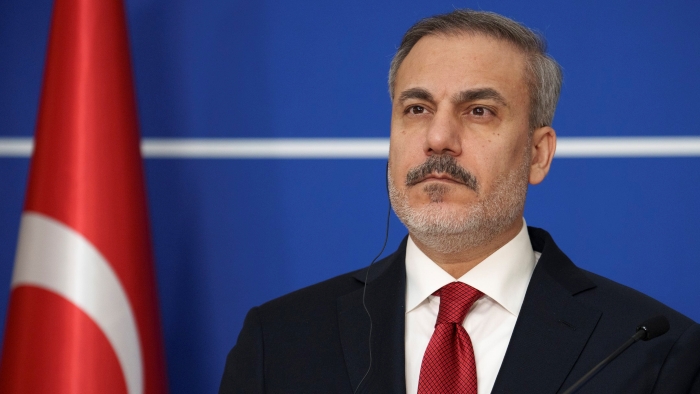
Turkish Minister of Foreign Affairs Hakan Fidan stated in an interview with A Haber that the Russian-Ukrainian war is now nearing its end. Meanwhile, in an interview with GB News, US President Donald Trump said that hostilities in Ukraine must end “as soon as possible,” calling the war “a terrible bloodbath” and “the biggest since World War II.”
At the same time, Finnish President Alexander Stubb expressed a more realistic view, noting that a ceasefire in Ukraine before spring is unlikely.
The issue of ending the Russian-Ukrainian war is consistently surrounded by discrepancies in approaches. The intentions behind such statements — as well as failed and rational forecasts — are examined in the text below.
Motivations behind the statements
For Turkey, negotiations present an opportunity to enhance its geopolitical position by serving as a platform for talks. Fidan emphasized this in the aforementioned interview. The opportunity window was opened as it turned out that Hungary is not suitable for this role for many reasons, including logistical difficulties for the Russian dictator.
For Donald Trump, statements about ending the war are also a tool to project leadership. Despite his initial “24 hours” promise has long been replaced with predictions of “weeks” or “months,” which by now have stretched into nearly a year.
Ukrainian politicians also manipulate with potential timelines for ending the war. Several MPs have named the end of 2025 as a probable date. These statements came from Fedir Venislavskyi (representative of the Verkhovna Rada Defense Committee), MPs Maksym Buzhanskyi and Oleksii Honcharenko, as well as Yulia Tymoshenko, leader of the Batkivshchyna party.
Prominent past predictions
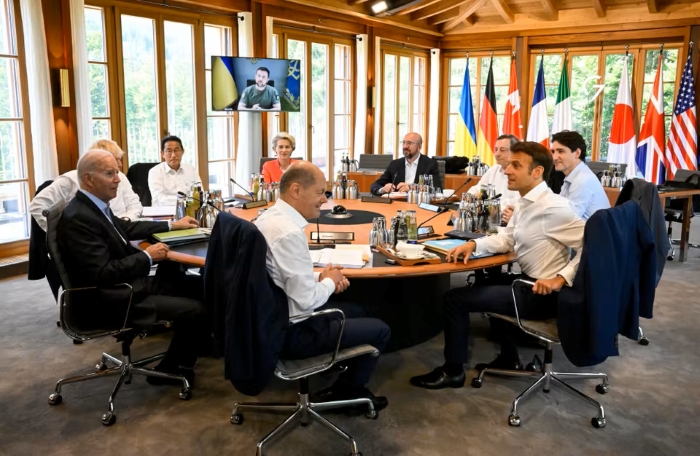
Such a long duration of the full-scale invasion seemed unrealistic at the beginning. During the G7 Summit in 2022, President Volodymyr Zelenskyy said that Ukraine expected to end the full-scale war with Russia by the end of the year.
In the summer of 2025, he stated that it was possible to force Russia to end the war, or at least to halt it.
In August, German Chancellor Friedrich Merz said that he is preparing himself mentally for a “long war”: he saw no signs that either side is close to military defeat or economic exhaustion.
Many expectations were linked to 2025. At the beginning of the year, former NATO Secretary General Jens Stoltenberg said that ending Russia’s war in Ukraine this year was possible, but emphasized the need to prepare for a much worse scenario at the same time.
Conclusion
The topic of ending the Russian-Ukrainian war is one of the most emotionally charged in the media space. For this reason, representatives of every segment, from pseudo-magicians to war analysts and both international and domestic politicians, try to voice their assumptions.
Over the past several years, predictions have repeatedly failed to materialize. Yet the public’s trust has not fully run out, and people continue to hope that “this time” might be different.
At the same time, overly optimistic forecasts are harmful. When attention is focused on short-term expectations, long-term strategic planning suffers. Moreover, a society exhausted by war becomes less mobilized.
In reality, Russia will not stop its atrocities until its military and economic potential is exhausted.