

On Sunday, October 20, the Republic of Moldova will hold presidential elections and a referendum on the country’s future membership in the EU. The vote will determine the country’s future course. There are 11 candidates running for the presidency, but the main battle will be between three of them. Former Prosecutor General Alexandru Stoianoglo, supported by the Socialist Party, and former mayor of the city of Balti Renato Usatîi are ready to compete with the current President of Moldova, Maia Sandu. The Ukrainian Review spoke with a well-known Moldovan political scientist and journalist, editor-in-chief of AVA-TV channel, Andrei Andrievski, about the pre-election situation in the country, external influence on Moldovan politics and post-election prospects.
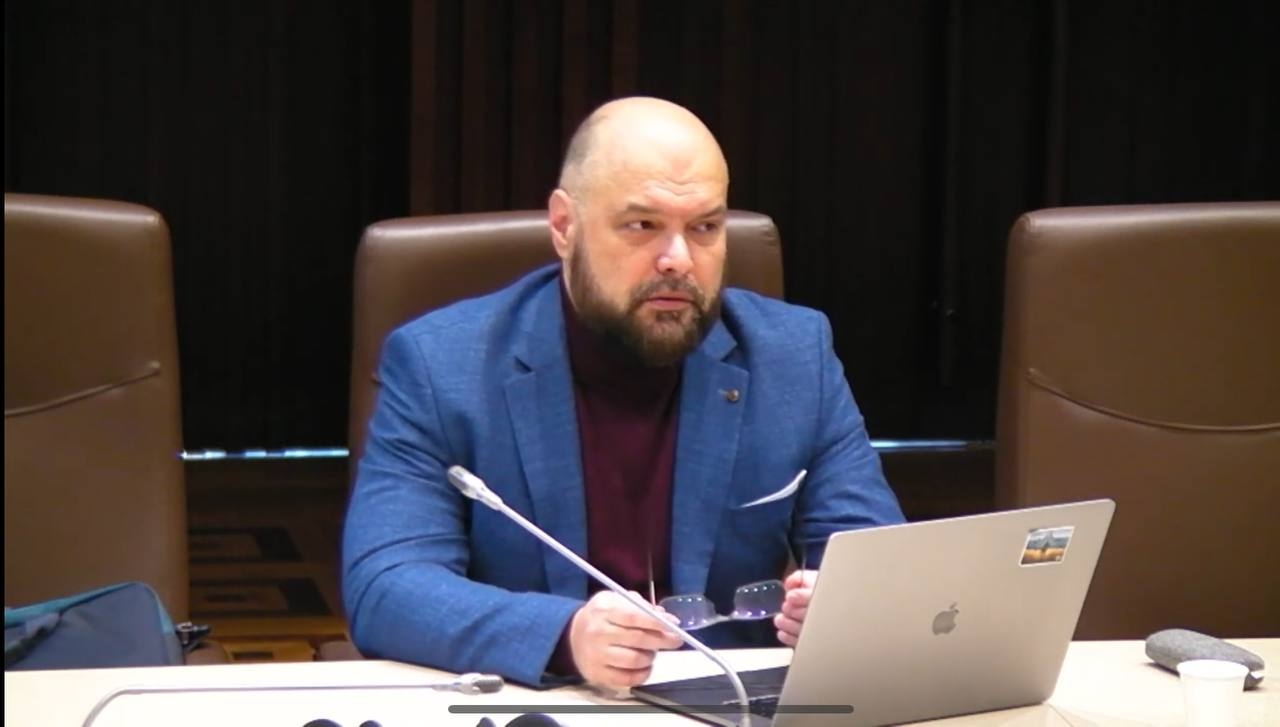
Kostyantyn Grechany, a journalist at The Ukrainian Review:
Europe or Russia
K.G.: Hello, Andrii. Can we say that there are two camps competing in the current presidential elections in Moldova – pro-European and pro-Russian? In the referendum context, is the current expression of will a civilisational choice?
A.A.: Good morning. Regarding the two camps, speaking in general, it is true. However, there are some nuances. The pro-Russian camp is now somewhat disguised. Despite the fact that most of the candidates are affiliated with the Russian Federation, none of them advocates a priority pro-Russian vector in foreign policy. The rhetoric is that let’s be friends with both Europe and Russia, so why spoil relations with anyone. But in general, there are really two camps – pro-European and pro-Russian.
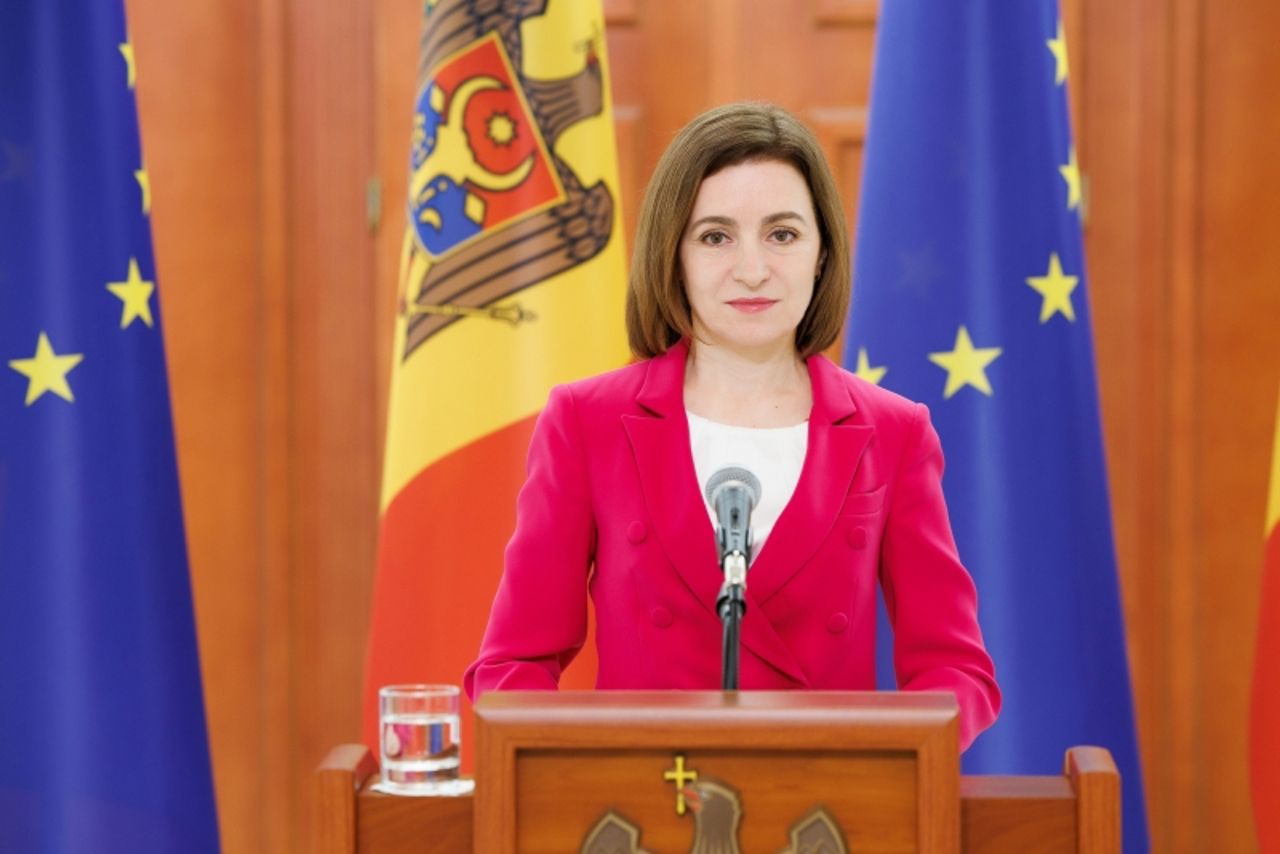
And these camps are not monogamous. The pro-Europeans have the current president, Maia Sandu, and Octavian Ticu can also be considered a real pro-European, but he has a very low rating, up to 2%. There are a few candidates who seem to be pro-European, but I personally have great doubts about this. They are more like technical candidates whose task is to hit Maia Sandu as hard as possible on the part of pro-Europeans.
There are also several currents in the pro-Russian camp, or rather, two large currents. One of them is under the supervision of Dmitry Kozak [Deputy Head of the Russian Presidential Administration – ed]. He is in charge of the Socialist Party, which has nominated former Prosecutor General Alexandru Stoianoglo as a candidate. They also promote several smaller candidates. The second line is the odious line of Ilan Shor. This is an oligarch-criminal who was sentenced by a Moldovan court to 15 years in prison [for embezzling $1 billion worth of bank assets – ed]. He is currently hiding in Moscow. Of course, this current is also connected to Putin, but the scheme is a bit more complicated.
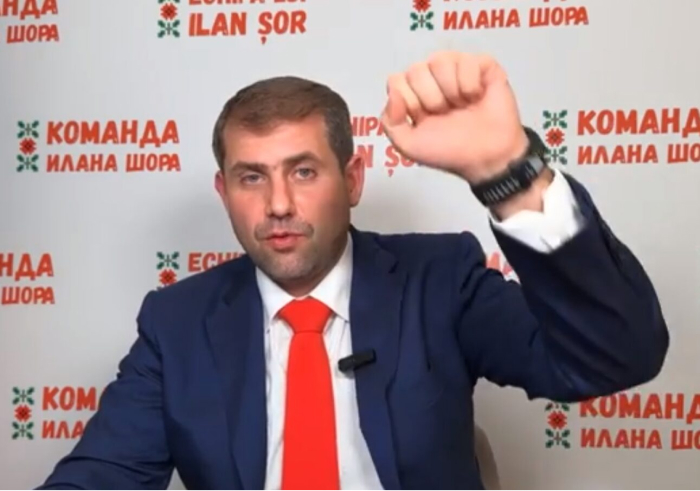
Russian oligarchs are behind Shor. Huge amounts of money are being poured into Moldova through this line. Our authorities have already realised this and are reacting accordingly: they are withdrawing their parties from the elections and trying to cut off financial flows. According to police estimates, Shor’s network consists of about 130,000 people who receive monthly salaries from Moscow on cards of one Russian bank. They can withdraw cash from these cards in “Transnistria” [an unrecognised breakaway republic on the territory of Moldova – ed]. These are not people who bought once before a particular election but citizens who are completely dependent on Russian payments. This is the money of those Russian oligarchs. If Stoianoglo makes it to the second round, the socialists will try to put pressure on Shor to support their candidate with his entire network. This will be very serious.
Prospects for the second round of elections
K.G.: What I’ve seen from the polls is that there will be a second round, with Sandu and most likely Stoianoglo going through to the second round. At the same time, Stoianoglo has a greater potential to increase his rating in the second round than Sandu, even though he is now significantly behind the current president. How do you see the electoral prospects of both candidates in the second round?
A.A.: Sandu has hidden potential in the pro-European electorate itself. Many people are disappointed in her because we have gone through a series of crises – the Covid, the war in Ukraine, which has a negative impact on us, the gas price hike, etc. These crises definitely undermined her rating. Although a number of events did not depend on Sandu, people traditionally blame everything on the government, it is a natural process. Therefore, many pro-European voters may simply not come to the polls in the first round. But when there is a direct threat that Moldova may change its foreign policy vector, there will be greater mobilisation of the electorate. By the way, the idea of a referendum is the right technology for Sandu. People who will come to the polls in the first round to vote for the European course are likely to vote for Sandu as well.
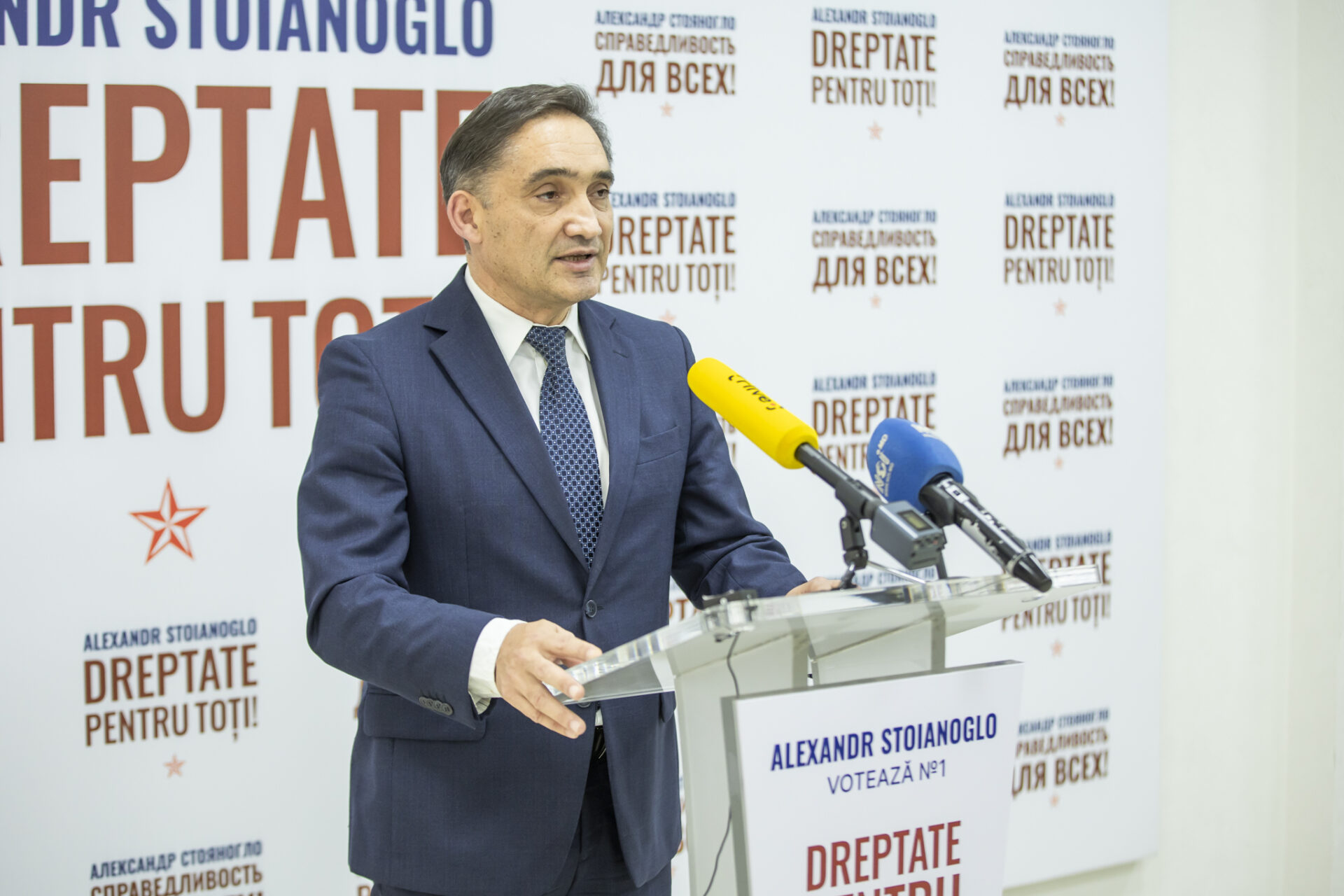
As for Stoianoglo, he may indeed receive votes from many other candidates in the second round (Iryna Vlach, Ion Kiku, and partially Renato Usatyi). Perhaps these candidates will not even say anything in his favour, but their electorate, which does not share the position on active European integration, may give some of their votes to Stoianoglo.
I would also note that I would not trust our opinion polls. They identify certain trends, but they “twist” the results to suit a particular candidate. This is always shown by post-election monitoring.
Elections: regional breakdown
K.G.: Andrii, I would like to ask you about such a problematic region as Gagauzia [an autonomous region in the south of Moldova with a predominantly pro-Russian electorate – ed]. Elections there are usually quite dirty. How are the authorities going to control the legitimacy of the expression of will in the region?
A.A.: Firstly, I would not exaggerate the importance of Gagauzia, less than 10% of Moldova’s population lives there. Secondly, the central authorities-the CEC, the prosecutor’s office, the Information and Security Service, and the local police-are subordinated to Chisinau, not to the bashkan [the highest official in Gagauzia – ed]. In recent years, their autonomy was secretly limited when they started to engage in all sorts of nefarious semi-separatist activities. There are virtually no opportunities to use state resources there.
At the same time, they still have the administrative resources of local authorities. There are city heads, there are village leaders, and there are local members of election commissions. Ilan Shor, for example, does not neglect to engage in direct bribery of voters, as we have already mentioned. It is extremely difficult to commit direct falsification at a polling station, as is the case in Russia. However, there are problems with other violations of the electoral law. Local mayors are campaigning for a particular candidate, and this is true.
K.G.: What are the moods in the big cities, Chisinau and Balti, in the first place?
A.A.: Chisinau is predominantly pro-European, although people are somewhat tired of geopolitical issues and the international agenda. For example, we have reduced the Geopolitics program on our channel to one episode per week. Two years ago, this program was aired almost every day and received a huge number of views, but now interest in it has actually dropped. People are tired of international news, war, world politics, etc. In this situation, the generally pro-European Chisinau elected Ion Ceban as mayor a year ago, who was once a communist, then a socialist and a supporter of friendship with Russia. Yes, he has recently changed his colour and says that he sees Moldova’s future in Europe. This helped him win because he collected votes partly from the left and the right. In the absence of a strong opponent, this tactic worked. My point is that the Chisinau voter is quite interesting and peculiar but definitely leaning pro-European.
In Balti, the situation is more complicated. It is the second largest city. While Chisinau is home to almost a third of the country’s population, Balti has about 120,000, if I’m not mistaken. This is much, much less.
K.G.: But in the electoral sense, it’s a lot, you have to admit.
A.A.: It is indeed the second-largest city by population, and there are many pro-Russian views there. Many ethnic Russians live there. The mayoral election was won by a representative of Renato Usatyi’s party, which says a lot. Shor’s parties have strong positions there (he has many). Belgians are more likely to favour candidates like Stoianoglo or Usatyi. In general, the situation in different districts is very varied. Much depends on the local authorities, who tilt their community in one direction or another.
What after the elections?
K.G.: Andrii, finally, I would like to talk about the post-election scenario. If Stoianoglo wins, then everything is clear: Moldova’s European future is immediately in doubt. But if Sandu wins, what is the algorithm of actions for pro-Russian forces? It is also interesting to model the situation if pro-Russian forces win the upcoming parliamentary elections.
A.A.: The current victory of Sandu or Stoianoglo is important in terms of building relations with the EU, it is psychologically important, but the most important struggle will be next year because we are a parliamentary republic. The parliament approves the government, which has all the levers to run the country. According to the constitution, the president’s powers are severely limited. Therefore, pro-Russian forces will throw all their resources at the parliamentary elections.
Of course, if Sandu becomes president, it would be good in the sense that she would coordinate our cooperation with partners. Perhaps additional funds will come. Ursula von der Leyen has now promised a €1.8 billion tranche from the EU. Maybe there will be some more goodies. This will all contribute to the pro-European forces taking a good percentage in the elections. However, preliminary estimates indicate that the ruling PAS party will not be able to take more than the 50% it currently has. This means that they will have to form a coalition with someone. It’s clear that there will be another pro-Russian force, and it’s hard to imagine a coalition with that force. Someone will be in the centre. The key question is, who? There are two preliminary options: either Ion Ceban’s MAN party or Renato Usatyi’s Nasha Pravda. If it’s Ceban’s party, then a coalition is hypothetically possible because he seems to be for Europe. I see now that PAS representatives finally have the stamina not to scold Ceban because, for the past year, there have been regular attacks on him, and he has constantly responded in the same style. It seemed that the chances of a coalition between them were minimal. The last two months have seen a lull, so there is a real chance for such an alliance. Then we will keep everything. If Usatyi, with his golden share, is in the centre, he may form a coalition with the left under pressure from Russia.
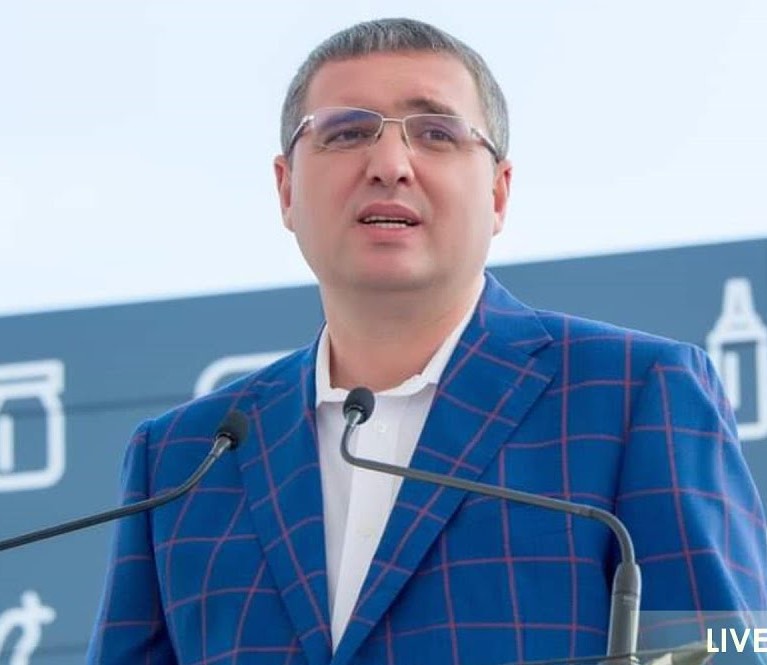
He’s a peculiar character, he can swing either way, but today, Usatyi is closer to Russia. Besides, their relations with Sandu have completely deteriorated. If a pro-Russian majority is formed, even with President Sandu, we will face a Georgian scenario: a pro-Russian parliament and a pro-European president. This will be a very bad option because we see what is happening to Georgia – they are being told in no uncertain terms that the country has turned off the European path. For Moldova, it would be a disaster. I guess there are still unknowns in this equation, but the threat that we could follow the Georgian path is quite high.
Kostyantyn Grechany