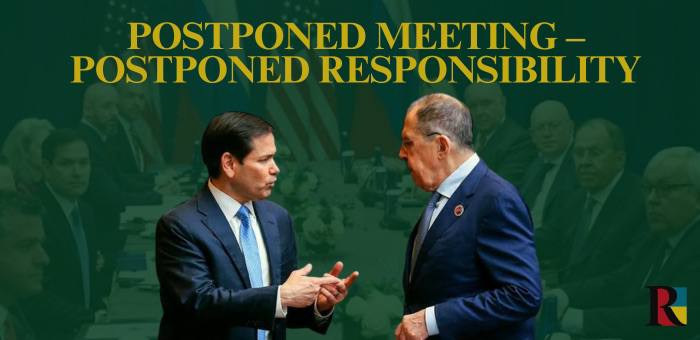


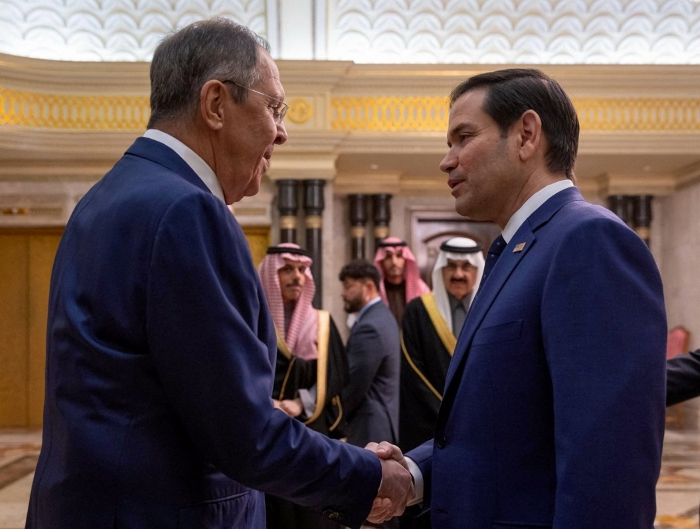
The meeting between Marco Rubio and Sergey Lavrov, which was supposed to precede the presidential summit, has been put on hold. According to CNN sources, Donald Trump and Vladimir Putin may not meet in Budapest as soon as the American president had hoped due to ongoing disagreements.
Russia’s response was characteristically defiant:
It is impossible to postpone something about which there were no agreements. We did not even have an approximate understanding of the timing or place of contact between Putin and Trump, — said Russian Deputy Foreign Minister Sergei Ryabkov.
According to the Financial Times, the Rubio–Lavrov meeting in Hungary may take place on October 30. Meanwhile, Russia continues buying time by insisting on its own terms for the meeting — including its vision of ending the war, as well as probably questions the time and location of potential talks.
Sanctions Proposals
Beyond the fact that Russia has no intention of stopping the war — and that such meetings only serve to break its isolation — there is another factor in play. According to Bloomberg, the U.S. Senate will hold off on considering new sanctions legislation against Russia until after Trump’s planned meeting with Putin.
However, threats of sanctions no longer appear as intimidating as they once were. Since returning to power, Trump’s administration has repeatedly postponed decisive action. In February 2025, his special envoy for Ukraine-Russia, Keith Kellogg, said that Trump was ready to double sanctions against Russia. In July 2025, Trump declared that if there was no peace within 50 days, the U.S. would impose 100 % tariffs. Later that month, he set yet another ultimatum: 10–12 days for peace, or sanctions. None of these threats — including the very recent related to weapons supplies — have been fulfilled.
Countries’ Reactions
Despite the symbolic meaning of Budapest, recalling the 1994 anti-nuclear memorandum, Putin is hesitant to make a final decision.
Bulgarian Foreign Minister Georgi Georgiev stated that Bulgaria is ready to provide the Russian dictator with an air corridor, while Polish Foreign Minister Radosław Sikorski said that Poland would force Putin’s plane to land for arrest.
Earlier, Kremlin spokesman Dmitry Peskov said that it was still unknown how Vladimir Putin would travel to a possible meeting with U.S. President Donald Trump in Budapest.
Conclusion
Russia continues to postpone any serious steps and tests the limits of the U.S. administration’s patience. As predicted from the beginning, the meeting remains highly uncertain. While Budapest offers advantages for Hungarian Prime Minister Viktor Orbán, who seeks to showcase his role in so-called peace negotiations ahead of the elections — and for Putin, who views it as an ideological victory over the EU — the dictator is simply afraid.