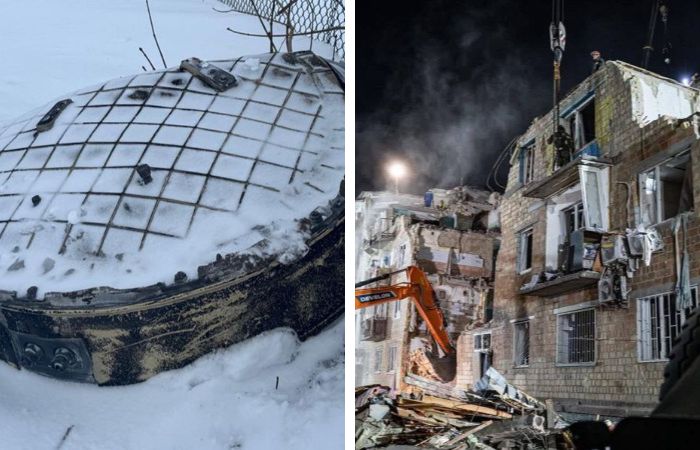


Russia has launched a large-scale missile and drone attack on Ukraine, resulting in civilian casualties in Kyiv, which along with the surrounding region became the primary target. Critical infrastructure was also hit in Lviv Region. According to Ukraine’s Western Air Command, the projectile that struck the Lviv region was travelling at a speed of approximately 13,000 kilometers per hour. The Air Force later confirmed that it was the Russian ballistic missile Oreshnik.
On the night of 9 January (beginning at 19:30 on 8 January), Russia carried out a combined strike on Ukraine’s critical infrastructure using attack UAVs as well as sea- and land-based missiles. In total, Ukraine’s Air Force radio-technical troops detected and tracked 278 air attack vehicles: 36 missiles and 242 UAVs of various types.244 air targets shot down/suppressed by air defense.18 missiles and 16 strike UAVs were recorded hitting 19 locations.
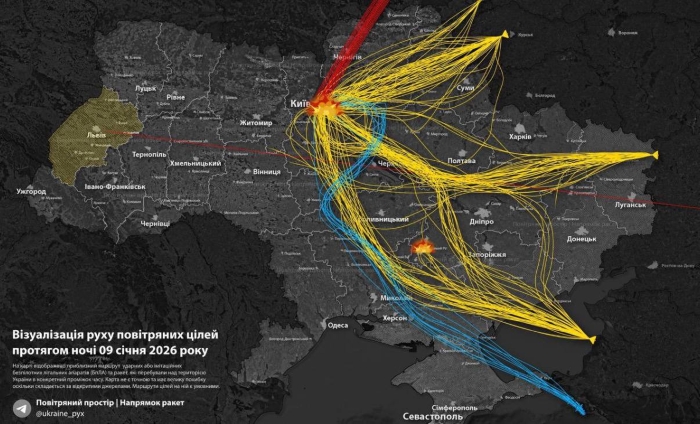
Kyiv and the Kyiv Region
In Kyiv, at least five people were killed, including a medical worker who arrived to deal with the consequences of the initial strike and was killed during a repeated attack. Rescue services reported fires and damage to residential buildings, as well as civilian and industrial facilities, across the capital.
During the massive overnight assault, the city of Slavutych in Kyiv Region was left in a complete blackout.
Russian strikes on critical infrastructure in Kyiv also caused disruptions to heat and hot water supply. Amid freezing temperatures, the situation became critical in several districts. Kyiv Mayor Vitalii Klitschko reported that nearly half of the city’s apartment buildings — around 6,000 — were left without heating due to damage to critical infrastructure. He urged residents, if possible, to temporarily relocate to places with alternative energy sources.
The attack also damaged the Embassy of the State of Qatar in Ukraine.
Lviv and the Lviv Region
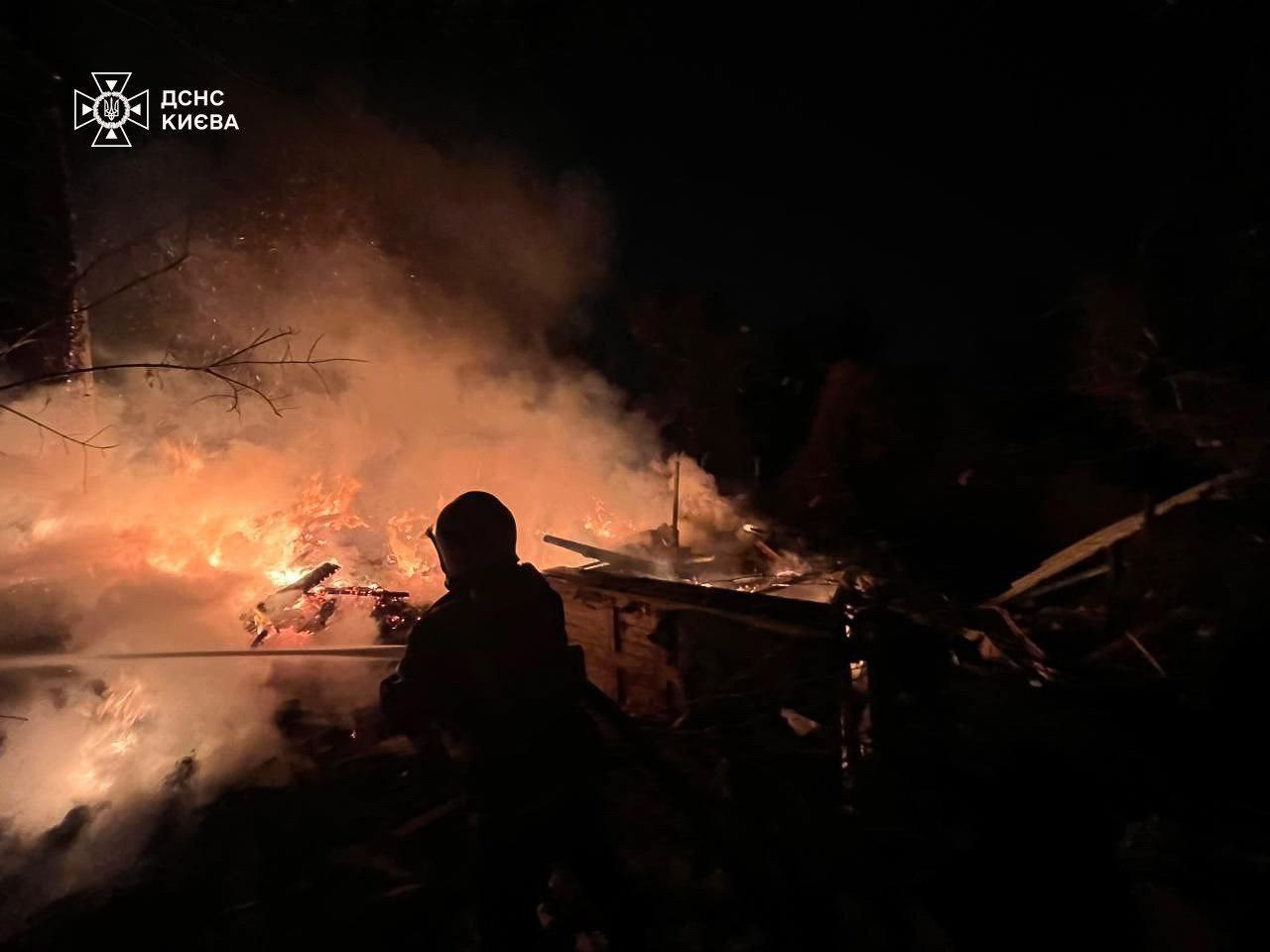
After air raid sirens sounded in Lviv, residents heard a series of explosions. Later, Lviv Mayor Andrii Sadovyi confirmed a strike on a critical infrastructure facility. As a result of a missile attack in the village of Rudno, within the Lviv territorial community, the automatic gas safety system was activated, leaving more than 370 households without gas.
For the first time in history, Lviv was hit by a ballistic missile. However, this was not the first use of Oreshnik against Ukraine. The missile was previously deployed against Dnipro in November 2024.
Although Oreshnik is capable of carrying nuclear warheads, both the strike on Lviv and the earlier strike on Dnipro were carried out without such payloads. The Lviv Regional State Administration confirmed that radiation levels in the region remained normal.

Reactions
Fortunately, neither use of Oreshnik resulted in catastrophic consequences. Instead, both strikes appear to have served as political signals. In 2024, Vladimir Putin described the attack on Dnipro as a “combat test” of a new missile, attempting to frame it as a response to alleged Ukrainian or NATO actions.
This time, Russia officially confirmed the use of Oreshnik, claiming it was retaliation for an alleged attack on Putin’s residence. This claim was debunked even by U.S. officials. The narrative again revealed Moscow’s readiness to manufacture pretexts for further escalation. Notably, the missile targeted a region close to the Polish border, underscoring the proximity of the threat to the European Union.
Ukraine’s Foreign Minister Andrii Sybiha announced on X that Kyiv would initiate international action, including an urgent meeting of the UN Security Council, consultations within Ukraine–NATO Council, and discussions at the EU, Council of Europe, and OSCE levels.
Several European politicians condemned the attack.
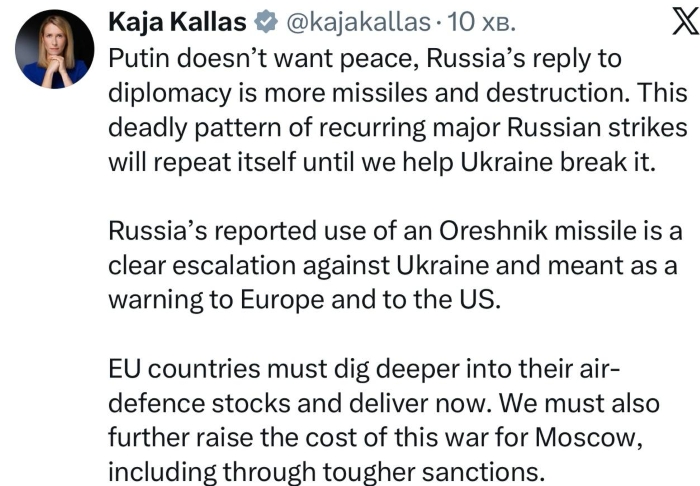
EU High Representative for Foreign Affairs and Security Policy and Vice-President of the European Commission Kaja Kallas emphasized that the strike should be seen as a warning aimed not only at Ukraine but also at Europe and the United States:
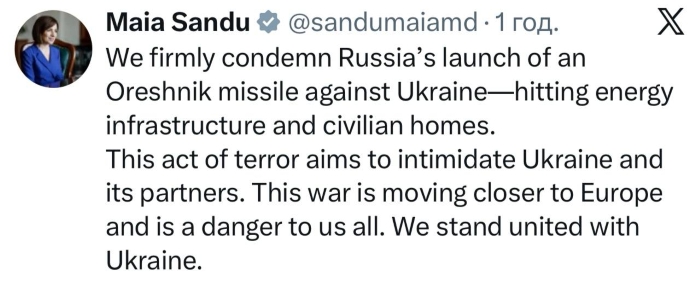
Moldovan President Maia Sandu also condemned the attack:
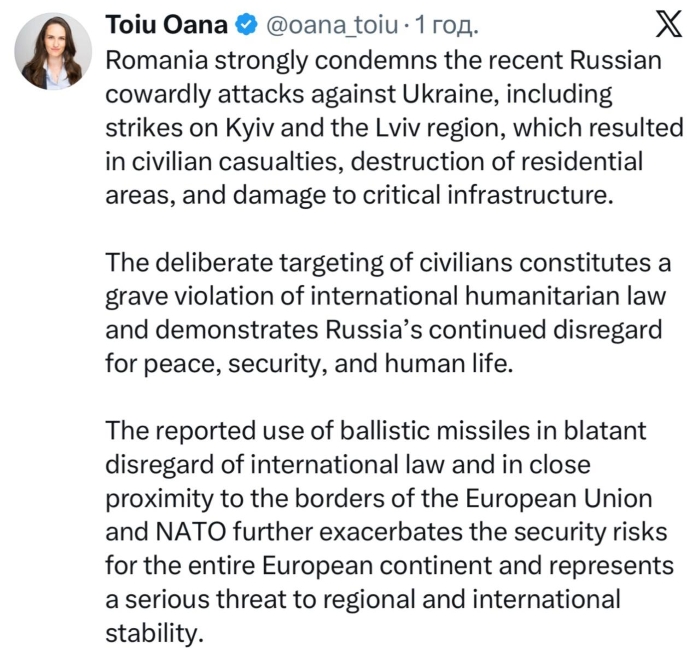
Romania’s Minister of Foreign Affairs Oana Țoiu expressed solidarity with Ukraine and highlighted Russia’s continued terror against civilians:
The newly appointed Czech Foreign Minister Petr Macinka, who was travelling to Ukraine during the attack, reported that his train was delayed due to it. “Russia welcomed me with missile strikes not far from us,” he commented.
It is also worth recalling that the previous use of Oreshnik in 2024 prompted international reactions. The then Chancellor Olaf Scholz described the strike as a “terrible escalation,” while U.S. officials confirmed that Russia had warned Washington of the missile launch through decondition channels designed to reduce the risk of nuclear confrontation.
Conclusion
The latest attack on Ukraine represents yet another act of terror that claimed civilian lives. At the same time, it is another clear signal that Russia is not interested in peace and continues to pose a direct threat to Europe. Cynically, Moscow has once again used a staged incident as a casus belli to justify the deployment of Oreshnik missiles — weapons that are capable of carrying nuclear warheads.