

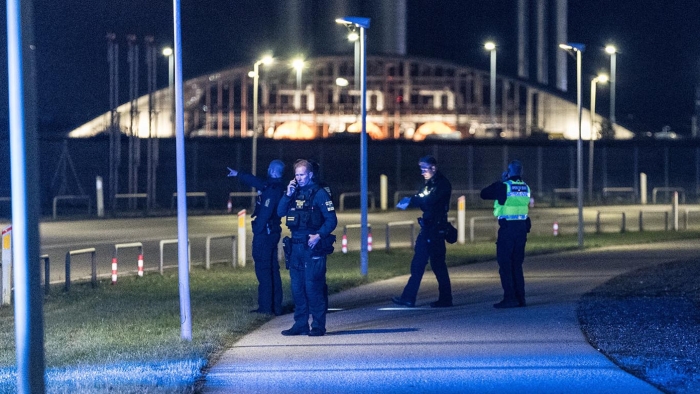
On September 22 in the evening, police in Denmark and Norway reported drone incidents in Copenhagen and Oslo. In Norway, police said they had arrested foreign citizens for flying drones in a restricted area, but further details are still under investigation in a coordinated effort. Russia officially rejects all suspicions directed at it. Kremlin spokesman Dmitry Peskov claimed the information originated from Telegram channels, which, he said, cannot be a trustworthy source, while hinting that precise information is known only to the military services. Unofficially, Russian propagandists expressed satisfaction with the news.
Lack of a Strong Reaction
Danish Prime Minister Mette Frederiksen called the flights of unidentified drones over Copenhagen Airport “the most serious attack on Denmark’s critical infrastructure”. She stressed that the incident cannot be viewed separately from similar ones that have recently occurred in Europe, neither confirming nor denying Russia’s involvement. Police also admitted that the drone operator appeared highly skilled, disappearing before authorities could neutralize them. The dense, populated areas around the airports further complicated the response.
Yet NATO’s reaction remains cautious. NATO Secretary-General Mark Rutte said at NATO Headquarters in Brussels on September 23 that the alliance would evaluate each incident before deciding on a response — a stance that leaves Russia more confident in its ambitions. So far, despite more aggressive propagandistic messaging for domestic audiences, the attacks have stayed on the edge: designed to sow panic and make NATO-country citizens uncomfortable, while avoiding serious damage or casualties and thus keeping NATO hesitant.
Losses in airports
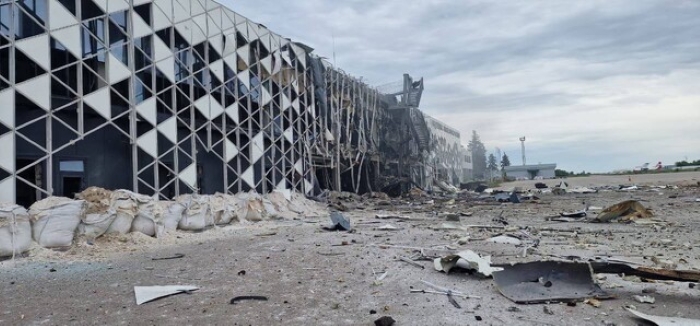
Ukraine’s airspace has been closed since the first day of the full-scale invasion. According to the Kyiv School of Economics, losses in the aviation industry reached about $2 billion by the end of 2024. Because of drone attacks, Russia has faced similar problems, including on the same night drones flew over Denmark and Norway. Estimates show that the “air collapse” in Russia only on July 5–6, 2025, cost approximately $254 million. Moscow appears eager for EU countries to experience the same disruptions. Poland’s airports have already been closed during attacks, and northern countries now face the same problem. All take-offs and landings at Copenhagen Airport were suspended due to drone reports, with at least 35 flights diverted to other airports. Oslo’s Gardermoen Airport in Norway was as well completely closed after several drones were spotted.
Conclusion
Regardless of who ultimately benefits from such attacks, the pattern is advantageous to Russia. NATO has shown an inability to respond swiftly when airports come under threat. Flight cancellations have cost Ukraine billions. Partial and regular cancellations inflict losses on Russia’s own economy. And now the EU faces the same problem without being officially at war. Russia’s interest appears especially strong in provoking supportive countries near the Baltic region, which has become a prime target after Ukraine, at least according to Russian propagandist narratives.
Daria Maslienkova