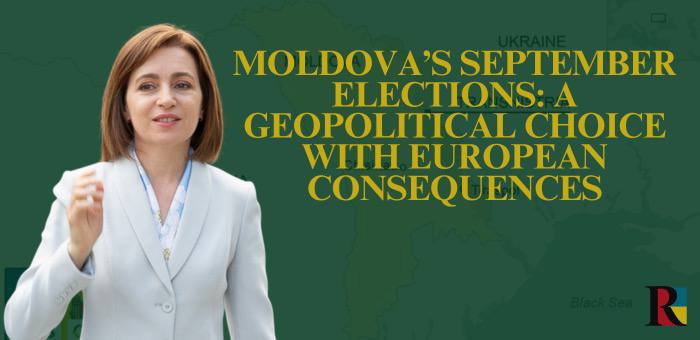


At the end of September 2025, Moldova will hold parliamentary elections that may determine not only the future of this small country but also the security of Ukraine and the stability of the entire Black Sea region. These elections are far more than domestic politics. They are a geopolitical choice: will Moldova continue on its European path or fall back into Russia’s orbit?
A Country at a Crossroads
Since gaining independence, Moldova has repeatedly faced the dilemma of choosing between Europe and Russia. The signing of the EU Association Agreement in 2014 marked a clear step westward, but the country has remained vulnerable to Moscow’s hybrid pressures: gas blackmail, trade restrictions, and political destabilization. Today, against the backdrop of Russia’s war in Ukraine, Chișinău’s geopolitical choice carries historic weight.
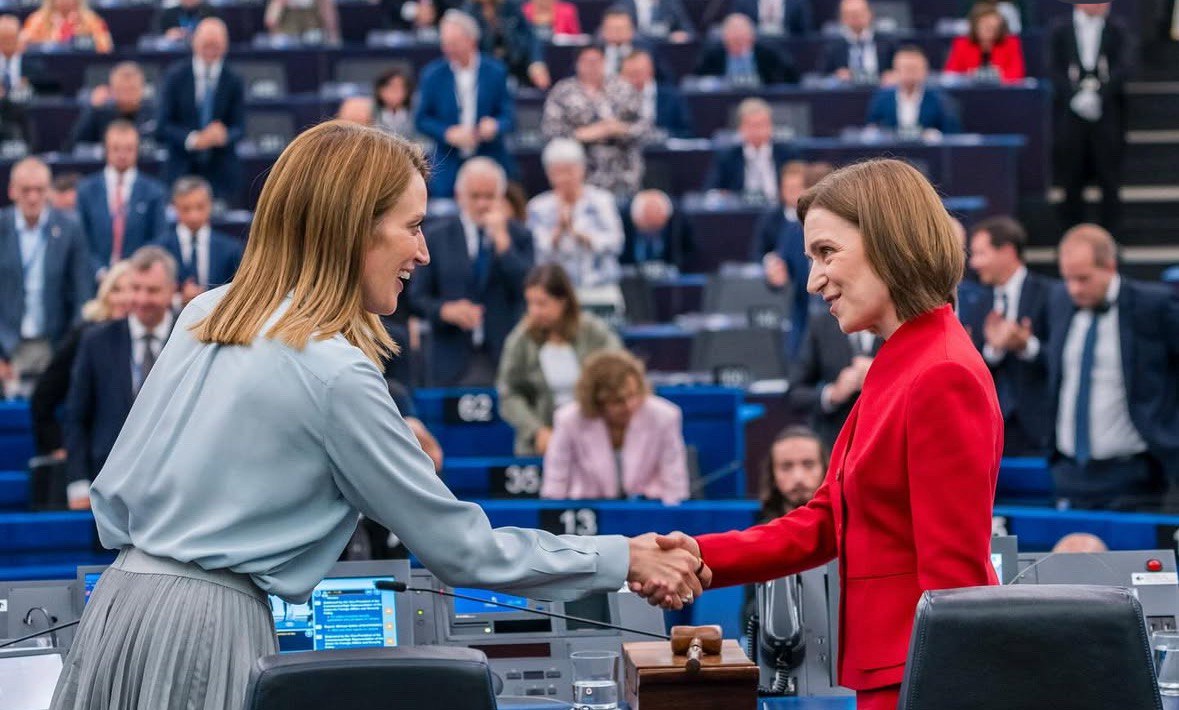
President Maia Sandu has unequivocally described these elections as “the most decisive in Moldova’s history,” stressing that “our democracy is under urgent threat from Russia, which is trying to undermine our path to the EU through disinformation, vote-buying, and illegal financing.”
Russia’s Playbook in Moldova
Pro-Russian forces—led by Igor Dodon, Renato Usatîi, and their allies—are seeking to return to power. Their campaign is not based on substantive debate but on Moscow’s well-tested tools of soft power and manipulation:
Concerts and celebrity diplomacy: Russian pop stars flown into Chișinău to create an illusion of “cultural unity.”
Charter flights and student programs: Organized tours for Moldovan youth to Russian universities presented as “exchanges,” but in practice serving as recruitment channels.
Media and disinformation: Russian outlets, social networks, and even church institutions amplify anti-European narratives and distrust of Ukraine. This is not cultural diplomacy. It is hybrid influence aimed at turning Moldova back toward Moscow.
Why It Matters for Ukraine and Europe
If Moldova once again falls into Russia’s sphere of influence, Ukraine’s southern flank will be exposed. A pro-Russian government in Chișinău would allow the Kremlin to remilitarize Transnistria, transforming a frozen conflict into an active staging ground. From there, Russia could threaten Odesa and Ukraine’s access to the Black Sea, opening a dangerous new front in the war.
Such a development would destabilize not only Ukraine but also Romania, a NATO member. The Alliance’s eastern flank would come under heightened pressure, and Europe as a whole would face yet another zone of instability at its borders.
Polls: Who Leads the Race
Recent polls highlight just how fragile Moldova’s European course remains:
According to iData (August 2025), the pro-European PAS (Party of Action and Solidarity) could expect about 36% of decided voters. Yet more than 40% of respondents said they were still undecided.
Other surveys show a surge for the Patriotic Electoral Bloc—an alliance of Socialists and Communists with openly pro-Russian views. In some polls, they even take the lead with around 36%, while PAS stands at 34–35%.
Additional forces include the Alternative bloc (around 11–12%) and Usatîi’s Our Party (9–10%).
The implication is clear: Moldova’s future will be decided by the undecided voters. If pro-Russian forces succeed in mobilizing them, they could seize power.
Europe’s Path: Difficult but Safer
Critics of the European course point to rising utility prices, uneven reforms, and slow progress. These frustrations are real. But the alternative—returning to Moscow’s embrace—carries far greater risks. Belarus stands as a stark reminder of what dependence on Russia means: economic bondage turned into political subjugation.
European integration, despite its challenges, opens up opportunities for Moldova: trade, investment, and the rule of law. The EU is already Moldova’s largest trading partner.
With Ukraine’s reconstruction ahead, Moldova could become a key logistical and economic hub, ensuring both stability and prosperity.
Conclusion
The September elections in Moldova are not about party competition or political personalities. They are about survival.
The outcome will shape not only Moldova’s trajectory but also the security of Ukraine, the stability of the Black Sea, and confidence in the European project. Moldova cannot afford to return to Moscow’s shadow. And Europe cannot afford to lose Moldova.
Artem Kasparian