

Mined toys, disabilities, lost relatives, and destroyed homes—this is what Russia brought to the children of Afghanistan and is now inflicting on the youngest Ukrainians. This country continues its genocidal policy against people who refuse to become part of the so-called “Russian world.”
We spoke with Sergey Melnikoff, a.k.a. MFF, a National Hero of the Chechen Republic of Ichkeria for his personal contributions to the informational struggle against Russia, a renowned American artist and creator of the Golden Christ the Savior. He shared insights into his volunteer work for Ukrainian children, the transformative power of photography, and the profound significance of the Cross of Peace installation. His current mission is to establish the International Rehabilitation Center named after Mother Teresa for Ukrainian Children of War.
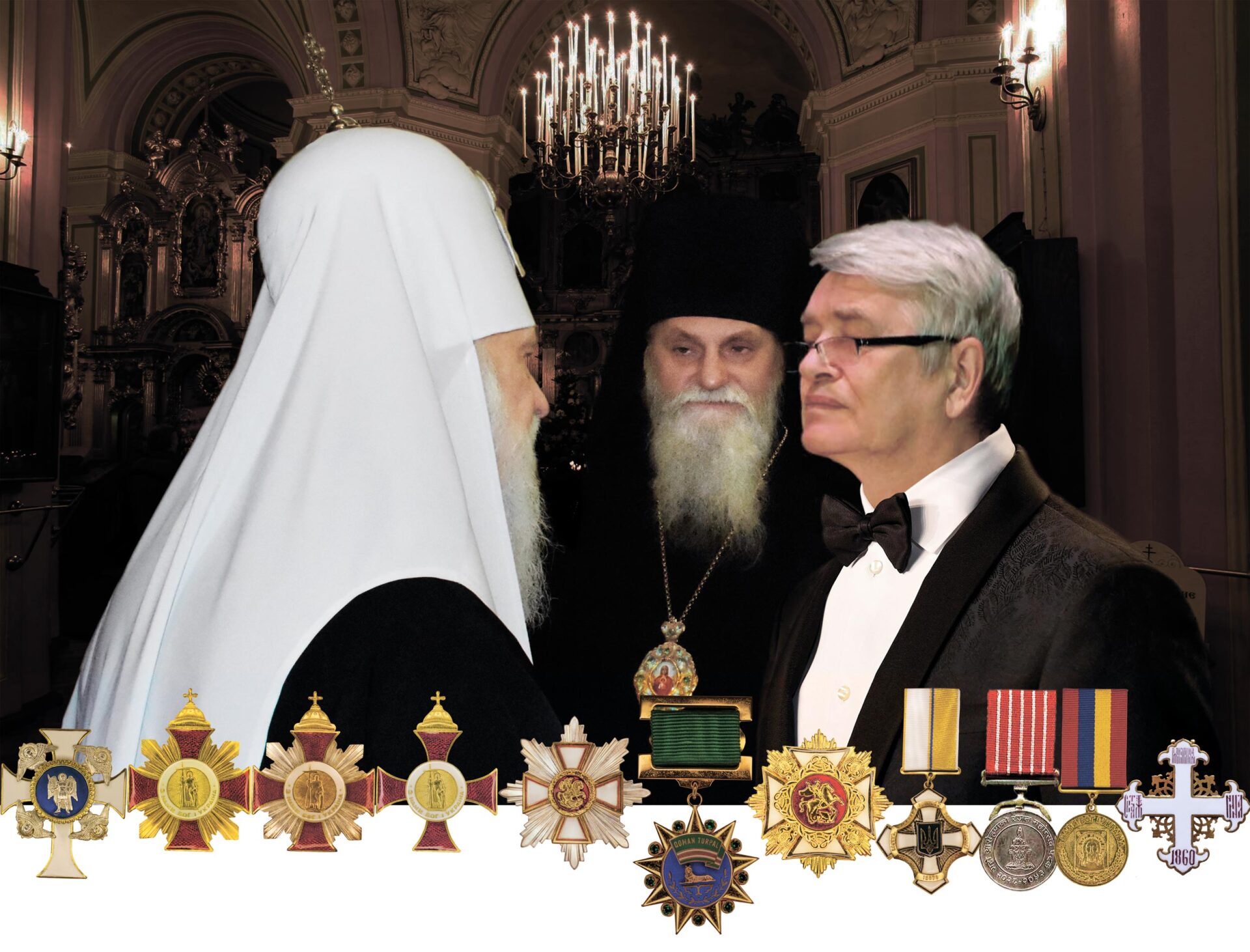
Sergey Melnikoff, also known as MFF, is one of the most significant photographers of our time. His works, of exceptional merit, consistently evoke admiration and embody the fusion of half a century of experience across over 150 countries worldwide. Currently rising to fame as a metal sculptor for his unique works crafted from the “ashes of war.”
Sergey Melnikoff, also known as MFF, is one of the most significant photographers of our time. His works, of exceptional merit, consistently evoke admiration and embody the fusion of half a century of experience across over 150 countries worldwide. Currently rising to fame as a metal sculptor for his unique works crafted from the “ashes of war.”
Tetiana Stelmakh (T.S.): Could you briefly share your creative journey? When did you start photographing, why did you choose this field, and what achievements are you most proud of?
Sergey Melnikoff (MFF): It was Her Majesty Fate that led me down this path. Life gifted me an extraordinary array of adventures — from enduring political imprisonment in the Soviet Gulag to reaching the summit of Everest and experiencing a suborbital flight. I even came close to going further: in 1993, I trained for a mission to the Mir space station, but a fire onboard halted those plans.
Instead, I dedicated 25 years to underwater filming, working as both a director and cameraman. In the underwater world, knowing where to point the lens is critical. Fortunately, one of my degrees is in oceanography and ichthyology, which helped me navigate those depths.
In the late ’80s, I fled the Soviet Union, crossing the Soviet-Mongolian border illegally. With my wife and one-year-old daughter, I sought help from the U.S. government and the UN, eventually finding refuge in Pennsylvania. The FBI hid us in a small town in the Appalachian Mountains near Pittsburgh until the USSR dissolved.
I hold three advanced degrees in vastly different fields, but when I arrived in the U.S., I didn’t know a word of English — not even “with a dictionary,” as people used to say. And in an English-speaking country, even holding a PhD is of little value if you don’t speak the language.
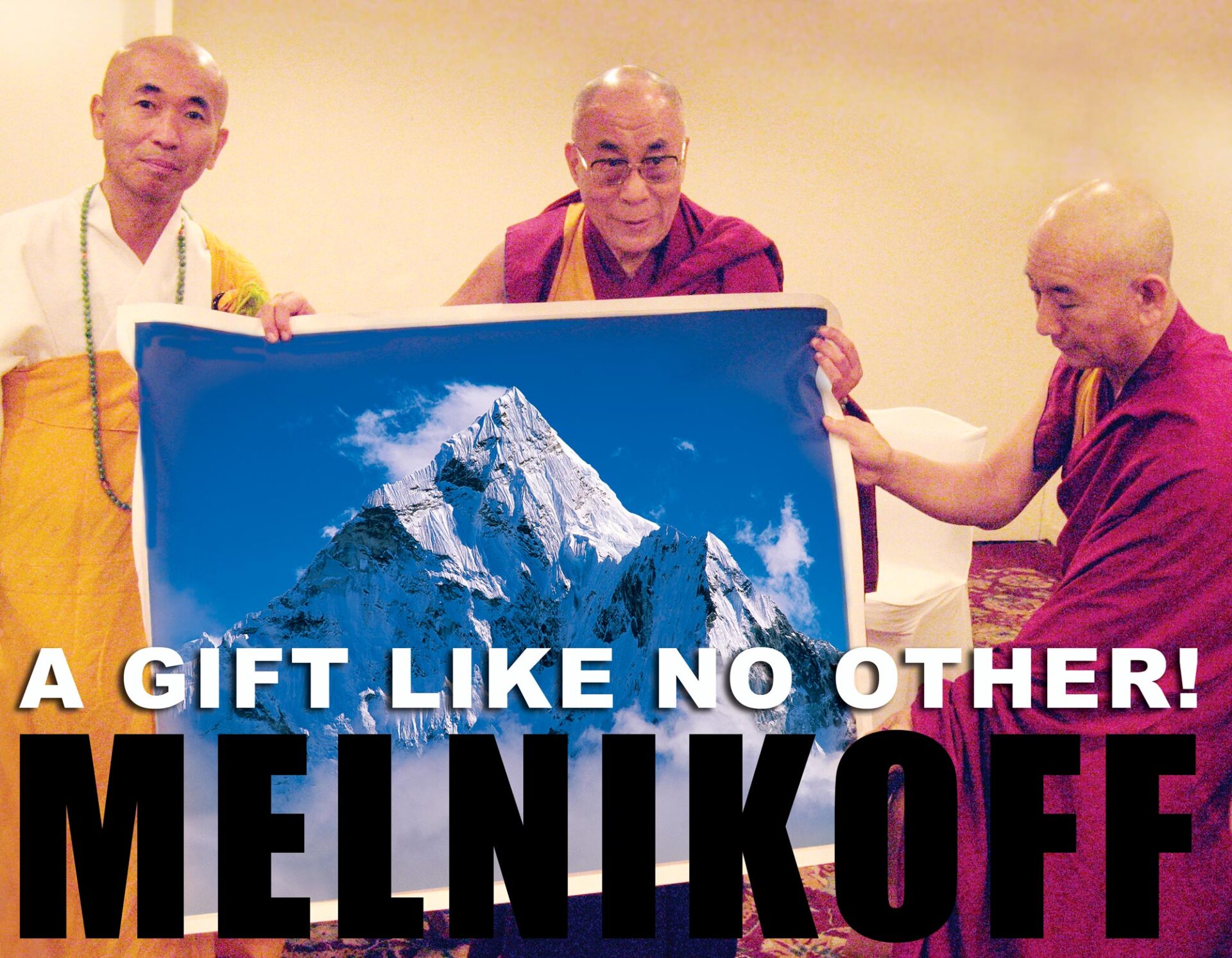
However, my passion for photography was immense, and I was fortunate to turn it into my profession. Russian media mockingly label me an “amateur photographer,” and they’re not wrong — I am self-taught. But I’m a self-taught photographer whose work is displayed by the Dalai Lama himself.
T.S.: What were your first and latest photos? What are your favorite shots and projects?
MFF: I don’t recall my very first photos. Back in the 1970s, while still a student, I worked part-time for regional publishing houses, including the publishing giant Planeta. Thanks to that, I traveled across the Soviet Union, exploring its most remote regions. I photographed the Kuril Islands, Kamchatka, the Commander Islands, the Northern Sea Route, Sakhalin, and the Primorsky Krai, as well as the Tian Shan and Pamir mountains. I visited all 15 republics of the so-called “indivisible union.” Essentially, I traversed the entire country with my camera.
As for my “latest” photo, I’m not ready to label any of my work as my last — I still have plenty left to capture!
T.S.: What are you currently working on? What ideas are you implementing or planning to realize in the near future?
MFF: As I mentioned, I am a self-taught photographer. Interestingly, many renowned photographers who visit my galleries have remarked that this is my strength. I found my own path and developed a unique style — what I call a “street urchin” style. I strive to capture the emotions of a moment in my photos.
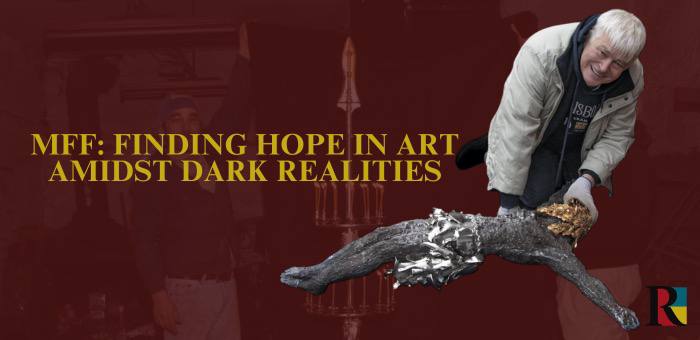
I’m also a self-taught sculptor, which has been even more challenging. Before creating Golden Christ the Savior from fragments of munitions, I practiced on dozens of pieces made from the same material. Perhaps it’s pure inspiration that drives me. Due to my age, I can’t fight in the trenches to clear Ukrainian soil of Russian invaders, so Fate and Chance offered me another way to channel my indignation—through art. Whether or not I succeeded is for others to decide.
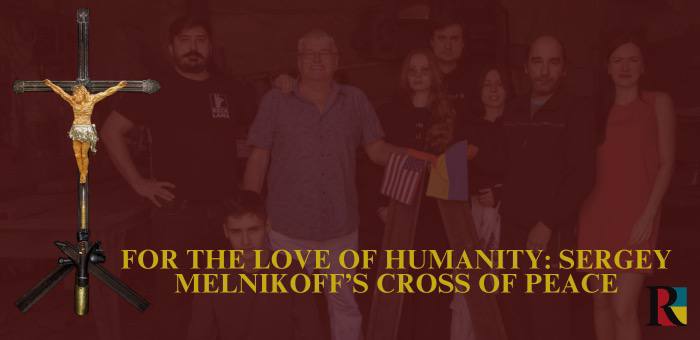
Recently, I completed the Cross of Peace installation, featuring a golden figure of Jesus Christ in crucifixion, portrayed as the protector of Ukraine. Starting in spring 2025, I’ll return to work on another major project, Four Horsemen of the Apocalypse.
Additionally, I’m organizing a charity project to support children who have become disabled due to Russian bombings. For this, I plan to invite 100 global icons — Madonna, Paul McCartney, Arnold Schwarzenegger, Richard Branson, Sylvester Stallone, Sigourney Weaver, J.K. Rowling, Mark Zuckerberg, Elton John, Denzel Washington, Sergey Brin, Clint Eastwood, and others — for photo sessions amidst the ruins of Ukrainian villages and cities.
T.S.: What is the concept and goal of your installation, Cross of Peace?
MFF: The Golden Savior of Ukraine is an immensely powerful work, and I dare say its symbolism can compete with that of Raphael and Michelangelo.
Transforming the “ashes of war” — fragments of exploded munitions — into art risks glorifying conflict. It’s crucial to infuse such creations with profound meaning. That’s why I chose Christ the Savior as the centerpiece, crafted at this moment, on this land, from this material.
Representatives of the Vatican, who appeared unexpectedly at the factory gates while I was overseeing the gilding of the sculpture on December 6, declared: “Nothing like this exists in the world! You’ve created a work comparable to the masterpieces of the Renaissance.”
I take pride in knowing that everyone who contributed to this project did so not for fame or money, but out of a shared desire to create something extraordinary. The Vatican’s comparison to Raphael and Michelangelo feels justified because, like their masterpieces, great art astonishes not through technical perfection, but through its aspiration to reach an unattainable pinnacle of beauty.
T.S.: When and where will people be able to see your installation? What lies ahead for the sculpture?
MFF: We’ve prepared everything necessary for the installation, including a special trailer to transport the one-ton sculpture. By the time this interview is published, the Cross of Peace will already be touring European cities. An informational campaign is being launched across all available social media platforms to announce where and when people can view the Golden Christ the Savior, created during the war in one of Ukraine’s front-line cities. The materials for this work — the “ashes of war,” as I call them — are fragments of exploded artillery shells and mines collected by farmers in southern Ukraine. About one and a half tons of these fragments were sent to the workshop to create the sculpture.
T.S.: A charity auction is planned for the sale of this sculpture. Where will it take place, and how will the proceeds be used?
MFF: The Cross of Peace will tour the world before being auctioned at one of the largest global charity events — likely through Christie’s or Sotheby’s. Given the sculpture’s colossal symbolism, I hope to see bids exceeding 100 million euros.
The auction will be organized by the Mother Teresa Center, which our charitable foundation, Soul of Ukraine, is establishing to support Ukrainian children with war-related disabilities. Every euro raised will go directly to this center.
T.S.: Tell us more about the International Rehabilitation Center for Children, Mother Teresa. What is needed to establish it? Who will be eligible for rehabilitation? Where will it be located, and will the children have to pay for treatment?
MFF: The center is envisioned as a charitable organization, and all services will be provided free of charge.
I’ve always empathized deeply with others’ tragedies. A true artist cannot create meaningful works with a hardened soul. And what can hurt more than the sight of a child suffering — missing a hand, a leg, or even both—not from natural disasters but because someone came to “liberate” them through violence?
My goal is to create a sanctuary, a temporary island of childhood, where these children can feel carefree, even if only for a little while. I believe this is one of the most important missions in life.
I chose Albania as the site for the center, but I did not anticipate the challenges I would face. The Ukrainian Ambassador to Albania, shockingly pro-Russian, spread rumors to officials, alleging that my efforts to create a center for Ukrainian children were a ploy to bribe the Albanian Prime Minister, Edi Rama.
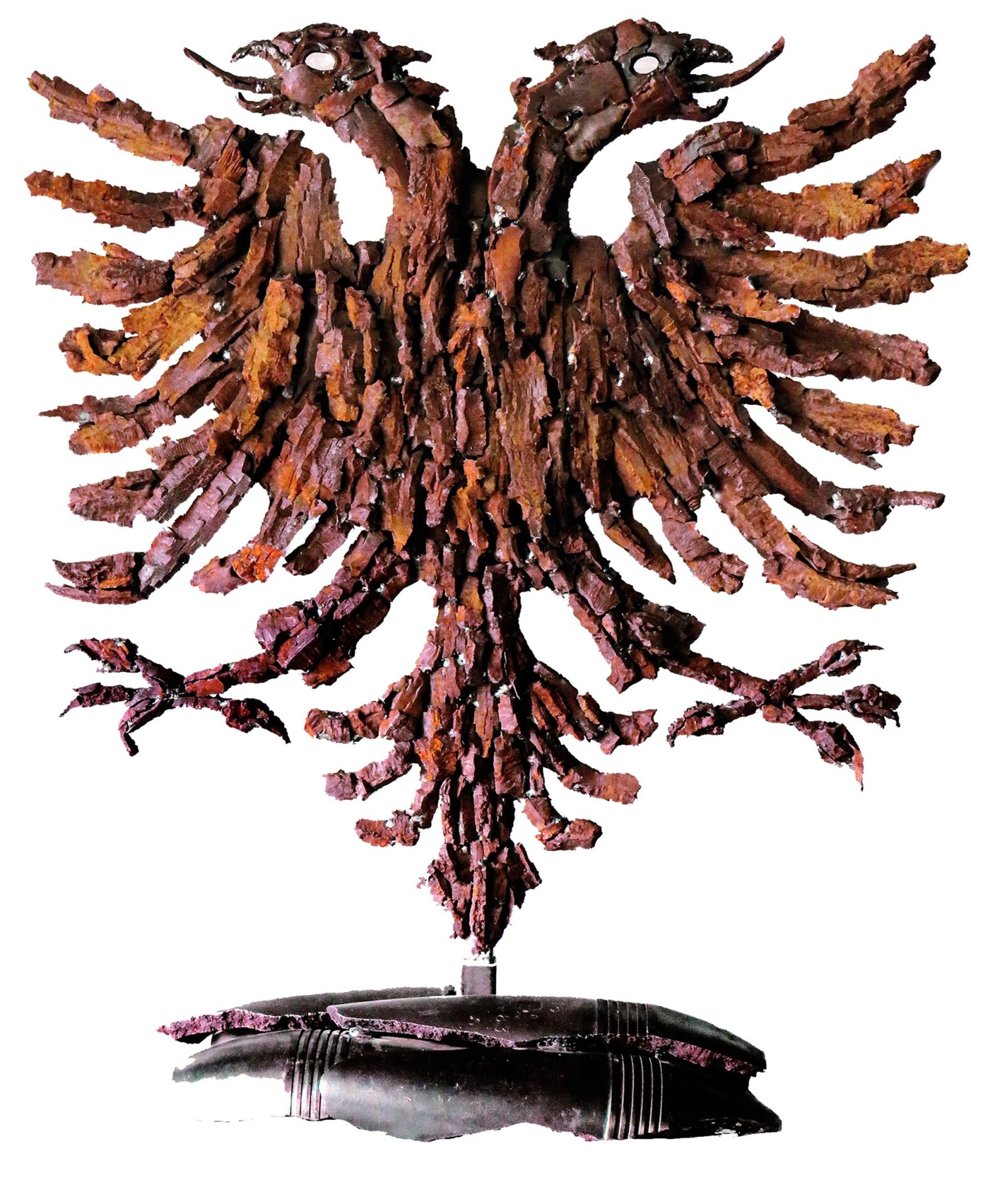
For example, I brought to Albania a sculpture of the national emblem — a two-headed eagle — crafted from feather-like fragments of artillery mines collected from Ukrainian fields. I asked the Ukrainian Ambassador to help organize an exhibition of children’s drawings, where I planned to present this gift to Prime Minister Rama on behalf of the people of Ukraine. Instead, the ambassador deemed this symbolic gesture a bribe. Ironically, Prime Minister Rama is also an artist.
This ambassador has actively blocked my efforts, ensuring that the pro-Ukrainian anti-war exhibition I brought to Albania in December 2023 remains stuck in customs storage in Tirana. The exhibit has been stuck in the broker’s warehouse for an entire year now!
While I was focused on creating the Cross of Peace installation, this incident became my first public protest against the incompetence of some individuals appointed by Ukraine’s Ministry of Foreign Affairs. In due time, I plan to share a detailed account— with facts, names, and sharper language — through a global platform like Time magazine.
I’ve faced powerful opponents before, including the KGB. Perhaps it’s time to dust off old skills and remind the world of the need to hold such individuals accountable. The spot under the baseboard is vacant.
T.S.: Do you plan to involve foreign specialists in the rehabilitation center? Have you already made any agreements?
MFF: Before discussing this, I must address the challenges caused by the “Ukrainian scum,” as the great Taras Shevchenko aptly put it. The war is not just on the borders of my ancestors’ land — it’s a global battle between good and evil. And I have yet to fully make my stand in this fight.
For now, it’s important to note that I am the creator of the world’s only statue of the Savior of Ukraine, assembled by my hands from over 20,000 tiny fragments collected from battlefields. The sculpture is covered with a thick layer of pure gold. Completing this titanic work cost me the tactile sensitivity in the pads of my fingers.
I fully understand the significance of this piece, a collaboration between myself and Viktor Bielchyk. Representatives of the Holy See have likened it to Michelangelo’s masterpieces. When the world begins to recognize the magnitude of this creation, I will make my voice heard—and for some, my words will cut like a katana. Unlike certain individuals, I do not take bribes, nor do I give them.
The battle for truth is far from over
T.S.: How often have you worked with children in your creative process since 2022? What aspects of such collaboration would you highlight?
MFF: During the winter of 2022, when Kharkiv was under siege, children sought shelter in the city’s metro stations while their parents defended Ukraine’s first capital against invaders. For two months, these underground stations became homes for countless little Ukrainians whose bedrooms were destroyed by rockets and artillery shells.
To distract the children from the constant tremors of explosions, several teachers began organizing drawing lessons at 29 metro stations. From this initiative emerged a unique collection of drawings, including remarkable works by young artists who found an outlet for their emotions through art. These drawings were donated to our foundation for inclusion in a charity auction at the future rehabilitation center.
We’re sharing a few of these works with The Ukrainian Review’s readers. Unfortunately, a larger collection gathered for the Ashes of War exhibition has been stuck in a broker’s warehouse in Tirana for a year, thanks to obstruction from the Ukrainian Ambassador to Albania. The charitable foundation Soul of Ukraine is now consulting Miami-based lawyers to explore filing lawsuits against Ukraine’s Ministry of Foreign Affairs and the Republic of Albania.
T.S.: What can you say about the situation of Ukrainian children during the full-scale invasion? Is there a particular story that moved you?
MFF: One horrifying question haunts me: how can a Russian “mother” place 100 grams of TNT in a child’s toy?
This isn’t new. The practice of booby-trapping toys goes back to the Soviet war in Afghanistan. As a student, I worked as a guard at a mine-torpedo arsenal, where underground workshops produced combat charges for torpedoes and sea mines. Every day, I saw workers — mostly women—enter and leave these spaces. And I often wondered, what must these women feel when making such insidious weapons?
The idea that such monstrosities continue today, with children as deliberate targets, is beyond comprehension.
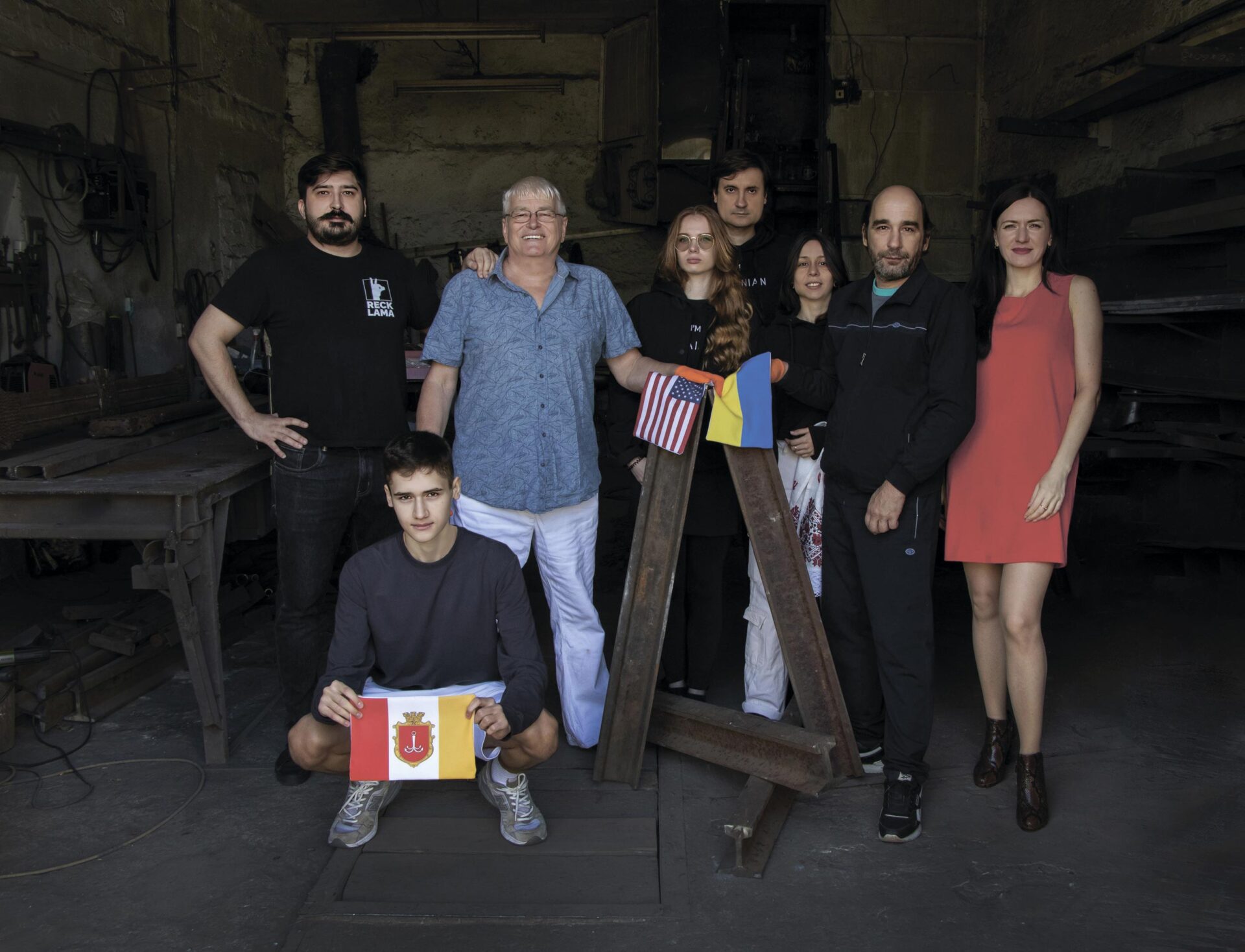
T.S.: What is the role of photography and creative projects during the war? How can artists draw global attention to the genocide in Ukraine? How does creativity shape the image of Ukrainians abroad?
MFF: Photography during war is a powerful weapon. Back in 2015, I advised President Poroshenko to stop waving Russian passports before American senators and instead show them posters of mined toys planted by Russians in eastern Ukraine.
Russian passports are meaningless; you can buy a stack of them anywhere. But visual proof of atrocities, especially those targeting children, resonates deeply with the American psyche. With well-documented evidence, such images would have secured Ukraine everything it asked for.
The role of artists in this fight is to show the world the truth — raw, undeniable, and unforgettable. Creativity can pierce the veil of indifference and inspire action.
Interviewed by Tetiana Stelmakh
Photographs by Mariia Universaliuk