

Trump’s ex-national security adviser speaks about the former American president’s “peace talks” and what they really mean.
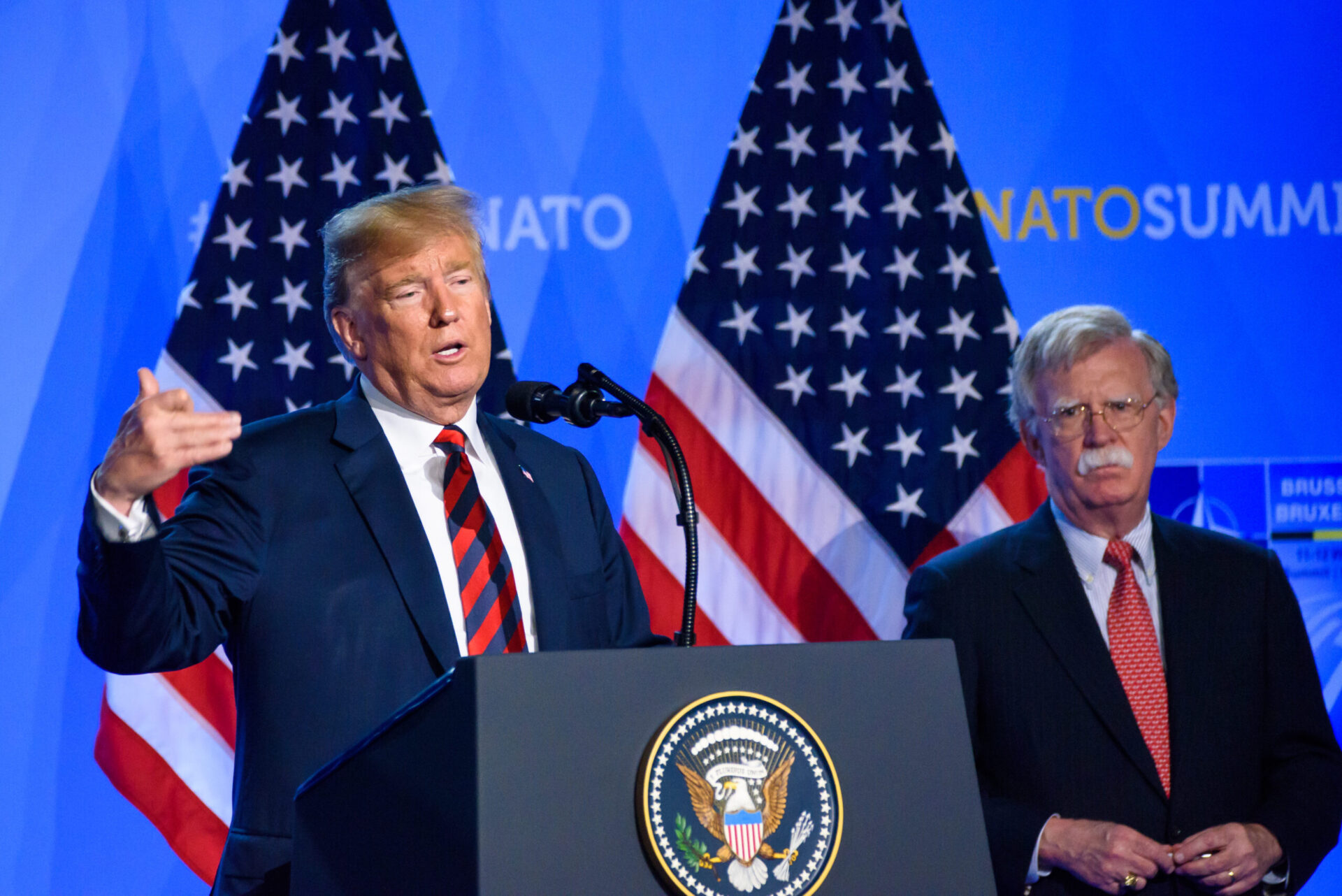
On August 23, 2023, from 8 p.m. to 10 p.m. Central Time Zone, in Milwaukee, Wisconsin, the first Republican presidential primary debate took place ahead of the 2024 U.S. Presidential elections. Topics of discussion during the debate included, among others, the policies of the current president, the federal ban on abortions, the climate crisis, and drug trafficking on the eastern border. Not surprisingly, support for Ukraine was another significant topic for political statements in the lead-up to the 2024 elections.
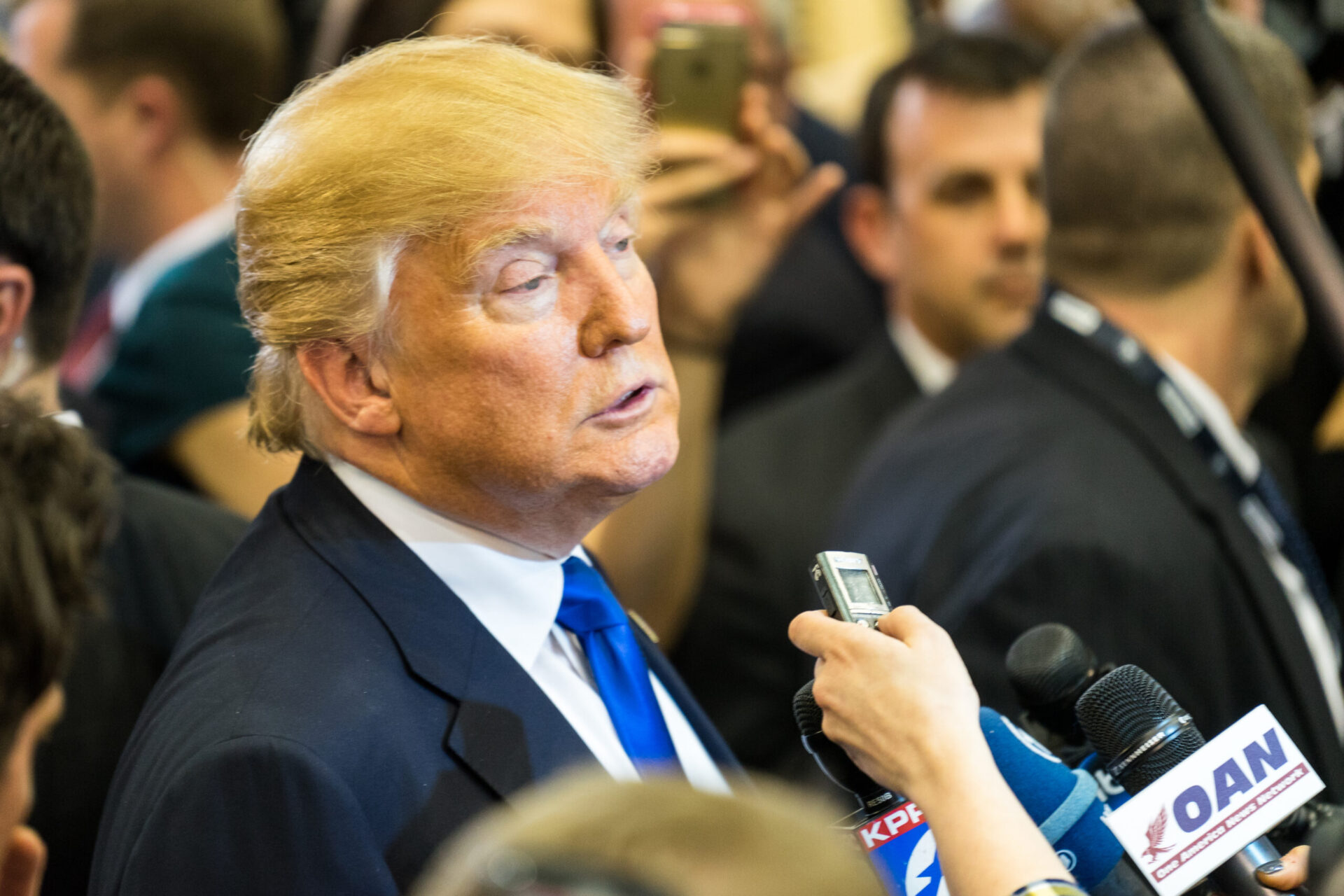
On the same day, at the same time, one of the presidential candidates who chose not to attend the debates also spoke about the Russian-Ukrainian war in his interview on X, the social media platform previously known as Twitter. “That’s a war that should end immediately, not because of one side but because hundreds of thousands of people are being killed… it’s gotta be stopped and it can be stopped very easily,” said former American president Donald Trump, who had previously claimed that he could end the war in Ukraine within 24 hours.
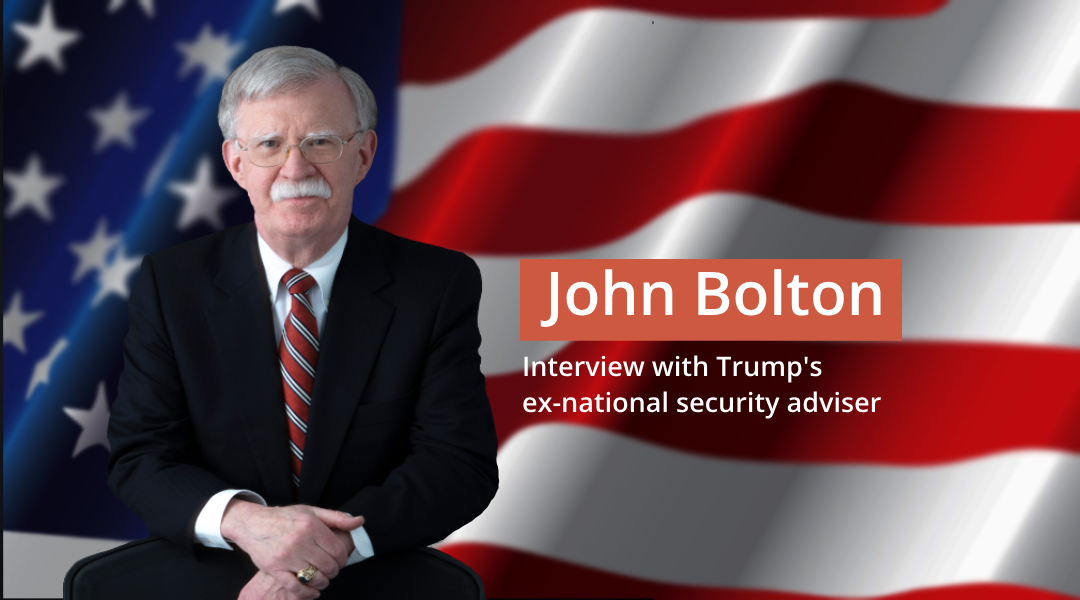
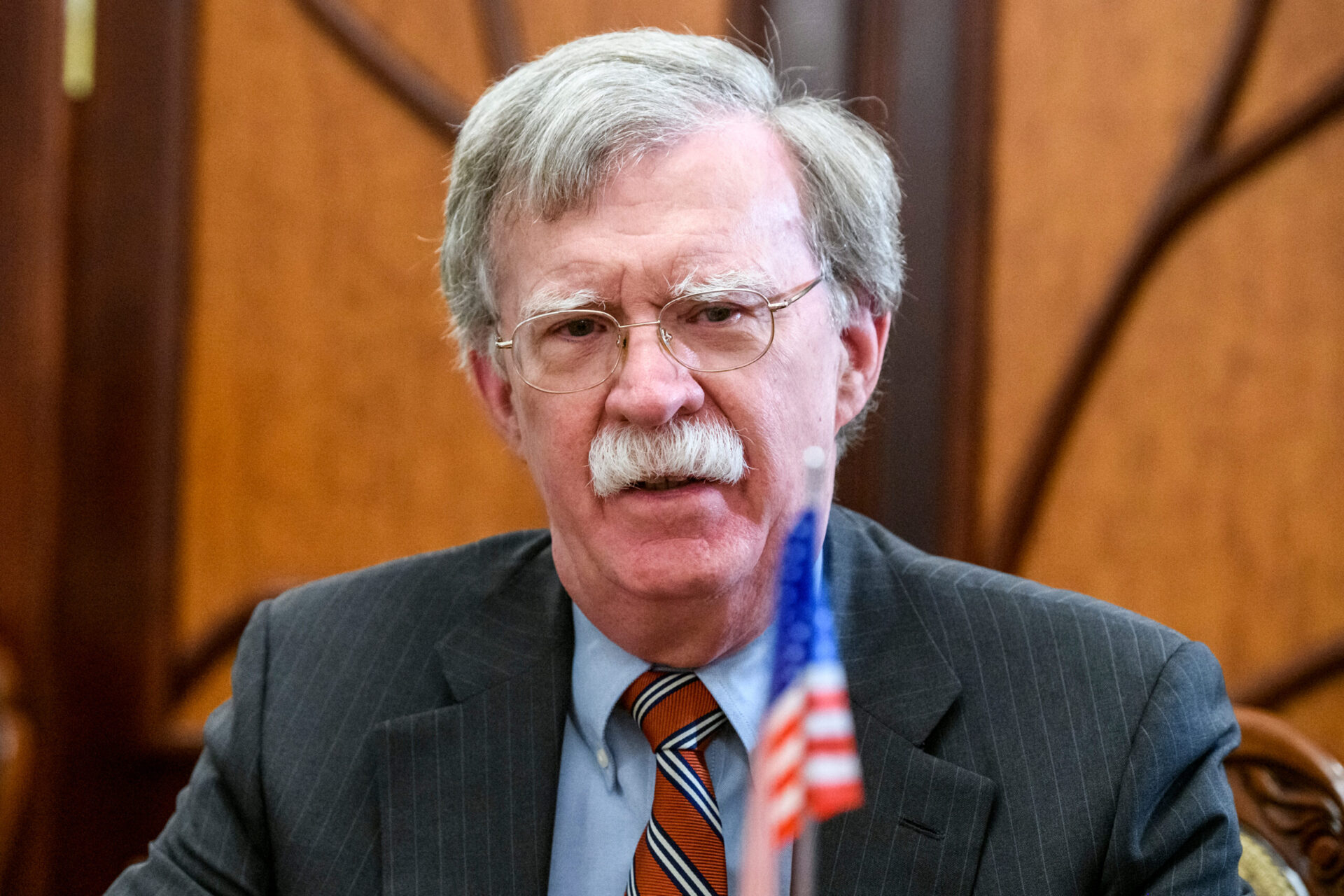
But could he truly end the conflict, and under what conditions it might happen? Why has this become a topic of speculation, and does Trump’s stance on the Russian-Ukrainian war align with American national interests? Earlier that same day, August 23, 2023 we at “The Ukrainian Review” posed these questions to John Bolton, an American attorney, diplomat, and Republican consultant, who served as the National Security Advisor for Donald Trump during a portion of his presidential term, specifically from April 2018 to September 2019.
– From your experience, how could you describe Trump’s feelings and attitude towards Ukraine and Russia?
– I think Trump sees most foreign policy issues through a very small prism. And the prism is what he thinks is in it for Donald Trump. He thinks to begin with that the measure of relations between nations is how well he gets along with the leader of the other nation.
So for example, for reasons I can’t explain, he thinks he gets along very well with Vladimir Putin. A few days ago, he said he was the apple of Vladimir Putin’s eye, which is not a compliment I would like to be bestowed on me, but that is Trump’s thought Putin liked him. And he would then say, is it not a good thing to have that kind of relationship with a country like Russia? He would say the same thing about Xi Jinping in China, or Kim Jong Un in North Korea.
On the other hand, he did not have good personal relations with the leaders of many of America’s allies, not with Theresa May of the United Kingdom, not with Angela Merkel of Germany, not with a number of others. So it does not conform to the historically expected pattern of who you have good relations with. But because Trump sees the world in a very simple way, that’s how he makes decisions on foreign policy.
So in the case of Ukraine, which he thinks is thoroughly corrupt, which supported Hillary Clinton against him in the 2016 presidential election by putting Joe Biden’s son on the board of Burisma, hiding Hillary Clinton’s famous computer server, and then again supported Trump’s opponent Joe Biden in 2020.
And he is obviously burned by having gone through the first impeachment, even after his perfect phone call with President Zelenskyy. Everybody has personal feelings, I am not disputing that. But personal terms are all that Donald Trump brings basically to foreign policy. He thinks he has got great relations with Vladimir Putin and not-so-good relations with Zelenskyy.
– Do you think if Trump remained in office he would have been able to stop Putin from invading Ukraine in 2022?
– No, I do not think so. I think what happened was when the whole Ukraine impeachment issue blew up in the United States, carrying through into an election year that was itself consumed with the COVID pandemic, that Putin and the Russians knew enough not to do something like invade Ukraine in the middle of an American election because they didn’t know what kind of reaction it would provoke.
And with COVID overwhelming everything, they had the fear that Trump would look for an excuse to divert people’s attention from COVID and that he might have reacted very strongly. Moreover, Putin knew that Trump was skeptical of NATO. And I feel that what Putin did in 2020 basically was wait out the American election.
If Trump had won, then he might wait for Trump to withdraw from NATO, to weaken the alliance. If Biden won, then he could take his time and size up the new president, which I think he did in Europe in the summer of 2021.
I think Putin found him weak. I think he looked at the withdrawal from Afghanistan. So that is a sign of weakness and encouraged the invasion.
So it was not that Putin feared Trump or that he had a good relationship so he was not going to invade Ukraine. I think it was a calculation on Putin’s part. It may have been right, it may have been wrong, but that is what I think was going through Putin’s mind.
– And do you think if Trump is re-elected in 2024, he would be able to stop the war, as he says?
– Well, he said he would just get Putin and Zelenskyy in a room and he would solve it in 24 hours. That, of course, is complete nonsense. I do not know what the diplomatic solution to the war is today, no matter who is president of the United States. I think Putin has to fight at least to a stalemate that he can justify to the Russian people and externally claim that he achieved his objectives, whether he did in fact or not, as long as he can say it with a straight face, and then he is going to call for a ceasefire and negotiations.
I worry that it may come as soon as September or October [2023] if the Ukrainian spring offensive does not make more progress. On the Ukrainian side, I do not see that President Zelenskyy has any incentive to negotiate, he is not yet in an adequate position of strength to do so. I do not think he would have popular support from the Ukrainian people, so I am afraid the best prediction you can make at this point is the military activity continues even if it is in a stalemate for some period of time.
– What do you think, Trump’s way of solving the conflict might be possible? What possible consequences can it have for the world and Ukraine?
– I think if Trump is re-elected, it will not be good news for Ukraine, because I think his general attitude is that it interferes with better relations with Russia. And as a nuclear power, it is not an insignificant point to say we want to have some stability in the relationship with Russia. But for Trump, remember, who has no political principles, he does not do normal policy, how do you solve a problem like Ukraine? You make a deal.
What is the deal? What would make Putin happy? Maybe it would not make Zelenskyy happy, but he could not do much about it. You give Russia more territory. To Trump, it is just a question of whether it takes doubling the territory that Russia controls in Ukraine to satisfy Putin? Does he need a little bit more? How far can he push Zelenskyy?
I think Zelenskyy between Trump on the one hand, and I am afraid some of the Europeans like the French, like the Germans on the other, would be in a very difficult position against that kind of pressure from the people who are providing the bulk of the military assistance.
– Why is the Russian-Ukrainian war the topic of speculation for Trump? What does Trump want to achieve by speaking about this?
– I think he, as I mentioned, feels that he was mistreated and subjected to a witch hunt on the allegations of Russia collusion during the 2016 election. I have to say, I think people know my position on Trump pretty well. I did not see any evidence of collusion with Russia. Maybe it is there, but I did not see it.
But he feels mistreated because of that. He feels mistreated because of the impeachment. And it is a kind of vindication of him personally, not to be guilty of collusion with Russia, not to have performed adequately in resolving the conflict.
So I think he would see it as kind of a test of his presidency fairly early to try and end the war. And because it has been such a focus going back really to the summer of 2019, the time of the famous perfect phone call.
And I think your readers should bear in mind that Trump knows nothing about the history of Eastern and Central Europe, nothing about hundreds of years of struggle for the status of the Ukrainian people from the Russian Empire, whatever it might be, he just looks at it as a deal that he can make today. And if he can make it, it is another success from his point of view, essentially without regard to the merits of either side of the deal.
– What is the American national interest in this war? Does Trump’s approach align with it?
– Well, I do not think Trump really has a concept of American national interest. I think he has a concept of Trump’s interest and that is how he measures things.
I think from a more analytical point of view, the breakup of the Soviet Union at the end of 1991 represented a fundamental realignment of power globally, effectively the end of a big piece of the Russian Empire that has developed over the centuries. I think numerous pieces of the former empire wanted to gravitate toward the West, and I think that was entirely in their interest and in the interest of the United States.
In April of 2008, President George W. Bush proposed bringing Ukraine and Georgia into NATO on a fast track. I thought that was the right decision. It was blocked by the French and the Germans. I think if membership had gone forward, I do not think there would have been an invasion in 2014 or 2022.
Today, given the circumstances that we face, Russia has now had two acts of unprovoked aggression against Ukraine. It has yet to be rebuffed in my views sufficiently. The Western response in 2014 was pathetic and I think formed part of the basis on which the Russians concluded they could get away with the second invasion in 2022. That invasion has roughly doubled the territory in Ukraine under Russian control as of the time we speak.
So it is not a case where aggression has been defeated. I think if we do not defeat the Russian aggression and defeat the first Russian aggression from 2014, to do what NATO says is its goal, which is to restore the full sovereignty and territorial integrity of Ukraine, the lesson Moscow will learn is they can do this in other pieces of the former Soviet Union as well, which is bad news and destabilizing across that entire territory.
The lesson they will learn in Beijing is if the United States in particular will not defend a country on the continent of Europe against unprovoked aggression, it will not defend a country like Taiwan all the way across the Pacific against Chinese aggression and other figures in other countries around the world will draw the same conclusion. So I think it will make the world a much more dangerous place if Russia gets away with this.
Watch full video on You-Tube.
Alina Kuvaldina