

Having entered, what is considered old age, I hope and pray that I shall see Ukraine, our lost daughter, safely in the European house, rebuilding and modernising to the highest standard, emerging as a leading member of our European family.
Vienna
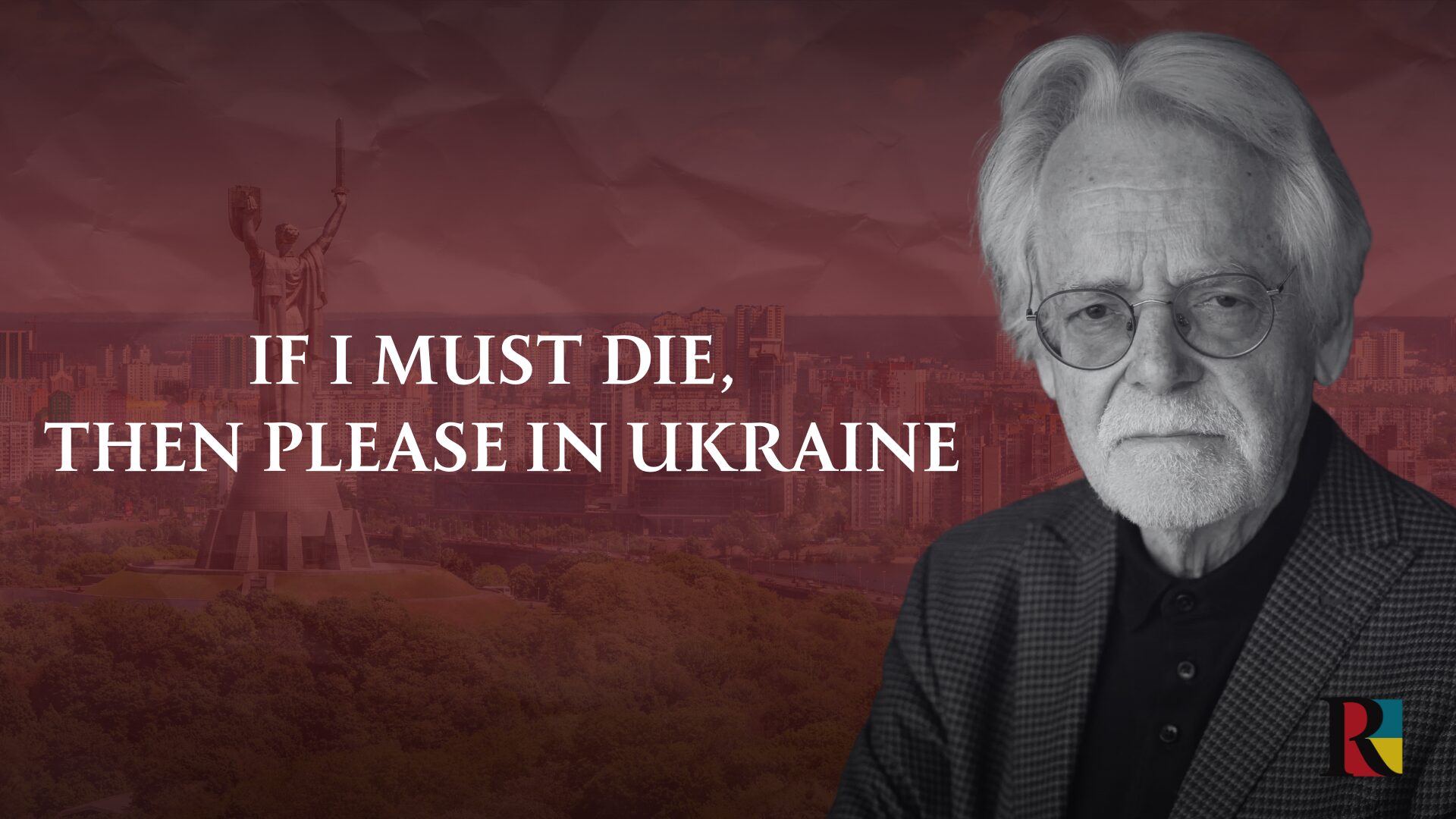
A while ago, very much on purpose, I spent my 80th birthday In Odesa. A Danish newspaper, the raw tone and aggressive reporting of which I admire, later proclaimed that I wanted to die in Ukraine. Well, for the moment, I do not want to die at all. What I meant, as I spoke to the chief-editor of the said paper, was that should I die – and sooner or later, most probably, I will die, though so far I have survived wars in Central America, the Middle East, and the Balkans – I would prefer to do so under a bomb or a grenade or a missile in Ukraine, on my feet, notebook in hand, rather than ending up old and decrepit in a bed further West, what we in Denmark since the times of the Vikings have called the straw death.
Death in Ukraine would be an honour for me – but not yet, please. The European, who considers Ukraine the best of Europe, a reminder to us all that Europe is something special, the continent of the individual, the lands of rights and duties, of established liberties (not just a hazy, ill-defined freedom, which is all too often the double-speak of tyrants), a civilisation and a culture well worth fighting for. The Ukrainians, with their incredible courage, are the epitome of this Europe. We, the rest of Europe, on this day of their independence, owe them a great compliment and our best wishes for a happy and secure future.
Ukraine, as Professor Jaroslav Hrytsak in Lviv reminded me a couple of years ago, is good for Europe. We see ourselves in the mirror of the war in Ukraine. We see what we do and what we must do – and what we did not do and should have done. In my more than 60 years of feeling and being not only a Danish, but European reporter, Ukraine is the most inspiring example of what Europe should be, having very consciously and by its own effort returned to Europe after 300 years in a Russian-Asiatic prison.
In 1956, as the Hungarians, then a braver race than now, rose against their Russian oppressors, I came to realise that outside the modest suburb of Copenhagen, where I grew up, there was a wider world, a European world. Lying on the floor of my mother´s flat, I listened to Radio Denmark – there was only the one – reporting from rebellious Budapest: the thunder of the Russian artillery and the rumbling of the Russian tanks in the street, the voices of the people on the spot.
Nearly 70 years later, Ukraine is as much a Danish affair as Hungary was in those days. At school, we were informed daily by our teachers about events, which were both very distant and very near to us. We studied history and maps. Names such as Imre Nagy and Pal Maleter entered our vocabulary, never – at least in my case – again to leave it. Unforgettable was a final, shaky voice from Györ near the Austrian border: “Do not forget us, we fight for ourselves and for you.” I began to understand something, which would grow and years later make me a correspondent in East and Central Europe and for a year – 2013, if I remember correctly – a member of an EU cultural committee tasked with the job of creating what Brussels called a New European Narrative, a mission impossible, as there is only one European narrative, the existing one.
In 1975, I was sent to Helsinki by the Danish National News Agency to cover the final session of the Conference on Security and Co-operation in Europe. I was not unaware of Central Europe (which in those days we called East Europe), having travelled occasionally, mostly by train, between Denmark and the Balkans and having managed, shortly to be arrested first in Poland, then in East Germany, two hilarious rather than threatening episodes. Arriving at the Finlandia Center, I noticed, somewhat to the left of the entrance, a small group of people waving blue and yellow flags. I walked down to them and asked who they were. “We are the Ukrainians,” answered a man, holding up a sign with the word Rukh. “The Ukrainians, I replied, “I thought the Ukrainians were Russians…” That was my first meeting with Ukraine. It was a repeat of Hungary in 1956- my world moved.
From 1980 to 1986, I was posted to London, where I saw Mikhail Gorbachov, the last Soviet leader (he did not know that at the time), in action with Prime Minister Margaret Thatcher. I had regular meetings, just as I had had during his time in Copenhagen, with Oleg Gordijevskij, the famous double agent (I knew him only as a press adviser), who delicately taught me how to look at the Kremlin. By the summer of 1985 (when Oleg, officially on holiday in Moscow, but actually in great danger, was about to be smuggled across the border to Finland by MI6, the British overseas intelligence service), I asked my newspaper, then and now Jyllands-Posten, for a transfer to Vienna.
I sensed a kind of revolution brewing in the east, but still, I did not see Ukraine coming. My beat was Europe from Tallinn to Athens and Ankara, not the Soviet Union, which to me was and is un-European. In August 1989, I was in Warsaw and decided to travel to Lithuania to observe the so-called Baltic Way, a human chain from Vilnius to Tallinn, by which those three small nations wanted to remind the world that illegally they had been conquered by Stalinist Russia, and that they wanted their freedom back. By way of Brest –and there was no open border between Poland or Lithuania – I managed in the dead of the night to reach Vilnius. The following morning, I met with the later President Landsbergis and, in the evening, made a tour along the line of demonstrators. As I told the lady at the reception of my rather decrepit hotel of my impression, she began crying. “We will never get our freedom,” she sobbed. Upon my departure I promised her, recklessly, that soon she would live in independent Lithuania. In such a case, she answered, she would give me a kiss. I got my kiss two years later.
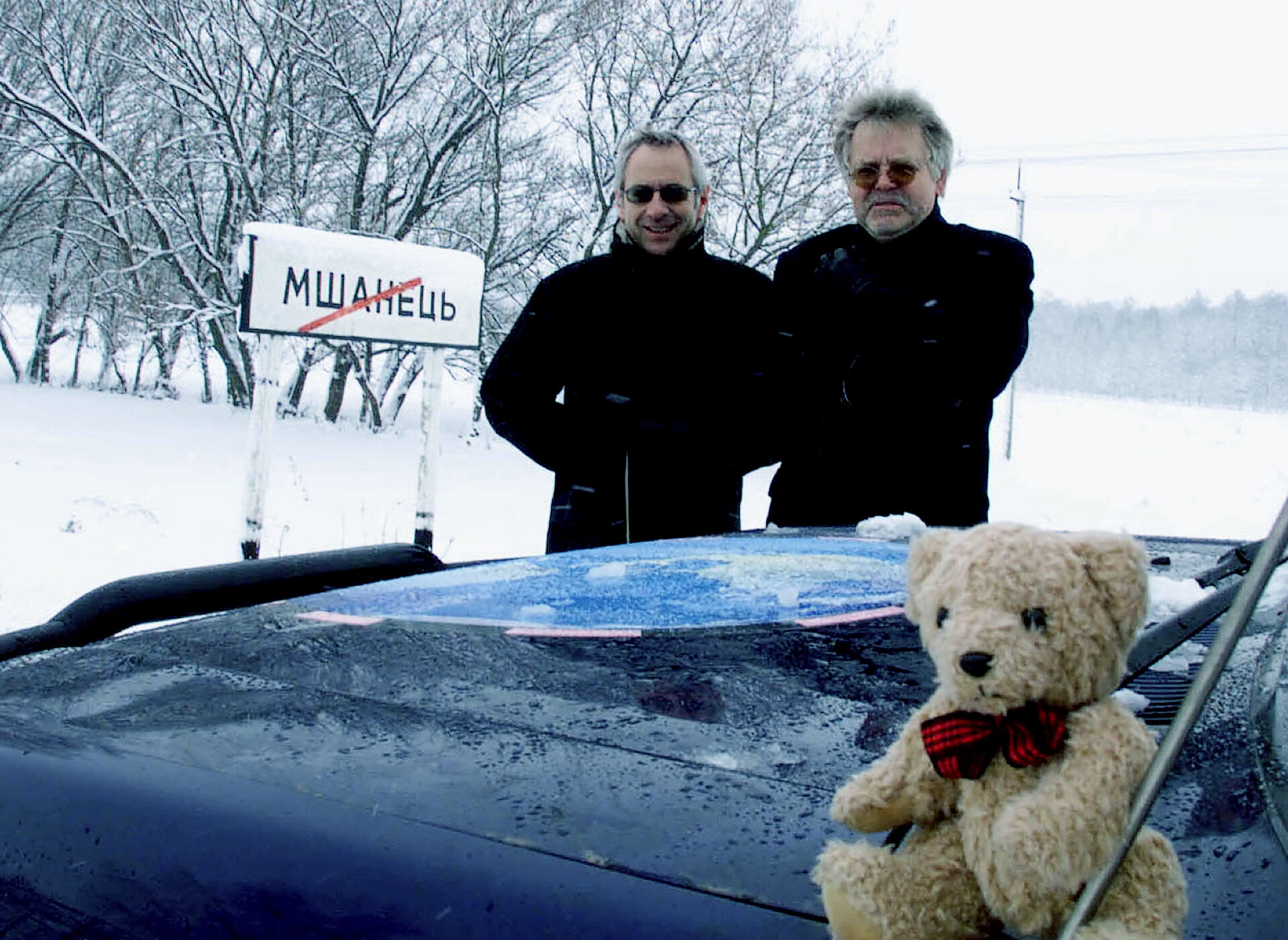
As the Russian empire disintegrated, I began travelling in its former European colonies, especially Ukraine, encouraged by Kyiv´s then ambassador, the unforgettable Natalie Zarudna, to Copenhagen, often accompanied by a friend and professional photographer, Carsten Ingemann, and my teddy bear, named after the English historian, John Julius Norwich (or could it be that the historian is named after the teddy bear?). In front of me, as I write this piece for The Ukrainian Review, I have a photo from the deepest Ukrainian winter. Carsten and me in the back, snow all over the place, John Julius on the bonnet of our car in the foreground.
How many times I have been back since, I do not know. I was at the Majdan in Kyiv in the time of the Revolution of Dignity, the army in 2016 took me on a tour from Sieverodonetsk and Kramatorsk to Avdijivka, I was in Odesa and Crimea, in Lviv and Mukachevo and Kyiv, even in Rivne, Voznesensk and Kaniv. Since 2022, I have tried to be back once or twice per year. I got Ukraine under the skin. I made Ukrainian friends – Alina and Petro, Yevhen now on the front, Stanislav and Aleksej, brave Natalia also on the front, Vladimir now in Spain and Alyona now in Canada, Yulia tragically killed in Texas, Borys who vanished, wise Aleksandr, equally wise Aleksej. I met serious and thinking people, stoic grandmothers, scared youngers, but rarely cowards. I sat in various basements, under the Russian bombardments, reading Kant’s Eternal Peace. I had the honour of two conversations with general Marchenko down on the coast. As the Ukrainians made Ukraine, Ukraine made me a Ukrainian.
Writing on the Middle East and the US and a European trilogy, I am too busy to be present in Ukraine on the 24th of August, but my heart will be there. I am watching with great interest the recent incursion by the Ukrainians into Russian territory near Kursk, seeing it as a sign that the scales of the war are tipping, ever so slowly, in favour of Ukraine. Having entered, what is considered old age, I hope and pray that I shall see Ukraine, our lost daughter, safely inside the European house, safely in the EU and NATO, rebuilding and modernising to the highest standard, emerging within the next generation to be a leading member of our European family.
Congratulations Ukraine!
By Per Nyholm
*These opinions are solely those of the author. The Ukrainian Review takes no position and is not responsible for the author’s words.
Per Nyholm, in 2023, published a book in Copenhagen and Barcelona “On the Road in the Land of Blood”. The first volume of a new European trilogy will be published in September. His books are available for free to any serious Ukrainian publisher. He writes every Sunday in the Danish newspaper Jyllands-Posten. This article was written for The Ukrainian Review.