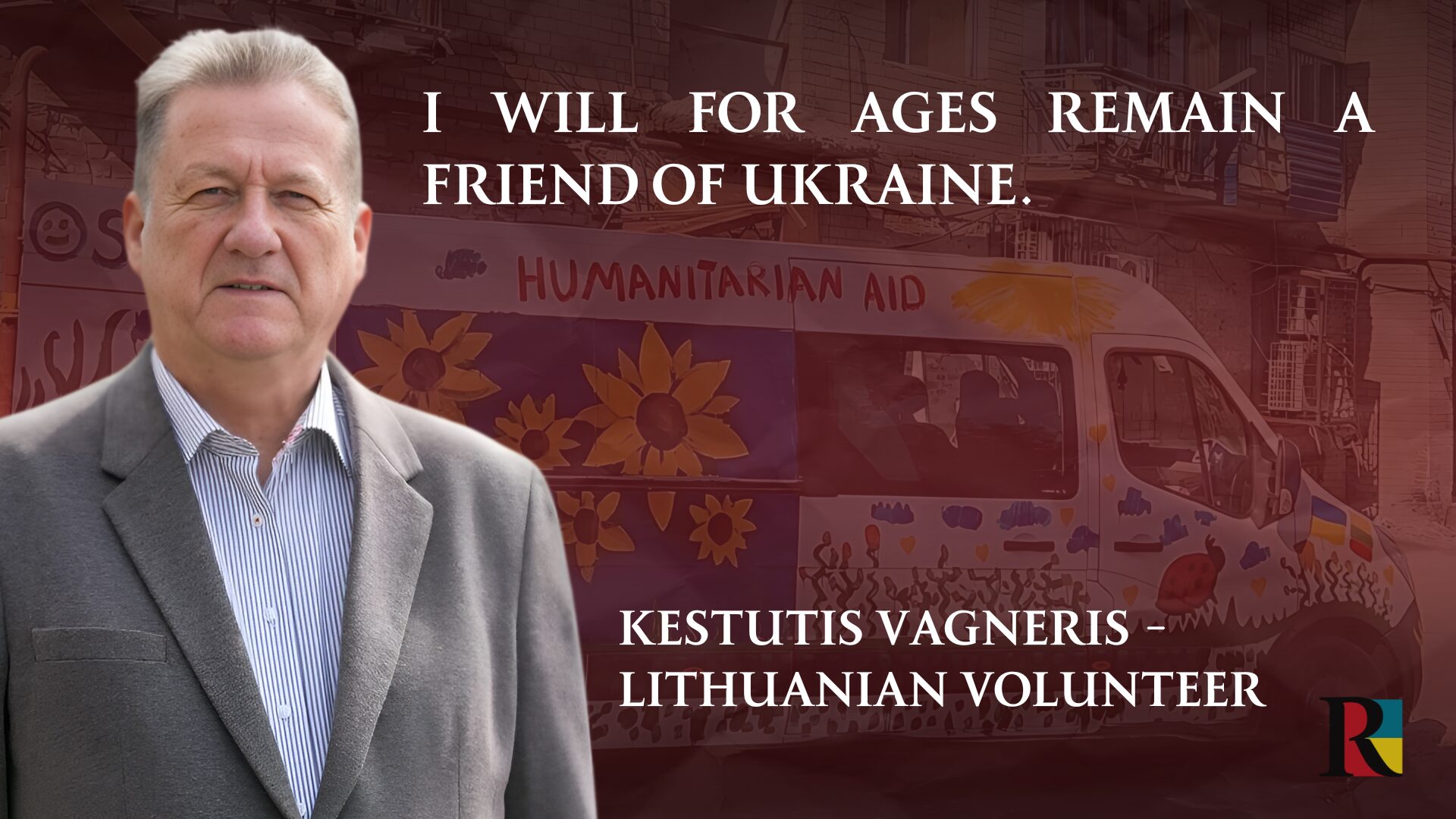


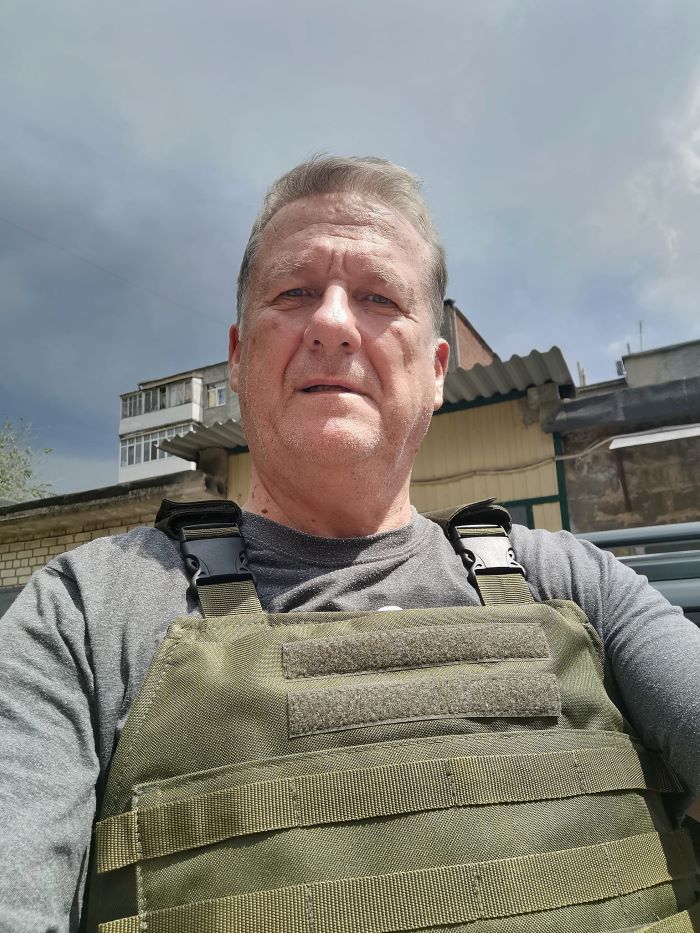
Two months after the full-scale invasion started, he went to the first charity mission in Ukraine, and by now, he had accomplished the 43rd one. Kestutis Vagneris is a Lithuanian volunteer who dedicates almost all his time to helping Ukrainian people. Moreover, he records what he sees in Ukraine and then shares notes, photos, and videos on his social media to immerse Lithuanian friends and subscribers in the Russo-Ukrainian war episodes.
Two educational backgrounds, sports and awards: biography
In 1981, Kestutis Vagneris graduated from the Faculty of Law of Vilnius University, and in 1993 from the Faculty of Journalism. From 1981 to 2019, he worked as a prosecutor. There were short periods when he was a lawyer and investigator-in-chief for significant cases.
Among his hobbies, Kestutis highlights journalism and basketball. He participated in the activities of the Lithuanian Journalists Union, where he combined two obtained degrees by specialising in the topics of organised crime and corruption. For this, he was awarded a certificate of honour from the Minister of Internal Affairs of Lithuania.
With his writing skills, he also contributed to the sport, helping the Lithuanian Basketball Federation prepare the Code of Ethics and Disciplinary Offenses, and then was awarded a special badge from the Lithuanian Basketball Federation.
Acquaintance with Ukraine
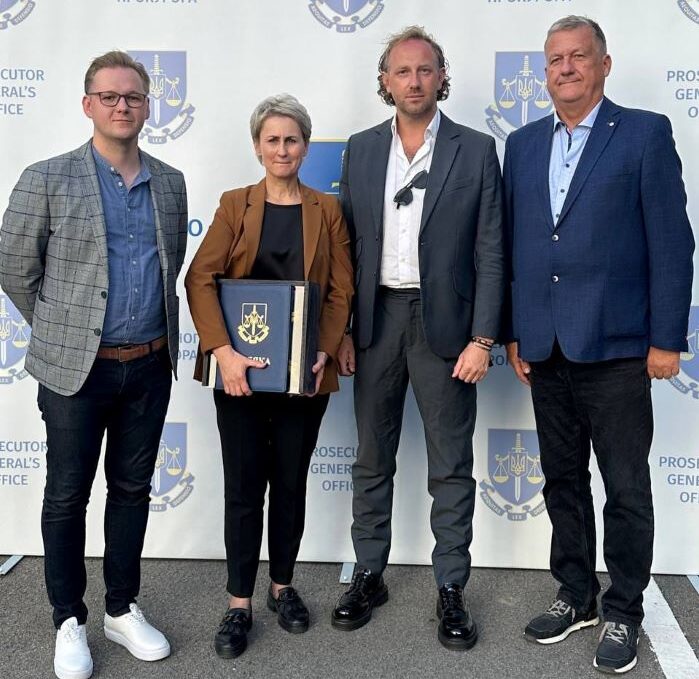
The first time I visited Ukraine, accompanying a delegation from the Lithuanian prosecutor’s office delegation, was in 1996 (not counting a trip to Crimea as a student during Soviet times). We were cordially welcomed, and a wonderful start began between the Ukrainian and Lithuanian prosecutors.
Later, as an individual member of the International Association of Prosecutors, I was invited several times to conferences that this organisation held in Kyiv and Lviv. For active actions aimed at strengthening mutual ties between prosecutors of Lithuania and Ukraine, I was awarded an honorary badge by the Ukrainian department of this association.
Commemoration and collaboration
In 1999, in Lithuania, members of an organised criminal group killed a young and honest prosecutor, G. Sereika, because they realised that their gangs would not stay unpunished anymore. Kestutis, along with his colleagues, wanted to honour the memory of their comrade. That is how the prosecutor’s public sports club Justitia, headed by Kestutis Vagneris, was established and lasted for almost 20 years.
We decided to regularly hold sporting events every year in different cities of Lithuania, during which we would donate various necessary things to kindergarteners and orphanages in this region. At one international conference that took place in Seoul in 2004. I met A. Shinalsky, the deputy general prosecutor of Ukraine. He was delighted with our initiative to honour the memory of the murdered prosecutor in this way. So, the sports team of Ukrainian prosecutors arrived in Lithuania in 2007. All teams brought and presented the necessary things to the orphans. This time, Ukrainian prosecutors did not become winners, but were rehabilitated in 2018, when in the Lithuanian resort town of Druskininkai they defeated the teams of the Lithuanian Government, the police prosecutor’s office, and a team from Poland.
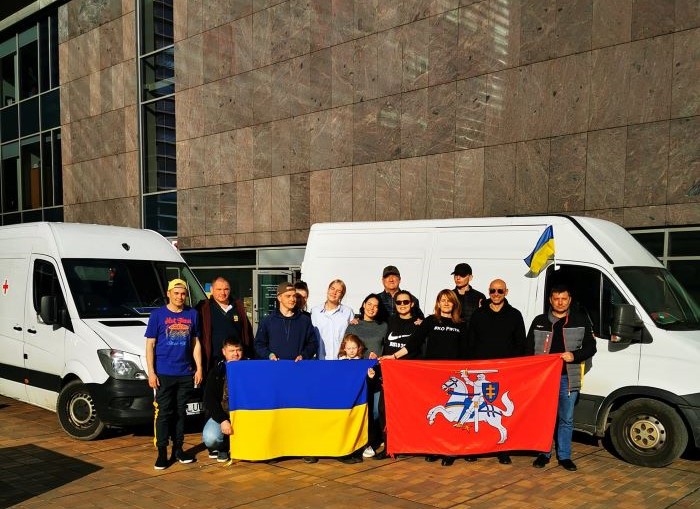
When the full-scale war in Ukraine started, prosecutors from Lithuania called their Ukrainian colleagues to invite their families to their homes. At that time Kestutis had already retired, so he wanted to join the humanitarian mission as quickly as possible.
The first trip during the Russo-Ukrainian war
I felt the first whiff of war as soon as I crossed the Polish-Ukrainian border. I felt like I was in a different reality: there were many checkpoints, and concrete barriers were laid on the roads (it was dangerous to drive at night). I remember the first alarm siren that sounded in Rivne. Already moving further towards Kyiv, I saw more signs of war.
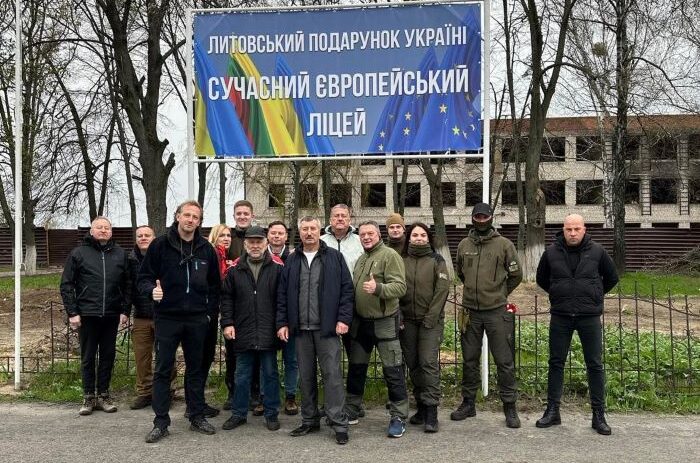
The leader of their column, with which Kestutis went through the town in Kyiv region, had been worrying about the school in Borodyanka, which was destroyed by a Russian tank salvo. Nowadays, this building has been restored at the expense of Lithuania.
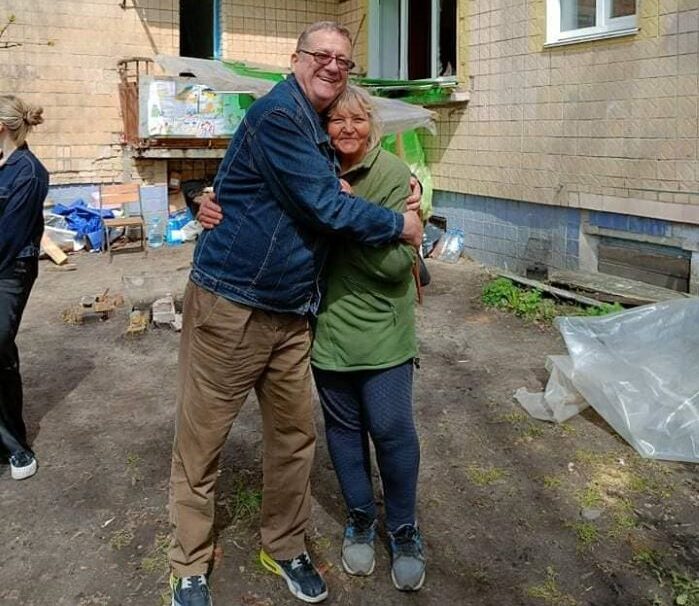
Then, I saw the destruction and damage to residential buildings. I talked to locals who told me about the horrors that Russians have made. I especially remember a conversation with a woman who lived alone in a dilapidated five-story building. Then, when I revisited Borodyanka, I made sure to bring her food and clothes, because the shops were closed at that time.
When we drove through the streets of Kyiv, the city, as it seemed to me, was half-dead: there were no people, no cars. Kharkiv looked more tragic. My heart trembled when I saw the dead Saltivka microdistrict. Local volunteers helped us give the things we brought from Lithuania to the military. But it was necessary to go along the road of death since the Russians shoot this section. I pressed the gas pedal of the van, and we arrived without loss, — recalls Kestutis.
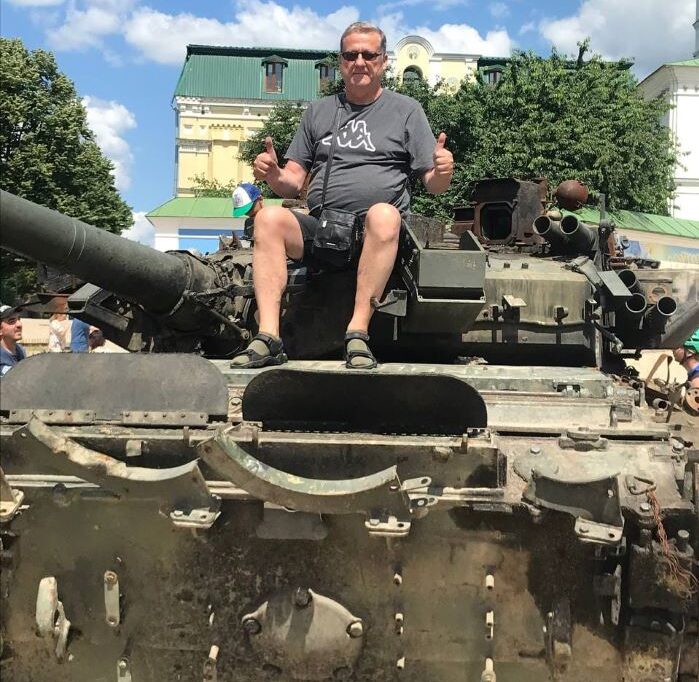
Kestutis Vagneris helps not only civilians but also Ukrainian military service. At the beginning of the active usage of drones on the frontline, Ukrainian artillerymen told him about the perspectives of this tool.
I heard about the need for drones for the first time. Later, several batches were directly given to the soldiers almost every time.
The most vivid memories from volunteering
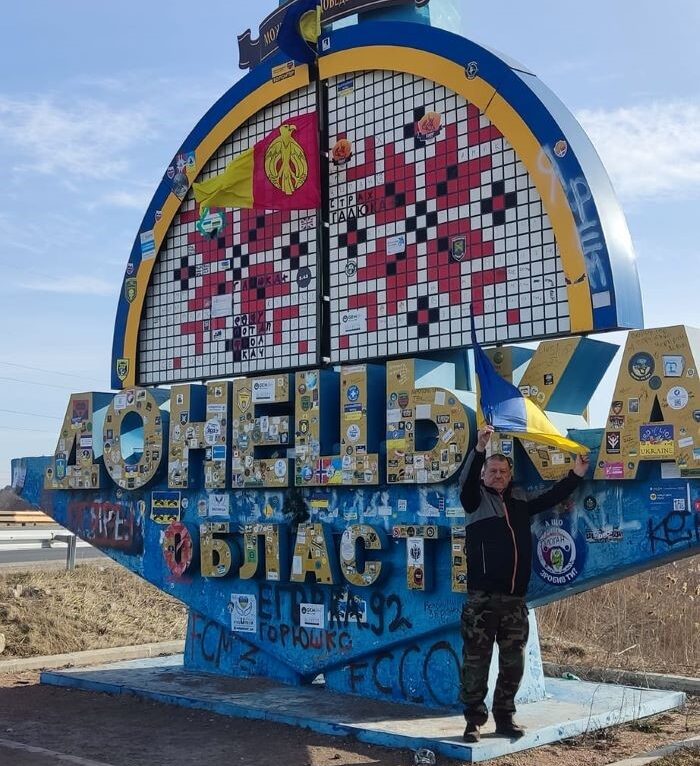
Kestutis visited many regions of Ukraine, being in danger several times.
We brought medicine to my acquaintance from Ternopil, who was the deputy chief of a battalion, which was located in the Sumy region. In gratitude, he took us to the training ground where shooting exercises were held only a few kilometres from the border. After we left, we received information that the Russians had fired mortars there. A similar situation happened in Kherson, which I visited several times. One afternoon, we unloaded food and clothing into the premises of the local volunteer headquarters. The next morning, this house was shelled. We were told that a local traitor gave the coordinates.
Under Russian drones: the direct danger
I felt a direct threat of death once (I am knocking on wood with my fist). We had two cars to transport humanitarian aid to Kherson. But on the way, we decided to take a look from afar at the Zaporizhzhia nuclear power plant, which is located in Energodar. Having passed Nikopol, we turned onto the road that led to the Dnipro River. An outpost met us. The military ordered us to hide the cars under the trees, but we leaned out of the cover and took a few pictures. Then we drove about 100 km. At the checkpoint, we were informed that Russian drones were flying in our direction. I was ordered to drive away the vans and hide under the roof of a destroyed gas station. A drone was flying above us for about half an hour. I tried to preserve in my memory the feelings and perceptions of consciousness.
In advance, Kestutis does not talk to family about such trips and shares his impressions and news about Ukraine with readers and loved ones after returning home. The bad connection in some areas is an obstacle, since Kestutis and his wife have an agreement about at least a few messages per day.
But I know that my wife’s blood pressure returns to normal when I’m next to her.
Transgenerational trauma: Soviet Union prosecutions
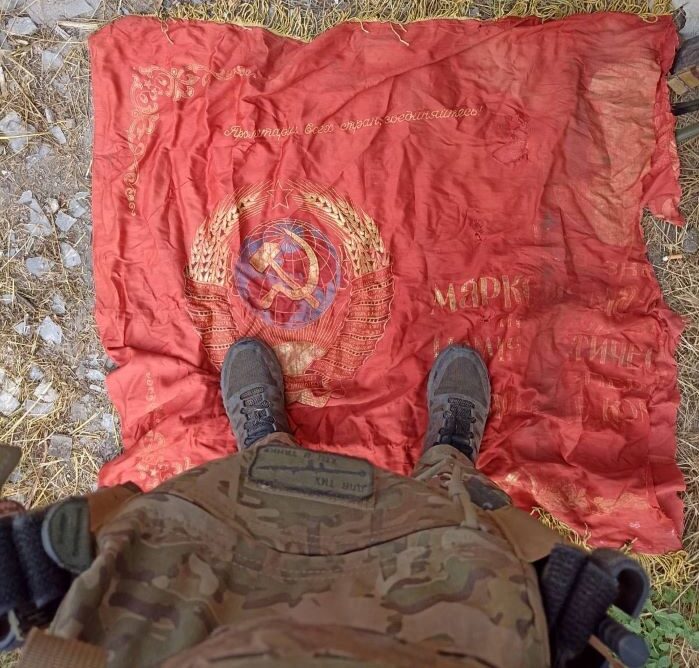
In Soviet times, when I, as an inexperienced prosecutor, once supported the state prosecution, behind my back, friends of a bandit conspired with a lawyer and a judge to save a friend from prison. But I firmly stood my ground. The bandit was convicted, but a week later, I received a telegram from the military garrison stating that I was being drafted into military service as a military prosecutor. Direction — Siberia. At that time, my son was only one month old.
Kestutis is convinced that he inherited his stubbornness from his mother’s side. The authoritarian Soviet regime did harm to different generations of his family.
After the end of World War II, mass deportations of people took place in Lithuania. My grandmother had not only many children but also several hectares of land. The family was dispossessed and sent to Siberia. My grandfather died there. My mother, who had moved alone to another part of Lithuania, had escaped the exile.
Reporting process: purposes and concerns
The main thing for me now is how to more objectively convey to the Lithuanian audience the atmosphere of war that is felt in Ukraine. So that my readers learn about everything, not from information messages, but from the lips of a person who has seen a lot with his own eyes.
Among the topics that Kestutis covers is the corruption in Ukraine. He emphasised that this issue could not be postponed because it discourages Lithuanians from donating to Ukraine.
I know how the militaries on the front line react to this. And I, carrying free humanitarian aid thousands of kilometres away, do not understand this. I often read that Ukrainian law enforcement officers exposed criminal schemes that caused great damage to the state. But I, as a former prosecutor, ask: where is the guilty verdict? People in Lithuania also ask me about this. The problem of corruption will become even more pressing in the post-war years when Western financial resources will come to restore your country. I’m willing to bet that this process will not gain the necessary strength without foreign honest authorities.
Dreams and plans
Kestutis emphasises that because of the atrocities of Russian PMC Wagner, his Prussian surname (Vagneris is an adapted version for Wagner) acquired bad fame. To overshadow this association, he dreams of meeting with Susan Lyne Wagner, one of the founders of the American Multinational Investment Corporation BlackRock, with whom he would like to discuss the potential aid for the Ohmatdyt
National specialized children’s hospital in Kyiv or for the Luhansk Hospital, which is currently located in Ukrainka, Kyiv region. There is a discrepancy between the needs of these medical institutions and finances.
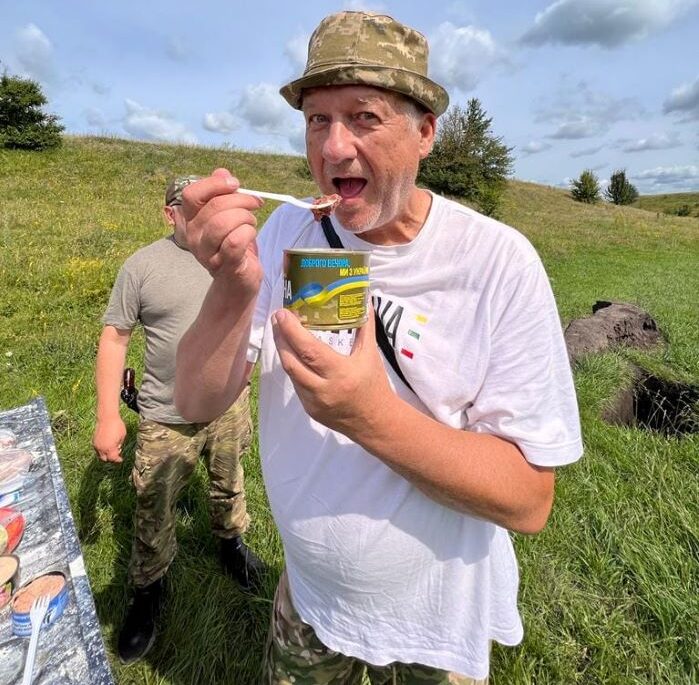
Within his last 43d mission, Kestutis Vagneris brought vehicles to transport injured soldiers. For this autumn, he has ambitious plans in which the help to Ukraine remains a leitmotif.
In addition to volunteering, I also decided to jump into unfamiliar political waters. I will participate as a candidate in the parliamentary elections in Lithuania, which will take place on October 13 this year. But I firmly decided for myself, that I would always remain a friend of Ukraine and help everyone with everything I am competent in.