


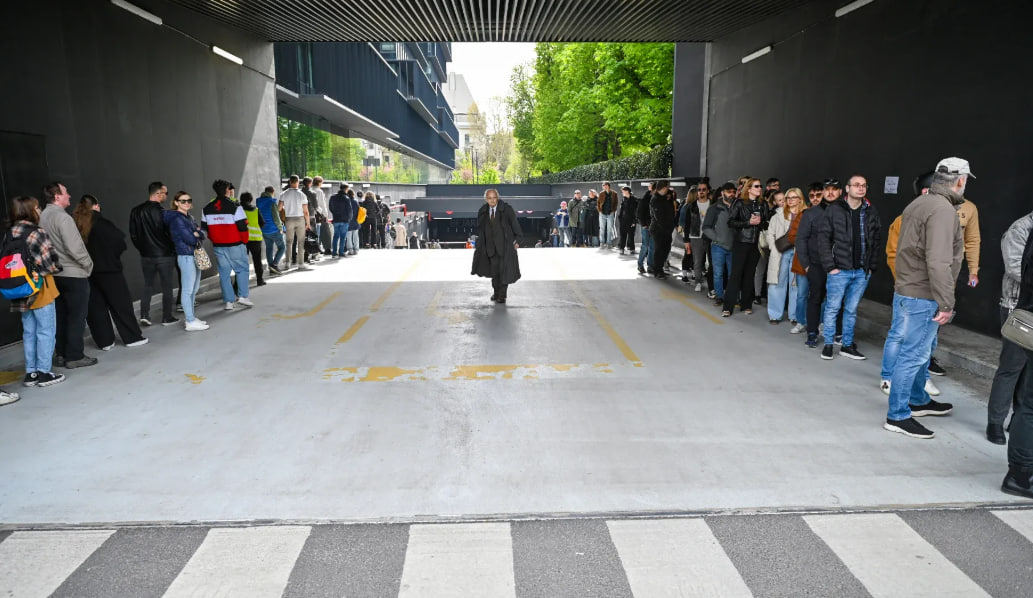
Hungary began parliamentary elections on April 12. Already in the first half of the day, officials reported record voter turnout. As of 11:00 a.m. local time, nearly 38% had voted.
Details
According to Hungarian media Telex, turnout in the morning exceeded previous elections. For example, by 11:00 a.m., 37.98% of voters had cast their ballots. This is one of the highest figures in recent years. The outlet continues to update data in real time.
At the same time, turnout in some districts is also above usual levels. In some places, it has already exceeded 40% in the first half of the day. Polling stations opened at 6:00 a.m. local time. Voters can cast ballots until 7:00 p.m. According to Associated Press, this campaign could set a record for participation in the country’s post-communist history.
Viktor Orbán told AP journalists that the campaign has become a “great national moment” for Hungary. According to him, he is here “to win.” His rival Péter Magyar called on all Hungarian citizens to “exercise their right to vote.” He told journalists that this election is “a choice between East or West, propaganda or honest public discourse, corruption or clean public life.”
Context
The parliamentary elections on April 12 may determine whether Prime Minister Viktor Orbán remains in power. He has held office for 16 years. The main challenger is opposition politician Péter Magyar and his party Tisza Party. Magyar promises to fight corruption and restore Hungary’s relations with the EU. According to pre-election polls, Tisza is ahead of Orbán’s center-right party Fidesz.
Orbán’s reputation has suffered after the March 26 screening of the documentary The Price of the Vote in Budapest cinemas and on YouTube. According to the film, Viktor Orbán pressures people to vote for Fidesz by blackmailing and bribing voters. He also publicly supports the Kremlin and opposes Ukraine.
So far, there are no official results. However, high turnout shows increased interest in the parliamentary elections. The first preliminary results are expected after polls close.
Earlier, The Ukrainian Review reported that Hungarian intelligence services use the Israeli tool Webloc for mass surveillance through mobile app and advertising data. The system allows tracking the movements of hundreds of millions of users without their consent.