

The famous Ukrainian journalist and political commentator Vitaly Portnikov noted that lies are the main weapon of Russian chauvinists, and even if Russia were to be deprived of weapons and energy resources, [Vladimir] Solovyov [Russian propagandist and journalist known for his anti-Ukrainian statements — author] would remain on the air – war is ensured for us.
A successful fight against Russian propaganda is certainly the key to the victory of the civilized world over aggressive Russia. However, how to do this effectively, when the Russian government spends not even millions, but billions of dollars on propaganda?
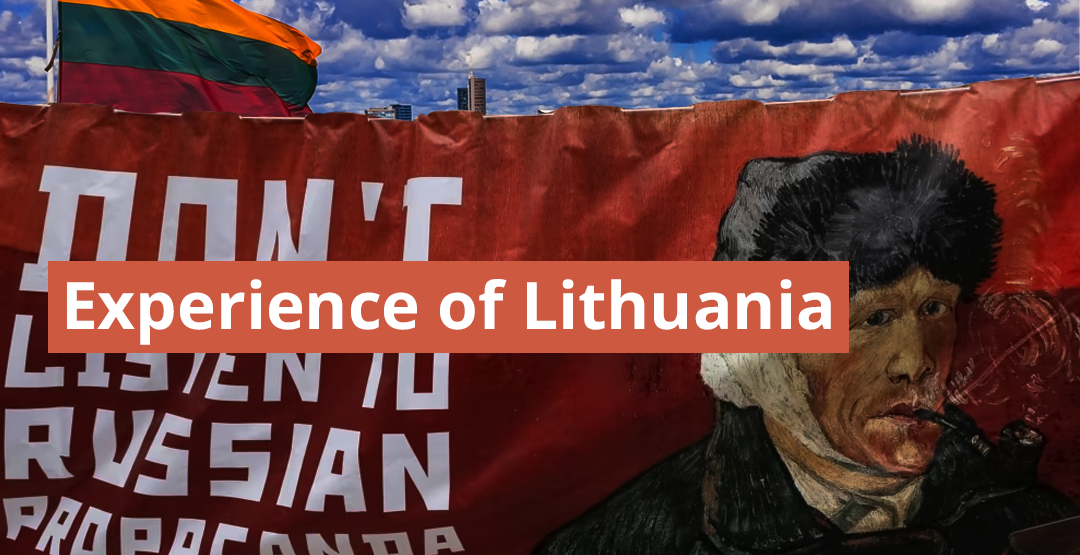
Let’s try to answer this question using the example of the Republic of Lithuania – one of the most loyal and friendly allies of Ukraine, which actively fights against Russian propaganda.
What are the most popular narratives promoted by Russian propaganda?
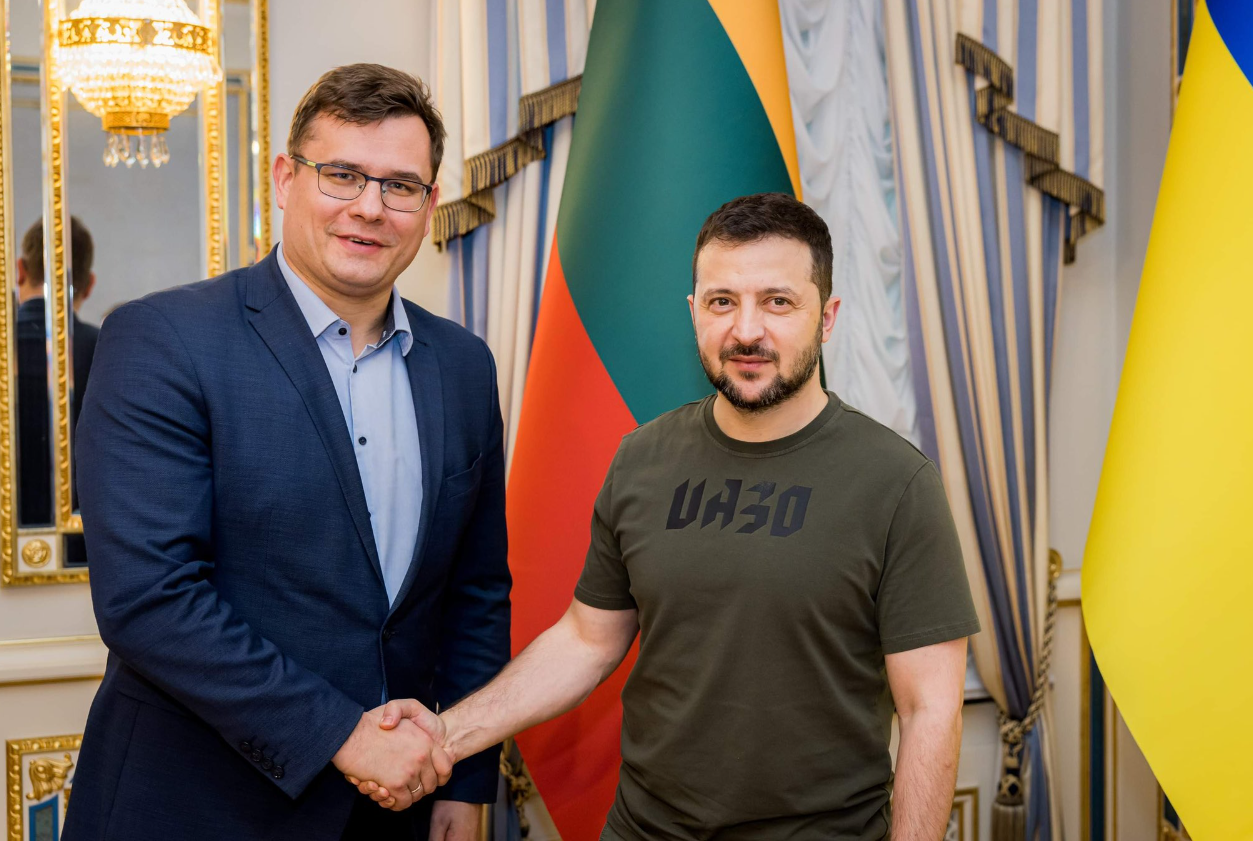
Russian propaganda was spread in Lithuania even before the Russian attack on Ukraine. According to Laurynas Kasčiūnas, chairman of the Lithuanian Seimas Committee on National Security and Defense, which he voiced in an interview with delfi.lt back in 2018, one of the most popular topics of Russian propaganda from the very beginning of the restoration of independence was that Lithuania is a fascist state. He also notes that Russian propaganda constantly tries to impose the feeling that the Baltic states are failed states.
What changed with the full-scale Russian invasion of Ukraine? Stopfake expert Aleksandra Kuczyńska-Zonik emphasizes that compared to January 2022, in February, the flow of disinformation in the Lithuanian information environment significantly decreased, because at that time Russia’s propaganda abilities were focused on Ukraine. However, in Lithuania, Russian propaganda was just as active, and the main topics were the Lithuanian army and security. More than half of the propaganda information concerned the army, as well as Lithuania’s defense potential: the capabilities of the Lithuanian army were belittled and assistance from NATO in the event of a threat was questioned. The language also touched on Ukrainian refugees in Lithuania, who were represented as Nazis and generally ungrateful persons.
Today, we asked Oleksandr Zamkovoi, an expert and an employee of a volunteer Internet project created to expose false information about Ukraine and other states, about the most popular topics of Russian propaganda in Lithuania:
“Currently, the most popular narratives are: “Ukraine prefers to fight to the last Ukrainian, a devastating mobilization is being carried out”, “Western weapons from Ukraine enter the EU”, “Western aid is stolen by the Ukrainian authorities”, “NATO mercenaries are fighting in Ukraine, and the country is a testing ground Western weapons”, “Russia does not attack civilian and cultural objects in Ukraine””.
Prohibition of propaganda channels and television programs
The banning of Russian propaganda channels in Lithuania, which began long before the full-scale invasion of the Russian Federation into Ukraine, was a logical step in the fight against Russian propaganda.
Thus, on January 7, 2015, the Commission for Television and Radio Broadcasting of Lithuania decided to start the procedure of stopping the rebroadcasting of the Russian TV channels RTR Planeta and NTV Mir in the country, because they committed numerous “violations of journalistic ethics” in the coverage of events in Ukraine.
With the beginning of the full-scale invasion of the Russian Federation into Ukraine, the pressure on Lithuanian state authorities on Russian TV channels increased. Already on February 25, 2022, bans on the broadcasting of the TV channels “Belarus 24”, “NTV Mir”, “RTR Planeta”, “Russia 24” for a period of 5 years, and “PBK”, “TVCI” — for a period of 3 years began to apply in the country.
Also, after February 24, 2022, the propaganda channels of the Kremlin were subject to EU sanctions. In particular, on March 2, 2022, the EU announced the blocking of RT and Sputnik broadcasting on the territory of the Union. On June 3, 2022, the broadcasting of three Russian state TV channels “RTR Planeta”, “Russia 24”, and “TV Center — Mezhdunarodnyi” was banned.
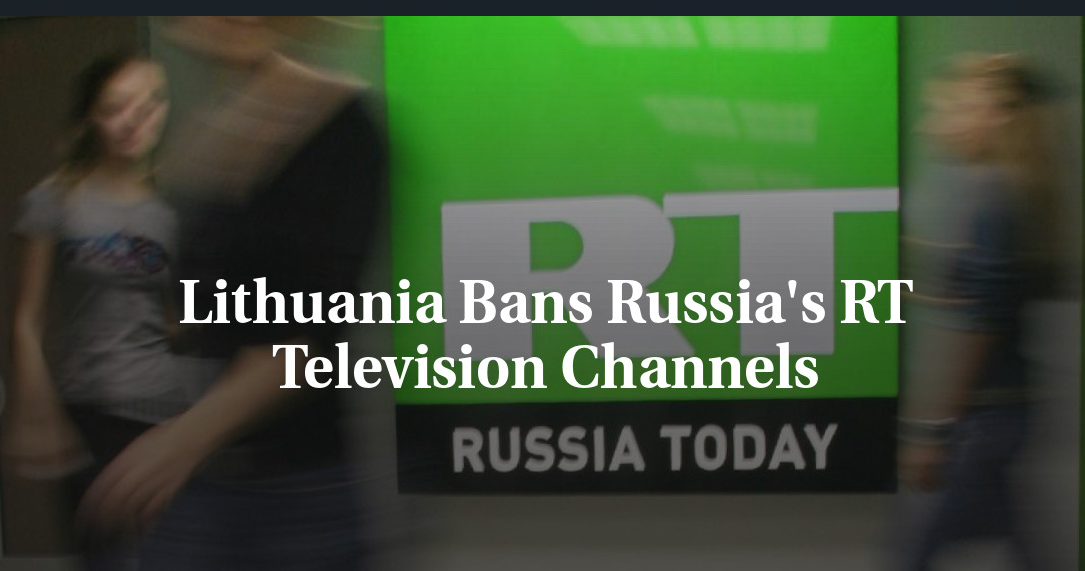
In December 2022, at the proposal of the European Commission, the TV channels NTV/NTV Mir, Pervy Kanal, Rossiya 1, and REN TV were added to the sanctions list.
In September 2022, the Seimas of the Republic of Lithuania adopted amendments to Article 34 1 of the Law “On Public Information”. In particular, it was prohibited to rebroadcast and distribute on the Internet radio and television programs created, financed, or controlled by the Russian Federation or the Republic of Belarus.
However, the Lithuanian Radio and Television Commission (LRTK) may grant permission to rebroadcast relevant programs if they are distributed from member states of the European Union or countries that have ratified the Television without frontiers directive.
The Lithuanian government did not limit itself to banning the broadcasts themselves. Taking into account that during the monitoring carried out by the Lithuanian Radio and Television Commission (LRTK), the spread of sanctioned channels on the Internet was detected, it decided in March, May, and June 2023 to block IP addresses from which there is access to propaganda TV programs banned in the country.
Oleksandr Zamkovoi highly appreciates the effectiveness of the Lithuanian Radio and Television Commission’s measures to combat Russian propaganda:
“Lithuania is currently one of the leading countries in countering Russian propaganda. Understanding all the risks of the impact of misinformation on the population, Lithuania is trying to protect its information space. Blocking by the Lithuanian Radio and Television Commission (LRTK) of IP addresses that allow watching sanctioned Russian propaganda TV programs will allow to influence the spread of propaganda not only on TV, but also on the Internet. I think such decisions are supported by the vast majority of Lithuanians.”
Civil society against Russian propaganda
However, Russian propaganda is not limited to official TV channels and broadcasts. Social networks and the so-called “troll factory” play an active role, the work of which was organized for a long time by Yevgeny Prigozhin, about whose death an article was published on our website.
Oleksandr Zamkovoi notes:
“Russian propaganda is still actively spread in social networks, which are not influenced by any of the regulators. Unfortunately, the fight against Russian trolls and bots, the spread of propaganda content in social networks is not effective. Social networks such as TikTok and Telegram are generally not sensitive to issues of spreading Russian propaganda. Therefore, it is important to explain the methods of spreading propaganda, to remind about the main narratives. They are, in fact, “markers” of the Russian worldview”.
Civil society came to the aid of the authorities in the fight against propaganda in social networks. Even before Russia’s full-scale invasion of Ukraine, a public movement was formed that reached tens of thousands of Lithuanians. They call themselves “elves” and oppose the Kremlin’s disinformation on the Internet. The founder of this movement was the blogger Ričardas Savukynas.
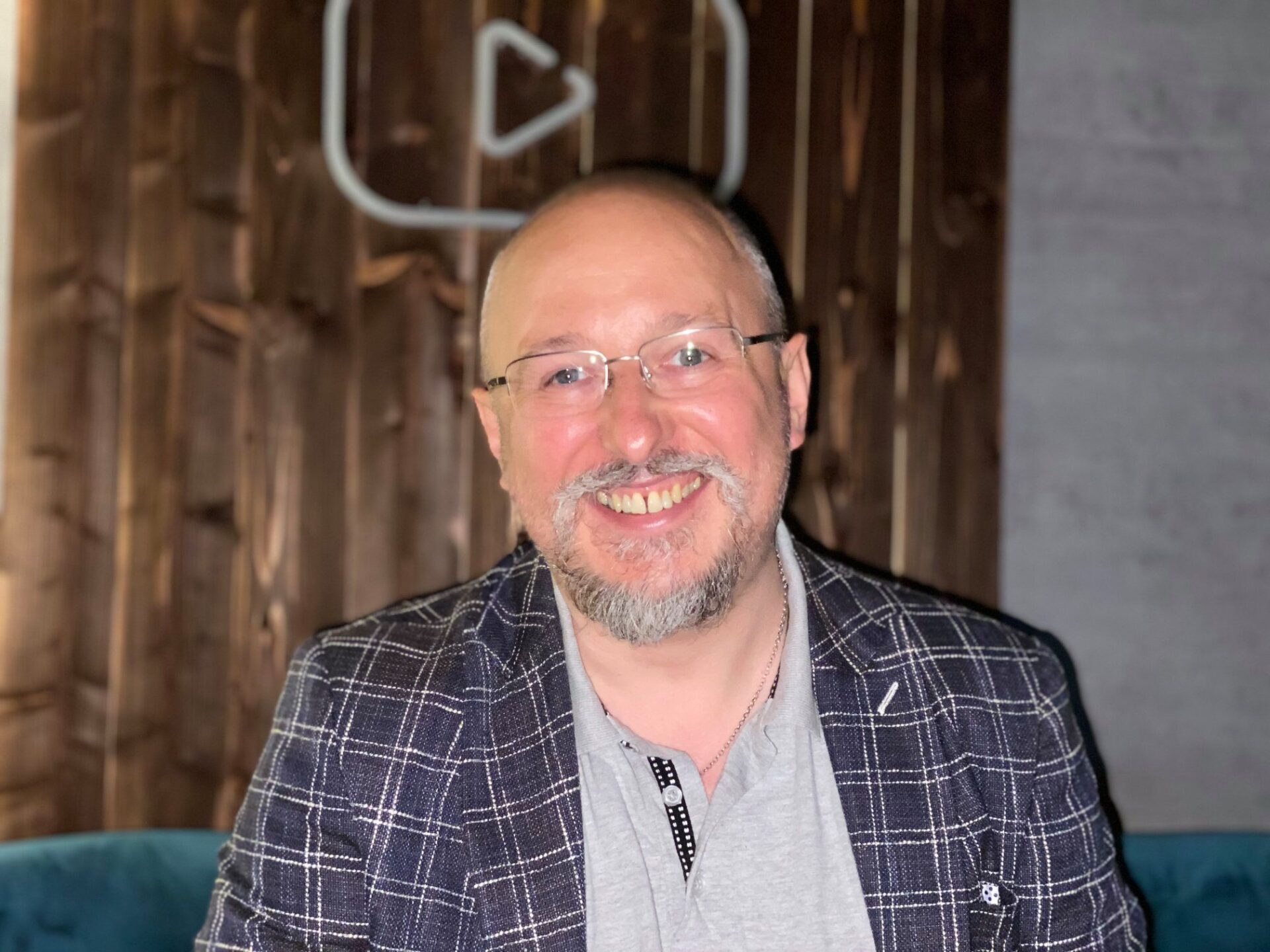
Commenting on the “elves” movement to the “Voice of America” publication, he noted that the movement began its most active activity after the events of the Ukrainian Maidan. For him, blocking the Kremlin’s disinformation is not just a struggle, but a war on his own front. Together with like-minded people, Ričardas Savukynas began to search for and block pro-Kremlin groups with complaints against them on social networks. Even today, he actively publishes posts on his Facebook account with appeals to complain and block fake accounts, of which, in his opinion, there may be approximately 1 million in Lithuania alone.
Russian propaganda has been spreading its narratives in the information space of the republic since the very beginning of the restoration of Lithuania’s independence. Kremlin disinformation intensified after the full-scale invasion of Ukraine on February 24, 2022. The main topics promoted by Russian propaganda are the spread of false information about Ukrainian refugees, about the war, accusing the Ukrainian side of war crimes, discrediting NATO, etc. However, Lithuanian government bodies, in particular the Lithuanian Television and Radio Broadcasting Commission, have adopted a number of effective decisions to block Russian propaganda channels and broadcasts and IP addresses on the Internet that distribute them. In addition, thousands of ordinary Lithuanian citizens actively join the fight against Russian “trolls”, who complain and help block fake accounts on social networks.
Evgen Dzhumyha