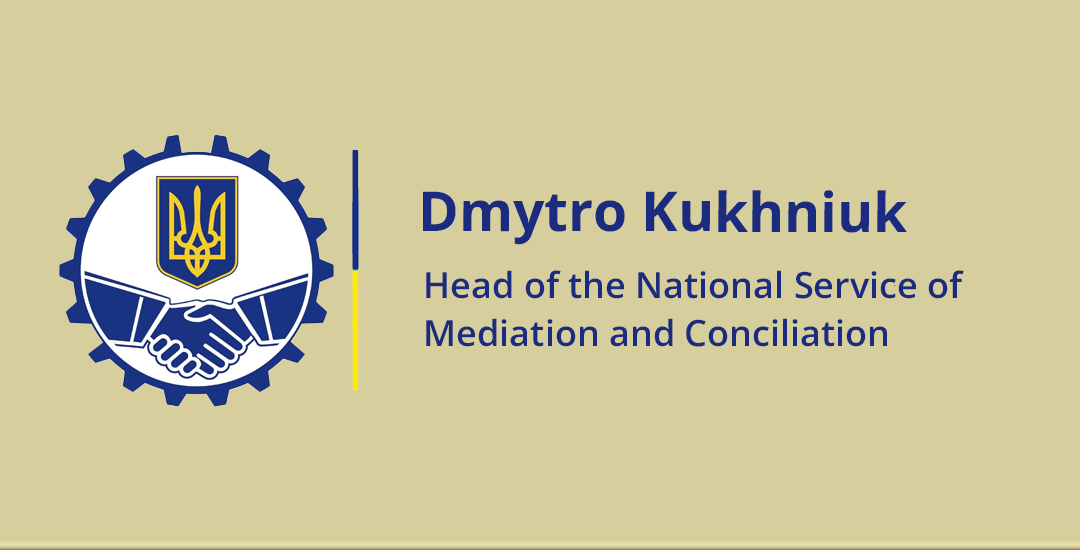


This year, the National Service of Mediation and Conciliation (NSMC) celebrates 25 years of its establishment. The agency allows collective labour disputes between employees and employers to be resolved without bringing the case to court. A similar practice has existed in some civilised countries for over a century. The Ukrainian Review spoke with the head of the state body, Dmytro Kukhniuk, about the specifics of the NSMC’s work in peacetime and wartime.
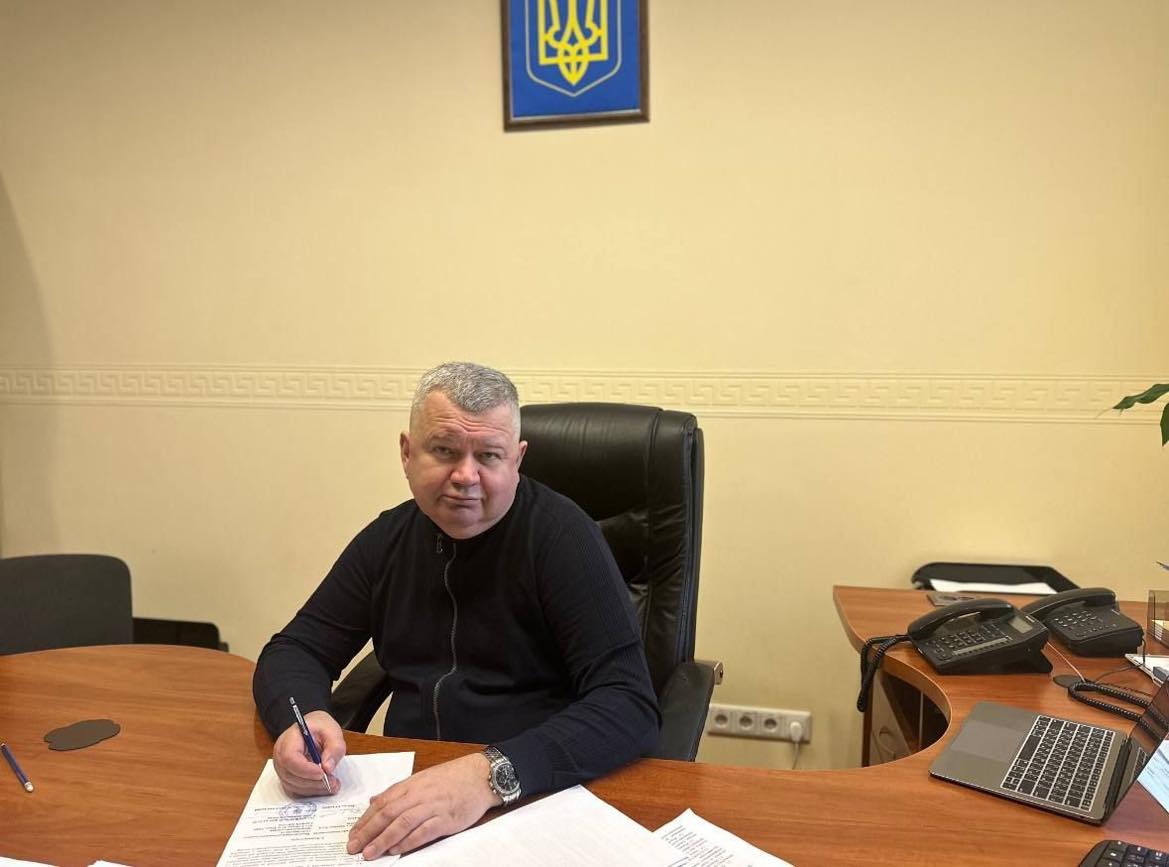
Mr. Dmytro, the National Service of Mediation and Conciliation deals with the resolution of labour disputes, which is understandable. Tell us what this concept includes and what is your area of responsibility?
The specificity of the activity is that we have to prevent conflicts between employees and employers or contribute to their resolution. We must reduce social tension and conflict through social dialogue and cooperation with the authorities, trade unions, and employers. It is a worldwide practice. Since 1917, the Federal Mediation and Conciliation Service has been the same service in the USA. In Sweden, for example, a similar service has existed since 1899, and in 1896, the Advisory Conciliation and Arbitration Service was created in Great Britain. By the way, we plan to establish cooperation with similar departments of partner countries, and we are currently working on this issue.
If you have already started talking about international cooperation, tell me with whom you are currently communicating regarding the exchange of experience and about your plans for the near future in this context.
We cooperate with the International Labor Organization (ILO). One of the ILO projects once provided training for labour mediators and arbitrators. It was in 2021. We also plan to cooperate with the ILO regarding expert support for our legislative initiatives. More precisely, it is law-making work because we do not have the right to legislative initiative. We also plan to hold a strategic session in October (with the help of a tool developed by ILO specialists), the result of which will be a road map for the development of the service. Based on this document, we plan to reform the service according to the best global standards.
This road map will serve as a reference point for our team, will allow us to define priorities, and form short- and medium-term plans for the main practical steps that will enable us to modernise the service, increase its status, and strengthen its institutional capacity following the best international standards. Also, the NSMC recently initiated the creation of an interdepartmental working group from among representatives of the parties to the social dialogue, national experts, scientists, and representatives of state authorities to reboot the current model of social dialogue in Ukraine, taking into account the recommendations of the International Labor Organization and best international practices for the preparation of a new edition of the draft Law of Ukraine “On Social Dialogue in Ukraine.” It is happening in the frame of Ukraine’s European integration aspirations and preparation for the country’s recovery from the devastating consequences of the war.
Are there any peculiarities in resolving conflicts at enterprises with foreign capital? And do you cooperate with your partners in this direction because each country is a separate legal field?
We will work in the event of such situations, but during the COVID-19 pandemic and the full-scale Russian aggression against Ukraine, that is, during my term of office, there were no such cases.
We will reach martial law, but let’s talk about the Institute of Arbitrators of the NSMC. What are the responsibilities of these people?
According to the Law of Ukraine, “On the procedure for resolving collective labour disputes (conflicts),” one of the stages of settlement of a collective labour dispute is an appeal to a labour arbiter, whom the parties choose from the list proposed by the National Service. Soon, we plan to allow the parties to select labour arbitrators from the list posted on the new NSMC website. The labour arbitrator, through appropriate conciliation procedures – primarily negotiations and meetings during labour arbitration sessions – contributes to resolving collective labour disputes.
And if the parties cannot agree on a specific arbitrator, what then? Draw? What mechanism?
Arbitration is purely voluntary. If the parties cannot agree, they must go to court.
Let’s talk about martial law. How has your work changed? How many disputes were resolved?
During martial law, the service contributed to the resolution of more than 200 collective labour disputes. During this time, the service registered 26 collective labour disputes and removed about 100 from registration.
Can you identify any trends compared to the pre-war period?
The number of collective labour disputes has significantly decreased compared to the pre-war situation.
What do you associate it with?
With changes in the overall landscape of the labour market: relocation of enterprises, labour migration… A significant number of working citizens have gone abroad, and a large number are participating in hostilities. However, we expect a surge in collective labour disputes after the war because the nationwide socio-economic situation will remain tricky, and society’s conflict-organic nature will increase. The service will have a lot of work then. We are now using time as a window of opportunity to strengthen the competencies of our employees responsible for resolving conflict situations and contributing to the resolution of labour disputes. They work here mainly in the regions because of this production level. The number of disputes is relatively low at the national and sectoral levels.
Then I will ask: what is the total number of full-time units in Ukraine?
Currently, we have 147 units, of which 28 are in the central apparatus, according to the state approved by the Presidential Decree. The rest are in the regions. But about 100 employees work. That is, about ⅔ of the vacancies are filled. It is enough now, but after the end of martial law, I think more workers will be needed.
Were there such cases during martial law: a person started the procedure for resolving a labour dispute, and then went abroad? Or did you apply from abroad to resolve a labour dispute in Ukraine online? Is it even possible?
There is a specific procedure, but it has not been recorded in any cases so far. The fact is that representatives of the trade union and representatives of the employer participate in resolving the labour dispute. Citizens as natural persons do not participate in this process. We may discuss individual disputes in this context, but our service does not currently deal with this.
Kostyantyn Grechany