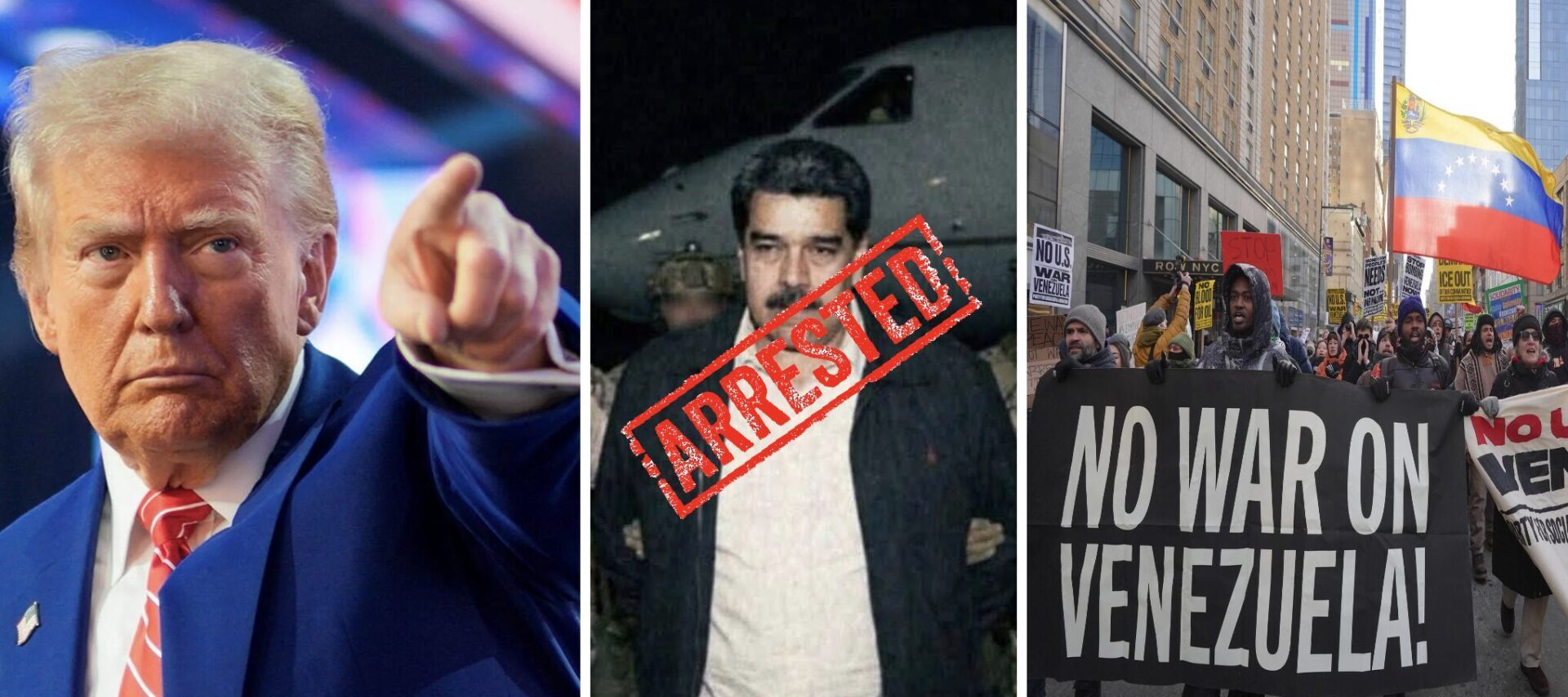


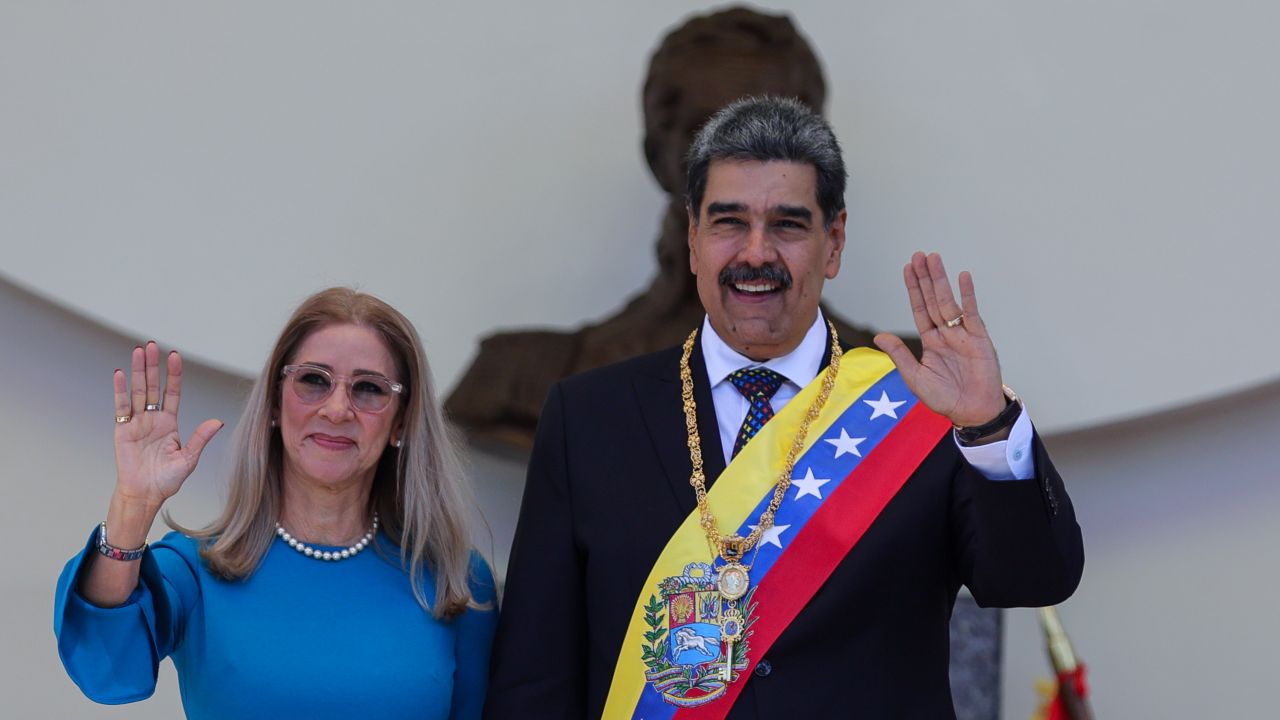
Venezuelan President Nicolás Maduro and his wife were transferred to the federal Metropolitan Detention Center in New York, AFP reports. According to Reuters, Maduro is scheduled to appear in court tomorrow, January 5. The operation carried out by U.S. special forces has sparked widespread international reaction. This article reviews the responses of countries around the world and the potential implications for Venezuela.
Support for the U.S. Operation
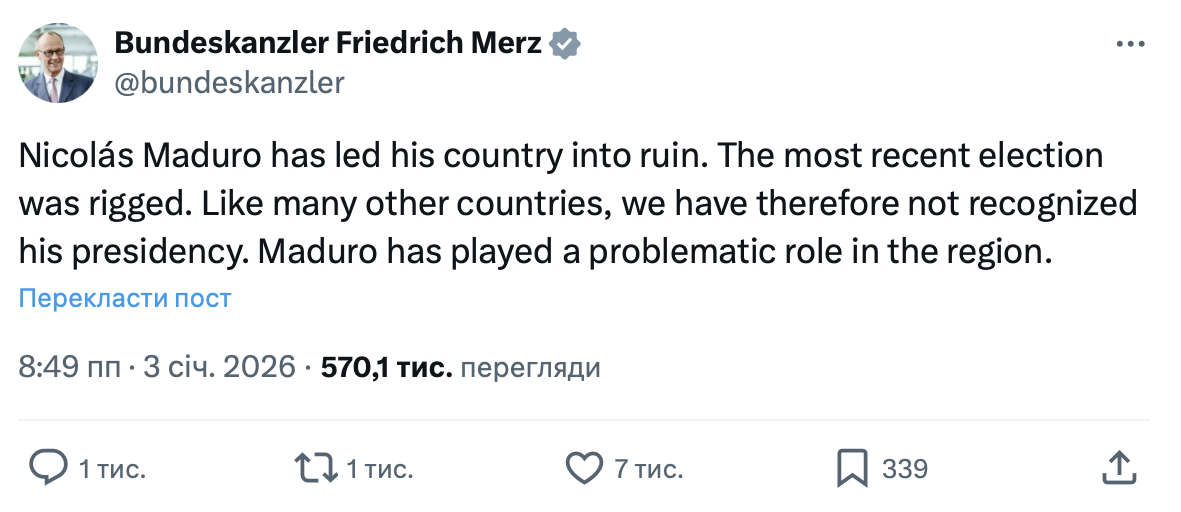
German Chancellor Friedrich Merz described the end of Maduro’s rule as a logical outcome of a prolonged political crisis. He emphasized that the country’s recent elections were rigged and criticized Maduro’s role in regional politics.
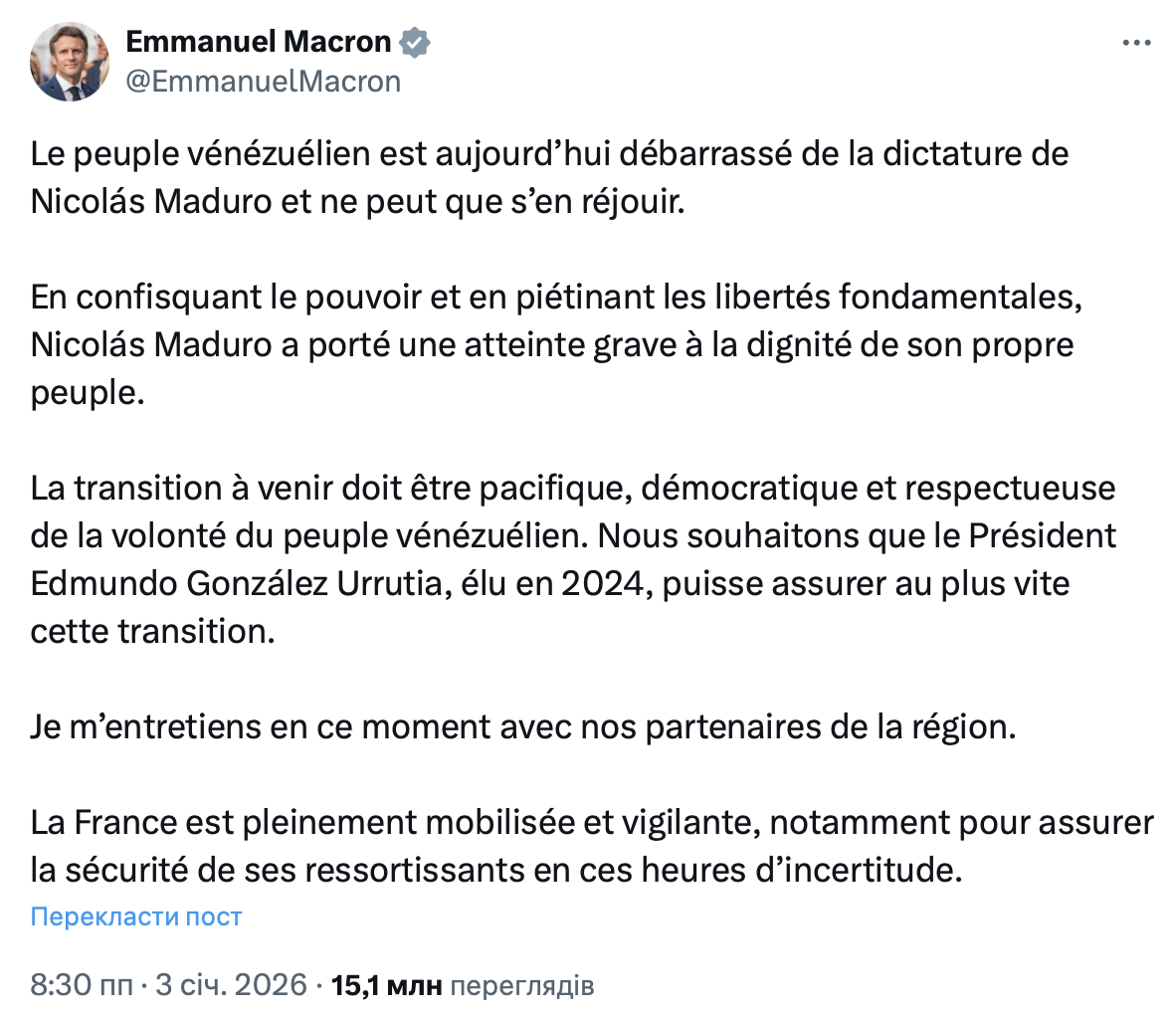
French President Emmanuel Macron quickly congratulated the Venezuelan people, stating that the country now has the opportunity to break free from a long-standing dictatorship. He also stressed that the transfer of power should occur in an orderly manner and with respect for the will of the people. Macron expressed support for the president elected in 2024, Edmundo González Urrutia.
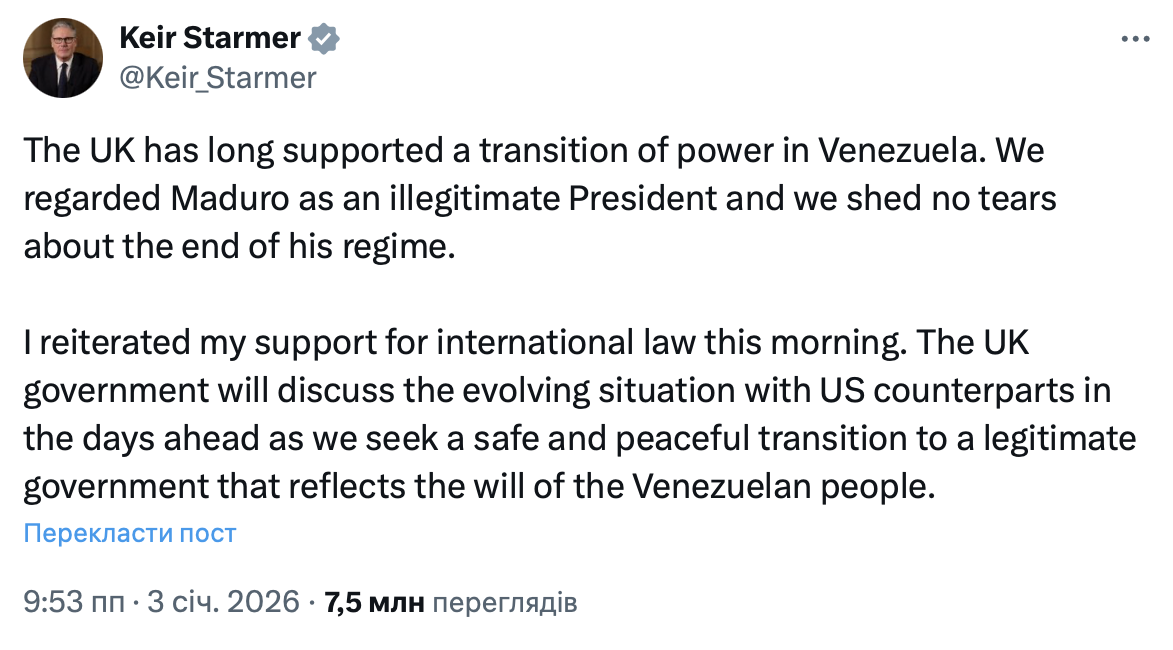
UK Prime Minister Keir Starmer highlighted the importance of adhering to international law to ensure a safe and peaceful transition to a legitimate government that reflects the will of the Venezuelan people.
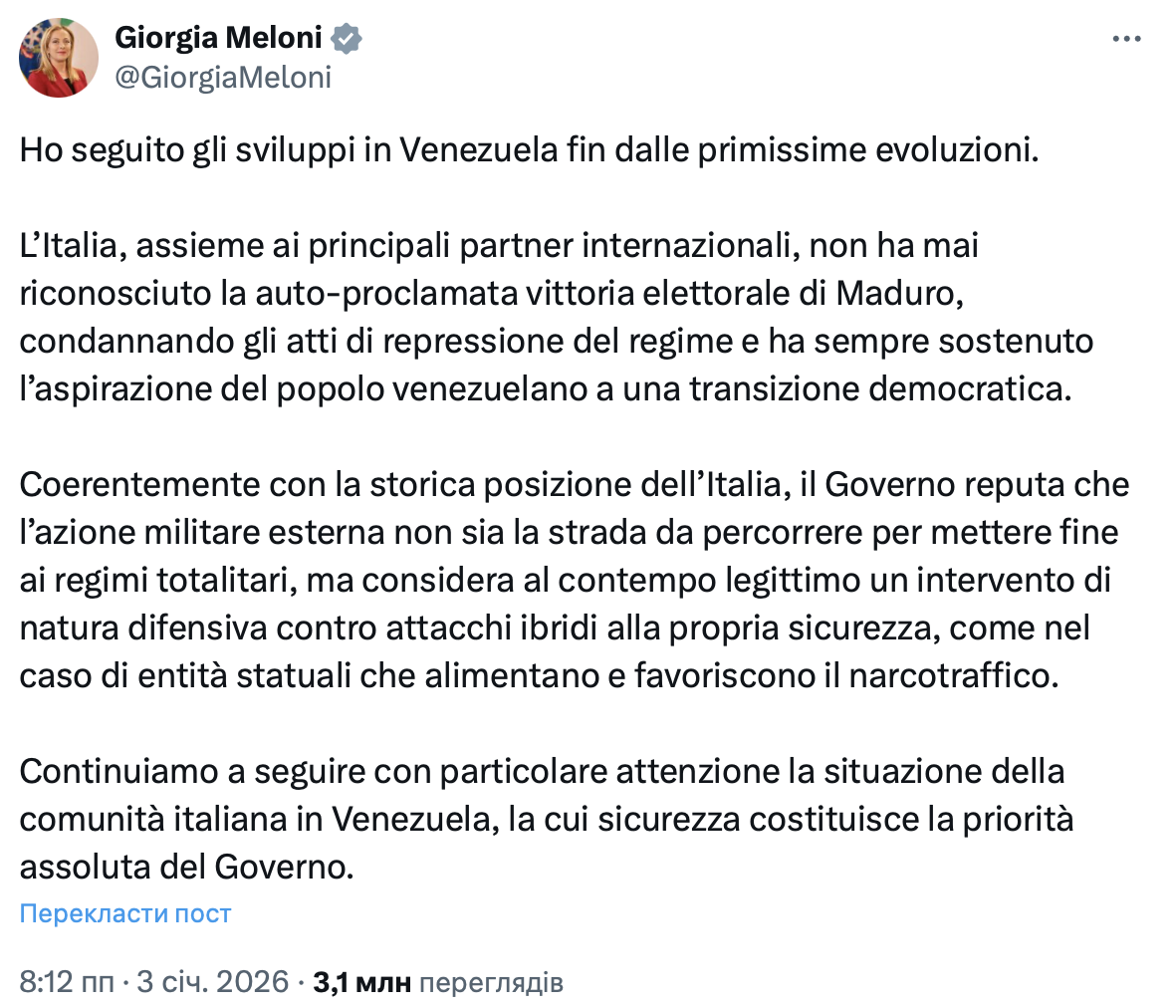
Italian Prime Minister Giorgia Meloni described the U.S. operation as controversial but acknowledged that it could be considered legitimate under the current circumstances.
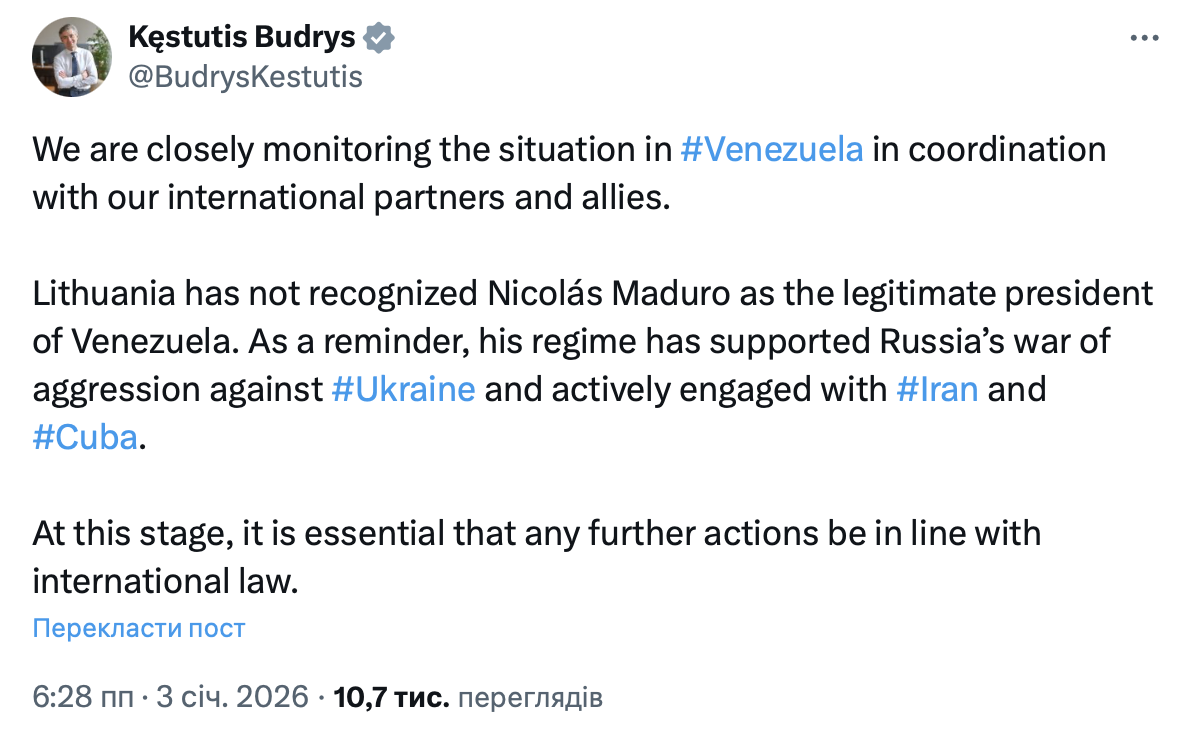
Lithuanian Foreign Minister Kęstutis Budrys noted that Maduro had supported Russia’s aggressive actions against Ukraine and had never been recognized as a legitimate president.
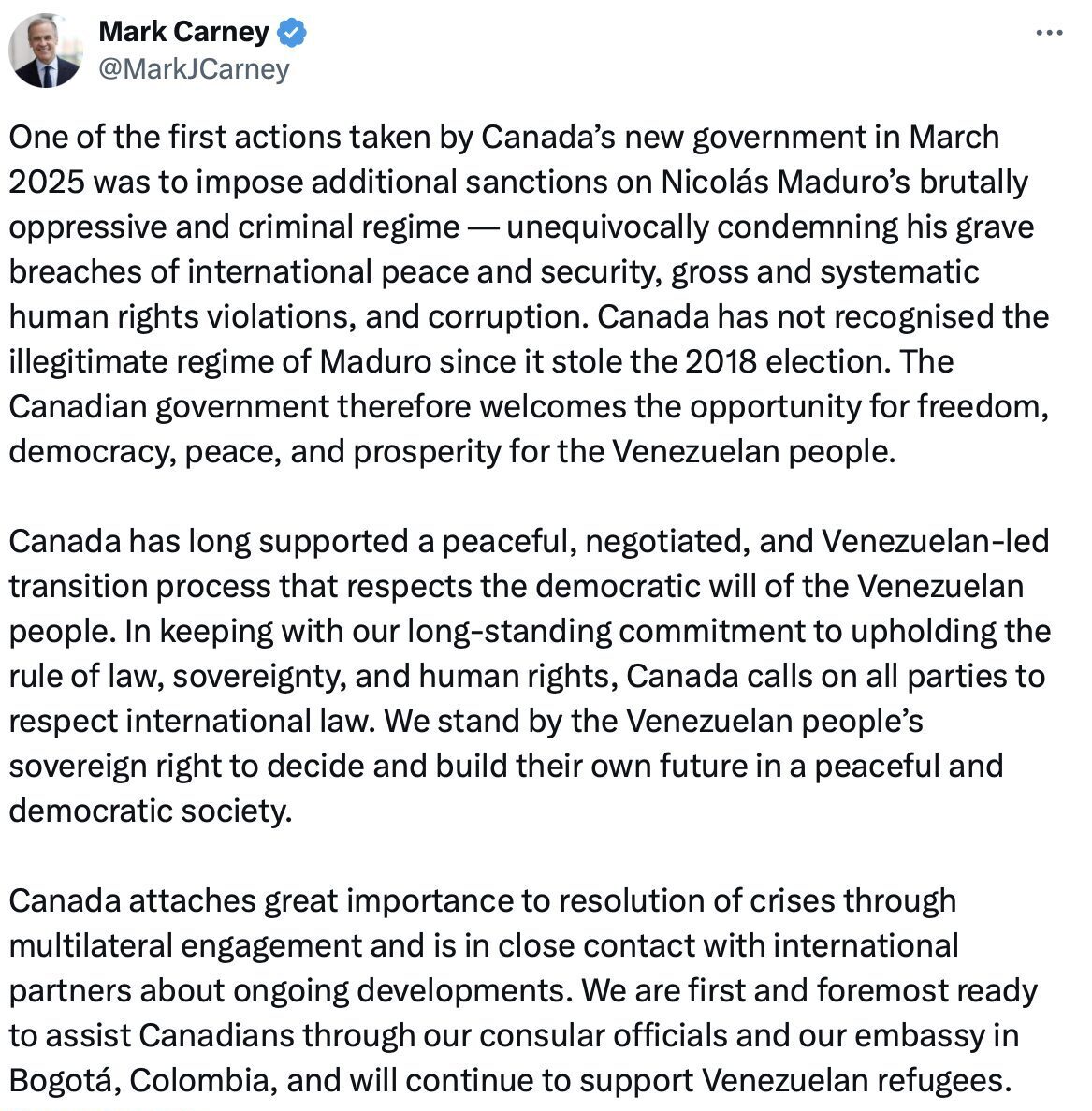
Canadian Prime Minister Mark Carney also welcomed the end of Maduro’s regime and emphasized the importance of respecting the Venezuelan people’s right to determine their own future.
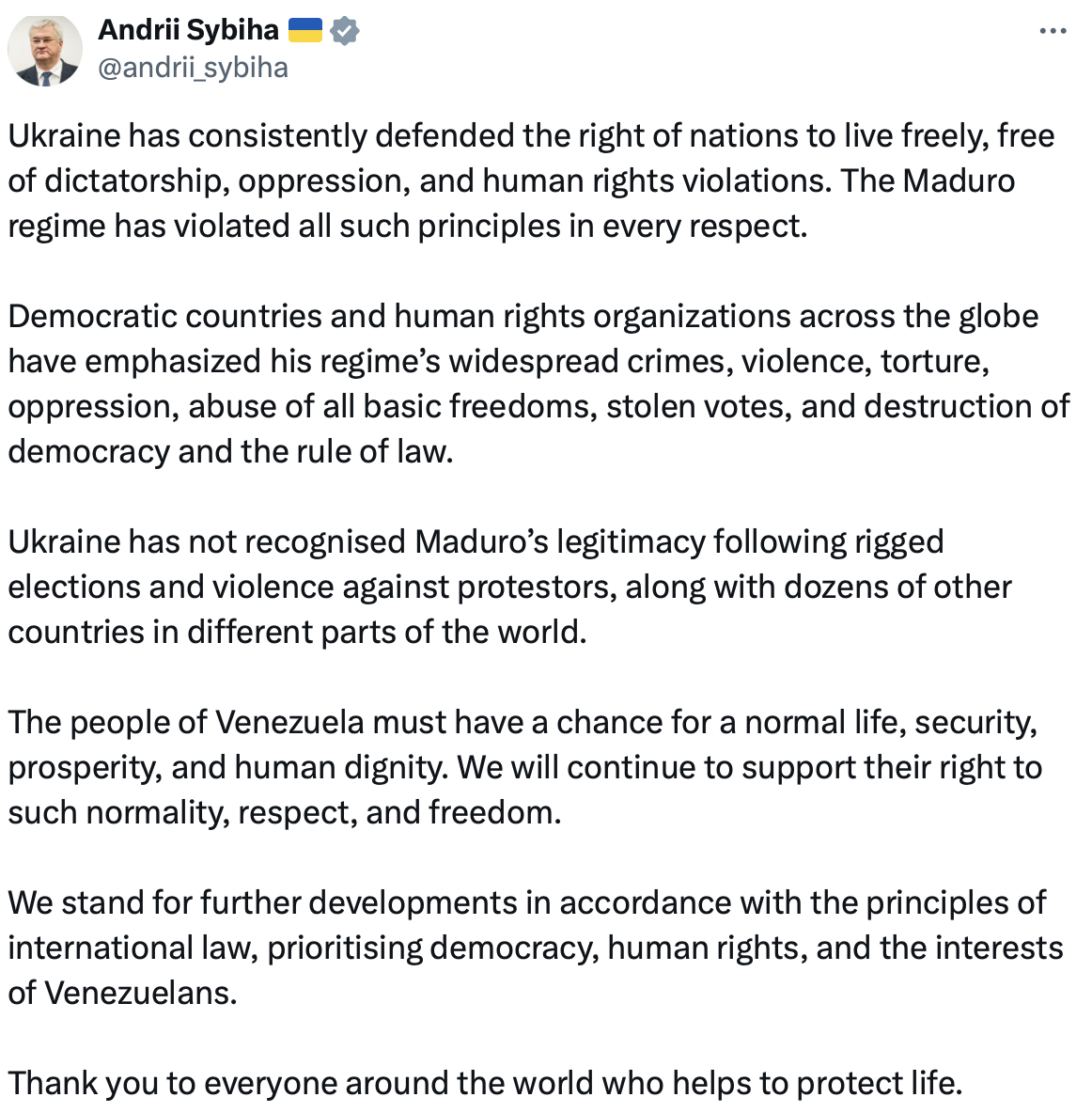
Ukraine’s Foreign Minister Andrii Sybiha expressed support for the Venezuelan people, stressing their right to a safe life and respect for human rights, and highlighted the need for further actions in accordance with international law.
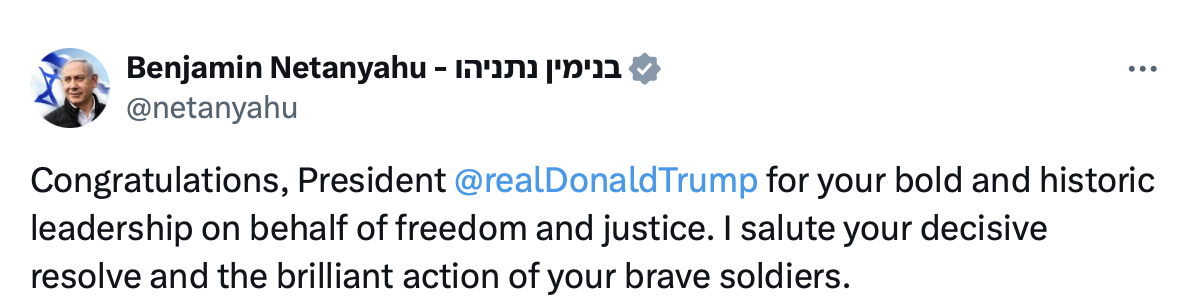
Argentina’s President Javier Milei, who maintains close ties with the Donald Trump administration, was among the first to publicly welcome the U.S. actions, calling them a “move toward freedom” and describing news from Caracas as “excellent for the free world,” Reuters reports. Israeli Prime Minister Benjamin Netanyahu similarly praised Trump’s leadership and the professionalism of the U.S. military.
Criticism and Condemnation
Despite significant support, several countries sharply criticized the U.S. operation against Maduro, with some calling for immediate de-escalation.
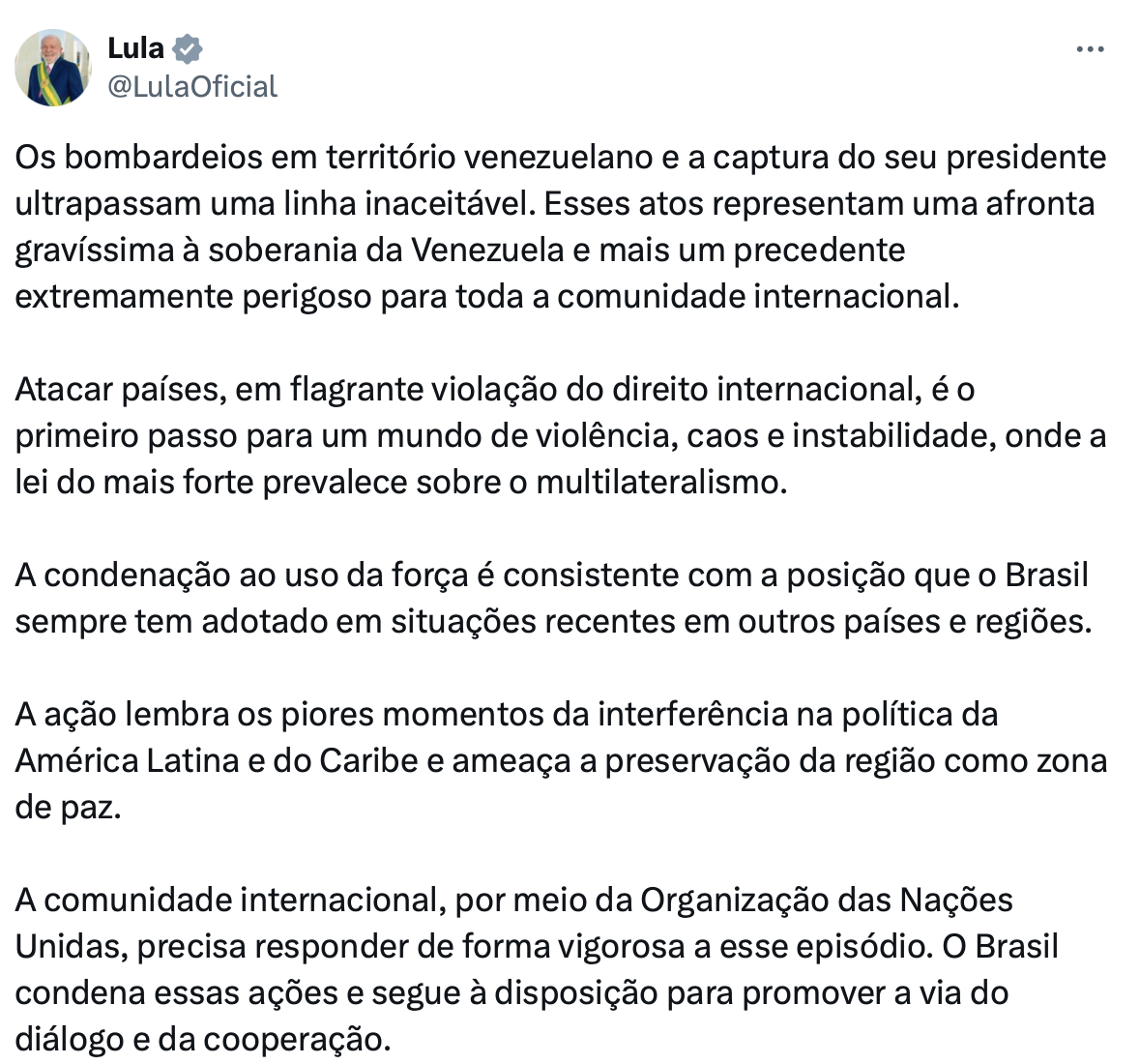
Brazilian President Luiz Inácio Lula da Silva condemned the operation, stating that such actions exceed acceptable limits and revive the worst practices of foreign interference in the region.
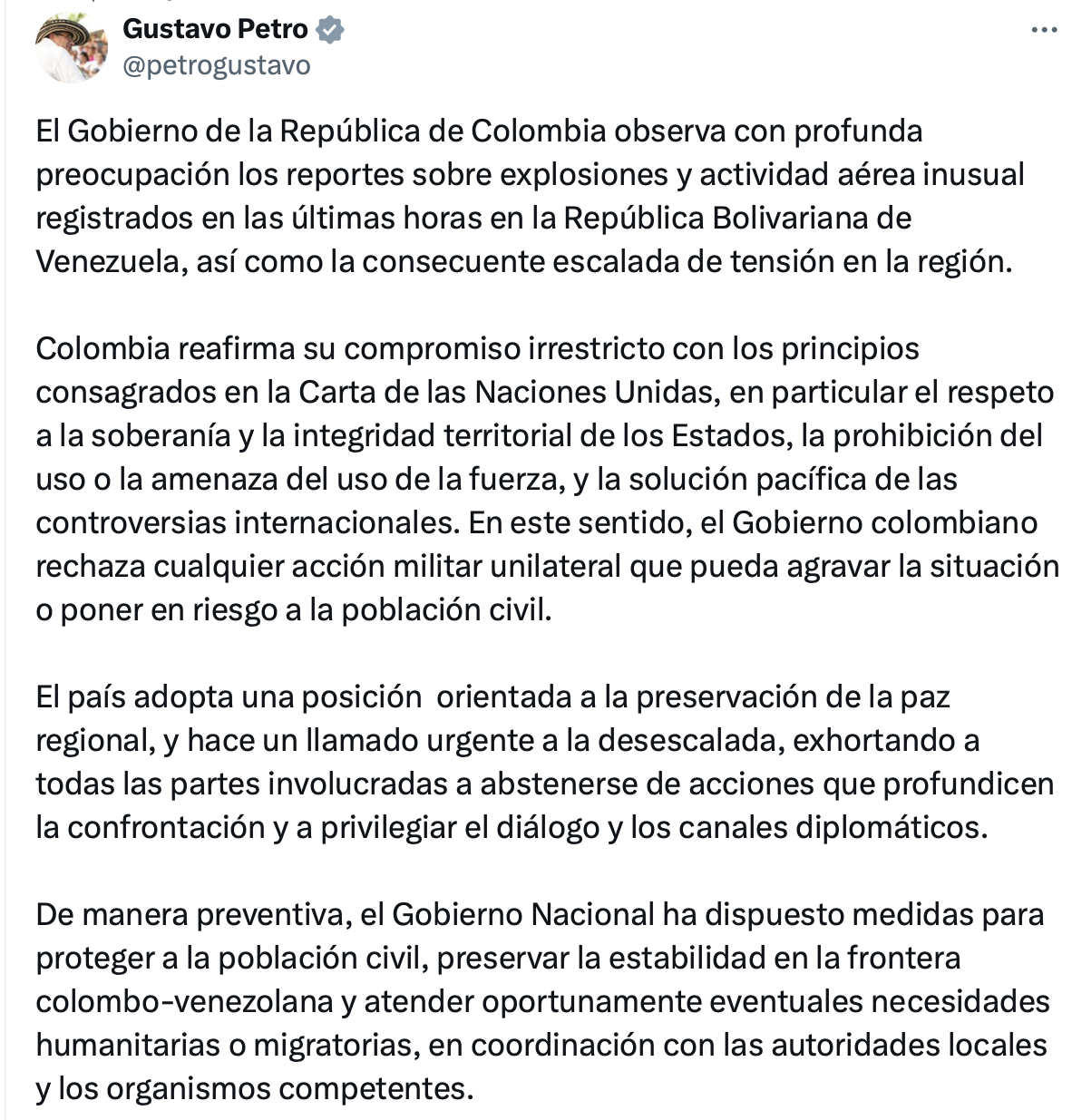
Colombian President Gustavo Petro called for urgent consultations within the Organization of American States and proposed raising the issue at the UN Security Council. Colombian authorities also strengthened security measures along the Venezuelan border and prepared civil protection services in case of mass population displacement.
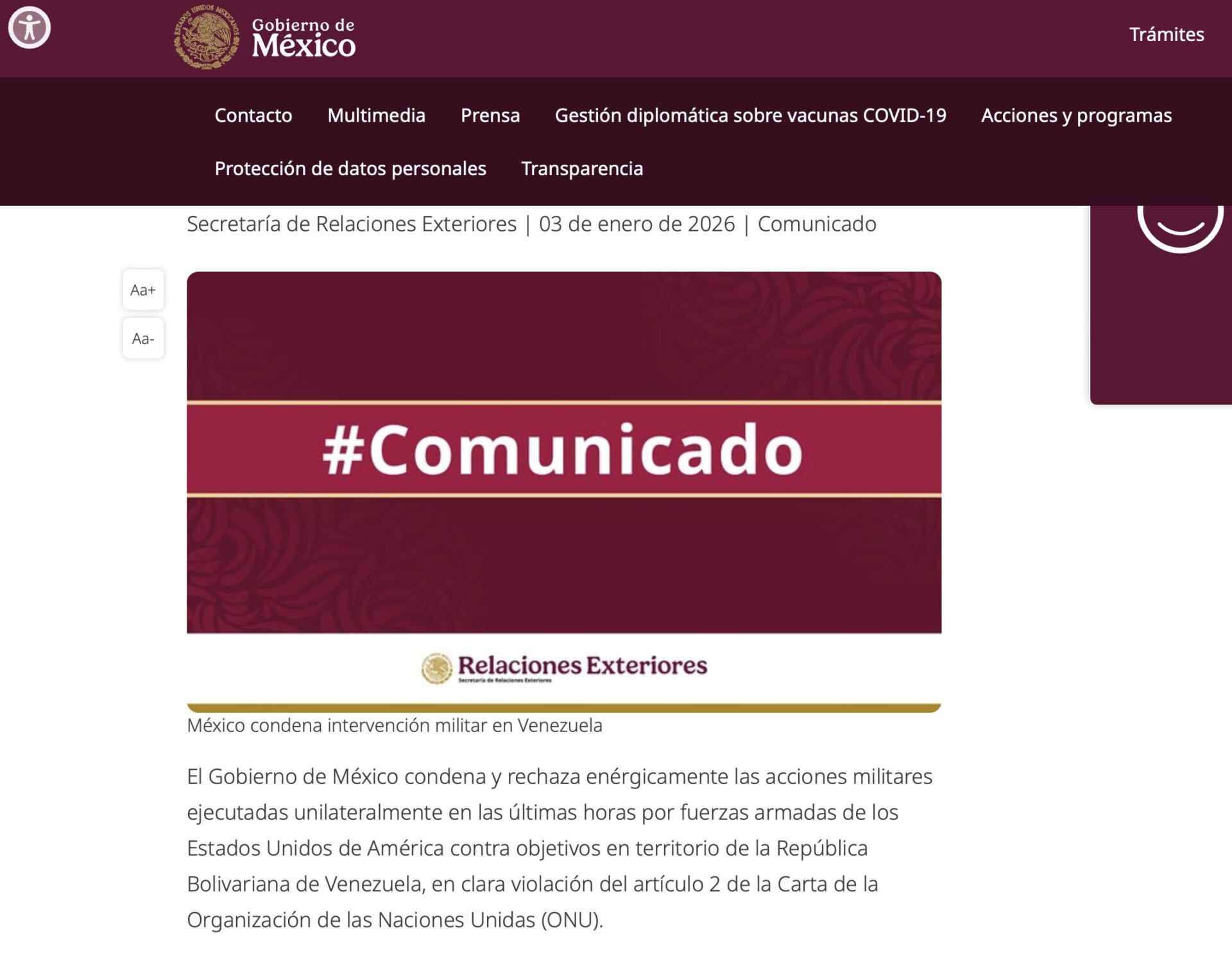
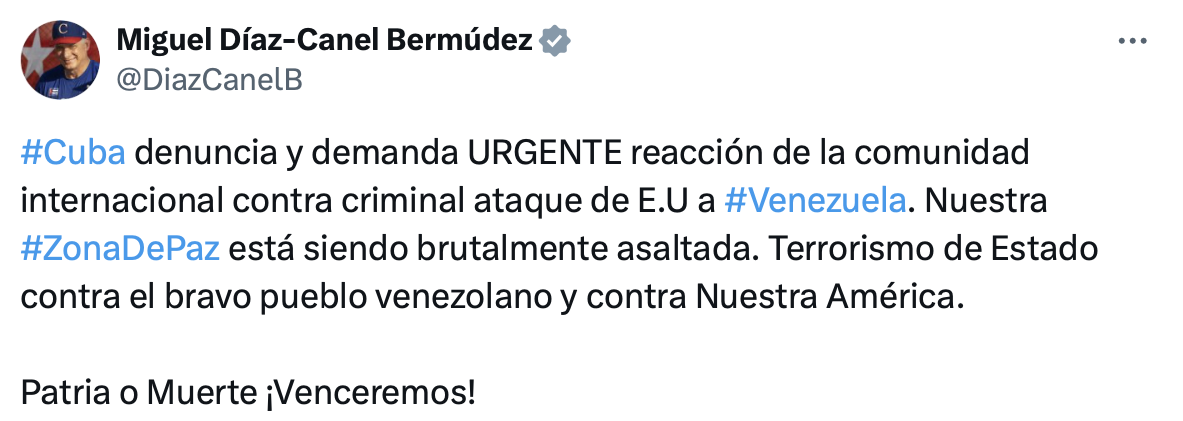
Mexico also strongly criticized the unilateral U.S. action. The Mexican Foreign Ministry rejected the use of military force on Venezuelan territory without international authorization, emphasizing the inadmissibility of such steps.
Additionally, Mexican President Claudia Sheinbaum reminded of the provisions of the UN Charter that prohibit the use of force in international relations.
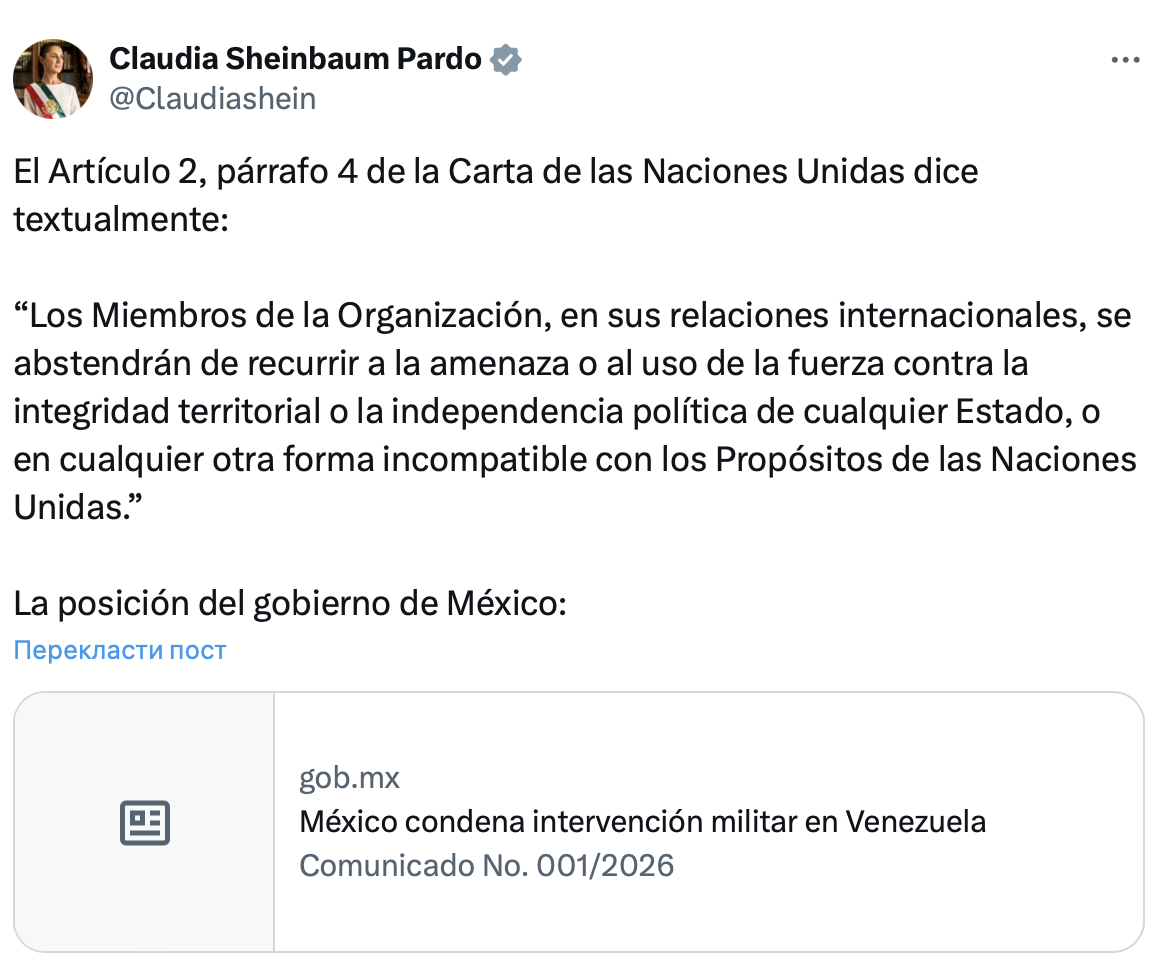
China condemned the U.S. operation as an unacceptable use of force against what it described as a sovereign state and its leadership, stating that it violated international law and threatened stability not only in Latin America but throughout the Caribbean region.
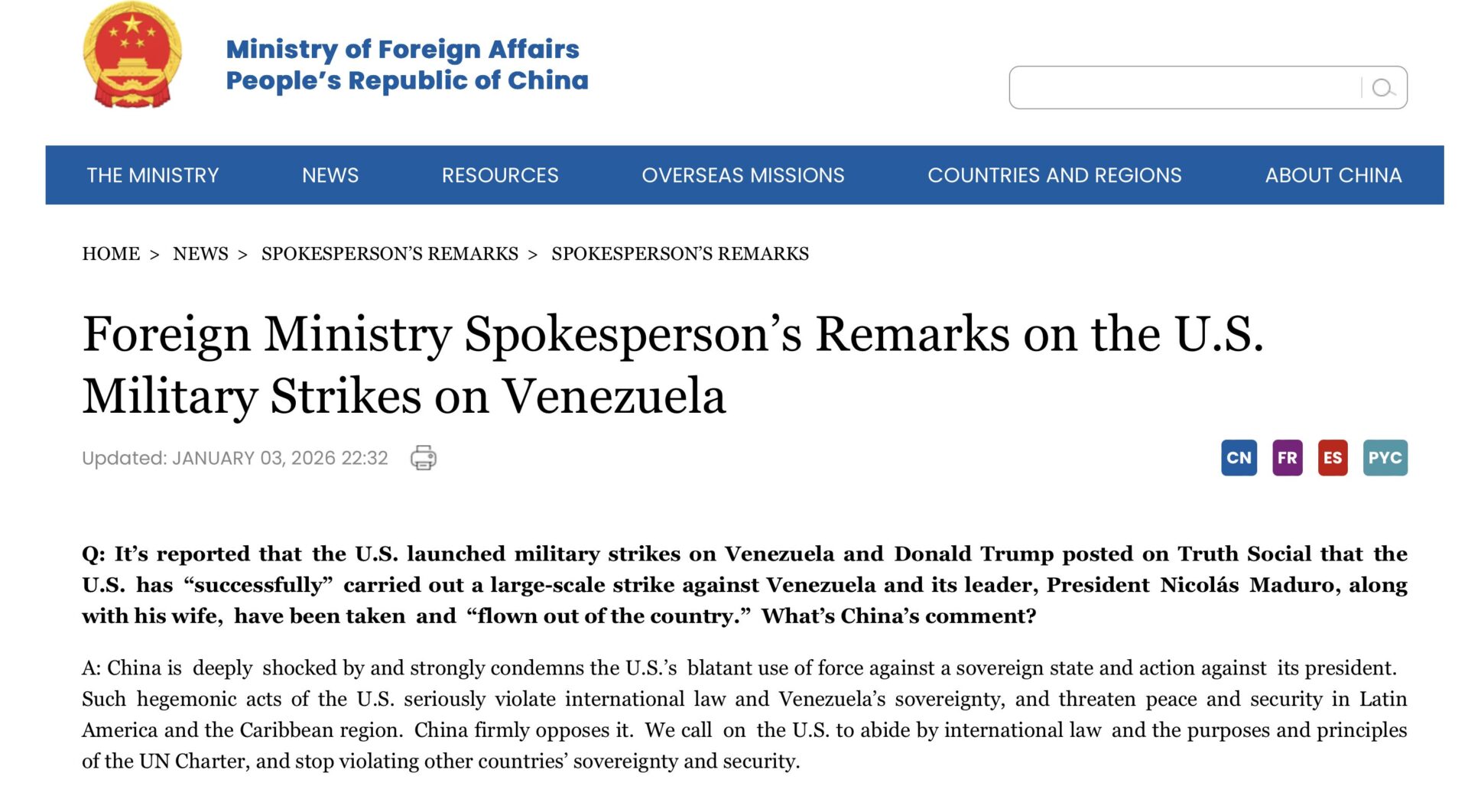
Spain took a more measured approach. Although Madrid has never recognized Maduro’s regime, it called for restraint and diplomatic resolution mechanisms, emphasizing the need to avoid further escalation and expressing readiness to support mediation efforts. Nevertheless, Prime Minister Pedro Sánchez sent a letter to members of his Socialist Party condemning the U.S. action as “a violation of international law in Venezuela, an act we resolutely reject,” according to Reuters.
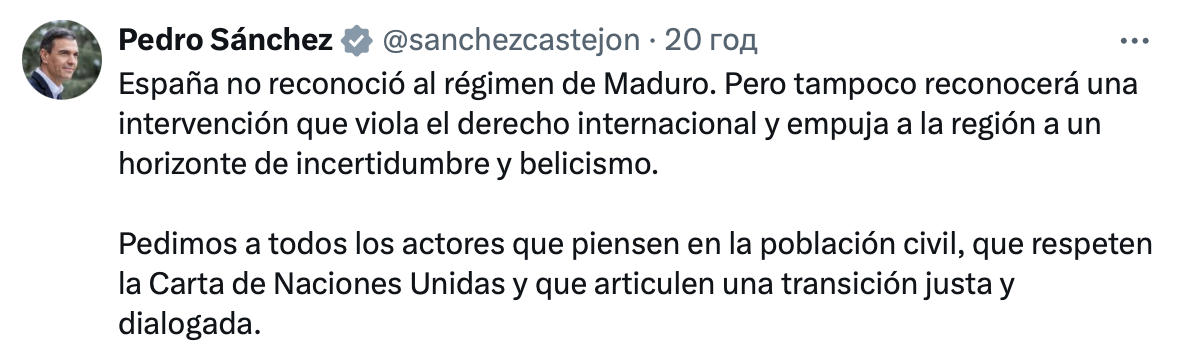
Cuba also reacted strongly. President Miguel Díaz-Canel Bermudez called on the international community to respond immediately, describing the U.S. operation as a blatant and unacceptable interference.
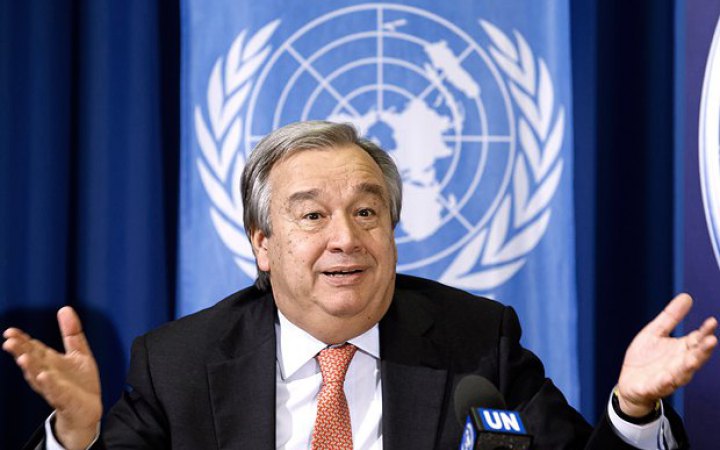
UN Secretary-General António Guterres, through his spokesperson, expressed serious concern over the potential violation of international law, warning that such actions set a dangerous precedent for the global community.
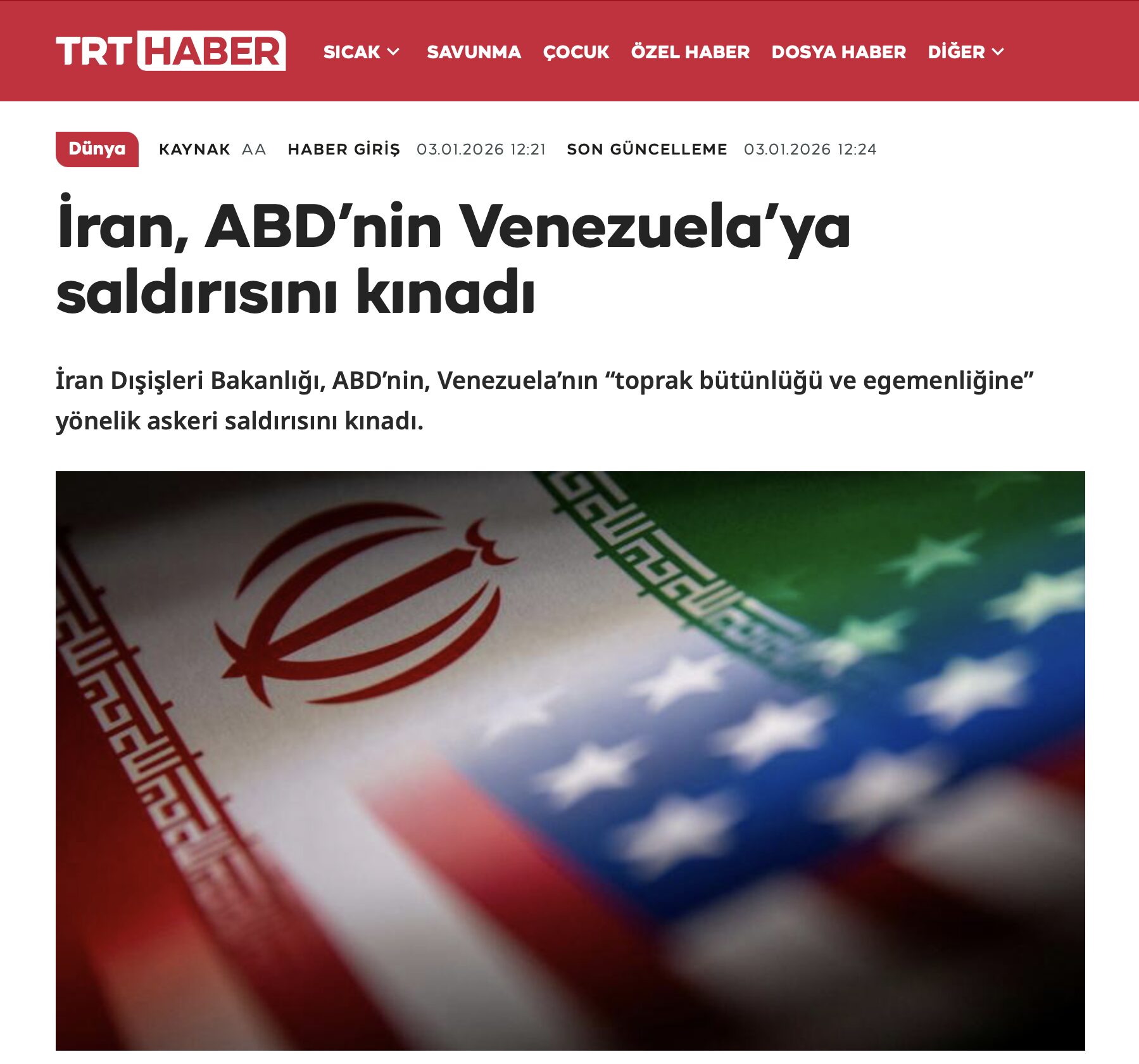
Russia and Belarus issued strong condemnations. Russian Foreign Minister Sergey Lavrov called the operation “an act of armed aggression” and urged disputes to be resolved through dialogue. Iran, led by Supreme Leader Ayatollah Ali Khamenei, also strongly condemned the U.S. actions while expressing support for its allies.
Countries Remaining Neutral
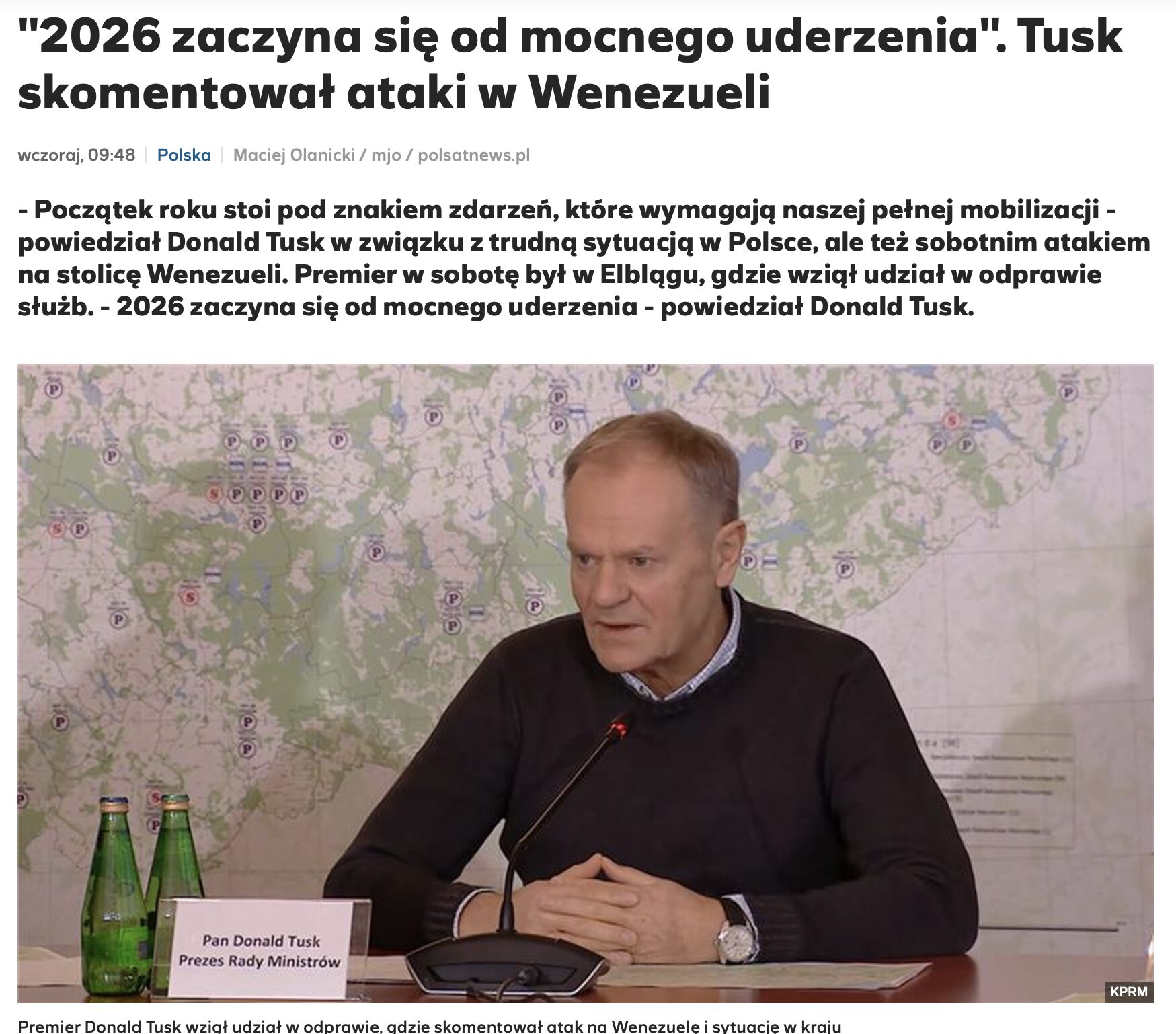
Some countries have so far refrained from taking a definitive stance. For instance, Polish Prime Minister Donald Tusk described the operation as a “powerful start to 2026” without commenting directly on U.S. actions. He noted that 11 Polish citizens continue to reside in Venezuela despite repeated warnings from the foreign ministry.
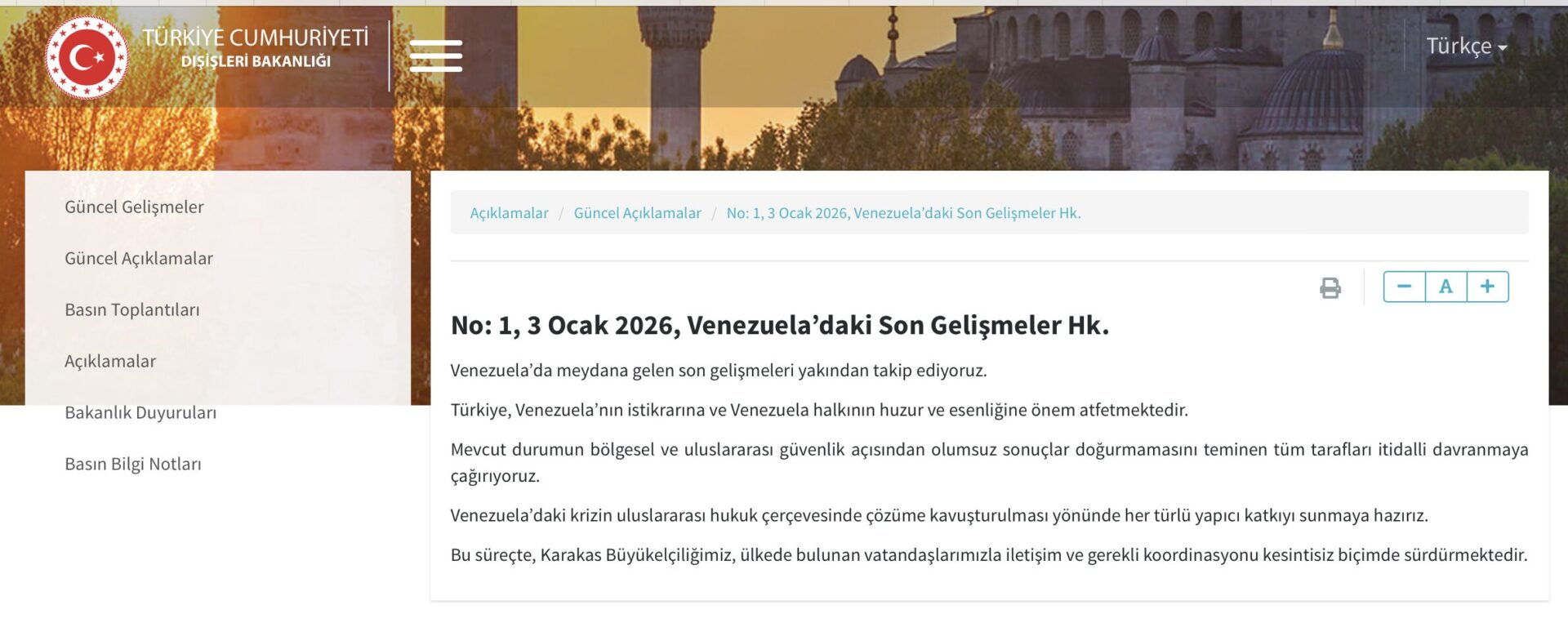
Turkey, for its part, urged all sides to exercise restraint, stressing the importance of maintaining stability in Venezuela and preventing negative regional and international consequences. Ankara also reaffirmed its readiness to support the resolution of the crisis within the framework of international law.
Domestic Reaction in the U.S.
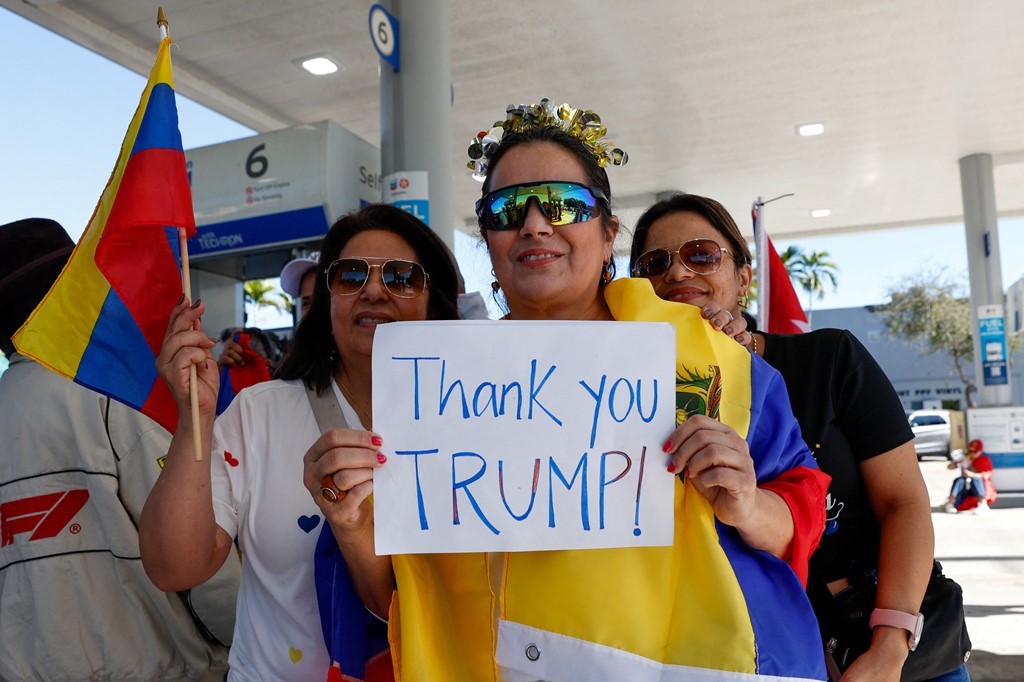
News of Maduro’s arrest triggered contrasting reactions within the United States. In South Florida, home to one of the largest Venezuelan diaspora communities, hundreds took to the streets waving national flags, celebrating the change in leadership.
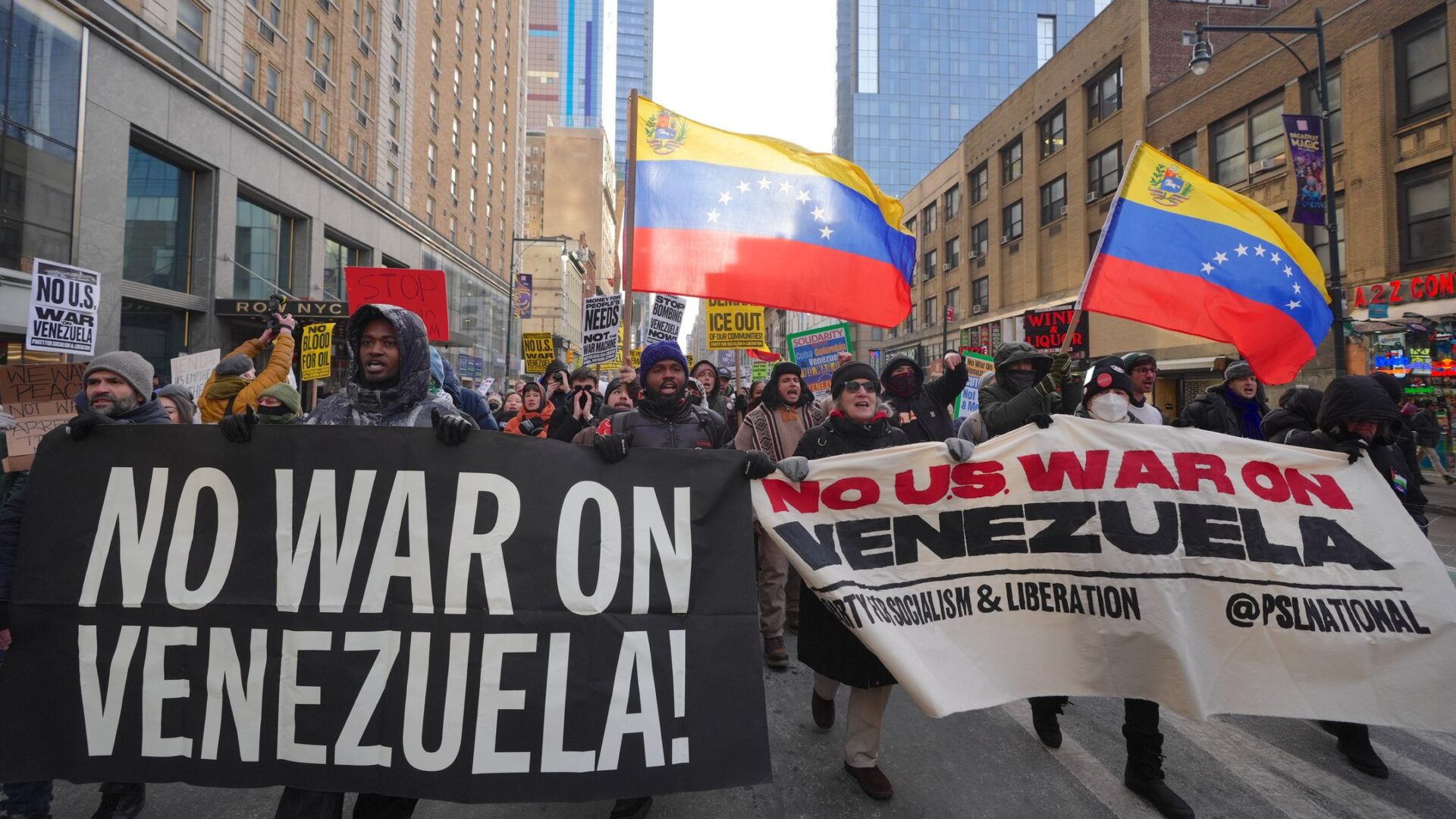
At the same time, protests were held in Washington, D.C., and New York City against the U.S. military action and the current administration, with demonstrators calling for the abandonment of a forceful approach and respect for Venezuelan sovereignty.
Background
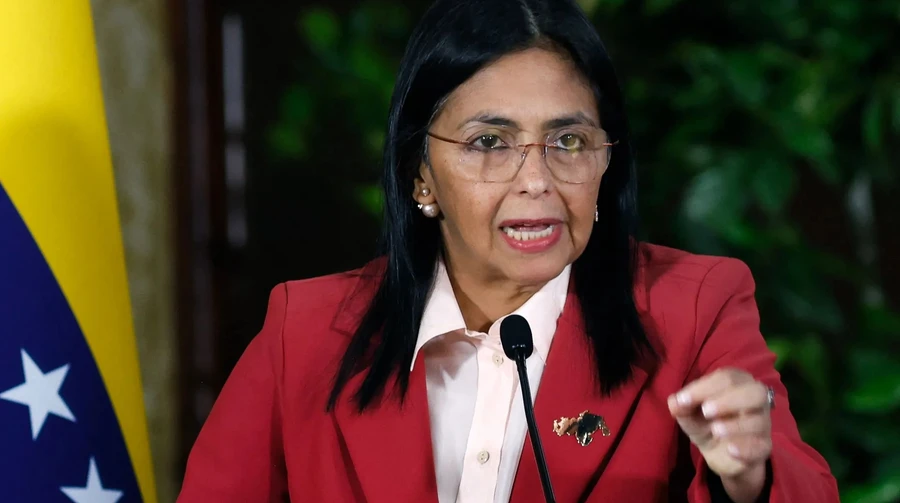
On the morning of January 3, U.S. Delta Force special units carried out an operation in Caracas, detaining Maduro and his wife Cilia Flores. According to Reuters, Venezuela’s Supreme Court temporarily transferred presidential powers to Vice President Delcy Rodríguez during Maduro’s absence. Earlier sources cited by the publication reported that Rodríguez was in Russia. At the same time, the Russian Ministry of Foreign Affairs quickly denied the information, stating that it was fake.
Conclusions
The U.S. operation has effectively polarized the international community. Western countries generally view Maduro’s detention as an opportunity to end authoritarian rule. They see it as a chance to begin a democratic transition. Meanwhile, Russia, Belarus, Iran, and several Global South nations consider U.S. actions a violation of sovereignty and international law.
Despite the high-profile operation, Venezuela’s political future remains uncertain. Domestic institutions of the regime continue to function, and no clear plan for next steps has been announced. The country’s trajectory will depend on U.S. policy, regional reactions, and the international community’s ability to facilitate a peaceful and legitimate resolution to the crisis.