

According to Ukraine news against the backdrop of the aggravation of the situation on the front and on the eve of Donald Trump’s return to the post of US President, talks about peace negotiations between Russia and Ukraine are increasingly appearing.
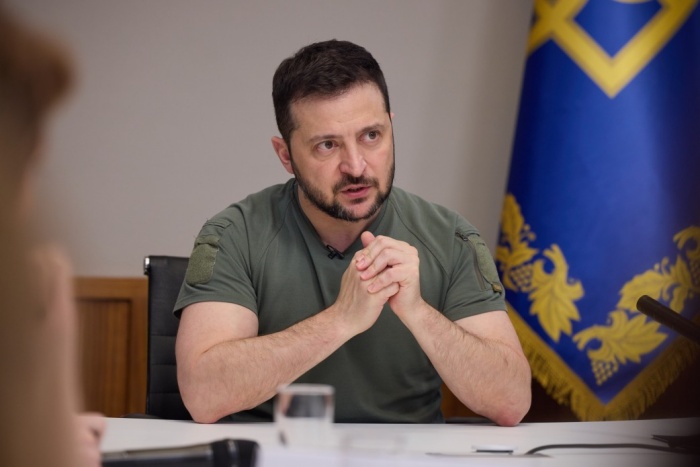
According to war in Ukraine news, if at the beginning of the full-scale war, Ukraine refused any negotiations with V. Putin (in particular, Zelenskyy signed a decision on the impossibility of negotiations with the Russian president), then in recent months Volodymyr Zelenskyy has increasingly said that the war can be ended with a diplomatic settlement.
However, to stop the war in Ukraine Kyiv agrees to negotiations only on the condition that the allies put Ukraine in a favorable negotiating position in Ukraine war now. Ukraine also doesn`t agree to give up its membership in NATO and its occupied territories. However, the British newspaper Financial Times writes that Kyiv agrees to refuse to return the territories by military means in exchange for joining NATO and security guarantees.
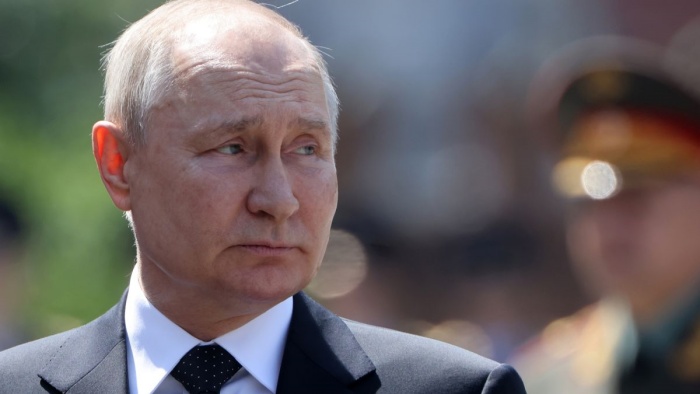
At the same time, Putin puts forward the following conditions for the start of peace talks in Ukraine war situation: the withdrawal of Ukrainian troops from the occupied territories and their regional centers (i.e. Zaporizhia and Kherson), refusal to join NATO, recognition of Crimea as Russian in international treaties, and lifting sanctions on Russia.
What Ukraine’s allies say about the peace talks and what foreign media write about them in war Russia – Ukraine – The Ukrainian Review analyzes further.
What Ukraine’s allies say about the peace talks
As BBC journalists note, the EU’s formal position is as follows: only Kyiv will decide how and when to hold talks with Moscow, while Europe will support Ukraine with money, weapons and sanctions pressure on Russia.
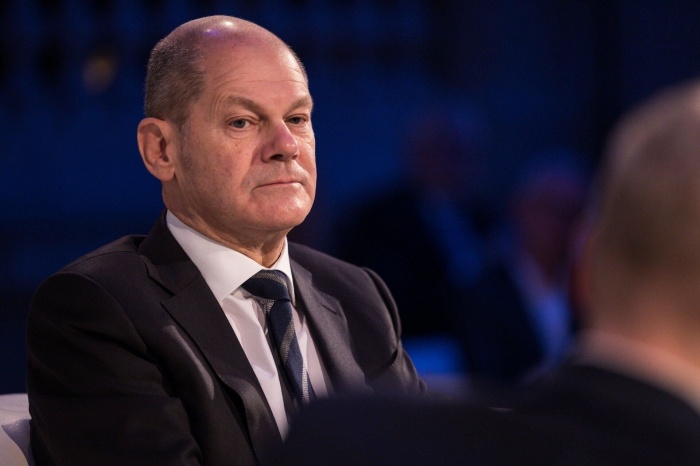
The most conservative position is taken by Germany: Chancellor Olaf Scholz opposes Ukraine’s accession to NATO due to fears of a direct conflict between the alliance and Russia. Moreover, in mid-November, Scholz spoke to Putin on the phone for the first time in 2 years.
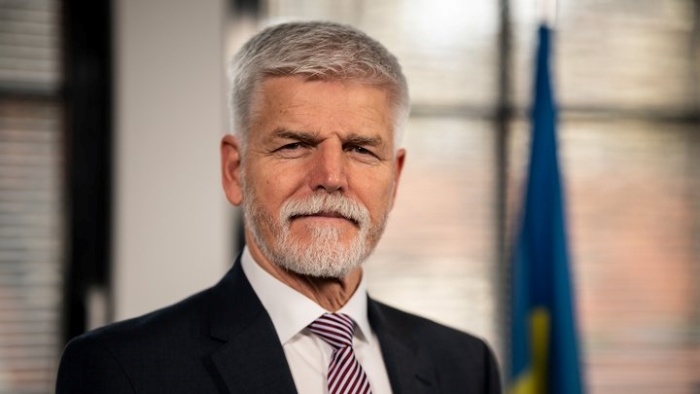
Czech President Petr Pavel believes that achieving a “100% just peace” for Ukraine is hardly possible: Kyiv must agree that some territories of Ukraine may remain under Russian control, at least “temporarily”. He also called on world powers, in particular the United States, China and the European Union, to unite in order to push Ukraine and Russia to peace talks.
Paris supports Zelenskyy’s victory plan and is ready to continue to help Ukraine. Britain also publicly supports Kyiv’s reluctance to discuss giving up its territories and promises to continue aid even if the US reduces it.
Moreover, France and Britain are discussing the deployment of their troops in Ukraine as a security guarantee. However, these talks are not being held at the NATO level.
What the world media is writing about the peace talks
American media
The New York Times has published several articles since the summer of 2024 on the issue of peace in Ukraine and peace talks.
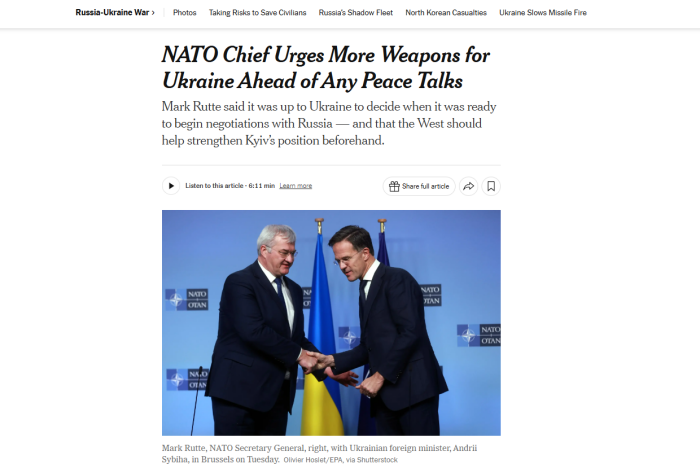
For example, this article states that NATO chief Mark Rutte is calling for more weapons for Ukraine before any peace talks. However, Ukraine itself decides when it is ready to start talks with Russia.
In this article, journalists write, citing a Ukrainian official, that amid the constant loss of territory in potential peace talks, the primary issue will be security guarantees for Ukraine, not territorial issues.
At the same time, the publication emphasizes in the same article that the ceasefires in 2014 and 2015 did not prevent the continuation of hostilities, which lasted for 8 years before the full-scale invasion. The journalists also note that Putin is trying to portray Ukraine as an irreconcilable party, while at the same time trying to impose conditions that are beneficial only to him.
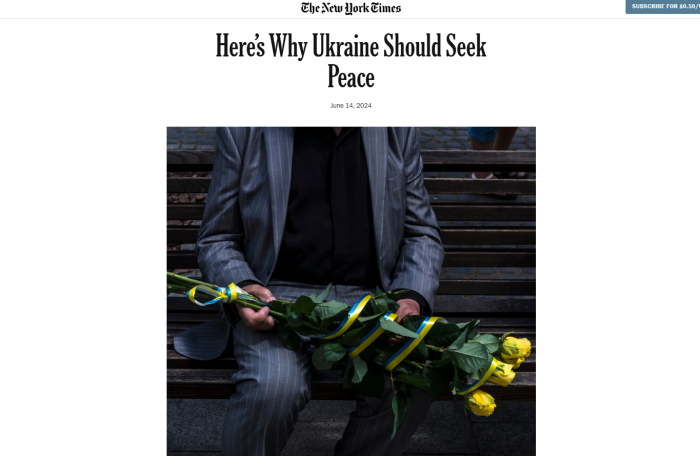
In this article, The New York Times writes that “Ukraine will not be able to regain control over all the territory occupied by Russia. Sooner or later, both sides will have to agree to a ceasefire and come to a peace agreement”. The journalists note that Russia’s concessions do not mean a temporary appeasement of Putin: “the cessation of the war will allow Ukraine to rearm and integrate into Europe and the West.”
In this article, the publication quotes Zelenskyy that Ukraine needs to join NATO and analyzes this decision. In particular, the journalists note that “if NATO had begun accepting Ukraine and Georgia into the alliance in 2008, Russia might not have invaded these two countries.”
Russia may be unhappy with Ukraine’s membership in NATO. But it is not about pleasing Russia. It is about lasting peace and security, the article says.
British media
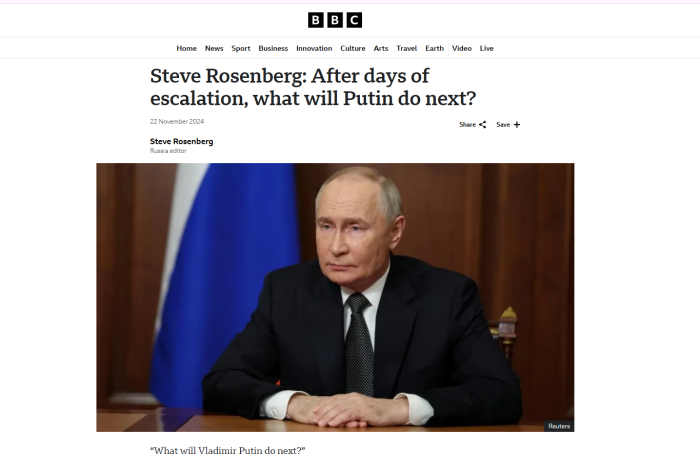
The British media BBC in this article analyzes that Putin is deliberately escalating the war to obtain peace on his terms: “Don’t expect the “Putinmobile” to suddenly slow down or de-escalate in the face of long-range missile strikes on Russia.”
The article quotes a former adviser to President-elect Donald Trump as saying that “the new administration will focus on achieving peace in Ukraine, not on allowing the country to return territories occupied by Russia.”
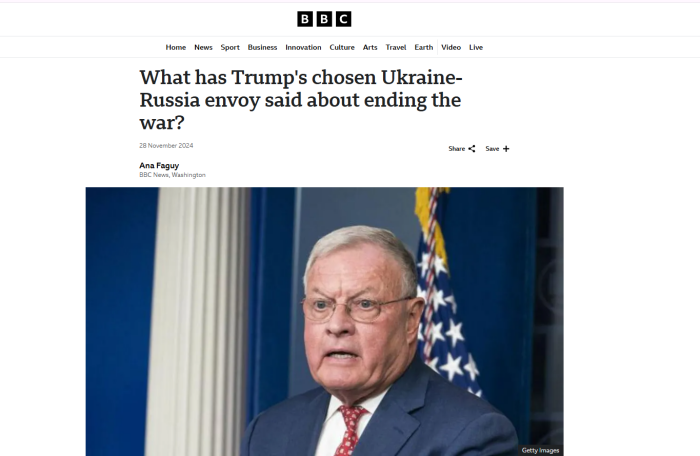
This article analyzes the position of the US special representative for Ukraine and Russia, Keith Kellogg. He advocates tough negotiations with Russia and Ukraine to end the war:
Ukraine will receive further aid from the US only if Kyiv participates in peace talks with Moscow, but also suggested that if Moscow refuses to participate, Washington will provide Kyiv with more aid.
This article quotes Zelenskyy as saying that he “proposed to take the parts of Ukraine under his control “under the NATO umbrella” to try to stop the “hot phase” of the war.
French media
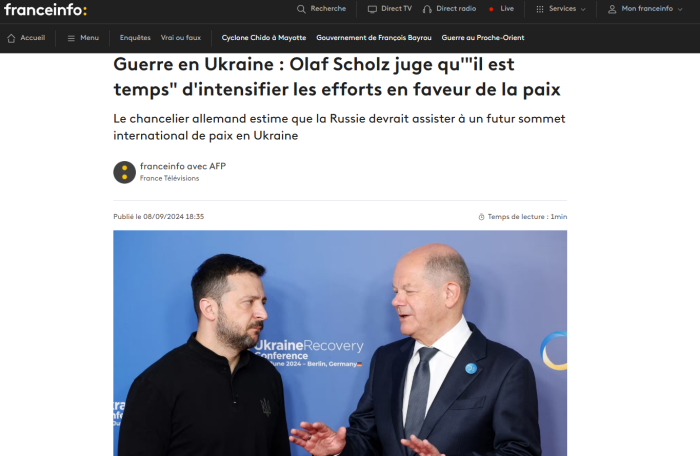
One of the most visited French news sites, Francetvinfo, quotes German Chancellor Olaf Scholz as saying that “the time has come” to intensify efforts for peace.
In this article, the media writes that “the Ukrainian president opens the way to peace talks”. However, negotiations are only possible if Ukraine is not alone against Russia.
This article states that Zelenskyy has again called for “Lasting Peace,” and that information about the organization of peace talks has increased, especially after the election of Donald Trump:
The US president promised to seek a quick agreement to end the conflict as soon as he takes office on January 20.
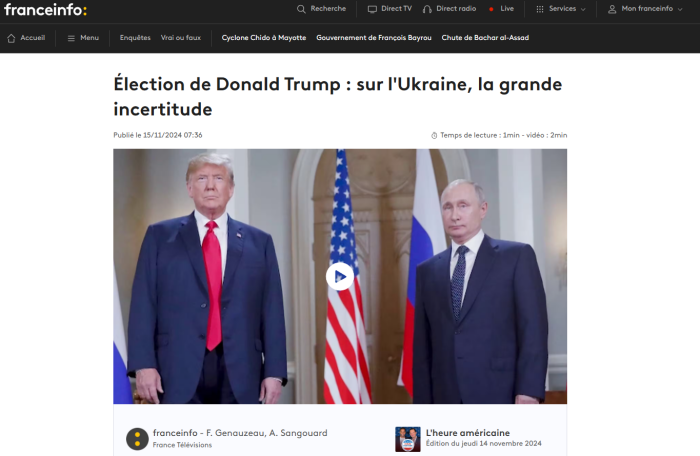
This article states that Donald Trump “does not want to finance Ukrainian military efforts.” But at the same time, he can put pressure on Putin by allowing the Ukrainian army to use American long-range missiles. This should equalize the balance of power between Ukraine and Russia before the talks.
In this article, journalists quote French President Emmanuel Macron as saying that it is necessary to “find a way” to peace in Ukraine that “takes into account” the interests of Kyiv and the Europeans.
Chinese media
Chinese media outlet Xinhua publishes news about peace talks, but only from the Russian side. No mention of the position of Ukraine, the EU or the US.
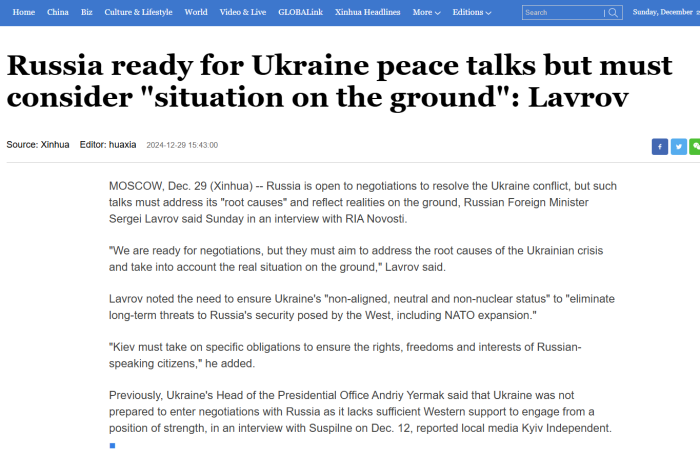
For example, in this news item, journalists quote Russian Foreign Minister Sergei Lavrov that “Russia is open to negotiations on the settlement of the Ukrainian conflict, but such negotiations should eliminate its “root causes” and reflect the real circumstances”.
This news item refers to a conversation between the heads of the Russian and French defense ministries, that Russia is ready for peace talks: “The starting positions can be the Istanbul Peace Initiative. Holding a meeting in Geneva without Russia’s participation is pointless”.
There was no more news about peace negotiations in 2024 in this media.
Serbian media
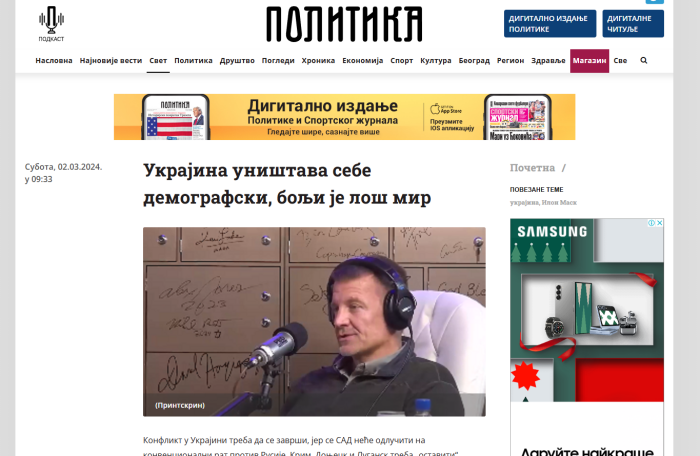
The Serbian media outlet Politika writes that “Ukraine is demographically destroying itself, a bad peace is better”:
The conflict in Ukraine must be stopped because the US will not dare to wage a conventional war against Russia. Crimea, Donetsk and Luhansk must be “left” to Moscow.
Another article states that “Ukraine is blackmailing countries that advocate peace.” The point is that “Ukraine is blackmailing Hungary and Slovakia by cutting off Russian oil supplies through Lukoil.”
In this article, journalists quote a Trump advisor, who says “Ukraine should focus on peace, not on territories and victory.”
Another publication analyzes “whether it is time for Ukraine to exchange part of its territory for peace.” The journalists suggest that Ukraine should consider territorial concessions to conclude a peace agreement with Russia due to the position of the army at the front.
***
Discussions about the possibility of peace talks between Ukraine and Russia reflect the fatigue of all sides from the war and the desire to stop hostilities.
However, the conditions put forward by Russia are contrary to Ukraine’s national interests and international principles. Statements by international leaders show that support for Ukraine remains high. However, differences in approaches to peace regulation create additional challenges.
Media analysis has shown that discussions about peace talks between Ukraine and Russia in the international information field are ambiguous. Western media mainly focuses on supporting Ukraine and emphasizing the need for just peace. At the same time, pro-Russian media continue to spread narratives that justify aggression and offer Russian peace terms.
The media also reflect the fatigue of the international community from the protracted war and the demand for diplomatic solutions, even if they are difficult.
Anya Ostymchuk
Photo
- V.Zelenskyy / Office of the President of Ukraine
- V.Putin / Getty Images
- Olaf Scholz / Varta1
- Petr Pavel / Suspilne
- Screenshot of The New York Times
- Screenshot of The New York Times
- Screenshot of BBC
- Screenshot of BBC
- Screenshot of Francetvinfo
- Screenshot of Francetvinfo
- Screenshot of Xinhua
- Screenshot of Политика