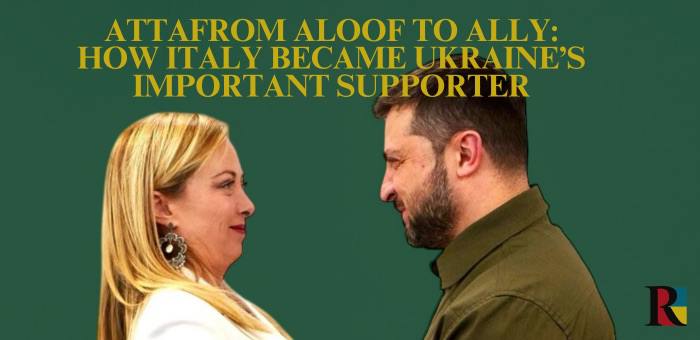


Italy is preparing its 12th military aid package for Ukraine, which will focus on munitions and SAMP/T air defense missiles. Moreover, the country has agreed to increase defense spending to required by NATO 5% of GDP by 2035.
At the same time, according to La Stampa, Donald Trump and Mark Rutte are pressuring Prime Minister Giorgia Meloni to join the PURL arms procurement program for Ukraine, but Rome initially declined.
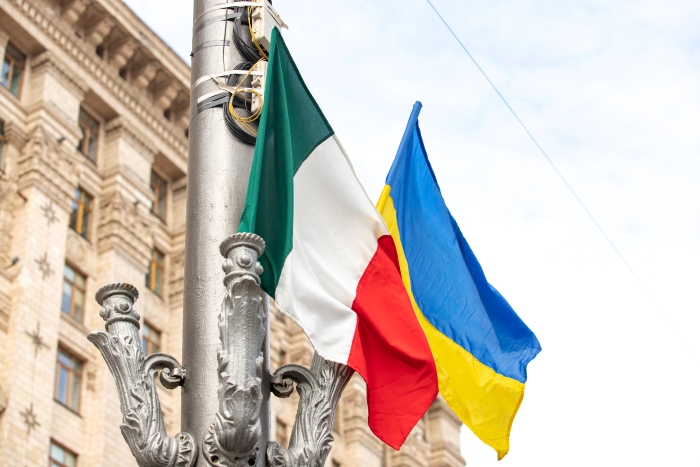
Italy’s shift from a rather indifferent stance to a fully supportive attitude toward Ukraine after the start of Russia’s full-scale invasion was remarkably swift. Initially, Rome tried to balance its traditional diplomatic ties with Moscow. However, since the spring of 2022, there has been a clear and consistent turnaround — Italy has moved toward systematic, comprehensive support for Ukraine.
Military and Economic Assistance
According to the Kiel Institute’s Ukraine Support Tracker, Italy’s total military aid amounts to €1.7 billion, while humanitarian aid totals €570 million. Italy has supplied: SAMP/T air defense systems (Franco-Italian design) to protect against cruise and ballistic missiles; M109L 155 mm self-propelled howitzers; Storm Shadow cruise missiles; M113 armored personnel carriers (about 400 units, according to reports); satellite communication systems, as well as other wheeled and tracked vehicles etc.
Additionally, Italy has organized a series of specialized training programs for the Ukrainian Armed Forces on a bilateral basis. Italy also allocated over €25.5 million to support UN and International Red Cross humanitarian appeals.
Since the beginning of the full-scale invasion, Italy has provided over €320 million in direct budget support to Ukraine, being one of the first countries to do so. As of early 2024, approximately 180,000 Ukrainian refugees held temporary protection status in Italy.
Cultural Cooperation and Reconstruction
A symbolic area of cooperation concerns the restoration of Ukraine’s cultural and historical heritage, particularly in Odesa.
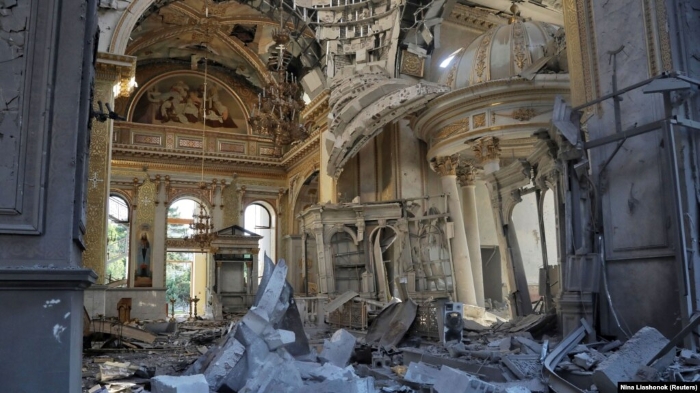
In July 2023, a massive Russian missile strike damaged the Transfiguration Cathedral, one of the city’s main architectural landmarks. In October 2023, it was confirmed that Italian business and cultural institutions — including organizations from Milan and Rome — would join the reconstruction efforts in Odesa. The Ukrainian Ministry of Culture announced that Italy was developing a three-year restoration plan for Odesa’s historic center, worth €45 million. In early 2024, Italy and UNESCO signed an agreement to provide €500,000 for immediate roof repairs and structural reinforcement.
Historically, Italians were among those who helped build Odesa, engaging later in trade and enriching the city’s cultural identity.
Conclusion
Although the Italian government has never published a full list of the weapons supplied to Ukraine, numerous official and media sources confirm that the scope of assistance is substantial.
While Italy still hesitates to take some major steps — such as fully joining the PURL initiative — due to domestic economic constraints, its overall trajectory is clear: Rome stands firmly with Kyiv and is ready to do more. Ukraine and Italy are rediscovering their historic connection. Once overshadowed by political caution, this partnership now grows stronger through shared values.