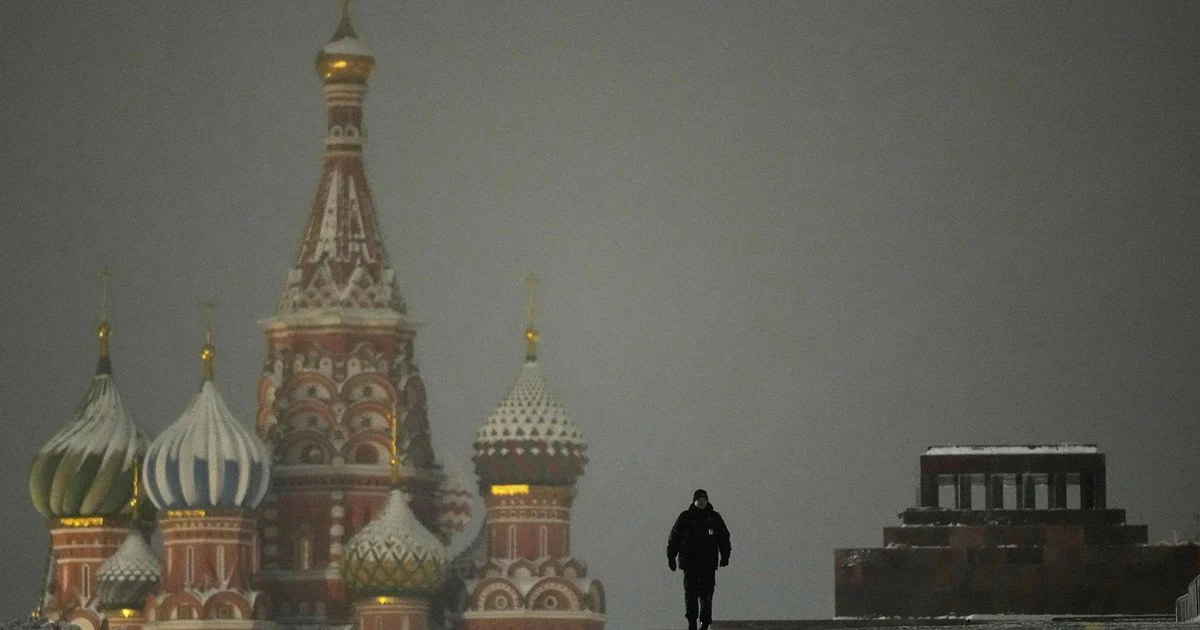
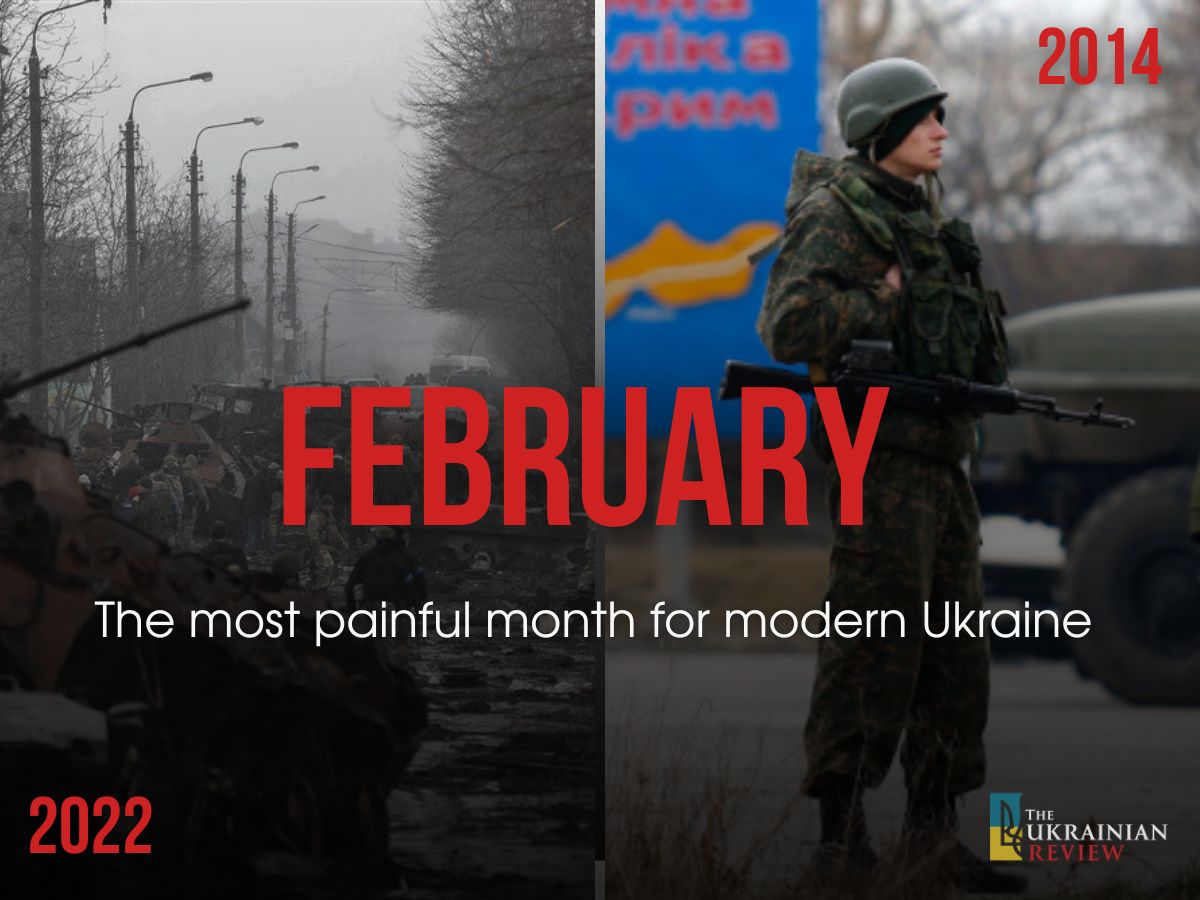


In Ukrainian, February is translated as “liutyi,” which in English means “rage” or “fierce.” The name is traditionally associated with harsh weather. This winter’s energy crisis reinforces that meaning. Symbolically, however, for Ukraine, February has become the month of the darkest pages in its modern history.
On February 20, Ukraine commemorates the Day of the Heavenly Hundred Heroes, honouring those killed during the Revolution of Dignity. This date also marks the beginning of the Russian-Ukrainian war in the 21st century, as Russia’s occupation of Crimea began on this day in 2014. Eight years later, on February 24, 2022, Russia launched its full-scale invasion, following February 23 — the so-called “Defender of the Fatherland Day” in Russia.
As the number of victims increased and the scales of tragedy deepened, the world briefly awakened, recognising first and foremost the bravery of Ukrainian defenders, and the resilience of Ukrainian society — people who continued to work, volunteer, donate, and support their army despite everything.
Since then, much has changed. Global attention has gradually shifted. Unity is not the same, neither around the globe, nor, as must be admitted, among Ukrainians. What has remained constant, however, is Russia’s intent to erase Ukraine as a nation.
The numbers
Civilians killed
According to the UN, the number of killed civilians had exceeded 15000 as of February 2026. However, this figure represents officially confirmed deaths, as the real number cannot be fully verified due to the occupation of Ukrainian territories.
For instance, according to Human Rights Watch, at least 8,000 people died in Mariupol during the first year of the full-scale invasion. Yet in April 2022, Mariupol’s mayor, Vadym Boychenko, stated that at least 20,000 people had been killed in the city. And Mariupol is only one example.
Children killed: 676+ (according to the Office of the Prosecutor General as of the end of 2025). That is roughly equivalent to 23–35 school classes erased.
According to President Volodymyr Zelenskyy, 55,000 Ukrainian soldiers have fallen in the Russian-Ukrainian war. There is also a large number of missing persons, as he stated at the beginning of February.
In total, Russia has killed the equivalent of the population of an average European city.
Here is your edited version, with corrected grammar, tightened structure, and no removal of substantive meaning:
The purposeless due to Russia`s real intentions negotiations of 2025 also had their price. Total civilian casualties in Ukraine in 2025 reached at least 2,514 killed and 12,142 injured — a 31 per cent increase compared to 2024. The Russian government grew more confident amid the breaking of international isolation and used this time to intensify its attacks, resulting in even more Ukrainian lives lost.
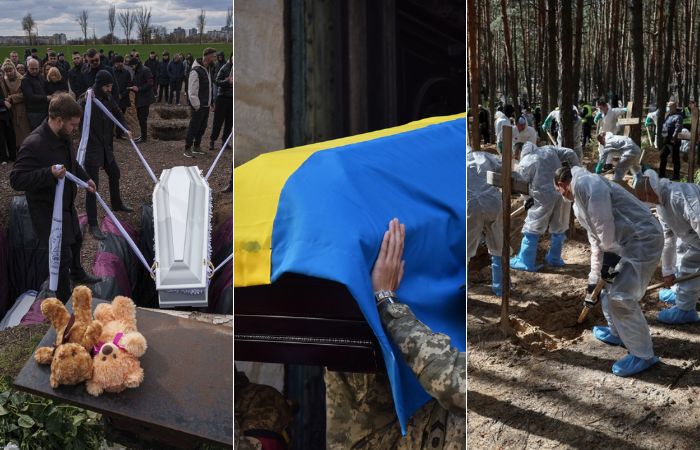
2) Soldiers carry the coffin with the body of combat paramedic Iryna Tsybukh during her funeral / Getty Images (May 2024)
3) Members of Ukrainian Emergency Service work at a place of mass burial during an exhumation in Izium in Kharkiv region / REUTERS, Gleb Garanich (September 2022)
Displaced people
As of 2025–2026, approximately 4.6 million internally displaced persons (IDPs) are officially registered in Ukraine. As of mid-2025, approximately 5.6–6.9 million Ukrainians remain abroad due to the war. Many of them may never have a home to return to.
Occupied territory
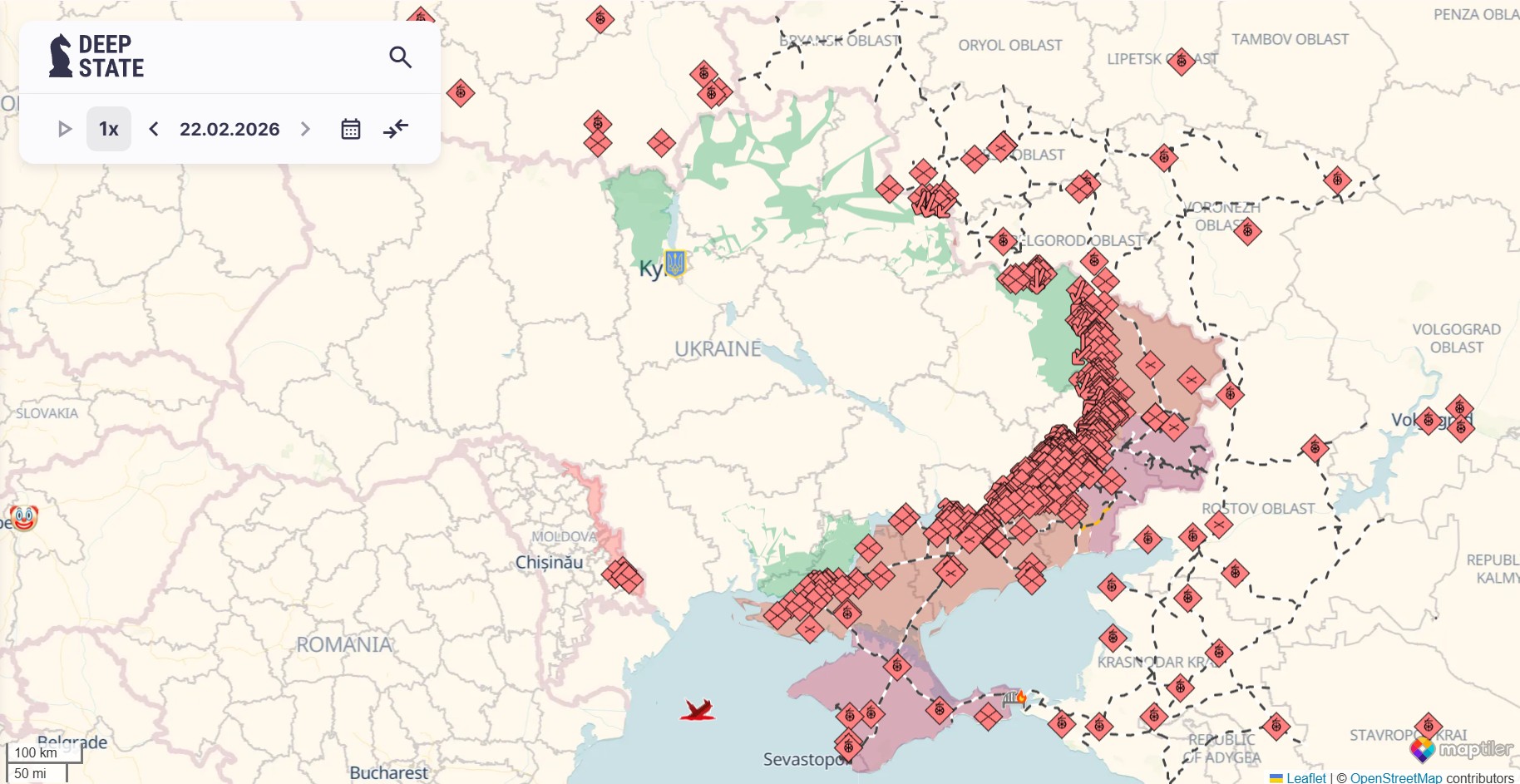
Since 2014, approximately 116,165 square kilometers — about 19.25% of Ukraine’s territory — remain under Russian occupation. This is slightly larger than Bulgaria or Iceland.
Missiles and drones
As of early 2026, Russia has launched more than 13,000 missiles of various types at Ukraine since the beginning of the full-scale invasion. Over 142,000 strike drones have been launched since 2022.
Air raid alerts
Total air raid alerts: 75,022
Average duration: 1 hour 29 minutes 45 seconds
Longest single alert: 70 hours 45 minutes 51 seconds
These numbers represent years of life spent in shelters.
Infrastructure losses
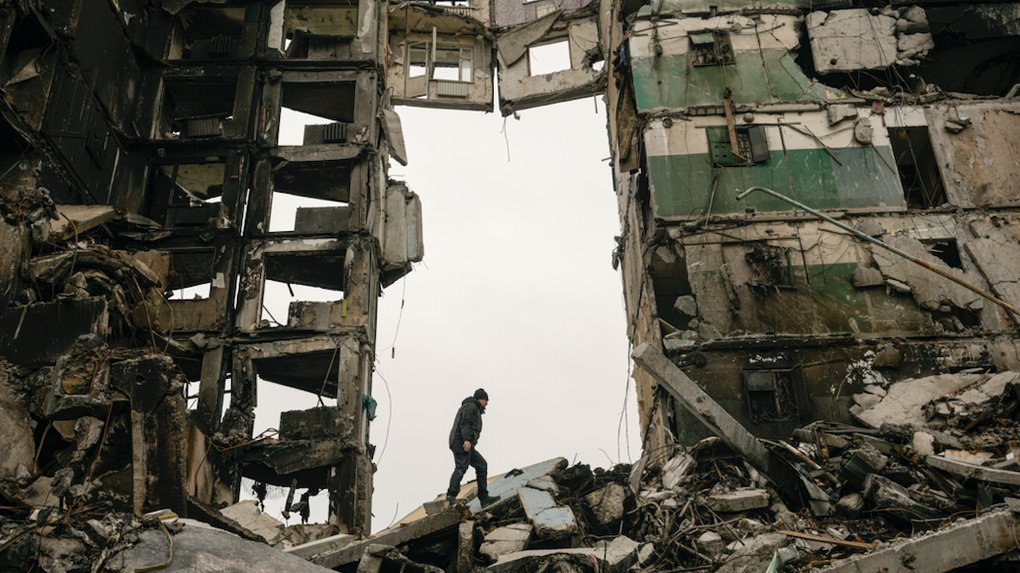
As of early 2026, direct damage to Ukraine’s infrastructure from Russian aggression exceeds $195 billion. In the global ranking of countries by GDP (there are about 195 countries in total), the $195 billion would put such an amount in the 58th-60th place, ahead of more than 130 countries worldwide.
International support
Hesitation has a measurable cost — the numbers prove it. What Russia expected when launching the full-scale invasion was global indifference. The “testing phase” that began in 2014 seemed, from the Kremlin’s perspective, successful. The international response when the aggressor swallowed, for example, Chechnya and parts of Georgia, had been weak.
But this time, indifference did not prevail.
Yes, many politicians doubted that Ukraine would withstand the invasion. Yet global solidarity proved significant. Humanitarian aid was soon complemented by military assistance.
Today, across Europe, major public buildings continue to be illuminated in the colours of Ukraine’s flag. It is important to remember: Europe remains safe as long as Ukraine serves as a shield. If Ukraine falls, Russia’s aggression will not stop at its borders. Ukraine need weapon to defend its freedom, because there is either freedom or no existence at all.