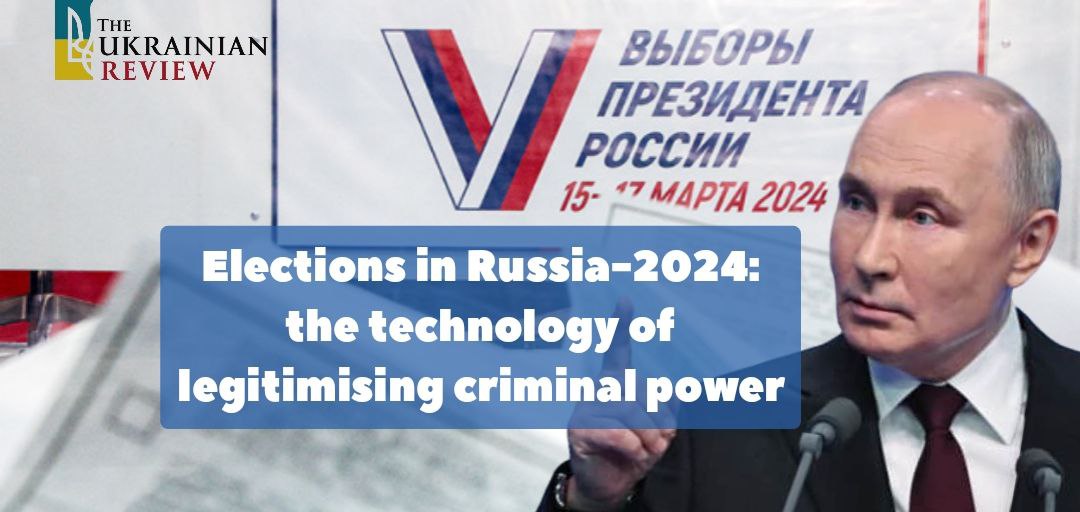


On March 15-17, 2024, the Russian Federation held presidential elections. No one doubts that their outcome will be obvious. And it is not even the winner that is in question, but the way and by what margin the current President of the Russian Federation, Vladimir Putin, will win. Let’s try to find out the content and direction of the aggressor country’s political show, as well as the possible consequences for the war in Ukraine today and the world.
Rules for elections without choice
First, it is worth highlighting the regulatory aspects of the elections. Not only do they allow us to see the overall political picture of today’s Russia, but in some moments, they also show the psycho-emotional image of the personalised government of the aggressor country as a litmus test. For example, let’s recall the 2012 elections: no one had ever seen Vladimir Putin cry when he commented on the bombing of residential buildings, the terrorist attack in Beslan, or other horrific events with massive civilian casualties. The Russian president often speaks about the Ukraine war today with a cynical smile on his lips. However, the whole world saw Putin’s tears after he won the 2012 elections.
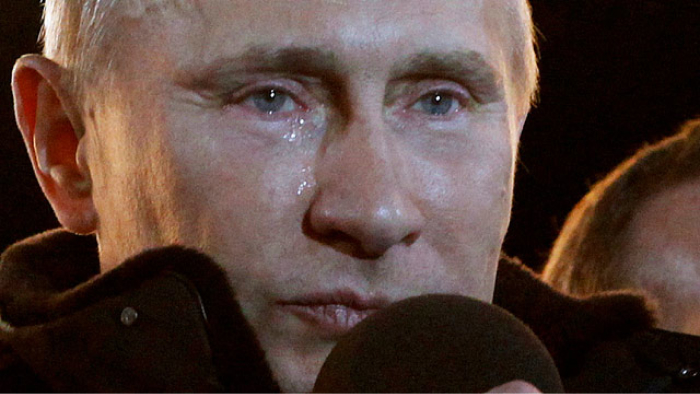
It was extremely important for the dictator to win in the first round to demonstrate his “absolute support” among the population and the sham nature of the opposition. The achievement of this goal moved Putin so much that during his extremely emotional speech on Manezhnaya Square, the whole world saw his tears. Of course, now the victory of the incumbent president in the first round is beyond doubt, but the example of 2012 is one of the puzzles to understand that modern Russia is ruled by a ruthless person on the one hand and an extraordinarily infantile and insecure person on the other.
But let’s get back to the current political play, which is called the 2024 Russian presidential election. The voting days were March 15-17, 2024. The president is elected for 6 years. To call a second round of elections, none of the candidates must receive more than half of the votes in the first round. The election will be recognised as valid despite the turnout threshold.
The current head of state, Vladimir Putin, is running for his 5th presidential term and his 3rd consecutive term. This became possible due to the amendments to the Russian Constitution adopted in 2020. According to them, Putin’s previous presidential terms are “nullified”, and the dictator has the right to remain in office until 2036 if he wins the current and subsequent elections.
In addition to Putin, three candidates are participating in the “people’s will”, and it is difficult to call them opponents of the current regime, even with a great stretch. Of course, none of them has condemned the war in Ukraine news. Putin’s sparring partners in the political show are:
- Leonid Slutsky, Liberal Democratic Party of Russia;
- Nikolai Kharitonov, Communist Party of the Russian Federation;
- Vladislav Davankov, New People Party.
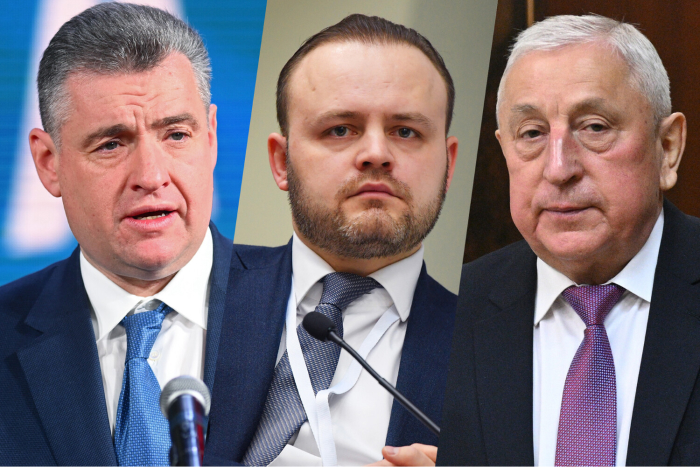
All three of them are quite systemic politicians and do not pose an electoral or media threat to the incumbent president. Ekaterina Dunttsova and Boris Nadezhdin, who condemned the latest Ukraine war news and declared their presidential ambitions, were not registered by the Russian CEC, as discussed below.
Nadezhdin, Duntova, Navalny, Girkin. The opposition?
Ekaterina Duntsova
Ekaterina Duntsova – a journalist and former deputy of the Rzhev Regional Duma, announced her desire to run for the presidency on October 16, 2023. The politician criticised the current regime, opposed the war with Ukraine and called for the release of political prisoners.
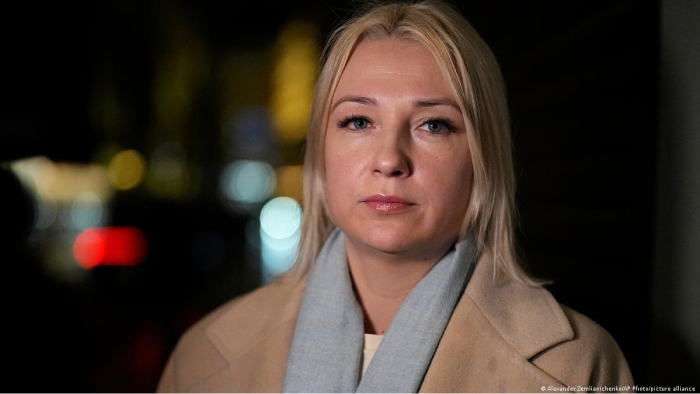
The independent media immediately dubbed Ekaterina a “surprise candidate.” However, her presidential ambitions ended 2 months later on December 23: The CEC refused to register Duntsova for formal reasons – they found errors in the documents she had submitted.
Boris Nadezhdin
Boris Nadezhdin, a former State Duma deputy (1999-2003), managed to run a full-fledged election campaign. The politician criticised Putin and used anti-war rhetoric.
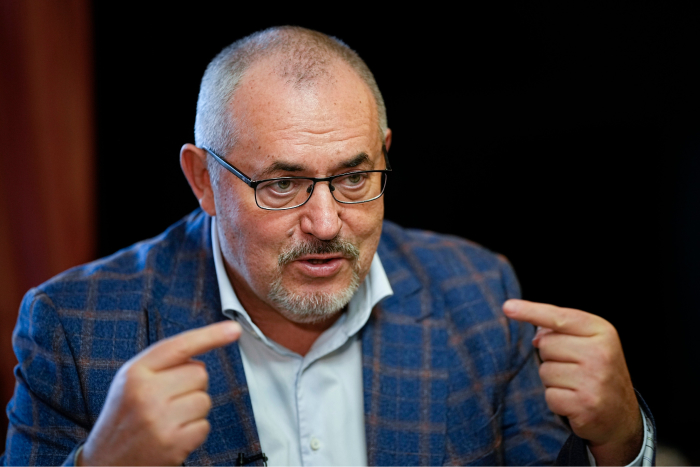
He was nominated by the Civic Initiative party’s congress, which is not represented in the State Duma or regional parliaments. Therefore, Nadezhdin had to collect 100,000 signatures for his nomination. The politician succeeded in doing so, and the world media widely reported the huge lines of citizens lining up outside the tents.
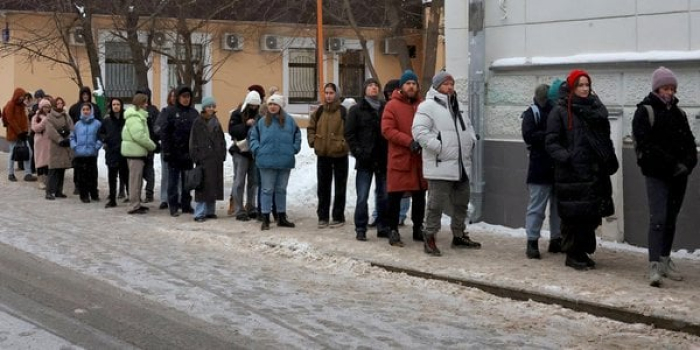
Among those who signed was the aforementioned Vladislav Davankov, who favoured peace with Ukraine, but only on Russia’s terms. That is, his position is no different from that of the Kremlin. So, this step can be seen as flirting with the protest electorate. But such technologies quickly became meaningless. On February 8, the Russian Central Election Commission refused to register Boris Nadezhdin because it found more than 9 signatures in his support invalid. In this way, the regime made it clear that anti-war rhetoric is de facto banned in Russia, as the world media has repeatedly reported.
Alexey Navalny
For many years, Alexey Navalny was considered Russia’s main non-systemic opposition leader, who, although imprisoned at the start of the election campaign, had some influence on the political process.
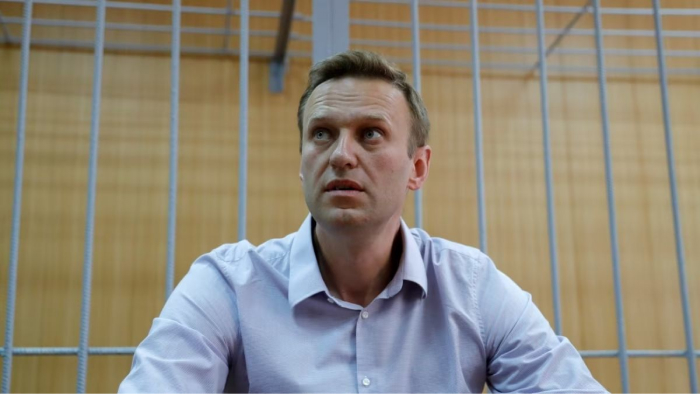
Representatives of the Anti-Corruption Foundation, which Navalny founded, campaigned on the streets of Russian cities against Putin, and the oppositionist’s YouTube channel regularly published anti-corruption investigations involving top government officials. However, it is clear that the current Russian regime decided to completely purge the Russian political scene of dissent for these elections. On February 16, 2024, it was reported that Alexei Navalny had died. Officials later stated that the cause of death was a blood clot.
It is worth noting that Navalny was tortured in prison, including being unreasonably placed in a pre-trial detention center for far-fetched reasons. As for the politician’s foreign policy position, it is worth noting that there has been a certain evolution of views. While Navalny used to make some ambiguous statements, in particular, that Crimea, despite its illegal annexation, should not be given back to Ukraine after the full-scale invasion, he still took an anti-war position and supported the restoration of Ukraine’s 1991 borders.
It’s also worth noting that Navalny’s widow, Yulia, who lives abroad, has promised to continue his case:
“I ask you to share the rage with me. Rage, anger, hatred for those who dared to kill our future. I am addressing you with the words of Alexei, in which I strongly believe: it is not a shame to do little – it is a shame to do nothing. It is a shame to let yourself be intimidated.”
Due to the lack of anti-Putin candidates, the Russian liberal opposition is planning to hold a kind of flash mob called “Noon Against Putin.” Its idea is to come to the polls en masse on the last day of voting, March 17 at, noon, and show the “unity of place and time.” You can vote for anyone except Putin or spoil your ballot. Thus, the opposition decided to ensure additional voter turnout, which is what the Kremlin is most concerned about. How this action will harm Putin remains a mystery.
Igor Girkin (Strelkov)
Another opposition figure worth mentioning is Igor Girkin (Strelkov). A former FSB officer and now an international terrorist who participated in the occupation of part of Donbas, former defence minister of the so-called Donetsk People’s Republic, an internationally recognised terrorist who faces life in prison in the Netherlands for his role in the downing of a Malaysian Boeing in 2014, which killed 298 people – that’s almost all you need to know about this man’s rich biography.
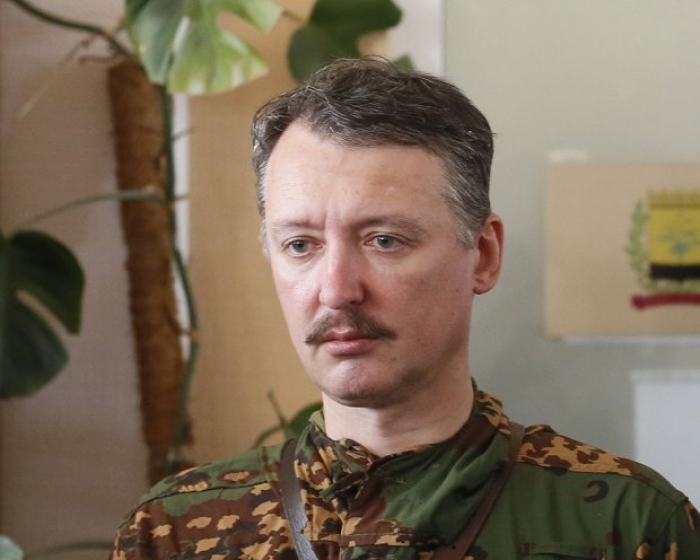
Since the first months of the full-scale invasion, he has been a strong critic of the Russian Defense Ministry and a cautious critic of the political regime in general, not because of the war, of course, but because of the inefficiency of military administration in Russia. On July 21, 2023, he was detained by law enforcement on charges of extremism and taken to a pre-trial detention center. While in the detention center, he announced his presidential ambitions. On December 24, 2023, Hirkin’s supporters nominated him for the presidency. However, instead of an election campaign, he predictably received 4 years in a general regime colony and a 3-year ban on propaganda on the Internet. The path from a popular favorite in the aggressor state to a political prisoner turned out to be quite short.
Consequences of the Russian presidential election: expert opinion
Valentyn Gladkykh, PhD. in Philosophy, an expert at the United Ukraine Analytical Center said next words:
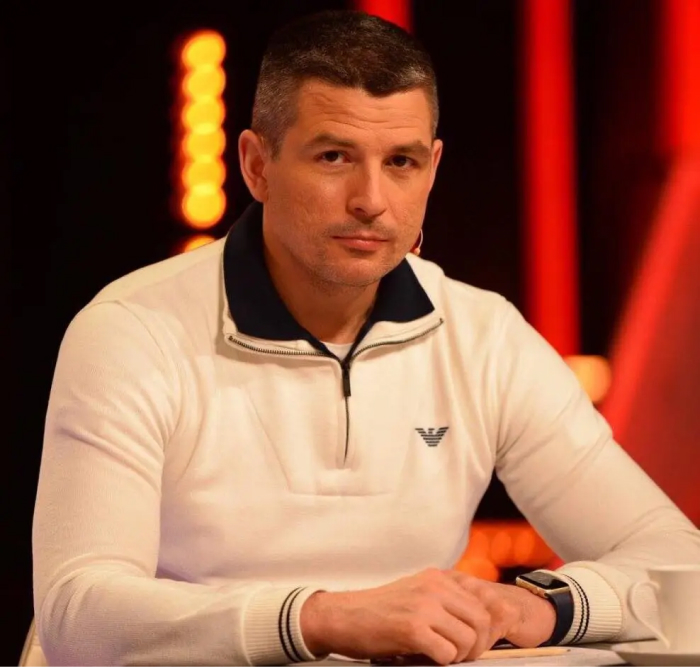
“These elections should finally push everyone to realise that Putin’s regime cannot be changed democratically. So, we need to look for other mechanisms. And the second important point is the realisation that the Putin regime itself can be transformed, as it was in the Soviet Union. We remember perestroika, the regime’s transformation from the top to the political elites. So, the Putin regime does not have this potential. For a long time, many in the world believed that it was necessary to communicate with Putin because he could change. He cannot.
This leads to the following thesis: the Putin regime must be changed. With global security in mind, but changed. I’m not calling for a military solution, but it cannot be rejected either. The civilised world is interested in Russia ceasing to exist as a terrorist state, and everyone knows how to do this, but they cannot or do not want to talk about it. In any case, Russia’s future largely depends not on these elections but on the outcome of the war Russian-Ukrainian. The best and safest way for everyone to change the Putin regime is to defeat it in Ukraine war now”.
Konstantin Borovoi, A well-known Russian political figure, deputy of the State Duma of the 2nd convocation said:
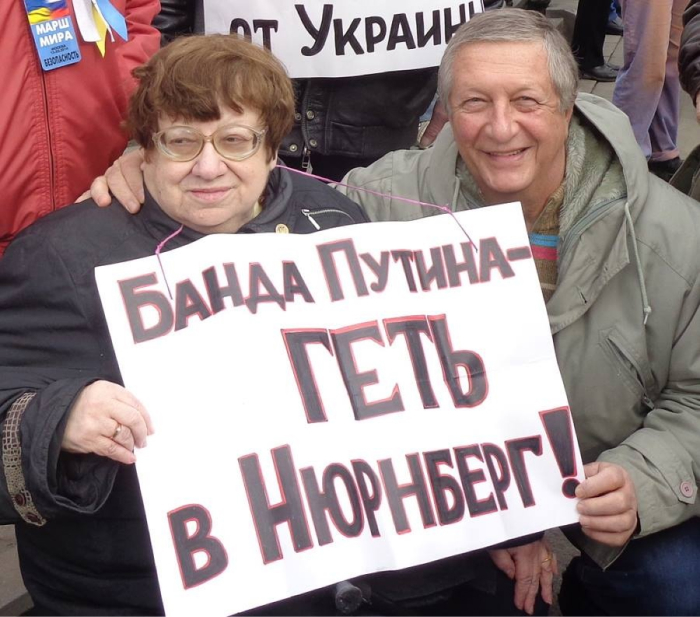
“These elections will have little effect on the situation inside Russia – it is just strengthening the regime. The opposition is persecuted, and repression is quite effective. Moreover, the regime is helped by those oppositionists who are not really oppositionists. With their provocative actions, the Navalnists are only strengthening repression (we are talking about the self-designation of “terrorist Navalnists”). And these calls to come to the polling stations and stand? Only a lazy person hasn’t made fun of that. To show how many of us there are? The security services already know that there are many of us.
As far as the international community is concerned, Putin is formally fulfilling his obligations. In the sense that there is a procedure. Like in Soviet times, when there was bourgeois democracy in the West and people’s democracy in the USSR. Democracy is without choice, but people’s democracy. Putin is doing the same. But what is important here is that the elections may unleash him even more. Putin is increasing military production and may try to act more aggressively towards Ukraine. I see this war as the result of agreements between the US Democratic Party and Putin, who thought the takeover of Ukraine was a done deal. But now he has realised the situation and is preparing better, so he may become even more aggressive”.
Conclusions
The Kremlin is using the presidential election not only to legitimise Vladimir Putin formally but also to clean up the electoral field completely. While in the previous elections, some controlled oppositionists were allowed to participate, it is categorically not allowed this time. This is mainly due to the de facto ban on anti-war rhetoric. The additional formal legitimisation of Putin may add aggression to the Kremlin’s behaviour, and the civilised world must understand these risks and also be more active in opposing the terrorist regime.
Kostyantyn Grechany