

According to the latest news on Ukraine, on February 13, 2024, the US Senate voted on an international aid package that includes funds for Ukraine. The bill was then supposed to be approved by the House of Representatives. However, as of March 31, 2024, the Speaker of the House, Mike Johnson, refused to bring it to a vote.
The amount in question for Ukraine is $61 billion. In addition to Ukraine, aid is also earmarked for Israel.
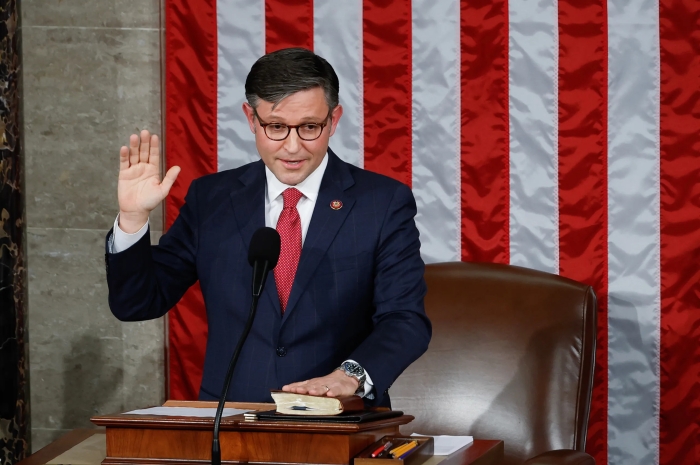
Mike Johnson then stated that he would not pass the bill allocating aid to Ukraine unless it included measures to address the migration crisis.
On February 16, 2024, the US House of Representatives went on recess until February 28 without considering the bill on aid to Ukraine.
On February 29, Speaker of the House of Representatives Mike Johnson stated that the issue of providing aid to Ukraine would be considered after the funding for the US government is extended.
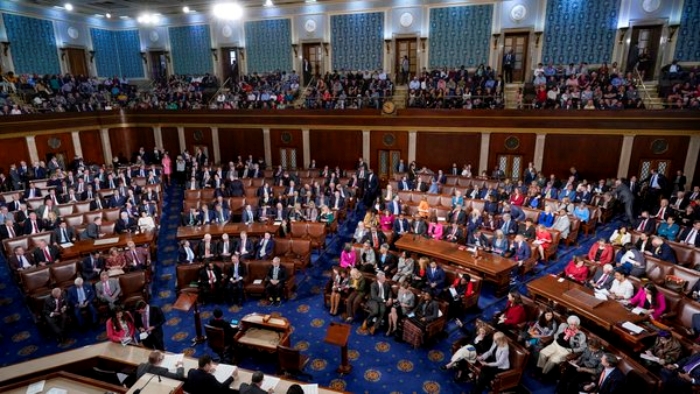
On March 12, 2024, two groups of legislators began separately collecting signatures to put the bill for additional foreign aid to a vote in the House of Representatives without approval from Mike Johnson. To bypass Johnson’s resistance, 218 signatures are required. As of March 16, 180 signatures have been collected.
Also, Mike Johnson stated that the House is developing a new bill to assist Ukraine. The United States is considering providing military aid to Ukraine not for free but on credit or by transferring weapons under lend-lease.
However, even this option still entails delays as time is needed to revise the project. The Ukrainian Review will continue to discuss the reasons for the delay and its consequences.
Why is financial aid from the US so important?
According to Ukraine war facts, as of September 2023, the United States of America was the largest donor to the Ukrainian budget, having transferred a total of $21.75 billion during the ongoing conflict, which was more than Ukraine received from the EU (approximately $21 billion).
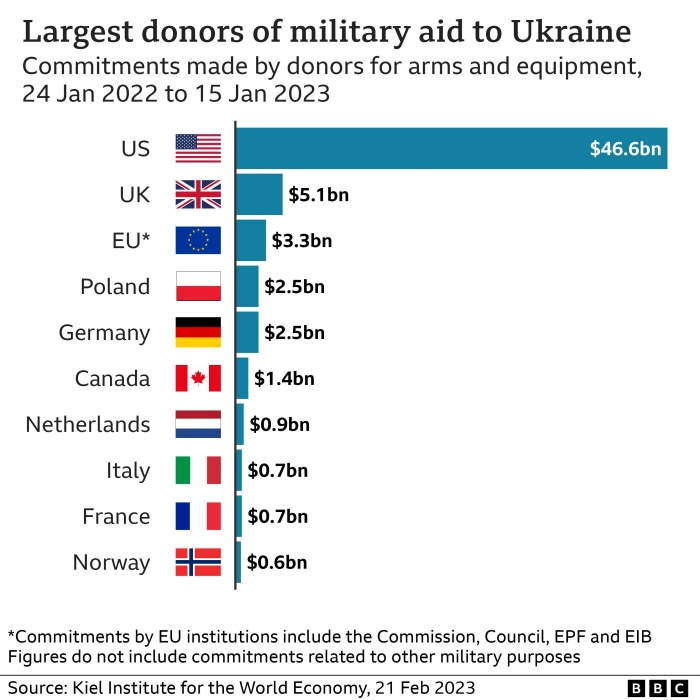
In 2022, financial aid from the United States accounted for 40% of the total international budgetary support since the beginning of Russia’s full-scale armed aggression.
According to news from Ukraine, the particularity of financial aid from America is also that it comes in the form of grants, meaning it is non-repayable assistance. Ukrainians will eventually have to repay money from other partners.
Consequences for Ukraine
The Ukrainian government included approximately $13 billion of financial support from the United States in the 2024 budget. These funds were intended to finance a significant portion of social expenditures. Finding a replacement for them will be difficult if these funds do not materialise.

“Getting additional funds from other countries is problematic because it requires lengthy negotiations. In most cases, potential sources of aid are known in advance and are studied during the budget development stage”, – emphasised the Kyiv School of Economics.
According to the President of Ukraine, Volodymyr Zelenskyy, without the assistance of the United States, Ukraine will lose many lives on the front lines. Additionally, the Armed Forces will be unable to achieve new successes on the battlefield and will be forced to retreat.
CIA Director William Burns has also warned that Ukraine will lose more territory this year without the United States’ assistance. However, if the U.S. Congress approves assistance to Ukraine, the Armed Forces will have a real chance to consolidate their strategic success. Additionally, if aid to Ukraine is halted, it could “fuel China’s ambitions” regarding Taiwan.
Oleksandr Khmelevskyi, PhD in Economics and independent expert, said that by receiving foreign loans and grants, Ukraine replenishes its international reserves, allowing it to finance the deficit of foreign trade. And in 2023, the deficit of foreign trade in goods increased to $27.4 billion:
“Currently, the foreign exchange reserves amount to around $37 billion, enabling the National Bank to maintain the stability of the hryvnia exchange rate. However, a moderate devaluation of the hryvnia is already underway. This week, the exchange rate reached 38.8 hryvnias per dollar, and devaluation is expected to continue. Reduction in funding from the EU and failure to receive funds from the US may lead to increased devaluation.
Regarding financing the budget deficit, despite the common belief that foreign loans provide such funding, it is not entirely true. Foreign loans can only be used to repay previously obtained foreign loans and pay interest on them. In all other cases, the Ministry of Finance sells the received loans in the currency of the National Bank and receives hryvnia from it to finance military, social, and other budget expenditures. This increases the amount of money in circulation, which can lead to price increases”.

He also said that the National Bank could directly finance the budget deficit without obtaining foreign currency:
“After all, the National Bank has already bought more than 700 billion hryvnias worth of government bonds and could continue to do so. However, the National Bank’s leadership does not want to do this due to its bias. Our Western partners also want Ukraine to borrow money from them and abandon internal sources of financing. However, internal sources are the most reliable and ensure uninterrupted financing regardless of conflicts in the US Congress or the European Parliament.
Only through optimising public debt management and changing the National Bank’s policy can additional hundreds of billions of hryvnias be found to finance the budget deficit. For example, the Ministry of Finance pays interest to the National Bank on government bonds in the amount of about 120 billion hryvnias annually. Suppose the national bank-owned government bond portfolio is restructured, and new securities with a symbolic yield, such as 1% per annum, are issued. In that case, budget expenditures will decrease by over 100 billion hryvnias annually”.
Another aspect is the issuance of deposit certificates by the National Bank, which are placed among commercial banks. Currently, commercial banks have invested about 400 billion hryvnias in these deposit certificates, and in 2023, the National Bank paid about 70 billion hryvnias in interest to commercial banks for the certificates.

“However, the funds that the National Bank attracts in this way are not needed. Its goal is to reduce the money supply to restrain inflation. However, the same effect can be achieved through other instruments, such as increasing NBU reserve requirements. Since the National Bank recalculates its profit annually to the state budget, refusing deposit certificates will increase the transfer of profits from the National Bank to the state budget by 70 billion hryvnias”.
As Oleksandr Khmelevskyi explained, commercial banks will increase their investments in government bonds if they cannot invest in deposit certificates, providing additional financing for the budget deficit. Lowering the NBU’s discount rate will reduce the yield of government bonds and save tens of billions of hryvnias for the budget. And these are far from the only ways to provide additional financing for the deficit:
“Instead, the government plans to resort to raising taxes. Currently, discussions are underway to increase the military fee, additional taxes for individual entrepreneurs, increase excise taxes on fuel, increase taxation of real estate and jewellery transactions, taxes on mobile phone usage, and more. In the conditions of war and economic stagnation, raising taxes is hardly advisable.
Enterprises and the population are going through tough times, and additional taxes will negatively affect their financial situation. The introduction of additional taxes will intensify the shadow economy. As a result, budget revenues may not increase but decrease”.
Why financial aid from the USA is delayed
On October 25, 2023, Mike Johnson assumed office. A staunch conservative and ally of former President Donald Trump, Johnson immediately pledged to take tough action on the budget, the Mexico border, which serves as a gateway for many illegal migrants into the US, and aid to Ukraine.
Statements of support for Ukraine from Republicans, including Mike Johnson, have frequently been accompanied by the condition of resolving border issues.
During Joe Biden’s three years in office, approximately 10 million illegal migrants entered the United States, a record high. In 2023 alone, their number reached around 3 million. Many Republicans argue that the country is “full” and cannot sustain a larger influx, which threatens fundamental American values.
On January 25, 2024, Senate Minority Leader Mitch McConnell acknowledged that reaching an agreement on border security and aid to Ukraine had become more complicated due to Trump’s position, who wants to leverage border issues for electoral advantage.
The President of the United States agreed to many concessions regarding border crossings in favour of Republicans and in order to allocate more funds to pass aid for Ukraine and directly address the border issue.
However, following this, Trump began to gain political points, and House Republicans felt emboldened to press further, winning more ground during the election campaigns.
Additionally, The Ukrainian Review contacted Rick Scott, a representative of the Republican Party, for comment, asking him to explain the main reasons for Republicans’ delay in allocating aid to Ukraine. Once we receive a response, we will add it.
What experts say
This was told to us by Oleksandr Khmelevskyi, a candidate of economic sciences and an independent expert:
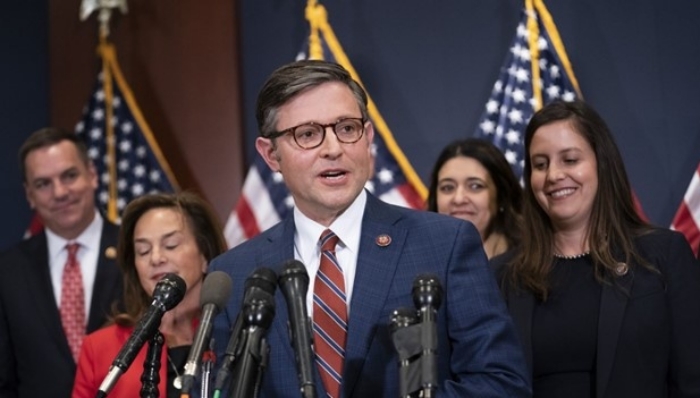
“Among some Republicans, including Mike Johnson, there is a prevalent idea that Ukraine should make concessions and negotiate peace on Russia’s terms. Since Ukraine refuses to agree to this and the war continues, they seek to force Ukraine into peace by cutting off our aid. On the other hand, the U.S. budget deficit for 2024 is projected to be $1.5 trillion, or 5.3% of GDP. The United States faces significant challenges in funding the budget deficit. The U.S. national debt has already exceeded $34 trillion, which is 125% of GDP. This situation threatens the financial stability of the United States, so Republicans are trying to reduce the budget deficit by cutting expenses. Among the expenses they seek to cut is aid from the United States to Ukraine and Israel.
Additionally, Republicans are linking the provision of aid to Ukraine to the Biden administration’s decision on limiting illegal immigration. The U.S.-Mexico border is effectively open, and thousands of migrants from Latin America enter the United States daily. This creates additional burdens on the budget and leads to an increase in criminal activity. Drug cartels often exploit migrants to distribute drugs. Currently, the situation regarding aid to Ukraine has reached an impasse. We can only hope that eventually, Congress will vote to provide assistance”

Investment banker Sergiy Fursa believes:
“This is solely the result of politics and politicking in the United States ahead of the presidential elections. Whatever Ukraine does, we cannot influence this.”
The Ukrainian Review contacted John Bolton, former National Security Advisor to the President of the United States, for comment on the reasons for the delay in financial assistance and the internal perspective. However, we have not received any responses yet. Once we receive them, we will publish them accordingly.
What will Ukraine do, and will other partners be able to replace US aid

The Budget Committee of the Ukrainian Parliament outlined their plan of action in case of the worst-case scenario:
“In such a case, we will implement a budget sequestration, as we did at the beginning of the full-scale invasion. We have already implemented two major sequestrations and reduced expenditures by almost 200 billion hryvnias. This means that expenditures in all non-defense sectors will be reduced. There is no other way.”
Will other partners be able to replace the assistance from the USA? Oleksandr Khmelevskyi responded to this question:
“Other partners are already partially replacing the funds that previously came from the USA. Thus, Ukraine receives loans from Japan, the United Kingdom, Canada, Norway, and other countries. Additionally, these and other countries act as guarantors for World Bank loans received by Ukraine. However, these funds are significantly less than those from the USA that Ukraine received last year. Therefore, other countries cannot fully replace the financing from the USA”.
The Ukrainian Review has contacted the Ministry of Economy of Ukraine to comment on the consequences of the delay in financial assistance from the United States and what steps Ukraine will take in case of further delays or complete absence of assistance. Once we receive a response, we will publish it.
Conclusion: USA allocated financial aid to Ukraine
Finally, on April 20, 2024, the United States House of Representatives, after over six months of blocking military and financial aid to Ukraine, approved a legislative package totalling over $60 billion.
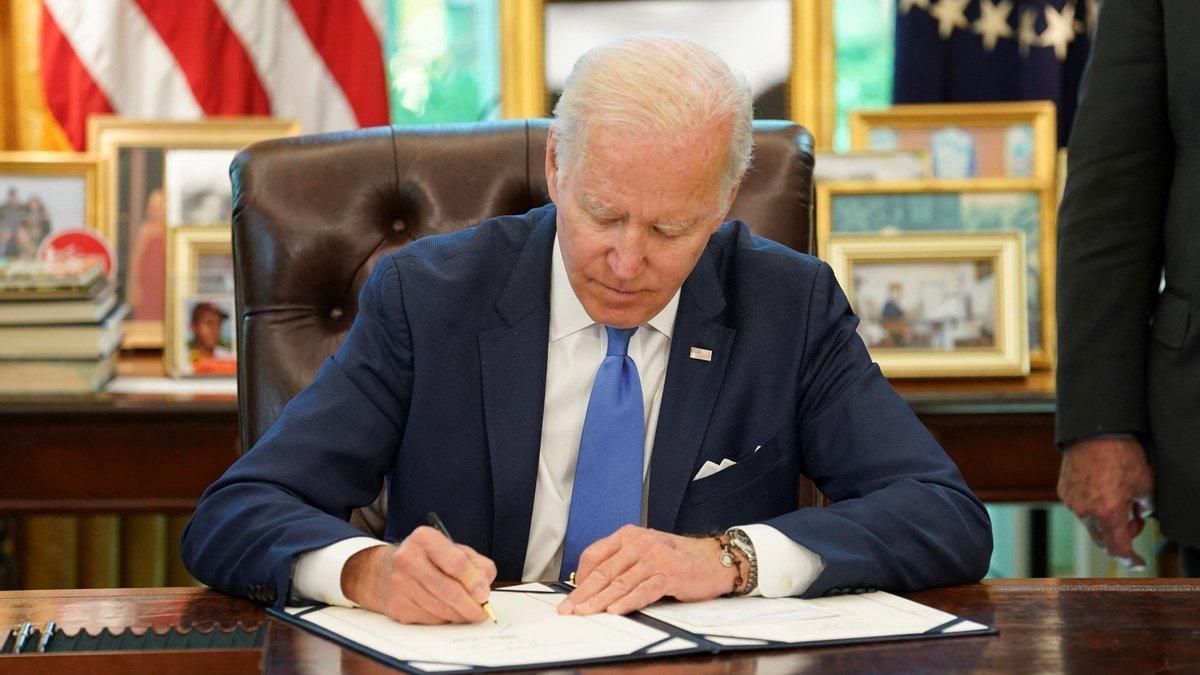
Just four days later, on April 24, President Joe Biden signed into law the bill providing Ukraine with a package of military and financial aid worth over $60 billion. He stated that deliveries to Ukraine would begin within “a matter of hours.”
Ukraine will receive, among other things, MANPADS (Man-Portable Air-Defense Systems), artillery shells, armored vehicles, and anti-tank weapons.
The first package will include RIM-7 and AIM-9M missiles for MANPADS, Stinger missiles for MANPADS, small arms and ammunition, including for countering drones, ammunition for HIMARS (High Mobility Artillery Rocket System), 155mm and 105mm artillery shells, Bradley infantry fighting vehicles, Javelin anti-tank systems, AT-4 launchers, precision aviation ammunition, anti-personnel mines, night vision devices, and other equipment.
***
Financial aid from the US is extremely important for Ukraine, as it has the largest volume among all partners. Due to the delay in financial assistance, Ukraine experienced significant difficulties. Without US assistance, Ukraine may face even greater challenges.
Anya Ostymchuk