

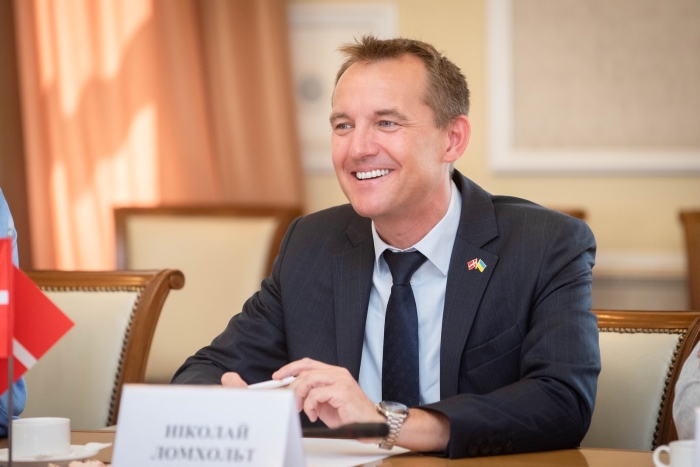
The global challenges of the transition to alternative energy sources in Ukraine intersect with the elimination of the consequences of constant Russian attacks. Denmark, a key partner in this effort, is significantly involved in stabilizing and optimizing the energy sector in Ukraine. With Nikolaj Lomholt Svensson, Energy Counsellor of the Royal Danish Embassy in Ukraine, we discussed the priorities in Danish investments, green transition practices in Ukraine, and long-term and short-term cooperation planning.
The background of collaboration
Ukrainian-Danish Energy cooperation began in 2014 as part of the Danish Neighbourhood Programme (DANEP). In 2021, the new phase of the Ukraine-Denmark Energy Partnership Programme (UDEPP) was initiated. Now, it is set to be revitalized to address the new challenges Ukraine faces.
Nikolaj Lomholt Svensson: The Danish energy authorities work with 24 countries around the world with a government-to-government approach, sharing the expertise we have had in doing a green and efficient transition in our power system. We usually cooperate with large and high-growth countries from the foundation that if we can change a bit the way energy policies are done in countries like India, Vietnam, or the United States, they could potentially have a much bigger impact than anything we could do in Denmark, considering Denmark only emit one tenth of a percent (0.1 %) of global emissions. Ukraine is different from the other partnerships in the way that the decision to establish an energy partnership after the war began in 2014 was predominantly based on understanding of the geopolitical implications of the dependency on Russia. So energy security has been at the core since the beginning.
Daria Maslienkova (journalist): How have the program’s priorities changed over the years, and which focuses have remained consistent?
N.L.S: Among the consistencies since the beginning has been a focus on energy efficiency by reducing the need to use as much of it, for instance, in the industrial sector.
Then, like the rest of the world, we faced the challenges from the COVID-19 pandemic, which made day-to-day collaboration difficult. We had restarted the partnership in 2021 and were preparing to re-engage when the full-scale invasion happened. In response, the short-term decision was then made to refocus our program on very concrete support activities. For instance, in the frontline city of Mykolaiv [besides the support provided on a national level, Danish assistance has focused on Mykolaiv city and Mykolaiv region].
Since the situation, at least in Kyiv, has stabilized much more, it was in the Spring 2024 decided to reinvigorate our collaboration in supporting the longer-term transitions in Ukraine.
Now the program spans the whole portfolio of areas where the Danish Energy Agency has its comparative competencies (Energy modelling/planning, energy system integration, energy efficiency, district heating, wind generation, biogas and green gas systems). We are working with the Ministry of Energy of Ukraine, the Ministry for Communities and Territorial Development of Ukraine, the State Agency for Energy Efficiency and Energy Saving of Ukraine, the National Energy and Utilities Regulatory Commission, the Transmission System Operator “Ukrenergo”, and the Gas TSO.
Our support includes choice awareness and policies in energy planning, for instance, the development of nationally determined contributions towards the international obligations on the EU and climate side. There are many EU regulations in this area where we can share Danish and European experience, and at the same time, this would help Ukraine in the short term. Then we work on integration with the European power markets.
We also help the Ukrainian decision-makers to understand the cost and benefits of different technological solutions. There is a continued focus on energy efficiency in industries, but that will also be expanded to include energy efficiency in buildings, including public buildings.
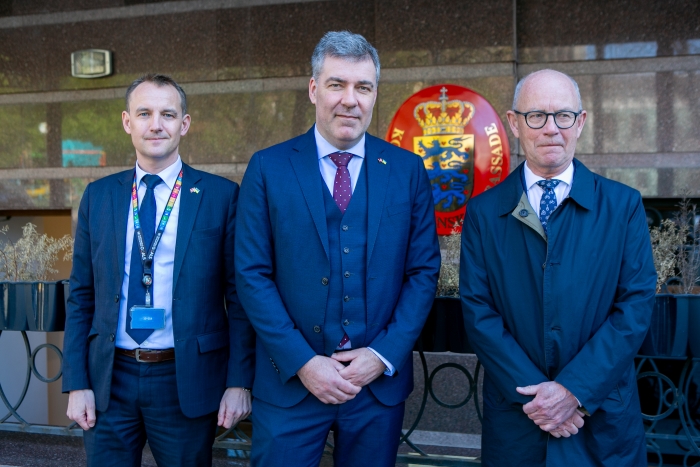
D.M.: How has the supply of Danish generators contributed to stabilizing services in Ukraine?
N.L.S: I work mostly on the national energy system and the engagement with the Danish Energy Agency, whereas this is the very localized support that we have been providing through our development assistance. And in that regard, for instance, again, we have this special emphasis on Mykolaiv. So there we have this embassy office to liaise our development assistance for the Mykolaiv region.
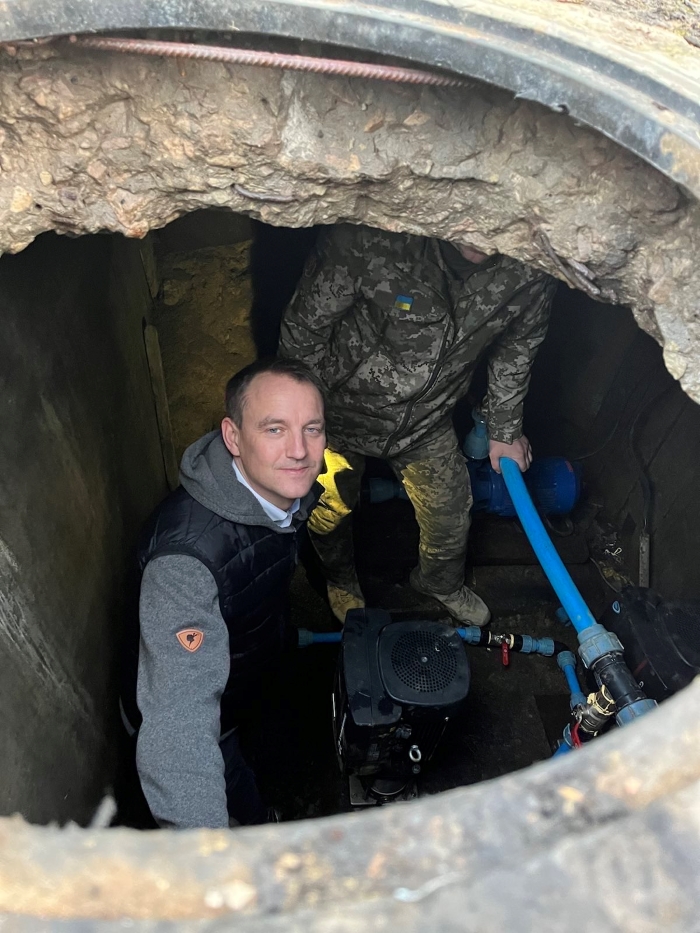
An example of what we have been providing is gas engines to the Mykolaiv “Oblteploenergo” [district heating company] to help with the backup generation for the water and heat supply in the city during blackout situations. If you have a failure of any utility that involves water during the winter season, you risk that the water will freeze up and you get a catastrophic destruction of the critical infrastructure. People will not just not get the heat for a few days but they will not get any heat until the whole system has been repaired.
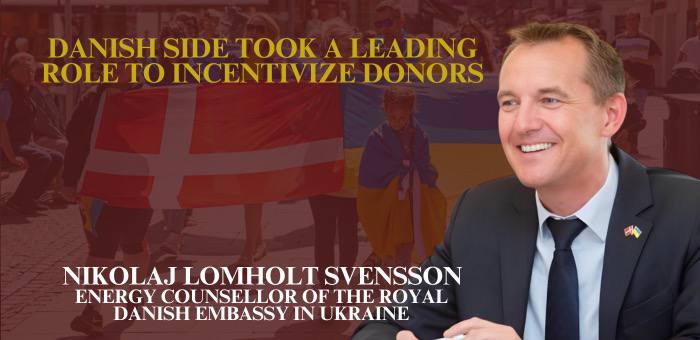
Another way that we have been supporting Ukraine is through the Energy Community’s Ukraine Energy Support Fund. After the full-scale invasion and the first big attacks on the energy system, it was understood that there would be a need to purchase replacements. So for instance, after the massive attacks on the transmission grid. This fund is designed to help donors prioritize funding for the replacement of the most urgent equipment. When energy companies have damaged equipment because of the attacks, they register this in the Ministry of Energy, and then they will convey this list to the Energy Community in Vienna, where donors would be asked whether they have similar equipment that they can donate or financial donations. Denmark was the first country to contribute to this fund in 2022. It was a very symbolic contribution of half a million euros. Today, with donors’ support, this fund been leveraged of 895 million Euros (out of this Denmark has donated approx. 28 million Euros). This has been a way where we from the Danish side took a leading role to incentivize donors.
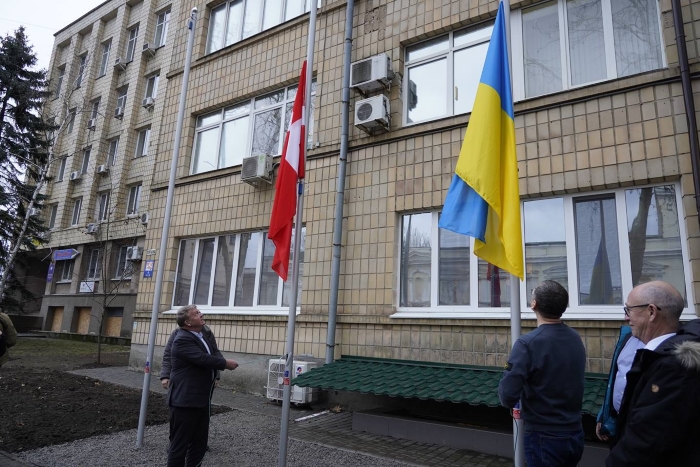
Danish practices and the new “Ukrenegro” app
District heating in Denmark plays a significant role in energy efficiency by utilizing renewable sources. The advice, related to it, is among the Danish energy-saving. However, in Ukraine, not all of these measures are applicable due to differences in the heating systems.
Therefore, Nikolaj shared the suggestions for the improvement of the Ukrainian approach and mentioned the advantages of the new app from “Ukrenergo”, sponsored by Denmark, which will show real-time updates on electricity supply across all regions of Ukraine.
D.M.: What are the problems with the current Ukrainian urbanistic approach, particularly with the heating system, and what should be improved in Ukraine in this direction
N.L.S: We support the State Agency for Energy Efficiency and the Ministry of Communities and Territorial Development of Ukraine with district heating as well. There are a lot of inefficiencies in the Ukrainian heating sector.
We encourage behavioral changes to ask the public to use electricity more responsibly — both by consuming less and in more flexible ways — and thereby limit the extent of power outages. We do that, for instance, by supporting a new “energy alert” application from “Ukrenergo”, where you can access your location in Ukraine, and then they can communicate directly to the consumers in this given area to inform them whether it’s good to use electricity in a normal way; or there are some strains that would encourage people to reduce their usage; or even a very significant shortage, when they will encourage citizens to turn off all non-essential power.
This will also align with the Danish experiences of the energy savings campaign that we implemented during the energy crisis in the winter of 2022 and 2023. For the longer term, we will support energy audits of public buildings.
We support the State Agency for Energy Efficiency’s teams (Office for Decarbonization) in Mykolaiv that can help identify energy savings in, for example, small enterprises. Then, through voluntary agreement, these enterprises can get attractive loans for energy efficiency investment through the Decarbonization Fund launched by the State Agency for Energy Efficiency in September. From a technological side, there’s a huge potential in Ukraine to improve the buildings. Due to the way the heating system is structured, it may be difficult to have individual metering in the apartment blocks.
There are also a lot of well-known solutions with heat management systems and isolation, including better windows, and they can also improve the quality of the air in the buildings. Today, many people open the windows even if there is a power shortage because they cannot turn their radiators up and down.
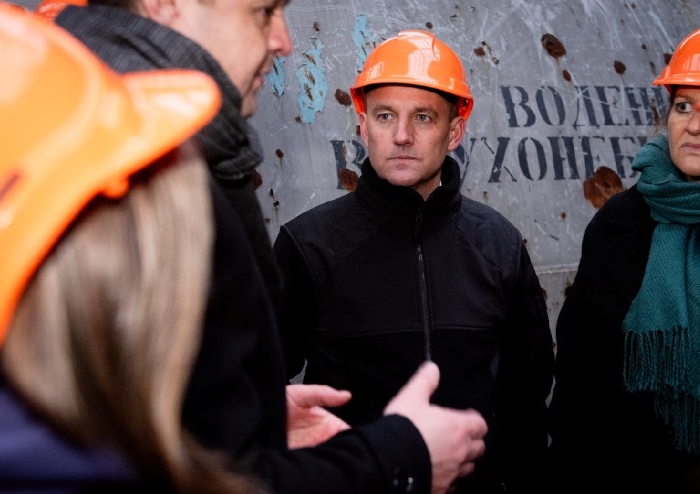
Altrernative energy: wind, solar, biogas
D.M: Denmark is a global leader in wind energy, while in Ukraine, this sector has been significantly reduced due to the war. However, developing this type of energy remains a priority in Ukraine’s strategy. Considering the security threats, which Danish practices could be applied in Ukraine now, and which might not be feasible?
N.L.S: Since 2023 we’ve been committed to supporting wind energy, which is where we from the Danish side have a lot of experience, both with the management of wind as a resource and the integration of it. And we have a business cluster covering the whole value chain for wind energy. This is an area where we support the regulatory framework on both how to prepare sites for wind energy and the market conditions on how to uptake it.
The memorandum of understanding between Denmark and Ukraine on wind generation covers both onshore and offshore types of plants. One of the first tasks we did for the offshore was engaging in dialogue with the Ministry of Energy and the World Bank about its potential. However, we fully understand the current conditions for developing offshore energy in the Black Sea that is contaminated with sea mines, a very aggressive neighbour, and other vulnerabilities. Therefore offshore wind power is something that will likely be at least a decade into the future. For this reason, our main focus will be on the onshore wind for the next couple of years.
We know that there is substantial potential for wind energy. Some figures say five gigawatts, some — six gigawatts. But considering the area that is under the territorial control of Ukraine, there is only half a gigawatt right now. In Denmark, I would say that 5 gigawatts of wind would be able to power 5 million households. In Ukraine that may be a little more or a little less. But a rough indicator is that 1 gigawatt of wind can power one million households.
We are exploring financial support instruments that would help to overcome the high risks of the war conditions and support the development of projects in private sector. The sites where the wind farms are erected are still leading up to all international requirements, including environmental assessment, clear ownership rights to develop the wind farm in close involvement in the neighbours, and so on. However, we see a big opportunity to support wind energy in an industrial and private sector-driven way both on the regulatory and investment sides.
Both wind and solar energy are highly competitive on the cost side but are also what we call variables. So the resource needs to be assessed during the individual day and even hour, but also in a seasonal way.
Wind is a very strong resource, especially in the south of Ukraine, and in some places in the Carpathians and in the North of the country. Whereas for the solar, the resource is biggest in the south and mostly in the summer time. In the winter time, solar energy only has the capacity to produce power eight percent of the time. For that reason, wind energy is a very important addition and contribution to winterization needs a decentralized energy system.
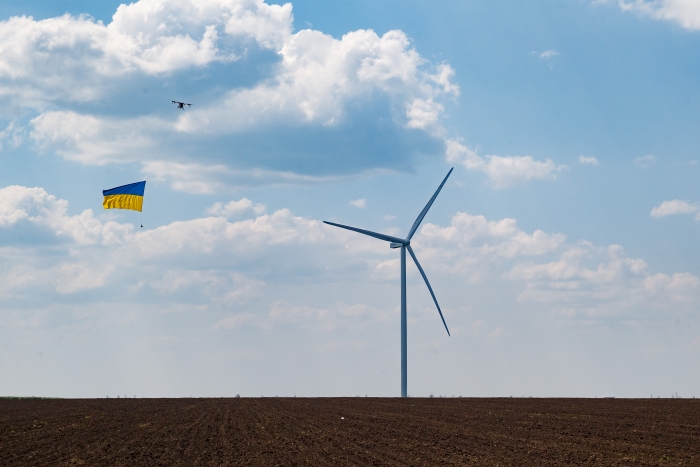
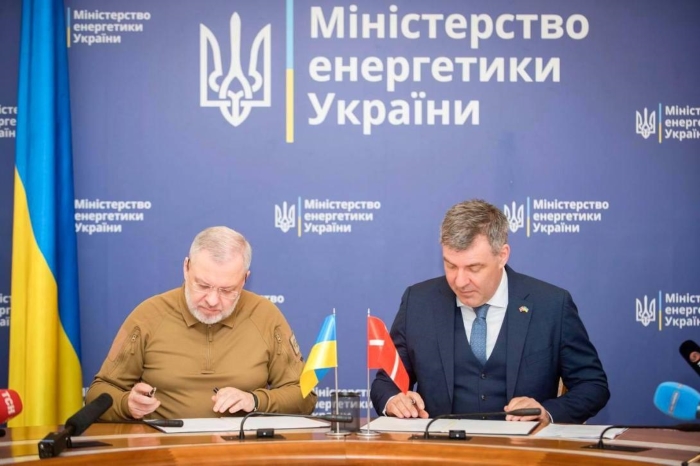
D.M.: In April 2024, Denmark and Ukraine signed a partnership agreement on renewable energy sources, with a focus on biogas. How has the implementation progressed since then? Has the initiative shown potential for expansion?
N.L.S: As an agrarian country, Ukraine has a huge potential for biogas. Now there’s fuel switching to natural gas, providing more decentralized solutions to supplying critical utilities in the case of power failures. Ukraine is perceived as self-sufficient in the production of natural gas, but this could change if the uptake of industry comes.
In Denmark, we have made this transition more than any other country in the world. I think approximately 40% of the gas in the Danish gas system is produced by biogas. And we believe that in the medium to long term, Ukraine has the same potential. However, the gas system must be prepared for this new fuel. In the shorter term, the bigger perspective for natural gas will be to export it to EU countries where compensation is more attractive than in Ukraine due to price caps. In the long term, it should be integrated into a green gas system to help prevent Ukraine from ending up in a renewed dependency on the import of natural gas, or even worse, the import of Russian natural gas.
D.M: Is the implementation of waste-to-energy plants being considered in Ukraine as part of Denmark’s support for renewable energy solutions?
N.L.S: The district heating can be supplied by various fuel sources, including the waste source. In Denmark, we are moving away from waste-to-energy. We do have a plant in Copenhagen, which is one of the most efficient in the world and also famous for a ski slope on top of it. So, in addition to domestic waste, we import the waste from for example England to ensure that we have enough waste for that site. It’s not optimal but still good for the environment because we prevent landfilling and methane gas leakages in some of our neighbouring countries. However, recycling should be the priority.
I still think in Ukraine there is a big possibility for waste-to-energy projects. It’s much better than putting it in a landfill where you get the local pollution and emission of methane gases instead of utilizing those gases for energy purposes.
In Mykolaiv, we are supporting the development of a heat supply scheme for the city, and waste incineration is one of several technologies that are being assessed.
Peculiarities of Danish assistance
D.M.: Are there any aspects of the Danish support approach that should also be mentioned?
N.L.S: It’s important to understand that the work that the Danish Energy Agency does is different from what many other donors do. For instance, the Americans with USAID or the Germans with GIZ will often bring in consultants to help draft the legislation or prepare the technical assessments. Our approach is more of a government-to-government one, where the delegations bring in the same experts who do the task in Denmark. An example is the deliverable of the “Urgent Technology Catalogue for the Ukrainian Power Sector” that we last winter prepared together with the Ministry of Energy that looked into which energy-generating technologies can have the biggest impact on the winterization needs in the next two, three, or four years time horizon. And also to use this post to increase choice awareness on the Ukrainian side and share this information with the regional stakeholders when they consider how to get the most urgent support that they need. This is an example that shows how even as a small country, Denmark (we are only six million people), is still able to hopefully provide some important advice for Ukraine also on these short-term challenges that the energy system is facing.