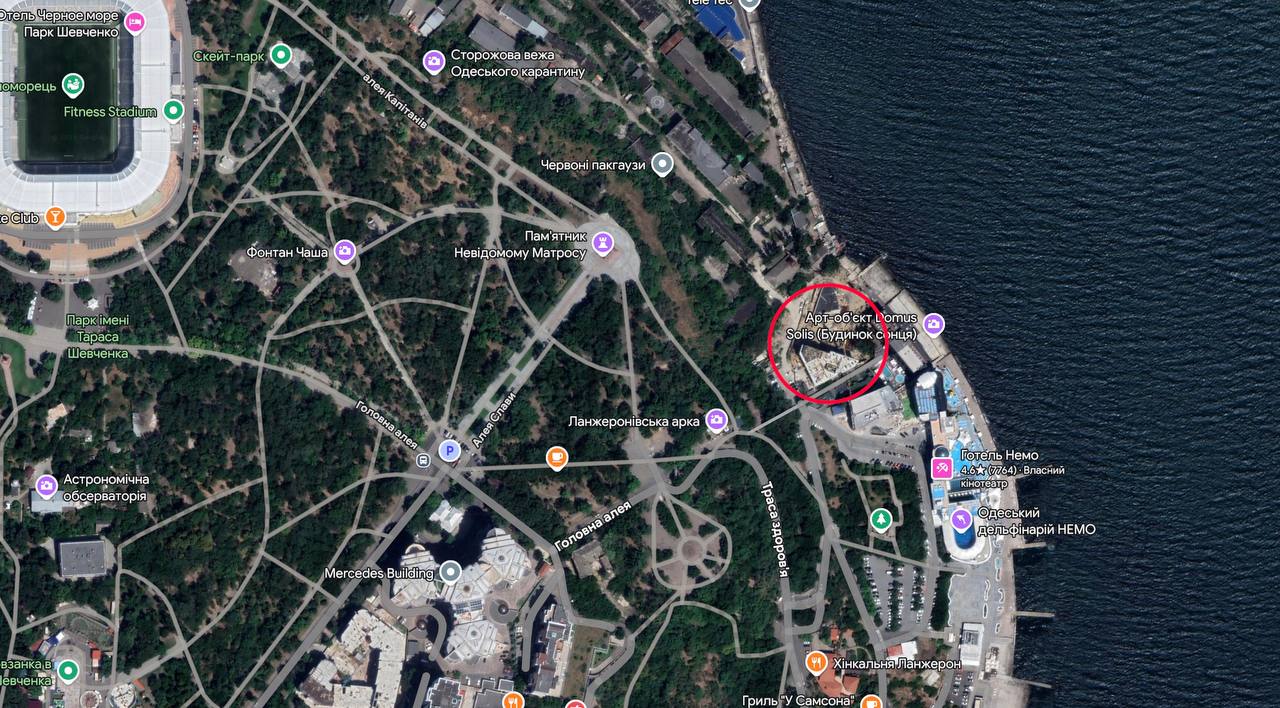
The Odesa seaside is one of the key public spaces of Ukraine. It is here, at the address of Lanzheron Beach, 1, that the conflict is unfolding around the facility known as the M1 hotel. The conflict has already gone far beyond the boundaries of a local construction dispute and has become an indicator of systemic problems in the field of urban planning.
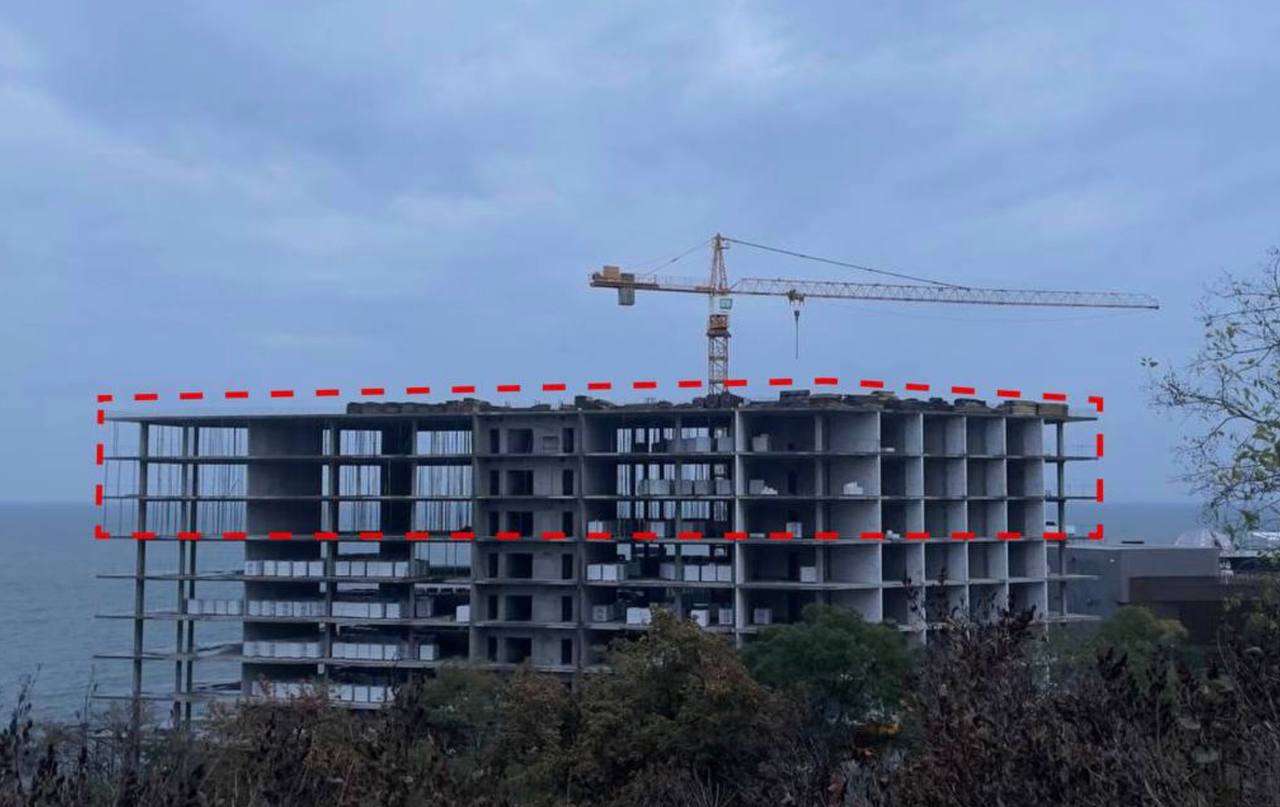
Initially, it was about the reconstruction of non-residential premises for a water sports recreation centre. However, the actual implementation of the project significantly deviates from the approved parameters. According to the results of an unscheduled inspection carried out by the Department of State Architectural and Urban Planning of the Odesa City Council in the period from 11/24/2025 to 12/05/2025, a key violation was established — an unauthorised increase in the number of floors of the facility by three floors.
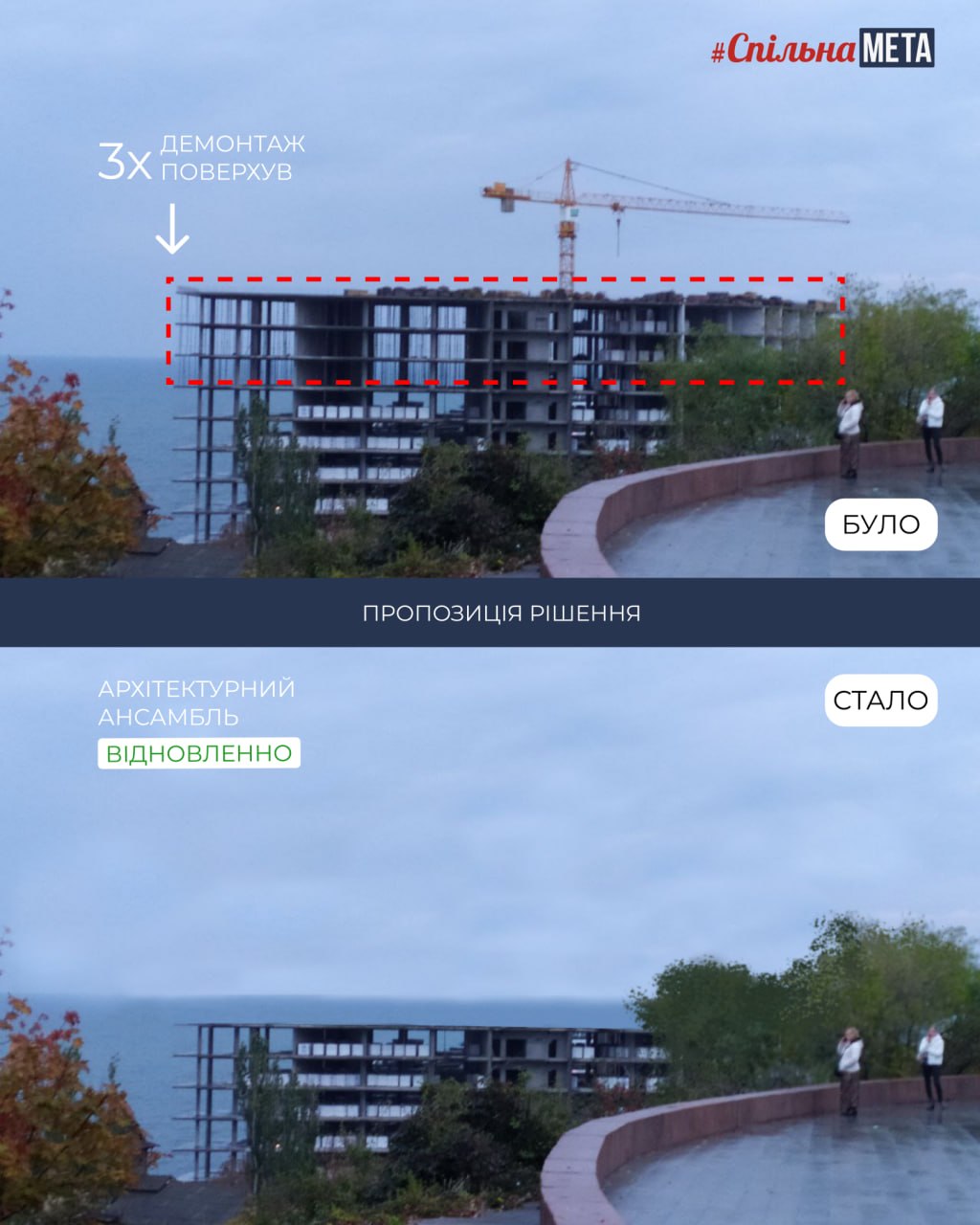
The supervisory authorities officially recorded the violations, and it was established:
- performance of work with deviations from the design documentation
- violation of construction norms and standards
- lack of part of the executive documentation
The reaction of state bodies was formal: on December 5, 2025, orders (No. 055/25 and No. 056/25) were issued to stop the work, protocols were drawn up, and fines were imposed. In particular, the total financial sanctions exceeded UAH 650 000 (USD ~14 821) only for the first violations, and additional fines were subsequently applied for failure to comply with the orders.
However, the key issue is not the fact of the fines, but the lack of results. Repeated inspections showed that the orders were not complied with, and construction continued, which became the basis for new sanctions, including fines totalling up to UAH 166 400 (USD ~ 3 794).
Finally, the Ministry for Development of Communities and Territories of Ukraine agreed to conduct a repeated unscheduled inspection in the period from 02/17/2026 to 03/02/2026.
Thus, the state records violations, which are confirmed by official responses from the Odesa Regional Military Administration and the Department of State Architectural and Urban Planning, but does not ensure their elimination, and construction continues.
Why do we believe this is a prime example of a corruption scheme?
M1 hotel case demonstrates a typical model of blurred responsibility:
- local authorities refer to state governing bodies
- state authorities refer to procedural restrictions
- law enforcement agencies refer to the duration of processes
As a result, a situation arises where formally everyone acts “within the limits of their powers”, but in fact no one ensures the protection of the city’s interests. This is confirmed by the lack of real procedural decisions and inspection results.
It is particularly telling that even after officially established violations, there was no:
- dismantling of illegally constructed floors
- bringing the facility into compliance with permits
- actual cessation of construction
This creates a dangerous precedent, when fines are not perceived as a tool for enforcing compliance with the law despite the issued regulations and imposed sanctions. Given that the amount of fines is significantly less than the economic benefit from increasing the area of the facility, it is perceived as part of the cost of the development project.
Loss of public space
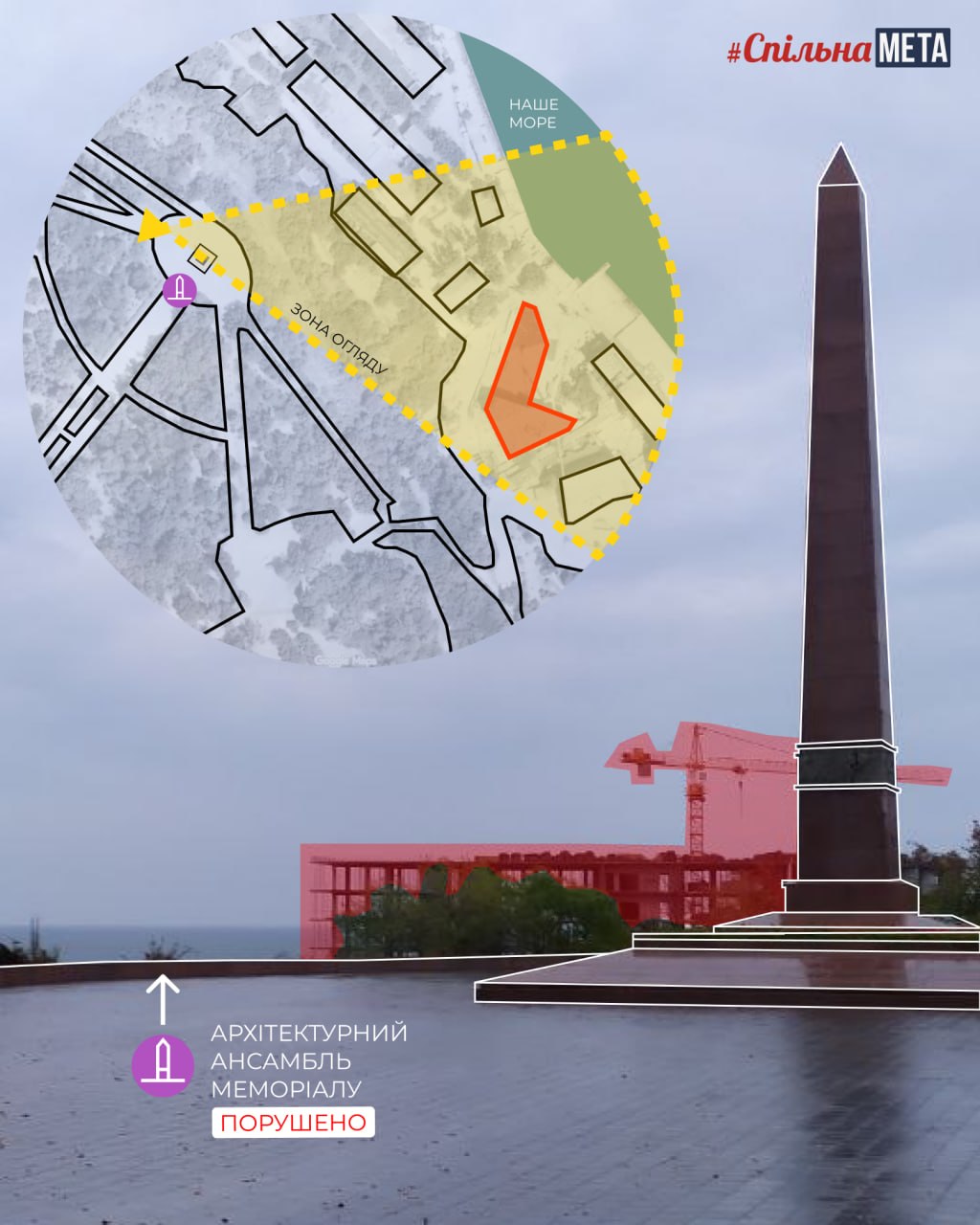
Langeron is not just a plot for development. It is one of the main exits of Odesa to the open sea, which has recreational, cultural and symbolic significance. Any increase in height in this area affects the urban landscape and the panorama of the coast.
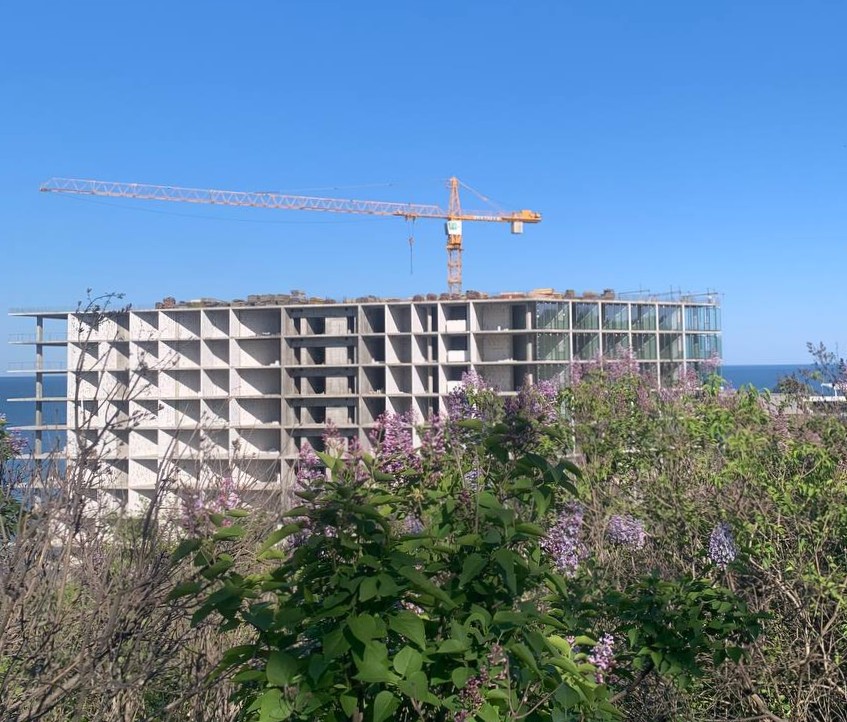
Such changes should be assessed at the level of the interests of the entire city, and not an individual investor. Especially after the inclusion of the historical center of Odesa in the UNESCO World Heritage List in 2023. What does this status mean for the city? It means that its historical environment, the complex of buildings, has international value. And the panoramic view of the sea, which is closed by the construction of the M1 hotel, falls under the zone of the historical center, which is under the protection of UNESCO.
“The Historic Centre of Odesa has also been inscribed on the List of World Heritage in Danger, which gives it access to reinforced technical and financial international assistance, which Ukraine may request so as to ensure the protection of the property and, if necessary, assist in its rehabilitation” — this is what is written in the official UNESCO statement of January 25, 2023.
The role of civil society
The situation around M1 shows another important thing: today, it is public organizations and human rights initiatives that are effective response tools.
A prime example is the activities of the NGO “Spilna Meta”, which has been systematically recording violations, initiating inspections and waging a public and legal fight against illegal construction on the Odesa coast for over 10 years, in particular through submitting official appeals, initiating inspections and publicly covering the results of state bodies’ actions.
That is why such cases should receive public coverage — this is important not only for a specific object, but also for creating systemic pressure on developers who violate the law.
For international partners, such cases should serve not as examples of local conflicts, but as a signal to strengthen support for civil society institutions and the implementation of mechanisms that ensure real participation of communities in decision-making. The fight against corruption for Ukrainian society is the second systemic threat after the aggressive war unleashed by the Russian Federation. It is an important factor for strategic international support for Ukraine, including in the context of transparency in the use of international aid and post-war reconstruction of Ukraine.
Conclusion
The case of illegal construction of the M1 hotel on Langeron is not about one hotel. It is a test for the entire system of state control of the construction industry and urban planning in Ukraine.
If after the established violations:
- construction does not stop
- regulations are not followed
- officials are not held accountable
- three floors are not dismantled
This means that the state system does not work and corruption has prevailed under the guise of blurred responsibility. We must realize that the additional three floors are a profit for one investor of several hundred thousand dollars, or even millions, but on the other hand – these are significant image losses for a city of a million people and ignoring the needs of both citizens and guests of Odesa, who will be forced to look at new buildings instead of an open view of the sea.
And that is why the question is not about a specific object. The question is whether Ukraine, as a legal state, is able to protect its cities and the interests of people, or will the problem of corruption become the No. 1 problem in Ukraine.

Volodymyr Savchenko