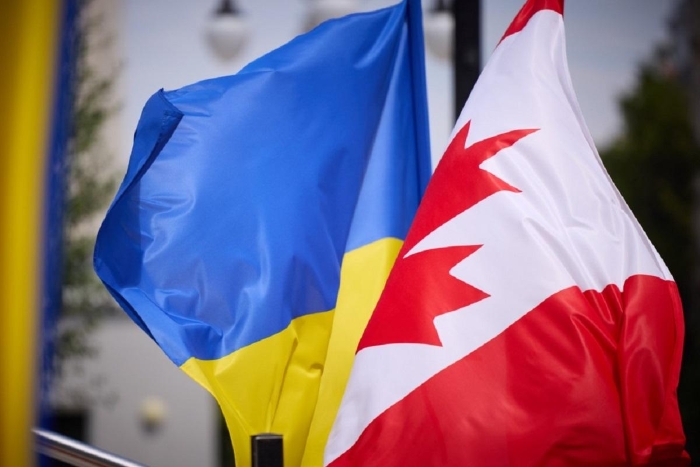


Canada has sent Ukraine 25 M113 armored personnel carriers along with approximately 75,000 spare parts. Ottawa is also transferring 125 AIM-7 air-to-air missile components and 38 LAU-7A launchers. In addition, Canada is providing $30 million worth of winter equipment.
The AIM-7 Sparrow is a medium-range guided air-to-air missile equipped with a semi-active radar homing system. Importantly, some of these missiles are now being converted for use in ground-based air defense systems, expanding Ukraine’s air-defense capabilities.
Canada’s support throughout the decade is examined below.
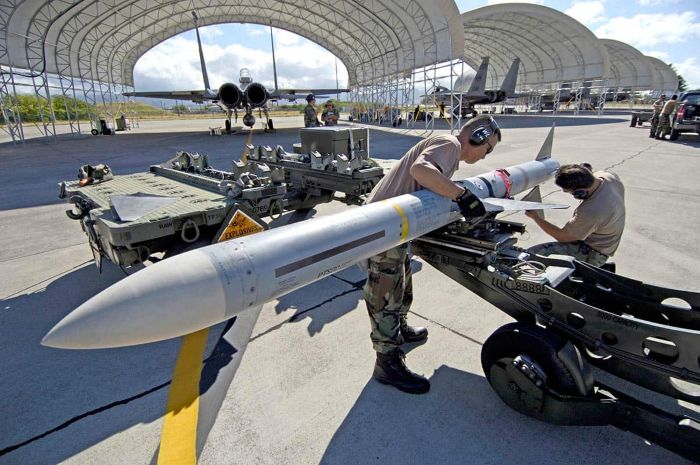
AIM-7 Sparrow air-to-air missile / militarnyi
Military Assistance
According to the Kiel Institute Ukraine Support Tracker, Canada ranks 7th in total bilateral financial commitments (including EU aid).
As reported by the Government of Canada, since early 2022, Ottawa has committed $6.5 billion in military assistance to Ukraine. This funding framework will support the continued delivery of military aid through 2029.
In March–April 2022, Canada transferred Carl Gustaf M2 anti-tank weapons and ammunition. In the outset of the full-scale invasion, Canada also supplied Ukraine with M777 howitzers paired with high-precision Excalibur rounds, capable of striking targets at distances of up to 40 km using GPS-guided technology.
In 2024, responding to the rapidly growing importance of drone warfare, Ottawa announced the delivery of more than 800 drones to Ukraine. Canada has also transferred SkyRanger R70 drones, a large batch of high-precision cameras for UAVs, thousands of CRV7 rocket motors, and significant quantities of ammunition.
Canada is a core member of the Air Force Capability Coalition, taking a leading role in training Ukrainian pilots to operate F-16 fighter jets. Ottawa has also strengthened Ukraine’s air defense by providing AIM-series missiles and donating a NASAMS air-defense system in 2024. In February 2024, Canada and Ukraine signed a 10-year bilateral Security Cooperation Agreement, reinforcing long-term military and political partnership.
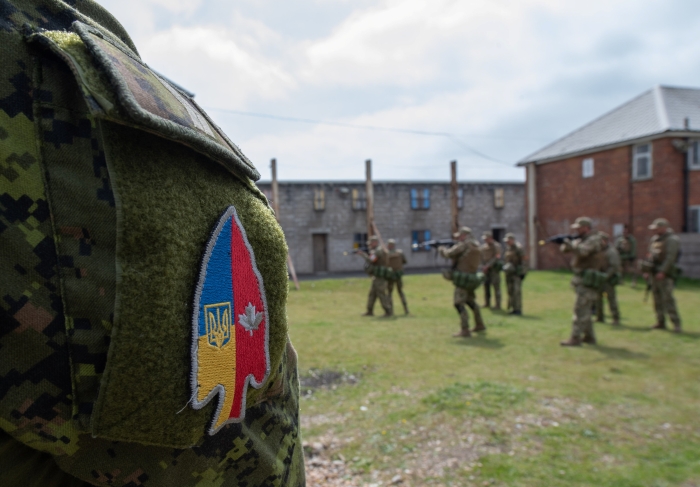
At the same time, Canada continued training Ukrainian service members under Operation UNIFIER. Notably, this mission began in 2015, making Canada one of Ukraine’s earliest and most consistent supporters since the first Russian invasion. As of today, Operation UNIFIER has trained over 44,000 members of Ukraine’s Security Forces.
Humanitarian Initiatives
At the end of October, Canada announced nearly $45 million in additional support for Ukraine’s energy sector recovery. More than $37 million of this sum will finance the purchase and delivery of natural gas compressors to the Kharkiv region.
Beyond infrastructure needs, Canadian government grants, loans, and humanitarian funding—distributed through the Canadian Red Cross, UN agencies, and other organizations—have supported internally displaced persons by providing medical services, temporary housing, and winter equipment.
A key factor in Canada’s sustained involvement is its highly organized Ukrainian diaspora. According to census data and demographic studies, Canada is home to 1.2–1.4 million people of Ukrainian origin, making it one of the largest Ukrainian communities outside Ukraine. The diaspora actively lobbies for political support, organizes fundraising, humanitarian relief, and volunteer assistance, and strengthens cultural and informational ties between the two countries.
Conclusion
Canada became one of the first countries to offer Ukraine assistance and continues to support Ukraine. It goes on because of shared geopolitical values, economic and security ties within NATO, strong electoral influence of the Ukrainian diaspora, and the readiness of Canadian industry to supply critical equipment.
Amid troubling discussions about forcing Ukraine into territorial concessions or military weakening, Canada’s new support package is the good defence news.