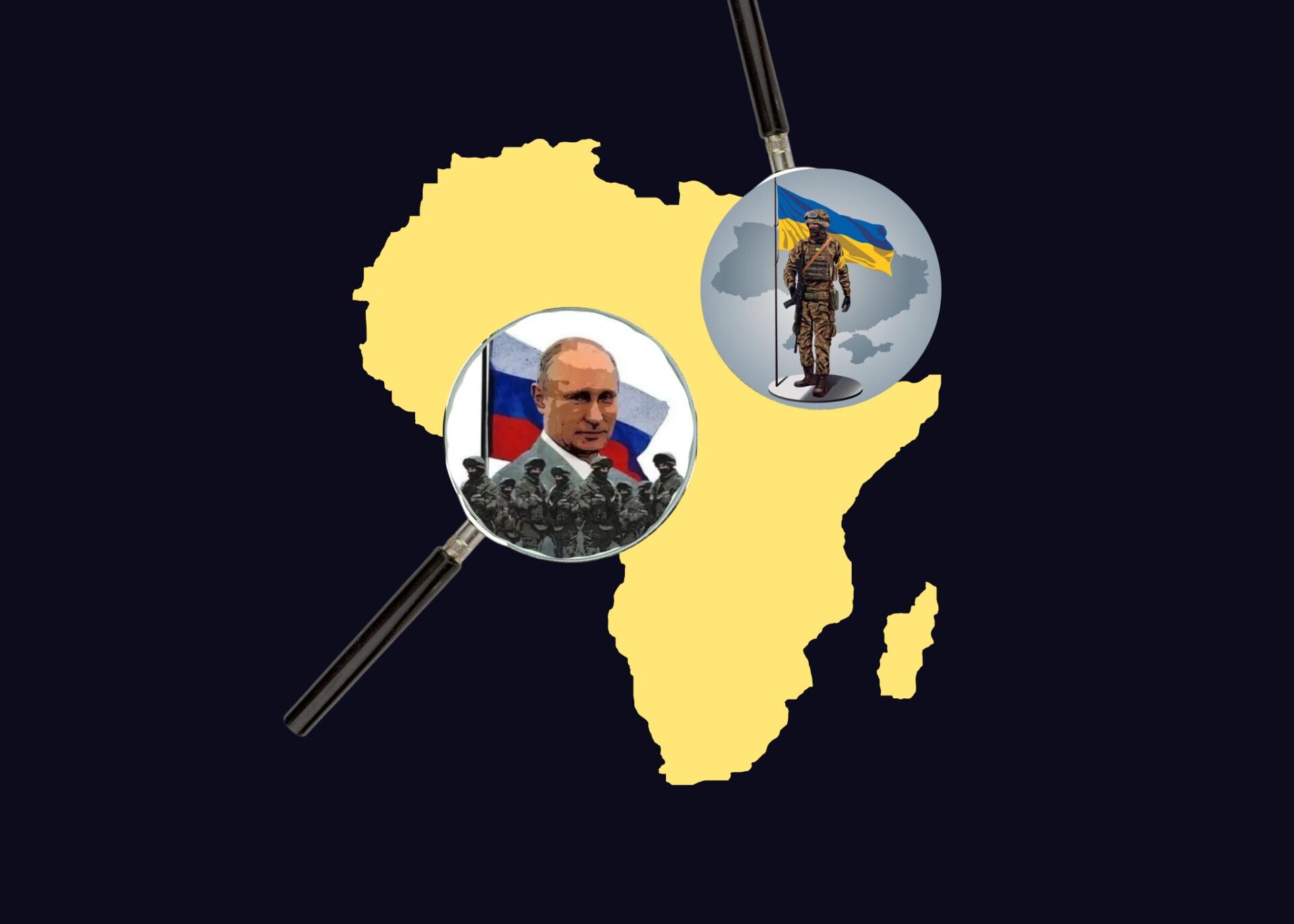


Africa has become an important field of Russia’s information warfare, where global narratives about the war in Ukraine are being shaped. Research centers note that Russia is actively investing significant resources in media influence across the continent, using various networks and influence structures, including organizations linked to the former Prigozhin.
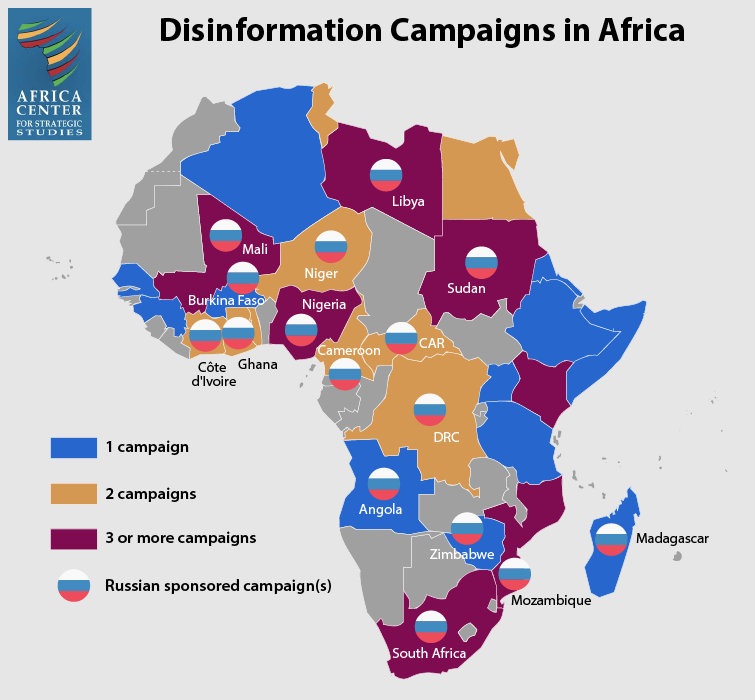
As shown in the comprehensive report by the Africa Center for Strategic Studies (ACSS) “Mapping Disinformation in Africa,” the number of disinformation campaigns in the region quadrupled in 2023–2024.
Next, we will analyze which fakes were spread in African media earlier and what the media report about the Russia–Ukraine war now.
Which Fakes Were Spread in Africa
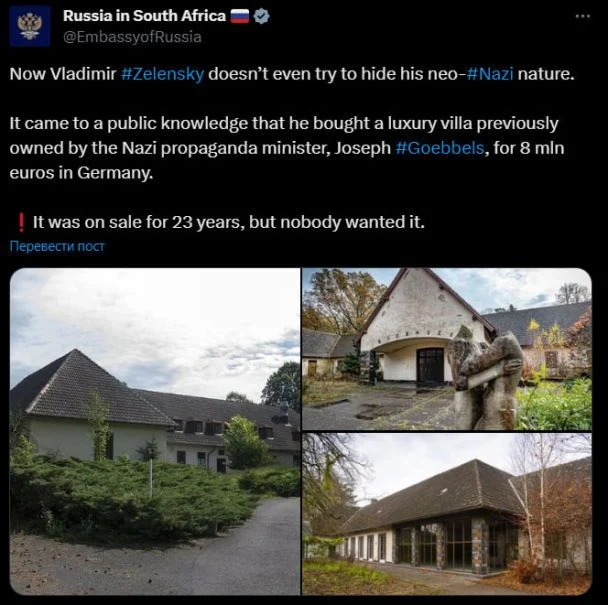
Fake about “Zelensky’s Villa in Egypt.” The fake claiming that Zelensky bought a villa in Egypt for his mother-in-law was spread in Nigerian media and anonymous Russian Telegram channels.
The reports claimed that Zelensky allegedly bought the house with Western aid to Ukraine, citing “documents” and a video by journalist Mohammed Al-Alawi.
In reality, the documents contained name errors, their authenticity was unverified, and the journalist had no real reputation. This was a fabrication aimed at discrediting Ukraine and portraying the country as corrupt, undermining its efforts in fighting corruption and pursuing European integration.
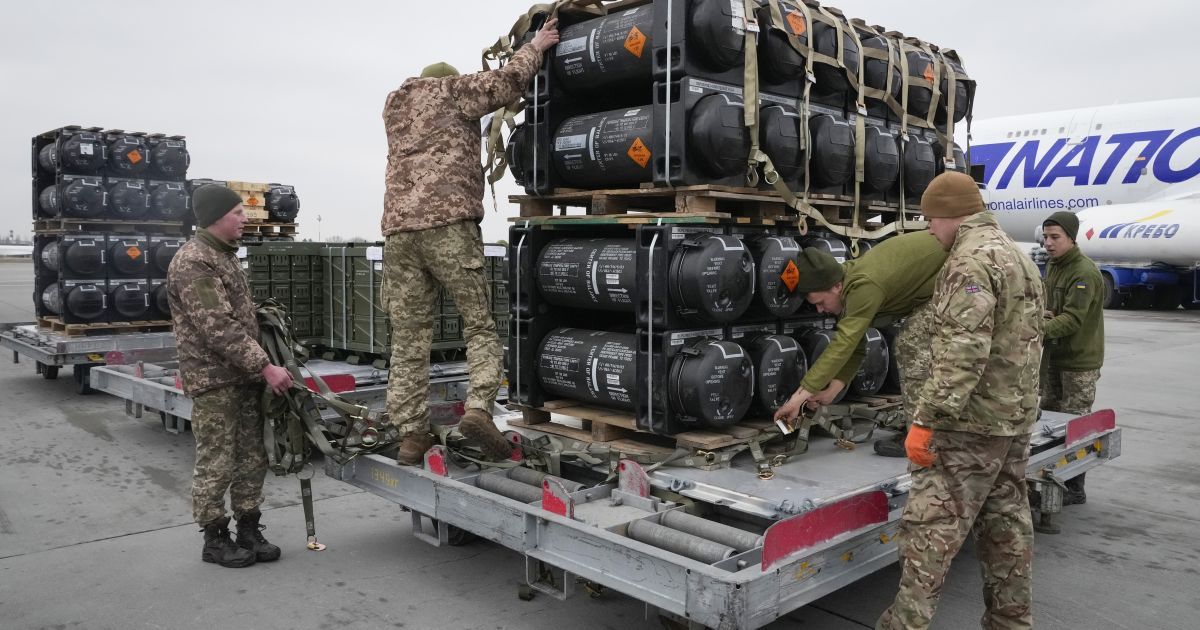
Fake about “Ukraine Selling Western Weapons to Terrorists in Nigeria”. Russian media circulated information claiming that Western weapons supplied to Ukraine ended up in terrorist groups in the Sahel and other African regions.
The reports cited statements by the President of Nigeria and Russia’s Defense Minister Shoigu, but this was manipulation. In fact, President Buhari only noted that the war in Ukraine and regional conflicts increase the threat of terrorism, without stating that weapons from the West for Ukraine ended up with terrorists.
Pentagon and EU officials confirmed that there is no evidence of resale or misuse of Western weapons by Ukraine, and multiple investigations showed that claims about smuggling or sales are Russian disinformation.
Next, let’s analyze what African media is writing about Ukraine and the Russian-Ukrainian war now.
The Premium Times (Nigeria)
An analysis of The Premium Times publications shows that the outlet acts more as an intellectual filter for international topics than as a source of up-to-date, operational information about Russia’s war against Ukraine.
The media rarely publishes materials about shelling, frontline events, the course of military actions, or documented Russian war crimes, thus avoiding the daily news dimension of the war.
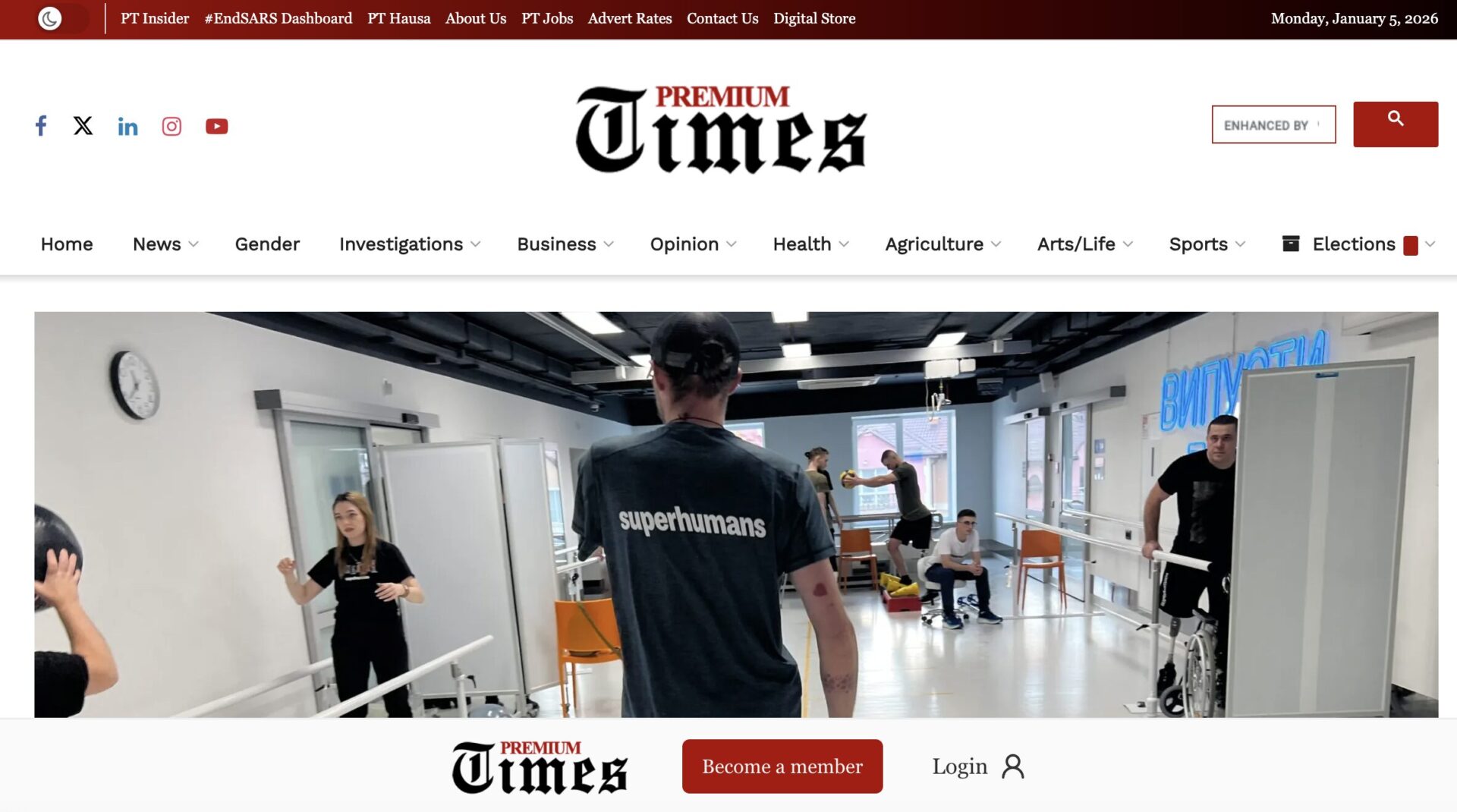
Instead, the focus is shifted to humanitarian and psychological aspects—stories of volunteers, civilians, and the trauma left by the war in people’s lives—which makes the texts deep and empathetic but at the same time distances readers from understanding the current reality of the war.
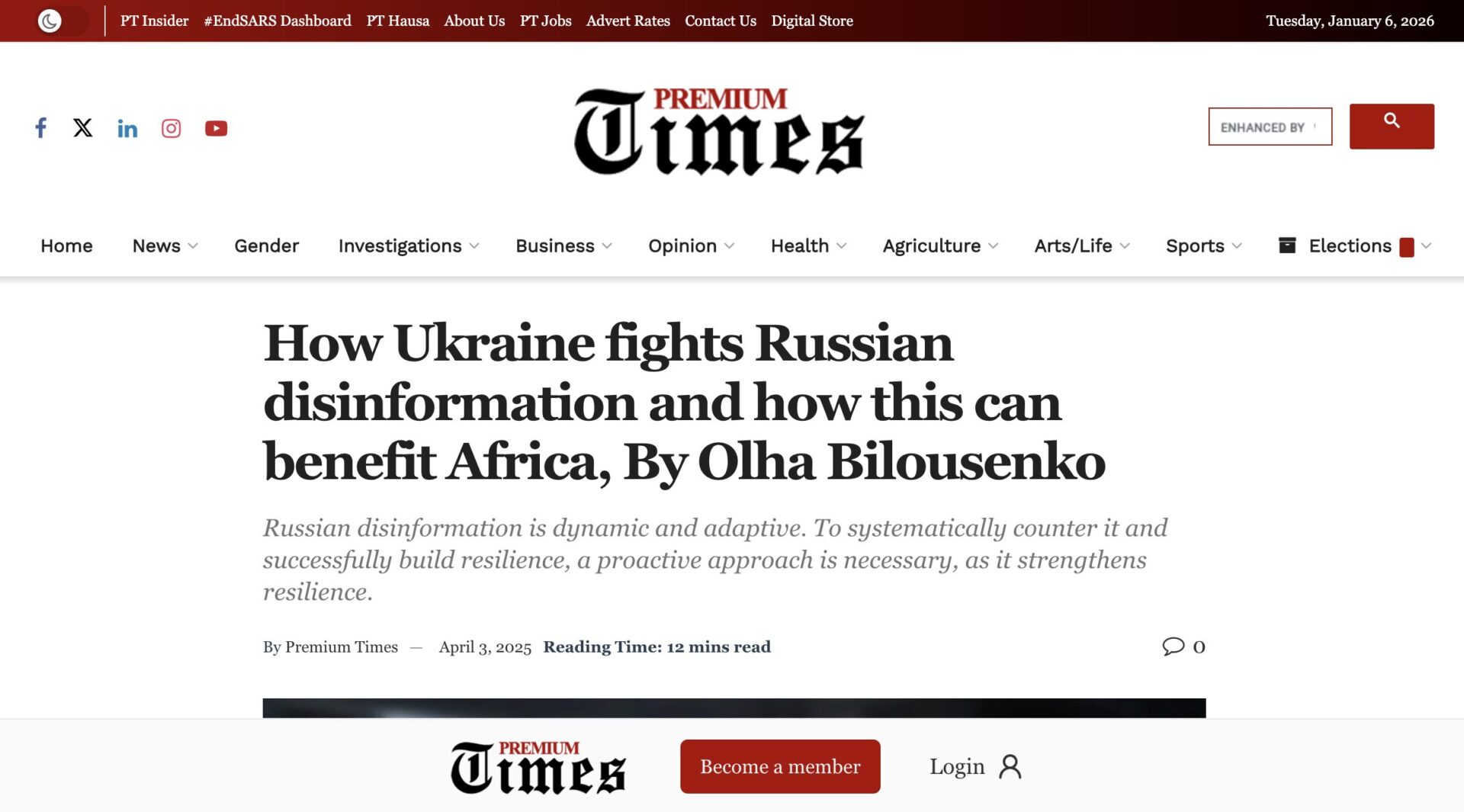
The Premium Times also actively engages with ideological manipulations, analyzing Russian narratives. For instance, the outlet published a detailed article, “How Ukraine Fights Russian Disinformation and How It Can Be Useful for Africa.”
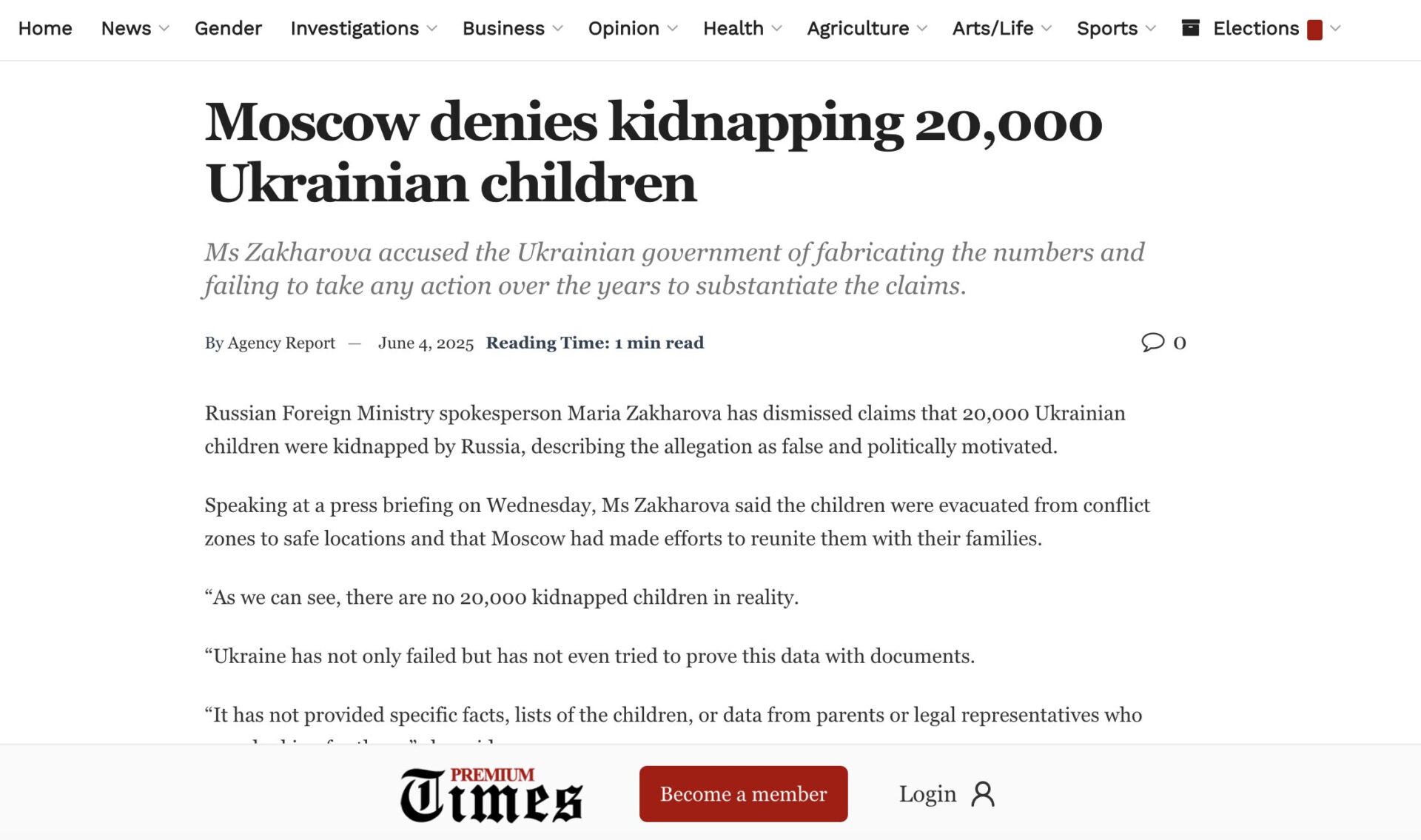
At the same time, in news materials, the outlet regularly reproduces Russian formulations and statements without sufficient context or clear disinformation labeling, quoting the Kremlin. For example, “Moscow denies the abduction of 20,000 Ukrainian children” or “the head of Russian intelligence named the conditions for ending the war in Ukraine.” This creates a perception of symmetry in positions where there is confirmed evidence of Russian crimes and accountability.
Thus, despite high-quality analytical and psychological materials, The Premium Times partially reproduces Russian narratives through language and news structure while avoiding systematic coverage of the war as a process with a clearly defined aggressor, limiting a full understanding of the conflict for the Nigerian audience.
The East African (Kenya)
The East African in Kenya reports on the Russia–Ukraine war very narrowly, focusing on few topics, mostly general or sensational aspects of the conflict rather than daily frontline events.
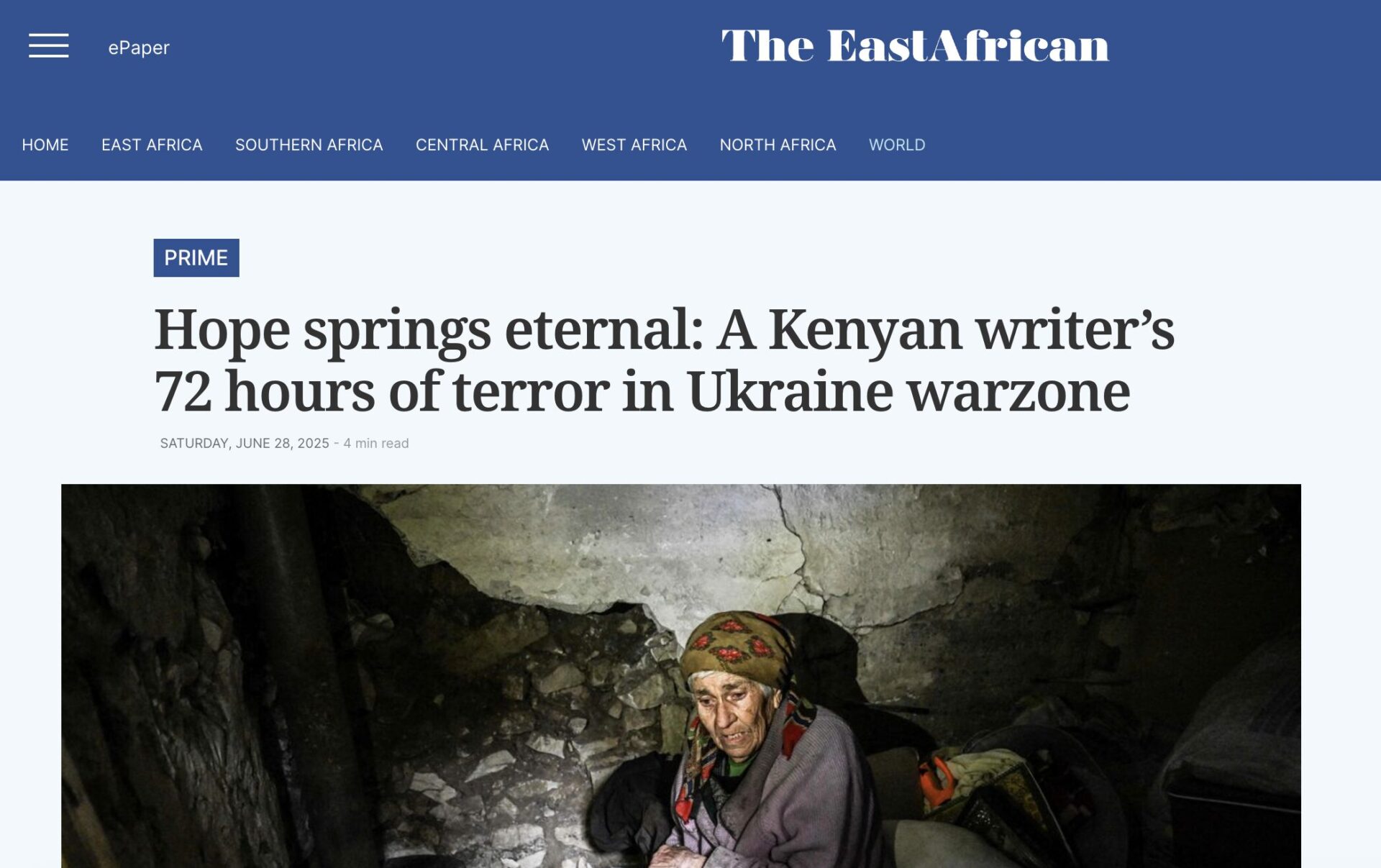
The outlet’s materials cover international political statements and individual human stories, such as the experience of a Kenyan writer in Ukraine or stories of Ukrainians trying to preserve art and cultural heritage despite destruction.
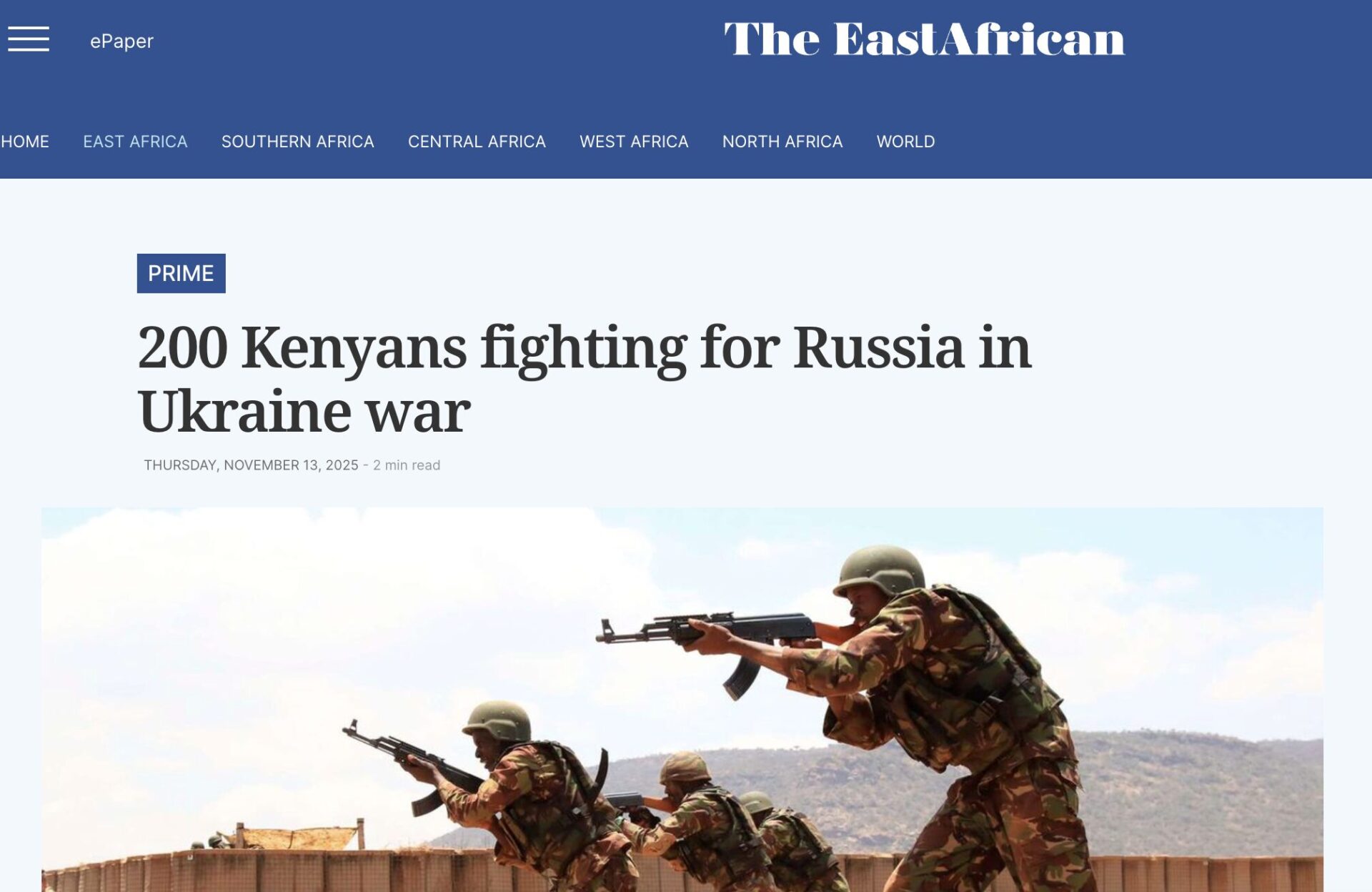
The focus also includes some sensational reports, like the participation of 200 Kenyans on Russia’s side, or Trump’s statements about the possibility of ending the war under certain conditions, giving readers a quick overview of key events and international positions, but without deep analysis or humanitarian context.
The East African does not offer frontline reports, does not cover civilian life in detail, and does not analyze propaganda narratives, instead reporting on the war through a limited set of topics, combining international politics, individual stories, and cultural aspects.
This creates only a superficial understanding of the war for the Kenyan audience, focusing more on news sensationalism and general international aspects than on comprehensive humanitarian or diplomatic context.
Daily Maverick (South Africa)
An analysis of Daily Maverick’s content demonstrates the approach of a leading intellectual outlet in South Africa, attempting to balance coverage of hard geopolitics with a humanistic focus.
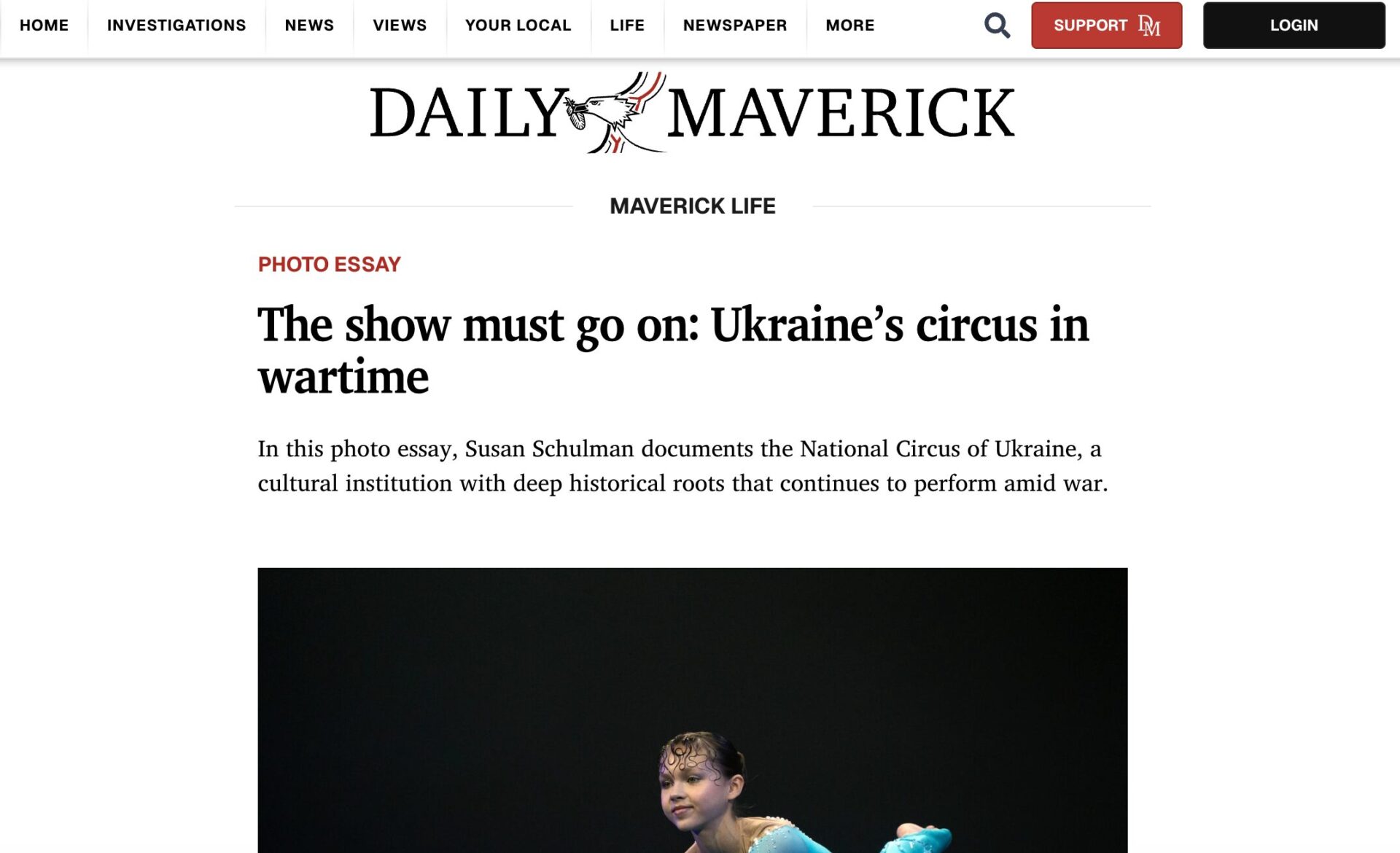
The outlet actively reports on Ukraine’s cultural resilience and national identity, using visual reporting, such as the story of the national circus, to show resistance not only on the battlefield but also in the sphere of spirit.
Significant attention is paid to diplomatic maneuvers and war-ending scenarios, where the media thoroughly analyzes complex compromises, including a potential renunciation of NATO membership in exchange for security guarantees or negotiations mediated by the United States.
Publications often have a restrained, almost clinical tone characteristic of high-quality Western journalistic standards, focusing on the real consequences of energy terror, describing blackouts and civilian survival in Kyiv.
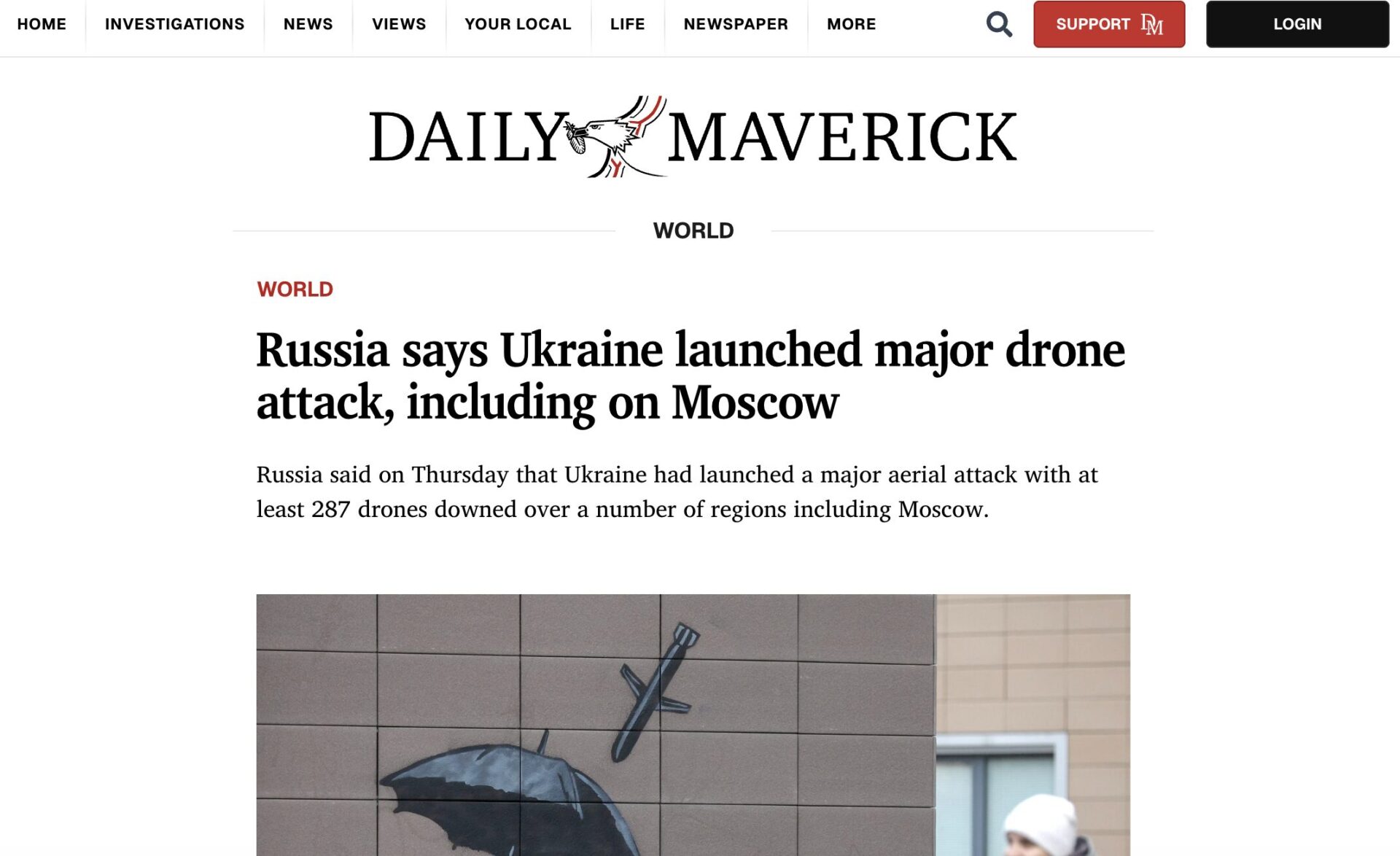
At the same time, the outlet often quotes Russian reports about the course of the war—for example, Putin’s reaction to a peace plan or Ukraine’s drone attacks on Russia—while almost completely ignoring regular Russian missile strikes, leaving readers without a full understanding of operational developments.
Conclusion
Africa is an important field of Russia’s information warfare, where global narratives about the war in Ukraine are formed. Russia actively promotes disinformation through various networks and influence structures, as confirmed by the Africa Center for Strategic Studies report showing a sharp increase in disinformation campaigns in 2023–2024.
African media demonstrate diverse approaches to covering the war. The Premium Times in Nigeria focuses on humanitarian and psychological aspects, analytically deconstructs Russian propaganda, and adapts news for the audience through fact-checking. At the same time, the outlet hardly covers operational events on the frontlines, shelling, or war crimes, and frequently cites Russian statements, creating a perception of symmetry where there is confirmed evidence of Russian crimes.
The East African in Kenya limits itself to superficial sensational reporting and international political statements, without delving into frontline reality or propaganda, forming only a general and fragmented understanding of the war for its readers.
Daily Maverick in South Africa demonstrates a more balanced approach, combining diplomatic analysis with a humanistic focus on civilians and Ukraine’s cultural resilience. Yet even here, the outlet regularly cites Russian statements while almost never reporting on regular shelling or active combat, leaving the audience without a complete view of operational developments.
Overall, African media form a heterogeneous picture of the war: from deep humanitarian and analytical coverage to superficial and sensational reporting. This underscores the critical role of media literacy in understanding international conflicts and the need for careful source analysis to separate facts from propaganda.
Anna Romaniv