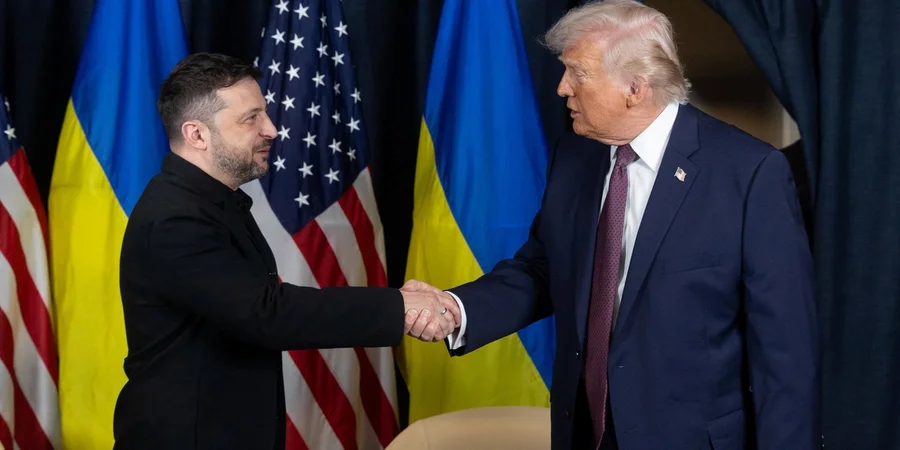


Tensions around Greenland are gaining momentum. At the World Economic Forum in Davos, attention partially shifted to the security of the island, particularly following statements by U.S. While rhetoric about Greenland seemed to fade relatively quickly at the beginning of Donald Trump’s second presidency, now the tone is far more decisive. In Davos, Trump stepped back from military-threat rhetoric, yet the pressure remains. European leaders have emphasized Denmark’s sovereignty as a key message.
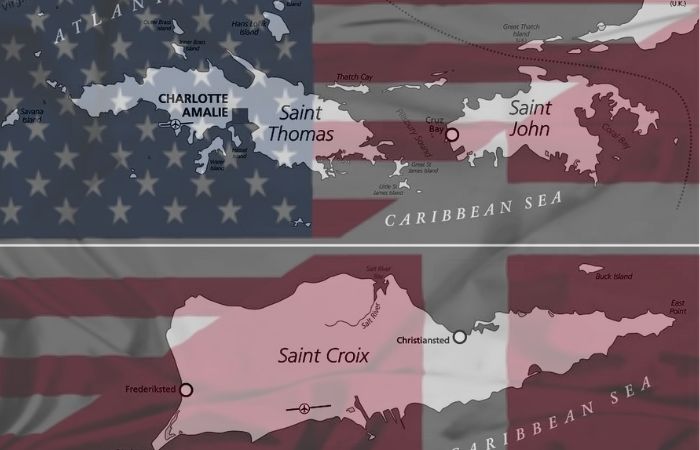
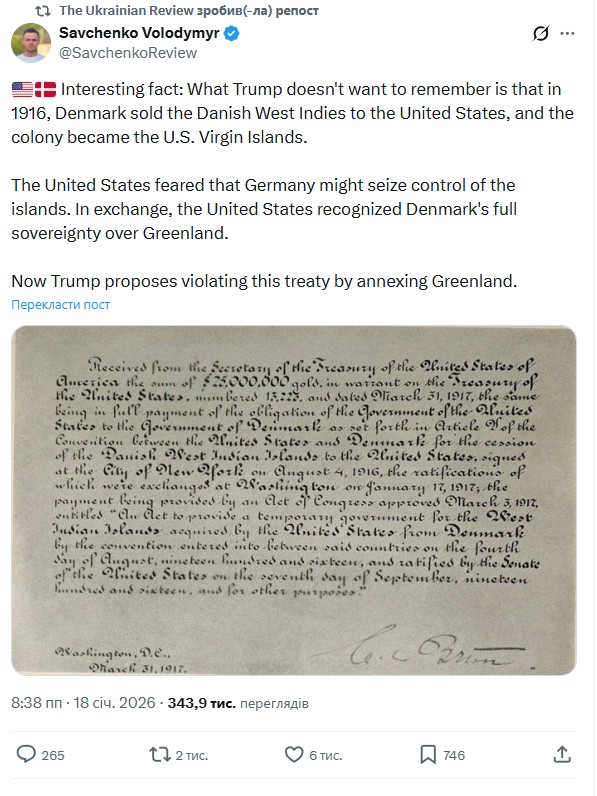
History offers an example in which the United States purchased territory colonized by Denmark. In 1917, Denmark sold the Danish West Indies to the United States; the colony later became the U.S. Virgin Islands.
However, could comparisons and reminders of obligations be applicable to the modern situation?
A Short History of the Islands
Denmark colonized Saint Thomas, Saint John, and Saint Croix in the 17th and 18th centuries, establishing the Danish West Indies. The plantation-based economy relied on the labor of enslaved Africans and generated profits until declining sugar prices in the 1840s. In July 1848, a mass revolt on St. Croix forced the abolition of slavery.
After the American Civil War, the United States began viewing the islands as a strategic asset in the Caribbean. An initial purchase attempt in 1867, negotiated by Secretary of State William H. Seward, failed in the U.S. Senate. U.S. interest intensified after the Spanish-American War in 1898, driven by imperial expansion and the future building of the Panama Canal, but a 1902 treaty collapsed when Denmark’s parliament rejected the sale.
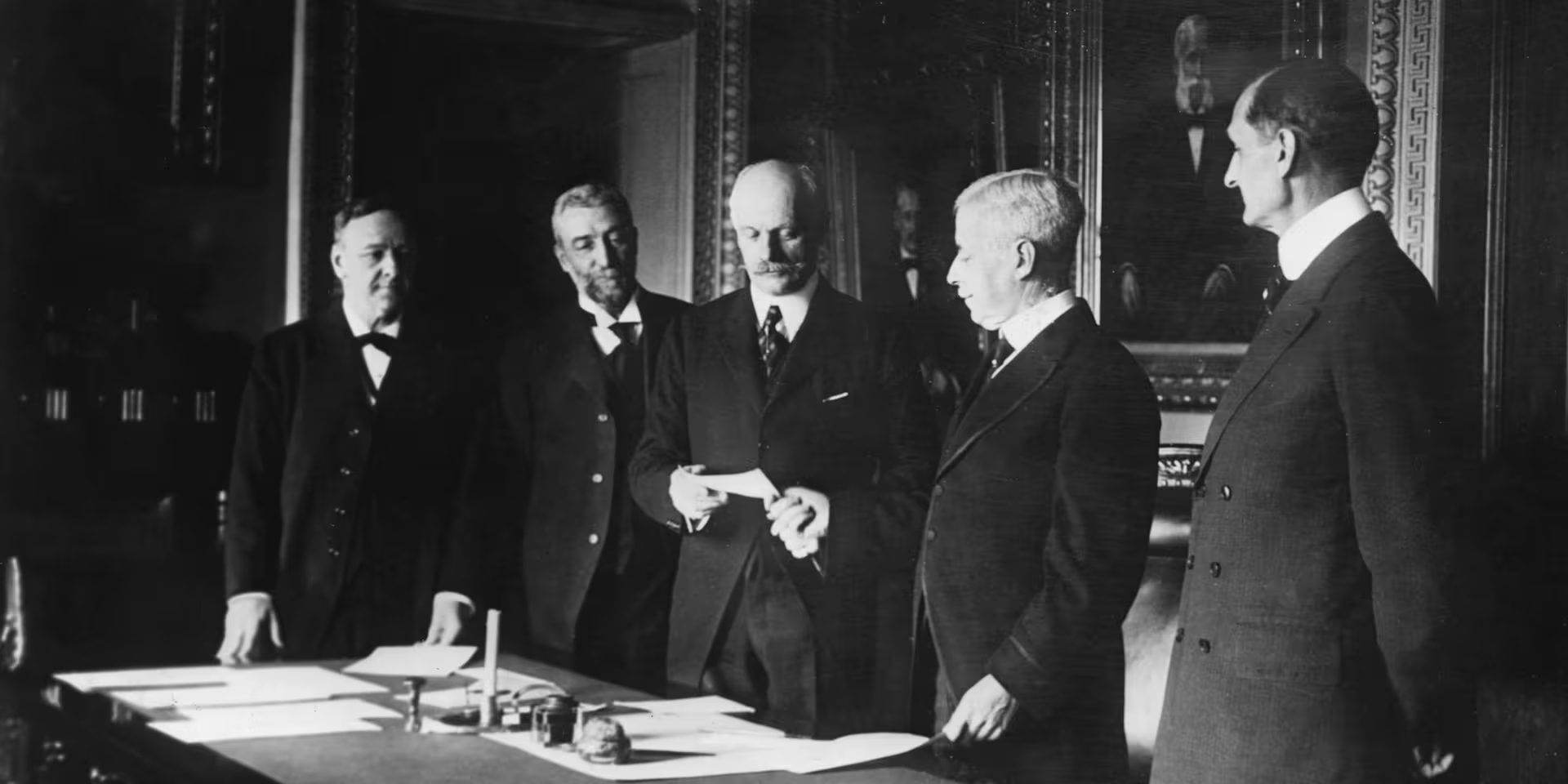
World War I revived negotiations amid fears that Germany could seize Denmark and use the islands as a naval base. Under strong U.S. pressure, Denmark agreed to sell, and on March 31, 1917, the islands were transferred to the United States for $25 million in gold. Interestingly, the sale included Jeffrey Epstein’s future notorious island, “Epstein Island”, as NYP noted.
Politically, the islands’ status evolved gradually. Residents received American nationality in 1920 and full U.S. citizenship in 1932. The right to elect a governor followed in 1970. Today, Virgin Islanders are U.S. citizens but lack voting representation in Congress and cannot vote in presidential elections.
Why the Comparison Does Not Hold
A recent The Ukrainian Review’s CEO post on X about the islands sparked discussions. Commentators expressed differing views: from seeing the case as evidence of the fragility of international agreements, to questioning whether the precedent is even relevant today and justifying the U.S. modern intentions with it.
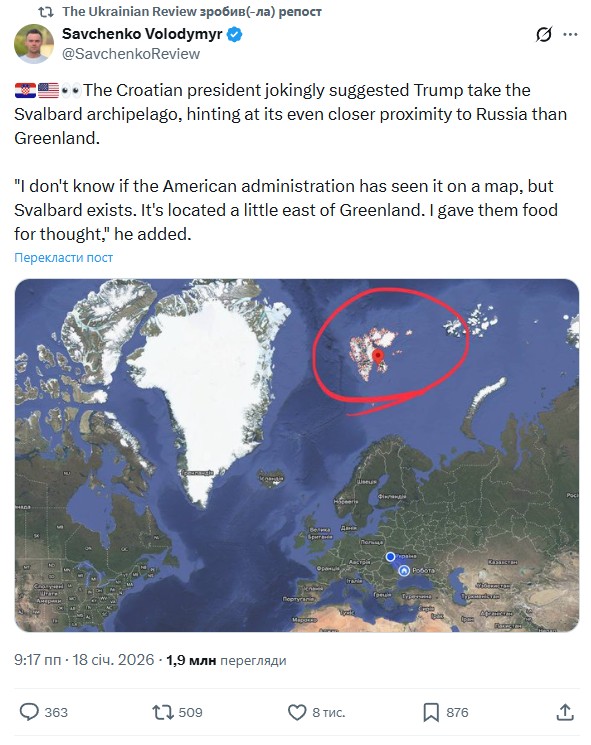
Separately that day, Croatia’s president jokingly suggested that Trump should instead take the Svalbard archipelago (Norway), hinting at its proximity to Russia:
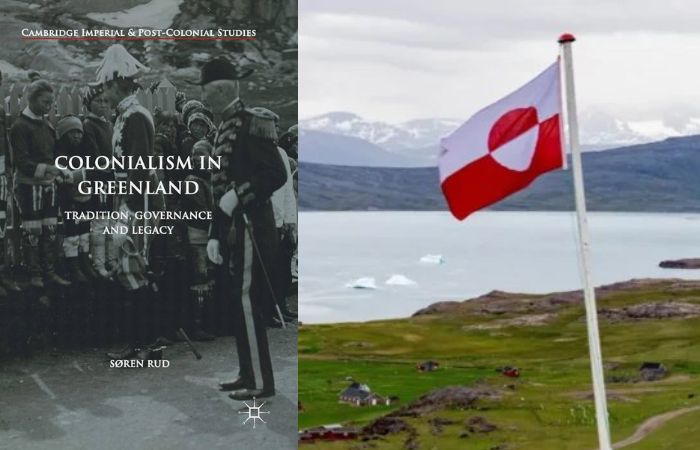
We asked Søren Rud, Associate Professor at Copenhagen University and author of the book “Colonialism in Greenland: Tradition, Governance and Legacy” whether it is correct to describe the 1917 deal as an exchange for independence. A historian noted that the sale should be understood as part of broader diplomatic efforts:
The sale had been a recurrent theme for Denmark since the 1860s since the Islands/colonies had become a financial burden for Denmark. The opening of the Panama Canal in 1913 increased the Islands strategic importance which grew further during the 1. World War. A sale to the USA was an obvious solution. In addition to the money Denmark took the opportunity to secure US support to the Danish plan for declaring sovereignty over all of Greenland (so far Denmark had had colonies in Greenland which comprised a colonial area or territory mainly in West-Greenland). Denmark looked at the anniversary of Hans Egede’s arrival (1721) in 1921 as an opportunity to declare sovereignty over all of Greenland and had diplomatic efforts to secure that the claim would not be opposed by any other states. The Lansing declaration (accepting the extension of Danish interests to the whole island) from 1916 should be seen in this light.
Denmark formally declared sovereignty over all of Greenland in 1921. Norway later disputed Danish claims over East Greenland, but the Permanent Court of International Justice in The Hague ruled in Denmark’s favor in 1933.
The professor also explained why the historical parallel is misleading in the modern context:
In 1916/17 the role as a colonial power was not a source of shame but rather pride. The European countries held and participated in colonial exhibitions where the modern industrialized projected their power by displaying their colonial possessions. After the Second World War a new order arose, and a wave of decolonization came about. The role as colonizer became problematic, especially in the UN. Denmark managed to gain support in the UN (with US support) for Greenland’s integration into the Danish Realm in 1954 and escaped the stigmatizing role as colonizer. So, (until recently…) the world looked quite different from what it looked like in 1917, where colonies could be traded between colonial powers. Trump however is operating within a pre-WWII logic of imperialism and colonialism. So, I believe that the parallel is misleading given the lack of consideration for the difference of historical contexts. Or, viewed differently, the parallel can be used to point out the absurdity of a proposal to buy Greenland. In 1979 and 2009 Greenland took steps towards increased political self-determination, and the Greenlandic politicians and the Greenlanders have the power to determine their future – unless Greenland becomes recolonized by the US.
Conclusion
In the current situation where Denmark and the United States are part of the same defense infrastructure, purchasing Greenland would not fundamentally change regional security as it was during the World War 1 with islands. Greenland’s population has protested against such proposals, emphasizing that the island must determine its own path.
At the same time, history remains essential for understanding the roots of contemporary political thinking. Ultimately, the most effective way to protect any territory from Russian aggression is not through territorial deals, but by weakening Russia through its defeat in the Russian-Ukrainian war.