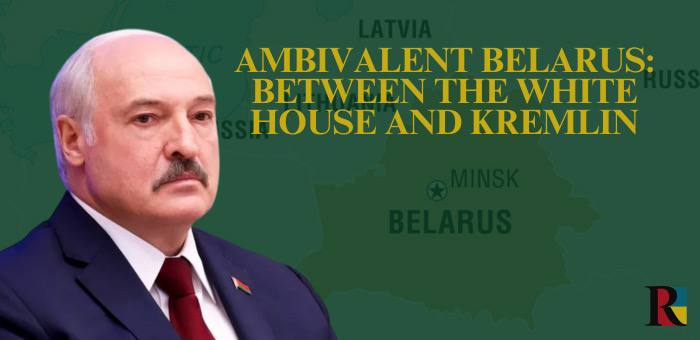


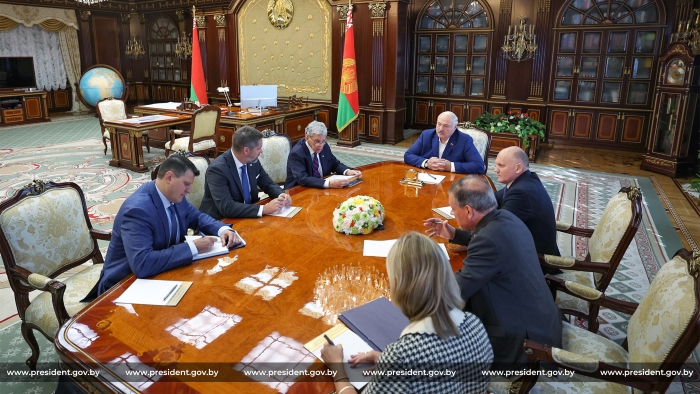
Another dictator emerging from the shadow of international isolation is Belarus’s self-proclaimed President, Aleksandr Lukashenko. The U.S. hopes to normalize relations with Belarus. On September 11, Lukashenko’s press service published a report from a meeting in Minsk with John Coale, a representative of the U.S. president.
Like his friend Putin, Lukashenko presents himself as a competent historian. He also praised Donald Trump, stating:
It doesn’t matter whether he has stopped seven, six wars or conflicts. He has stopped quite a few conflicts. I say this as a historian and as a president who has been in office for a long time: no president of the United States of America has made such efforts to ensure peace on the planet.
During the conversation, the Russian-Ukrainian war (referred to as a “conflict” by the Belarusian leader) was mentioned several times. This was exactly what the U.S. delegation wanted to hear: Lukashenko could again present himself as a potential mediator. In the end, Coale handed him a gift from Donald Trump: cufflinks engraved with the White House. Moreover, the U.S. decided to lift sanctions on the Belarusian airline “Belavia”.
Lukashenko’s “Relegalization”
Through such compromises, Washington is trying to secure the release of numerous political prisoners. However, this policy could just as easily fuel the dictator’s appetite, as happened with Russia after Alaska.
Since the mass protests of 2020, Lukashenko has not been recognized as a legitimate leader. In 2025, the European Parliament again called the Belarusian elections “fake.” On January 17, former U.S. Secretary of State Antony Blinken issued a statement calling the elections a “sham,” now archived on the State Department’s website.
Friendly and Unfriendly Warnings to Poland
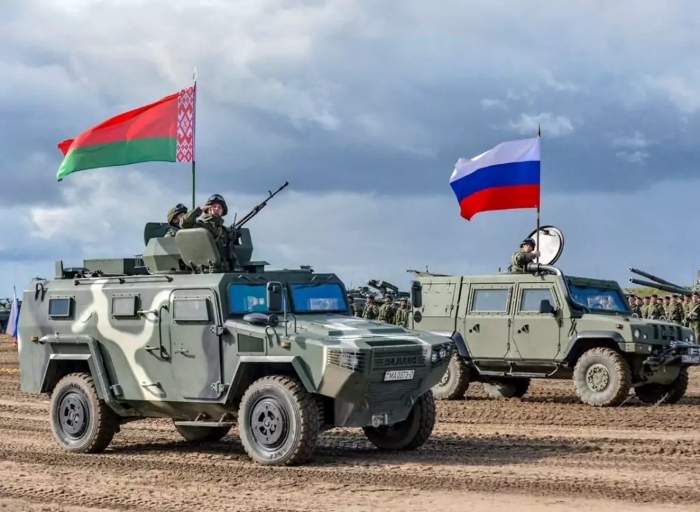
Poland recognized the September 10 Russian strike as deliberate. Chief of the General Staff of the Polish Armed Forces, Wiesław Kukuła, noted that Belarus had warned Poland about the attack — a strange move considering the ongoing Belarusian-Russian military exercise “Zapad 2025.” Polish Foreign Minister Radosław Sikorski nevertheless said Warsaw has no plans to sever diplomatic ties with Moscow. Consequently, relations with Minsk have also not been fully broken.
Indeed, Belarus balances between its long-time ally Russia and Western countries, attempting to change its image while building up military power. As Slidstvo.Info, the Belarusian Investigative Center and KibOrg have reported, Belarusian citizens are increasingly signing contracts with the Russian army: in the first half of 2025 alone, 596 Belarusians signed up compared to only six in 2022 and 518 in 2024. Ukrainian intelligence confirms the figures for 2022–2024, while in 2025 it reports only 157 soldiers. This much higher number (596) revealed by the Coordination Center’s “I Want to Live” project. The insignificant discrepancy does not that Belarusians are gaining experience not only on training grounds but also on the battlefield.
Conclusion
Washington’s new policy seeks to pull Belarus westward. Yet with small gestures toward the democratic world, Lukashenko merely throws dust in Western eyes to distract from his country’s militarization and economic decline. Convinced that the exiled opposition poses less of a threat than it did in 2020 when it was physically present inside Belarus, he appears ready to release a few prisoners in exchange for geopolitical, especially economic, benefits while remaining an ideological servant of Russia.
Daria Maslienkova