

Everyone experiences captivity differently. Regardless of when people were taken into captivity – at the beginning of the full-scale invasion, in its middle, or only recently – many return exhausted, with severely damaged health, physically and psychologically broken.
Someone needs silence, recovery, and distance from what they have endured to begin living again. Others, by contrast, feel the need to act and consciously take on a mission – to remind the world that war, captivity, and torture continue. It is precisely thanks to such people that the world continues to hear about captivity.
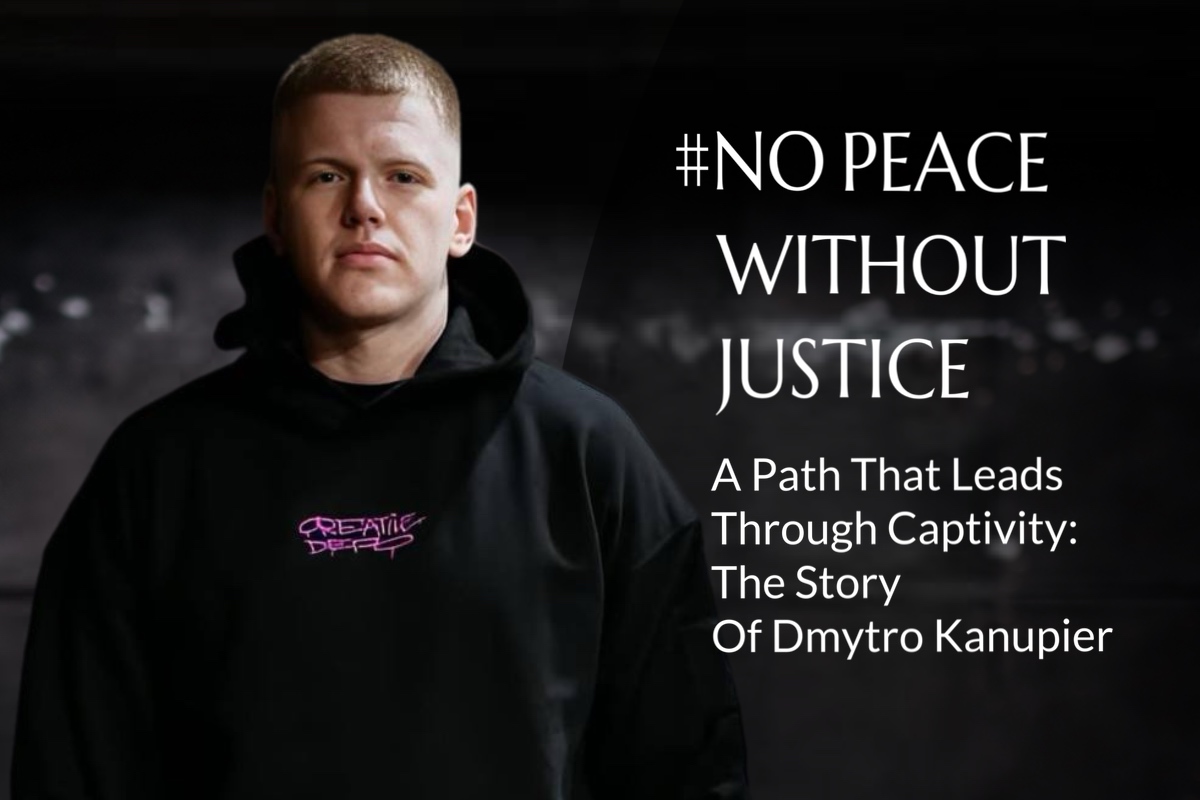
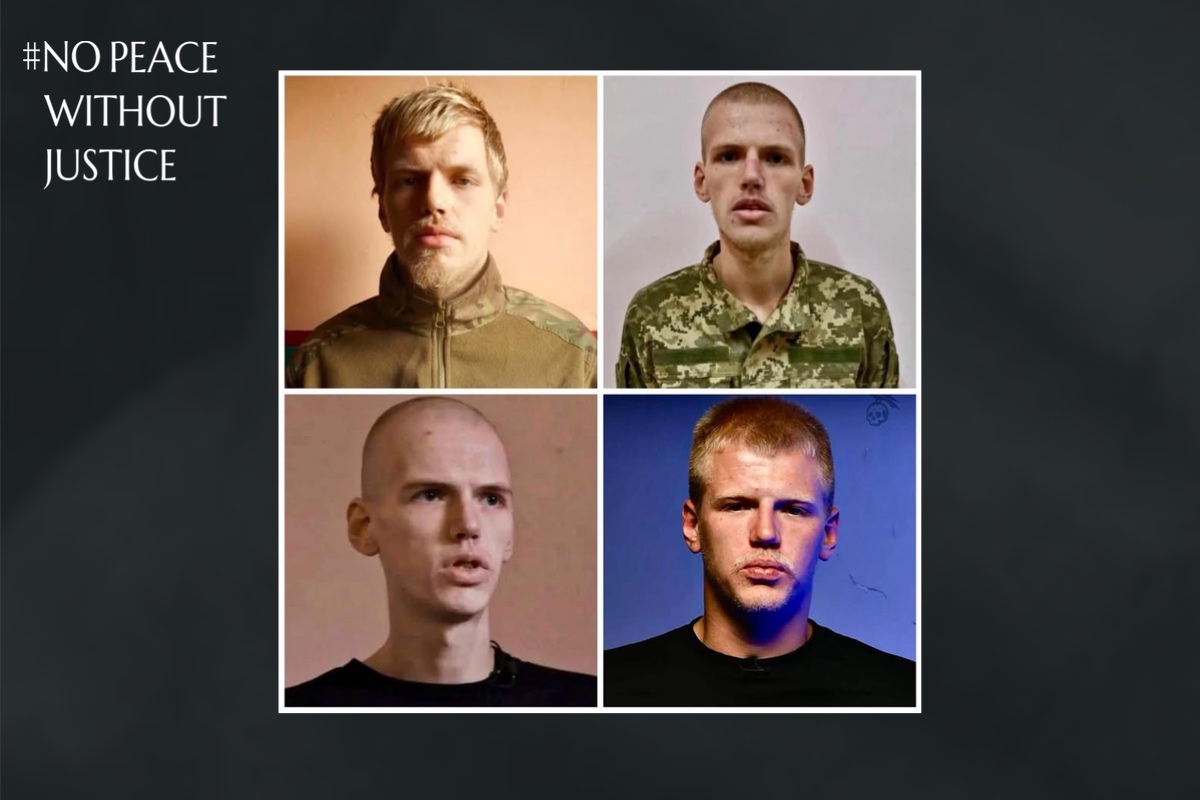
Dmytro Kanupier, callsign “Rasti,” is one of them. He joined the Azov special unit in 2020, when he was 20 years old. In May 2022, during the evacuation of Azovstal’s defenders, Dmytro went into captivity following the Commander-in-Chief’s order. In September 2023, a so-called “court” in the occupied Donetsk region sentenced him to 29 years in a high-security penal colony. For 2 years and 5 months, he was held in four different detention facilities.
In October 2024, a long-awaited prisoner exchange led to his return home. Dmytro completed rehabilitation, returned to active duty, and continues to serve today.
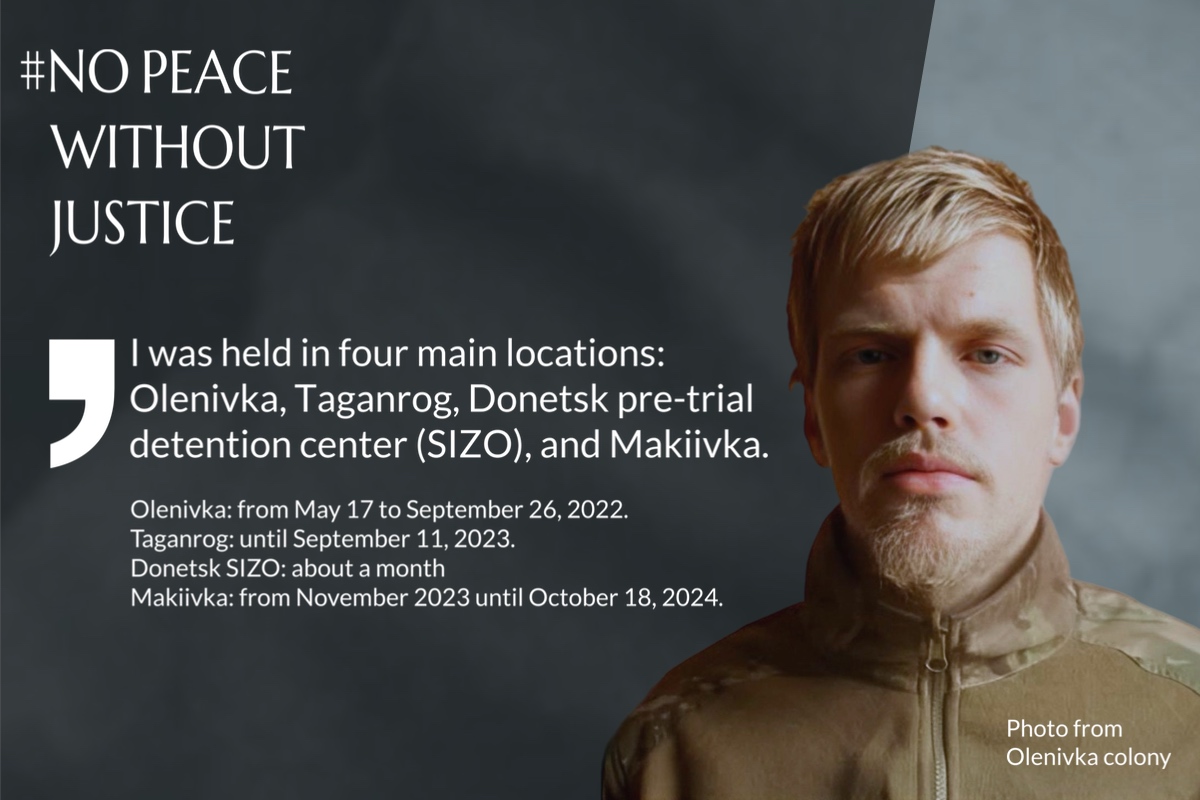
I was held in four main locations: Olenivka, Taganrog, Donetsk pre-trial detention center (SIZO), and Makiivka. I was in Olenivka from May 17 to September 26, 2022. Then I was transferred to Taganrog, where I stayed for almost a year, until September 11, 2023. After that, I spent about a month and a half in the Donetsk SIZO. The final period, from November 2023 until October 18, 2024 – when the exchange took place – was in Makiivka.
Olenivka
I was held in four main locations: Olenivka, Taganrog, Donetsk pre-trial detention center (SIZO), and Makiivka. I was in Olenivka from May 17 to September 26, 2022. Then I was transferred to Taganrog, where I stayed for almost a year, until September 11, 2023. After that, I spent about a month and a half in the Donetsk SIZO. The final period, from November 2023 until October 18, 2024 – when the exchange took place – was in Makiivka.
At the beginning, when we were brought to Olenivka, everything seemed relatively normal. There were already marines from the 36th Separate Brigade who had been taken captive on April 12, 2022. We were told that they had been forced to go through a so-called “corridor,” where they were beaten from both sides and dogs were set on them. Several people even died there. The fact that we were simply registered, had our belongings checked, and were not physically harmed at that point seemed unusual.
We were held in a barrack with a capacity of 60 people, but there were 333 of us inside. The conditions were terrible. There were constant interrogations, and some people were tortured. I was not beaten, but there was constant moral and psychological pressure.
Taganrog
On conditions of detention and torture
Then the Taganrog period began. It was the only place where I was tortured. The intake there was very brutal – people died there as well. The conditions of detention were more or less tolerable, but there was constant physical and psychological pressure.
We would wake up at 6 a.m. to the sounds of the Russian anthem. After that, anything could happen at any moment: a guard could come in, and if something didn’t please him, he would make us do a hundred or a thousand squats or push-ups, or force us to beat our fellow prisoners, to slap each other.
A lot depended on the guards. Some of them would come into any cell every hour and say, “Tak, davai gimn Rossii s togo-to ryada” (“Alright, start singing the Russian anthem from this line”) or “Rasskazhi, chto oznachaet belyy tsvet vo flage Rossii”(“Explain what the white color on the Russian flag means”). If we got something wrong, we were beaten during the inspection.
Breakfast was at 8 a.m. Then there was a morning inspection at 9 or 9:30. We were taken out for inspection twice a day. When special forces arrived, everyone had to already be bent over, waiting for them to enter. As soon as the door opened, we had to shout, “Zdravia zhelayu, grazhdanin nachalnik” (“Good health to you, sir”) to which the response was, “Krugom, iz kamery begom marsh” (“Turn around and run out of the cell”).
We could be beaten at any moment. They constantly made us do various physical exercises and verbally abused us. After inspection, we could be taken for interrogation. It varied. The investigators’ working day usually started after 9 a.m., but we were called in at different times. Sometimes they would call us after 3 p.m., sometimes at 5 p.m. in the evening.
Lunch was from 1 to 2 p.m. At 3 p.m., there was a second inspection – the same as in the morning. In the evening, from around 5 to 7 or 8 p.m., there was dinner. Then it was lights out at 10 p.m.
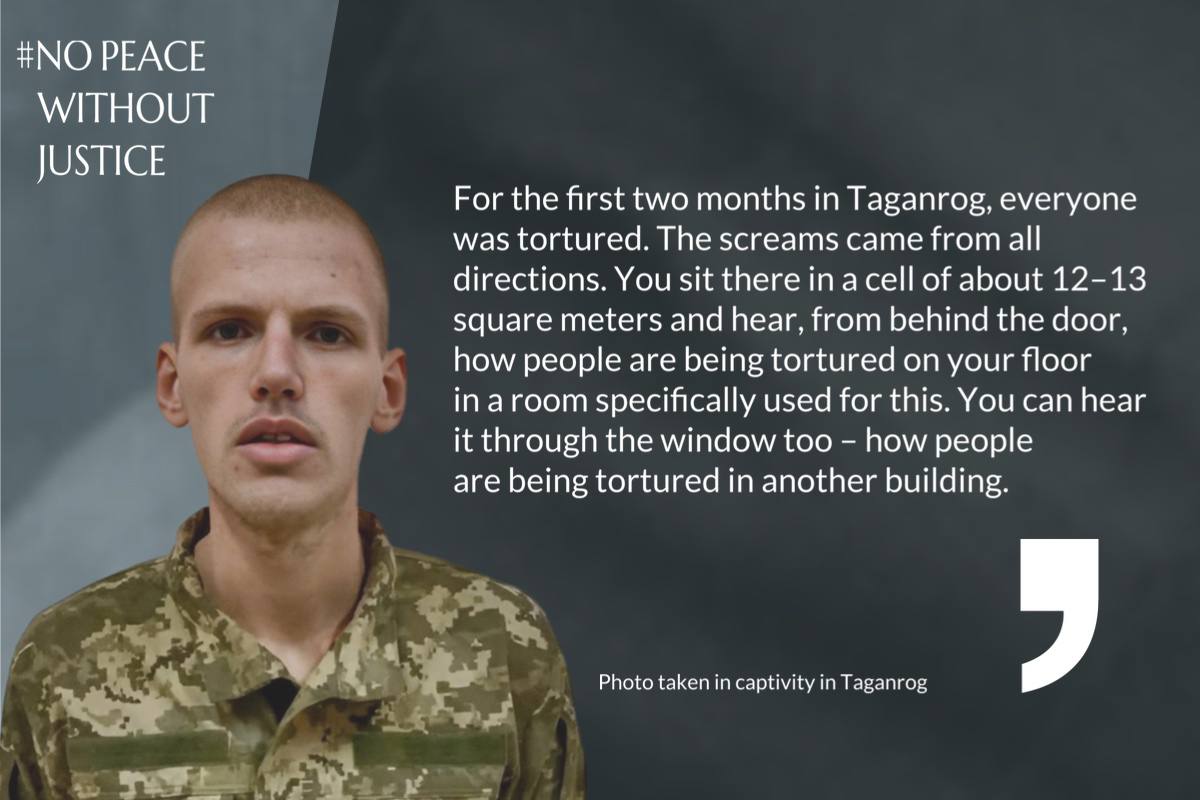
For the first two months in Taganrog, everyone was tortured. The screams came from all directions. You sit there in a cell of about 12–13 square meters and hear, from behind the door, how people are being tortured on your floor in a room specifically used for this. You can hear it through the window too – how people are being tortured in another building. And that probably wore you down psychologically even more than when you were tortured yourself. The very moment of waiting to be taken for interrogation was more frightening than the interrogation itself.
There was every form of physical pressure: beatings to all parts of the body, with elbows, hands, knees, and feet. They beat me with sticks – on soft tissues, on the head, on the legs.
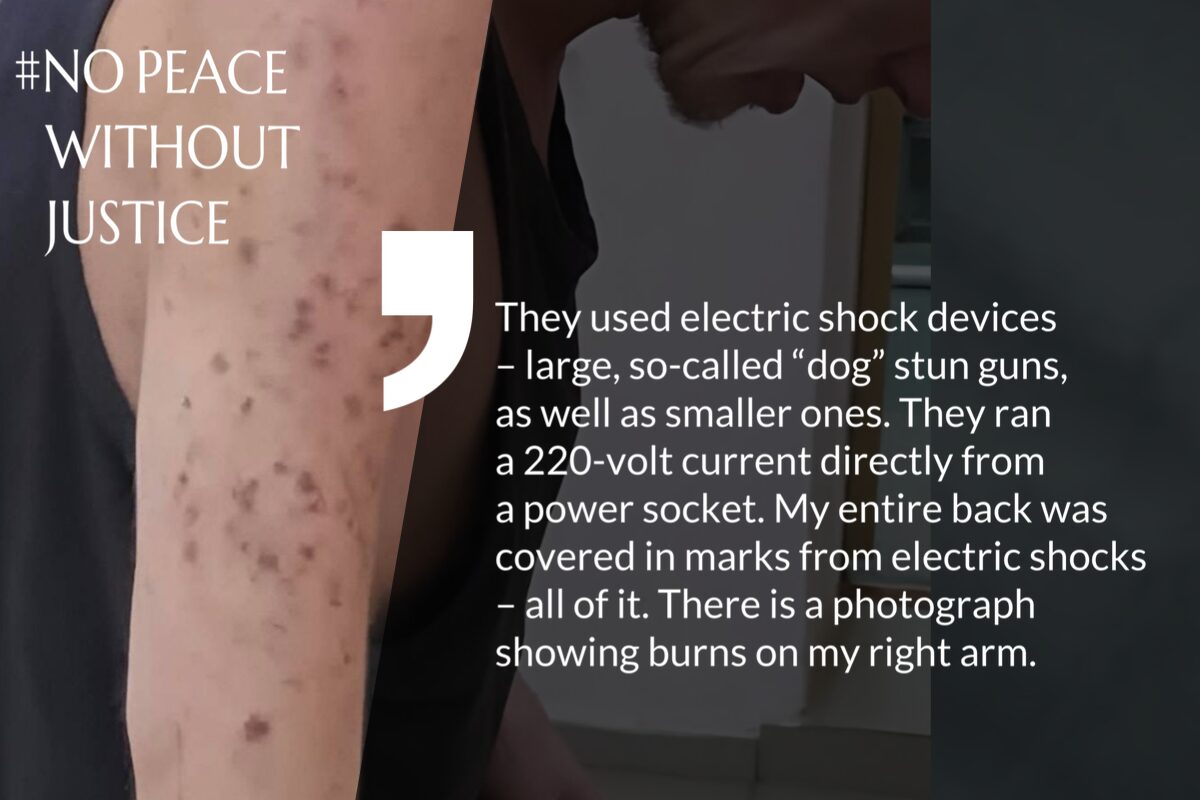
They used electric shock devices – large, so-called “dog” stun guns, as well as smaller ones. They ran a 220-volt current directly from a power socket. My entire back was covered in marks from electric shocks – all of it. There is a photo showing burns on my right arm.
I remember a time when I was bedridden – I couldn’t walk. Both of my legs were as thin as my arm, and one of them had been beaten so badly that it swelled up and became four times its normal size. The pants I wore, even though they were three sizes too big, were tearing on me.
There were periods when no one was called in at all for two months. And for a month, we didn’t hear any screams. It felt very unusual – like the calm before a storm. No one understood what was happening. And then it all started again.
I went through about ten interrogations before I agreed to take the first case. They were different – some lasted 15 or 30 minutes, and at least five lasted over three hours. Our commanders had told us to take the case on ourselves right away if anything was pinned on us. But I didn’t want to, because I didn’t know whether I would be exchanged later if I were convicted. I held out, and it was only during a 12-hour interrogation that I couldn’t take it anymore and agreed to take the charge. I thought they would leave me alone after that, but instead, they started torturing me even more and calling me in for interrogations more frequently.
On food
We were fed three times a day. When we arrived in Taganrog, we saw buckwheat and meat – they had been feeding the marines from Olenivka before us, who were later transferred to different locations.
It was normal for a few days – we were given what was left. And then what you could call a “holodomor” began. For two months, the situation was such that about one loaf of bread per day was issued for eight people.
Food was handed out unevenly – there were no standards. The person handing it out might give one person half a ladle for breakfast – about six spoonfuls of porridge – and another a quarter of a ladle, around three spoonfuls. That was it. In the mornings, we were given pasta or porridge. After about six months, they started giving a full ladle – around ten spoonfuls. But it was a tiny portion – like for a child.
We would count the pieces of pasta between us: “I’ve got 23,” “and I’ve got 13.” “Not your lucky day.” Sometimes, in the morning, they would give us flat plates of water in which the pasta had been boiled – about two tablespoons. Just water. There were maybe around fifteen breakfasts like that during the entire time in Taganrog.
Lunch in Taganrog was about 200 ml, sometimes 300 ml, and occasionally a full bowl of broth. There were times when they gave a proper, hearty soup – something you could actually get full on. On average, it was around 300 ml of watery broth with a quarter of a potato and small pieces of other vegetables. It varied. Sometimes there would be eight plates, and one of them would be full, while all the others were practically empty.
At first, we shared the food, but it took a lot of time, and sometimes we only had three to ten minutes to eat, plus we had to wash and return the dishes. If someone had a larger piece of fish, we would try to cut some off it and give it to someone else.
Over time, we developed our own system: instead of sharing the food, we would swap plates. We already knew how the ones on duty served the food – who put more on the right plate and less on the left. So one day one person would get more and another less, and the next day it would be the other way around. That’s how we managed it. We did the same with bread.
Later, they started giving more food – because one person in Taganrog died of starvation. After that, they began issuing whole loaves. Just one loaf per person. They were trying to fatten us up.
On clothing
Four days before I was supposed to be transferred from Taganrog to the Donetsk pre-trial detention center (SIZO), a prosecutor’s office delegation arrived. They would come to all the prisons about once a month – to check on things, the conditions, how everything was. In Taganrog, we never complained about anything: we had everything, and everyone was well fed.
We knew that if we complained, we would simply be beaten. I had a towel – a waffle-textured one – that completely wore out over six months, with a huge hole in the middle. I could only dry myself with the sides. The clothing was issued only once and was never replaced. We had one pair of socks, one pair of underwear, one pair of shoes, and one towel. We repaired everything ourselves the entire time. We also washed everything ourselves – in cold water.
The prosecutor came in, walked around the cell, looked around, and asked whether everything was fine, whether we were being fed well, and whether we were being beaten. We said everything was fine, everything was good. But he kept looking.
By the wall, opposite the entrance, there was a rack where we dried our towels. And there was a towel hanging there – with a huge hole in it. He saw it and told his assistant, “Take a photo of this.”
We got scared that we’d get in trouble, because we were supposed to hide things like that. But instead, he said, “What else do you need?” He ordered that the towel be replaced. We stayed silent.
He looked at us – we were in our underwear and undershirts because it was hot. One of our guys had underwear that looked like it had been hit with a shotgun – full of holes, hundreds of tiny ones. He said, “Show me your underwear. Turn around.” We did. “Right – replace five pairs of underwear. Undershirts too.” He looked at my legs: my sock was completely torn, hanging on only around the heel and by a single thin strip – like a thong. My toes were exposed.
For six months, we weren’t given a needle or thread. We would pull threads from our clothes or blankets and sew things ourselves. You understand – they wouldn’t give us a needle and thread, but they would beat us for having things not mended.
As soon as the prosecutor left, the guard on duty at the time, while closing the door, threw at us, “Freaks.” A couple of days later, our clothes and mattresses were replaced.
On medical care
In Taganrog, a doctor came every morning and offered medical assistance, but hardly anyone used it, because there was a risk of being beaten for it.
On support
You know, there were moments when we argued. You’re in a confined space – especially when there are eight people in a cell, and you see the same faces every day for a year. Sometimes we even fought each other – our nerves couldn’t take it. But most of the time, we helped one another and supported each other after interrogations.
Once, after an interrogation, they just threw me back into the cell. I literally couldn’t walk – I was bedridden. The guys would help me get to the toilet, holding me by the arms, and feed me with a spoon.
We supported each other. There was no other way. Of course, there were arguments, but overall, we stuck together.
Donetsk SIZO
From Taganrog, I was transferred to the Donetsk pre-trial detention center (SIZO), where I was put on trial. They didn’t touch me there – there was only occasional psychological pressure. But the conditions were terrible – it would have been better to live in a shed than in the place we were kept. There were 12 people in a cell designed for six, with only four mattresses, bedbugs, no water, no shower, and no outdoor time. But there were no inspections like in Taganrog. We would simply stand in the cell in front of the peephole, and they would count us without coming in.
But the worst conditions in terms of medical care were there. “Grazhdanin nachalnik, nuzhen vrach. U cheloveka gnoy iz ukha techet” (“Officer, we need a doctor. Someone’s ear is full of pus“). And the response was to tell us to get lost – to say that we should all die. That was it.
Makiivka
In Makiivka, things were somewhat easier. I was supposed to serve my sentence there, but I was exchanged. When I first arrived, I spent two months in a pit – the so-called “DIZO” (disciplinary isolation unit). At that time, there were very few prisoners of war in Makiivka. When I arrived, there were about 30 people, and all of them were held in these “DIZO” cells because there were no available barracks for us. It was a basement space with four beds, a toilet, a sink, and a small window. And nothing else.
We stayed there for two months – until they allocated a separate barrack for prisoners of war. First, they transferred the first group of people, and then me and everyone else.
In the first barrack, there were about 50 of us, and later up to 70 people. By the end, when I was leaving Makiivka, there were two barracks with prisoners of war: about 75 people in one and 115 in another. That is, nearly 200 Ukrainian servicemen in total.
In Makiivka, we had a “KVR” – “komnata vospitatelnykh rabot” (room for educational work). It was a place where, at designated times, we were allowed to watch TV. The barrack had a sleeping area where everyone rested. Only these two spaces were heated.
We had a stove and someone on duty who would feed it with coal. The kitchen, the storage area for clothes, the toilet, and the shower were not heated. The water we stored in barrels would constantly freeze when the temperature dropped to minus 25°C. Water was provided once a day, and we had to get as much as possible so it wouldn’t run out.
In Makiivka, there was a medical unit. We would sign up in the morning and be sent to see a doctor. But if you got sick, it was ascorbic acid. If you were dying, it was ascorbic acid. Ascorbic acid “for everything.” It thins the blood – that’s it.
In the final months before the exchange, the guys who were brought to us said that Taganrog had become a transit point: you arrive there for a few days, and then you are moved on.
On returning to service
Everything I went through didn’t break me – on the contrary, it strengthened my desire to return to the ranks. Of course, there were mood swings: sometimes I thought I should live for myself, take a rest. But then the feeling would come back that I had to return – to take revenge for myself and for the comrades who are still there.
At the exchange, I met my former commander and told him I wanted to go back. He said, “Are you out of your mind? It will take six months to recover after captivity.” I replied, “What is there to rest from?” I was missing seven teeth after captivity. “I’ll get them fixed, take care of everything quickly, and go back.”
I spent three months in rehabilitation and recovered physically. Then there was a month of diplomatic trips – to Denmark, as well as speeches and conferences across Ukraine. After that, I took another month’s vacation. So in total, five months passed after my release from captivity – and I returned to the ranks.
Interview recorded by Anna Lisova, Ukrainian journalist