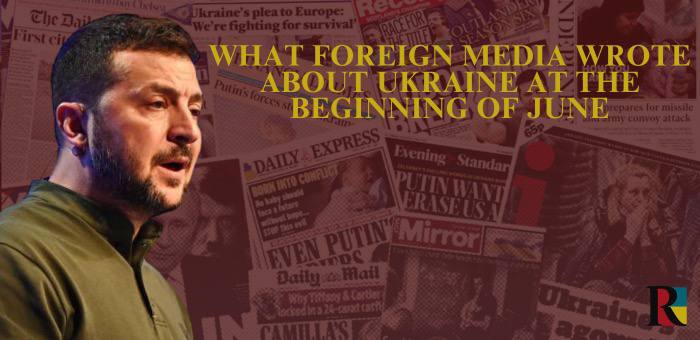


The Ukrainian Review offers a selection of what European, Asian, African, and other media wrote about Ukraine, including the Ukraine news war, at the beginning of June 2024. This will help to see which Ukraine in the news and, accordingly, in these countries’ information spaces.
No mention of the war in Ukraine: African media
Africanews – a South African media outlet with 4.3 million visitors over the past two months.
The media does not cover the military events in Ukraine and the consequences of Russian attacks on Ukraine at all.
Instead, Africanews actively quotes Russian President Vladimir Putin. For example, his words that the Russian economy is growing despite the sanctions. Or that “Putin visited North Korea and promised to overcome sanctions.”
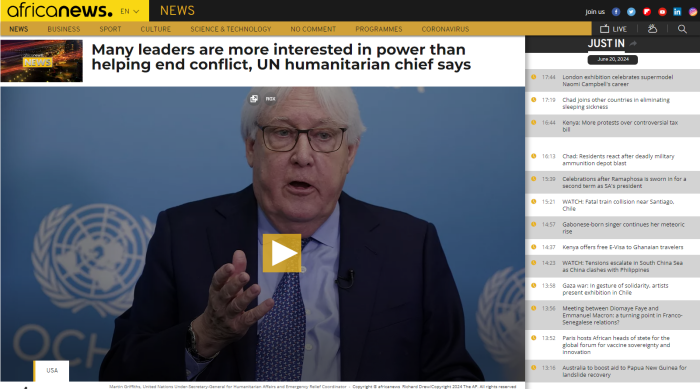
Also, from all meetings and statements of UN representatives, the media quotes the head of the humanitarian service as saying that “many leaders are more interested in power than in ending the conflict.”
Poles are tired of Ukrainian refugees: European media
Serbian daily newspaper Politika has 19.6 million visitors over the past two months.
Journalists of the publication openly express their attitude to the events. For example, in this material they say: “The White House does not hesitate to bless the “wild marriage” between NATO and Ukraine.”
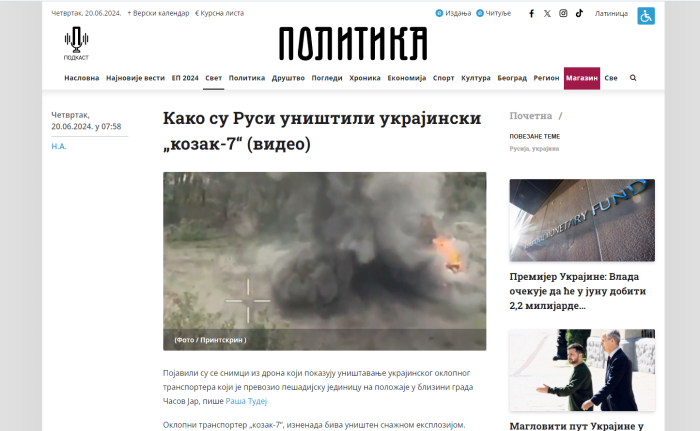
They also publish news of Russian attacks: “the Russians destroyed the Ukrainian Kozak-7, an armored personnel carrier that was transporting an infantry unit to a position.” Instead, Politika does not publish Russian attacks on critical infrastructure of Ukraine and residential buildings.
The media also play up negative points: “Poles are less favorable towards Ukrainian refugees.”
Serbian national news agency Tanjug has 877.000 visitors over the past two months.
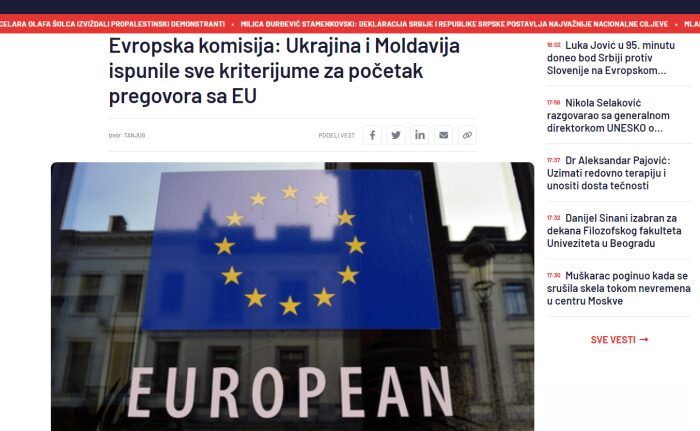
At the same time, this Serbian media publishes news about the consequences of Russian attacks (for example, about a Russian missile hitting a residential building in Kryvyi Rih, that Ukraine will not accept Putin’s conditions for starting peace talks, that Ukraine and Moldova have fulfilled all the criteria for starting negotiations with the EU.
Czech TV channel ČT24 has 20.5 million visitors at his website over the past two months.
They publish news about the consequences of Russian attacks in Ukraine (for example, about the drone attack on the Lviv region), that Russia is causing extreme damage to the climate in Ukraine, imprisoning thousands of Ukrainians.
Sit on two chairs: Chines media
Chinese media outlet CGTN, which has 28.3 million visitors over two months.
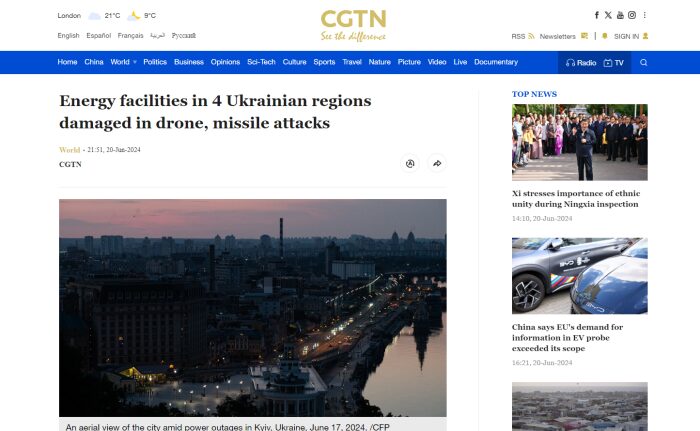
The publication published news that Russians damaged energy facilities in Ukraine in 4 regions, or that a Russian attack injured 12 people and led to power outages.
At the same time, the Kremlin cites, for example, that “the Ukrainian peace summit gave “zero” results” or that Russia is imposing sanctions against the new British.
Another media outlet, People’s Daily, has 1.3 million visitors over two months.
The media writes that “China was the most firmly and actively committed to promoting peace negotiations regarding the Ukrainian issue.” Or that “South Africa highly appreciates China’s efforts in finding a political solution to the problem with Ukraine.”
However, there is no information about military actions or the consequences of Russian missile attacks on Ukraine.
Analysis of events in Ukraine: USA media
USA Today has 480 million visitors over two months.
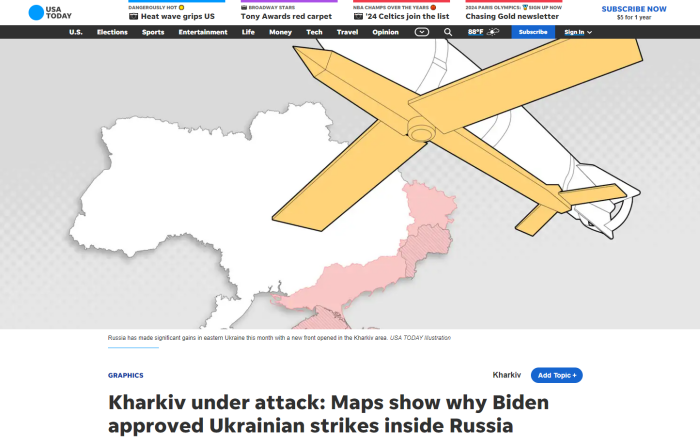
The media writes that “Ukraine is protecting the nation from Russian invasion”, that:
President Joe Biden has allowed Ukraine to use certain US weapons on military bases and infrastructure inside the border with Russia. This decision is in response to recent actions by Russia, including the seizure of nearly 100 square miles of land near Kharkiv, Ukraine’s second largest city.
In general, the media offers readers a lot of analytics and focuses on the rapprochement of China and the Russian Federation.
Information agency Reuters has 249 million visitors over two months.
The publication writes about the consequences of Russian attacks on Ukraine (for example, about the attack in the Donetsk region, as a result of which 3 people died).
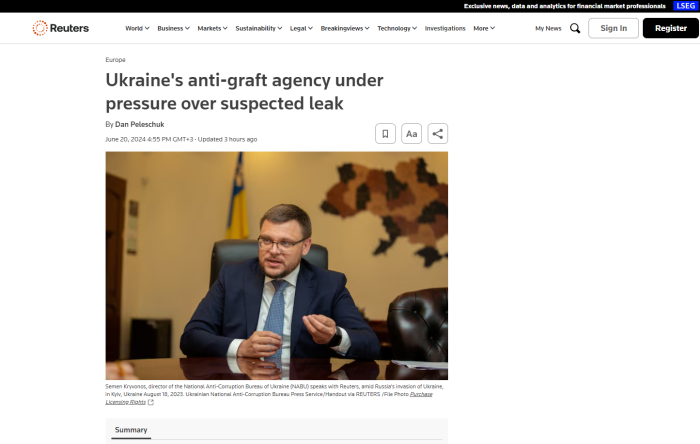
The journalists also write that “Ukrainian anti-corruption agency is under pressure due to suspicion of leaking information”, that “Trade union of Ukraine calls for suspension of planned minimum prices for food products”. That is, it focuses on internal, in particular, political events in Ukraine.
No mention of the war: Brazilian war
State information agency Agencia Brazil has 22 million visitors over two months.
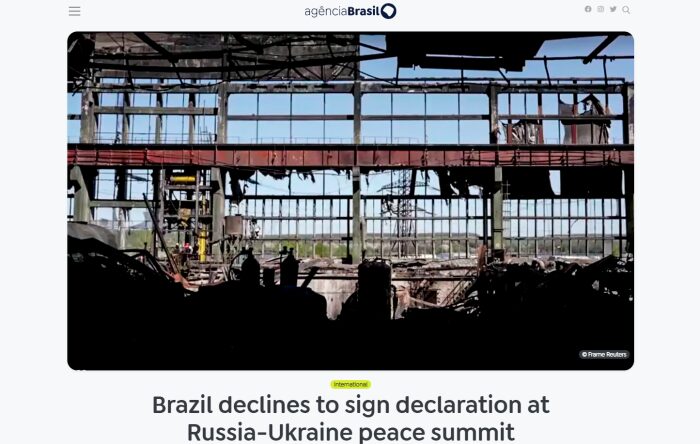
The agency does not write about the Russian-Ukrainian war. However, it published the news that “Brazil refuses to sign the declaration at the Russian-Ukrainian peace summit.”
However, it also writes that “the Kremlin considers the result of the military summit to be insignificant” and that “the Ukrainian attack caused a fire at the Russian oil terminal.”
Newspaper Correio Braziliense has 83 million visitors over two months.
The publication also does not publish news about the current situation on the battlefield or about the consequences of Russian attacks. However, he writes that “Ukraine is experiencing the worst crisis since the beginning of the war.”
There is also a lot of news about Putin, including his relationship with North Korea. The media also mentions that “before the summit, Putin demands a ceasefire in Ukraine”.
***
An analysis of how the foreign media cover the Ukrainian Russia news of the war demonstrates the political orientation of these countries. Some stick to reporting Russian news about Ukraine, some try to avoid news about Ukraine, some, on the contrary, talk about Russian crimes and the situation in Ukraine, some try to show reality objectively.
Anya Ostymchuk