

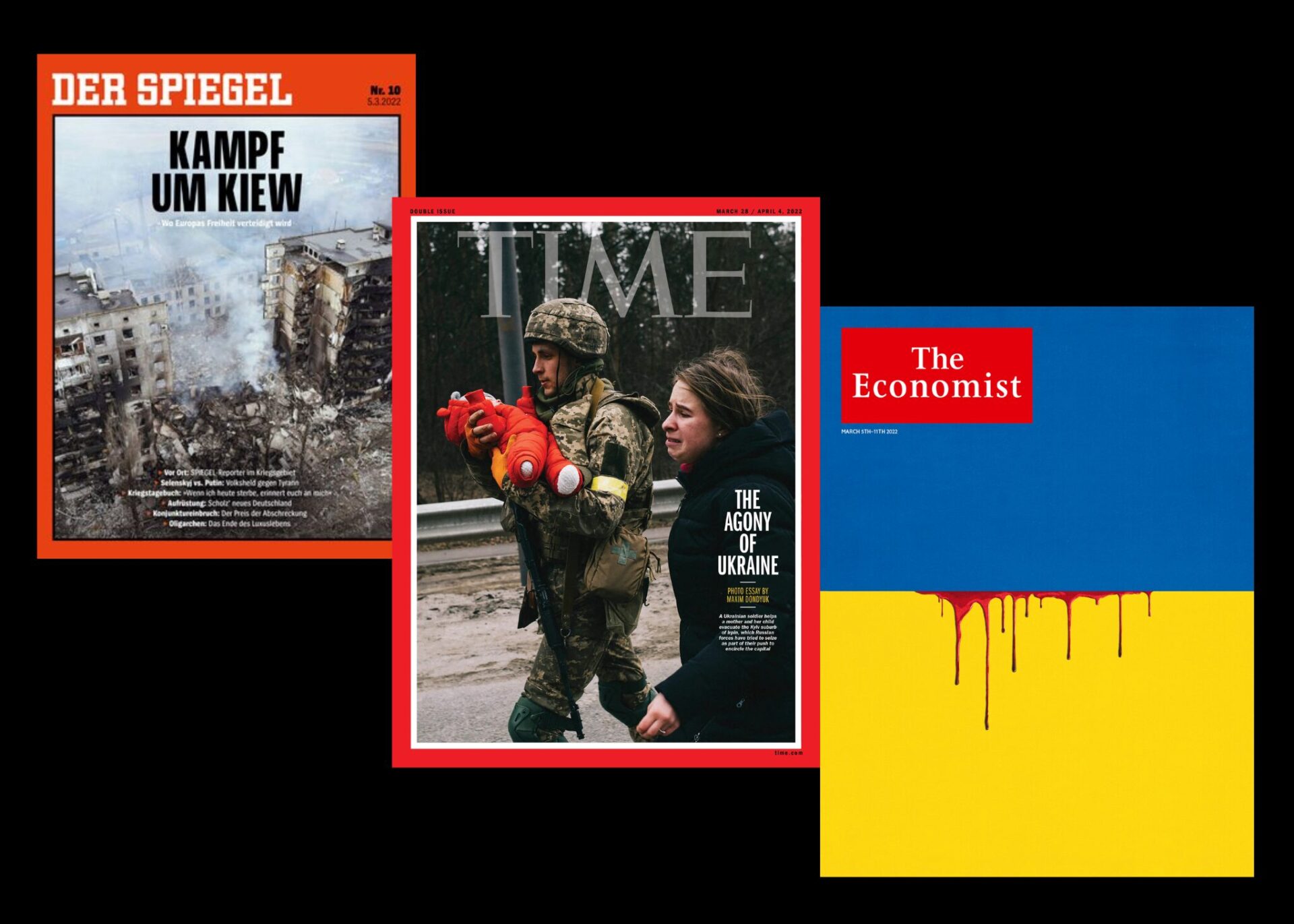
During 2022, when Russia launched a full-scale invasion of Ukraine, the topic of the war appeared on the covers of international publications (Time, Der Spiegel, The Economist, and others) 15 times. In contrast, in 2025, it appeared only 5 times.
Overall, as early as 2024, the number of publications in international media decreased 2.5 times compared to 2023. This was noted in a study by the independent Ukrainian organization Brand Ukraine.
Thus, The Ukrainian Review decided to analyze in detail how the rhetoric in global media regarding the Russian-Ukrainian war changed from the beginning of the full-scale invasion to the present.
The New York Times: From Frontline Chronicle to Diplomatic Track
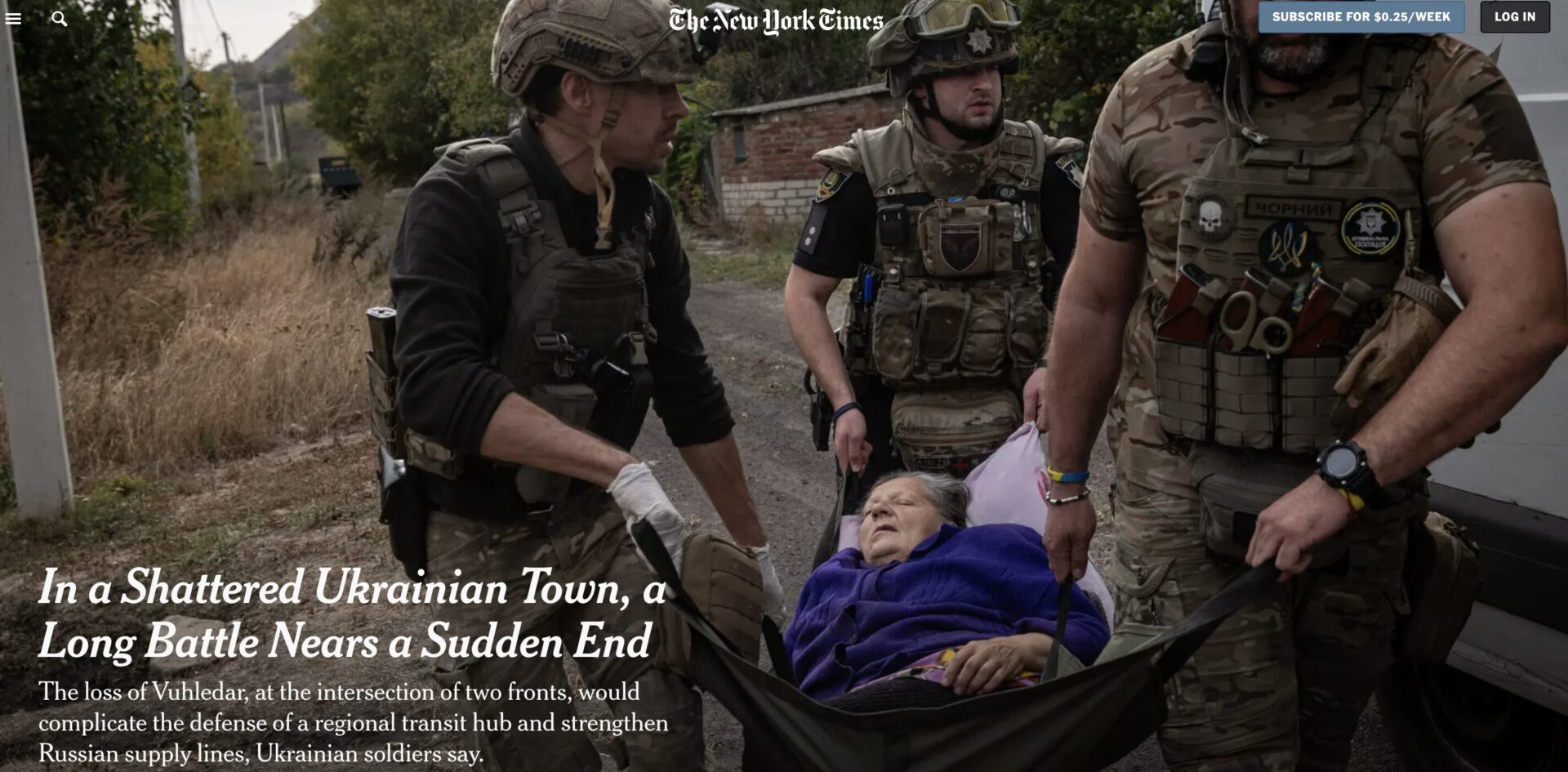
The example of The New York Times clearly shows how, over four years, not only the intensity but also the perspective of war coverage has changed. In 2024, the editorial logic of the publication remained closely tied to the battlefield. Frontline reports, detailed descriptions of tactical situations, and analyses of the strategic significance of cities all painted a picture of the war as a process unfolding daily, requiring constant explanation to the international reader.
All reports and articles served as analytical navigators: explaining why a particular settlement mattered, how its loss would affect logistics, and what Ukraine’s strategy was. In this vein were materials on the possibility of a tribunal for Putin, Kremlin nuclear blackmail, and Zelenskyy’s appeals to the world.
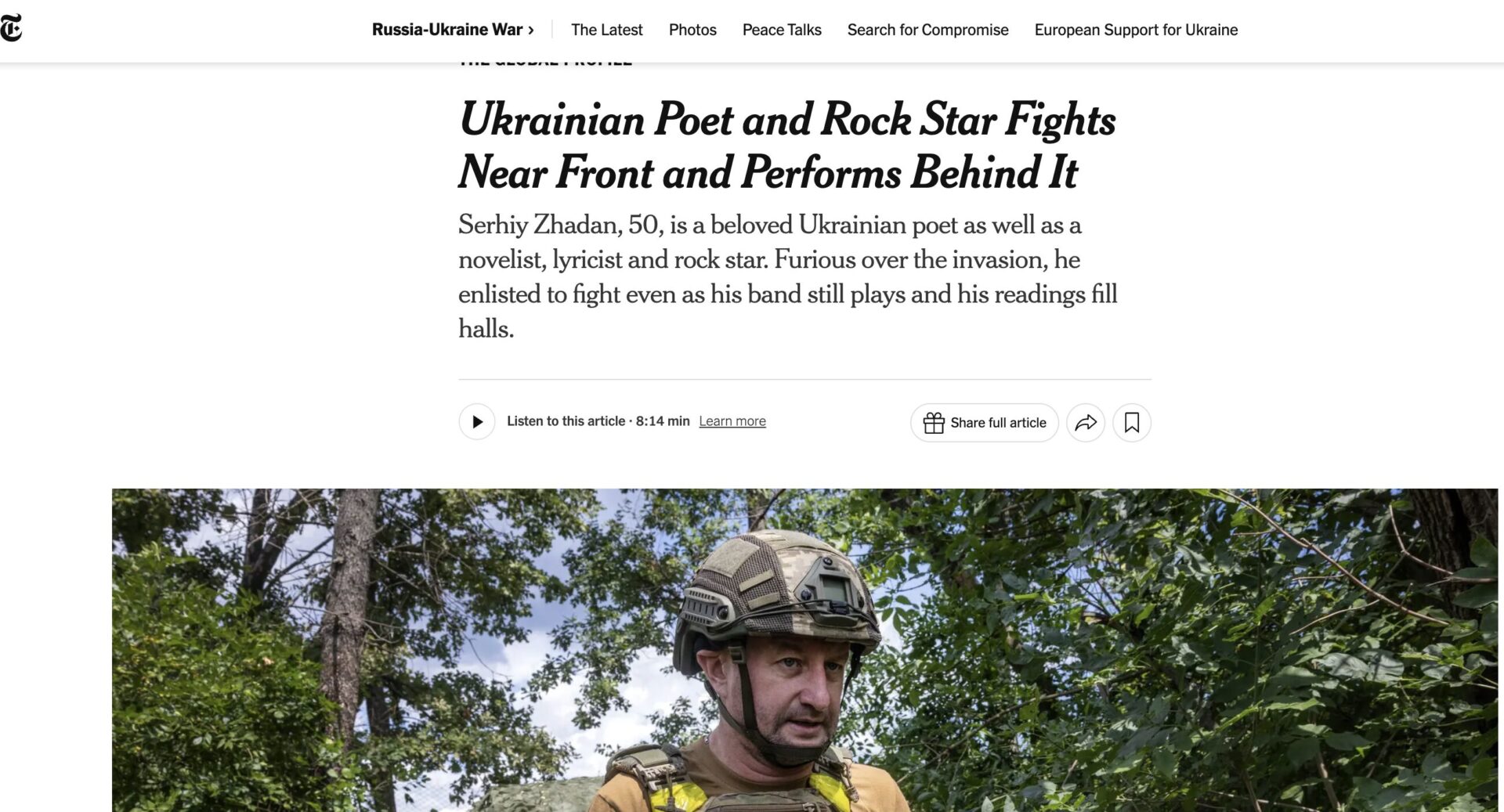
Alongside war analytics, the publication actively published human stories. A portrait of Serhiy Zhadan—a poet and rock musician who went to the front—combined cultural context with war reality. The story of two girls from Mariupol, separated by the war and reunited after a long odyssey, created an emotional dimension, showing the war not as an abstract conflict but as the experience of real people.
By 2026, the tone and focus had noticeably shifted. The war remains in the news feed, but increasingly as a backdrop for other topics—peace negotiations and international politics. Articles about Ukrainian skepticism toward talks in Geneva or about increasing attacks amid diplomatic initiatives of the Trump administration construct a narrative not around the frontline but around the negotiation table.
A significant portion of the materials focuses on the role of the U.S. and Europe: on Donald Trump’s strategy, his informal envoys, and the reactions of European leaders in Munich, who speak not only of the “Russian threat” but also of Washington’s unpredictability. In these texts, Ukraine often appears as an object of diplomatic processes—a party waiting for decisions from major players and evaluating their initiatives.
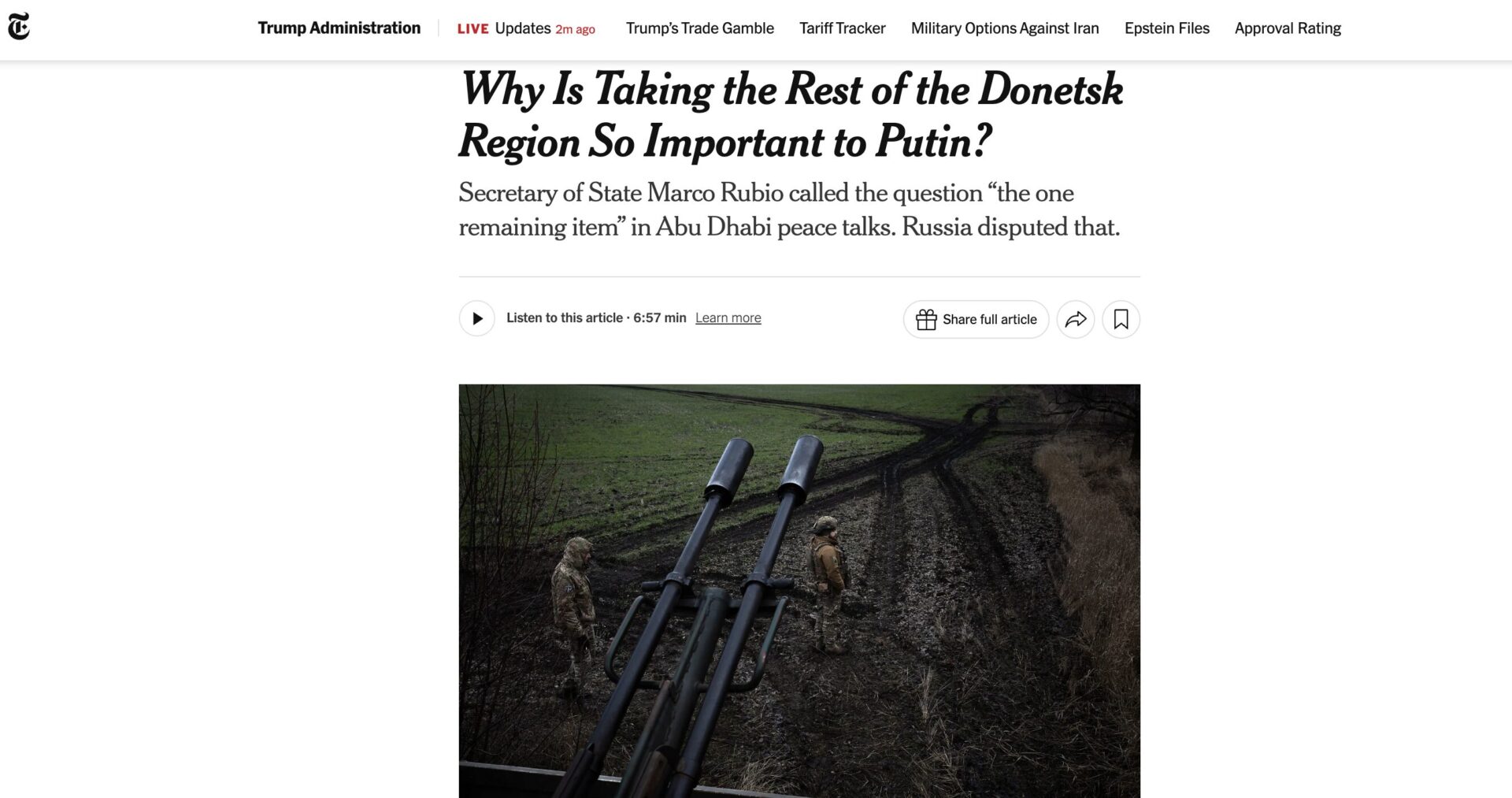
At the same time, frontline analysis does not disappear completely. There are articles like “Why Capturing the Rest of Donetska Oblast is So Important for Putin” or “Ukraine Cannot Defend the Entire Front. Russia Finds Gaps”. However, they are fewer and no longer form the main coverage. If in 2024 the map of the battlefield was a central element in explaining the war, by 2026 it becomes just one of the contexts.
There is also a noticeable increase in materials focusing on Russia – not only as an aggressor but as a society adapting to a protracted war. Texts about Russian regions awarded the title “villages of military valor” or about how Russian troops adapt to the drone era expand the analytical framework. In 2024, Russia in the publication mainly appeared through battlefield actions or Kremlin decisions; in 2026, more social and institutional context emerges.
Der Spiegel: From Emotional Shock to Geopolitical Assessment
From the start of the full-scale invasion, the German publication Der Spiegel demonstrated high attention to Ukraine. In February 2022 alone, Ukraine appeared twice on the cover, and in March—three times.
However, by the second half of 2022, the focus partially shifted. In August, the publication paid more attention to Russia’s role and personally to Putin, while by the end of the year the invasion topic was less prominent on covers.
The Ukrainian voice during this period was almost absent: positions of public figures, intellectuals, and writers were rarely heard. A notable exception was a text by Oksana Zabuzhko—more a symbolic gesture of support than a systematic integration of the Ukrainian intellectual perspective into the discourse of the publication.
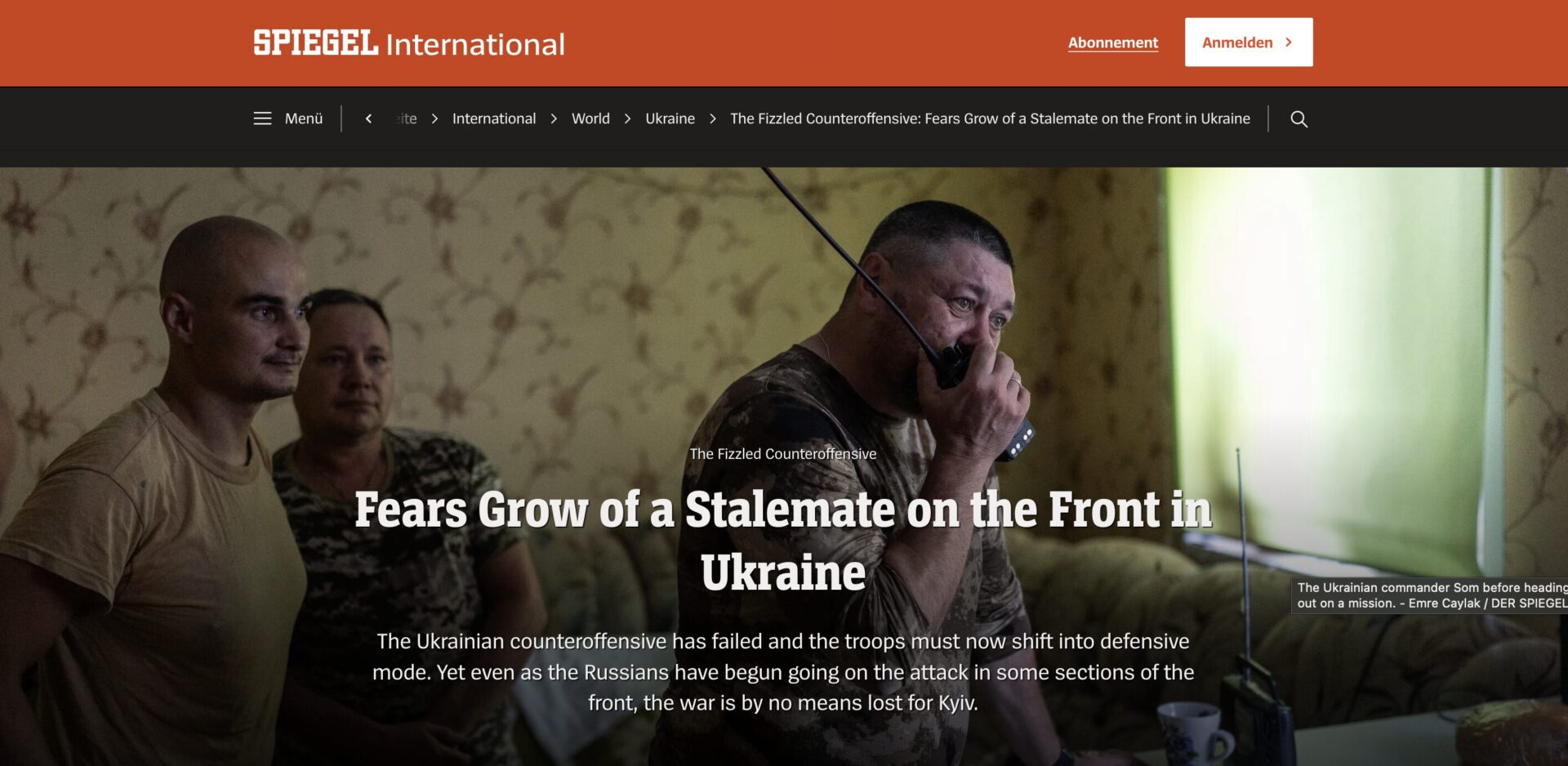
In 2023, the tone became more analytical and complex. On one hand, attention to the frontline remained: fears of a “deadlock,” dependence of the counteroffensive on Western weapons, and discussions of breakthrough prospects. On the other hand, interest in internal Russian processes grew. Materials about the wives of mobilized men expressing dissatisfaction, or interviews with experts on the ideological nature of Putin’s regime, reflect attempts to explain the war through the structure of Russian society and political system.
Simultaneously, the publication actively worked with human stories: trips to the dried-up Kakhovske Reservoir after the dam was blown up, the story of a wounded Ukrainian soldier who lost his hands and sight but continues living, and reports from the calmest city in Ukraine—Uzhhorod. This combination of frontline analysis and deep reporting forms a multidimensional picture of the war.
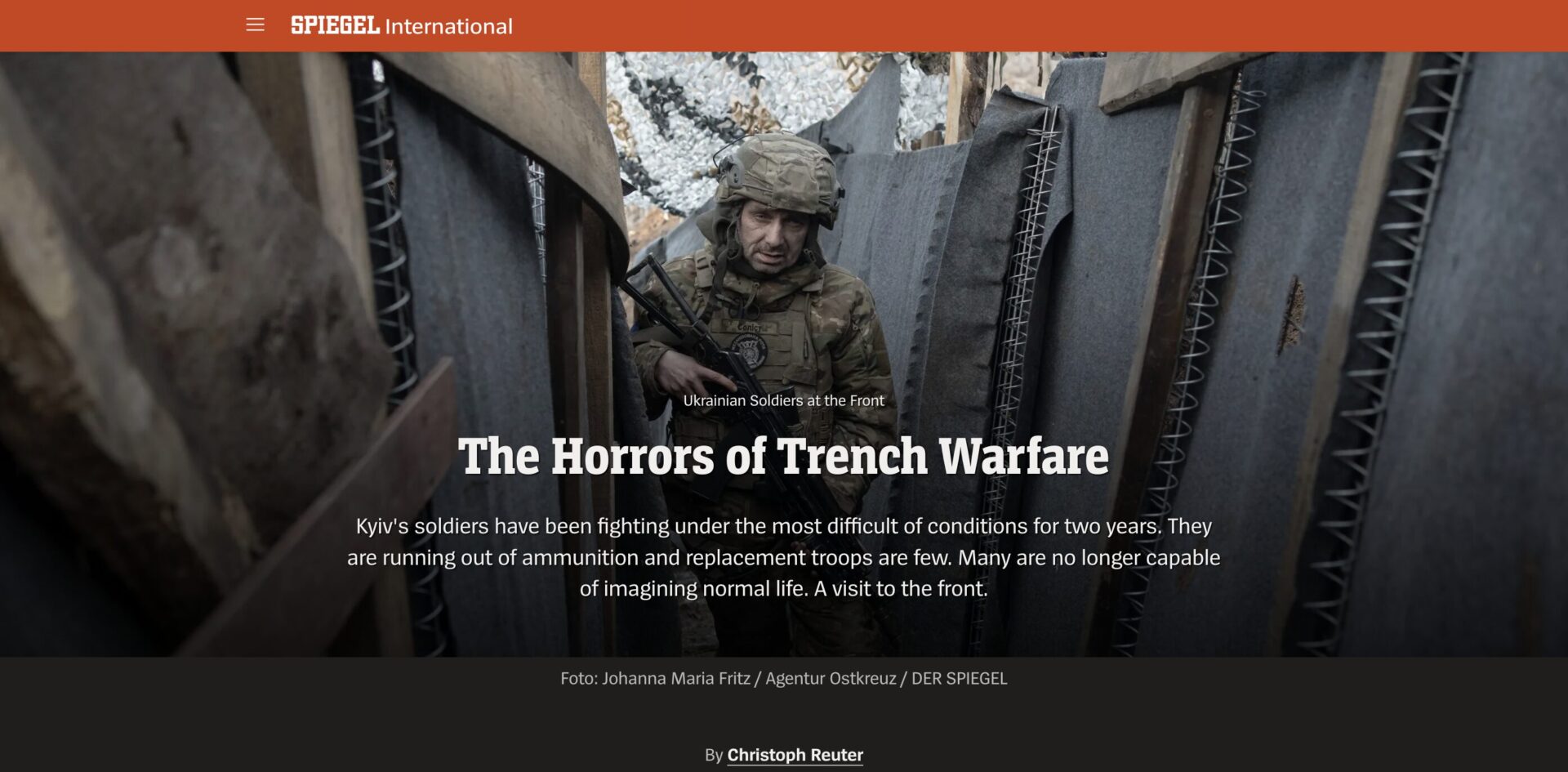
In 2024, there was an even clearer focus on exhaustion. Frontline reports on the “horrors of trench warfare” did not discuss quick victories but shortages of ammunition, lack of reserves, and soldier fatigue. At the same time, materials about Putin’s control over Russians or sanctions against Russian billionaires broadened the scope to questions of responsibility and adaptation of the Russian elite and society to the war. Ukraine remained central but increasingly as part of a broader European and Russian context.
By 2026, the shift became even more pronounced. There were fewer frontline reports. Instead, political figures and geopolitical dynamics took center stage. Interviews with John Bolton about the risks of peace negotiations, materials about Donald Trump’s role, and the possibilities of Chancellor Friedrich Merz keeping the U.S. in the European security architecture present the war increasingly as an element of a global game between Washington, Berlin, and Moscow.
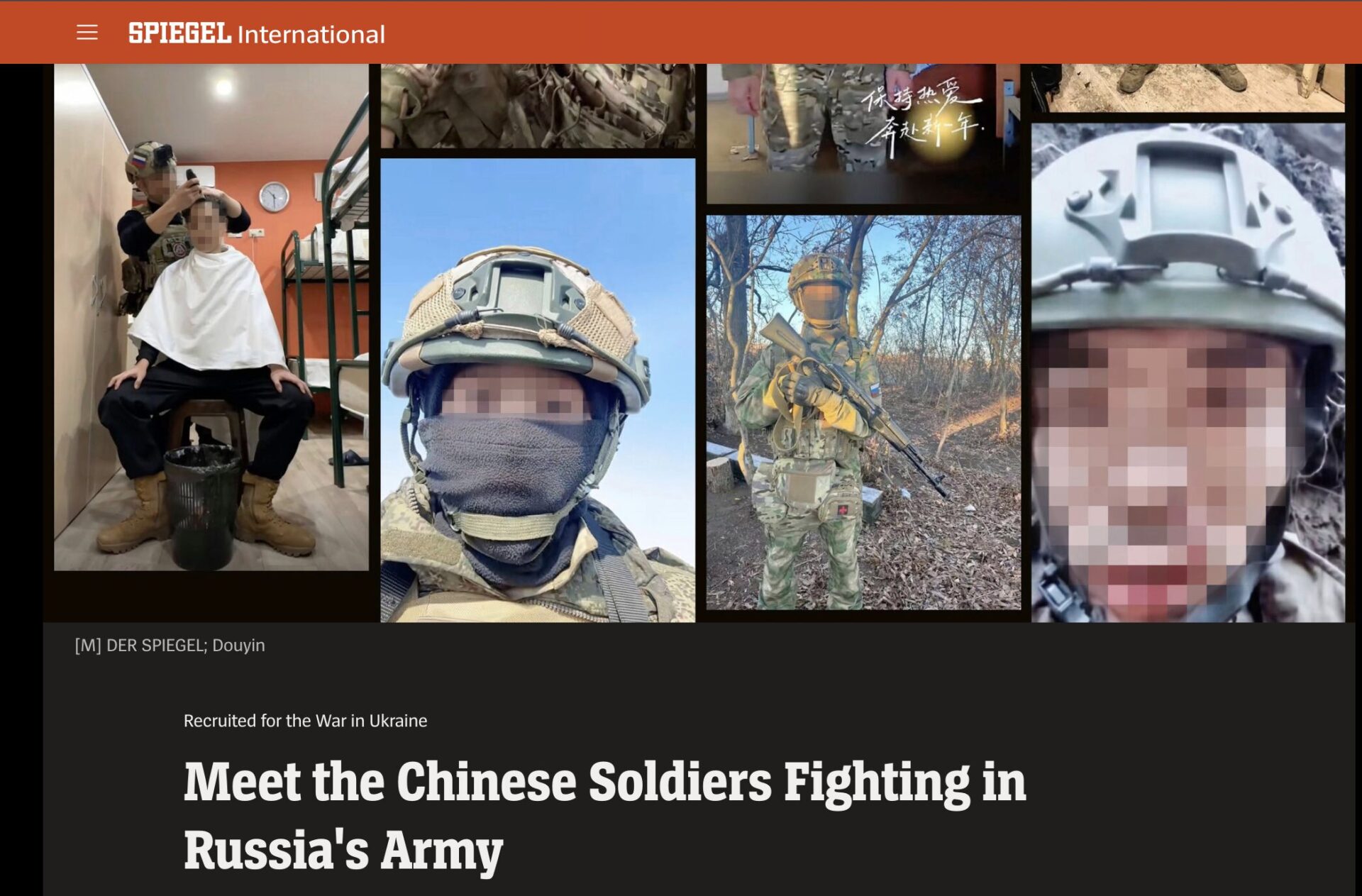
Interest in internal Russia also intensified. Articles about lawyers defending opposition members and ending up in prison themselves, women protesting the war, and Chinese volunteers in the Russian army indicate a change in focus: from the frontline to the structure of the regime and its social base. Russia becomes not just an aggressor on the map but an object of deeper socio-political analysis.
Thus, if in 2022 Der Spiegel treated the war as a dramatic rupture of European reality, and in 2023–2024 combined frontline analysis with deep social reporting, by 2026 the emphasis shifts to geopolitics and Russia’s internal transformation.
The number of materials on direct combat decreases, and the war is increasingly interpreted as a long political process with global consequences. The Ukrainian dimension remains but is no longer the sole center of attention, rather as part of a broader European and global configuration.
Xinhua: From “U.S. Global Gain” to Neutral Diplomacy
The example of the Chinese Xinhua shows how the position of a state media outlet formed and transformed over four years of war.
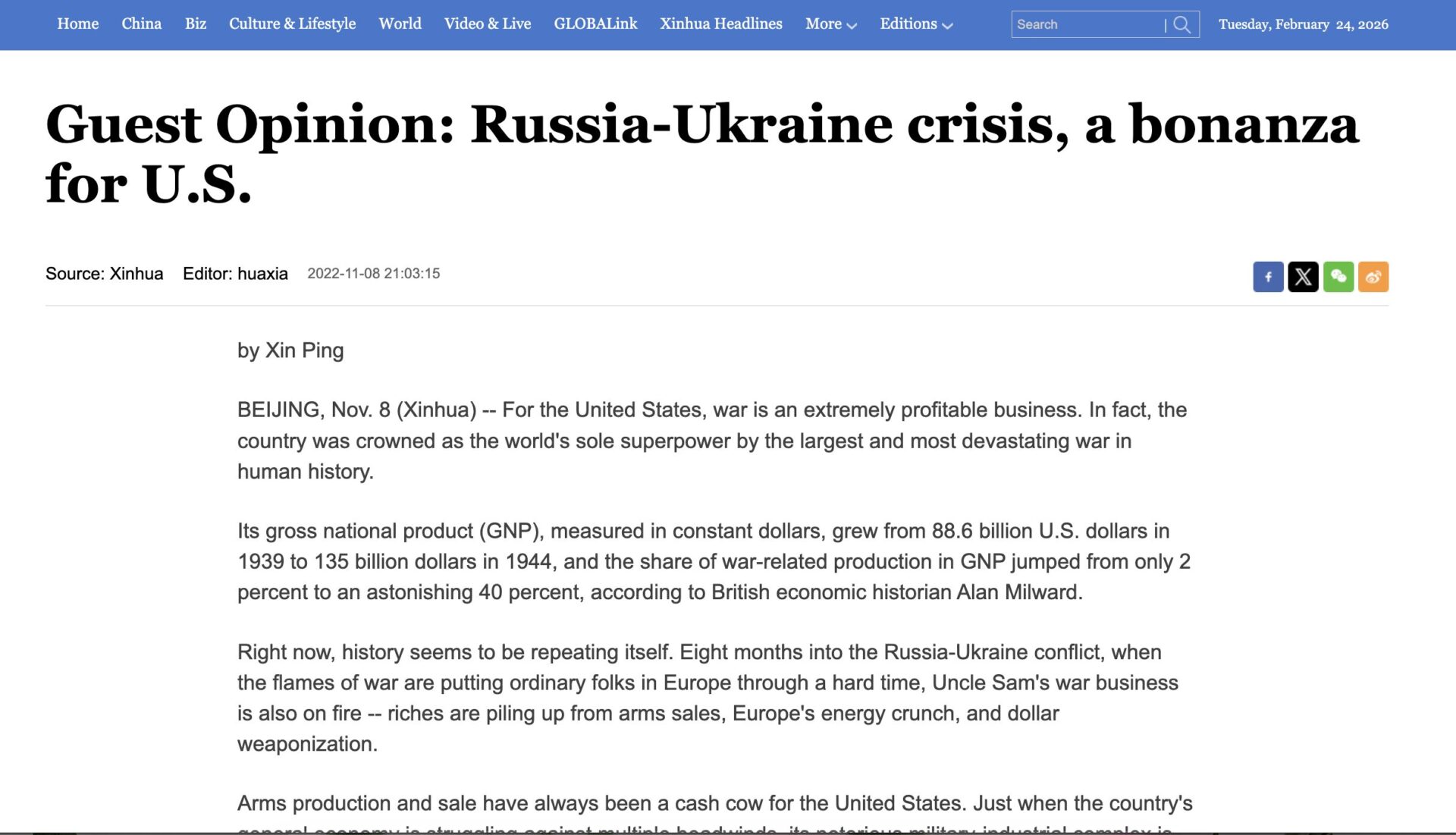
In 2022, the emphasis was clearly ideological: the “conflict” was presented as a “golden bottle for the U.S.,” a war beneficial to the American superpower, causing major problems in Europe.
Publications did more than inform—they built a narrative about global injustice, Western sanctions, and Ukraine’s allegedly provocative role. Xinhua effectively repeated Russian narratives: that the war was caused by NATO expansion, biological programs in Ukraine, and U.S. involvement.
There were no frontline reports and no analysis of combat operations or the strategic significance of cities.
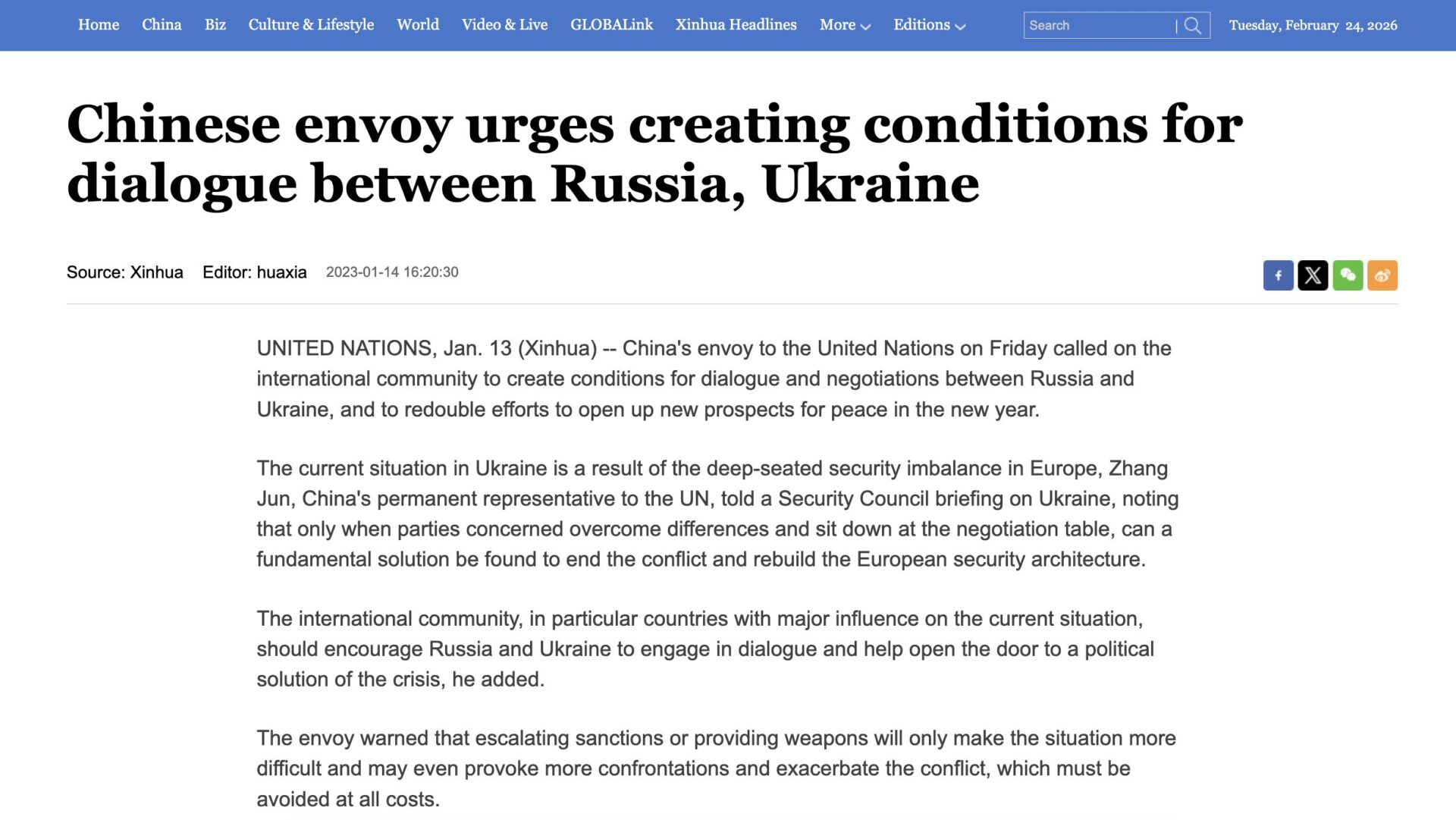
In 2023, the tone changed: attention to diplomacy and political processes increased. Materials emphasized negotiations between Russia and Ukraine and, in particular, China’s calls to create conditions for dialogue. Direct military actions were rarely mentioned.
In 2024, the media began reporting more frequently on civilian casualties in Ukraine and Russian drone attacks. This was the only direct information about the war. However, the war was still called a “conflict,” and direct quotes from Russian officials prevailed. The Ukrainian voice was almost absent; there were no frontline reports, interviews, or analyses.
By 2026, the situation was noticeably different. For the first time, Xinhua regularly began quoting Ukrainian leaders like Volodymyr Zelenskyy and reporting on military aid provided to Ukraine.
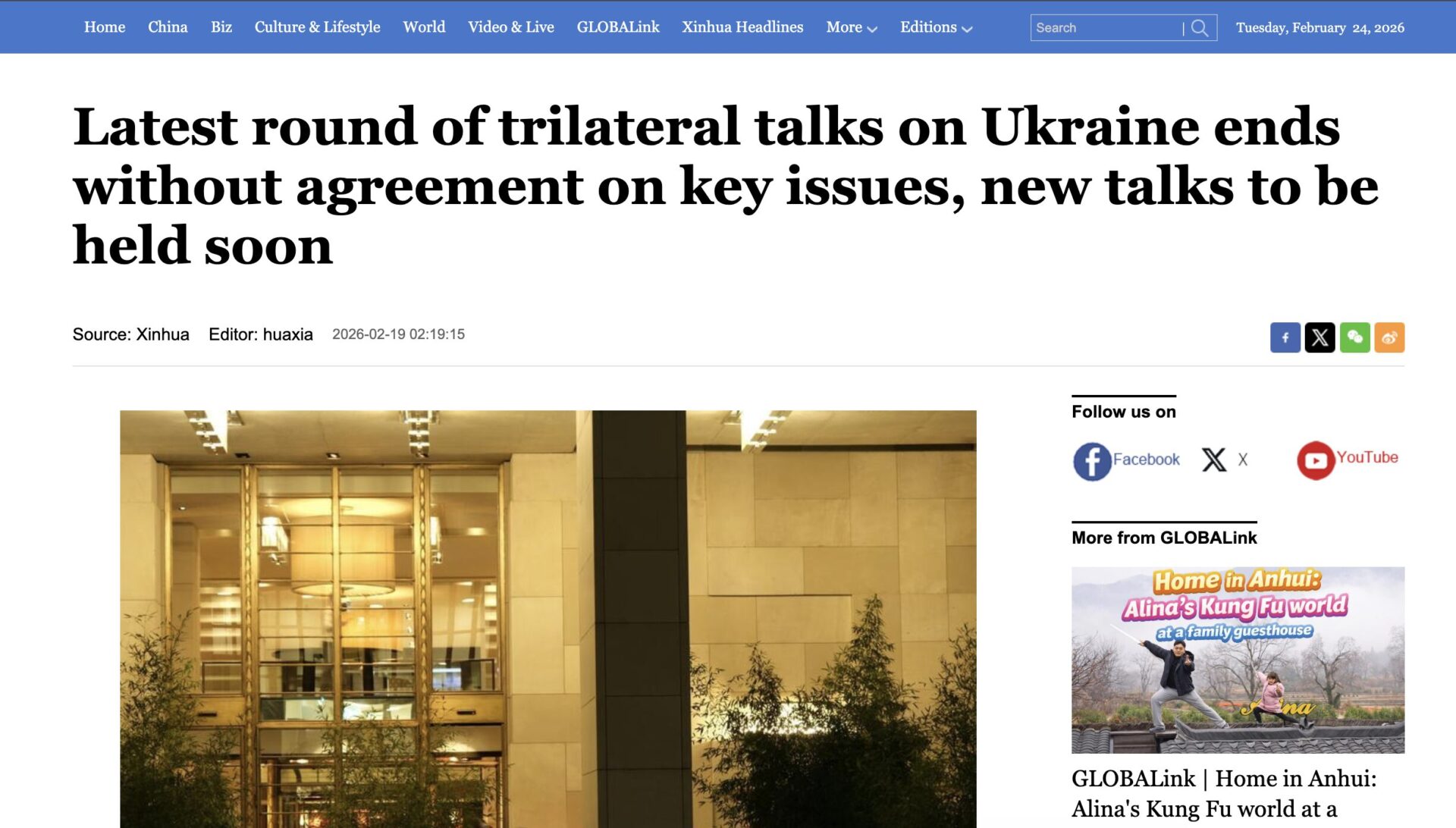
Although journalists still call the war a “conflict,” new topics emerge: stories about South Africans “drawn into the conflict,” as well as a significant portion of news about ongoing negotiations. Interestingly, information about talks to end the war is presented neutrally—no side is quoted, whereas previously the focus was on quoting the Russian side.
Thus, by 2026, Xinhua enters a new phase: the media maintains state control over the narrative but significantly expands its sources, quotes Ukraine more often, and reflects the real consequences of Russian attacks.
Conclusion
An analysis of war coverage dynamics in leading global publications from 2022 to 2026 shows a consistent but worrying transformation: from emotional shock and detailed battlefield reporting to cold geopolitical calculation.
If at the beginning of Russia’s full-scale invasion, media like The New York Times and Der Spiegel focused on combat operations, human stories, and war analysis, today the focus has decisively shifted from the frontline to potential negotiations. The war is increasingly interpreted not as an existential struggle of the people but as an element of a global chess game among key world players.
Ukraine in this discourse gradually drifts from the role of the main actor to that of an object of major diplomacy, whose fate is examined through the lens of U.S. administration strategies or the internal resilience of the European security architecture.
Even the Chinese outlet Xinhua, while expanding its sources by quoting Ukrainian leaders, continues to maintain distance, presenting events as a “conflict” that requires external resolution.
The sharp decrease in the number of publications and the disappearance of the topic from covers indicate the effect of “habituation” and the dangerous normalization of war in global consciousness. Today, the world no longer looks at Ukraine primarily through the horror of war—it increasingly observes it through the lens of geopolitical events.
This poses a new challenge for Ukrainian communication strategy: how to remain heard in a reality where frontline analysis has ultimately yielded to diplomatic forecasts and the study of internal processes in the aggressor country.
Anna Romaniv