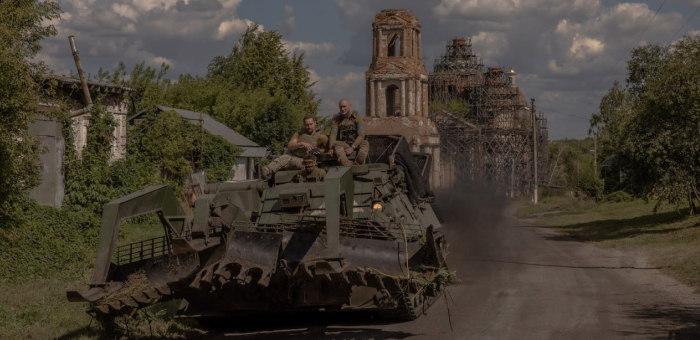


The British authorities have decided to be more open about the use of weapons provided to Ukraine during the Ukrainian offensive in the Kursk region of the Russian Federation, in particular, they have confirmed the use of Challenger 2 tanks, Radiosvoboda reports.
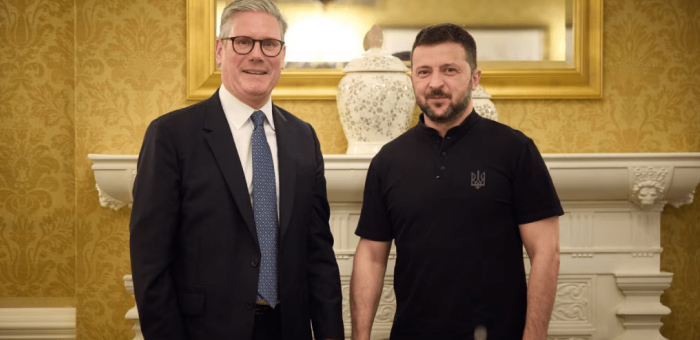
According to The Sunday Times, British Prime Minister Keir Starmer and Defense Secretary John Healey are seeking to convince key allies to do more to help Ukraine.
We will not shy away from the idea of using British weapons in Russia in defense of Ukraine. We don’t want any uncertainty or nervousness about Britain’s support at this critical time, and a half-hearted or uncertain response would show that. We should be proud to have provided equipment that helps Ukraine in its defense, – a British government source told the publication.
In addition, the prime minister also asked the National Security Council to develop plans to provide Ukraine with broader support, British journalists write.
It’s not just about military support, but also industrial, economic and diplomatic support, – a defense ministry source told The Sunday Times.
If Putin succeeds in Ukraine, he will not stop there. But the economic consequences are huge, because we all saw how badly Britain suffered when he first invaded Ukraine.
It is noted that the only British weapon that cannot be used in Russia is the Storm Shadow cruise missile. The journalists add that the British prime minister has publicly expressed support for allowing the missile to be used in Russia. However, since the missile is a joint project, it also requires permission from the United States and France.
Ukraine is also calling on its Western partners to allow the use of their weapons to strike deep into Russian territory. So far, there have been reports of long-range strikes using drones. For example, in early May, a Ukrainian drone struck an oil refinery in Bashkortostan, Russia.
The lifting of restrictions on Ukraine’s strikes on Russian territory was supported by French President Emmanuel Macron, NATO Secretary General Jens Stoltenberg, Latvian President Edgars Rinkēvičs, Dutch Defense Minister Kajsa Ollongren, and Czech Prime Minister Petr Fiala. However, the United States and Germany, for example, do not support this.