

Vienna
Should we be worried about what is happening in the world? Yes. There is too much happening, as the then Prime Minister of Great Britain, Macmillan, sighed – nowadays from Ukraine to Gaza and further to the USA, the Pacific, and China. There are climate problems, growth problems, and issues with uncontrolled immigration, political intolerance, and the advanced welfare state’s unique product: boredom, lack of well-being, and alienation.
Should we imagine the demise of democratic civilisation? No. 2024 is, in its own strange way, the year of elections and thus, the year of the democratic principle. Around four billion people, or nearly half of the world’s population, are expected to be called to elections of one kind or another, from local to supranational, from Russia and the USA to San Marino and Sint Maarten. This holds both promises and warnings.
Even the most dubious elections sharpen voters’ political sense. Just look at the reactions when fraud is blatant: yesterday Belarus, today Venezuela. And tomorrow? Who knows? Perhaps a surprise.
Europeans went to the polls in June, free and fair elections. They ended with an EU Parliament that did not satisfy everyone, but that was democracy. The USA will have elections in November. I hope for an indisputable victory for Kamala Harris, the politically attractive candidate of the Democratic Party, accompanied by a similarly indisputable defeat for Donald Trump, whom I consider a threat to the democracy of the USA and the security of Europe. Voters in, among others, the Netherlands, France, and Great Britain have recently voted for right-wing and left-wing parties in their national parliaments. Next Sunday, within a few weeks, a third state election will follow in Germany, this time in Brandenburg. The federal government in Berlin seems shaken, but the electoral process itself proceeds flawlessly. Europe’s democracies function.
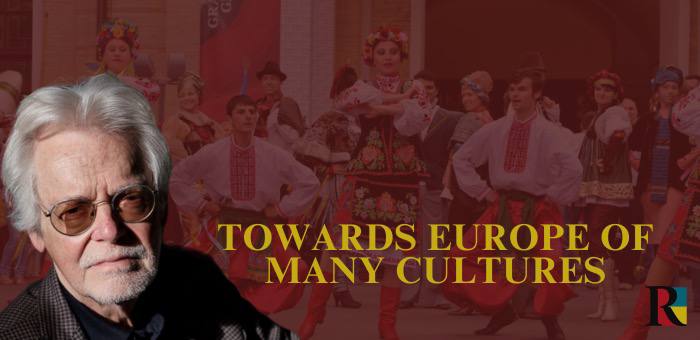
The EU Parliament is more right-leaning than ever. This can be interpreted as a defeat for the idea of an ever-closer union – but what kind of union? If one desires a superstate Europe governed from Brussels (I am tempted by it), there is undoubtedly a setback. But one could also turn the table and think back to the fathers of European unification. They wanted a united Europe consisting of this Europe’s many peoples and many cultures, overseen by a slim administration, today’s commission, lifted over the crises and wars that are Europe’s history through a thousand years.
The leaders of the member states, large and small, generally emphasize a sovereignty that, contrary to the spirit of the EU and often the letter of the EU, has transformed Europe from being the project of the peoples to being the project of the states. Along the way, the many nations and many cultures have been overlooked. Perhaps the leading and often concerned European leaders should bring the diversity and multivocality of Europe further forward in the European concert. Perhaps an expansion of the orchestra and its repertoire would appeal to the forces that reject the supranational federal state.
We could all benefit from listening to Europe’s historical regions: Tuscany and Provence, Castile, Catalonia and the Basque countries, Bavaria and Pomerania, Volhynia and Bukovina, Carinthia, Slavonia, and Transylvania, among others—the close Europe, the people’s Europe, which is the true Europe at a distance from the rulers’ Europe. It has become a dogma that the Europe of the future must be the Europe of the fatherlands or nation-states. Such a Europe would be unnecessarily weakened in a world that would gladly possess Europe – see Ukraine. The solution is the 21st-century European empire, which does not conquer others but includes others, its demands, and those of others who may wish to step into the empire of voluntariness and freedom.
Denmark significantly contributes to the defense of Ukraine and, thus, Europe. It is respected. Denmark will enter the UN Security Council and the EU’s governing trio at the new year, consisting of the outgoing presidency Hungary, which was a failure, the new presidency Belgium, which is expected to perform solidly, and the Danish presidency starting on July 1. Denmark, therefore, acts in the next few years in a weight class where the small state does not naturally belong. Denmark could make an effort for the original European idea away from the sometimes perspectiveless everyday of the EU, which includes an unworthy fight to get to the cash register and the use of Brussels as a dumping ground for the problems that governments cannot or dare not solve at home.
Denmark has quite a lot to gain regarding the regionalization of Europe, given that Denmark is one of the few European states that is also a region. An empire slowly created should gather around the continent’s core tasks: democratic and rule of law conditions, finance, foreign policy, and security policy, including military defense. Health and education, culture, environment, social policy, and transport, among others, can be delegated to the regions. In this context, states will constitute an expensive and delaying instance between a necessary upper power and the civilized society’s locally oriented services.
Years ago, I sat on a cultural committee in Brussels where a score of people, without any evident result, wrestled with a so-called new European narrative or history. A somewhat eccentric Italian suggested what he called a medievalization of Europe. That could be the future.
By Per Nyholm
*These opinions are solely those of the author. The Ukrainian Review takes no position and is not responsible for the author’s words.
Per Nyholm has been a Danish journalist since 1960. He is based in Austria and is a columnist and foreign correspondent at the Jyllands-Posten, a liberal Danish daily newspaper.
Tetiana Stelmakh adapted this text for The Ukrainian Review.