

Washington
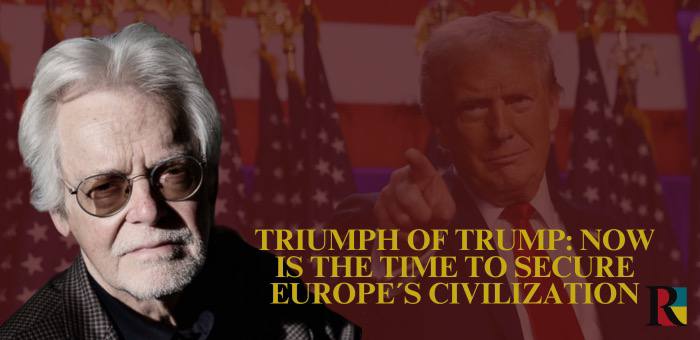
Whatever the long-term outcome of last week’s elections in the United States, it was a defeat for democracy in America, in Europe and other parts of the world. The victory of the republicans constitute a clear and serious warning to us all: that an already weakened international order, due to the wars in Eastern Europe and in the Middle East, may break down in the course of 2025, as Washington, to be directed by the isolationist – in my view a liar and crook – Donald Trump may begin the process of realizing at least some of his so called promises to an electorate, more than 70 million people, who have little knowledge of and even less interest in the complications of an interconnected world.
I just returned to Washington after an absence of 12 years. In 2012 the mood was one of optimism, complacent yes, but understandable so. It was still possible to daydream about a better world after the demise of the Soviet Union. The successor state of Russia was drifting in the direction of fascism, but not yet there. It had invaded and brutally dismembered the republic of Georgia, but Georgia was a small, unimportant republic in the Caucasus, which only a handful of Americans could pinpoint on the map. The reliable and beautifully talking Barack Obama, a democrat and a black man to boot, was reelected, hands down.
The world was in order, superficially. One could hear gurgling in the Kremlin, but Vladimir Putin, the former, low grade communist agent in a no longer existing state, called the German Democratic Republic (being neither democratic, nor a republic, but a Soviet colony), was seen as a kind of light weight troublemaker. That he should invade Ukraine a first time in 2014 could not be read in the cards, with which the Western leaders were playing.
All this is now gone. Donald Trump, a convicted felon, never a serious republican, but an upstart, who tried to gain power through the Democratic party machine in his hometown of New York, then as he was refused continued to the Republican Party, which he conquered through his own, noisy MAGA-movement: Make America Great Again. In 2016 he lost the popular vote the to the democratic nominee, Hillary Clinton, then gained a majority in the undemocratic, but decisive Electoral College and for the next four years ran the affairs of the United States in such a chaotic way, that in 2020 he lost both the popular vote and the electoral college Joe Biden, an elderly, staunch democrat and – important for the Europeans – an Atlanticist. Biden rebuilt the national economy, restored confidence in the rather disunited States and in NATO, and supported Ukraine generously after the second and more serious Russian invasion in 2022.
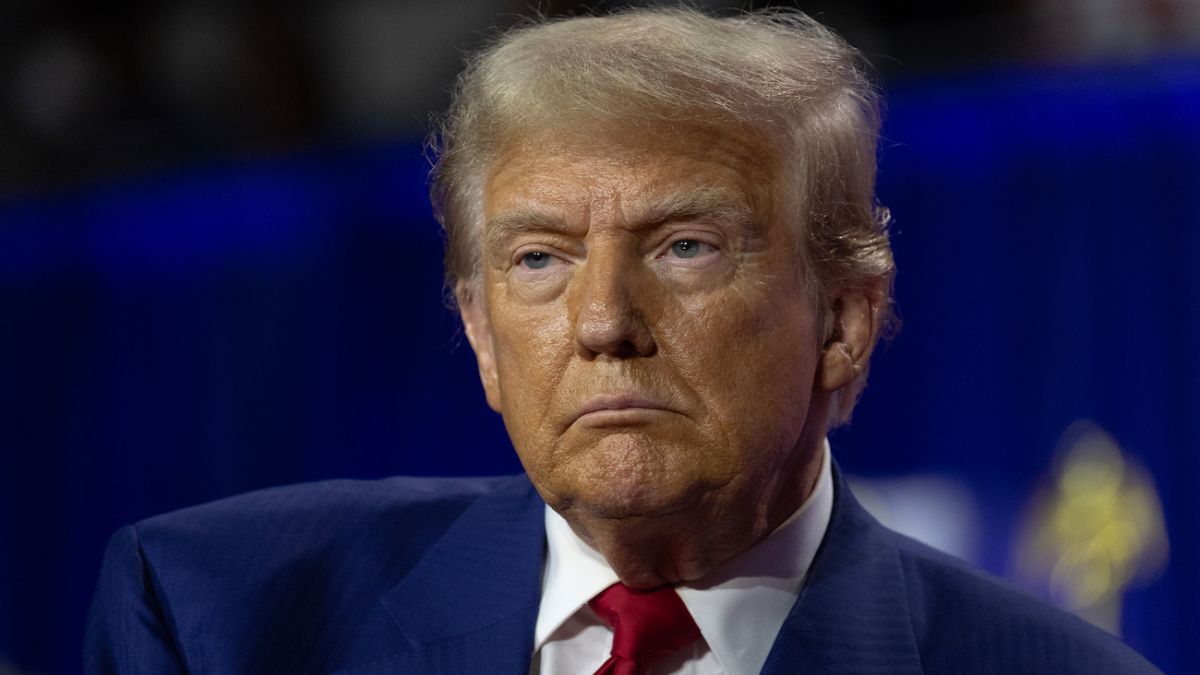
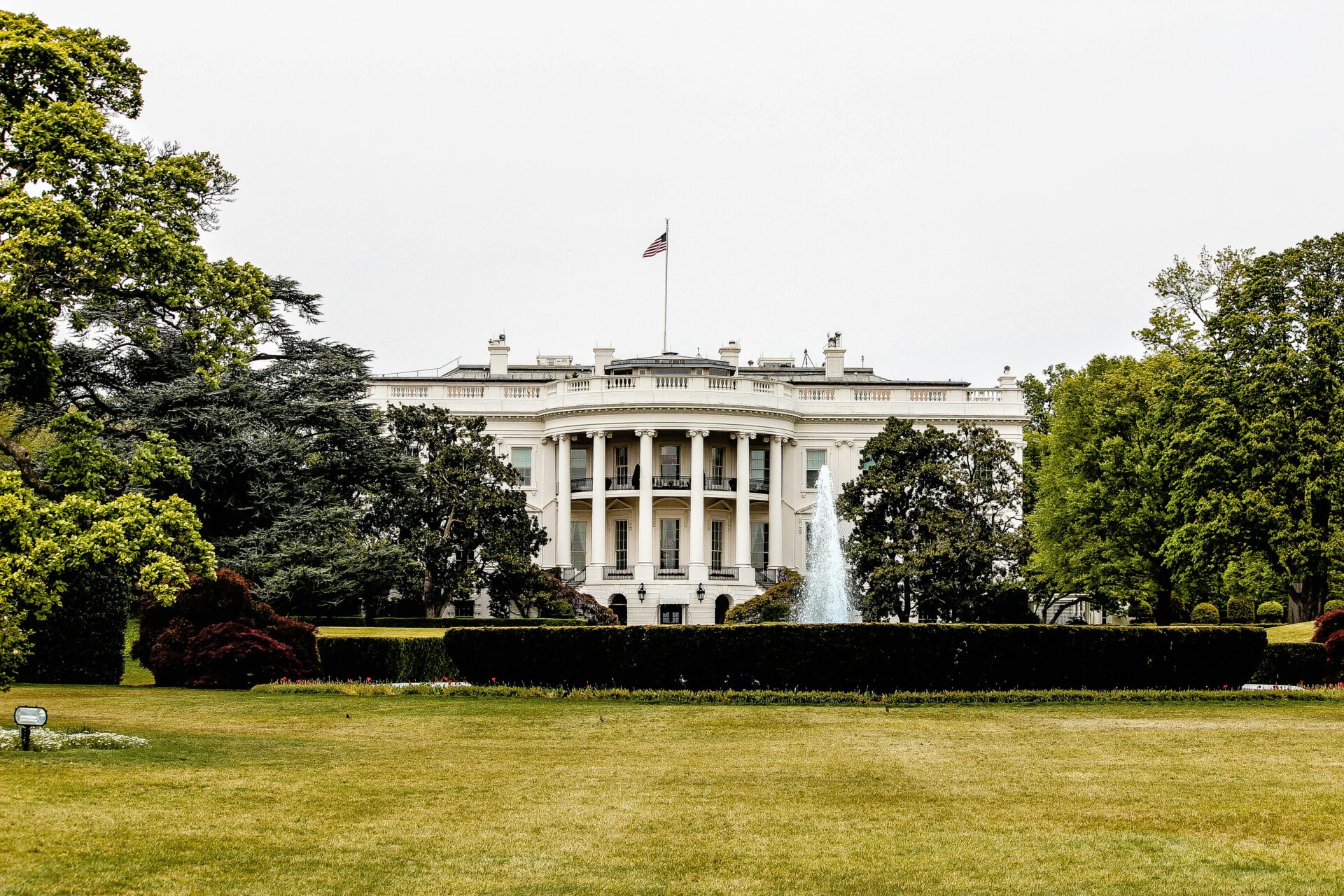
Most and maybe all of this seems to be lost with the return, this time triumphantly and indisputably, of Trump, the otherwise perennial loser: a massive victory in the national election (nearly 75 million votes against 71 million to Kamala Harris), a massive victory in the electoral college (312 to 226), full or almost full control of Congress, full or almost full control of the Supreme Court. Mr. Trump, if not a self-declared fascist, but seen as such, quite officially, by his former Chief of Staff in the White House, general John Kelly, and his former defense-chief, general Milley, may be more of a sovereign in The White, beginning with his inauguration on 6 th January, than his compatriot, Vladimir Putin, who in the golden halls and darkened corridors of the Kremlin has to watch out, day and night, for the daggers and poisoned cup of coffee.
What is going to happen to Europa and indeed to the United States nobody knows, probably not even Mr. Trump. My assumption is that the US is in for a political revolution, but in the long run. For Europe the chips might start falling in the spring of 2025.
Trump – maybe not so much the president himself, whose interest in politics seems limited, but whose narcissism demands his presence on the front page of the newspapers every morning and on the TV-screens every evening – could turn out to be less dangerous than the staff around him, often highly educated and highly ambitious types, coming out of The Heritage Foundation and other extreme rightwing think tanks. They are lean and vigorous, hungry for power and seeing America as an authoritarian state, shaped in the mold of Russia under Putin, a ruler, whom Trump admires. A march in that direction could commence slowly, then by 2028 intensify under Trump’s nr. two, J.D. Vance, a much more ideologically driven figure than the 45. and the 47. President.
For the Europeans, and indeed for the Ukrainians, doomsday may occur much earlier. In Washington one can hear that Trump is toying with the idea that he, the president-elect, should celebrate a first triumph before his arrival in the White House, publicly humiliating and pushing the hated Biden into the shadows.
The thought – and it is only a thought – centers around a summit within the next few weeks between Trump and Putin in Istanbul, organized by Turkey’s ever busy president Erdogan. Trump in Istanbul, goes the reasoning, could offer the Russian fascist Führer that he will stop or greatly reduce the US military and economic assistance to Ukraine against a promise by Putin, that Russia will stop its attacks on Ukraine. Washington and Moscow will then enforce a ceasefire along the present frontline, and Ukraine will not be allowed to join Nato within the next 20 years. Ukrainian membership of the European Union will be another, not very important matter, as Trump intends to bleed the EU as much as possible through an already planned economic and commercial war.
Neither Ukraine nor the rest of Europa will have much of a say in this matter. They will be dictated to, the assumption being that the Ukrainians cannot fight on alone (but surely, they can wage an indefinite guerilla war, which on an annual basis should cost Russia millions of dollars and thousands of soldiers). Europe is seen in both Washington and Moscow as disorganized and weak, having neglected its defenses for years, believing naively in the US nuclear umbrella and the good will of any possible regime in Washington.
The short-term winners will be Trump in the West and Putin’s Axis of Evil, consisting of Russia, North Korea, Iran and somewhat ambiguous China, but open to opportunists such Hungary under Viktor Orbán and others.
Will an Istanbul-deal lead to peace? I believe not. I take my cue from Moscow-arrangement of 1939, by which Hitler´s Nazi-Germany and Stalin´s Communist Russia agreed to divide Europe. It led to the Second World war. Ukraine, in a different way, will be, what Poland was then. The Ukrainians will not give up. They will be supported, though insufficiently by Polen, the Baltic republics and the Nordic countries, possibly also by Great Britain, Holland and others. And they will, if necessary, fight an indefinite guerilla war, which on an annual basis should cost Russia millions of dollars and thousands of men.
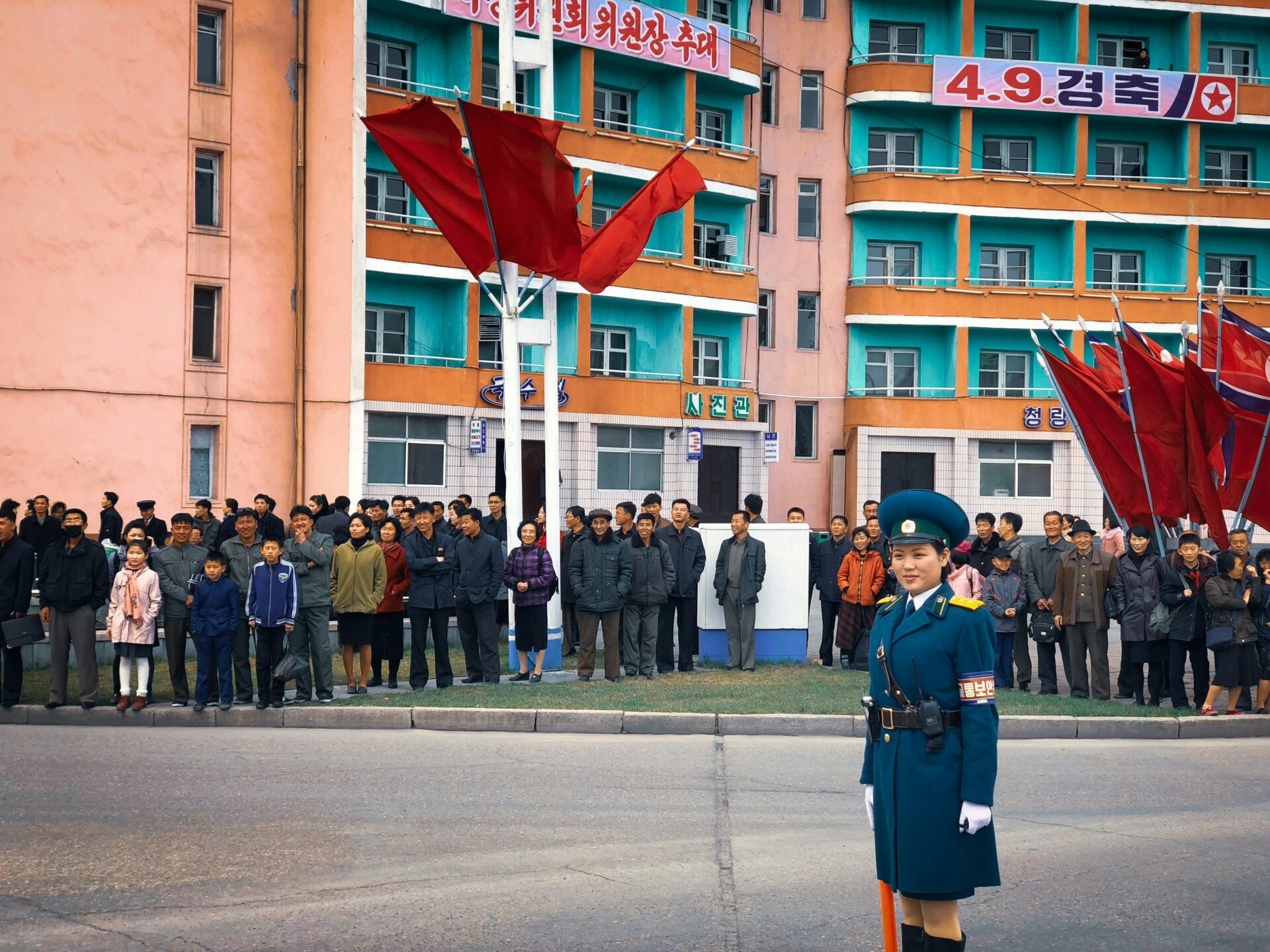
Europe with Ukraine has the capacity, the men, the money and the material to defend itself. What is missing is the will to make effective use of this defense. With the arrival of North Korean soldiers in Europe the character of Russia´s war in Ukraine has changed. It is now a war between two civilizations, a peace seeking, democratic European civilization and an aggressive, authoritarian Russian-Asian civilization. This fateful change demands a change of practical strategy. Ukraine’s battle hardened armed forces must be seen and armed as Europe´s sword in the East, the Nato-forces – with or without the US – must be seen and armed as Europe’s unbreakable shield in the West.
For its own sake the whole of Europe must wake up to its exposed situation. Europe, Ukraine included, need not accept any American-Russian dictate.
By Per Nyholm
*These opinions are solely those of the author. The Ukrainian Review takes no position and is not responsible for the author’s words.
Per Nyholm has been a Danish journalist since 1960. He is based in Austria and is a columnist and foreign correspondent at the Jyllands-Posten, a liberal Danish daily newspaper.
Tetiana Stelmakh adapted this text for The Ukrainian Review.